
The usual advice about night float and workouts is too soft. You can train on nights. But if you get the timing wrong, you will absolutely crash.
Here’s the real answer: yes, it’s okay to work out on night float days—if you time it right, keep intensity in check, and respect sleep like it’s a critical care patient. Blow any of those, and your “healthy” habit turns into self‑inflicted jet lag.
Let’s break this down the way residents actually live, not how wellness handouts pretend you live.
The Core Rule: Sleep First, Ego Second
Night float is already a circadian punch to the face. Any workout plan lives or dies on one rule:
You never trade core sleep for a workout.
If you routinely:
- Cut sleep below 6–6.5 hours to lift
- Do high‑intensity workouts when you’re already nodding off
- “Power through” post‑call to hit the gym
…you’re not being disciplined. You’re being short-sighted.
On nights, your priorities are:
- Protect a sleep block (ideally 6–8 hours in 24h, even if split).
- Keep caffeine below “tachycardic intern” levels.
- Move your body most days, but in ways that don’t wreck 1 and 2.
Once that’s clear, then we talk timing.
When to Work Out on Night Float: Best and Worst Times
Here’s the short version for a typical schedule: 7 PM–7 AM night float, home by 8 AM.
| Timing | Overall Rating | Good For |
|---|---|---|
| Just before shift | Best | Strength, cardio |
| Early in the shift | Good | Quick movement |
| Mid‑shift (2–4 AM) | Risky | Light stretching |
| Immediately post‑shift | Situational | Very short, light |
| Right before daytime sleep | Worst | Avoid completely |
1. Best: Late afternoon / Early evening before your shift
If you start at 7 PM, the sweet spot is roughly 4–6 PM.
Why this works:
- Your body is still in something like a “daytime” rhythm.
- You can use the workout to wake up after your pre‑shift nap.
- You have time to cool down, shower, eat, and commute.
What to do:
- Strength training (30–50 min): compound lifts, machines, or bodyweight.
- Moderate cardio (20–30 min): easy run, incline walk, cycling.
- Avoid all‑out HIIT. You want “energized,” not “obliterated.”
2. Also reasonable: Short, light session early in the shift
If your nights are variable but you usually get a calmer first couple of hours, you can do:
- 10–20 min light movement around 8–9 PM in a call room, stairwell, or small gym.
Think:
- Light resistance bands
- Bodyweight squats/pushups
- Short walk outside the hospital
This isn’t “training.” It’s maintenance—keeping your body from turning into a pretzel.
3. Risky: Middle of the shift (2–4 AM)
This is when your circadian rhythm wants you dead asleep. Forcing your body into a hard workout here is like taking off in a storm with one engine out. Can it work? Maybe. Would I recommend it as routine? No.
If you must move:
- Keep it ultra light: walking laps, simple stretching, a 5–10 minute mobility session.
- No heavy lifting. No max heart rate intervals. No “I’ll just crank a 5K on the treadmill” at 3 AM.
4. Situational: Right after the shift (7–9 AM)
This is where people get into trouble. You walk out of the hospital wired on adrenaline and coffee. You feel like you have energy. You daydream about “hitting the gym on the way home.”
Ninety percent of the time, this is a trap.
When it might be okay:
- You slept decently the day before (6–8 hours total).
- Your shift was relatively calm; you’re mentally tired but not destroyed.
- You do a short, low‑to‑moderate session:
- 15–20 min easy cardio
- Light mobility or yoga
- No PR attempts. No hero WODs.
When to absolutely skip it:
- You’re nodding off in sign‑out.
- You used caffeine heavily after 2–3 AM.
- You feel nauseated, shaky, or wired-tired.
5. Worst: Right before your main daytime sleep block
Example: You get home at 8 AM, decide to stay awake until noon lifting, then “crash for a bit.”
That is how you:
- Shred your sleep window
- Guarantee fragmented 3–4 hour sleep
- Feel hungover all night
Do not stack intense workouts right before the longest sleep you’ll get that day. You want your core sleep as easy and deep as possible, not fighting post‑exercise stimulation.
How Often Should You Work Out on Night Float?
You’re not training for the Olympics. You’re trying not to fall apart.
For a 5–7 night block of night float, a realistic target is:
- 2–4 actual “workout” days
- Most days: 5–15 minutes of light movement or stretching
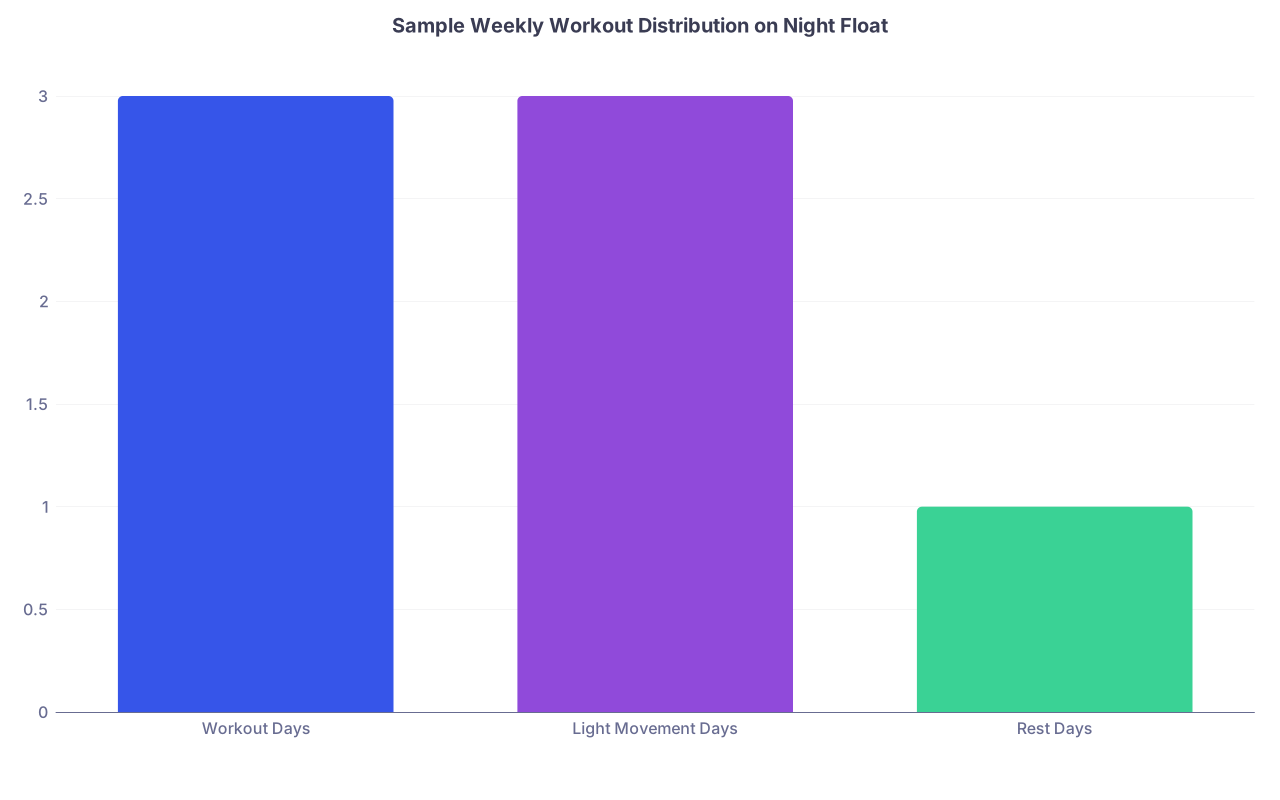
| Category | Value |
|---|---|
| Workout Days | 3 |
| Light Movement Days | 3 |
| Rest Days | 1 |
If you push for “6 lifts a week” while flipping your sleep schedule, you will:
- Get sick
- Get injured
- Or both
Dial back volume and intensity by about 20–40% from your “normal days” plan.
What Kind of Workouts Actually Work on Nights?
Here’s how I’d structure it for a typical resident on night float.
Strength Training (2–3x/week max)
Best timed: Afternoon / early evening before shift
Focus on simple, efficient sessions:
- Day A: Squat or leg press, hinge (RDL or deadlift variation), core
- Day B: Bench or push‑ups, row, overhead press, core
Rules:
- 30–45 minutes total. Not 90.
- Leave 1–2 reps “in the tank” on each set (no grinding maximal sets).
- If you’re shaky or your form falls apart early, you’re done. That’s the night float tax.
Cardio (1–3x/week)
Best timed: Before shift or short, easy immediately after if you truly feel okay.
Keep it:
- Easy to moderate pace
- 20–30 minutes
- Something you don’t hate: brisk walking, light jog, bike, elliptical.
Avoid:
- Late‑night sprints
- “Death” intervals at 3 AM
- Anything that leaves you gasping
Mobility / Recovery Work (near daily, 5–15 minutes)
Best timed:
- Start of shift (quick reset)
- Before bed (but low intensity, relaxing)
Examples:
- Hip flexor and hamstring stretches
- Thoracic spine rotation work
- Gentle yoga flows or a short YouTube mobility video
This is the lowest risk, highest ROI movement on nights. It keeps your back from revolting against you.
Sleep, Caffeine, and Workout Timing: How They Interact
You can’t talk about night float workouts without talking sleep and caffeine. They’re glued together.
Sleep rules that keep you functional
Aim for:
- A main sleep block of at least 5–6 hours
- Optional second nap (60–90 minutes) later if that’s how your body works
Try this pattern (example for 7 PM–7 AM shift):
- 8–9 AM: home, small snack, blackout curtains, earplugs, bed by 9–9:30
- 3–4 PM: wake up
- 4:30–5:30 PM: workout
- 5:45–6:30 PM: eat “breakfast/dinner,” commute
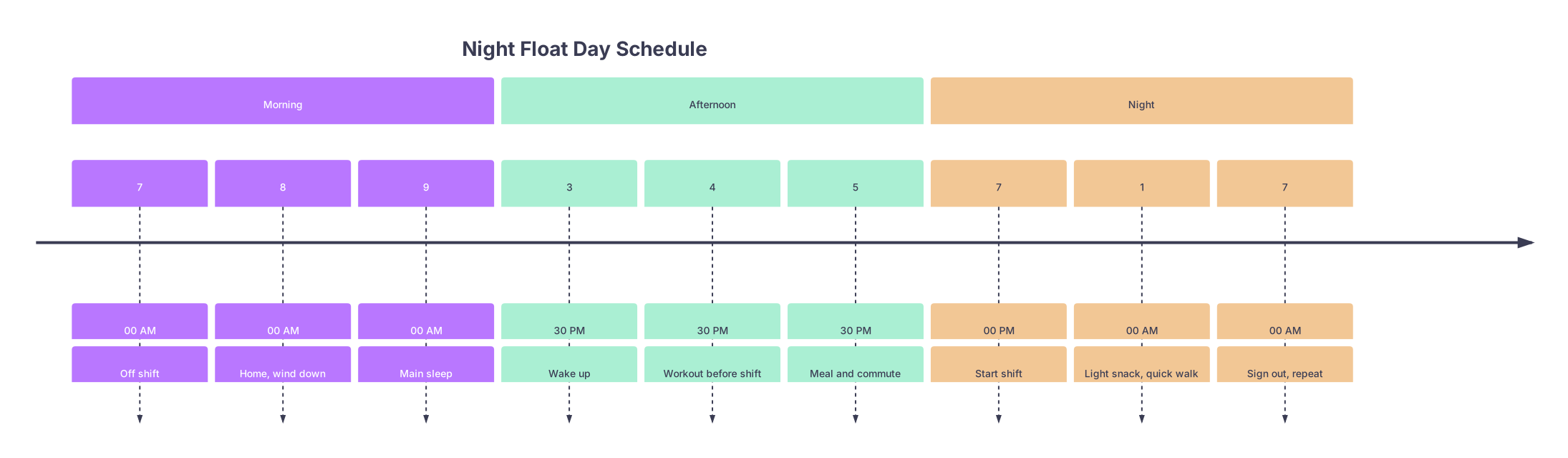
| Period | Event |
|---|---|
| Morning - 7 | 00 AM |
| Morning - 8 | 00 AM |
| Morning - 9 | 00 AM |
| Afternoon - 3 | 30 PM |
| Afternoon - 4 | 30 PM |
| Afternoon - 5 | 30 PM |
| Night - 7 | 00 PM |
| Night - 1 | 00 AM |
| Night - 7 | 00 AM |
Caffeine and workout timing
Basic rules:
- Last significant caffeine at least 6+ hours before your main sleep.
- If you work out right before shift, it’s fine to use some caffeine with that workout.
- Do not use caffeine to “rescue” a workout when you’re already sleep‑deprived. That’s how you end up jittery at 4 AM and unable to sleep at 9 AM.
Worst combo:
- Heavy workout + late caffeine + bright light exposure = staring at the ceiling in your blackout-curtained room while your next night shift gets closer.
How to Tell If Your Night Float Workouts Are Hurting You
Pay attention to these red flags. If they show up, dial back immediately:
- You feel more tired after a workout than before, not in a “good sore” way but in a “I could sleep standing up in sign‑out” way.
- Your sleep drops below 5–6 hours for more than 1–2 days in a row.
- Resting heart rate runs high, you feel wired and anxious, or you’re constantly mildly sick.
- You start making mistakes on the floor. Forgetting orders. Missing subtle changes.
If that happens:
- Cut workouts to 1–2 short strength sessions + walking/stretching only.
- Back off intensity by another 20–30%.
- Double down on sleep and nutrition for a few days, then reassess.
Realistic Scenarios and What I’d Do
Scenario 1: You crushed three admits at 4 AM, your shift was brutal, and it’s 7:30 AM. Should you still work out because “this is the only time”?
No. Go home. Shower. Eat something light. Sleep. Your body is already in the red.
Scenario 2: Slow night, you actually got a couple of naps, and you wake up at 3 PM feeling okay. Gym at 4:30 PM?
Yes. That’s the perfect window. Keep it under an hour, stop short of total fatigue.
Scenario 3: You missed a workout yesterday, and now you’re tempted to double up pre‑shift and post‑shift.
Hard no. Night float is about survival and consistency, not “making up” days like an undergrad bro split.
Quick Rules to Live By on Night Float
- Yes, you can work out.
- No, you should not sacrifice sleep to hit an arbitrary plan.
- Best time: late afternoon / early evening before your shift.
- Worst time: just before your main sleep block.
- Aim for fewer, shorter, less intense sessions than your usual routine.
You’re not lazy for scaling down. You’re smart for training in a way that doesn’t sabotage your brain when you’re responsible for actual patients at 3 AM.
FAQ: Night Float Workouts
1. Is it okay to lift weights after a night shift before going to bed?
Sometimes, but it’s not ideal. If you’re truly not exhausted, limit it to 20–30 minutes, keep it light to moderate, and stop well before you feel wiped. If your sleep drops or you feel wired in bed, move that workout to before your shift instead.
2. Can working out on night float help me stay awake at work?
Yes—if you time it before shift or as a short, light movement break early in the night. A 10–15 minute walk or mobility session around 9 PM can help a lot. But smashing a hard workout mid‑shift or at 3–4 AM will usually backfire and make you feel worse later.
3. How many days per week should I realistically exercise on nights?
For most residents: 2–4 “real” workouts per week during night float is plenty. The rest of the days, aim for walking, light stretching, or a 5–10 minute mobility routine. If your sleep starts dropping, cut back.
4. Is it better to do cardio or weights on night float?
Neither is universally “better.” Weights are nice because they’re time‑efficient and less likely to spike your heart rate for hours. Easy cardio is great for stress and mood. I’d lean toward: 2x simple strength sessions, 1–2x easy cardio, plus daily light movement.
5. What if I feel too tired to work out at all during a night float block?
Then you prioritize sleep and very light movement only. Aim for 5–15 minutes of walking or stretching most days and pick up real training once you’re back on a normal schedule. Forcing hard workouts when your body is clearly saying “no” is a fast path to burnout, sickness, and mistakes at work.
Key points: Yes, it’s okay to work out on night float days. The safest and most effective time is before your shift, not right after and never at the expense of sleep. Keep the sessions shorter and less intense than usual, and listen harder to your fatigue than to your training plan.