
The worst way to start a night float is to “wing it” and hope your body magically adapts. It won’t. If you don’t control your sleep, caffeine, and workouts, the rotation will control you.
You’re on a 4‑week night float. Here’s the exact timeline for when to shift your sleep, when to slam coffee (and when not to), and how to keep working out without destroying yourself.
Overview: The 4‑Week Night Float Timeline
At this point, before we get into the weeds, you need the big picture.
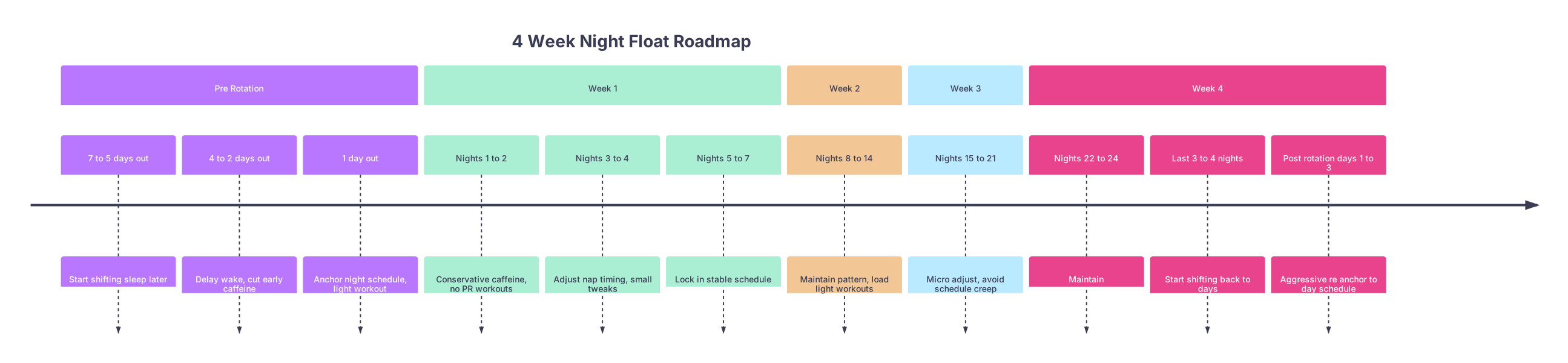
| Period | Event |
|---|---|
| Pre Rotation - 7 to 5 days out | Start shifting sleep later |
| Pre Rotation - 4 to 2 days out | Delay wake, cut early caffeine |
| Pre Rotation - 1 day out | Anchor night schedule, light workout |
| Week 1 - Nights 1 to 2 | Conservative caffeine, no PR workouts |
| Week 1 - Nights 3 to 4 | Adjust nap timing, small tweaks |
| Week 1 - Nights 5 to 7 | Lock in stable schedule |
| Week 2 - Nights 8 to 14 | Maintain pattern, load light workouts |
| Week 3 - Nights 15 to 21 | Micro adjust, avoid schedule creep |
| Week 4 - Nights 22 to 24 | Maintain |
| Week 4 - Last 3 to 4 nights | Start shifting back to days |
| Week 4 - Post rotation days 1 to 3 | Aggressive re anchor to day schedule |
You’re going to think about the rotation in five phases:
- Pre‑rotation (7 days out) – Start shifting and planning.
- Week 1 – Adapt without crashing.
- Week 2 – Maintain and refine.
- Week 3 – Prevent burnout and schedule drift.
- Week 4 + re‑entry – Transition back to days without getting wrecked.
7 Days Before: Pre‑Rotation Setup
At this point you should stop pretending your normal schedule will survive.
Days −7 to −5: Begin the shift
Goal: Gently push your sleep later so Night 1 isn’t a brick wall.
Sleep:
- Go to bed 1–2 hours later than usual.
- Wake 1–2 hours later than usual.
- Example: If you’re a 23:00–06:00 person, move to 00:00–07:00 or 01:00–08:00.
- Keep it consistent for these three days.
Caffeine:
- Cap total caffeine at your usual amount. Don’t “pre‑load.”
- Last caffeine by 14:00. You’re just setting up clean sleep, not extending your day.
Workouts:
- Keep your normal rhythm, but start nudging workouts later in the day if you usually go early morning.
- Example: move from 06:00 workouts to 09:00–11:00.
- Intensity: normal, not maximal. You’re not starting a new PR cycle now.
Days −4 to −2: Commit to night‑shift thinking
Now you make decisions like a night shifter, not a day resident.
Sleep:
- Push bedtime another 1–2 hours later.
- Aim to be falling asleep around 01:00–02:00 and waking 08:00–10:00.
- Darken your room more than usual. Blackout curtains if possible; at least an eye mask.
Caffeine:
- No caffeine after 12:00–13:00.
- If you’re a chronic sipper, cluster your caffeine:
- 1st dose: wake time.
- 2nd dose: late morning.
- You’re protecting your ability to fall asleep at a later time.
Workouts:
- Shift sessions to late morning or early afternoon.
- Keep them 30–60 minutes.
- Prioritize:
- Compound lifts at moderate weight, or
- 20–30 minutes of moderate cardio.
- Skip heroic workouts that will leave you exhausted and wired.
Day −1: Build your “Night 1” bridge
This day matters more than Night 1 itself.
If your first shift starts around 19:00–20:00:
Sleep:
- Wake no earlier than 09:00–10:00.
- Short, controlled nap 16:00–17:00 (30–90 minutes) max.
- Set an alarm. If you oversleep 3+ hours you’ll feel groggy and still crash at 03:00.
Caffeine:
- Morning: one normal dose (coffee/tea) at wake.
- Absolutely no caffeine after 14:00–15:00.
- Plan your Night 1 caffeine like a med order:
- First night dose around 21:00–22:00.
- Second tiny booster 01:00–02:00 if needed.
- Nothing after 03:00.
Workouts:
- Light session late morning:
- 20–30 minutes easy cardio or
- Short full‑body lift, low volume.
- Do not work out after ~15:00. You want sleep pressure to build for that 16:00 nap.
Week 1: Survive the Adaptation Phase
This is where people blow it with random naps, all‑night caffeine, and “I’ll just squeeze in a lift at 09:00 after call.” Don’t.
Assume: 19:00–07:00 shift. Adjust times if your shift differs, but keep the structure.
Standard Night Float Template (Nights 1–7)
| Time | Focus |
|---|---|
| 15:30–16:30 | Wake, light meal |
| 17:00–18:00 | Workout (if lifting that day) |
| 18:00–18:30 | Pre‑shift food, caffeine dose 1 |
| 19:00–07:00 | Work (planned caffeine window 21:00–03:00) |
| 08:00–14:00 | Core sleep block |
You might not hit these exact times, but this is the skeleton.
Nights 1–2: Conservative, controlled
Sleep (post‑shift):
- Get home, bed by 08:00–09:00.
- Sleep until 13:00–14:00.
- No “just one quick errand” detours. Straight home.
Caffeine at work:
- Dose 1: 21:00–22:00 (regular cup of coffee or equivalent).
- Dose 2: 01:00–02:00 (half dose if you’re sensitive).
- Hard stop: no caffeine after 03:00.
- If you feel like a zombie at 05:00, accept it; your body is adjusting.
Workouts:
- Night 1: skip heavy lifting. If you must move, do:
- 15–20 minutes walking after you wake (around 16:00).
- Night 2: moderate workout:
- Either lift or cardio, not both.
- Keep it under 45 minutes.
Nights 3–4: Lock in routines, tweak nap strategy
By now you’ll know your “danger zone” hours (usually 04:00–06:00).
Sleep:
- Aim for a consistent 08:00–14:00 window.
- If you feel wrecked, extend to 14:30–15:00, but not later. You don’t want to push your pre‑shift wake time too close to start.
Caffeine at work:
- Use your data:
- If you were wired and couldn’t sleep after shift → cut the 01:00 dose in half or move it earlier (00:00).
- If you crashed at 03:30 → keep dose timing but ensure no caffeine earlier than 19:00 before you come in.
- Same cut‑off: no caffeine after 03:00.
Workouts:
- Plan 2–3 lifting sessions per week, none aiming for PRs.
- Good split for night float:
- Day A: upper push/pull.
- Day B: lower body + core.
- Day C: optional light full‑body or just cardio.
- Place workouts after your main sleep and at least 2–3 hours before shift.
Nights 5–7: Stabilize, don’t get greedy
At this point you should have a predictable pattern. Don’t start “optimizing” with big changes.
Sleep:
- Keep the same block daily, even on days off in the middle of the week.
- Example day off mid‑week:
- Still sleep 08:00–14:00.
- Still be awake 15:00–05:00-ish, even if you’re not working.
- Treat it like a “less interrupted” night rather than a return to day shift.
Caffeine:
- Same dosing rules as earlier nights.
- If you’re doing well, don’t reward yourself with a 23:00 energy drink. Stay boring.
Workouts:
- You’ll feel tempted to “catch up” on a day off. Bad idea.
- Cap total weekly training at 70–80% of your usual volume.
- If your body feels beaten up, drop one lifting day and walk instead.
Week 2: Maintain and Fine‑Tune
Week 2 is all about consistency. Over‑tinkering is how you drift into permanent fatigue.
At this point you should:
- Know your ideal post‑shift sleep length.
- Know which hours on shift are your worst cognitively.
- Have a workout schedule that doesn’t make you dread exercise.
Weekly Structure for Weeks 2–3
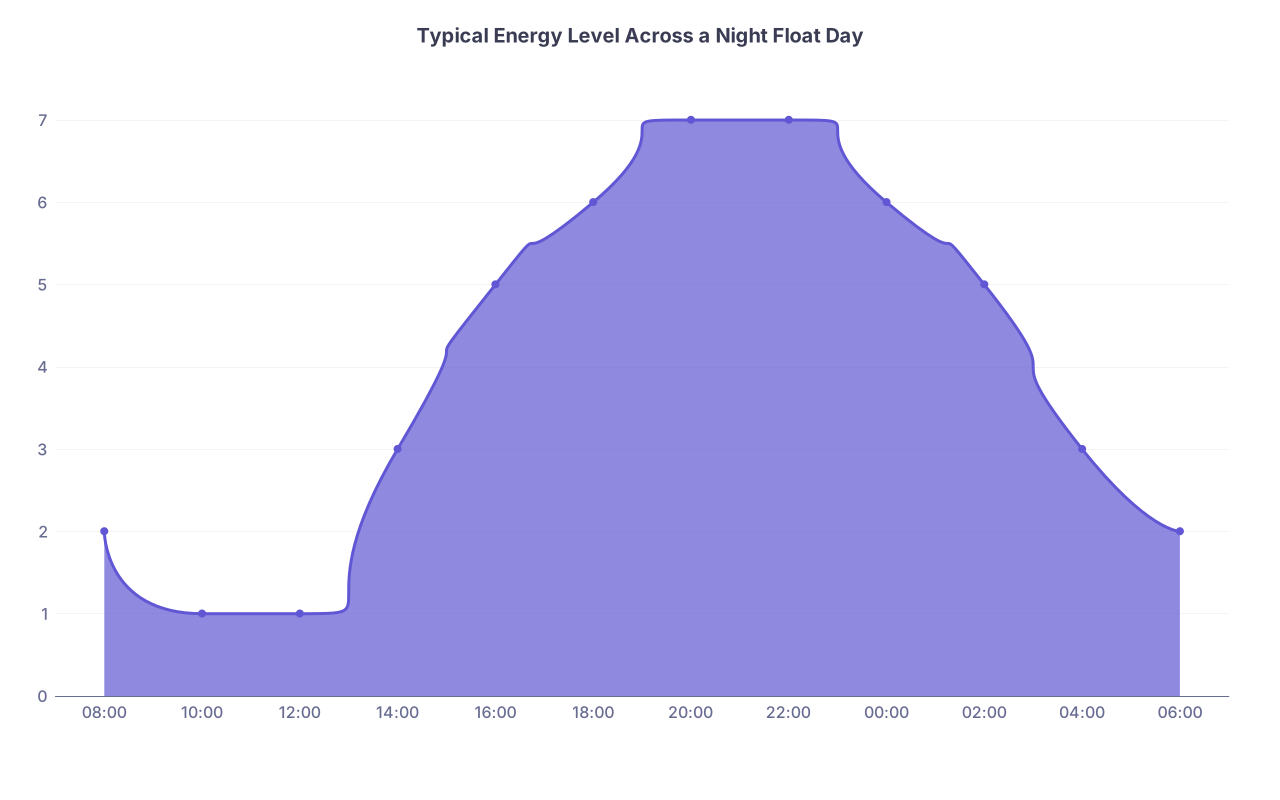
| Category | Value |
|---|---|
| 08:00 | 2 |
| 10:00 | 1 |
| 12:00 | 1 |
| 14:00 | 3 |
| 16:00 | 5 |
| 18:00 | 6 |
| 20:00 | 7 |
| 22:00 | 7 |
| 00:00 | 6 |
| 02:00 | 5 |
| 04:00 | 3 |
| 06:00 | 2 |
Energy is lowest as you leave work and mid‑sleep; highest late afternoon/early evening. That’s your window.
Sleep:
- Protect the main block like an ICU bed:
- 08:00–14:00 locked.
- Phone on Do Not Disturb.
- White noise or fan.
- If you’re waking early (e.g., 12:30), don’t lie in bed forever. Get up, accept a shorter block, and nap briefly 17:00–17:30 later if needed.
Caffeine:
- Steady pattern wins:
- 18:00–19:00: small pre‑shift dose if you’re dragging.
- 22:00–23:00: main dose.
- 01:00: optional micro‑dose (half coffee, tea, etc.).
- Still no caffeine after ~03:00. Yes, always.
Workouts:
Weekly plan example (3‑4 sessions):
Day 1 (post‑sleep, ~16:00) – Lower body strength:
- Squats or leg press, 3–4 sets, moderate weight.
- Romanian deadlifts or hinge, 3 sets.
- 5–10 minutes light bike.
Day 3 – Upper body strength:
- Bench or push‑ups, 3–4 sets.
- Rows or pull‑downs, 3–4 sets.
- Light accessory shoulders/arms.
Day 5 – Conditioning:
- 20–30 minutes easy–moderate cardio (treadmill, rower, brisk walk).
Optional Day 6 – Mobility / yoga / long walk.
If you feel like trash walking into the gym two days in a row, that’s your sign to back off, not push harder.
Week 3: Prevent Burnout and Schedule Drift
Week 3 is when subtle mistakes pile up—extra caffeine here, a truncated sleep there—and suddenly you’re irritable and forgetful.
At this point you should run a mid‑rotation audit.
Early Week 3: Micro‑Audit
Take 10 minutes on your “day off” and answer:
- Am I actually getting 5.5–7 hours total sleep on most days?
- Am I drinking caffeine later than 03:00 on more than two nights a week?
- Did I try to keep day‑shift social life and night‑shift work life? (Be honest.)
If sleep is under 5 hours consistently:
- Add a planned 45–60 minute nap:
- Either 17:00–18:00 or 18:00–19:00 on days you feel worst.
- Keep the main 08:00–14:00 block sacred.
If caffeine is creeping later:
- Pull your main “anchor” dose earlier:
- Shift that 01:00 dose back to 00:00.
- Use non‑caffeinated alertness tricks at 04:00:
- Bright lights in the workroom.
- Cold water on face.
- Short 5‑minute brisk walk.
If workouts feel impossible:
- Switch to a “minimum viable” template for the rest of the rotation:
- 2 × per week:
- 20–30 minutes walking.
- 2 sets each of a push, pull, and squat variation with light weights.
- 2 × per week:
- The goal is to move, not to improve.
Week 4: Wind Down and Prepare to Flip Back
The last week has two jobs: don’t fall apart, and don’t destroy your re‑entry to day shift.
The mistake I see constantly: residents hold a perfect night schedule until the last shift, then try to “hero flip” in 24 hours. That’s how you lose your first full week back to brain fog.
Nights 22–24: Still in full night mode
At this point you should keep things boring.
Sleep:
- Maintain your standard block 08:00–14:00.
- If your last shift is approaching, do not start drifting back to day schedule yet. That comes in the last 3–4 nights.
Caffeine & Workouts:
- Same patterns you established in Weeks 2–3.
- Don’t try new pre‑workout powders or energy drinks “for fun.”
Last 3–4 Nights: Gradual flip strategy
Assume your last night is Night 28.
Night 25–26: Slight softening
- Sleep after shift: 08:00–13:00 instead of 14:00.
- Small 20–30 minute nap 18:00–18:30 if you’re wrecked.
- Caffeine:
- Keep your usual pattern until 01:00.
- Try to skip the 01:00 dose on at least one of these nights if you can function.
Night 27 (second to last):
- Post‑shift sleep: 08:00–12:00.
- Then stay awake into the afternoon/evening.
- Light activity: walk, groceries, simple chores.
- Bedtime: aim for 22:00–23:00.
- This will feel rough. That’s the point. You’re using controlled sleep deprivation to reset.
Night 28 (last shift):
- Treat this as a partial‑night reset.
Option A – If you’re off the next day completely:
- Post‑shift: short nap 08:00–10:00 max.
- Then force full day wakefulness:
- Get outside in sunlight late morning and early afternoon.
- Normal caffeine like a day person (none after ~14:00).
- Bedtime: 21:00–22:00.
- Expect to wake once or twice overnight; go back to bed, don’t grab your phone.
Option B – If you work a day shift soon after:
- More aggressive:
- Try to skip the post‑shift nap or keep it to 30 minutes late morning.
- Anchor yourself with light, social contact, and movement through the day.
- Plan an early night: 20:00–21:00 bed.
Post‑Rotation: 3‑Day Re‑Entry Plan
Here’s what to do once you’re free of nights and trying to feel human again.
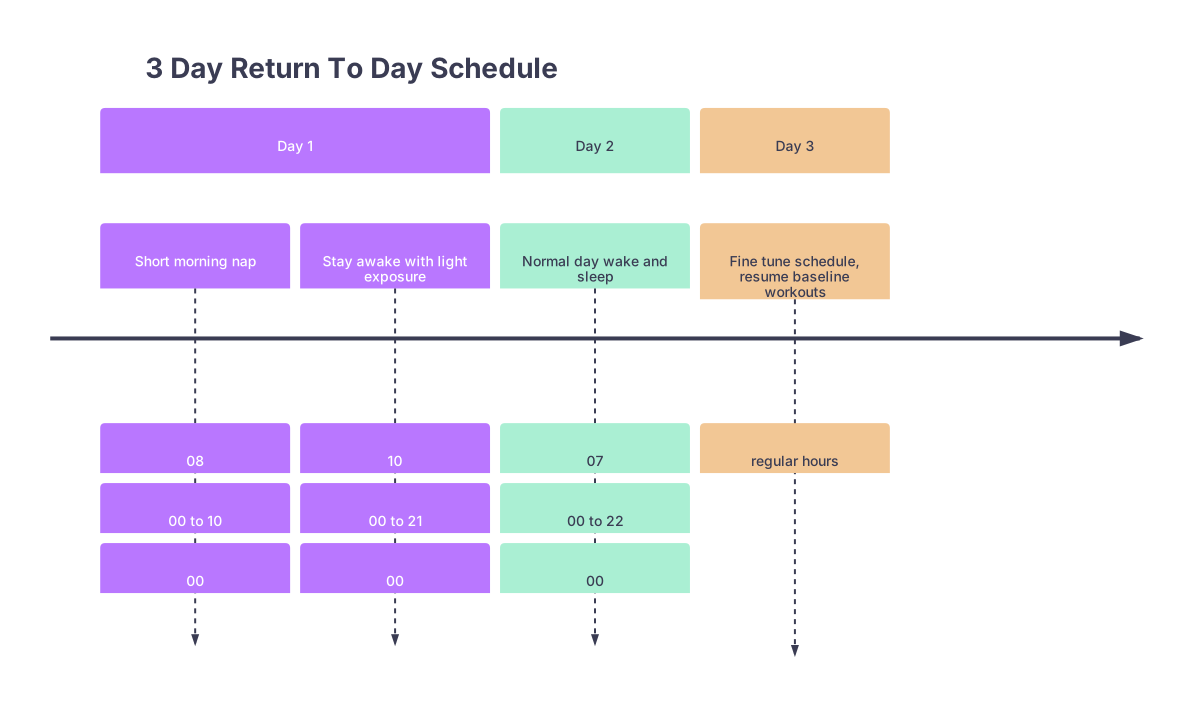
| Period | Event |
|---|---|
| Day 1 - Short morning nap | 08 |
| Day 1 - Stay awake with light exposure | 10 |
| Day 2 - Normal day wake and sleep | 07 |
| Day 3 - Fine tune schedule, resume baseline workouts | regular hours |
Day 1 after nights
At this point you should focus on light and timing, not perfection.
- Wake no later than 08:00–09:00 if you slept overnight.
- Caffeine:
- Resume “normal person” rule—last dose by 14:00.
- Light:
- Get at least two outdoor light exposures (morning and midday).
- Workout:
- Easy: 20–30 minute walk, light mobility.
- Bed:
- Aim for 21:00–22:00, even if you’re not very sleepy. Get in bed, dark room, no screens.
Day 2
- Wake: 06:30–07:30.
- This day should feel significantly closer to baseline if you didn’t nap late on Day 1.
- Workout:
- Resume a moderate session:
- Short lift or moderate cardio, not both.
- Resume a moderate session:
- Caffeine as usual, cutoff 14:00–15:00.
- Bedtime: 22:00–23:00.
Day 3
- You should be close to your pre‑rotation pattern.
- If you still feel like you’re in a fog:
- Check your previous day: did you nap after 15:00? Did you sneak 17:00 coffee?
- Fix those on Day 3.
Quick Reference: Sleep, Caffeine, Workout Timing by Phase
| Phase | Sleep Focus | Caffeine Cutoff | Workout Window |
|---|---|---|---|
| 7–2 days before | Shift later gradually | 12:00–14:00 | Late AM–early PM |
| Day before | Long morning, PM nap | 14:00–15:00 | Late AM only |
| Week 1 | Anchor 08:00–14:00 | ~03:00 | 15:00–18:00 |
| Weeks 2–3 | Maintain stable block | ~03:00 | 15:00–18:00 |
| Week 4 (early) | Same as Weeks 2–3 | ~03:00 | 15:00–18:00 |
| Last 3–4 nights | Shorten post‑shift sleep | 01:00–02:00 | Short/light only |
| Post‑rotation | Return to day pattern | 14:00–15:00 | Late AM/early PM |

Final Takeaways
- Shift early, not reactively. Start moving your sleep 5–7 days before Night 1.
- Treat caffeine like a scheduled medication with a hard cutoff around 03:00 on nights.
- Keep workouts shorter and earlier in your wake window—aim for consistency, not performance.
Follow the timeline, not your impulses, and night float becomes survivable instead of disastrous.