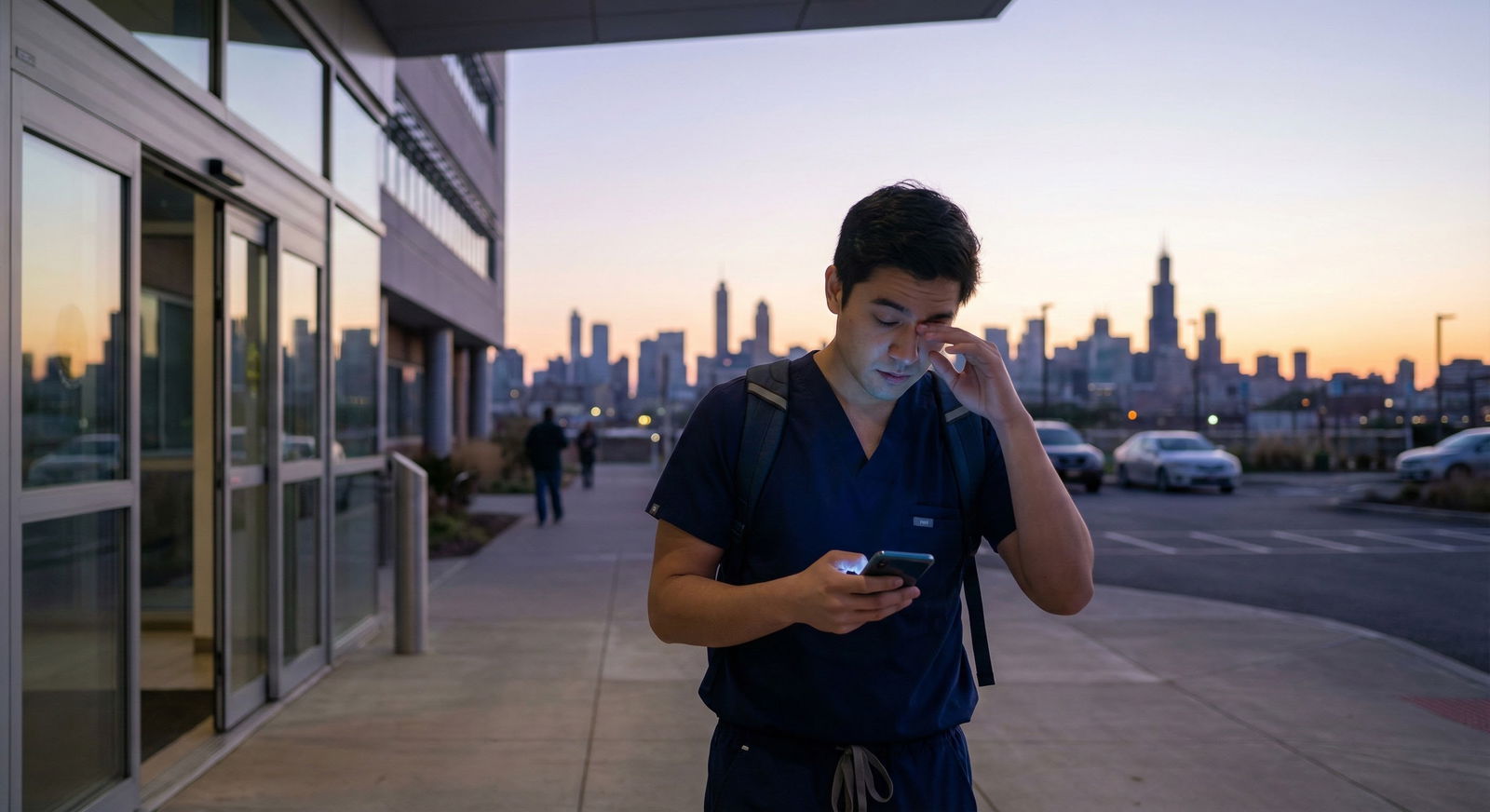
68% of night-shift clinicians blame “blue light from screens” for their post-shift insomnia—yet controlled lab studies show screen use before bed usually changes sleep by only 10–20 minutes, if at all.
So yes, you’ve been sold a villain that’s convenient, marketable, and wildly overhyped.
If you’re a resident stumbling out of a 28‑hour call, eyes burning, brain fried, and you cannot fall asleep once you finally get home, I’m going to be blunt: your problem is not mainly your phone. It’s your circadian system, your timing, your light exposure pattern over the entire shift, your caffeine use, and your behavior in the last 60–90 minutes.
Let’s walk through what actually matters—and what’s mostly gadget‑industry noise.
Myth 1: “Blue light from screens is destroying my post-shift sleep”
The story you hear: blue light from your phone suppresses melatonin, which ruins your sleep. Block it, and you sleep like a baby.
The reality from actual data: the effect is real but modest, and in the context of residency, it’s usually not the main driver of your insomnia.
Here’s the key study everyone loves to cite but few actually read. In 2014, Chang et al. compared e‑readers (blue-rich light) vs printed books before bed. The e‑reader group had:
- About 10 minutes longer to fall asleep
- About 10 minutes less REM sleep
- Slightly lower melatonin in the evening
That’s it. Not “hours of insomnia.” Ten to twenty minutes. And that’s in carefully controlled conditions with consistent bedtimes and no night shifts.
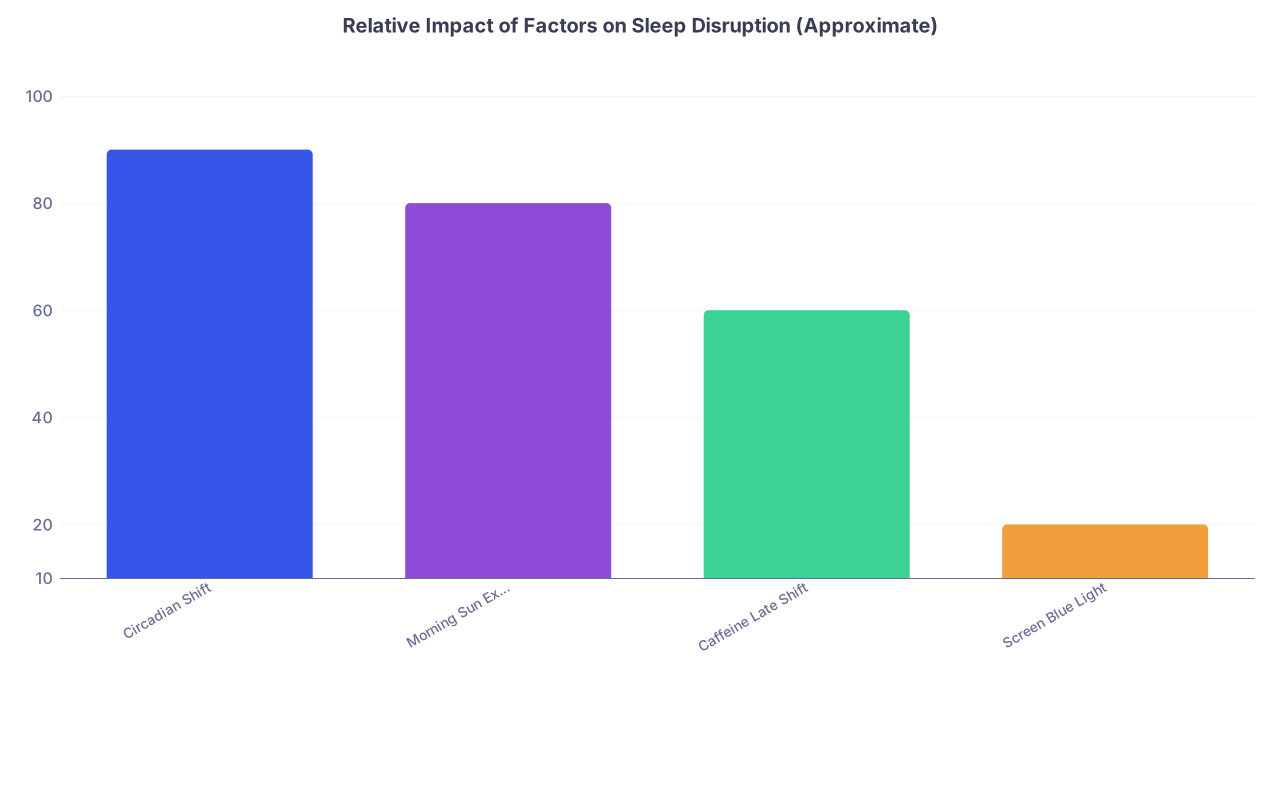
Now stack that against what you’re doing on nights:
- Flipping your circadian rhythm by 8–12 hours
- Working under bright hospital lighting at 3 a.m.
- Power-chugging 3 cups of coffee at 1 a.m. plus random energy drinks
- Driving home in bright morning sunshine (the most powerful circadian cue there is)
Compared to those sledgehammers, the “blue light from your phone” is a plastic spoon.
| Category | Value |
|---|---|
| Circadian Shift | 90 |
| Morning Sun Exposure | 80 |
| Caffeine Late Shift | 60 |
| Screen Blue Light | 20 |
Do blue-light–blocking glasses help? Sometimes. But the effect size is modest and the evidence is mixed, especially in real-life shift workers rather than perfect lab volunteers. If putting on orange glasses is your entire “post-shift sleep strategy”, you’re aiming at the wrong target.
What’s actually true:
- Bright light (any color, but especially blue-rich) at the wrong time is the problem, not screens per se. Overhead ED lights at 4 a.m. are far more potent than your phone at 8 a.m. in bed.
- Intensity and timing matter more than color alone.
- Screen content—paging through cross-cover disasters, doomscrolling, fighting with your co-residents in group chats—keeps you wired far more than just the wavelengths of light.
So no, you don’t need to throw your phone in the freezer after a night shift. You need a plan that respects how your circadian biology actually works.
Myth 2: “If I just wear blue-blocking glasses, I can flip between days and nights”
Here’s the uncomfortable truth: you cannot “hack” your biology out of existence with one pair of orange glasses.
The circadian system is a slow-moving, stubborn clock. In lab settings, under perfect control of light and behavior, humans shift about 1–2 hours per day. In real residency life with random pages, unplanned exposures to bright light, inconsistent sleep times, and weekend social life? You’re lucky to get a stable 3–4 hour shift, let alone completely inverting your schedule.
But let me separate what’s possible from what’s fantasy.
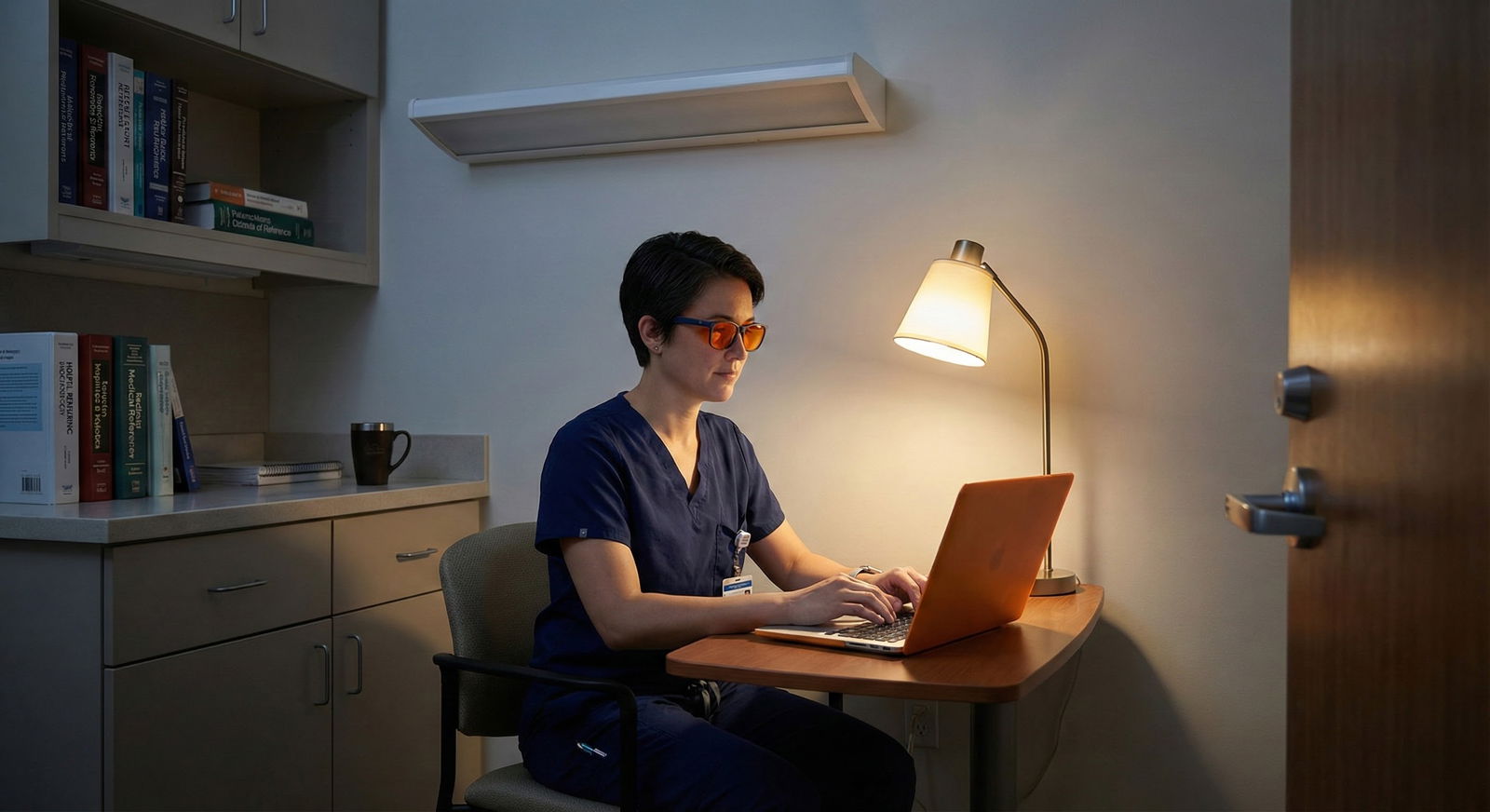
What blue blockers can realistically do for night-shift residents:
- Slightly reduce melatonin suppression when you have to use screens or be under bright light during the “biological night”
- Help your brain feel like it’s winding down by limiting harsh, high-intensity light right before sleep
- Give you a small edge when trying to nap pre-shift (if you dim the environment plus use them)
What they cannot do:
- Turn a 7 a.m. drive home in blazing sunlight into a “night”
- Let you flip back and forth between days and nights every 2–3 days without a cost
- Override caffeine, stress, and 10 pages in the last hour of your call
If you want to use blue blockers, fine. But they’re an accessory, not the main intervention. The heavy hitters are when and how you expose yourself to any bright light—especially sunlight.
Myth 3: “Screen time before bed is always bad”
This one is halfway true. Most people misunderstand which half.
There are two ways screens screw you:
- Physiologic: light exposure (brightness + blue spectrum) delaying melatonin
- Psychologic: what you’re doing on the device (work, email, fights, doomscrolling)
The second one is usually worse for residents.
Look at your last three post-call mornings. What did you actually do once you got home?
- Open Epic on your phone to re-check that borderline potassium
- Read the new thread in your residency group chat complaining about the new schedule
- Respond to three “can you pick up this shift?” text messages
- Scroll social media and see all your non-med friends at brunch, outside, awake, and happy
None of that is calming. Even if the screen were magically emitting only warm candlelight, you’d still be emotionally wired and cognitively revved.
The research supports this. When studies compare passive light exposure vs interactive screen tasks, engagement level and emotional arousal have a huge impact on sleep onset and quality. It’s not just photons. It’s what those photons are showing you.
So instead of the childish rule—“no screens before bed, ever”—use an adult version tailored to residency:
- Avoid work-related screens for at least 30–45 minutes before you want to sleep. No EMR. No email. No scheduling.
- Keep social media and group chats very low-stimulation. Mute work chats. Do not re-litigate call drama from your pillow.
- If you must use a device, use it for low-arousal stuff: audiobooks, comfort shows, light reading, guided relaxation.
What Actually Matters for Post-Shift Sleep: The Short List
Let’s stop worshipping at the altar of blue light and look at the real levers you can pull.
1. Light Exposure Pattern, Not Just “Blue Light”
Your circadian system cares about three things:
- How bright the light is
- When you’re exposed to it
- How long the exposure lasts
Night-shift survival is about pattern management, not one magic device.

| Step | Description |
|---|---|
| Step 1 | Start Night Shift |
| Step 2 | First Half of Shift - Bright Light |
| Step 3 | Second Half - Dim Down |
| Step 4 | Commute Home - Block Morning Light |
| Step 5 | Sleep Block - Dark Room |
Practical pattern that works better than “just use blue blockers”:
- First half of night shift (e.g., 7 p.m.–1 a.m.):
- Stay under brighter light. This helps you stay alert and pushes your circadian rhythm later.
- Second half of night shift (e.g., 1–7 a.m.):
- Dim the environment where safely possible (turn off nonessential overheads, use task lighting).
- If you’re at a computer, turn brightness way down and use night mode.
- Commute home in the morning:
- If the sun is up, wear dark sunglasses. Yes, even if it feels weird.
- Do not stop for coffee and sit in a bright café for 45 minutes. That’s circadian suicide.
- At home:
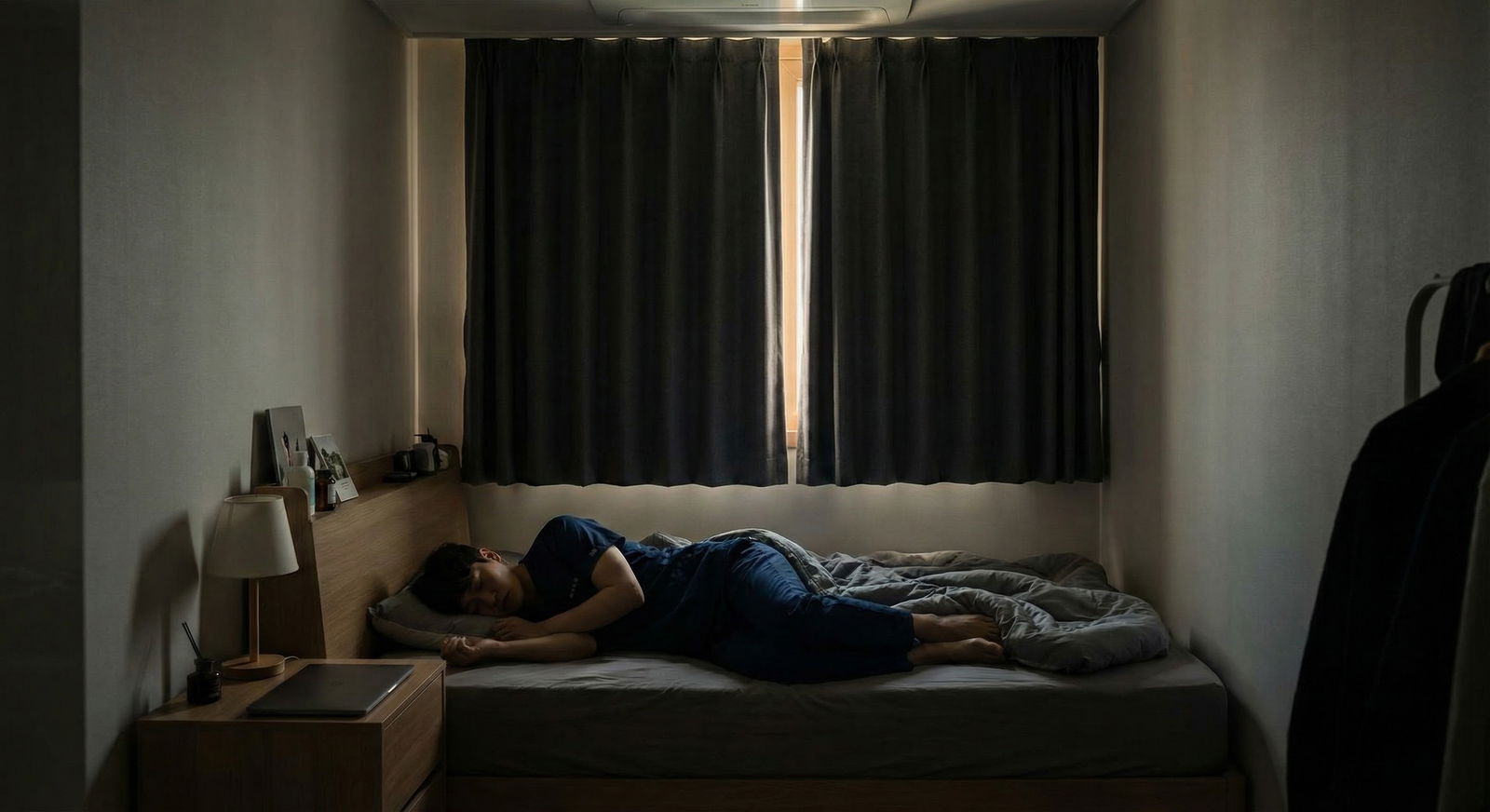
- Your bedroom should be cave-like. Blackout curtains, eye mask if needed. Light leakage from a bathroom or hallway is a bigger deal than your phone on night mode.
Blue blockers can help in the “second half of shift” and commute phases. But again—they’re supporting cast, not the lead actor.
2. Caffeine Timing: Your Silent Saboteur
I’ve watched residents do this for years: dead on their feet at 4 a.m., they slam a huge coffee or energy drink “just to get through sign-out.” They leave at 9 a.m., get home at 10, and then complain they can’t fall asleep until 1 p.m.
This is not mysterious. That caffeine is still working.
Caffeine half-life: roughly 4–6 hours. Meaning that 200 mg at 4 a.m. leaves you with 100 mg still floating around at 8–10 a.m. when you are trying to wind down.
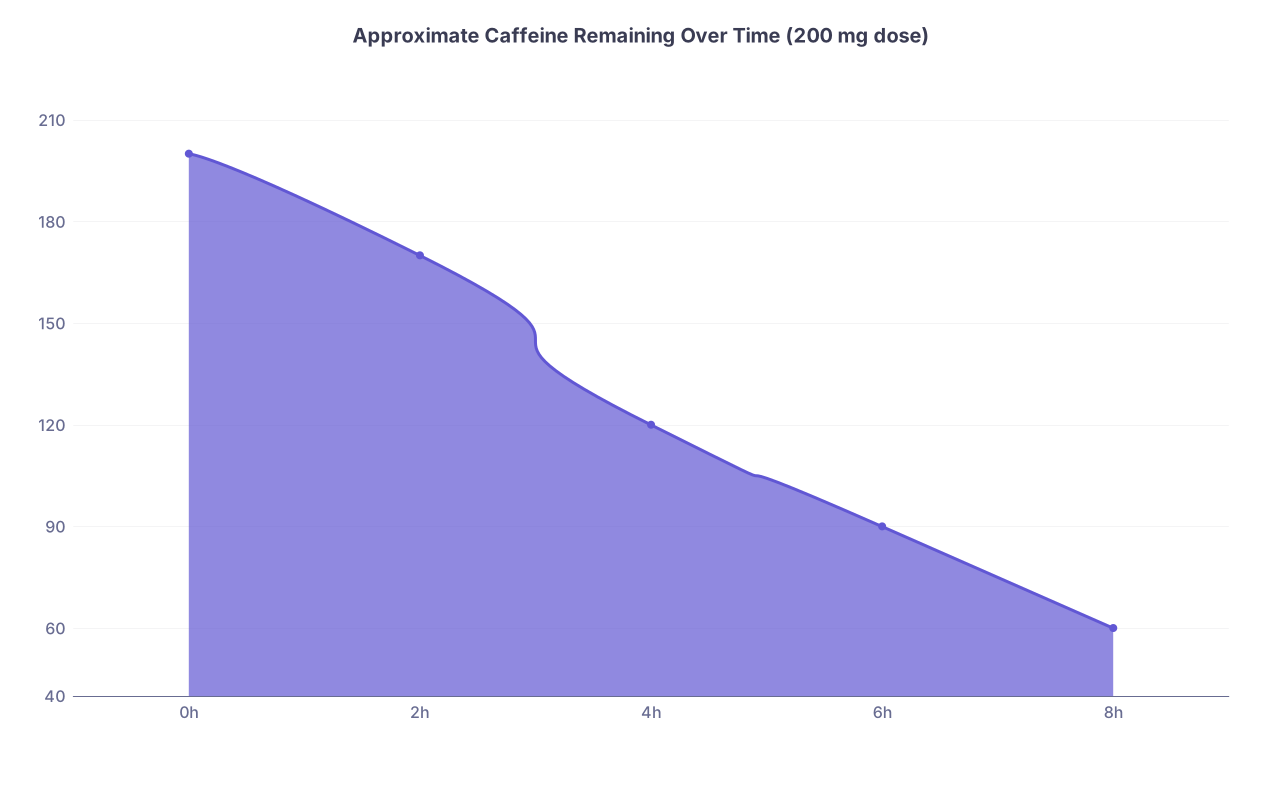
| Category | Value |
|---|---|
| 0h | 200 |
| 2h | 170 |
| 4h | 120 |
| 6h | 90 |
| 8h | 60 |
The basic rule for nights if you care about post-shift sleep:
- Front-load caffeine. Use it early in the shift. Think 7–11 p.m.
- Avoid new caffeine in the last 4–6 hours before your planned sleep time. For many residents, that means no caffeine after ~3–4 a.m.
If you’re absolutely dying and safety is an issue, fine, take some. But realize you’re trading safety now for worse sleep later. Don’t pretend you don’t know why you’re staring at the ceiling at noon.
3. Sleep Window and Consistency (As Much As Reality Allows)
No, you cannot maintain perfect sleep hygiene on residency. But you can avoid making it worse.
For post-night-shift sleep, the things that actually move the needle:
- Commit to a specific target sleep block after shift (e.g., 10 a.m.–3 p.m.) and protect it like an OR case.
- Do not lie in bed scrolling for 90 minutes “to decompress” and then complain you have no time to sleep. Decompressing is fine; do it lying down, eyes closed, with audio if you must.
- If you wake up earlier than planned and feel “wired but tired,” resist the urge to immediately grab your phone in full brightness. Stay dark and quiet. Often you’ll drift back.
And on days between nights: stop trying to live like a daywalker and a nightwalker simultaneously. You can’t.
- If doing a stretch of nights, treat your schedule as if you live in a later time zone. Don’t swing wildly back to 7 a.m. wakeups on your “off” day.
- If it’s a one-off night shift, yeah, your sleep will be trash no matter what. Optimize the damage, don’t chase perfection.
Putting It Together: What To Actually Do After a Night Shift
Here’s the post-shift protocol I’ve seen work best for residents who stop obsessing over blue light and start respecting real physiology.
| Phase | Key Moves |
|---|---|
| Last 2–3 hours of shift | Dim lights if safe, reduce caffeine, use night mode/low brightness |
| Commute home | Dark sunglasses, avoid bright prolonged stops, no new caffeine |
| First 30–45 min at home | Light snack if needed, warm shower, no work email/EMR |
| Pre-sleep wind-down | Low stimulation screen use only, night mode, volume up/brightness down or audio-only |
| Sleep environment | Blackout curtains or mask, cool room, no bright overhead lights nearby |
If you want a tech tweak: sure, use blue-blocking glasses in the second half of your shift and on the drive home. Use night mode on every device. But don’t kid yourself that they’re a substitute for timing your light, caffeine, and behavior.
Quick Reality Check: Phones Aren’t Innocent, But They’re Not The Main Villain
Let me be clear: I’m not letting screens totally off the hook. They contribute. But not mainly through “blue light toxicity.”
They mess you up by:
- Keeping you mentally in the hospital when you’re physically at home
- Extending your wake time long past when you could have been asleep
- Exposing you to stimulating, emotional, or infuriating content in your so-called wind-down window
If you think your problem is “blue light,” you’ll buy glasses and apps and still feel awful.
If you realize the actual culprits are mistimed bright light, bad caffeine timing, chaotic sleep windows, and emotionally loaded screen use, you can change things that actually move the needle.
The Bottom Line
- Blue light from screens is a factor, but in residency it’s a minor one compared to circadian disruption, bright morning light, and badly timed caffeine.
- Light timing and intensity over the whole shift matter much more than one pair of orange glasses or a phone setting. Shape the pattern, not just the color.
- Post-shift sleep improves most when you: front-load caffeine, dim in the last hours of shift, block morning sun, avoid work/emotional screens pre-sleep, and protect a consistent sleep window—even if it’s imperfect.