
Melatonin will not “fix” night shift sleep. At best, it is a small tool in a very leaky toolbox. At worst, it gives you false confidence while you keep doing everything else wrong.
Let’s cut through the marketing and the residency lore.
You’ve heard this on nights: “Dude, just pop 10 mg of melatonin when you’re off. Knocks me out.”
I’ve watched that same person doomscroll for 90 minutes under bright hallway light, then complain they “must be resistant” to melatonin.
No. The biology is working exactly as designed. They’re just abusing a hormone like it’s a sleeping pill.
Here’s what the data actually shows about melatonin for night-shift workers—especially residents.
What Melatonin Actually Is (And What It Is Not)
Melatonin is a timing signal, not a sedative hammer.
Your brain’s suprachiasmatic nucleus (SCN) runs your circadian rhythm. Light hits your retina → SCN → pineal gland → melatonin release. In darkness, melatonin rises and tells your body: “Night now. Start the night physiology package.”
That package includes:
- Lower core body temperature
- Increased sleep drive
- Changes in blood pressure, gut motility, hormone balance
But melatonin on its own is not like zolpidem or trazodone. It doesn’t “knock you out.” Its main job is to shift and reinforce your internal clock.
When you swallow a melatonin pill, you’re sending your brain a fake “it’s nighttime” signal. Whether that helps depends on timing, dose, and what else you’re doing with light and sleep.
And this is where most residents blow it completely.
The Evidence: How Much Does Melatonin Actually Help Night Shifters?
Short answer: modest effect, very dependent on timing and environment. Not the cure-all people sell it as.
Meta-analyses and controlled trials on shift workers (including healthcare) paint a consistent picture:
- Melatonin can slightly improve daytime sleep after night shifts
- It can shift circadian phase a bit (you fall asleep earlier/later depending on timing)
- The effect size is small to moderate, and heavily blunted if you ignore light control
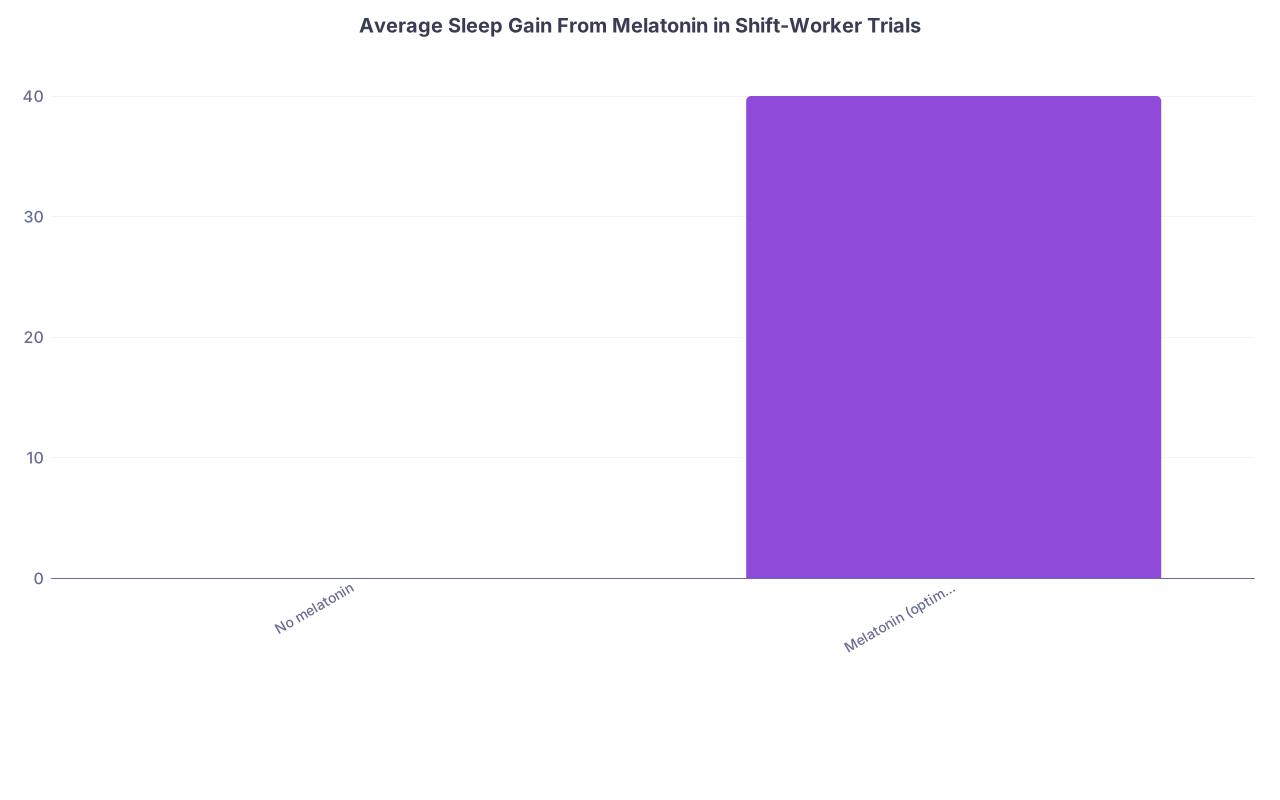
| Category | Value |
|---|---|
| No melatonin | 0 |
| Melatonin (optimal use) | 40 |
That “40” is approximate extra minutes of sleep, averaged across studies that actually did things right (darkened room, decent timing, modest doses). Not 3 extra hours. Not “I slept like a rock for 9 hours.”
The core findings across studies:
- Sleep duration: Gains of ~30–60 minutes of daytime sleep are common.
- Sleep latency: You fall asleep slightly faster—often by 10–20 minutes.
- Subjective quality: People feel like they slept better, but objective improvements are modest.
- Night performance: Very mixed; melatonin taken after nights doesn’t reliably boost night-shift performance or alertness.
Crucially: when people use melatonin but still get blasted by bright morning light on the way home and sleep in a bright, noisy room, the benefit is tiny or nonexistent.
So yes, melatonin can help. But only as part of a package. And the package most residents are running is garbage.
The Big Misconceptions (And Why They Matter)
Myth 1: “Melatonin is basically a sleeping pill.”
No. And thinking it is is exactly why it “doesn’t work” for a lot of you.
Sedative-hypnotics force sleep through neurotransmitter effects. Melatonin changes the timing and probability of sleep by signaling “night.”
I’ve seen residents take melatonin after a brutal 28-hour call, then stay in the team room “finishing notes,” bright overhead lights, coffee in hand, TikTok on between charts. Then they go home at 11 a.m. and complain they’re wired.
That’s like taking insulin and chasing it with a bucket of syrup.
If you treat melatonin as a sleep drug instead of a circadian drug, you’re using it wrong.
Myth 2: “More melatonin = better sleep.”
Completely backwards.
Physiologic melatonin levels peak at doses around 0.3–1 mg. Most over-the-counter tablets in the US are 3, 5, 10 mg. Some are even “extra strength” 20 mg monstrosities. It’s absurd.
More isn’t better. Above a certain point, you just get:
- Longer duration of elevated melatonin
- More grogginess
- More potential desynchronization of your internal rhythms
There’s no good evidence that 10 mg is better than 1–3 mg for shift work. In fact, there’s a decent argument it’s worse because you stay drenched in melatonin when you’re trying to shift back to daytime on your days off.
Myth 3: “If melatonin doesn’t fix it, nothing will.”
This one is dangerous and lazy.
If you:
- Walk out of the hospital into full noon sun with no sunglasses
- Drive home with bright daylight blasting your eyes
- Sleep in a room with thin blinds and your phone lighting up every 15 minutes
- Then complain melatonin “does nothing”
The problem is not melatonin. The problem is that you’re fighting your brain with a tactical nuke of light and noise while tossing in a single hormone pill and hoping for magic.
Melatonin is a minor player. Light and behavior are the main levers.
How to Use Melatonin Correctly on Nights (If You’re Going to Use It At All)
Let me be clear: you do not have to use melatonin. Plenty of residents survive nights purely by controlling light, timing, and caffeine. But if you do use it, do it like an adult, not like a zombie in the CVS aisle.
1. Get the Dose Right
For most residents:
- 0.5–3 mg is usually plenty
- Taken once per night shift cycle, not popping pills all day/night
You can usually start with 1 mg. If you feel nothing, 2–3 mg is reasonable. 5+ mg is almost never justified.
| Dose (mg) | Typical Use Case | Main Issues |
|---|---|---|
| 0.3–1 | Circadian shift, minimal grogginess | Often underused because people think it's “too low” |
| 2–3 | Most night-shift strategies | Reasonable balance of effect vs. side effects |
| 5–10 | Overkill for most residents | Morning grogginess, possible rhythm disruption |
2. Time It Like a Circadian Drug, Not a Sleeping Pill
For night shifts, the usual pattern that actually aligns with the data:
If you’re on a block of nights (e.g., 4–7 nights in a row):
- Take melatonin 30–60 minutes before your main daytime sleep after the night shift.
- Example: Off at 8 a.m., home by 9 a.m., melatonin at 9–9:30 a.m., asleep by ~10 a.m.
If you’re doing just 1–2 odd nights with quick flip back to days:
- Melatonin can actually make the transition back to days harder if you’re blasting your daytime clock with extra “night” signals.
- In that case, some people skip melatonin entirely and instead use strict light control and a shorter, strategic nap.
The point: the pill should coincide with when you want your brain to believe “this is night.” For night-shift residents, that’s the block of hours you’re trying to sleep during the day.
3. Light Control: The Non-Negotiable
This is the hill I’m willing to die on: if you won’t control light, melatonin is largely a placebo.
Here’s the crude version of what actually works:
- Leaving the hospital: dark sunglasses on as soon as you walk out, even if someone snickers. They’ll still be awake at 2 p.m. staring at the ceiling.
- Home environment: minimal bright light exposure before bed. No open kitchen blinds, no blasting overhead LEDs.
- Bedroom: blackout curtains or at least a real attempt (not “I have a flimsy IKEA shade”). Eye mask if you can tolerate it.
- Screens: dim, night mode, and not held 8 inches from your face.
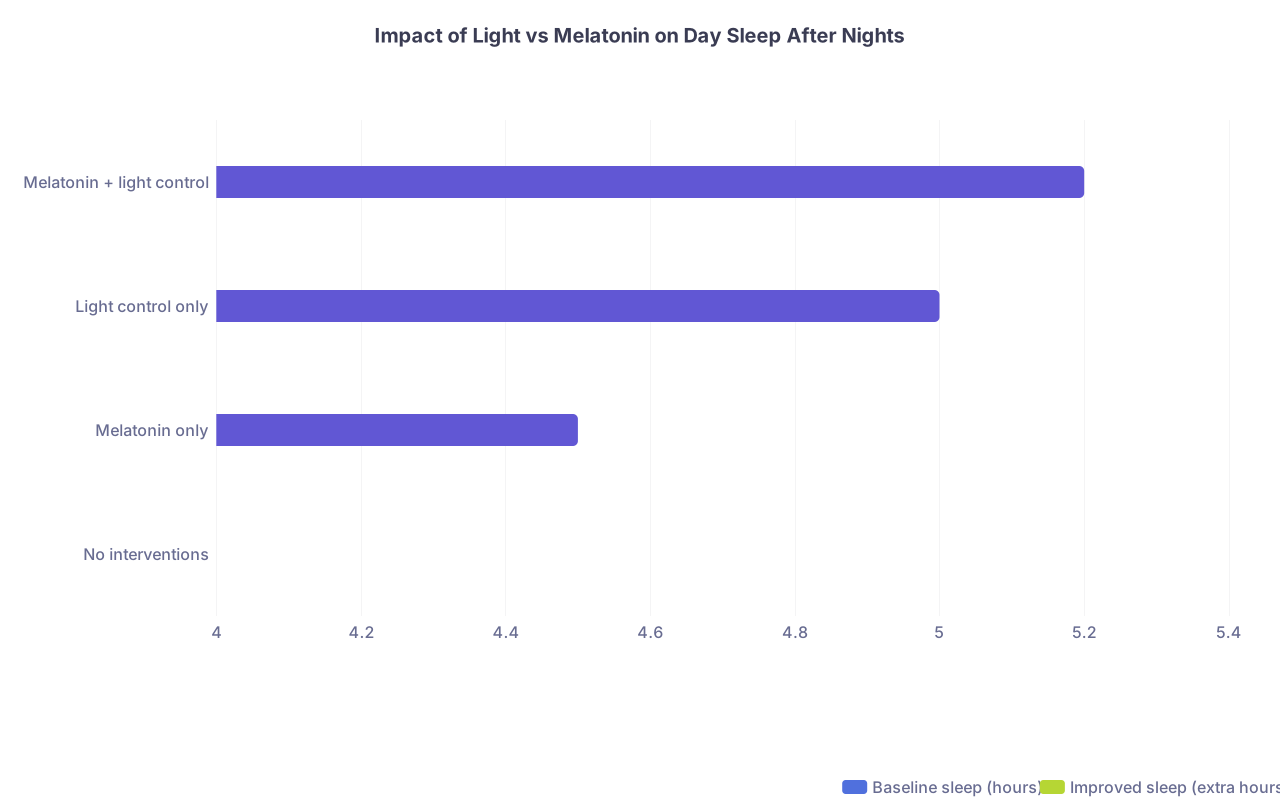
| Category | Baseline sleep (hours) | Improved sleep (extra hours) |
|---|---|---|
| No interventions | 4 | 0 |
| Melatonin only | 4 | 0.5 |
| Light control only | 4 | 1 |
| Melatonin + light control | 4 | 1.2 |
That “light control only” bar? That’s where the real gains come from. Melatonin just adds a little on top.
Special Problems: Residents Are Not Normal Shift Workers
Most melatonin studies are done on more stable shift patterns: people working nights for weeks, not the chaotic “2 nights, 2 days, random long call” pattern of residency.
Your schedule is biologically abusive. There’s no pill fix for that.
Flipping Back to Days
This is where melatonin often makes things worse because people use it mindlessly.
Scenario I’ve seen repeatedly:
- Resident on 3 night shifts: takes 5–10 mg melatonin each post-night to sleep
- Last night ends, they take melatonin again at 9 a.m. to “catch up”
- Next morning they’re supposed to be up at 6 a.m. for days
- Shockingly, they feel wrecked and can’t fall asleep early the night before days
You can’t tell your brain “nighttime is at 10 a.m.” for three days in a row and then expect it to instantly believe “just kidding, night is at 11 p.m.” the next day.
On your last post-night day (before flipping back to days), many residents are better off:
- Using a shorter nap strategy (e.g., 2–4 hours mid-day)
- Skipping melatonin or using a tiny dose early, not at noon
- Getting strong evening light exposure and strict dark at normal bedtime
Combining With Other Sedatives
Residents love the unholy cocktail: melatonin + antihistamine + trazodone + “just a little” alcohol.
Terrible idea. Not just for safety, but for quality of sleep. You’re stacking agents that fragment sleep architecture and worsen next-day cognition, then blaming nights for how awful you feel.
If you need more than melatonin plus basic environment control, talk to an actual sleep or occupational medicine doc. Not the senior resident who swears by Benadryl and whiskey.
Side Effects and Long-Term Concerns (Yes, They Exist)
Melatonin is marketed like a vitamin. It is not. It is a hormone. You are signaling endocrine pathways every time you swallow that gummy bear.
Most short-term studies show melatonin is relatively safe, but in residents, I see several recurring issues:
- Morning grogginess / “melatonin hangover” – especially with higher doses or late timing.
- Worsened mood in some people – occasional reports of increased irritability or low mood.
- Vivid dreams / nightmares – entertaining for some, miserable for others.
- Hormonal implications – long-term, high-dose use may have subtle effects on reproductive and metabolic hormones; data are not great and certainly not reassuring enough to mega-dose year-round without thought.
Also, the supplement market is sloppy. Analyses of OTC melatonin products show wild variation between labeled and actual dose—sometimes several-fold.
So no, I don’t think a resident using 1–3 mg around night blocks is doomed. But I also don’t buy the “it’s just a benign vitamin” narrative. You’re playing with your clock and your endocrine system. Do it intentionally.
What Actually Moves the Needle for Night Shift Sleep
Here’s the uncomfortable truth: melatonin is at best a 10–20% solution. The heavy lifting comes from boring, unsexy basics that no one wants to hear, because they require discipline instead of a pill.

| Step | Description |
|---|---|
| Step 1 | Better night shift sleep |
| Step 2 | Light control |
| Step 3 | Consistent sleep window |
| Step 4 | Melatonin |
| Step 5 | Caffeine timing |
| Step 6 | Dark bedroom |
| Step 7 | Sunglasses after shift |
| Step 8 | Low dose |
| Step 9 | Correct timing |
If you want actual progress:
- Treat light like a drug. Because it is.
- Anchor a consistent main sleep window during your run of nights, even if it’s imperfect.
- Time caffeine to end 6–8 hours before planned sleep.
- Use melatonin as a small, precisely timed assist—not a crutch.
Do these, and melatonin may give you an extra 30–60 minutes of sleep and a smoother transition into that first daytime block. Ignore them, and melatonin is just another resident myth in a white bottle.
The Bottom Line: Evidence vs. Hype
Let me strip this down to what actually matters:
- Melatonin does not “fix” night shift sleep. It modestly improves daytime sleep length and timing if you also respect light and schedule.
- The big levers are light exposure, consistent sleep windows, and caffeine timing. Melatonin is a minor, optional add-on—helpful at low doses (0.5–3 mg) with proper timing, not a magic bullet.
- If you’re relying on 5–10 mg of melatonin to survive residency nights while ignoring basic sleep hygiene, you are not “hacking your circadian rhythm.” You’re just self-medicating your way around a system problem, and getting far less benefit than you think.
Use melatonin if you want. But use it like what it is: a subtle circadian signal, not a knockout drug.