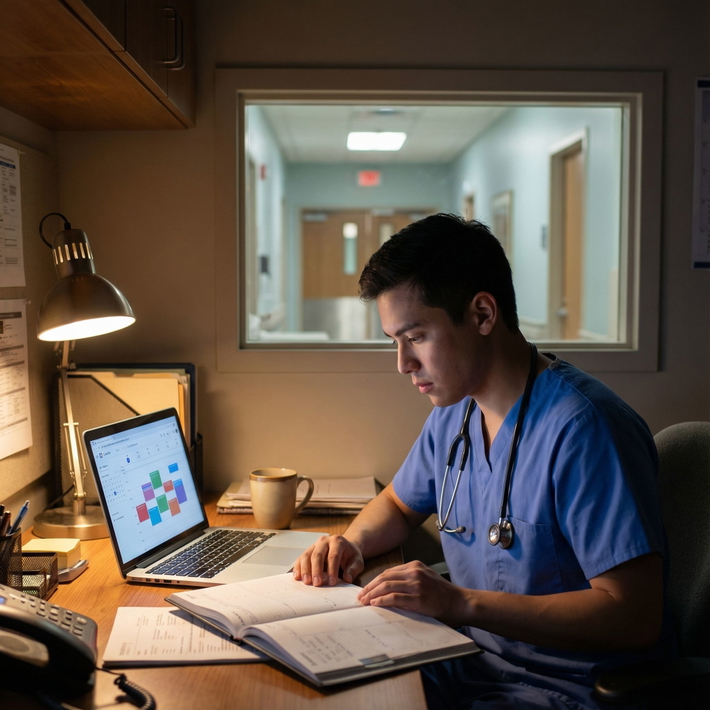
The usual advice about “just power through” night shifts while studying for boards is garbage.
If you are doing real nights and real board prep at the same time, you are running two performance-critical jobs on one very tired brain. You cannot wing this. You need a system.
I’m going to walk you through exactly how to protect both: safe night shift performance and meaningful board progress. Not theoretical. The kind of “here’s what you actually do Tuesday at 1:30 a.m.” advice I’ve watched residents use without burning out or bombing their exam.
1. First, Accept This Hard Truth About Capacity
You do not have full power available for both the boards and nights simultaneously. Anyone telling you “you can just keep your usual study schedule” has never signed out an ICU at 6:45 p.m. and tried to start UWorld at 7:30.
Here’s the reality:
- Your priority 1 during nights: do not harm patients.
- Your priority 2: protect your own brain so you do not implode halfway through the block.
- Your priority 3: maintain momentum for boards. Not maximize it. Maintain it.
On heavy stretches of nights, your board goals should be:
- Don’t lose the habit of daily contact with the material.
- Choose low-friction, high-yield tasks that fit your cognitive state.
- Avoid doing anything so ambitious it wrecks your sleep debt and screws both the shift and the exam.
If you set your expectations wrong, you will either:
- Over-aim → sleep 3–4 hours per day → foggy on shift and forget what you “studied” anyway.
- Or under-aim → abandon board prep → spend 6 weeks of nights with zero progress and panic later.
We’re going to thread the middle.
2. Build a “Nights Mode” Study Plan Before You Start
You need two plans: Day Shift Plan and Nights Mode Plan. You should be able to flip the switch in one afternoon.
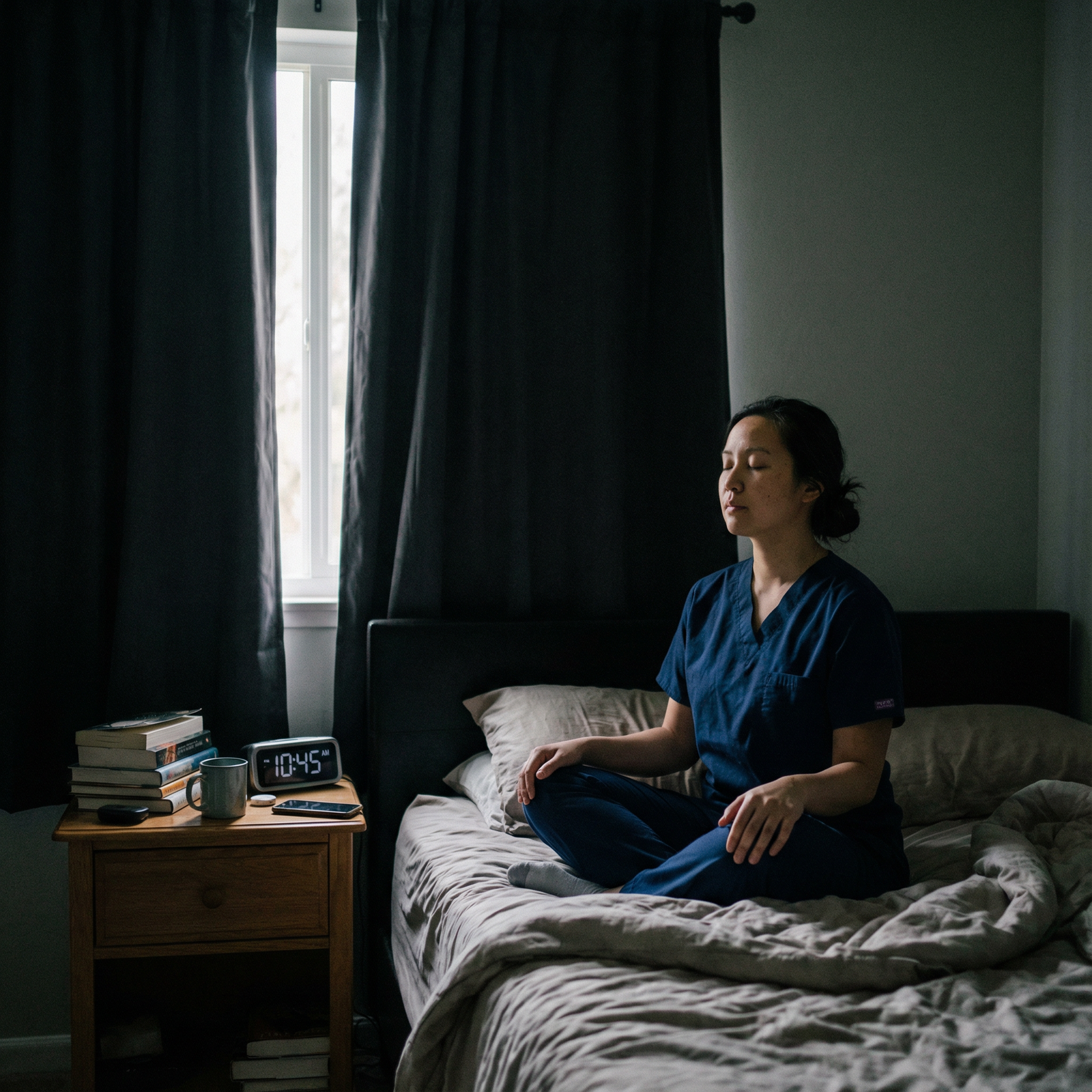
Step 1: Define Your Nights Block
What you’re up against:
- Number of consecutive nights
- Shift length (8, 10, 12+ hours)
- Typical intensity (ED nights vs floor cross-cover vs ICU)
- Commute time
Do not pretend “I’ll just see how it feels.” Pre-commit.
Step 2: Choose Your “Nights Study Budget”
Decide ahead of time your maximum realistic study time per 24 hours while on nights. For most residents:
- Light/moderate nights: 60–90 minutes total
- Heavy nights (ICU, ED, crazy cross-cover): 30–45 minutes total
- Post-call after last night: 0 minutes. Yes, zero. That is not “wasted time,” that is brain repair.
Lock this in. Write: “Nights budget: X minutes per day.”
Step 3: Pick the Right Types of Tasks for Nights
On nights, you want short-cycle, high-yield, low-friction tasks. Think sprints, not marathons.
Good tasks:
- 10–15 question UWorld or AMBOSS mini-blocks (timed or tutor based on fatigue)
- Flashcards (Anki / self-made) with strict time limit
- Audio review (podcast/recorded notes) on commute or pre/post shift
- Skimming one short, high-yield section (not a full chapter)
Bad tasks:
- 40-question blocks at 3 a.m. and full rationales
- Trying to “memorize all of cardiology this week”
- Reading dense review books when you’re fighting to stay awake
Decide in advance: “On nights, I do X, Y, and Z. I never do A, B, or C.”
| Task Type | Nights-Friendly? |
|---|---|
| 10–15 question Qbank mini-block | Yes |
| Full 40-question block + full review | No |
| Short Anki session (20–40 cards) | Yes |
| Reading long textbook chapter | No |
| High-yield audio during commute | Yes |
| Full practice exam (NBME/UW SA) | No |
3. Structure Your 24-Hour Cycle: Sleep First, Then Study
If you mess up anything, it will probably be here. People protect their “study time” and sacrifice sleep. That’s backwards. Your study quality and shift safety come from being at least semi-rested.
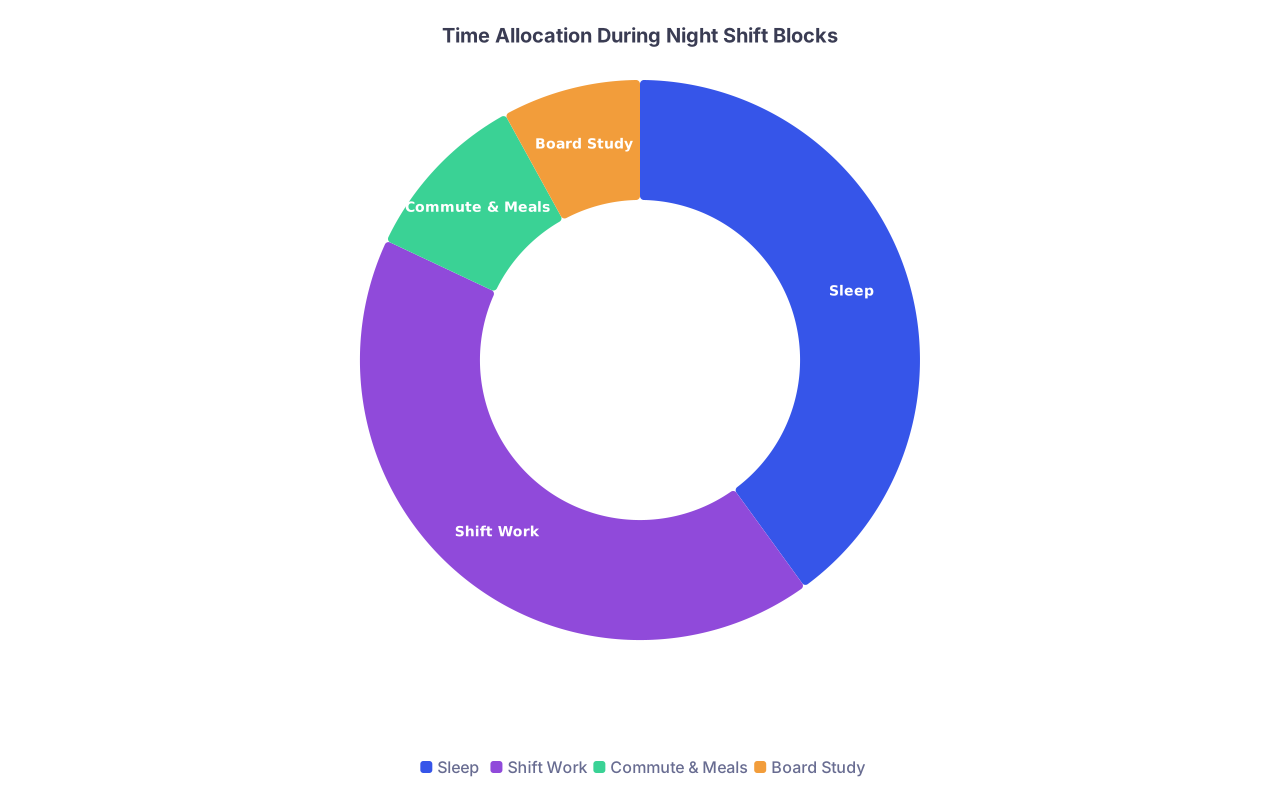
| Category | Value |
|---|---|
| Sleep | 40 |
| Shift Work | 42 |
| Commute & Meals | 10 |
| Board Study | 8 |
Ideal Night Shift Day (Example: 7 p.m. – 7 a.m. shift)
Here’s a template that actually works for most:
- 07:30–08:00 – Get home, small snack, wind down (no studying)
- 08:00–13:00 – Core sleep block (5 hours)
- 13:00–14:00 – Groggy time, light food, basic chores
- 14:00–15:00 – Boards (primary study block)
- 15:00–17:00 – Optional nap + decompress
- 17:00–18:00 – Get ready, commute, light audio review
- 19:00–07:00 – Work. Micro-study only if safe and appropriate.
Key point: Your main study is before you go in, not during the shift. You’ll be more awake and less interrupted. Night-shift “downtime” is too unpredictable to anchor your plan on.
If You Can Only Get 4–5 Hours of Core Sleep
Then your second sleep block matters more than your study block. In that case:
- Prioritize a 90-minute nap late afternoon (around 16:00–17:30)
- Compress boards to 30–40 minutes right after you wake from your main sleep block, not before your nap
Sleep architecture beats fantasy productivity. If you’re a wreck, your 90 minutes of “studying” is actually just staring.
4. What To Study When: Matching Task to Fatigue Level
You have three cognitive states during nights: daytime-OK, pre-shift, and on-shift.

Post-Sleep (Best Brains of the Day)
Use this for your “heaviest” boards work while on nights:
- 15–20 question Qbank mini-block in timed mode
- Full review of explanations (not every word, but why each wrong was wrong)
- Small chunk of concept review (1–2 pages of a summary book, 10 flashcards on a weak area)
This is often 14:00–15:00 or whatever time you’re finally functional.
Pre-Shift (Medium Tired, Medium Focus)
Here you use “warm-up” tasks:
- Light flashcard run (10–20 cards max)
- Skim formulas/tables (electrolyte corrections, murmurs, CAP guidelines etc.)
- Revisit a single “card” topic (e.g., all the high-yield stuff for sepsis in 10 minutes)
If you have a brutal service, you can skip this and use the time to nap. That’s a legitimate choice.
On-Shift (Fatigued, Distracted, Interruptible)
Rule here: patient care first, always. Then basic functioning. If—and only if—the night is calm and your co-residents/attendings are fine with it:
Safe study modes while at work:
- Passive: audio review on low-volume in one ear during mindless tasks (stocking, walking between units) if allowed.
- Micro reading: 1-page topic on your phone during true downtime at the desk.
Not safe:
- Wearing noise-canceling headphones
- Doing even 10-question UWorld blocks while on the hook for cross-cover pages
- Getting so absorbed you miss alarms/pagers
You should never need on-shift studying to meet your nights-mode study goals. Treat it as bonus only.
5. Adapting to Different Types of Night Rotations
Not all nights are alike. Your approach has to match the chaos level.
, ED Nights, Floor Cross-cover, Night Float with Interns, Step-down/Tele Nights](https://cdn.residencyadvisor.com/images/articles_svg/chart-relative-study-feasibility-by-night-rotation-type-7326.svg "Relative Study Feasibility by Night Rotation Type")
| Category | Value |
|---|---|
| [ICU Nights](https://residencyadvisor.com/resources/night-shift-survival/rotating-through-icu-nights-right-after-orientation-surviving-the-steep-curve) | 20 |
| ED Nights | 30 |
| Floor Cross-cover | 50 |
| Night Float with Interns | 40 |
| Step-down/Tele Nights | 60 |
ICU Nights
- Expect: sharp surges of intensity, unpredictable codes, constant vigilance.
- Strategy:
- Main study block: always at home, post-sleep
- Nights budget: 30–45 minutes per day tops
- On-shift: maybe skim relevant topics (ARDS, shock, vent settings) in direct relation to active patients. That’s clinical learning, not boards, but it helps both.
ED Nights
- Expect: patients keep coming, attention constantly shifting, some lulls but often brief.
- Strategy:
- 60 minutes post-sleep if you’re not wrecked
- Use ED pathology as live board review: consciously connect each patient to board concepts
- On-shift: if lull and allowed, read 1–2 EM-focused board-style topics (toxicology, trauma, chest pain workup) rather than question blocks
Floor Cross-Cover Nights
- Expect: long stretches of boredom punctuated by chaos, especially early evening and early morning.
- Strategy:
- This is where a tightly controlled “desk study” can work
- Pre-decide micro-blocks: 5 questions at 22:00 if quiet, 5 questions at 02:00 if quiet. If chaos, you skip them. No guilt.
- Post-sleep: 30–60 minutes for your main work
Night Float Over Weeks
Longer stretches of nights are more dangerous academically and physically if you pretend it’s “normal life.”
- Week 1–2: normal nights-mode targets (60–90 min/day)
- Week 3–4: scale back to pure maintenance if you feel yourself crashing (20–30 min/day, mostly flashcards and review)
The trick with extended night float is letting your overall weekly progress matter more than any single day.
6. Protecting Sleep Like Your Exam Depends on It (Because It Does)
Your Step 2 or boards performance correlates with sleep more than with raw hours spent reading. I’ve seen residents grind on 4 hours/night and then perform like they never studied.

| Step | Description |
|---|---|
| Step 1 | End of Shift |
| Step 2 | Prioritize sleep first |
| Step 3 | Short focused study block |
| Step 4 | Longer study ok |
| Step 5 | No study until at least 90 min nap |
| Step 6 | 30-60 min boards work |
| Step 7 | 60-90 min boards work |
| Step 8 | Total sleep last 24 hours |
Non-Negotiables
- Dark room, coldish temperature, eye mask if needed
- Phone on Do Not Disturb except critical contacts
- Caffeine cut-off: at least 4–6 hours before planned main sleep (for true insomniacs, more)
- Post-shift: no “I’ll just do a few questions before bed” unless you’re superhuman. Most are not.
Strategic Napping
Power naps (20–30 minutes) help before a shift or during a long one. They are not a replacement for your main sleep block.
- Pre-shift nap: 16:00–16:30 can sharpen you
- Mid-shift nap: only if explicitly allowed, covered by someone, and pagers handed off
You should never push yourself into microsleep territory to hit a study quota. That’s how med errors happen.
7. What “Good Enough” Board Progress Looks Like During Nights
Your nights goal is trajectory not volume.
For a 7-night block, an efficient resident might manage something like:
- 3–4 days: 60–75 minutes of real board work
- 2–3 days: 30–45 minutes
- 0–1 days: zero work (disaster shift, personal emergency, just cooked)
So across the block you’re still getting 5–7 focused hours. Not huge, but not nothing. Over 2–3 months, that matters.
| Day of Week | Study Time | Primary Task |
|---|---|---|
| Night 1 | 45 min | 20 Qs + review |
| Night 2 | 60 min | 15 Qs + 30 flashcards |
| Night 3 | 30 min | Flashcards only |
| Night 4 | 75 min | 20 Qs + topic review |
| Night 5 | 45 min | 15 Qs + audio on commute |
| Night 6 | 30 min | Quick topic skim |
| Post-call | 0 min | Full rest |
If you compare this to a motivated resident on days, sure, they’re ahead. But the person on nights who keeps the chain of small wins intact will ramp back up faster once they’re back on days.
8. Dealing With Guilt, Panic, and Program Expectations
The biggest killer of your sanity here is not the workload. It’s the voice that says: “Everyone else is doing more than me. I’m falling behind. I’m screwed.”
You are not in the same reality as your co-residents on electives with 7–5 schedules. Stop comparing.
What you do instead:
Track effort, not just output.
Write down: “Tuesday – 45 min, 15 questions, 10 cards.” That’s a win. You made a deposit.Have a re-entry plan post-nights.
First 24–48 hours after your last night:- Re-stabilize sleep (anchor a real nighttime bedtime)
- Do a single, smaller Qbank block, not a full practice exam
- After 2–3 days, ramp back to normal study plan
Be honest with yourself about your exam date.
If you have 4–6 weeks of brutal nights right before your exam and board prep is way behind, the correct move might be: postpone. That’s not weakness; that’s strategy.
9. Very Tactically: What To Do on a Specific Night
Picture this: You’re an IM PGY-2, on your 3rd night of cross-cover 7 p.m. – 7 a.m., 30 days from Step 3.
Here’s what your day could look like:
- 08:00 – Home, quick shower, snack. No study.
- 08:30–13:30 – Sleep (5 hours)
- 13:30–14:00 – Wake, coffee, basic food
- 14:00–14:45 – 15-question UWorld block, timed
- 14:45–15:15 – Review explanations, write 3–5 tiny notes on recurring weak spots
- 15:15–17:00 – Nap or decompress. If wired, 10 flashcards only, then rest.
- 17:00–18:30 – Get ready, eat, commute. Optional audio review while commuting.
- 19:00–23:00 – Busy on the floors. No studying, only clinical.
- 23:00–01:00 – Slight lull. Check with senior: okay to read if caught up? If yes:
- 20 minutes: read 2–3 pages in a high-yield book on something you saw that night (e.g., AFib management).
- 01:00–07:00 – More pages, admits, random disasters. No expectations of studying.
- 07:30 – Go home, repeat.
You did 60-ish minutes of real, focused work. That counts.
FAQ (exactly 4 questions)
1. Should I ever take a full practice exam (NBME/UW) on a “day” between nights?
Almost never. Full-lengths are cognitively brutal even when you’re well-rested. Doing one between nights, when your circadian rhythm is flipped and you’re sleep-deprived, gives you a score that’s artificially low and demoralizing. Save full practice exams for weeks when you’re on normal day shifts with at least 2–3 consecutive days of decent sleep. During nights, use mini-blocks (10–20 questions) and focused review instead.
2. Is it okay to specifically study cases I’m seeing on nights and count that as board prep?
Yes, with one caveat. If you’re reading about sepsis, DKA, GI bleed, etc., in a structured, board-oriented way (guidelines, diagnostic criteria, standard treatments), that’s absolutely productive for boards. Just make sure you don’t only read super-rare zebras because they’re interesting. Aim for common, testable bread-and-butter topics that come up frequently both on the exam and in real patients.
3. How do I handle it if my co-residents are studying on shift but I feel unsafe doing it?
You listen to your own brain, not their performance theater. Some people can safely review a few flashcards at 3 a.m. and still catch every alarm and page. Others can’t. If you feel your situational awareness dropping when you try to study on shift, stop. Prioritize patient care and your license. You can always shift your study minutes back home, but you do not get do-overs on an overnight code that went badly because you were doing UWorld at the desk.
4. I’m already behind on boards and nights are coming up. Do I push harder or accept a slower pace?
You accept a slower pace and extend your timeline if needed. Doubling down during nights by cutting more sleep and stuffing in more questions is how you end up both unsafe and ineffective. Better plan: lock in a realistic nights-mode routine (even if it’s just 30–45 minutes/day), keep that streak, and then use the post-nights period to ramp up again. If the total remaining time before your exam is too short to recover, talk early to your PD or advisor about rescheduling. That beats tanking the exam from stubbornness.
You’re juggling two demanding roles right now: safe night-shift physician and serious board exam candidate. With a deliberate nights-mode plan, you do not have to sacrifice one to save the other. Get through this block protecting your sleep, your patients, and your study habit. Once you’re back on days, you can turn the volume up again and really push your scores. That next phase—how to accelerate board prep after a brutal night block—is a different conversation, and we’ll take that on when you’re standing on slightly less shaky ground.