
The way most residents approach night shift is broken. They “wing it,” react to pages, and hope experience will magically turn chaos into competence. That is slow, painful, and unnecessary.
You need a night shift playbook. Written. Tested. Refined. Something you can open at 7 p.m. and know: “If it comes at me tonight, I have a script, a checklist, or a protocol for it.”
I am going to walk you through how to build that playbook from scratch. Not theory. The actual structure, the checklists, the call scripts, and the small hacks that keep you from drowning at 3 a.m.
1. The Core Idea: Treat Night Shift Like a High-Risk Procedure
Day shift is a clinic visit. Night shift is an emergent intubation. You do not “just see how it goes” with an airway; you have a plan, a checklist, backups.
Same mindset here.
Your personal night shift playbook has four pillars:
- Start‑of‑shift routine – how you start determines if you chase all night or stay ahead.
- Standard checklists – so you stop reinventing your mental wheel at every page.
- Call scripts – for nurses, consults, attendings, families. Clear, efficient, confident.
- End‑of‑shift handoff framework – so nights do not bleed mess into days.
Format does not matter (paper notebook, OneNote, Notion, Google Doc). Consistency does. I like a small binder or a slim notebook in my pocket, plus a digital version you update post‑call.
2. Start-of-Shift: Your “Zero Hour” Checklist
The first 30–45 minutes of night shift are not for heroics. They are for setup. The worst nights I have seen are almost always from residents who skipped this and started “putting out fires” immediately.
Here is the checklist you should literally copy, print, and adapt.
2.1 Pre‑Shift Personal Prep (before you step onto the unit)
Do this at home or in the call room before sign‑out:
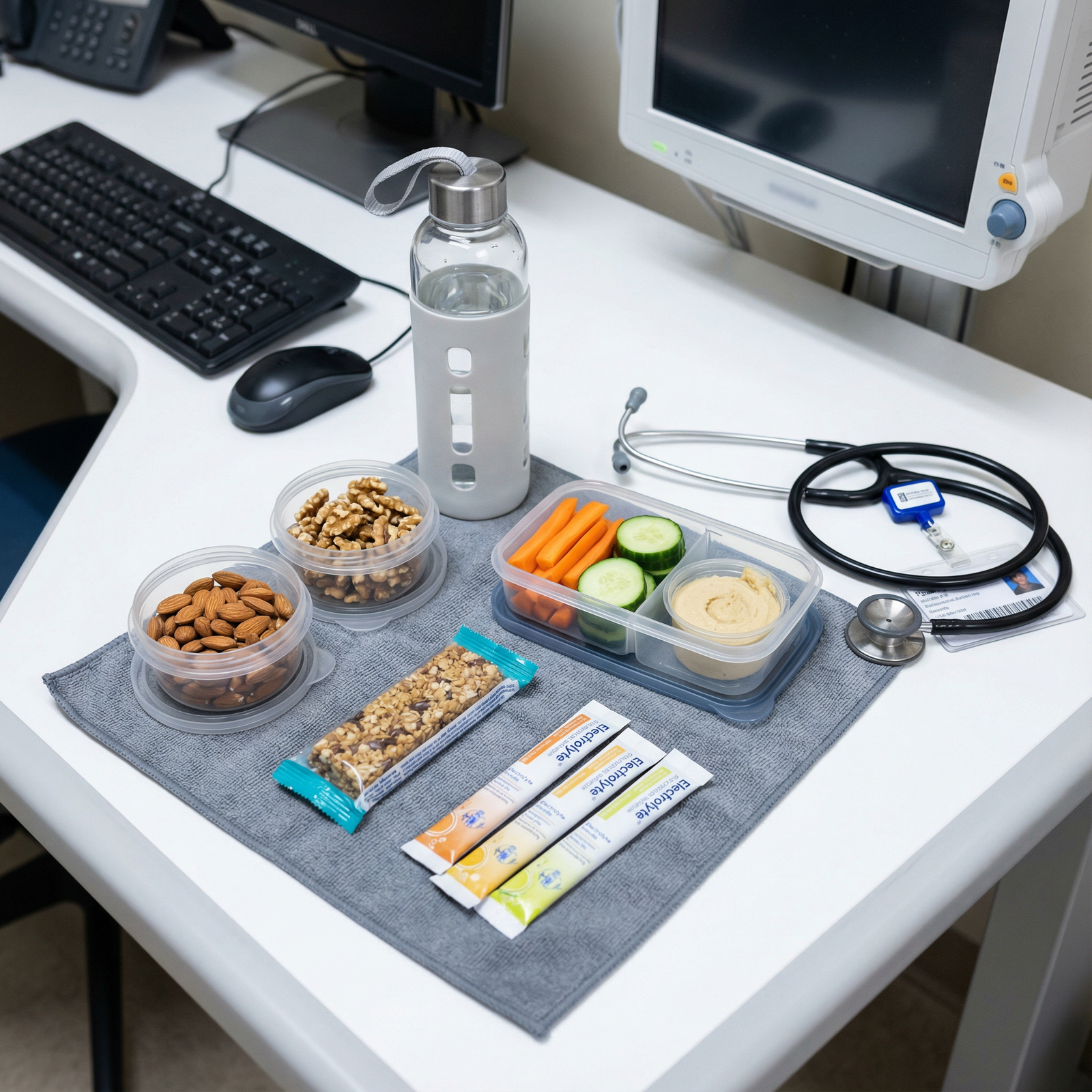
- Eat a real meal (protein + complex carb, not just vending machine junk).
- Caffeine plan:
- Last serious caffeine: no later than 2–3 a.m. if you want to sleep post‑shift.
- Do not slam an energy drink at 6 a.m. “to finish strong.” That wrecks recovery.
- Pack:
- Snacks (nuts, protein bar, something salty)
- Refillable water bottle
- Phone charger / power bank
- Earplugs and eye mask for post‑call sleep
- Minimal meds you rely on: ibuprofen, antacid, etc.
You are not being “soft” by planning this. You are protecting your cognitive function.
2.2 Sign‑Out Intake Checklist
During evening handoff, you should not just listen passively. Use a template. For every patient, hit these points:
- Big picture: Why are they here? (1‑sentence illness script)
- Tonight risk flags: “If anything goes wrong tonight, it will be…”
Examples:- “HF exacerbation, borderline on BiPAP, watch for rising CO2.”
- “GI bleed, Hgb 7.4, last transfusion 4 hours ago.”
- Active tasks: Labs to check, imaging pending, consult follow‑ups.
- Code status and limits: Full / DNR / DNI, goals of care discussions incomplete?
- Lines / tubes / weirdness: Drains, home infusions, special meds, clinical trials.
- Contact preferences: Attending style – “page me for any chest pain” vs “only if unstable.”
Write this in whatever handoff tool your program uses, but you need the distilled “If X happens, do Y or call Z” line for each fragile patient.
2.3 Unit Walk‑Through and Micro‑Introductions
Once sign‑out ends:
- Walk the units you cover. Physically.
- Say a quick word to charge nurses:
“Hey, I am [Name], covering overnight. Anything you are worried about already?” - Ask:
- Any fresh post‑ops/post‑procedures?
- Any patient circling the drain?
- Any families still on the unit expecting to talk to a doctor tonight?
This 5–10 minutes of “face time” pays off at 2 a.m. when the nurse calls you early, not late.
3. Build Your Core Clinical Checklists
At night, your brain is lagged, you are often solo, and you are getting information in fragments over the phone. Checklists protect you from your own fatigue.
Do not aim for every disease. Aim for the 10–15 things that page you constantly on nights. Those are:
- Acute changes in vitals (hypotension, tachycardia, hypoxia, fever)
- Chest pain
- Shortness of breath
- Delirium / agitation
- Pain not controlled
- Nausea/vomiting
- Sepsis / possible sepsis
- “Patient looks bad” / “I am just worried”
- Common floor stuff: urinary retention, no bowel movement x days, low K/Mg
Let us build a few.
3.1 “Go See Them Now” Screen – 10‑second Triage
First page content can be incomplete. You still need a consistent mental filter. When paged, ask:
- What are the vitals right now?
- Mental status change?
- Any new oxygen need or increase from baseline?
- Is the nurse at the bedside right now and do they think the patient looks unstable?
If any of these are true:
- SBP < 90 or MAP < 65
- HR > 130 or < 40
- RR > 30 or < 8
- O2 sat < 90% on usual oxygen
- New confusion / unresponsiveness
- Nurse says, “I am really worried”
You stop what you are doing and go. No debating. No “let me finish this note first.”
3.2 The Rapid Bedside Assessment Checklist (ABCDE‑ish)
When you do go, you need a default order so you do not miss something obvious.
- Airway: Talking? Gurgling? Snoring? Stridor?
- Breathing:
- Work of breathing, accessory muscles
- Breath sounds: wheezes, crackles, absent side
- O2 source and setting
- Circulation:
- Skin: warm vs cool, clammy vs dry, mottled?
- Peripheral pulses, cap refill
- Any obvious bleeding / post‑op sites
- Disability (neuro):
- GCS or “AVPU” (Alert, Voice, Pain, Unresponsive)
- Pupils equal/reactive?
- Focal deficits?
- Exposure:
- Look under the blanket: surgical sites, rashes, lines, drains
Then:
- Pull up vital trend and last 24 hours labs.
- Scan med list: new meds, high‑risk drugs (opioids, benzos, insulin, anticoagulants).
Write yourself a small one‑pager with these bullets. Tape it to your badge or inside your notebook.
3.3 Problem‑Specific Mini‑Checklists
Here are some skeletons you can build out by specialty.
A. Hypotension on the Floor
- Confirm:
- Recheck manual BP
- Compare with baseline
- Quick exam:
- Volume status: JVD, edema, dry mucosa
- Heart, lungs, abdomen, surgical sites
- Immediate orders (depending on context and supervision):
- Stat vitals q15–30 min
- IV access check; start second line if needed
- 500–1000 mL fluid bolus if no obvious contraindication (or smaller in frail HF)
- Point‑of‑care glucose
- Labs:
- CBC, BMP, lactate
- Type and screen if bleeding concern
- Cultures if infection suspected
- Decide:
- Is there a clear reversible cause? (bleeding, sepsis, meds)
- Does this patient need step‑up level of care / ICU?
Write a brief “If MAP <65 for >15–30 min despite 1–2 boluses, consider ICU call.”
B. Chest Pain at Night
- History (3–4 questions):
- Where exactly? Radiation?
- Character (pressure, sharp, burning)
- Onset and what they were doing
- Associated SOB, diaphoresis, nausea
- Immediate:
- Vitals, O2, place on monitor
- 12‑lead EKG stat
- Review:
- Past cardiac history, risk factors
- Last EKG and troponin pattern if present
- Orders you can consider (depending on your level & protocol):
- Troponin, BMP, CBC
- Nitroglycerin if typical ischemic chest pain and BP ok, no RV infarct suspected
- Aspirin if not already on and no contraindication
- Call attending:
- Any EKG change, hemodynamic instability, or concerning story.
Again, keep this as a single half‑page in your playbook.
C. Agitation / Delirium
This is night shift poison if you do not have a plan.
- Rule out immediately dangerous:
- Hypoxia, hypoglycemia, hypotension, stroke (focal signs)
- Check:
- Infection flags: fever, WBC, UA, line sites
- Med list: new opioids, benzos, anticholinergics, steroids
- Sensory: hearing aids, glasses available?
- Non‑pharm first:
- Lights down but oriented (clock visible, calendar, reorient)
- Family call or sitter if feasible
- Mobilize if safe, avoid full restraints if possible
- Meds:
- Know 1–2 default options in your institution (low‑dose haldol vs quetiapine, etc.)
- Avoid benzos in elderly delirium unless withdrawal suspected
Keep your doses and usual QTc limits written. Your 3 a.m. self will thank you.
4. Call Scripts: Stop Rambling, Start Communicating
Most residents lose time and credibility not on medical decision making, but on how they talk on the phone. You need scripts. Not to sound robotic, but to avoid leaving out core information when you are tired.
4.1 Standard SBAR for Nursing Pages
Every time you answer a page, guide the conversation.
Your opening line: “Hi, this is Dr. [Name], night resident. Can you give me SBAR on the patient?”
If they are not familiar with SBAR, prompt:
- S – Situation: What is happening right now?
- B – Background: Why are they here / big picture?
- A – Assessment: What are the vitals and what do you think?
- R – Recommendation: What are you hoping I can do?
You are allowed to push for structure. It makes both of your lives easier.
4.2 Script for Calling Your Attending at 2 a.m.
This is the call that makes residents anxious. You are tired, they are asleep, and you do not want to sound lost.
Use a rigid format:
- Identify yourself and urgency:
- “Hi Dr. [Name], this is [PGY‑X] on nights. I have an unstable / concerning patient I would like to discuss.”
- 1‑sentence summary:
- “This is a [age]‑year‑old [sex] with [key problem] admitted for [reason].”
- Present the acute issue:
- “Over the last [timeframe], they developed [problem] with vitals: [list].”
- What you did:
- “So far I have [exam done, labs ordered, interventions], and the patient is [same/better/worse].”
- Your impression and plan:
- “I am most concerned about [diagnosis/issue]. My plan is [A, B, C]. I am calling to [get approval / ask if you want to see them / ask if we should transfer to ICU].”
Example:
“Hi Dr. Smith, this is Alex, the night PGY‑2 on medicine. I have an unstable patient to run by you.
72‑year‑old man with HFrEF and recent pneumonia admitted for sepsis. Over the last hour his SBP has dropped from 110 to 78 despite a liter of fluids, HR 120, febrile to 38.9, on 4 liters O2 with sats 93%.
At bedside he is awake but pale and clammy, lungs with diffuse crackles, no focal deficits. I have ordered stat labs, repeat lactate and blood cultures, started another small fluid bolus given his EF, and I am arranging ICU evaluation.
I am most concerned about septic shock in the setting of poor cardiac reserve. I plan for early pressor support in the ICU. I am calling to update you and confirm you agree with ICU transfer and if there is anything else you would add.”
You sound competent even if you are internally sweating.
4.3 Script for Calling Consultants at Night
Consults will respect you more if you are structured and clear about the question.
Format:
- Who you are and which service.
- Who the patient is and why they are here.
- What the specific consult question is.
- What data they will care about.
Example: Neurology consult for new focal deficit:
“Hi, this is Dr. Lee, the night medicine resident. I am calling about a neurology consult request.
68‑year‑old woman admitted with UTI and delirium, now with new left arm weakness noted at 1 a.m. She was last known normal at 10 p.m. on the floor. Vitals: BP 150/80, HR 90, glucose 110, saturating 96% on room air.
On exam she has 3/5 strength in the left arm, 5/5 in right arm and both legs, no facial droop, speech clear. CT head without contrast has been ordered and is pending.
My question is: can you evaluate for possible stroke and advise on next imaging / treatment steps?”
You can paste a generic template into your playbook as a reminder.
4.4 Family Call Script at Night
You will get the “Can we talk to a doctor tonight?” request. Sometimes at 11 p.m., sometimes at 3 a.m.
Boundary + clarity script:
“Hi, this is Dr. [Name], the overnight doctor taking care of [Patient]. I wanted to update you that medically they are [stable/unchanged/slightly improved/worse] since earlier.
I can answer immediate questions about tonight’s events. For big‑picture decisions and long‑term planning, I want your daytime team—who knows the case in depth—to talk with you when they are here.
Right now, the main things we are watching for overnight are [X, Y], and if anything major changes, we will call you.”
You are being kind without getting pulled into a 40‑minute goals‑of‑care conversation at 2 a.m. unless it is truly emergent.
5. Logistics, Time Blocking, and “Batching the Chaos”
Nights feel chaotic because everything is unbounded. If you do not impose structure, the shift will eat you.
5.1 The Pager Triage Habit
Every time your pager goes off, do not just call back the last number. You will get jerked around.
Do this instead:
- Look at all pages from the last 2–3 minutes.
- Quickly sort mentally:
- Now (go to bedside or call immediately)
- Soon (within 15–30 min)
- Can batch (med adjustments, chronic issues, clarifications)
You can even sketch a quick list in your notebook:
- Now: Room 312 hypotension
- Soon: Room 280 chest pain with normal vitals, EKG ordered
- Batch: Missed bowel movement x3 days, trazodone request, DVT prophylaxis question
Knock out all “Now” issues, then clear a block of “Batch” items in one focused 10–15 minute burst.
5.2 Default Time Blocks for the Night
Obviously, codes and real emergencies blow this up. But having a template keeps you organized.
| Time Block | Primary Focus |
|---|---|
| 7:00–8:00 | Sign‑out, high‑risk patient review, meet charge nurses |
| 8:00–10:00 | Finish leftover day tasks, proactive rounding on fragile patients |
| 10:00–12:00 | Routine orders, follow‑up labs, respond to non‑urgent pages in batches |
| 12:00–2:00 | Quick snack, targeted chart review, check in on anyone unstable |
| 2:00–4:00 | “Graveyard prime”: protect this time for sleep‑critical tasks, minimize note‑writing |
| 4:00–6:00 | Reassess sick patients, clear backlog of orders, start organizing handoff |
| 6:00–7:00 | Final vitals check on sick patients, handoff notes, sign‑out prep |
You will not follow this perfectly. That is not the point. It gives you an anchor to return to when chaos ebbs.
5.3 Proactive Rounding on Fragile Patients
This is the single best “hack” to reduce 3 a.m. surprises.
After sign‑out and unit check‑in, identify:
- Fresh post‑ops (<12–24 hours)
- High‑risk patients: sepsis, GI bleeds, CHF on BiPAP, new strokes, etc.
- “Soft concern” patients from day team: “Little tenuous, could go either way.”
Make yourself see them early. Tell the nurse: “I am just checking in because I know this patient is high‑risk.”
You catch the deteriorations when they are a MAP of 70, not 50.
6. Sleep, Food, and Sanity: The Boring Stuff That Saves You
If you think “I will just push through” every night, you are lying to yourself. You are not a hero. You are a human with an oxygen‑hungry brain.
6.1 Micro‑Break Protocol
Write this into your playbook: “When safe, I take a 5‑minute reset every 2–3 hours.”
Reset means:
- Put phone/pager where you can still hear emergencies, but not answering non‑urgent pages.
- Stand up, walk 2–3 minutes.
- Stretch back/neck.
- Drink water. Eat a small snack if you are starving.
You can survive without this on one shift. You cannot survive a month of nights like that.
6.2 Caffeine Strategy (Not Addiction Strategy)
Use caffeine as a tool, not a crutch.
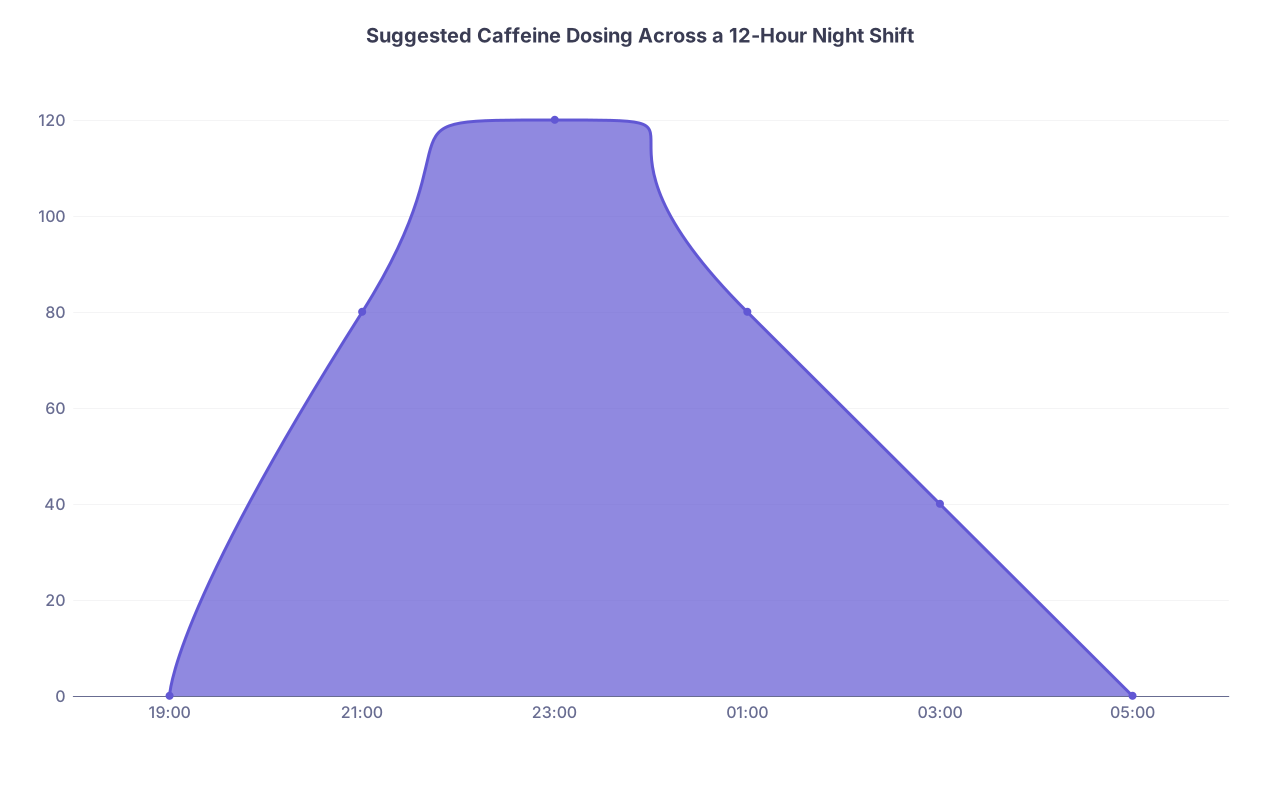
| Category | Value |
|---|---|
| 19:00 | 0 |
| 21:00 | 80 |
| 23:00 | 120 |
| 01:00 | 80 |
| 03:00 | 40 |
| 05:00 | 0 |
A simple guideline:
- Small dose early (e.g., 50–100 mg around 8–9 p.m.).
- Another modest dose late evening (9–11 p.m.) if needed.
- After 2–3 a.m., taper. Switch to water.
If absolutely dying at 4 a.m., keep it minimal (30–50 mg).
Your future self at 10 a.m., trying to sleep, will appreciate it.
6.3 Post‑Call Ritual
Have a fixed “shutdown” routine:
- End‑of‑shift sign‑out.
- 5–10 minute brain dump:
- Anything you want to add to your playbook?
- Any near‑misses or “I wish I had…” moments?
- Home (or call room):
- Light snack if starving, no huge meals.
- Shower to signal “end of work.”
- Dark, cold room, earplugs/eye mask.
Do not open social media and scroll for an hour “to unwind.” That is how you accidentally erase your sleep window.
7. Actually Building Your Playbook: Step‑by‑Step
Let us be very concrete. Here is how you build this over 2–4 weeks.
7.1 Step 1: Choose a Container
Pick one main place:
- Small physical notebook with tabs
or - OneNote / Notion section labeled “Night Shift Playbook”
or - Google Doc bookmarked on your workstation.
Do not scatter this across 5 apps.
7.2 Step 2: Create Sections
Suggested sections:
- Start‑of‑Shift Checklist
- High‑Risk Routines (proactive rounding, unit walk‑through)
- Clinical Checklists:
- Vitals change
- Chest pain
- SOB
- Delirium / agitation
- Weakness / neuro changes
- Sepsis
- Call Scripts:
- Nurses SBAR prompt
- Attending call template
- Consultant call template
- Family update script
- Logistics:
- Time block template
- Micro‑break rules
- Caffeine rules
- “Lessons Learned” Log
That last one is gold.
7.3 Step 3: Fill In the Bare Minimum, Not a Textbook
Your goal is not to copy UpToDate into your notebook. You want:
- 1–2 pages of checklists total for clinical stuff.
- 1 page of scripts.
- 1 page of routines / hacks.
- A growing “lessons” list.
Think of it like this: “What do I want my half‑awake self to see at 3 a.m.?”
7.4 Step 4: After Each Night, Add Exactly 1–2 Items
Do not overhaul it every day. Just add small pieces:
- One line to your delirium checklist: “Always check for urinary retention.”
- One tweak to your attending script: “Always state how long issue has been going on.”
- One hack in logistics: “Pre‑chart labs for 4 a.m. so I am not hunting later.”
Use a simple log:
| Date | Situation | What I Want to Do Next Time |
|---|---|---|
| 1/5 | Missed rising lactate in septic patient | Add 'trend lactate q4–6h' to sepsis checklist |
| 1/7 | Confused family midnight call | Use clear boundary script, defer big decisions to daytime |
| 1/9 | Felt overwhelmed by pages at 2 a.m. | Batch non‑urgent pages every 20–30 minutes when safe |
Six months later, this log is more valuable than any lecture you will attend.
8. Specialty‑Specific Tweaks (Internal, Surgery, ED, ICU)
The core principles are universal, but your playbook should reflect your world.
8.1 Medicine Nights
Focus extras on:
- Decompensated HF mini‑checklist (weights, I/O, diuretic plan).
- COPD/asthma exacerbation steps: nebs, steroids, VBG targets.
- DKA/HHS overnight checks: glucose, anion gap, fluids, insulin drips.
8.2 Surgery Nights
Extra pages hit you for:
- Post‑op fever:
- POD day
- Sources: wind, water, wound, walking
- Post‑op hypotension:
- Bleeding vs sepsis vs meds vs pain control.
- Nausea/vomiting in post‑ops:
- NPO clarification, NG tube consideration.
Have your attending’s preferred analgesia/escalation pathway written down (“If pain uncontrolled after X, next step is Y”).
8.3 Emergency Department Nights
You are less “following” patients and more “front‑loading” care.
Playbook emphasis:
- Fast triage checklists (chest pain, abd pain, psych).
- “Dispo heuristics” – what absolutely cannot go home.
- Consult call scripts tuned to your local surgical, medicine, and ICU teams.
8.4 ICU Nights
Here you want:
- Vasoactive support quick reference (your unit’s top 3 pressors, start doses).
- Vent tweaks checklist (what you try before waking attending).
- “Imminent crash” checklist: who needs to be in the room, what to bring, what to set up.
9. Tools and Visual Aids That Make It Stick
Do not rely on PDFs buried in your email. Make things visible.
9.1 Badge Cards
Create mini‑cards (laminated if your institution allows):
- Emergent orders (e.g., “For suspected sepsis: A, B, C.”).
- Common drug doses (sedation, agitation, insulin).
9.2 Unit‑Posted Algorithms
If you have any influence, push for visible algorithms for:
- Rapid response: when to trigger and what happens.
- Chest pain on the floor.
- Stroke alerts.

| Step | Description |
|---|---|
| Step 1 | Page about unstable vitals |
| Step 2 | Ask nurse to go now |
| Step 3 | Ask for current vitals and concern |
| Step 4 | Go to bedside immediately |
| Step 5 | Order initial tests and plan reassessment |
| Step 6 | Rapid bedside ABCDE assess |
| Step 7 | Call rapid response or ICU and attending |
| Step 8 | Set close monitoring plan |
| Step 9 | Nurse at bedside? |
| Step 10 | Meets go now criteria |
| Step 11 | Still unstable? |
Tape this logic somewhere visible on your workstation early on. Over time, it becomes muscle memory.
9.3 Visualizing Your Improvement
Track a few simple metrics for yourself over a month of nights:
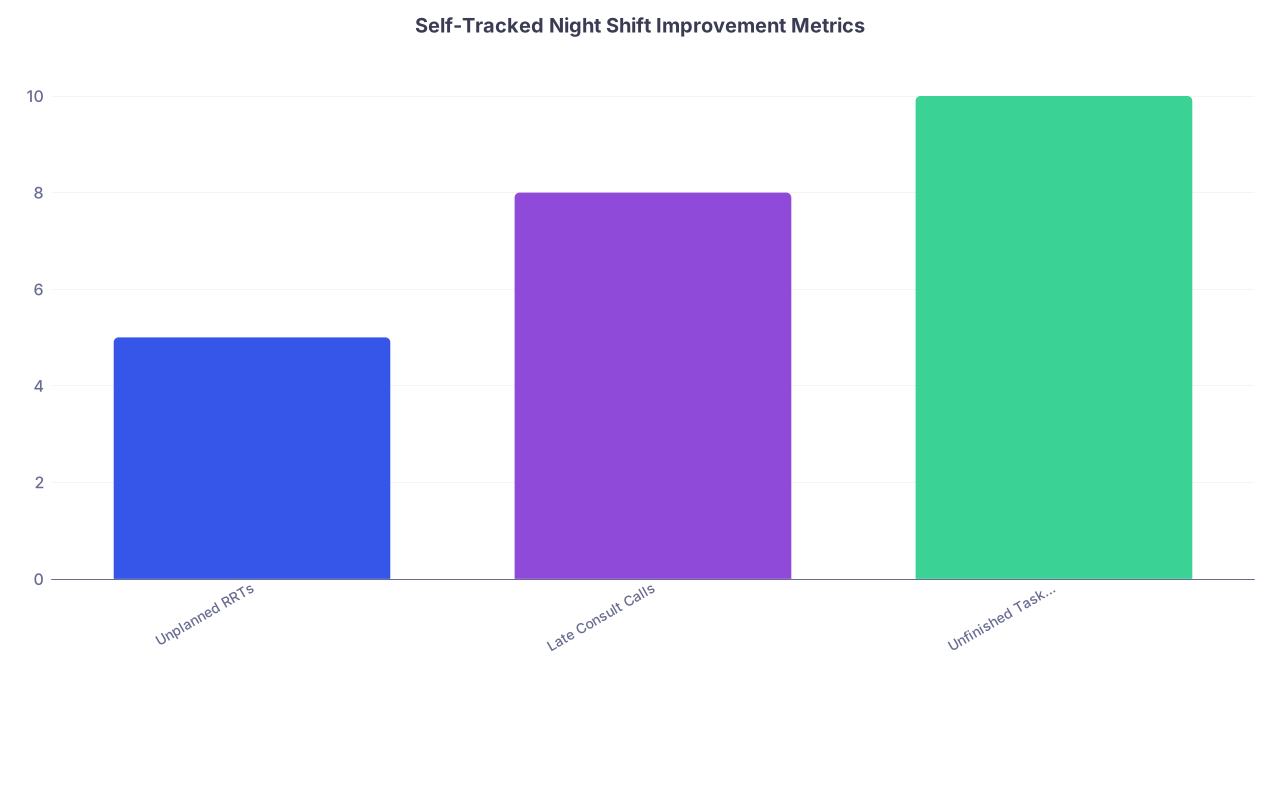
| Category | Value |
|---|---|
| Unplanned RRTs | 5 |
| Late Consult Calls | 8 |
| Unfinished Tasks at 7 a.m. | 10 |
Then repeat later in the rotation and see where numbers drop as your playbook matures.
10. The Real Point: Confidence Without Arrogance
You are not building this playbook to show off. You are building it to:
- Reduce preventable errors when you are exhausted.
- Protect your limited cognitive bandwidth for real thinking.
- Make your communication crisp under pressure.
- Turn “miserable” nights into “demanding but manageable” nights.
You are allowed to feel overwhelmed. Night shift is inherently rough. But you do not have to be at the mercy of it.
Create your personal night shift playbook. Start with:
- A ruthlessly simple start‑of‑shift checklist.
- A handful of problem‑based mini‑checklists for common pages.
- Two or three well‑rehearsed phone scripts.
Everything else you can layer in as you go.
Three key points:
- Do not wing nights. Treat each shift like a high‑stakes procedure and use checklists.
- Standardize your communication with nurses, attendings, and consultants using scripts.
- Build and refine your playbook over time; one or two improvements after each shift add up fast.
That is how you survive nights. And eventually, how you own them.


