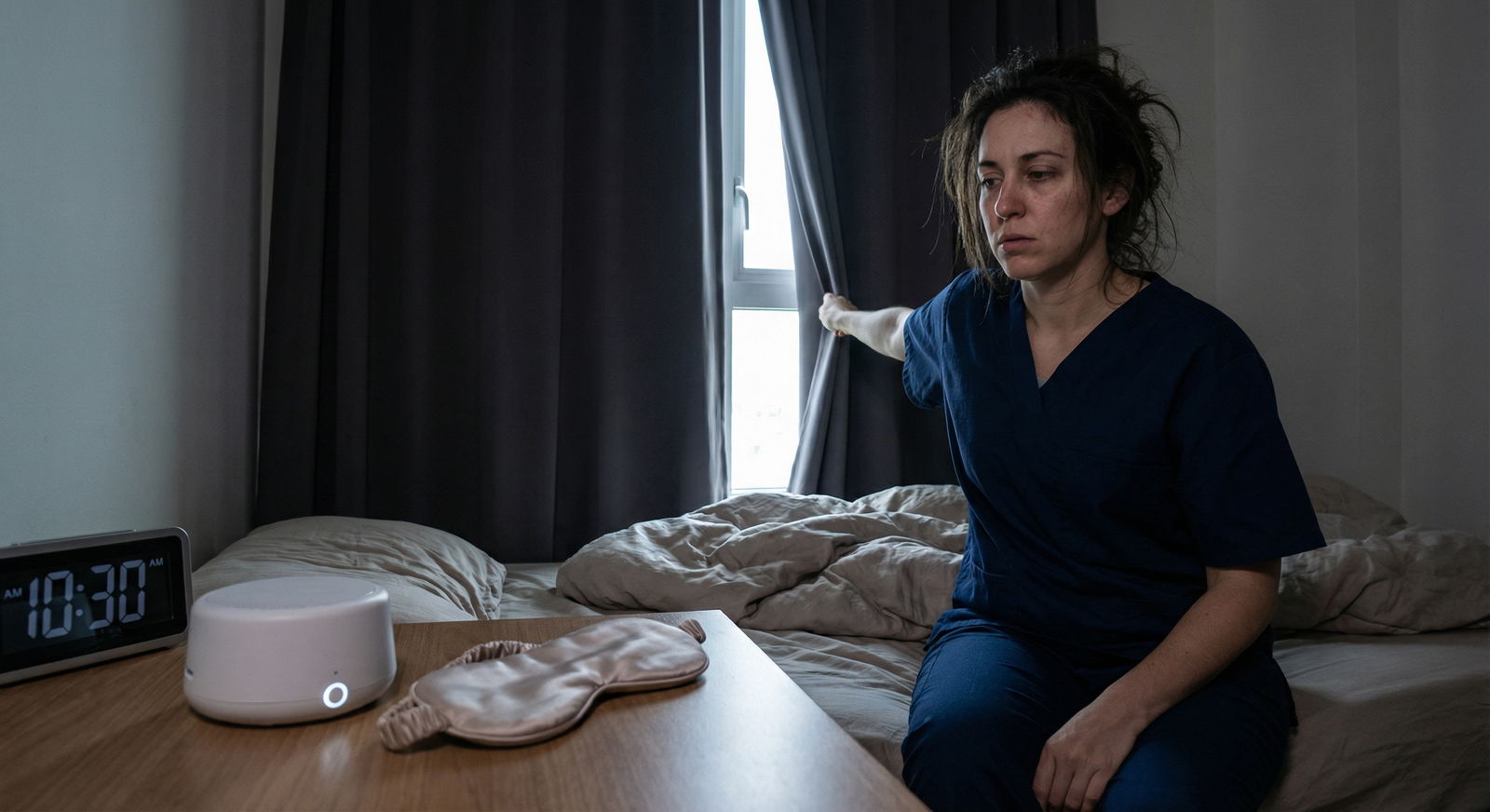
The way most residents “unwind” after a shift is exactly why they cannot sleep.
Scrolling in bed. Random TV. Snacking. Maybe a beer. Then staring at the ceiling at 09:30 wondering why their brain will not shut off while they have to be back in 10 hours. I have watched this pattern wreck people by PGY-2.
You are not “bad at sleeping.” You are running the wrong post-shift protocol.
You need a decompression routine that is:
- Repeatable when you are half-zombie.
- Short (20–40 minutes).
- Physiologically grounded, not Instagram self-care nonsense.
- Brutally practical for residency life.
That is what this 5-step decompression routine does.
Use it after nights. Use it after brutal days. Use it whenever your brain feels like it is still in the code room three hours after you clocked out.
The Core Principle: You Cannot Slam the Brakes From 100 to 0
Here is the mistake: you walk out of a bright, chaotic, adrenaline-heavy environment and expect to be asleep 15 minutes after you hit your pillow.
Your nervous system is still in:
- High cortisol
- Elevated heart rate
- “Scan for problems” mode
- Emotional backlog (anger, guilt, frustration, grief)
Your decompression routine’s job is to walk your brain and body through a controlled descent:
- Disengage from work.
- Offload mental/emotional residue.
- Shift the nervous system from sympathetic to parasympathetic.
- Prepare the sleep environment.
- Use a consistent “pre-sleep script” your brain recognizes.
Think of it as your post-shift landing checklist. You do not skip checklists in the ICU. You should not skip one for your sleep either.
Here is the 5-step routine, then we will break down each step.
| Step | Goal | Time |
|---|---|---|
| 1. Physical off-ramp | Cool down body & detach from hospital | 5–10 min |
| 2. Mental download | Clear “open loops” from your head | 5–10 min |
| 3. Nervous system reset | Turn off adrenaline, turn on calm | 5–10 min |
| 4. Sleep prep environment | Make your bedroom actually sleepable | 5–10 min |
| 5. Pre-sleep script | Train your brain to associate routine with sleep | 5–10 min |
You are aiming for 25–40 minutes total. Not 2 hours of elaborate rituals. A tight, repeatable sequence.
Step 1: Physical Off-Ramp – Take Your Body Out of the Hospital
Your body does not know the shift ended because you badged out. It knows based on:
- Light.
- Temperature.
- Movement.
- Sensory input.
You need a physical pattern that says, “Work is over.”
1.1. The non-negotiable: a defined “transition block”
From the moment you walk out until you open your door at home = no processing work stories in detail.
Your job in this window: move, cool, and detach.
Here is a simple protocol:
Walk for 5 minutes before you sit
- If you park far, use that.
- If you are on call and walking home, that counts.
- If you drive, park at the far end of the lot and do 2–3 extra minutes of slow walking before getting in.
Target: Slow, nasal breathing, shoulders relaxed, phone away.
Change the sensory channel
- No medical podcasts, no texts about sign-out, no “you will not believe what happened” recaps on the phone.
- Instead:
- Calm instrumental music, or
- A familiar, low-stakes audiobook / podcast that has nothing to do with medicine.
Hydrate with intention
- One bottle of water on the way home. Not energy drinks. Not coffee.
- If you want caffeine, it belongs early-mid shift, not in the last 4 hours.
If you bike, walk, or take public transport, the commute can be the best part of this step. Do it deliberately instead of doomscrolling in the back of an Uber.
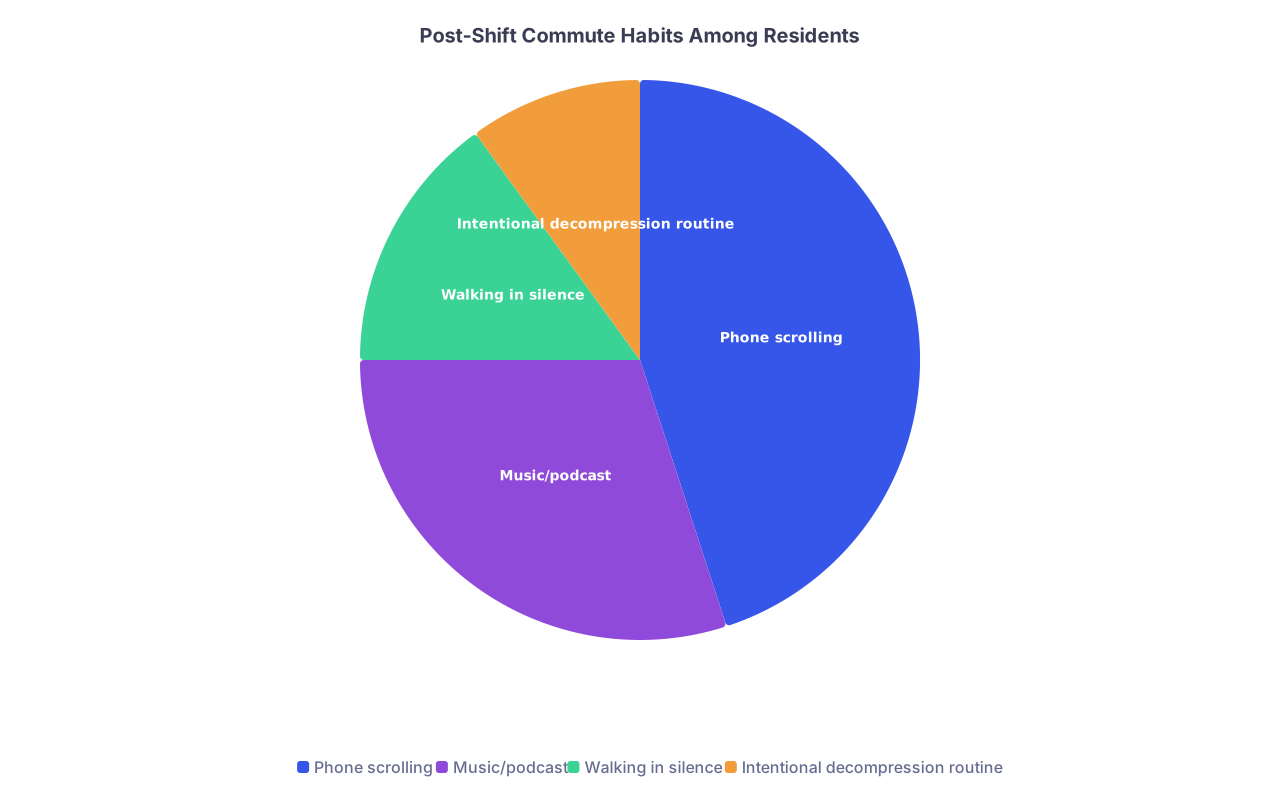
| Category | Value |
|---|---|
| Phone scrolling | 45 |
| Music/podcast | 30 |
| Walking in silence | 15 |
| Intentional decompression routine | 10 |
Notice that last slice. You want to be in that 10%.
Step 2: Mental Download – Empty Your Head Before Bed
One big driver of post-shift insomnia is cognitive residue:
- Did I sign that order?
- What happened to that troponin?
- I should have escalated sooner on that patient.
- I forgot to respond to that email.
Your brain keeps these as “open tabs.” You lie down, and it starts cycling through them.
Fix this with a 5–10 minute mental download the moment you walk in the door.
2.1. Set up a “post-shift pad”
You need:
- One physical notebook or a small legal pad.
- A pen that lives next to it.
- Dedicated space: kitchen counter, desk, or a small shelf by the door.
This is not a journal. This is a brain dump station.
2.2. The 3-column download
Draw three quick headings:
- “Loose ends” – objective tasks
- “Emotional residue” – subjective reactions
- “Tomorrow” – stuff that can wait
Then, 5 minutes max:
Under Loose ends, write:
- “Check BMP on Mr. X – follow AKI trend.”
- “Email attending about case for M&M.”
- “Follow up on family meeting for ICU bed 3.”
If anything is urgent and you truly must address it now, do it deliberately and then return to the routine. Most things can wait.
Under Emotional residue, write in bullet, not prose:
- “Feel guilty about delaying pain meds for ED patient.”
- “Angry about how nurse spoke to me in front of family.”
- “Sad about code outcome overnight – first patient my age.”
No analysis. Just labeling. Your brain relaxes when it knows the feeling has been registered.
Under Tomorrow, write:
- “Prep for clinic at 14:00 – review 3 complex patients.”
- “Set alarm for 12:30 instead of 11:00.”
This is not therapy. This is mental triage. Move the mess from your head to paper.
Step 3: Nervous System Reset – Turn Down the Adrenaline
You are still wired. Heart rate elevated. Thoughts fast. You need to flip your autonomic switch.
Deep breathing apps and generic “relax” advice usually fail because they are either:
- Too long.
- Too complex.
- Too “woo” for a resident who just finished a trauma code.
You need two short, concrete tools: one for your body, one for your breathing.
3.1. Body: 5-minute “downshift” routine
Do this before you even think about lying down. No gym. No hardcore workout. Just low-intensity, parasympathetic-friendly movement.
Pick one of these, every time:
- 5-minute mobility flow (no mat needed):
- 1 minute: neck circles and shoulder rolls.
- 1 minute: arm circles and gentle chest opening.
- 2 minutes: slow forward fold -> stand -> reach overhead (repeat 6–8 times).
- 1 minute: ankle circles and light quad/hip flexor stretch holding onto a chair.
Or:
- Hot shower “reset”
- 3–5 minutes under warm water. Let shoulders drop.
- No phone. No podcasts.
- Focus on the sensation of water hitting your back and head. Stay with that.
The point is not stretching for flexibility. The point is telling your muscles: “We are safe now.”
3.2. Breathing: 3–5 minutes of physiologic down-regulation
There are two breathing protocols I have seen residents actually stick to:
Option A: 4–6 breathing
- Inhale through nose for 4 seconds.
- Exhale through nose or pursed lips for 6 seconds.
- Do this 10–15 cycles.
Option B: Physiological sigh (Stanford style)
- Short inhale through nose.
- Second quick inhale through nose on top of that.
- Long, slow exhale through mouth.
- Repeat 10–15 times.
Set a 3-minute timer on your watch or phone (screen face-down) and just do the breaths.
You are not meditating. You are mechanically downshifting your CO2/O2 balance and heart rate.
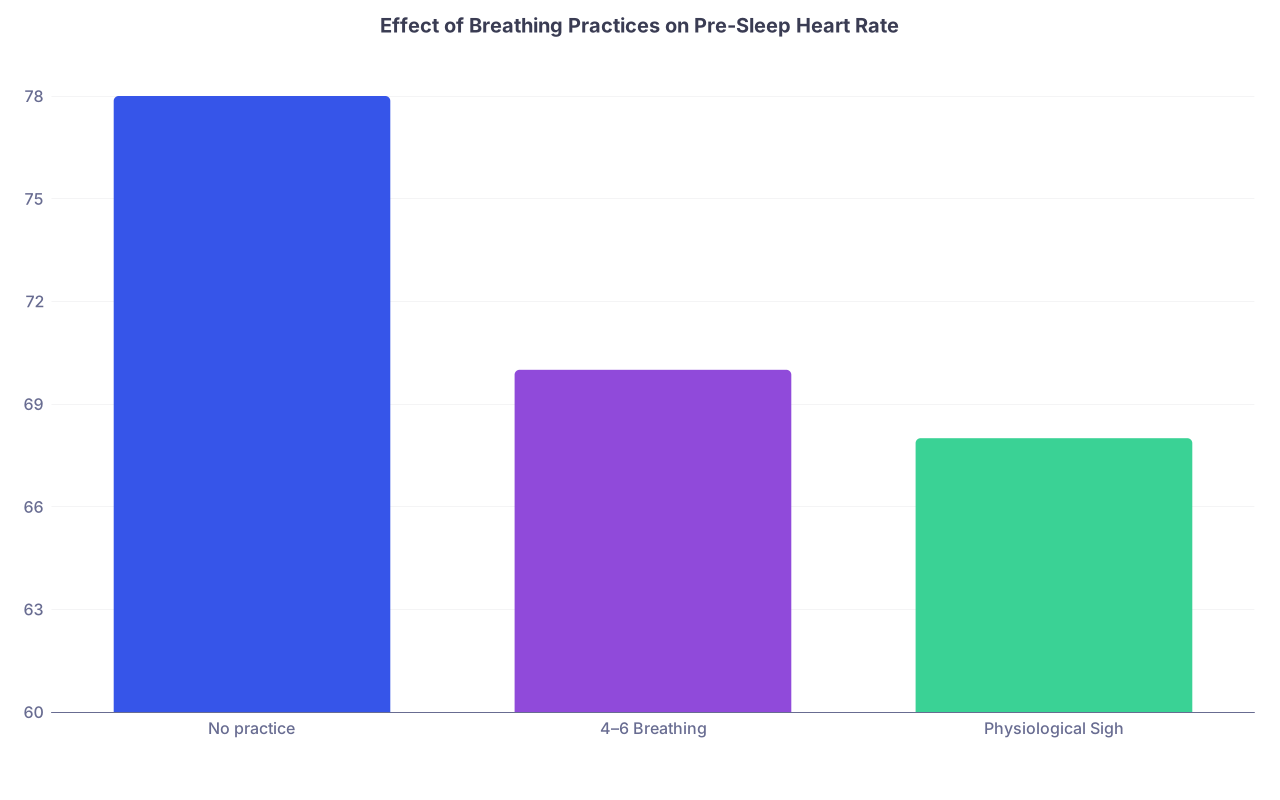
| Category | Value |
|---|---|
| No practice | 78 |
| 4–6 Breathing | 70 |
| Physiological Sigh | 68 |
These numbers are illustrative, but the direction is real. Residents using these consistently report fewer nights of “heart pounding in my chest while I am lying there exhausted.”
Step 4: Sleep Environment – Make Your Room Hostile to Insomnia
Most residents try to sleep like normal diurnal humans. Light leaking around the blinds. Phone lighting up the room. Neighbors vacuuming. Sun blasting through at 09:00.
You are not living a normal schedule. Stop pretending you can sleep like one.
You need your bedroom to do three things well:
- Dark.
- Quiet.
- Cool.
4.1. Darkness: black it out like you mean it
Do not rely on “blackout” curtains that are dark-colored but leak light from the sides.
Cheap, effective setup:
- $20–30: actual blackout curtains + tension rod to fit inside window frame.
- And/or: Blackout window cling film for rental-safe, removable coverage.
- Backup: a decent sleep mask (silicone nose bridge, adjustable strap).
The test: stand in your room at noon. Close the door. If you can easily read the time on your phone without turning it on, it’s not dark enough.
4.2. Sound: control what you can
You cannot stop your upstairs neighbor from stomping. You can drown it.
Layered approach:
- Baseline: white noise machine or fan at steady volume.
- Personal: soft silicone earplugs if you tolerate them.
- Behavioral: tell your core people (partner, family) not to call unless truly urgent during your post-shift window. Use “Do Not Disturb” with exceptions.
You are not being fussy. You are defending your only restorative hours.
4.3. Temperature: cooler than you think
Your body sleeps better when core temperature drops.
Target:
- Room temp: around 18–20°C (64–68°F) if feasible.
- Light, breathable bedding. Not a heavy winter comforter in summer.
- Warm your hands/feet if needed (socks are fine). Paradoxically, warm extremities help core cooling.
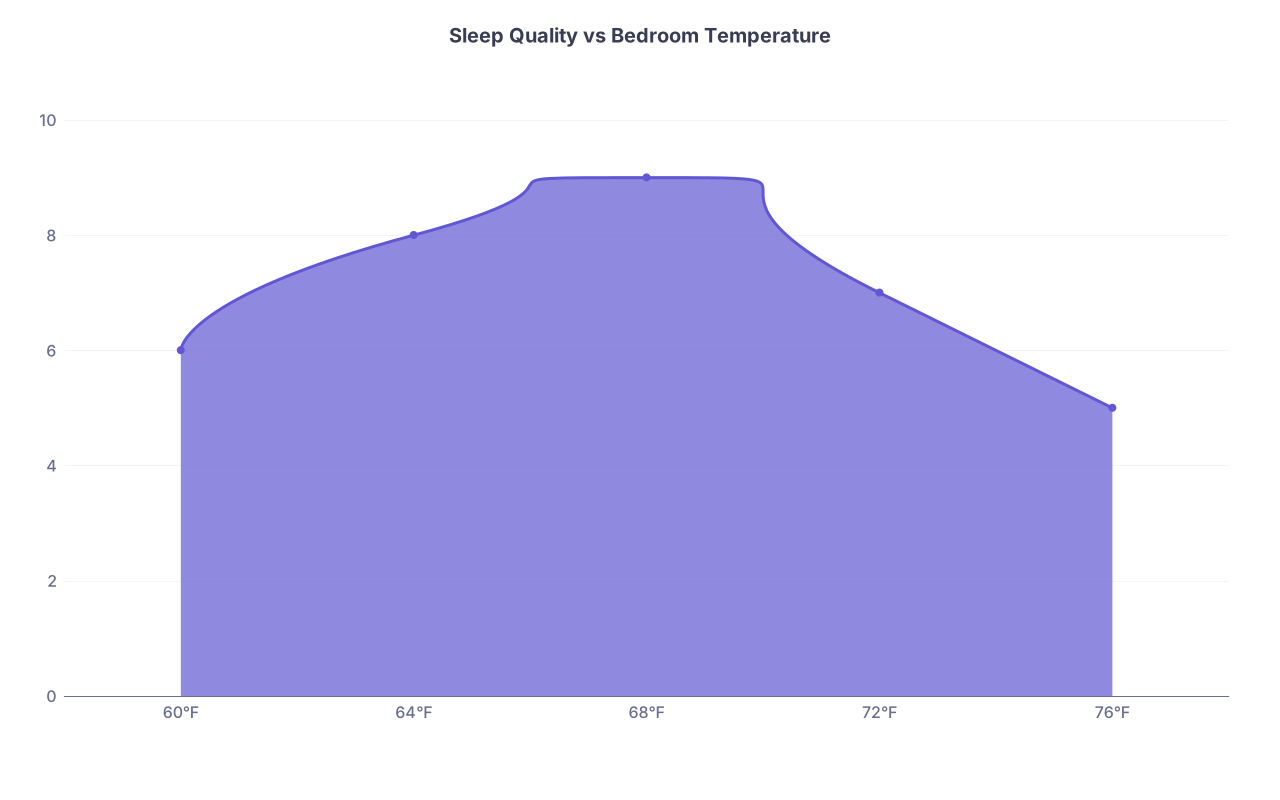
| Category | Value |
|---|---|
| 60°F | 6 |
| 64°F | 8 |
| 68°F | 9 |
| 72°F | 7 |
| 76°F | 5 |
Scale 1–10 self-reported sleep quality. Again, illustration, but it matches what we see in practice.
4.4. Electronics: brutal boundaries
Two rules that will save you more sleep than melatonin ever will:
No screens in bed.
Your bed is for two things: sleep and sex. That is it. Not TikTok, not charting, not watching match highlights.If you wake and cannot fall back asleep in 20 minutes, get out of bed.
Sit in a chair in dim light. Read something boring on paper. When sleepy returns, go back to bed.
Remaining in bed frustrated trains your brain: Bed = wakeful stress. You want the opposite association.
Step 5: Pre-Sleep Script – Train Your Brain with a Consistent Sequence
Here is where most routines fail: they are random. Sometimes there is stretching. Sometimes there is Instagram. Sometimes there is tea. Your brain never learns, “This means sleep is coming.”
You need a simple, specific script you follow in the same order almost every time.
Think of this as your ED checklist: ABCs every time, not “whatever I feel like today.”
5.1. Build your 10–15 minute script
You have already done:
- Step 1: commute off-ramp
- Step 2: mental download
- Step 3: nervous system reset
- Step 4: environment prep
Now you stack a consistent micro-routine right before bed. Example:
Sample 12-minute pre-sleep script for a night-shift resident:
Brush teeth / quick bathroom routine – 3 minutes
- Same order every time: brush → floss → face wash → bathroom → lights dimmed.
2-minute “gratitude + wins” jot – 2 minutes
- On same notebook or separate small pad:
- One thing that did not go terribly.
- One thing outside medicine you are grateful for.
- Example:
- “Caught that early sepsis patient before they tanked.”
- “Grateful for 10-minute call with my sister on the way in.”
This is not toxic positivity. It is an antidote to “today was pure garbage and I am terrible.” It contains the negativity bias.
- On same notebook or separate small pad:
Short grounding or body scan in bed – 5–7 minutes
- Lie down, lights off, eyes closed.
- Do a simple body scan:
- Notice feet → relax them.
- Notice calves → relax.
- Up through thighs, hips, abdomen, chest, shoulders, arms, neck, face.
- If thoughts come, fine. Label “thinking,” return attention to the body part.
If you like audio, you can use a single, same track every time (5–10 minutes, not 45-minute meditations). You want your brain to pair that sound with “time to shut down.”

Putting It All Together: The 5-Step Decompression Flow
Here’s how a full routine might look from door-to-pillow.
You just finished a 19:00–07:00 shift. You get home at 07:30.
07:30–07:40 – Physical off-ramp
- Walk from parking lot, slow breathing, no calls.
- Drive with soft music. Finish water bottle.
- Walk up to apartment without checking messages.
07:40–07:48 – Mental download
- Drop bag. Grab “post-shift pad.”
- 3–4 bullets in Loose ends.
- 3–4 bullets in Emotional residue.
- 2–3 bullets in Tomorrow.
- If anything truly urgent: handle it now, deliberately.
07:48–07:58 – Nervous system reset
- 5-minute hot shower reset.
- 3 minutes of 4–6 breathing sitting on edge of bed.
07:58–08:08 – Sleep environment prep + brief snack
- Close blackout curtains. Turn on white noise. Set room temp if you can.
- Small, light snack if hungry (yogurt, banana with peanut butter, not a heavy meal).
- Phone to Do Not Disturb, face down, away from bed.
08:08–08:20 – Pre-sleep script
- Bathroom routine.
- 2-minute “gratitude + wins” jot.
- In bed, lights off, 5–7-minute body scan or familiar audio track.
Asleep by 08:30–08:45 is realistic once this script is trained. Less tossing, less ceiling staring, less self-hate spiral about “why am I still awake?”
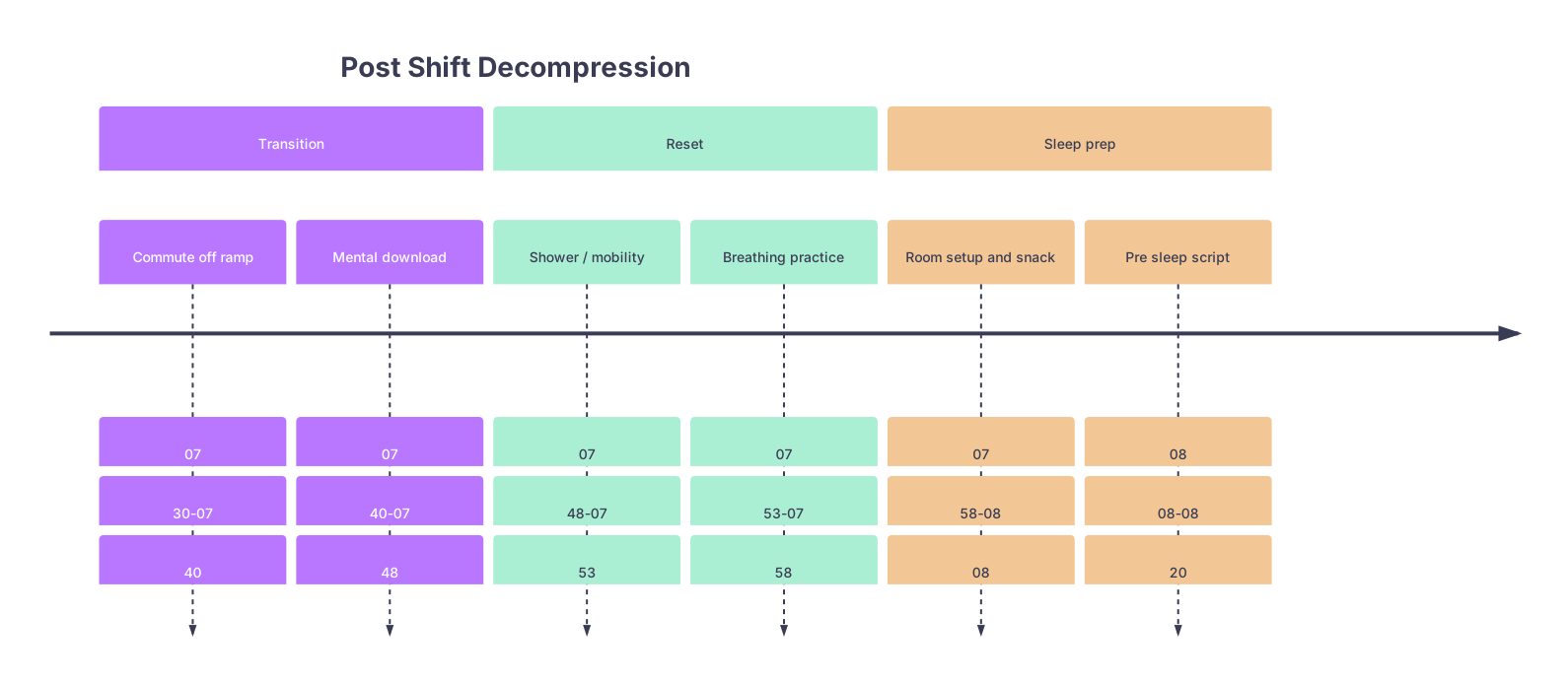
| Period | Event |
|---|---|
| Transition - Commute off ramp | 07 |
| Transition - Mental download | 07 |
| Reset - Shower / mobility | 07 |
| Reset - Breathing practice | 07 |
| Sleep prep - Room setup and snack | 07 |
| Sleep prep - Pre sleep script | 08 |
Common Failure Points (And How to Fix Them)
You will not execute this perfectly. No one does. The key is knowing where residents usually blow it and what to do next.
Failure 1: You start doomscrolling “for 5 minutes”
You sit on the couch “for a second” and suddenly it is 09:30. You are wired again.
Fix: remove the decision point.
- Do not sit on couch. Go straight to your “post-shift pad” spot.
- Keep your charger and “sleep phone position” in the bedroom, not by the couch.
- If you always fail in the living room, ban the living room between end-of-shift and sleep.
Failure 2: You bring heavy emotional processing into bed
Ruminating about that code. Replaying interactions. Building arguments in your head.
Fix: create a boundary container.
- Tell yourself: “I processed this on paper; it is scheduled for later review.”
- If one thought keeps returning, get up, write it down in 1 sentence, then return to bed.
- If a case is truly haunting you, schedule time on an off-day to discuss with a trusted senior or mentor. Put that in the Tomorrow column so your brain stands down.
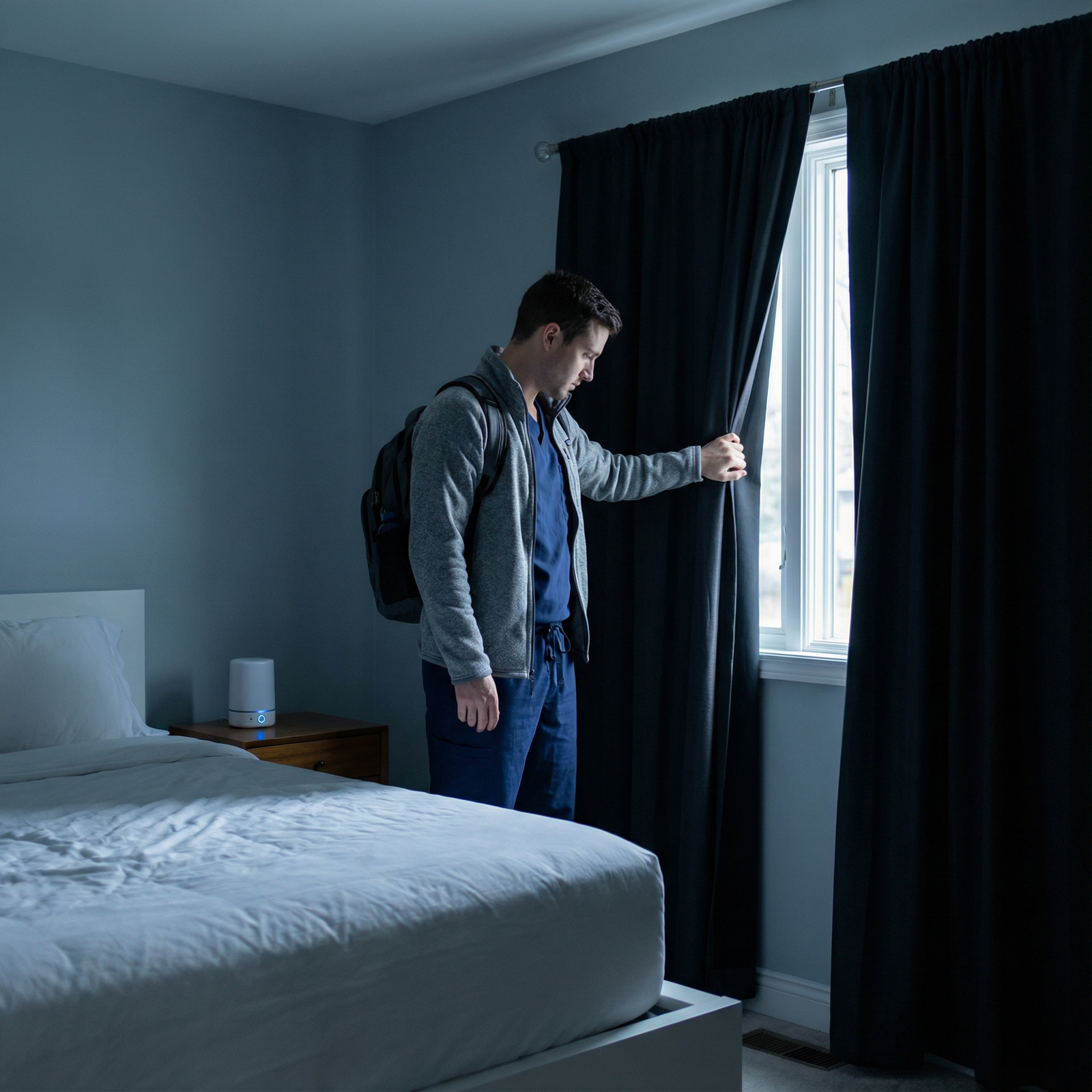
Failure 3: You disrupt your own circadian rhythm with random timing
You come home some days and go straight to sleep. Other days you stay up and run errands. Some days you nap later. Your brain never predicts what is coming.
Fix: consistent post-shift rule.
- On night float: same sequence and approximate timing every post-shift day.
- No major errands or social plans right after nights. If you absolutely must, schedule them after at least a core 3–4 hour sleep block.
Failure 4: You expect this to work perfectly from day 1
Your nervous system has been trained by months or years of chaos. One clean routine will help, but it is not magic.
Fix: measure success differently. Track 3 things for 2–3 weeks:
- Sleep latency – how long until you fall asleep.
- Night wakings – how many times you wake up >5 minutes.
- Restedness on waking – rate 1–10.
You want trend improvement, not perfection in 48 hours.
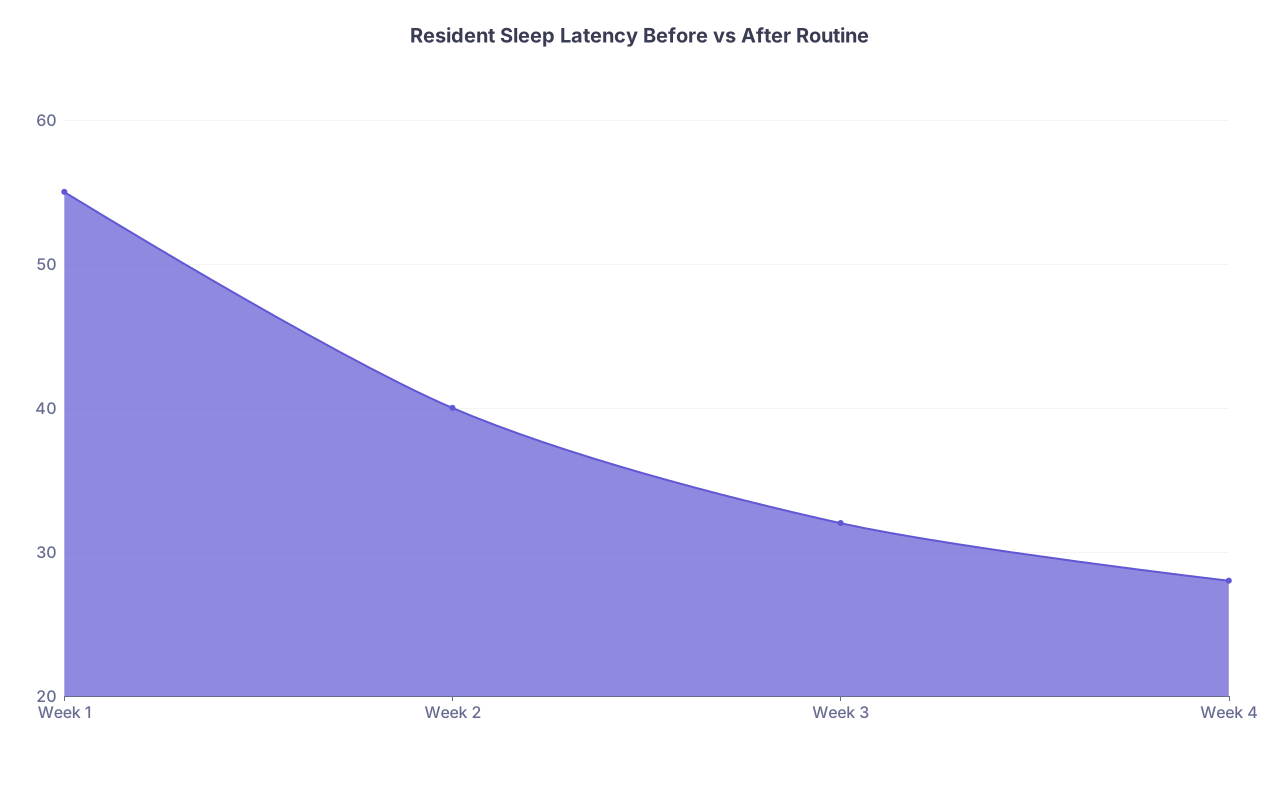
| Category | Value |
|---|---|
| Week 1 | 55 |
| Week 2 | 40 |
| Week 3 | 32 |
| Week 4 | 28 |
This kind of drop is completely realistic when people stop winging it and start running a protocol.
Adjustments for Different Rotations and Personalities
Not all nights are equal. ICU, ED, wards, OB – each hits differently. You tweak, you do not abandon.
ICU or ED: high-adrenaline, high-mortality nights
You may need:
- Slightly longer mental download (8–10 minutes) to list cases and raw emotions.
- A defined “grief/processing” slot later in the week with co-residents or a mentor.
- A firmer no-alcohol post-shift rule; alcohol plus high adrenaline is a sleep grenade.
Quiet nights or clinic days that still leave you wired
You can:
- Shorten the routine (20–25 minutes total).
- Keep the skeleton: brief physical off-ramp, micro download, 3-minute breathing, same pre-sleep script.
Introvert vs extrovert differences
- Introverts tend to need quiet, solo decompression. Protocol above fits well.
- Extroverts may benefit from a short, structured social decompression:
- 5-minute call with a partner/friend during commute
- But still: once home, switch into the routine. Do not socialize in bed.

When You Need Extra Help
If you have:
- Persistent insomnia >3 nights a week for >3 months
- Significant anxiety or panic symptoms at night
- Regular nightmares / flashbacks about cases
- Or you are using alcohol / sedatives regularly to knock yourself out
You are not weak. You are burnt and your system is overloaded.
Reach out to:
- Your program’s wellness or mental health services.
- A therapist who understands healthcare work (many do telehealth in odd hours).
- Your PCP to discuss sleep aids as a short-term bridge, not a permanent crutch.
What the 5-step routine does is create a foundation. Sometimes you still need additional support. That is not failure. That is appropriate escalation of care – same way you would for a patient.
Your Next Step (Today)
Do not try to build the perfect system in your head.
Do this instead, right now:
Pick one upcoming shift and write a 5-line version of your decompression routine for after it.
Example you can literally copy and modify:
- Walk out without my phone in hand, slow breathing, calm audio only.
- 5-minute brain dump at the kitchen table: loose ends, emotions, tomorrow.
- 5-minute hot shower and 3 minutes of 4–6 breathing.
- Blackout bedroom, white noise on, phone on Do Not Disturb away from bed.
- Brush teeth, 2 bullet “wins,” 5-minute body scan in bed.
Write it on an index card. Put it in your bag. Follow it once. Then again. Then again.
You do not fix post-shift insomnia by wishing you were less anxious.
You fix it by running the right checklist, every time, until your brain learns: We are off duty. We are safe. We sleep now.