
Picture this: You're 35. You've spent the last decade building something. A career. A savings account. A 2,400-square-foot house with a mortgage you've been chipping away at for six years. Then one Tuesday night, you open the MSAR, scroll through tuition costs, and your stomach drops.
$250,000. Plus living expenses. Plus four years of opportunity cost.
Now you're sitting at that kitchen table, the same one where you pay bills every month, staring at your house key. The math doesn't work. Not with your savings. Not with what you'd pull out of retirement without a 10% penalty. So the thought creeps in: What if I just sell the house?
I've coached applicants through this exact decision. Some sold. Some kept. Some regretted it for years. Here's what I want you to understand before you list that property.
This article is for educational purposes only and is not financial advice, not legal advice, and not tax advice. Figures vary, so consult a qualified professional before making any major financial decision. Don't trust a blog post over a CFP who knows your full situation.
The Scenario: You're 35, You Own a Home, and You're Afraid of Debt

Let me set the scene properly. You're not a 22-year-old borrowing from your parents. You have equity. Maybe $80,000. Maybe $200,000. You've worked for it. And now you're thinking about handing it over to a university in exchange for an MD.
The emotional weight here is real. That house isn't just an asset, it's proof you've built a stable life. Selling it feels like stepping backward. Like admitting you can't afford this dream on your own terms.
But here's the hard truth: most non-traditional applicants underestimate how much med school actually costs. The AAMC publishes a number around $250,000-$300,000 for four years, but that's sticker price. Living expenses, exam fees, interview travel, residency applications, it adds up fast. You're looking at $300,000+ for a private school, less but still brutal for public.
So the immediate question becomes: Is liquidating my largest asset the smartest move?
The answer is almost always no. But not for the reason you think.
The Math: 'Cash is King' vs. The Cost of Capital
Let's run real numbers, because feelings don't pay tuition.
If you sell your home (assume $400,000 value, $150,000 equity):
- Closing costs eat 5-6% (~$22,500)
- Capital gains tax on any appreciation above the exclusion threshold ($250,000 single, $500,000 married)
- Moving costs, storage, deposits on a new rental
- Net cash in your pocket: maybe $115,000-$125,000
- The asset itself? Gone.
If you borrow that same $150,000 over four years:
- Grad PLUS interest at 7-9% compounds aggressively
- Over a standard 10-year repayment, you're paying back $200,000+ total
- But you keep the house. You keep the equity. You keep appreciating in a market that historically climbs 3-5% annually
The bar on the right is taller. By a lot.
So selling wins on a pure cost basis, right? Wrong. That's the trap. The chart doesn't capture what you're actually giving up:
- The home appreciating $60,000-$80,000 over four years
- The capital gains tax you'd owe selling at peak value
- The cost of renting for 4-7 years of training when you could have been building equity
- The safety net you handed over for a tuition payment
The "No-Loan" dream feels noble. It's also often the most expensive option when you add the invisible costs.
The Opportunity Cost: The Market is Watching
This is where most applicants make a critical mistake. They think of the home as a pile of cash. It's not. It's an appreciating (or depreciating) asset with its own trajectory.
Housing markets are cyclical. Selling in a downturn because you're panicking about med school is a recipe for regret. I know a guy who sold his condo in 2009, started med school in 2010, and watched that same condo triple in value by the time he graduated. He's still renting. Twelve years later.
Renting out the home is a different story. If the rental income covers your mortgage, taxes, insurance, and maintenance, you're essentially getting free housing while someone else builds your equity. That's powerful. But it requires:
- A stable rental market in your area
- Money set aside for repairs (rule of thumb: 10% of rent monthly)
- A landlord you trust to manage it, or the stomach to manage it yourself from 1,000 miles away
The break-even analysis is straightforward. Run both scenarios over a 10-year horizon, that's med school plus residency, and the answer is usually clear. Keeping the home wins.
The risk of appreciation is the real danger. If that home doubles in value in five years (and in some markets, that's not crazy), did you leave money on the table? Yes. Massively.
The Risk Factor: The 'What If' Scenario
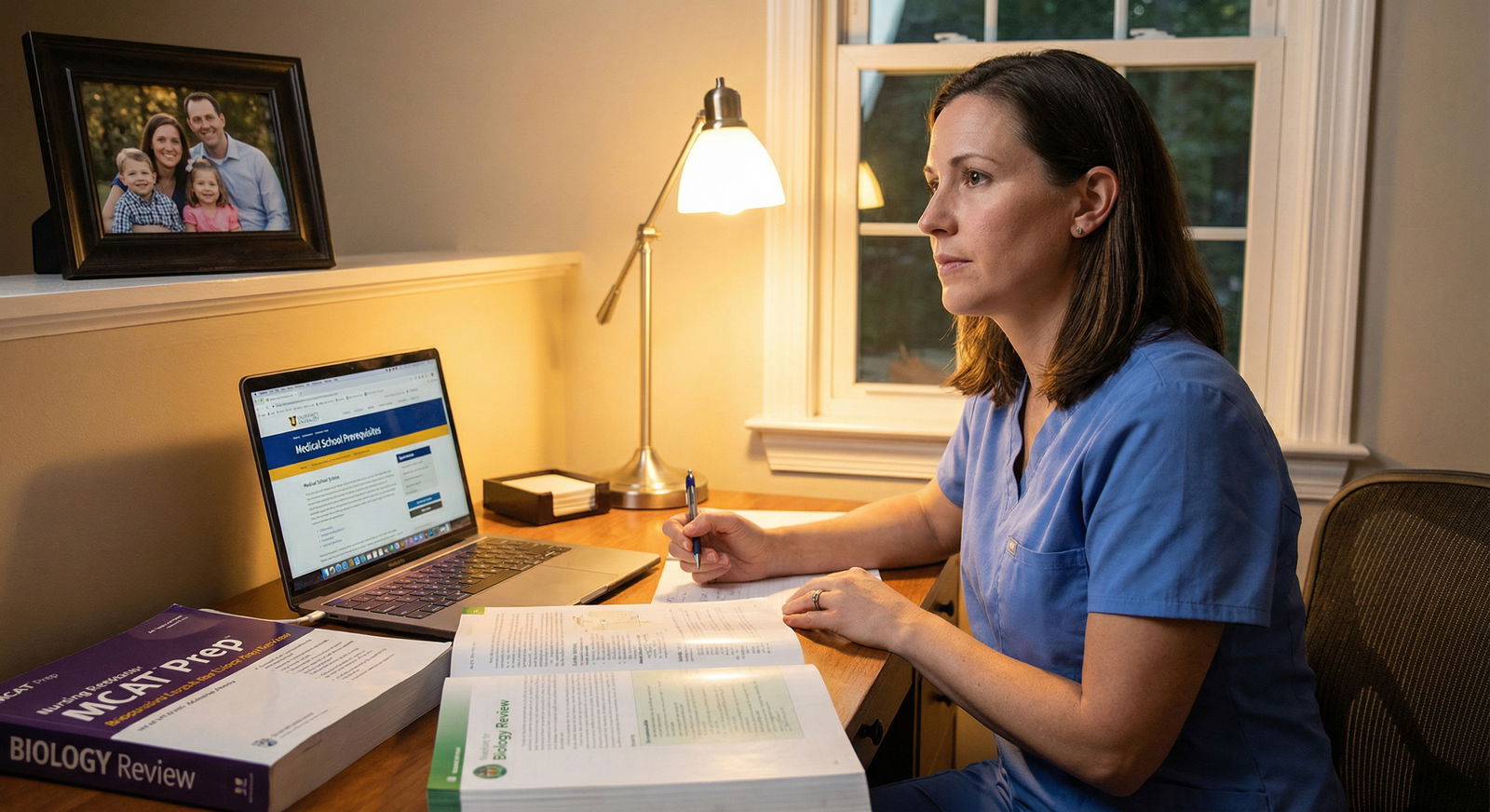
Here's what keeps me up at night about applicants who sell. Not the math. The unknown.
Med school is a four-year marathon with no guarantees. You could fail a board exam. Take a research year. Not match. Decide halfway through that you hate clinical medicine and want to do public health instead. I wish I was exaggerating. I've seen all of it happen.
If you sell your home and blow the equity on tuition, you have nothing to fall back on. You become 100% dependent on the degree paying off. That's pressure. The kind that turns Step 1 anxiety into a full breakdown.
You need a place to live if:
- You take a gap year for mental health
- You fail a rotation and need to repeat it
- Your spouse loses their job and you need to be the stabilizer
- You decide to take a research position in a different city
The emotional toll of living in a tiny rental while your classmates are sleeping in their own beds in their own homes? Real. Underestimated. I have seen marriages strain under this specific pressure.
The hybrid strategy is worth considering. Sell the vacation home. Sell the rental property. Sell the investment account that's been underperforming. But keep the primary residence. That house is your safety net, not just your asset.
The Non-Traditional Strategy: The Middle Ground

Selling the primary residence is a sledgehammer. You have other tools.
HELOC (Home Equity Line of Credit): This is the best-kept secret in premed finance. You access the equity in your home without selling it. You only pay interest on what you use. Rates are often lower than federal Grad PLUS loans. And the interest may be tax-deductible if you use it for qualified educational expenses. Talk to a tax advisor about this, it's not automatic, and the rules are specific.
Selling a secondary property: Got a rental? A vacation home? A piece of land? Liquidate the asset that doesn't serve your primary need. The primary residence is where you live, sleep, and recover from clinical rotations. Don't touch it.
The Bridge Loan: If you want to keep your home but need cash flow during the transition, a bridge loan can cover tuition for the first year while you rent out your current home and move closer to school. Expensive? Yes. But it's a temporary cost for a long-term gain.
Tax implications: A 1031 exchange allows you to sell an investment property and defer capital gains taxes if you reinvest in a similar property within a specific timeframe. This is advanced territory. Most applicants shouldn't try it without a CPA walking them through it. But if you have a rental property, ask about it before you list anything.
The middle ground exists. You don't have to go all-or-nothing. But you do have to think creatively and you do have to get professional help. This is not a "YouTube and a spreadsheet" decision.
Key Takeaways
Before you list that house, sit with these:
- Selling your home to pay for med school eliminates debt but eliminates your biggest safety net. You can't borrow back a down payment.
- The opportunity cost of selling often outweighs the interest you'd pay on federal loans. The math almost always favors keeping the home.
- Consider a HELOC or selling a secondary asset before liquidating your primary residence. Protect where you live.
- Always run the numbers. Compare four years of loan interest against closing costs, capital gains, and projected market appreciation. Use a spreadsheet. Better yet, hire a financial planner who specializes in medical professionals.
Your Next Move
Here's what you do this week. Not next month. This week.
- Pull your home's current market value from three sources: Zillow, Redfin, and a local agent who'll do a free comparative market analysis.
- Calculate your equity. Subtract mortgage balance, estimate closing costs (6% of sale price), and estimate capital gains tax exposure.
- Call a financial planner who works with medical professionals. Yes, it costs $200-$400 for the initial consultation. It's the best money you'll spend this year.
- Get pre-approved for a Grad PLUS loan and a private loan, just to see the rates. You don't have to take them. But you need to know your options.
- Don't sign anything until you've run the numbers with the planner. Med school will still be there next month. A bad financial decision follows you for decades.
I've watched too many applicants make panic decisions in December because their acceptance letter came in October and they didn't plan. Don't be that person. The home you built took years of work. The decision about its future deserves more than a sleepless night and a real estate agent who's eager to list it.
Your future self, as a resident, as an attending, as someone trying to buy a house again, will thank you for being patient now.