Navigating Medical School as a Non-Traditional Student: Comprehensive Tips and Strategies
Entering Medical School as a non-traditional student is both a bold step and a powerful asset to your future career. Whether you’re pivoting from a previous career, returning to school after raising children, serving in the military, or restarting after a long academic break, your path to medicine will look different from that of many of your classmates—and that difference can be one of your greatest strengths.
At the same time, non-traditional students often juggle additional responsibilities: mortgages, partners, children, aging parents, or ongoing work obligations. Medical school is demanding in the best of circumstances; adding real-life complexity requires intentional planning, strong Time Management, and robust Support Systems.
This guide expands on key Study Tips and practical strategies specifically tailored to Non-Traditional Students navigating Medical School. You’ll find actionable advice, real-world examples, and tools to help you not only get through medical school, but truly thrive.
Understanding the Non-Traditional Medical Student Experience
Non-traditional students are not a monolith. In the context of Medical School, “non-traditional” generally refers to anyone who didn’t follow the typical path of going directly from college to medical school. Common backgrounds include:
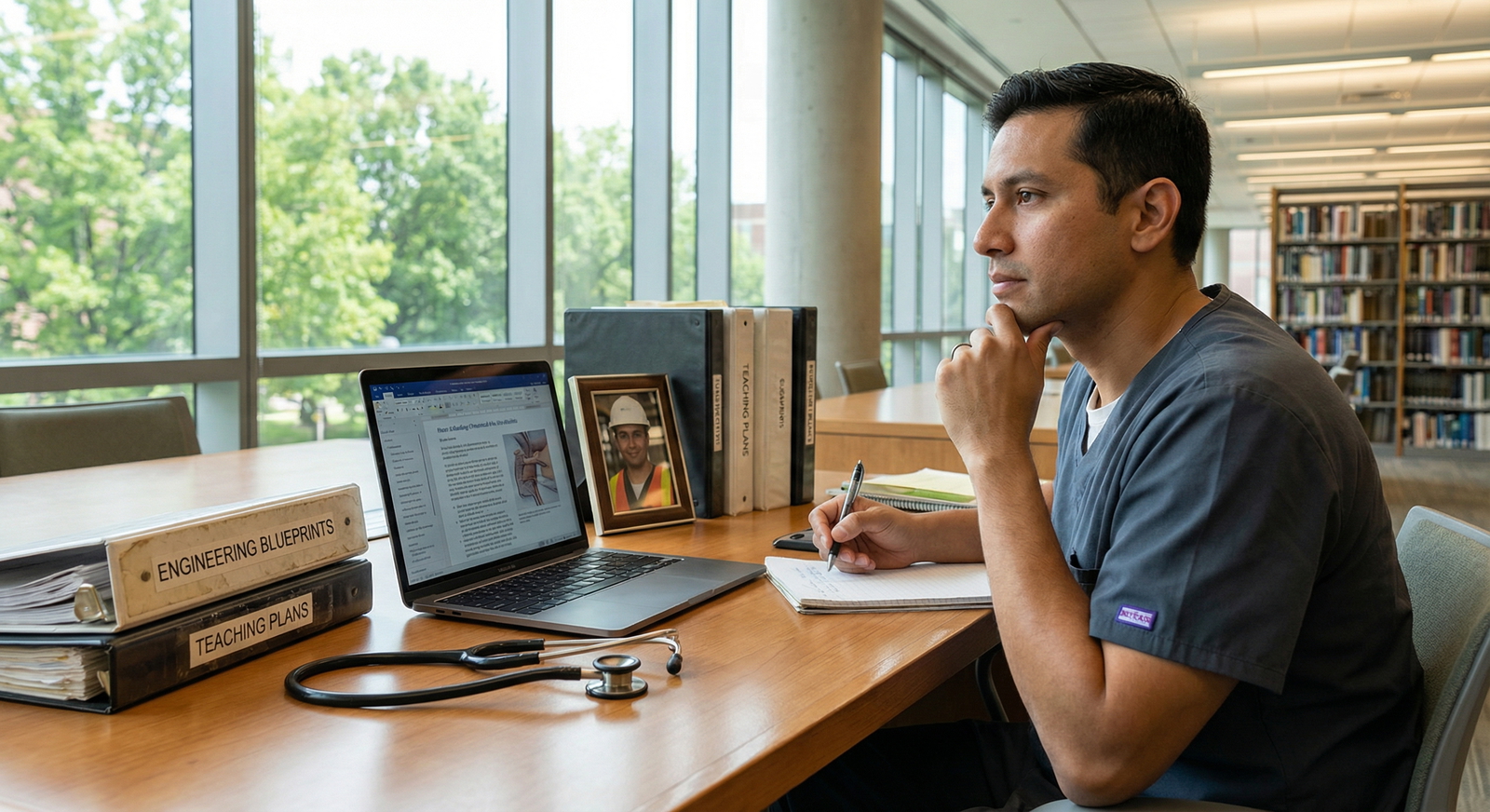
- Career changers (e.g., engineers, teachers, nurses, accountants, entrepreneurs)
- Military veterans and service members
- Parents or primary caregivers
- Students who completed a post-baccalaureate or returned to school years after undergrad
- Individuals who pursued other degrees, professions, or life experiences before medicine
Unique Strengths You Bring to Medicine
Non-traditional students often bring:
- Mature communication skills from workplace experience, leadership roles, or parenting
- Resilience and adaptability gained from navigating life transitions
- Professionalism and accountability developed in prior careers
- Empathy and perspective from diverse life experiences
- Time management and prioritization skills (even if they need fine-tuning for medical school)
These strengths translate directly into clinical excellence—especially in patient communication, interprofessional teamwork, and navigating complex systems.
Common Challenges Non-Traditional Students Face
Despite these advantages, there are real challenges that often arise:
- Feeling like an outsider among younger classmates
- Re-learning how to study after years away from school
- Managing financial obligations, debt, or dependents
- Balancing family life with long study hours and clinical rotations
- Coping with imposter syndrome and comparisons to traditional applicants
Recognizing these challenges early allows you to anticipate obstacles and build structures that support you.
Mastering Time Management as a Non-Traditional Medical Student
Effective Time Management is foundational for every student, but for Non-Traditional Students, it is absolutely critical. You’re not just managing lecture content and exams—you may also be managing childcare, household responsibilities, or work commitments.

Build a Weekly System, Not Just a Daily To-Do List
Instead of reacting to each day as it comes, design a repeatable weekly structure:
Block Schedule Your Week
- Start with fixed commitments: lectures (if mandatory), labs, small groups, exams, clinical sessions, and family obligations.
- Add protected study blocks (e.g., 2–3 hours) each day, treated like appointments you cannot miss.
- Reserve at least one partial rest block each week for recovery (e.g., Sunday afternoon for family and non-medical activities).
Use Tools That Work With Your Life
- Digital calendars (Google Calendar, Outlook): Ideal for syncing across devices and sharing with partners/family.
- Task managers (Todoist, Notion, Trello): Break large tasks (e.g., “study cardiology”) into smaller, actionable steps (e.g., “watch lectures 1–3,” “do 40 cardiology practice questions”).
- Paper planner or whiteboard: Especially helpful if you like visual, physical reminders in your study space.
Time-Boxing and the Pomodoro Technique
- Use time-boxing: allocate a specific time slot to each task (e.g., 7:00–9:00 pm: renal physiology review).
- Implement the Pomodoro Technique: 25 minutes focus + 5 minutes break; after four cycles, take a 15–20-minute break.
- For longer stretches, consider 50/10 cycles (50 minutes work, 10 minutes break) if that matches your focus pattern.
Prioritization: Doing the Right Work at the Right Time
Non-traditional students often can’t afford to waste time on low-yield tasks.
- Use the Eisenhower Matrix:
- Urgent + Important: Exams this week, assignments due soon.
- Important + Not Urgent: Long-term board exam prep, building research experiences, maintaining health.
- Urgent + Not Important: Many emails, low-priority admin tasks.
- Not Urgent + Not Important: Excessive social media, passive re-reading notes.
Focus your energy on Important tasks first, not just the urgent ones screaming for attention.
Protecting Time for Life Outside Medical School
Decide deliberately what you will and will not do:
- Set realistic “stop times” most nights to prevent chronic sleep deprivation.
- Batch errands and chores (e.g., grocery shopping once weekly with a list, meal-prepping on weekends).
- Discuss your schedule with your partner/family so they understand when you’re genuinely unavailable—and when you’re fully present.
Leveraging Your Life Experience as a Superpower
Your non-traditional background is more than a story you told in your personal statement; it is an active advantage in Medical School and clinical training.
Translate Your Previous Skills into Medical School Success
Examples of how different backgrounds can be leveraged:
- Former teacher: Break down complex concepts, lead study groups, and explain difficult topics simply.
- Military veteran: Apply discipline, leadership, and teamwork to group projects and clinical teams.
- Business or management professional: Use organizational skills, delegation, and strategic planning in research or student leadership roles.
- Parent: Bring heightened empathy, crisis management, and multitasking skills to patient interactions and clinical responsibilities.
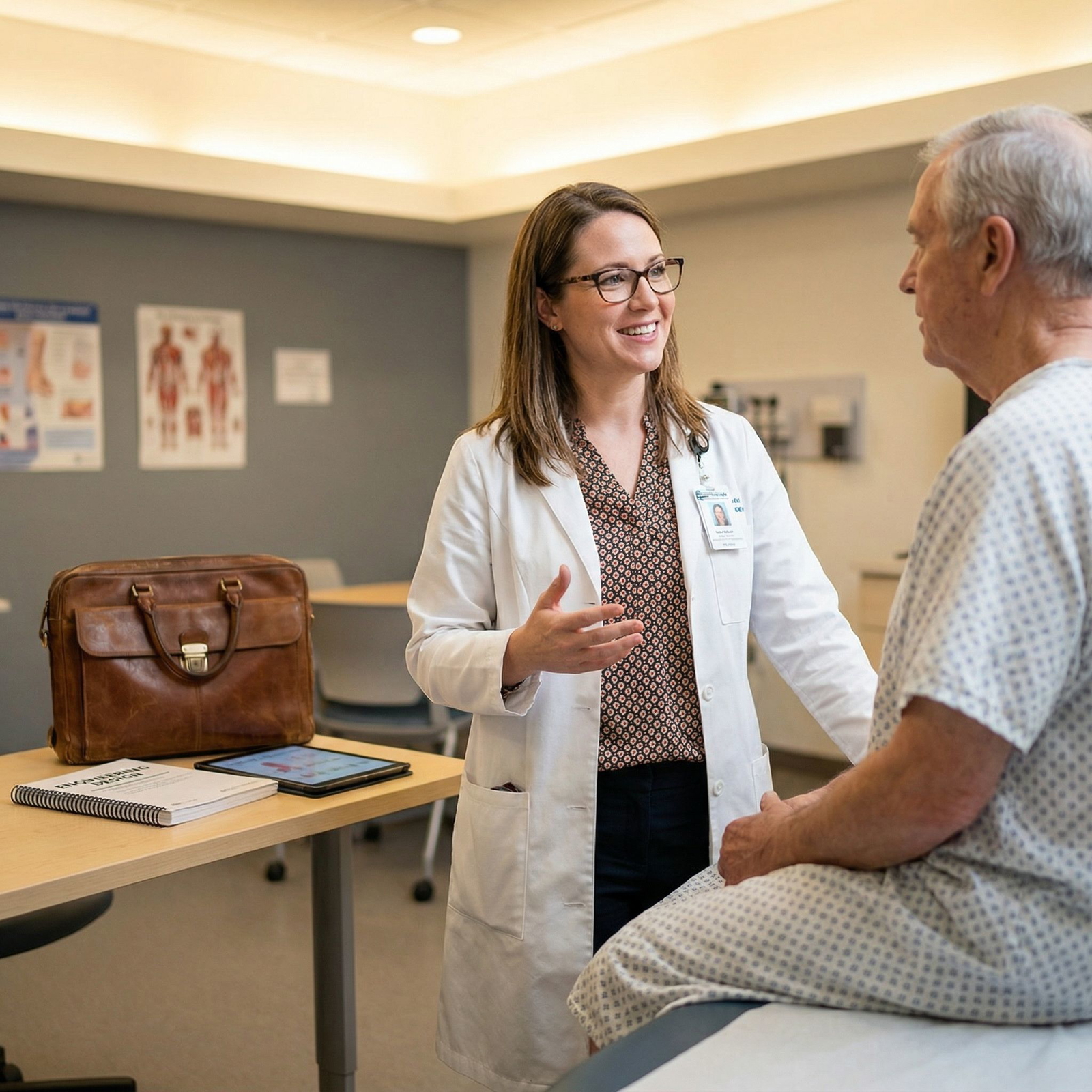
- Engineer or scientist: Excel in systematic problem-solving, data interpretation, and evidence-based decision-making.
Reflect intentionally:
- What did you do extremely well in your last role?
- How can that specific skill help you today (e.g., in anatomy lab, small-group discussion, dealing with stress)?
Use Your Perspective to Enrich Class and Clinical Settings
- Participate actively in discussions: Share relevant insights from your work or life when analyzing cases, ethics scenarios, or communication challenges.
- Normalize your journey: Speaking openly about your non-traditional path can help younger classmates understand the value of diverse experiences and may encourage others considering a similar path.
- Advocate for patients: Your familiarity with the “real world” may make you more attuned to social determinants of health, financial stressors, or cultural barriers—use this insight to advocate thoughtfully.
Building Strong Support Systems in Medical School
Support Systems are essential for every Medical School student, but Non-Traditional Students benefit immensely from having both academic and personal networks in place.
Academic and Peer Support
Peer Study Groups
- Look for classmates with similar goals, not necessarily similar backgrounds.
- Consider joining or forming a group with at least one other non-traditional student who understands your responsibilities.
- Clarify expectations: frequency of meetings, format (questions vs. teaching each other), and shared resources.
Mentorship
- Seek out:
- Faculty mentors who value diverse paths.
- Resident mentors (especially those who were non-traditional themselves).
- Upperclass medical students who can share course-specific tips and board prep strategies.
- Prepare for meetings with mentors:
- Bring specific questions (e.g., “How should I balance research and family?” or “How did you handle Step studying with kids?”).
- Ask about common pitfalls and what they would do differently.
- Seek out:
Institutional Resources
- Academic support offices (tutoring, learning specialists)
- Counseling and mental health services
- Career advising for specialty choice and residency applications
- Offices for student affairs, veterans, diversity and inclusion, or parenting students
Family, Friends, and Community Support
Communicate Expectations Early
- Share your program structure, exam weeks, and clinical rotation demands with your partner, children (age-appropriate), and close family.
- Clarify where you may need help (childcare backup, meal support, quiet time before exams).
Share the “Why”
- Explain your motivation for pursuing medicine and how this sacrifice is temporary but meaningful.
- Involve your family when appropriate—show them your white coat ceremony photos, give simple explanations of what you’re learning.
Find or Create Community
- Join:
- Non-traditional or parent-student groups
- Veteran or career-changer organizations
- Local faith or community groups for emotional support
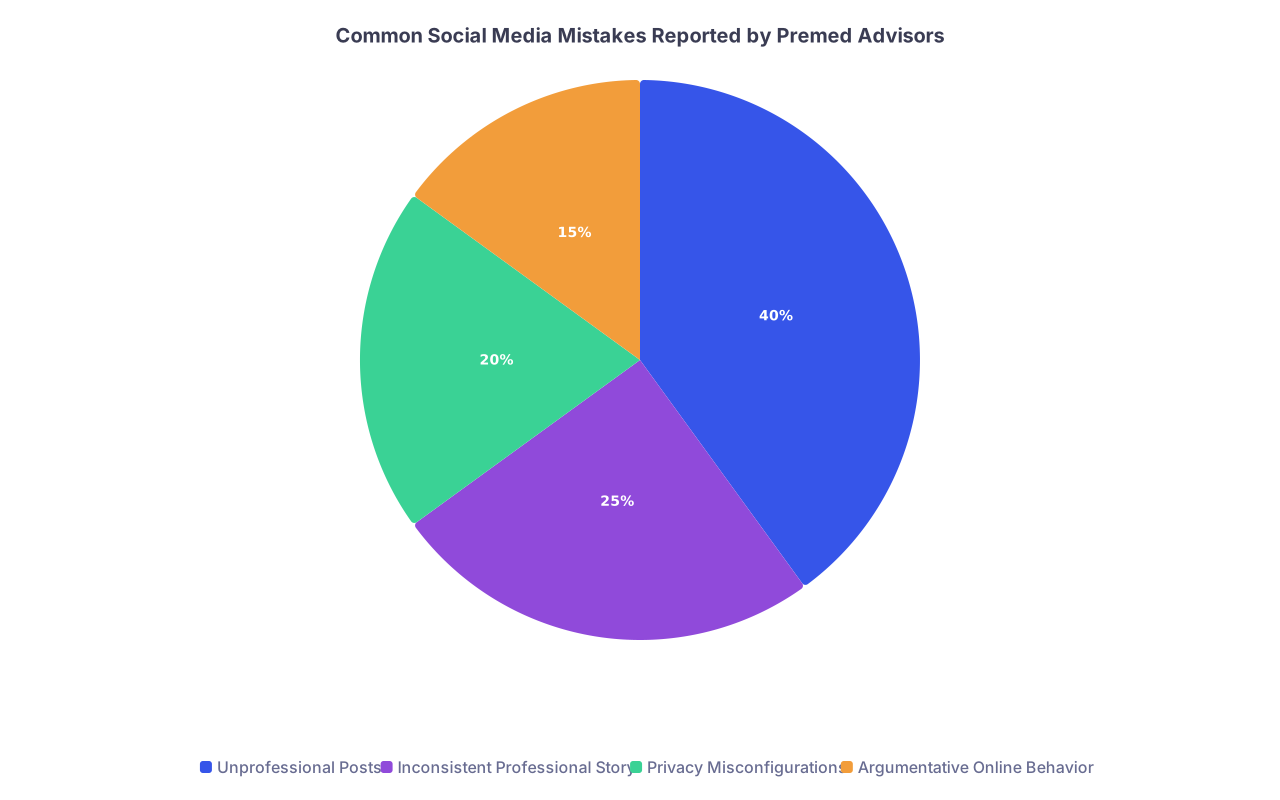
- Online communities (forums, social media groups) can be valuable, but be discerning—avoid comparison traps and focus on constructive, supportive spaces.
- Join:
Optimizing Study Habits for High-Yield Learning
Effective Study Tips can make the difference between feeling constantly behind and feeling in control of your learning—especially if you’ve been out of school for a while.
Use Evidence-Based Learning Strategies
Active Learning Over Passive Reviewing
- Replace extensive re-reading and highlighting with:
- Self-testing (question banks, flashcards, end-of-chapter questions)
- Teaching others (explain a concept to a peer, partner, or even out loud to yourself)
- Practice questions as early as possible in each block
- Replace extensive re-reading and highlighting with:
Spaced Repetition and Anki
- Use spaced repetition tools like Anki to:
- Reinforce high-yield facts over time
- Avoid last-minute cramming
- Make use of small time pockets (e.g., 15 minutes between classes, on the train)
- Create or modify decks that align with your curriculum and exams.
- Use spaced repetition tools like Anki to:
Interleaving and Integration
- Mix topics (e.g., studying cardiac physiology, then related pharmacology, then relevant pathology) to strengthen connections and application.
- Periodically review older units while learning new ones to maintain long-term retention.
Set Up an Effective Study Environment
Designated Study Space
- Quiet, well-lit, and comfortable
- Minimal clutter to reduce distractions
- Keep essential tools within reach (laptop, pens, water, planner)
Minimize Distractions
- Silence non-critical notifications during study blocks.
- Use website blockers if needed to limit social media.
- Inform your household about your focused study times.
Use “Micro-Study” Opportunities
- Listen to audio lectures or podcasts during commutes.
- Review flashcards while waiting at appointments.
- Keep a small set of “portable tasks” (flashcards, question sets) for unpredictable time windows.
Adapting to the Pace and Volume of Medical School
Even with strong study habits, the pace of Medical School can be jarring—especially if you’ve been out of an academic environment.
Expect an Adjustment Period
- It is normal to feel overwhelmed initially—even if you were highly successful in your prior career.
- Give yourself 4–8 weeks to refine your system before judging your capabilities.
Use Early Assessments as Feedback, Not Verdicts
- Analyze exam results: Were you missing content, misreading questions, or running out of time?
- Adjust your approach: More active practice? Better scheduling? Different resources?
Consider Pre-Matriculation Preparation
- If you’re still in the premed phase, consider:
- A refresher course in biology, chemistry, or statistics
- A structured pre-matriculation or post-baccalaureate program
- Online review modules for basic sciences
- If you’re still in the premed phase, consider:
Balancing Medical School With Life, Family, and Well-Being
Non-traditional students often juggle roles: student, parent, partner, employee, caregiver. Achieving “perfect balance” is unrealistic—but intentional boundaries and habits can make the load sustainable.

Set Clear Boundaries and Communicate Them
Define Protected Times
- “Non-negotiable study time” (e.g., 7–10 pm on weekdays, 8–11 am on Saturdays).
- “Non-negotiable family time” (e.g., family dinner most nights, Sunday mornings).
Negotiate Support
- Discuss division of household tasks with your partner (cooking, cleaning, childcare).
- Consider outsourcing selectively if possible: grocery delivery, occasional cleaning help, or shared childcare with another family.
Prioritize Physical and Mental Health
Neglecting your health is not sustainable in medical training:
- Sleep: Aim for consistent, sufficient sleep (ideally 7–8 hours most nights). Chronic sleep deprivation makes studying inefficient.
- Exercise: Incorporate brief, regular movement—this can be 20–30 minutes of walking, home workouts, or stretching between study blocks.
- Nutrition: Simple, prepped meals and healthy snacks can prevent energy crashes.
- Stress Management: Mindfulness, journaling, therapy, or spiritual practices can provide essential emotional grounding.
Plan for High-Stress Periods
- Identify exam weeks, board prep periods, and demanding clinical rotations in advance.
- Arrange:
- Extra childcare or family support during those windows.
- Prepped meals or reduced chores.
- Reduced social obligations for a set time, with a plan to reconnect after.
Engaging With the Medical School Community as a Non-Traditional Student
Feeling disconnected or “different” is a common experience for Non-Traditional Students. Intentional engagement can help you build a sense of belonging.
Get Involved Strategically
You don’t need to join every club or event. Choose activities that align with your goals and bandwidth:
- Student organizations: Specialty interest groups, community outreach projects, mentorship programs.
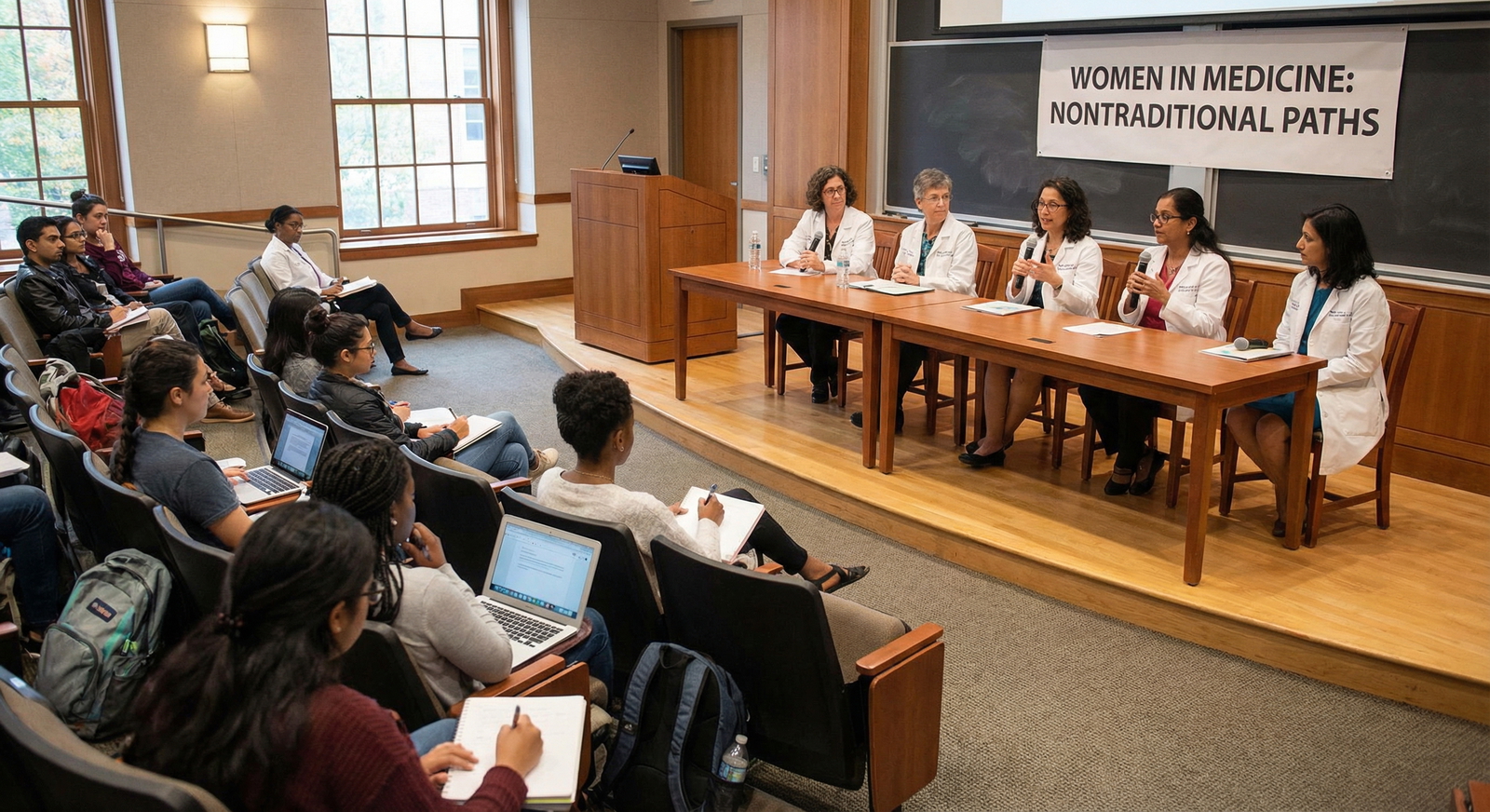
- Professional development events: Grand rounds, specialty panels, research seminars.
- Leadership roles: If feasible, consider roles that benefit from your prior experience (treasurer, project coordinator, committee lead).
Network With Purpose
- Attend networking events and introduce yourself to faculty, residents, and visiting physicians.
- Prepare a brief, authentic explanation of your background and interests:
- “I used to work as a [profession], and I’m particularly interested in [field/issue].”
- Follow up with a brief email after meaningful conversations.
Real-World Examples: Non-Traditional Students Thriving in Medical School
Real stories can make these strategies more tangible:
Susan – Former High School Teacher
- Background: Taught biology and chemistry for 10 years before Medical School.
- Strength: Exceptional at explaining complex topics.
- Strategy: Led weekly, informal review sessions for classmates; used her teaching skills to reinforce her own understanding and build community.
- Outcome: Her communication skills later made her stand out in clerkships and as a peer mentor.
James – Military Veteran
- Background: Served in the military for several years with leadership responsibilities.
- Strength: Discipline under pressure and team coordination.
- Strategy: Applied his leadership skills to organize efficient study groups, and his calm demeanor became invaluable during stressful clinical shifts.
- Outcome: He became a natural leader during clinical rotations and later in residency.
These examples highlight a key theme: your prior life does not compete with your Medical School identity—it enhances it.
Frequently Asked Questions (FAQ)
Q1: What is considered a non-traditional student in Medical School?
A: A non-traditional student is typically someone who did not follow the direct path from college to Medical School. This may include individuals who took several years off for work, military service, family responsibilities, additional degrees, or significant life experiences before applying. Age alone does not define “non-traditional”—it’s more about your path and context.
Q2: How can I manage my responsibilities (family, work, finances) while in Medical School?
A: Start by creating a realistic time and financial plan before matriculation. During school, use structured Time Management (weekly schedules, protected study blocks), communicate clearly with your partner/family, and explore institutional supports (financial aid counseling, childcare resources, academic support). If you must work, try to find flexible, low-hour roles and be prepared to adjust if your academic performance is affected.
Q3: Are there support systems specifically for Non-Traditional Students in Medical School?
A: Many schools now recognize the value and needs of Non-Traditional Students. Look for:
- Formal mentorship programs that can match you with non-traditional mentors
- Affinity groups (e.g., parenting students, veterans, career-changers)
- Academic support, counseling, and wellness services If such groups don’t exist, consider collaborating with student affairs to help establish them—others are likely seeking them too.
Q4: What if I don’t perform as well as I expected early in Medical School?
A: Early struggles are common, especially if you’ve been away from formal academics. Treat this as data, not a verdict on your potential. Analyze what went wrong (study methods, time use, exam-taking skills), seek help from learning specialists or academic advisors, adjust your strategies, and give yourself grace during the learning curve. Many highly successful physicians had rocky starts in Medical School.
Q5: Can my non-traditional background truly enhance my medical career long-term?
A: Absolutely. Residency programs and healthcare systems increasingly value diversity of perspective and experience. Your prior career, parenting experience, military service, or other life roles can distinguish you in:
- Patient communication and rapport
- Leadership and teamwork
- Systems-based practice and problem-solving The same qualities that brought you to medicine—persistence, courage, maturity—will continue to serve you throughout your training and career.
Non-traditional paths to medicine are not detours; they are powerful, experience-rich routes that can produce exceptional physicians. By cultivating strong Time Management skills, leveraging your unique background, building durable Support Systems, and using high-yield Study Tips, you can navigate Medical School with intention and resilience—and turn your non-traditional journey into a defining professional strength.