
The biggest mistake mid‑career professionals make when pivoting to medicine is underestimating the money problem by years, not by dollars.
You are not a 21‑year‑old undergrad. You’ve got rent or a mortgage, maybe kids, maybe aging parents, and a salary you’ve gotten used to. If you try to “figure out the finances later,” you will either quit early or accept a school you cannot afford.
So we’re not doing that.
This is your 3‑year, month‑by‑month financial prep timeline for a pivot to medicine, assuming:
- You’re working full‑time in another field now
- You’re planning to apply in about 2–3 years
- You’ll likely start medical school around Year 3 or 4 from now
Adjust exact months for your situation, but keep the order. At each point, I’ll tell you what, exactly, you should be doing.
Big Picture: Your 3‑Year Financial Arc
First, the birds‑eye view.
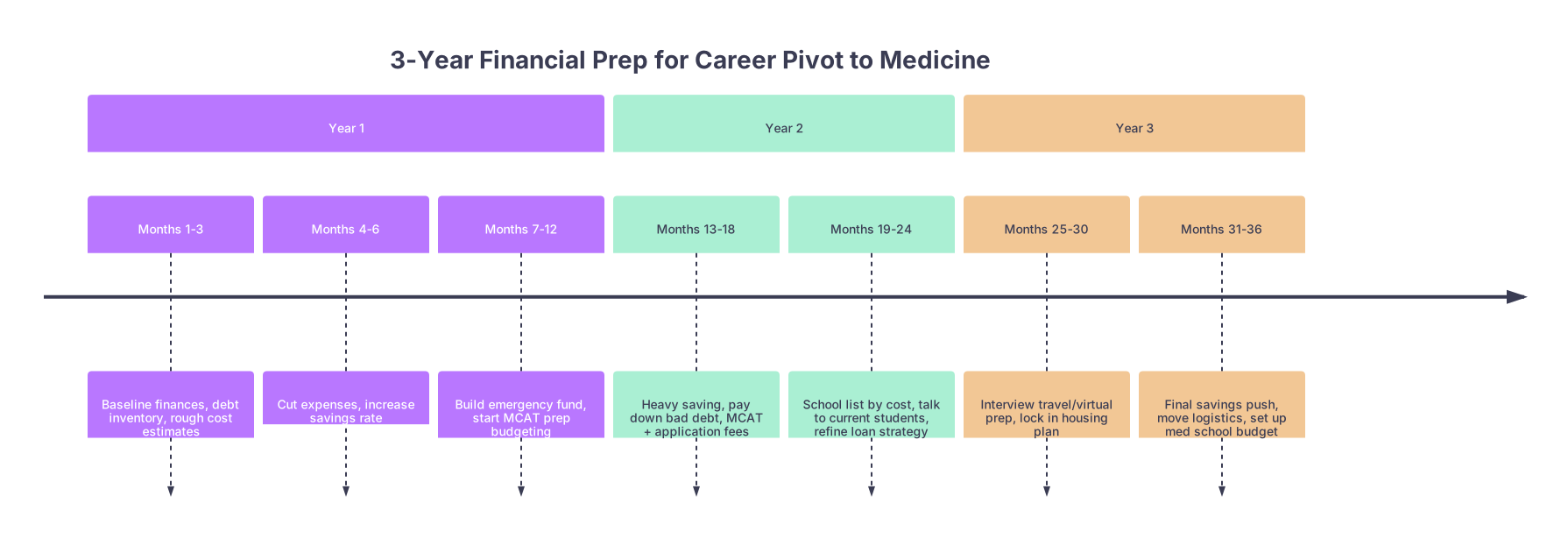
| Period | Event |
|---|---|
| Year 1 - Months 1-3 | Baseline finances, debt inventory, rough cost estimates |
| Year 1 - Months 4-6 | Cut expenses, increase savings rate |
| Year 1 - Months 7-12 | Build emergency fund, start MCAT prep budgeting |
| Year 2 - Months 13-18 | Heavy saving, pay down bad debt, MCAT + application fees |
| Year 2 - Months 19-24 | School list by cost, talk to current students, refine loan strategy |
| Year 3 - Months 25-30 | Interview travel/virtual prep, lock in housing plan |
| Year 3 - Months 31-36 | Final savings push, move logistics, set up med school budget |
Now let’s walk it chronologically.
Year 1: Get Brutally Honest and Build the Base
Months 1–3: Financial X‑Ray and Reality Check
At this point you should stop guessing and get hard numbers.
Inventory your entire financial life
Open every statement. Make a one‑page snapshot:- Take‑home pay (monthly average over last 6–12 months)
- All fixed expenses (rent/mortgage, utilities, insurance, subscriptions, minimum loan payments)
- All variable but recurring spending (food, gas, childcare, etc.)
- Assets (cash, investments, retirement accounts, home equity)
- Debts (credit cards, personal loans, car loans, student loans)
Put it in a table. Something like this:
| Category | Amount (Monthly) | Notes |
|---|---|---|
| Take-home income | $X,XXX | After tax and benefits |
| Fixed expenses | $X,XXX | Rent, loans, insurance |
| Variable expenses | $X,XXX | Food, gas, childcare |
| Savings rate | $X,XXX | Or % of take-home |
| Debt total | $XX,XXX | Credit cards, loans |
| Cash savings | $X,XXX | Checking + savings |
Estimate the full cost of your pivot
You’re not just budgeting tuition; you’re budgeting lost income + life.Make a rough, pessimistic estimate for:
- Lost salary over 4 years of med school
- Tuition and fees (use high‑end ranges: $45–70k/year)
- Living expenses in the med school city
- Application and testing costs
To visualize where your money will go during the transition:
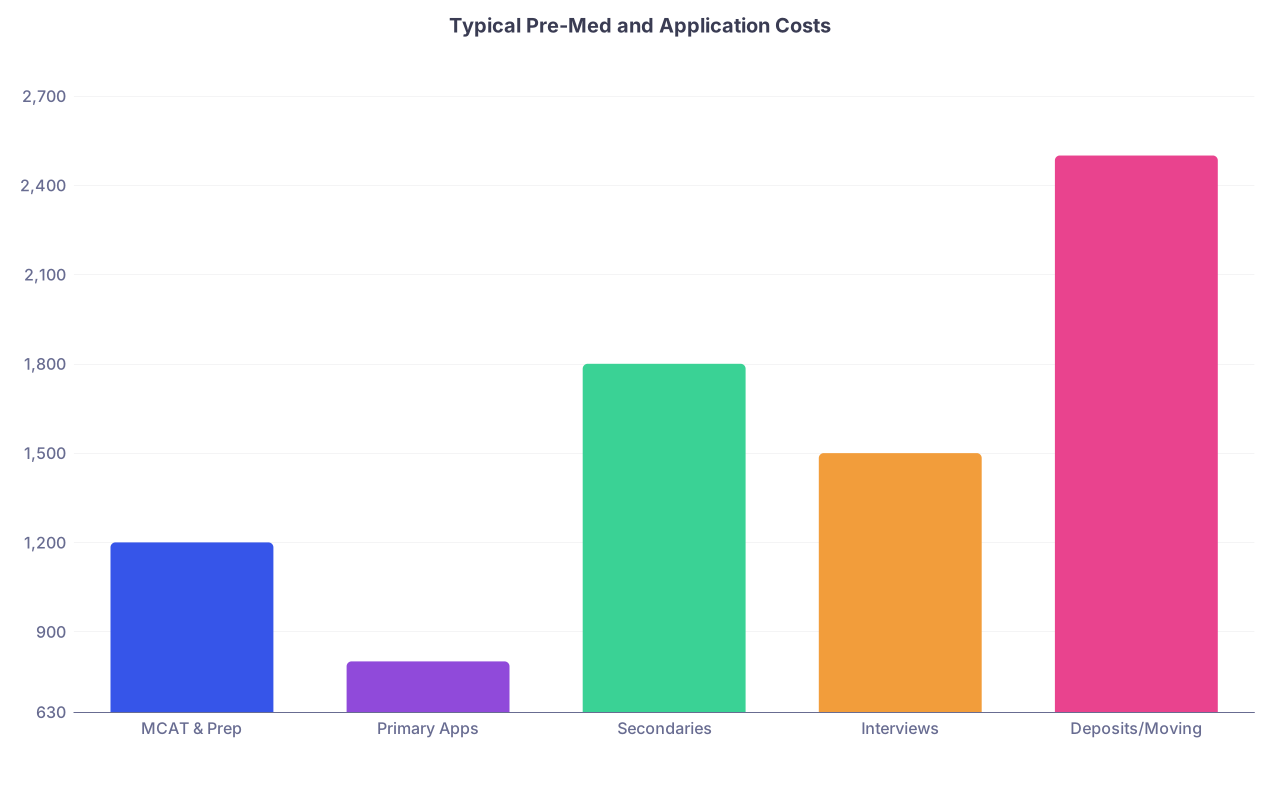
| Category | Value |
|---|---|
| MCAT & Prep | 1200 |
| Primary Apps | 800 |
| Secondaries | 1800 |
| Interviews | 1500 |
| Deposits/Moving | 2500 |
Run a basic feasibility check
Not to discourage you. To avoid fantasy.At this point you should answer:
- If I had to live on $X/month during med school, what is the minimum I can tolerate?
- How much debt could I live with at graduation? (Pick a max number. E.g., “I will not go over $300k total debt.”)
- What non‑negotiables do I have? (Partner who won’t move? Kids in a specific school? Parents to support?)
If those numbers are wildly incompatible, you need to adjust something early (timeline, target schools, whether to keep part‑time work during post‑bacc, etc.).
Months 4–6: Slash the Burn Rate and Rebuild the Budget
At this point you should be re‑writing your entire monthly budget around one goal: maximize your runway for the pivot.
Create a pivot‑specific budget
Shift from “standard adult budget” to “pre‑med transition budget”:
- Cap housing at a reasonable % of take‑home (ideally 25–30%)
- Kill high‑friction subscriptions and lifestyle creep
- Start treating any extra income as med‑school money, not “fun money”
Decide what gets protected
You probably have things you refuse to cut: daycare, certain medical expenses, helping family. Fine. Protect them. But do it consciously.
Then, target the rest:
- Restaurants / delivery
- Travel
- Upgrades (car, tech, wardrobe)
Set explicit saving and debt priorities
For most mid‑career pivoters, the order looks like:
- Build/secure a 3–6 month emergency fund for the pre‑med period
- Kill high‑interest debt (>8–9%) aggressively
- Maintain at least minimal retirement contributions (5–10%) if your debt isn’t crushing
- Save a separate bucket for MCAT + application costs
Visualizing your priorities:
| Priority | Focus Area | Target |
|---|---|---|
| 1 | Emergency fund | 3–6 months bare-bones expenses |
| 2 | High-interest debt | Rate > 8–9% |
| 3 | Retirement minimum | 5–10% of income (if feasible) |
| 4 | Application bucket | $4k–$6k over 18–24 months |
You’re setting up a system now that will run mostly on autopilot later, when you’re drowning in MCAT passages and secondaries.
Months 7–12: Build the War Chest and Plan for the MCAT Year
At this point you should be moving from “figuring it out” to “executing a plan”.
Hit a concrete emergency fund milestone
- Minimum: 3 months of bare‑bones expenses
- Ideal for a non‑trad with dependents: 6 months
Keep this separate from your med‑school/application savings. Different purposes. Different accounts if needed.
Start earmarking MCAT money
You’ll likely spend:
- MCAT registration: ~$335
- Prep materials: $300–$1,500 (AAMC bundle + question banks + maybe a course)
- Extra costs if you travel to a test center
Decide your MCAT window (sometime in Year 2) and count backward. Divide total costs by the number of months you have left; that’s your monthly MCAT savings line item.
Audit your benefits and insurance
At this point you should:
- Understand what happens to your health insurance when you leave or cut hours
- Know your vesting schedule for 401(k)/pension/stock grants
- Identify any bonuses or milestones you shouldn’t walk away from too early
I’ve seen people quit three months before a big vesting date and effectively throw away $10k+. Do not be that person.
Start light conversations at home
If you have a partner/family, this is when the real talks start:
- “This is how our income will drop in ~2–3 years.”
- “Here’s the city range we may need to move to for cheaper schools.”
- “Here’s how much we’d need to borrow at School X vs Y.”
You’re setting expectations early, not springing a lifestyle shock on them the month before orientation.
Year 2: Heavy Saving, MCAT, and Application Costs
This year hurts the most financially: you’re still working, but now you’re also paying for MCAT, applications, and maybe a post‑bacc or prerequisite classes.
Months 13–18: MCAT + Aggressive Savings + Kill Bad Debt
At this point you should be in execution mode with clear targets.
Lock in your MCAT plan and budget
Your MCAT year has three cost pillars:
- Registration
- Materials (AAMC bundle is non‑negotiable)
- Possibly reduced work hours to study properly
Estimate the income hit if you cut from full‑time to 0.8 or 0.6 FTE for 3–6 months. That opportunity cost is an MCAT expense.
Track both in one chart:
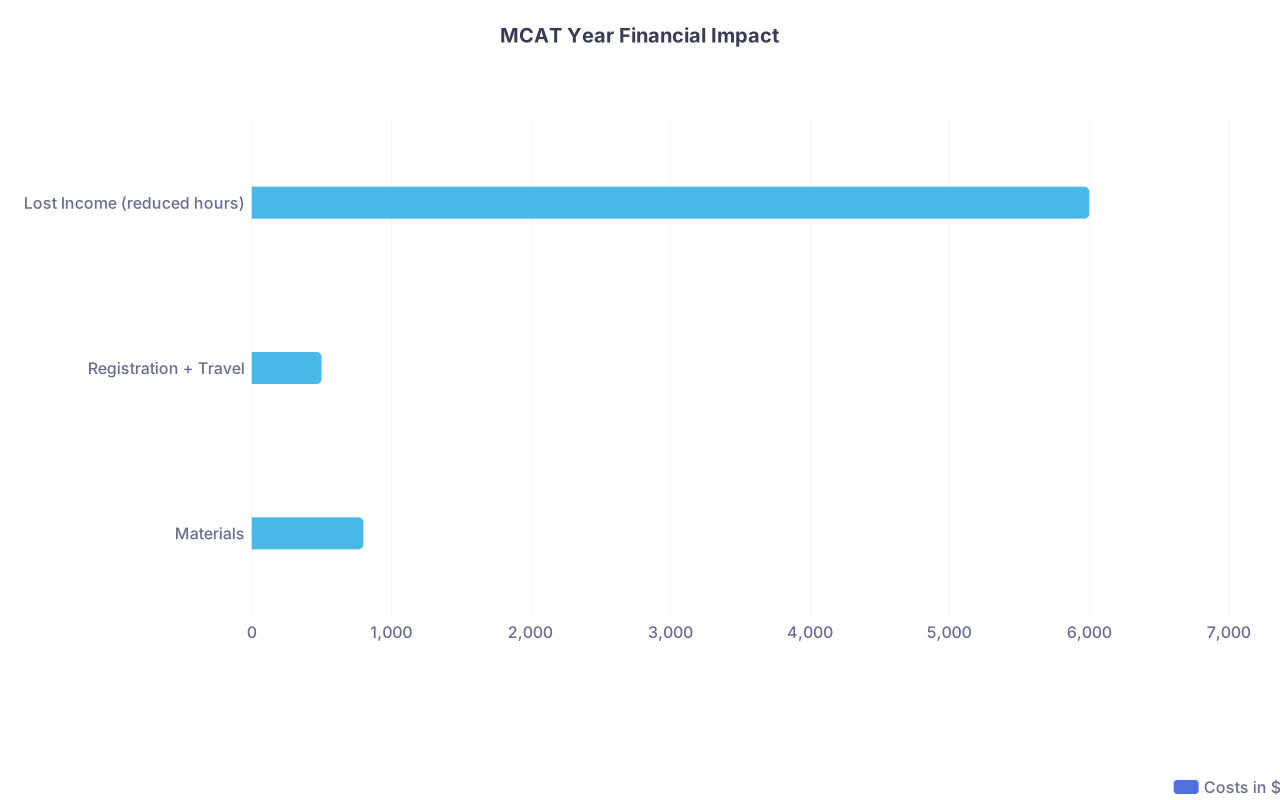
| Category | Costs in $ |
|---|---|
| Materials | 800 |
| Registration + Travel | 500 |
| Lost Income (reduced hours) | 6000 |
Finish off high‑interest debt
The moment you’re reasonably sure you’re going to medical school, high‑interest consumer debt becomes a fire. You want it gone before you add six figures of educational debt on top.
This 6‑month window is where you:
- Throw every extra dollar at credit cards and personal loans
- Avoid taking on a new car loan unless your current car is genuinely dying
Decide on post‑bacc or DIY prerequisites early
If you still owe prereqs, decide:
- Formal post‑bacc (more expensive, more structure, better advising)
- DIY at a state school/community college (cheaper, more flexible)
Price them out. Not just tuition, but:
- How many work hours you’ll realistically give up
- Commute/parking
- Lost overtime, promotions, or bonuses because you’re less available
At this point you should know whether Year 2 or Year 3 will include part‑time work + classes.
Months 19–24: Application Season and School Cost Strategy
Here’s where non‑trads often blow money: they apply blindly and expensively, then realize in February that half those schools would have bankrupt them.
At this point you should be building a cost‑aware school list.
Estimate your application‑year costs
For a typical mid‑career applicant applying to 20–25 schools:
- Primary (AMCAS/AACOMAS/TMDSAS): ~$1,000–$1,200
- Secondaries: $1,500–$2,000+
- Interviews:
- If mostly virtual: a few hundred (better internet, some equipment, maybe 1–2 trips)
- If many are in‑person: easily $1,500–$3,000
You should have at least $3,500–$5,000 ring‑fenced before secondaries start hitting.
Use data, not vibes, for school selection
You’re not chasing prestige; you’re buying a license to practice medicine at a sustainable price.
Screen schools by:
- In‑state vs out‑of‑state tuition
- Historical cost of attendance (COA)
- Cost of living in the city
- Scholarship patterns (some private schools discount heavily; some don’t)
Rough‑compare likely med school scenarios
Build a simple comparison for your top realistic scenarios:
| Scenario | Tuition/Fees (4 yrs) | Est. Living (4 yrs) | Total Debt at Grad |
|---|---|---|---|
| In-state public | $180,000 | $120,000 | ~$300,000 |
| Out-of-state public | $240,000 | $140,000 | ~$360,000 |
| Private (no scholarship) | $280,000 | $160,000 | ~$420,000 |
| Private (half tuition merit) | $160,000 | $160,000 | ~$320,000 |
Now compare those totals to the maximum debt number you chose back in Year 1. If they don’t match, change something: target states, number of private schools, or willingness to move.
Talk to real students about real costs
This is the missing step almost everyone skips.
- Email or DM current non‑trad students at schools you like
- Ask them:
- “What did you underestimate financially?”
- “Where are you overpaying to live?”
- “If you had to do it again, which school would you pick purely on money?”
You’ll hear patterns. Expensive downtown housing. Surprise fees. Hidden commuting costs. That info is gold.
Year 3: From Acceptance to Day 1 – Locking In the Transition
If Year 2 was about paying to apply, Year 3 is about aligning your entire life around the school you’re actually going to.
Months 25–30: Interview Season, Offers, and Early Housing Planning
At this point you should be in the thick of interviews (or waiting) and thinking in concrete terms about specific cities, not vague “med school.”
Manage interview‑season spending
You already set aside interview money in Year 2. Now:
- Prioritize interviews at financially viable schools
- Don’t over‑book travel; cluster trips when possible
- For in‑person visits, stay cheap but safe. You’re not on vacation.
Run school‑specific financial scenarios
When you start getting A’s, WL’s, and R’s, pull out your spreadsheet again.
For each acceptance, calculate:
- 4‑year tuition and mandatory fees (use current numbers + 3–4% annual bump)
- Realistic rent in nearby safe neighborhoods
- Commute and parking costs
- Health insurance if not covered through a spouse
Then estimate annual loan needs:
- Total annual COA – any scholarships – any reasonable work/partner income = loans you’d take
Represent your scenarios simply:
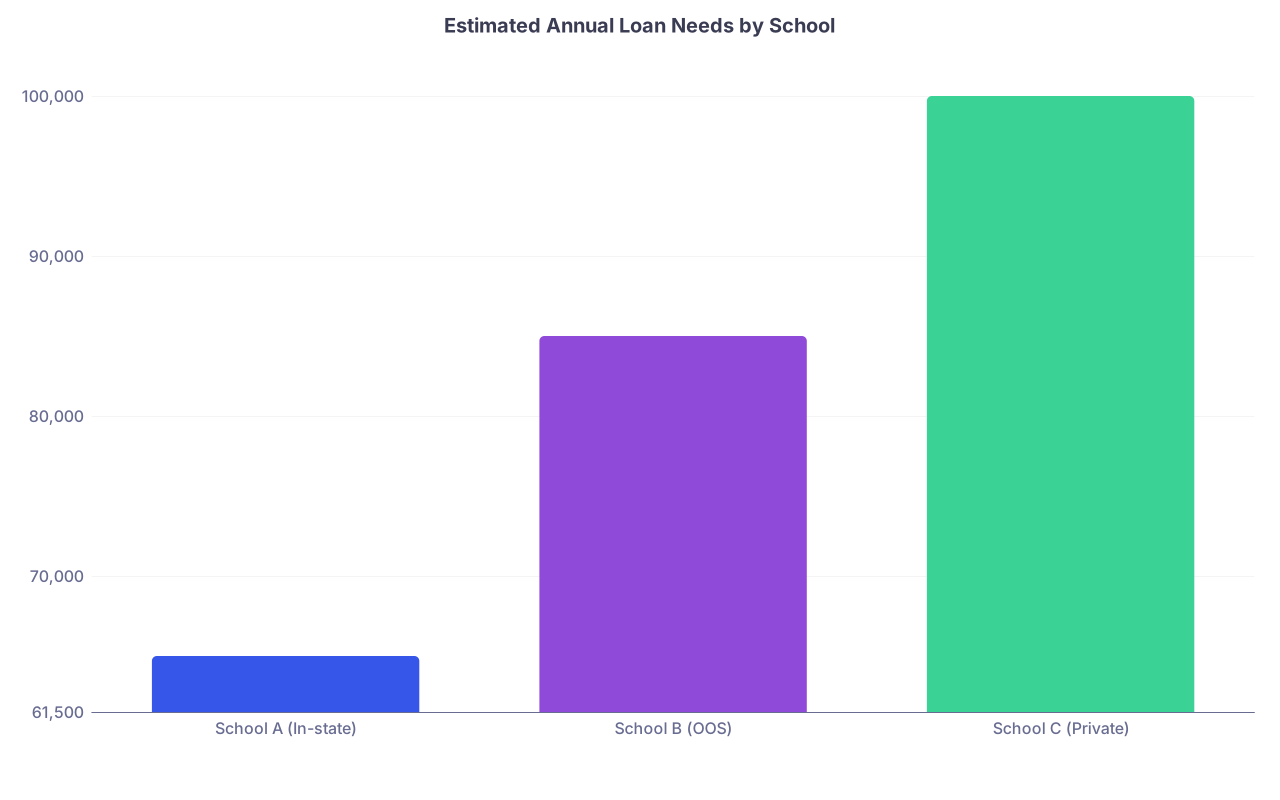
| Category | Value |
|---|---|
| School A (In-state) | 65000 |
| School B (OOS) | 85000 |
| School C (Private) | 100000 |
Start rough housing planning early
Once you have a likely acceptance:
- Research neighborhoods where students actually live
- Decide: roommate vs solo, walk/bike distance vs commute by car
- If you own a home now, start exploring: rent it out, sell it, or leave it empty? (Leaving it empty is usually a financially bad idea.)
Your housing choice will be one of your largest controllable costs in med school. Do not wing it in July.
Months 31–36: Final Savings Push, Life Logistics, and Med School Budget
You’re in the home stretch. This is where you stop thinking like a well‑paid professional and start thinking like a student again.
At this point you should be downshifting your life to med‑school mode.
Execute your exit plan from your current job
- Capture any final vesting, bonuses, or 401(k) matches
- Preserve health insurance coverage until your med school coverage kicks in (watch coverage end dates carefully)
- Avoid unnecessary gaps with no income and no loans disbursed yet
Do one last hard reset on expenses
Pretend it’s August of M1 and ask:
- What will my monthly budget look like on loan money/student income?
- What expenses do I need to kill now so they’re not baked into my lifestyle later?
Common cuts at this stage:
- Expensive gym → cheaper option or school gym
- Streaming overload → 1–2 max
- Car: sell the “nice” one, buy a reliable used one if you even need a car in your med school city
Set your med school monthly budget before you arrive
Use your school’s COA as an upper bound, not a suggestion.
Break it into a monthly plan:
- Rent + utilities
- Food
- Transportation
- Childcare (if applicable)
- Books/supplies
- “Life happens” buffer
Compare your plan to the loan amount you could take. Then deliberately choose to borrow less if possible. Every unnecessary dollar plus interest is your future attending self’s problem.
Shore up safety nets
Non‑trads can’t live on vibes. You need real backstops:
- Keep that emergency fund somewhere accessible but not tempting
- Ensure your partner (if you have one) isn’t financially overextended assuming future attending income too early
- Confirm you understand income‑driven repayment and forgiveness options you may use post‑residency
One Sample Combined Timeline
To tie it together, here’s what a tight but realistic 3‑year path often looks like:
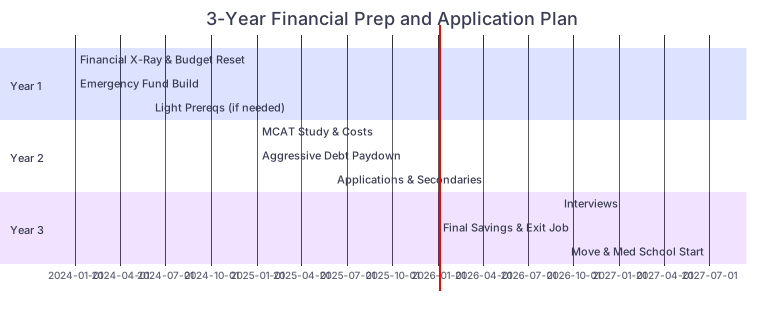
| Task | Details |
|---|---|
| Year 1: Financial X-Ray & Budget Reset | a1, 2024-01, 3m |
| Year 1: Emergency Fund Build | a2, after a1, 6m |
| Year 1: Light Prereqs (if needed) | a3, 2024-06, 6m |
| Year 2: MCAT Study & Costs | b1, 2025-01, 6m |
| Year 2: Aggressive Debt Paydown | b2, 2025-01, 12m |
| Year 2: Applications & Secondaries | b3, 2025-06, 6m |
| Year 3: Interviews | c1, 2026-09, 5m |
| Year 3: Final Savings & Exit Job | c2, 2026-01, 12m |
| Year 3: Move & Med School Start | c3, 2027-07, 2m |
Final Checks in the Last 3–6 Months Before Matriculation
At this point you should run a final, ruthless checklist:
- Do I have at least 1–3 months of living expenses separate from my loans?
- Is all high‑interest consumer debt either gone or on an aggressive payoff plan that doesn’t depend on fantasy income?
- Have I committed to a housing option that’s boring and affordable, not shiny and aspirational?
- Do I understand exactly how much I’m borrowing for Year 1 and what that looks like per month after residency?
If anything here feels fuzzy, fix it now. Not after white coat ceremony.
Key Takeaways
- Your pivot to medicine is a multi‑year financial project, not a series of random payments. Treat it like one.
- The big wins come from early decisions: debt killed before med school, realistic school list by cost, and housing choices that match your future income, not your past salary.
- At each phase, know your job: Year 1 = clarity and cuts, Year 2 = MCAT and application spending with discipline, Year 3 = choosing a school and a lifestyle you can actually afford for the long haul.