
It’s March 28th. You just refreshed your email for the 14th time today and there it is: “Congratulations! We are pleased to offer you admission…”
Your heart’s racing. You’re in. But then the second wave hits:
“I have a full-time job. A boss. Projects. Health insurance. When do I tell them I’m leaving for medical school—and how?”
This is the part nobody really prepares you for. The timeline between “I got in” and “I’m gone” is tight, political, and full of landmines if you’re not deliberate.
Let’s walk it out step-by-step: from the moment you’re likely to be accepted, to your last day in the office.
Big Picture: The Overall Timeline
First, zoom out. For a typical U.S. med school that starts in early August:
- Acceptances: October–March (with most non-trads hearing Nov–March)
- Final decisions/commit deadlines: April–May
- Orientation: Late July / early August
- Classes: Early–mid August
- Reasonable last work day: Late June / early July
- Reasonable notice: 4–8 weeks before last day
So in practice, you’re usually telling your employer between late April and early June, depending on your situation.
Here’s the macro view of how your time gets split.
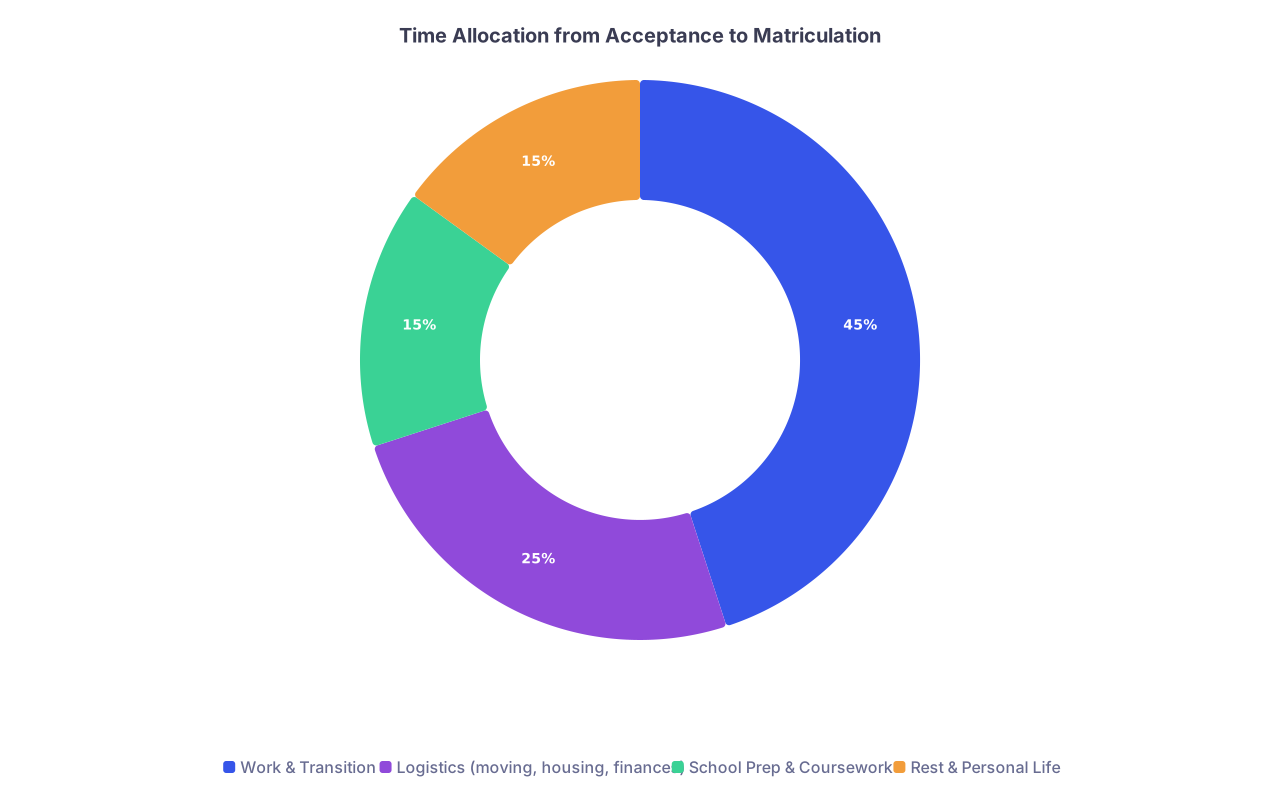
| Category | Value |
|---|---|
| Work & Transition | 45 |
| Logistics (moving, housing, finances) | 25 |
| School Prep & Coursework | 15 |
| Rest & Personal Life | 15 |
Now let’s go chronologically.
Phase 1: Before You’re Accepted (6–12 Months Before Start)
You’re still applying, maybe interviewing, doing secondaries on lunch breaks, and quietly freaking out.
At this point you should stay quiet at work unless you have a very specific reason not to.
6–12 Months Before Matriculation (Application / Interview Season)
At this point you should:
Keep your intentions need-to-know only.
Your boss doesn’t need to know you might leave in a year. Premature announcements create:- Missed promotions
- Reduced responsibilities
- Subtle sidelining (“We’ll give that project to someone who’ll be here longer.”)
Decide your disclosure strategy:
Ask yourself:- Is my supervisor generally supportive of education/career changes?
- Would a gap in my schedule for interviews be easier to explain if they knew?
- Is there any risk they’ll retaliate, consciously or not?
If your boss is human and decent, you might say something soft like:
“I’m exploring going back to school in the next year or two, so I may need occasional days off for that process.”
But I’m blunt here: I’ve watched people lose opportunities because they announced too early. When in doubt, say less.
Use PTO strategically for interviews.
Do not say “medical school interview” to HR. Say:- “Graduate school interviews”
- “Education-related meetings”
- Or just “personal appointment / PTO”
Document your work.
Start keeping:- Clear notes on your projects
- Process docs
- Checklists for your responsibilities
You’re pre-building your handoff materials. Future you will be grateful.
Phase 2: When You Receive Your First Acceptance
This is the moment everything changes—but you still don’t rush to your boss’s office.
Week 0–1 After Acceptance
At this point you should:
Stabilize your options.
- Are you on multiple waitlists?
- Is this your only acceptance?
- Are you still waiting on your top choice?
Don’t trigger job chaos before you know whether you’ll be moving across the country or staying local.
Confirm key dates from the school:
- Orientation start date
- Mandatory pre-orientation events (summer programs, pre-matric courses)
- Final date you must “Commit to Enroll” (for AMCAS schools)
- Financial aid timeline
Roughly decide your last working day.
Most non-trads do best with a 3–6 week buffer between last day of work and first day of med school. Enough to:- Move
- Handle financial aid
- Breathe like a human for 5 minutes
So if orientation is August 1:
- Ideal last day: Between mid-June and mid-July
- If money is tight: Lean closer to mid-July
- If you’re moving far: Lean closer to mid-June
Do not tell your employer in the first 48 hours.
You’re too amped. You’ll over-share, under-negotiate, or agree to weird terms. Let it sit.
Phase 3: From “Acceptance in Hand” to “Commit to Enroll”
This is the gray zone where you’re effectively in, but the exact school or location might still change.
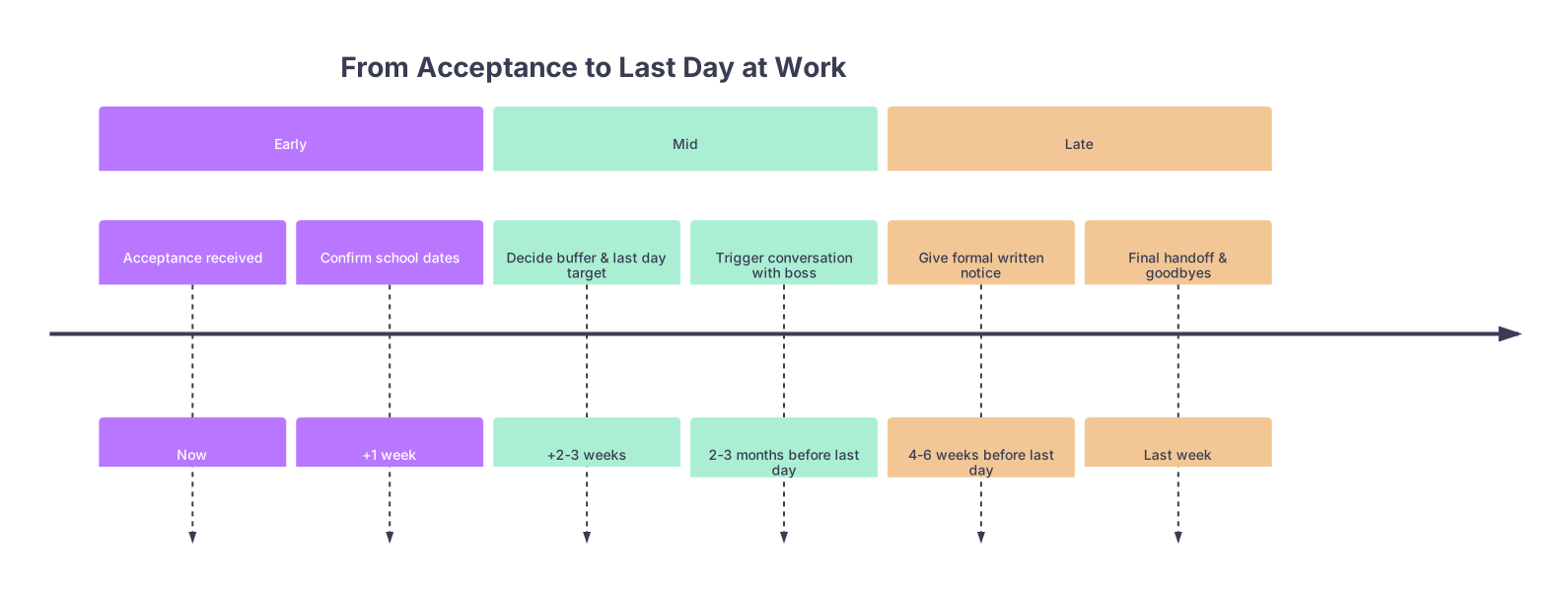
| Period | Event |
|---|---|
| Early - Acceptance received | Now |
| Early - Confirm school dates | +1 week |
| Mid - Decide buffer & last day target | +2-3 weeks |
| Mid - Trigger conversation with boss | 2-3 months before last day |
| Late - Give formal written notice | 4-6 weeks before last day |
| Late - Final handoff & goodbyes | Last week |
3–5 Months Before Starting Med School
At this point you should:
Lock in your school choice as much as possible.
If you’re still on waitlists but have one solid acceptance:- Plan around the solid one
- Assume location may change, but the start date window won’t be radically different
Decide your notice window.
Here’s how I usually break it down:Standard roles (analyst, coordinator, staff):
- Good notice: 4 weeks
- Excellent: 6–8 weeks
Key roles (project lead, manager, only-person-who-knows-X):
- Good notice: 6 weeks
- Excellent: 8–10 weeks (especially if hiring is slow)
Anything longer than 10–12 weeks? Often backfires. People start treating you like a lame duck.
Recommended Notice Period by Role Type Role Type Recommended Notice When It Backfires Entry-level / support staff 2–4 weeks >8 weeks (lame duck status) Individual contributor (IC) 4–6 weeks >10 weeks Team lead / project owner 6–8 weeks >12 weeks Manager / senior leadership 8–10 weeks >12 weeks (political drama) Pick your “tell the boss” week.
Count backwards:- From your target last day
- Subtract your ideal notice period
Example: - Orientation: August 1
- Last work day: July 5
- Notice: 6 weeks
→ You’re aiming to tell your boss around late May.
Quietly clean up your professional life.
- Update your resume and LinkedIn (without “Incoming medical student at X” yet)
- Save copies of your own work product if allowed (non-proprietary stuff, templates you built, etc.)
- Clear personal files from work devices
You’re building optionality. If something weird happens (school start date shifts, personal crisis, etc.), you haven’t boxed yourself into a corner at work too early.
Phase 4: The Conversation Window – Telling Your Employer
This is the part everyone stresses about. Here’s the straightforward version.
2–3 Months Before Your Last Day
At this point you should tell your direct supervisor in person (or video if remote).
Step 1: Time it early in the week
- Best days: Monday or Tuesday
- Best time: Morning, not at 4:55 pm when they’re checked out
- Ask: “Do you have 10–15 minutes for something I’d like to discuss in person?”
You don’t schedule a cryptic 30-minute “meeting” titled “Discussion.” That just spikes anxiety.
Step 2: Lead with clarity, not a TED talk
You don’t need a speech. Use something simple and grown-up like:
“I wanted to let you know I’ve been accepted to medical school starting this August, and I’ve decided to attend. I’m planning for my last day to be [DATE], which gives us about [X weeks] to transition things. I’m really grateful for the opportunities here and want to make this as smooth as possible for the team.”
Key points in that sentence:
- You’ve already decided (you’re not asking permission)
- You give a specific last day
- You immediately pivot to transition and gratitude
What you don’t do:
- Apologize excessively
- Over-explain your life story
- Say “I might leave” or “I’m thinking about going”
- Ask them what they think you should do

Step 3: Be ready for the three classic reactions
You’ll usually see one of these:
- Supportive/proud:
“Wow, that’s amazing. Congratulations! How can we help with the transition?” - Detached/practical:
“Okay, thanks for letting me know. Let’s talk through your projects.” - Annoyed/panicked:
“This is really bad timing. We’re in the middle of X. Are you sure about the date?”
For reaction #3, don’t fold. You can be firm and reasonable:
“I understand the timing is tough. The school start date and my lease/move are all anchored to that, so [DATE] really is the latest I can stay. I’d like to use the time between now and then to document everything and help with training someone new.”
You are not a hostage. You’re leaving for medical school, not abandoning a sinking ship in the middle of a hurricane.
Step 4: Align verbally, then follow up in writing
Same day or next day, send:
- A short email summarizing:
- Your last day
- Your willingness to help with transition
- Formal resignation letter attached or in the body (HR usually needs this)
Something like:
Hi [Manager],
As we discussed, I’ve been accepted to medical school and will be starting in early August. My last working day will be [DATE].
I’m committed to making the transition as smooth as possible and can:
- Document my current processes and workflows
- Help train a replacement or redistribute tasks
- Wrap up / hand off my open projects
Thank you again for the opportunities and support during my time here.
Best,
[Your Name]
Phase 5: Notice Period – From Telling Them to Walking Out
This is where people sometimes make a mess by overworking, underworking, or emotionally checking out.
4–8 Weeks Before Your Last Day
At this point you should:
Create a transition plan. In writing. Outline:
- All your regular responsibilities
- Active projects and their status
- Key contacts
- Logins/accesses that need to be transferred (don’t actually share passwords; just list systems)
Simple Transition Plan Structure Item Description Status New Owner / Backup Weekly Report Compile sales metrics every Monday Ongoing TBD Client X Project Implement feature Y by July 1 In progress Manager / New Hire System Accesses Salesforce, Jira, Shared Drive Needs review IT / Admin Protect your boundaries. Common trap:
- “Since you’re leaving anyway, can you also do…”
No. You are not their temp agency.
Reasonable yes:
- Document your job
- Train replacement
- Finish realistic projects
Reasonable no:
- Massive new initiatives that extend beyond your end date
- Weekend crunches “for the team” when you’re trying to move, pack, and do med school paperwork
- “Since you’re leaving anyway, can you also do…”
Control the narrative with coworkers. If you like your team, you’ll get questions:
- “Why medicine?”
- “Aren’t you too old?”
- “How long is med school again?”
Your go-to script:
“I’ve wanted to go into medicine for a long time, and the timing finally lined up. I’ll be starting at [School] this August.”
Don’t trash the company. Don’t over-share how miserable you were. People talk.
Clarify benefits and logistics with HR. At this point you should ask:
- When does health insurance actually end?
- What happens to unused PTO?
- Can you cash it out or should you use it before you leave?
- What happens to retirement contributions (401k, match, vesting dates)?
Use this information to plan your medical, dental, and vision needs before you’re uninsured or between coverages.
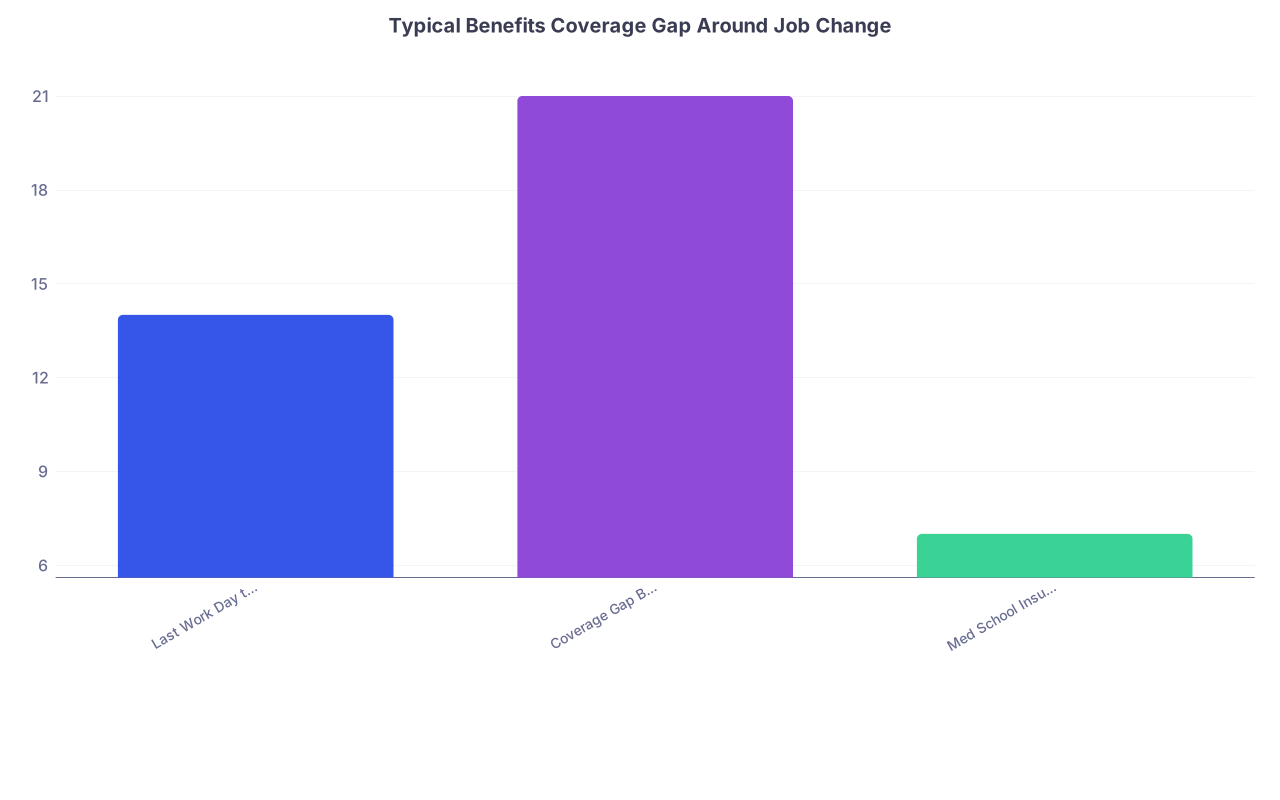
| Category | Value |
|---|---|
| Last Work Day to Coverage End | 14 |
| Coverage Gap Before Med School | 21 |
| Med School Insurance Start Lag | 7 |
Phase 6: Final 2 Weeks and Last Day
This is where you close loops and avoid burning bridges.
2 Weeks Before Your Last Day
At this point you should:
Do a mini “exit interview” with your boss (informal).
Not HR. Just a quick:- “Here’s what I’ve wrapped up.”
- “Here’s what’s in progress.”
- “Here’s where I’ve documented everything.”
Finish documentation like it actually matters.
I’ve watched teams spend months reverse-engineering things a departing employee could’ve explained in 2 pages. You know where the landmines are—write them down.Say selective goodbyes early.
Don’t wait until your last 30 minutes in the building.
Last Week
At this point you should:
Stop starting anything new.
Focus on:- Handoffs
- Final follow-up emails
- Making sure your replacement or teammates aren’t blind
Send a short, professional goodbye email on your last or second-to-last day:
Hi all,
As some of you know, I’ll be leaving [Company] after [X] years to start medical school at [School] this August. My last day is [DATE].
I’ve really appreciated working with you and have learned a lot from this team. If you’d like to stay in touch, you can reach me at [personal email] or on LinkedIn: [link].
Wishing you all the best,
[Your Name]Leave your workspace clean.
Physical or digital. Don’t be that person whose inbox is chaos and whose files are a disaster.

Special Situations and Adjustments
If You’re Remote
- “In person” conversation becomes video on camera, not Slack.
- Pay extra attention to:
- Documentation
- Access removal
- Who owns which digital assets
If You’re Critical to a Major Project
This is where people feel guilty and stay too long. Do not stay an extra month just because your company didn’t plan for redundancy.
Instead:
- Give them a clear project transition proposal:
- “Here are the pieces I can realistically finish before [DATE].”
- “Here are the pieces that will need reassignment.”
- Offer to:
- Join one or two short calls after you leave as a paid consultant if they really need it (optional, not required)
If Your Employer Might React Poorly
If you suspect:
- Retaliation
- Immediate termination
- Hostility
Then:
- Time your notice closer to your financial and insurance security:
- Have enough cash saved to survive a surprise early exit
- Schedule any major medical needs earlier
- Consider giving shorter notice (2 weeks) if you believe they’ll show you the door the same day anyway.
I’ve seen this with small businesses and insecure managers. Protect yourself first.
Using the Gap Between Work and Med School Wisely
Last piece: your off-ramp time.
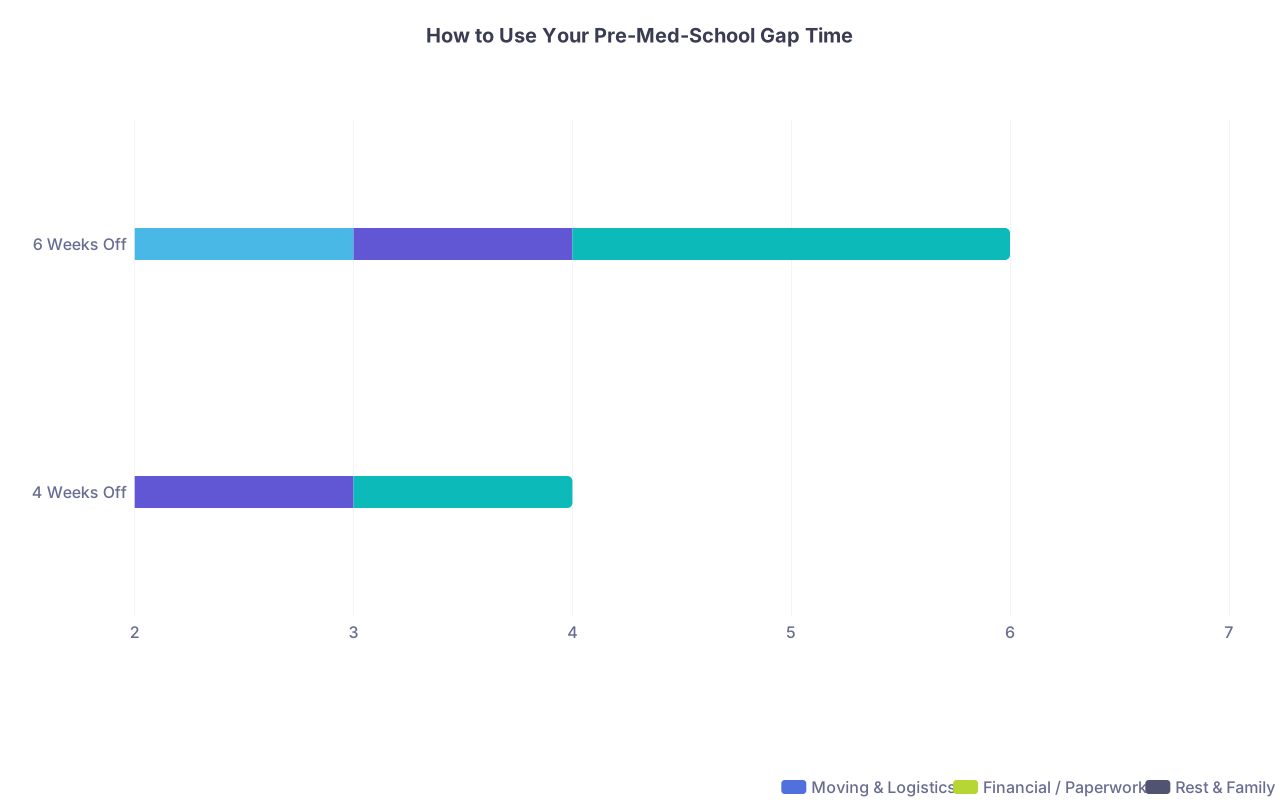
| Category | Moving & Logistics | Financial / Paperwork | Rest & Family |
|---|---|---|---|
| 4 Weeks Off | 2 | 1 | 1 |
| 6 Weeks Off | 3 | 1 | 2 |
Choose your buffer based on:
- Money: If you need income, shorter gap (2–4 weeks).
- Move complexity: Cross-country move? Aim for 4–6 weeks.
- Burnout level: If your job has wrecked you, don’t roll straight from your last day into orientation with no break. That’s how you start M1 already fried.
During that gap you should:
- Set up:
- Banking near your school
- Health insurance through school
- Housing and utilities
- Handle:
- Any remaining immunizations / titers
- Background checks, drug screens
- Actually rest:
- See family
- Sleep without alarms
- Do something that has nothing to do with school or work

Core Takeaways
- You don’t tell your employer the day you get accepted. You wait until you know your dates, then aim for 4–8 weeks’ notice before your last day, depending on your role.
- Lead with clarity and finality. “I’ve been accepted and I’m going. My last day is [DATE].” Then immediately shift to how you’ll help with the transition.
- Protect yourself while staying professional. Reasonable notice, solid documentation, and clean handoffs—without sacrificing your own financial, medical, and mental stability before med school.