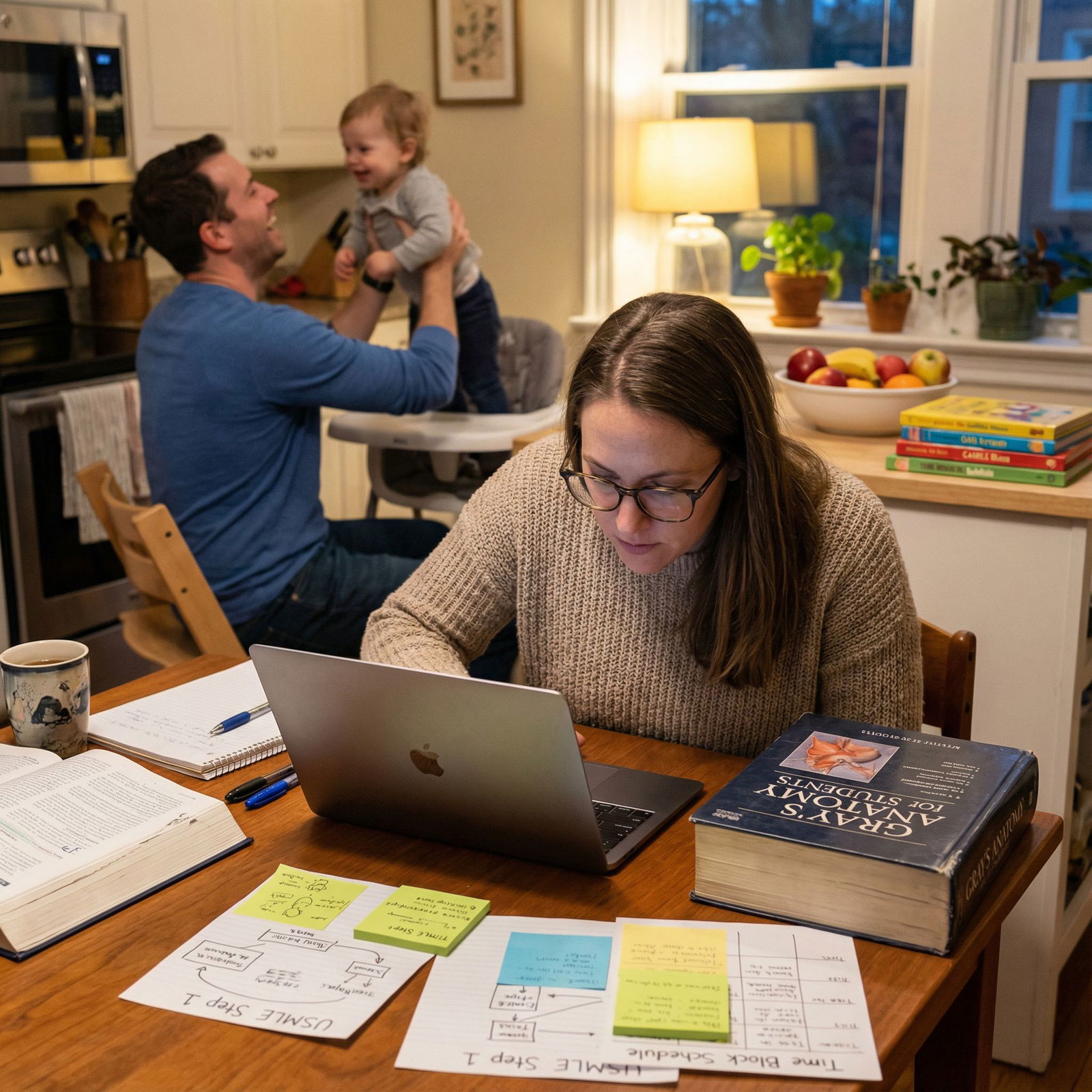
Introduction: The Reality of Balancing Family and Medical School as a Late-Career Student
Choosing to attend Medical School later in life is a bold, meaningful decision. Many late-career students arrive with rich prior careers, established families, mortgages, and deep community roots. These experiences are tremendous assets—but they also create unique pressures when combined with the intensity of medical education.
Instead of moving through medical school with few external responsibilities, you may be:
- Raising young children or teenagers
- Supporting a spouse or partner’s career
- Caring for aging parents
- Managing significant financial responsibilities
- Negotiating the emotional weight of a major career shift
Balancing all this with demanding coursework, clinical rotations, and board exams can feel overwhelming. Yet many late-career and non-traditional students not only survive but thrive in this environment.
This guide is designed specifically for late-career medical students and applicants who are navigating family responsibilities. It offers practical Time Management strategies, Self-Care approaches, and ways to build and leverage Family Support so you can succeed academically without sacrificing your relationships or well-being.
Understanding the Unique Challenges of Late-Career Medical Students
Before planning solutions, it’s important to name the most common challenges late-career students face. Recognizing them early helps you advocate for yourself, set realistic expectations, and design systems that work for your life—not someone else’s.
Family Commitments and Competing Roles
Late-career students often hold multiple roles simultaneously: parent, partner, caregiver, financial provider, community member, and now medical student.
Common scenarios include:
- Parenting young children while managing preclinical coursework and exams
- Supporting a partner’s career that may involve travel or variable hours
- Co-parenting or blended families, requiring coordination across households
- Caring for aging or ill parents, adding emotional and logistical responsibilities
These roles are deeply meaningful, but they can also create:
- Guilt about missed family events
- Stress when academic deadlines collide with family crises
- Pressure to “do it all” perfectly in every domain
Acknowledging that you cannot give 100% to everything at all times is the first step toward sustainable balance.
Financial Pressures and Long-Term Planning
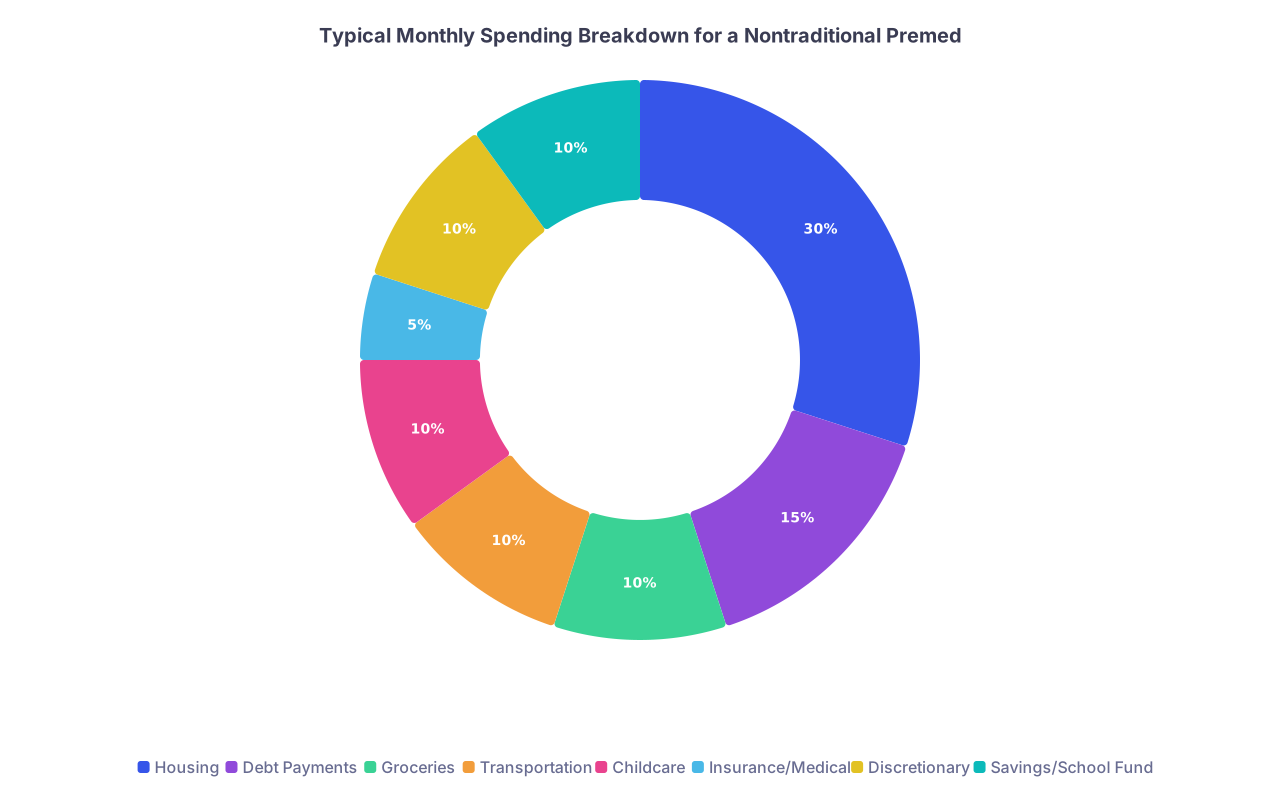
By the time many late-career students start Medical School, they may already have:
- A mortgage or rent in a high-cost area
- Children’s daycare or school tuition
- Retirement savings goals
- Existing student loans from previous degrees
Adding medical school tuition, fees, and lost income from reduced or paused employment can feel daunting. The financial impact extends beyond the four years of school; residency and fellowship training can also delay peak earning years.
This reality underscores the importance of:
- Careful financial planning before matriculation
- Open family discussions about budget changes
- Understanding loan options, forbearance, and repayment programs
- Considering long-term career paths with realistic timelines
Time Management Under Pressure
Late-career students often say that time is their most precious resource. Unlike some traditional students, you may not have the option to study into the night or spend every weekend in the library.
New constraints might include:
- Fixed bedtime routines for kids
- School pickups, sports, and activities
- Household responsibilities like meals, laundry, and appointments
- Limited ability to stay late on campus or at the hospital
This makes intentional Time Management not just helpful, but essential. Without a plan, your days can easily slip into constant triage—reacting to what feels most urgent instead of moving steadily toward your goals.
Personal Well-Being, Burnout, and Identity Shifts
Medical training is demanding for everyone, but late-career students face an extra layer: integrating a new professional identity with an already established personal and family identity.
You may experience:
- Exhaustion from continually switching roles (student at school, parent/partner/caregiver at home)
- Imposter syndrome, wondering if you’re “too old” or “too behind” compared to peers
- Social isolation if you feel out of place among younger classmates
- Grief or loss over leaving a previous career or financial stability
Without ongoing Self-Care, these stresses can accumulate into burnout, strained relationships, or declining academic performance. Proactively supporting your mental and physical health is not optional—it’s a core part of your success strategy.
Building a Sustainable Schedule that Honors Both Family and Medical School
Intentional structure is one of the most powerful tools late-career students can use. A good schedule is not rigid; it’s a realistic framework that protects what matters most while leaving room for flexibility.

Designing a Weekly Blueprint
Start with a “blueprint” schedule you revisit every semester and adjust as rotations change.
Include:
Non-negotiables
- Class times, labs, required sessions
- Clinical rotation hours and commute times
- Child drop-off/pick-up, recurring family commitments
- Minimum sleep time (e.g., 7 hours/night as a baseline goal)
Protected Family Time
Block specific windows you commit to family presence, such as:- Dinner time most evenings
- Saturday morning outings
- Short daily connection time (e.g., 20-minute bedtime routine or check-in walk with partner)
Dedicated Study Blocks
Align study time with:- Your most productive hours (early morning vs late evening)
- Available quiet windows (kids at school or daycare, partner at work)
- On-call vs off-call days during clinical years
A sample weekday blueprint might look like this:
| Time | Activity |
|---|---|
| 5:30–6:00 AM | Wake up, brief exercise/stretch |
| 6:00–7:00 AM | Focused study (high-yield material) |
| 7:00–8:00 AM | Family breakfast, school prep |
| 8:00 AM–12:00 PM | Classes/clinical rotation |
| 12:00–12:30 PM | Lunch + quick review/flashcards |
| 12:30–1:00 PM | Administrative tasks (emails, forms) |
| 1:00–4:30 PM | Classes/clinical or dedicated study |
| 5:00–7:00 PM | Family time, dinner, kids’ routines |
| 7:30–9:00 PM | Study block, practice questions |
| 9:15–10:00 PM | Wind down, short mindfulness, sleep |
Using Micro-Study and Micro-Rest Periods
Late-career students rarely enjoy long, uninterrupted study days. Instead, learn to use short, focused bursts:
- 10–15 minutes of flashcards while waiting in the carpool line
- 20-minute review while kids are at practice
- Audio lectures or question explanations during commutes
- Short board-style question sets during lunch
Equally important are micro-rests:
- 3–5 minute breathing exercises between tasks
- Brief walks to decompress after emotionally intense patient encounters
- Screen-free breaks to reset your attention
These “small units” of focus and rest compound into major gains over months and years.
Planning Around Peak Stress Periods
Every Medical School curriculum has predictable high-stress periods: exam weeks, board preparation, certain rotations (ICU, surgery). As a late-career student with Family Support responsibilities, you cannot afford to improvise through these times.
Two strategies:
Calendar forecasting
- At the start of each term, map out exam dates, major assignments, and Step/Level exam windows
- Share this calendar with your partner or support network
- Identify weeks when you’ll need extra help at home
“Surge plan” for support
- Arrange ahead for:
- Extra childcare
- Meal prep or grocery delivery
- Housecleaning help (even temporarily)
- Let extended family or close friends know which weeks you may need backup
- Arrange ahead for:
Planning for peak demands reduces last-minute crises and helps your family understand why some weeks will feel more intense than others.
Engaging Your Family as True Partners in Your Medical Journey
One of the greatest strengths late-career students bring to Medical School is a built-in support system: partners, children, extended family, and friends. But support doesn’t happen automatically; it requires communication, structure, and shared expectations.
Communicating the Realities of Medical School
Many families underestimate the intensity of the medical curriculum. Make it a priority to educate them, especially at the beginning.
Consider:
A family “orientation night”
Walk through your upcoming schedule, exam structure, and what a typical week looks like. Explain:- Why you may need quiet during certain hours
- Why last-minute changes can happen on clinical rotations
- What support will help you most
Setting clear expectations
- Share that there will be seasons of relative calm and seasons of extreme intensity
- Emphasize that this is a shared family project, not just your personal dream
For children, use age-appropriate explanations about what it means to be in Medical School, and how long the journey will be.
Creating Family Routines that Support Learning
Integrate your academic life into the family’s rhythm:
Family study time
- Younger kids do homework or reading while you review notes
- Older kids might quiz you on anatomy terms or flashcards
- This normalizes learning and shows them you value their academic efforts as much as your own
Weekend planning meetings
- As a family, review the upcoming week
- Identify evenings where you’ll be more available vs more limited
- Include children in small decisions (e.g., picking one dinner, choosing a weekend outing)
Mini-traditions
- Post-exam family pizza night
- Short weekend activity after a tough rotation ends
- These rituals give everyone something to look forward to and mark milestones together.
Leveraging Extended Family and Community Support
Many late-career students succeed because they actively build a support ecosystem:
- Grandparents or relatives who help with childcare or school pickups
- Trusted neighbors or friends who are emergency contacts
- Church, cultural, or community groups who can offer practical help
If you’re moving away from your existing community for Medical School, invest early in building new connections:
- Join parenting groups or non-traditional student networks
- Introduce yourself to neighbors; exchange contact info for emergencies
- Explore school or daycare options that align with your schedule
You are not meant to do this alone. Building support is a sign of wisdom, not weakness.
Technology, Prioritization, and Boundaries: Working Smarter, Not Just Harder
Modern tools can make managing Medical School and family life far more efficient—if used intentionally.
Using Technology to Coordinate Home and School
Some practical tools for late-career students:
Shared digital calendars (Google, Outlook)
- Create separate calendars for school and family, then share with your partner
- Color-code exams, clinical rotations, kids’ activities, and family events
Task management apps (Trello, Asana, Todoist)
- Maintain boards or lists for:
- Academic tasks (assignments, readings, board prep)
- Household responsibilities (bills, repairs, errands)
- Assign tasks and due dates to avoid mental overload
- Maintain boards or lists for:
Study tools
- Spaced repetition apps (Anki, Quizlet) for efficient memorization
- Question banks with mobile apps for study on the go
- Lecture playback at variable speeds to fit short windows of time
Prioritization: Saying “Yes” and “No” Deliberately
When your time and energy are limited, not all “good opportunities” are good for you right now.
A simple framework:
- Must-do: Required coursework, rotations, core family responsibilities, basic Self-Care
- Should-do (when possible): Research projects, leadership roles, extra teaching opportunities
- Nice-to-do (when time allows): Optional events, extra committees, social invitations
Ask yourself regularly:
- “What will matter most for my growth and well-being 6–12 months from now?”
- “Does this opportunity align with my long-term goals, or can it wait?”
- “What will I need to give up to say yes to this?”
Learning to decline respectfully but firmly is a crucial skill for long-term sustainability.
Setting and Protecting Boundaries
Healthy boundaries help you be fully present where you are:
Study boundaries
- A specific place (desk, corner of a room, library) is for studying only
- Noise-cancelling headphones or visual cues (“headphones on = please pause interruptions unless urgent”)
Home boundaries
- Two or three evenings a week where you commit to not doing schoolwork after a set time
- A minimum number of family meals together each week, even if simple
Digital boundaries
- Limit endless social media scrolling that steals time and energy
- Turn off non-essential notifications during study blocks and family time
Boundaries are not about perfection. They’re about default patterns that protect your priorities over time.
Prioritizing Self-Care and Mental Health as a Late-Career Medical Student
Self-Care is often treated as optional, especially by high-achieving students. For late-career students balancing family responsibilities, it is a core survival strategy.

Building Realistic Self-Care into a Packed Schedule
Self-Care doesn’t need to mean expensive spa days or long retreats. Focus on consistent, small practices:
Sleep
- Aim for 7 hours most nights; protect this with the same seriousness as an exam
- Use a simple wind-down ritual: lights dim, phone away, short reading or breathing exercise
Movement
- 10–20 minutes of walking, stretching, or bodyweight exercises most days
- Walk during phone calls or listen to audio notes while moving
Nutrition
- Prepare simple, batch-cooked meals on weekends
- Keep quick, healthy snacks available (nuts, yogurt, fruit, cut vegetables)
- Limit reliance on energy drinks and sugar to “get through” study sessions
Mindfulness and Stress-Reduction Tools
Practical ways to keep stress manageable:
- Short meditation apps (Headspace, Calm, Insight Timer, free YouTube resources)
- Box breathing: inhale 4 seconds, hold 4 seconds, exhale 4 seconds, hold 4 seconds—repeat several times
- Journaling 5 minutes a day to process emotions and track gratitude or wins
Use these especially:
- Before major exams
- After emotionally intense clinical days
- When you notice irritability, racing thoughts, or feeling detached from family
Recognizing When You Need Additional Support
Despite your best efforts, there may be times when stress, anxiety, or depression become overwhelming. Warning signs include:
- Persistent insomnia or oversleeping
- Loss of interest in activities or family time
- Frequent tears, irritability, or emotional numbness
- Thoughts of hopelessness or of giving up entirely
If you notice these signs:
- Reach out early to your school’s counseling center or mental health services
- Talk with your primary care provider
- Consider peer support groups for non-traditional or parenting students
Accessing help is a strength—and often the turning point that allows students to stay on their path safely and successfully.
Frequently Asked Questions (FAQ) for Late-Career Medical Students Balancing Family and Training
1. Can I realistically succeed in Medical School while raising a family?
Yes. Many late-career and non-traditional students successfully complete Medical School while parenting, partnering, and caregiving. Key success factors include:
- Honest communication with your family about expectations and support
- Structured Time Management and planning around major academic demands
- Willingness to accept help and delegate tasks at home
- Firm commitment to Self-Care and mental health
Your life experience can actually be a major asset—patients, peers, and faculty often appreciate your maturity, perspective, and resilience.
2. How can I study effectively with children at home?
Some practical techniques:
- Create a designated study space that kids understand as your “work zone”
- Use family study time, where everyone works quietly on homework, reading, or quiet play
- Employ micro-study blocks (10–20 minutes) during:
- Naps
- Independent play
- After bedtime
- Use headphones and visual cues to signal when you need focus
- Communicate to kids (in age-appropriate terms) why your study time matters and when you’ll next be available just for them
Consistency and routine help children adapt to your new schedule.
3. What if my partner or family doesn’t fully understand the demands of Medical School?
This is very common at the start. Try:
- Scheduling a structured conversation about your typical weekly schedule and upcoming peak stress periods
- Sharing concrete examples:
- Number of hours of lecture and reading
- Frequency of exams
- Required clinical hours and on-call shifts
- Inviting them to attend orientation or family-focused sessions if your school offers them
- Checking in regularly (monthly or quarterly) to adjust expectations as things change
Many partners become strong advocates once they clearly understand the demands and timeline.
4. Are there financial resources specifically for Late-Career Students or students with families?
Often, yes. Consider:
- School-specific scholarships for non-traditional, returning, or parenting students
- National and regional scholarships targeting:
- Career changers
- First-generation college or Medical School students
- Underrepresented groups in medicine
- Federal and private loan options, including income-driven repayment plans
- Public Service Loan Forgiveness (PSLF) if you plan to work in qualifying settings after training
Meet early with your school’s financial aid office to build a long-term plan and explore all available options.
5. How do I prevent burnout over the long course of Medical School and residency?
You can’t eliminate stress, but you can reduce the risk of burnout by:
- Setting realistic expectations: you are a whole person, not just a student
- Maintaining at least one meaningful non-medical activity (hobby, faith community, exercise class, creative outlet)
- Taking regular inventory of your well-being:
- Sleep quality
- Mood and motivation
- Relationship health
- Seeking professional support early when stress begins to feel unmanageable
- Protecting your core relationships—investing in your partner, children, and close friends
Remember that your goal is not to “power through” at any cost, but to arrive at residency and beyond as a healthy, grounded physician.
Balancing Family and Medical School as a late-career student is undeniably challenging, but it is also deeply rewarding. Your commitment, life experience, and support network can become powerful strengths in your future medical practice. With intentional planning, honest communication, and consistent Self-Care, you can honor both your family and your calling to medicine—without losing yourself in the process.