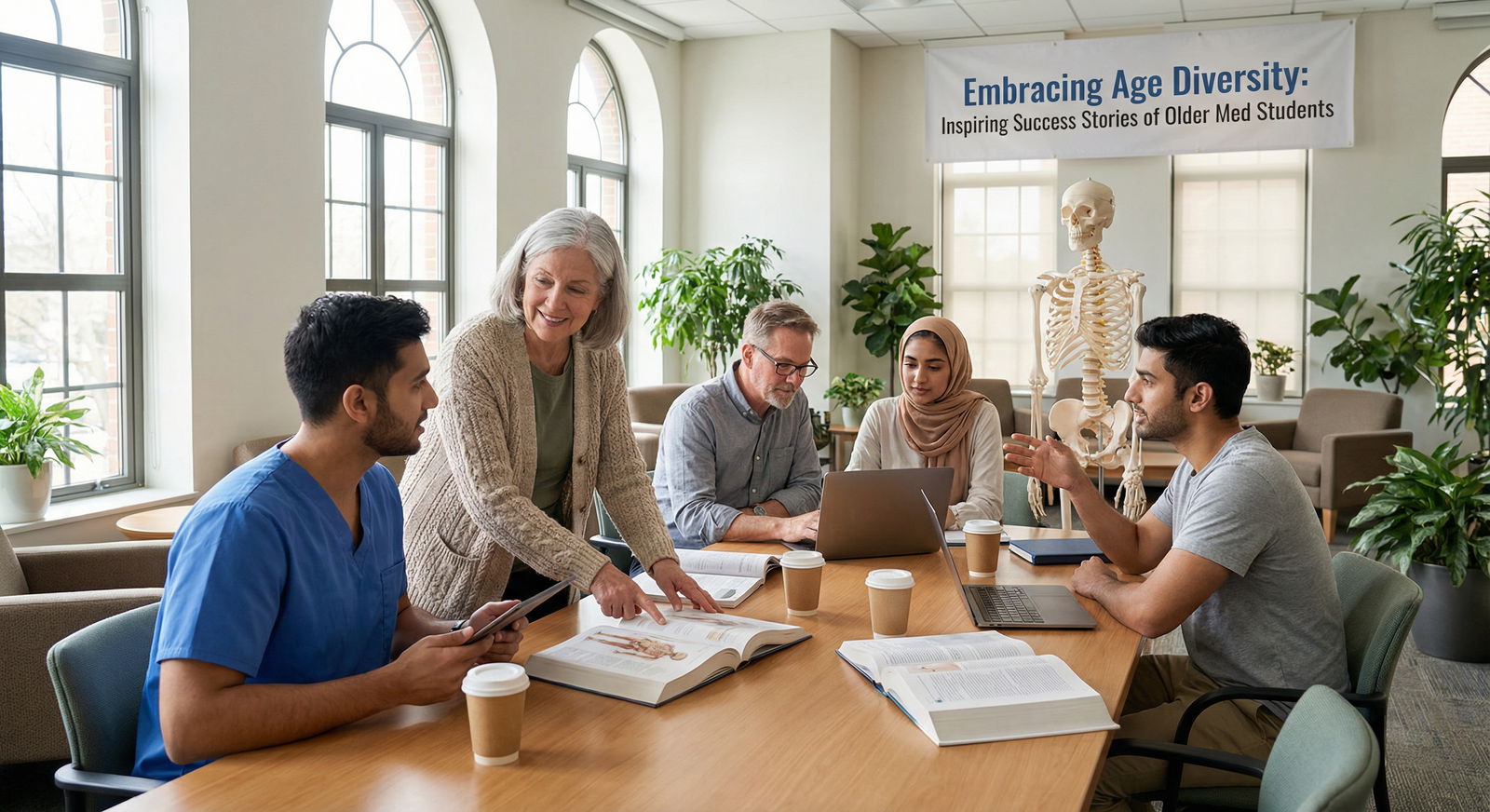
Why Age Is Just a Number: Success Stories and Strategies for Older Medical Students
Life rarely unfolds along a straight line. Careers change, families grow, priorities shift—and sometimes, a long-held dream like attending medical school resurfaces years or even decades later. Increasingly, older students are proving that a meaningful career in healthcare does not have an expiration date.
For many nontraditional applicants, medical school is not a continuation of an early path but a bold new beginning: a chance to realign life with purpose, contribute to patient care, and bring hard-earned experience into medicine. This article explores real-world success stories, the changing landscape of medical education, and practical advice for older students considering this path.
If you are in your 30s, 40s, 50s, or beyond and wondering whether it’s “too late” for medical school, you are not alone—and you are not an exception. You are part of an important and growing movement in healthcare.
The Changing Face of Medicine: Age Diversity in Medical School
Medical school classrooms today look different from those of 20 or 30 years ago. While many students still enter straight from undergraduate programs, the proportion of older students and those with prior careers has steadily increased.
Evolving Demographics in Medical Education
Medical schools are actively recognizing that age diversity and varied life experiences enrich both the learning environment and patient care.
Key trends and data points:
- The Association of American Medical Colleges (AAMC) has reported that the average age of first-year medical students has slowly crept upward over the past several years.
- In the U.S., more than 1 in 5 incoming medical students are 30 or older at the start of their first year, demonstrating that older students are a substantial and visible part of the class.
- Many schools explicitly highlight nontraditional and older applicants on their admissions websites, emphasizing that maturity, resilience, and prior careers are valued assets, not liabilities.
Internationally, similar shifts are evident. In Canada, the UK, Australia, and other countries, medical programs and graduate-entry pathways increasingly welcome applicants who come from law, engineering, education, military service, business, and other fields.
Why Medical Schools Value Older Students
Admissions committees and training programs are discovering concrete benefits of having older students in their cohorts:
- Professional maturity: Years in the workforce often translate to reliability, professionalism, and advanced interpersonal skills.
- Real-world problem-solving: Students who have navigated complex job roles, crises, or family responsibilities bring practical judgment to clinical decision-making.
- Patient relatability: Older students may more easily relate to older patients and those managing long-term careers, parenting, or financial stress.
- Team dynamics: Age diversity in healthcare teams mirrors the diversity of patient populations, supporting more well-rounded care.
In short, the narrative is changing: age is less a barrier and more a dimension of diversity that strengthens the field of medicine.
Inspirational Success Stories of Older Medical Students
Hearing about others who have navigated this path can make the possibility feel more real. Below are expanded versions of the original stories, plus added insights into how each person leveraged their prior life experience to succeed in medical school and beyond.

1. Dr. Joan Baker: From Corporate Management to Compassionate Family Medicine
Before becoming a physician, Dr. Joan Baker spent more than a decade climbing the corporate ladder in management. Her days were filled with meetings, performance metrics, and long-term strategic planning. Yet, she felt increasingly drawn toward more personal, meaningful work.
At 38, she made a life-altering decision: she would apply to medical school.
Challenges She Faced
- Family responsibilities: As a single mother to a young child, Joan had to balance parenting, financial stability, and demanding premed coursework.
- Academic reentry: It had been over 15 years since her last college science class. She needed to complete prerequisites and get back into “test-taking mode.”
- Self-doubt about age: Surrounded by undergraduates in their early 20s, she sometimes questioned whether she was too old for this path.
How She Turned Experience into Strength
- Time management from management: Her project management background translated directly into effective scheduling. She treated her premed and medical school years like major projects—setting milestones, tracking tasks, and evaluating progress.
- Strategic use of resources: She relied on online lectures, recorded classes, and spaced repetition tools to fit studying around childcare and part-time work.
- Leadership and empathy: In medical school, Joan was often the de facto team coordinator on group projects. Her prior experience managing people helped her mediate conflicts, advocate for classmates, and communicate clearly with faculty.
Joan graduated from medical school at 42 with honors and matched into family medicine. Patients frequently comment on her approachability and “real-world understanding” of work-life pressures. She often draws on her previous career when helping patients navigate stress, burnout, and lifestyle changes.
Key takeaway: Your prior career—whether in business, education, tech, or another field—can become a powerful asset in medical training and practice.
2. Dr. Michael Roberts: From Army Veteran to Trauma Surgeon
Dr. Michael Roberts served 14 years in the military, much of it in high-intensity environments. He witnessed both the brutality of trauma and the healing power of emergency medical care provided to soldiers and civilians.
At 36, transitioning back to civilian life, he realized his next mission: becoming a physician.
The Transition from Service to School
- Academic bridge: Michael had not taken formal science courses in years. He enrolled in a post-baccalaureate premedical program to complete prerequisites and rebuild study skills.
- Using veterans’ benefits: The GI Bill and veterans’ education programs helped cover tuition and living expenses, significantly reducing his debt burden.
- Reframing skills: Initially, Michael worried that military experience might not “translate” to medical school. Over time, he saw how leadership, crisis management, and discipline were invaluable.
Bringing Military Strengths into Medicine
- Calm under pressure: In trauma bays and simulations, Michael excelled. Years of combat-zone triage meant that chaotic scenes did not rattle him; instead, he became a steadying presence for his team.
- Peer support and mentorship: He informally mentored other nontraditional and veteran students, advocating for better support systems and mental health resources.
- Patient connection: Veterans and trauma survivors often felt a strong rapport with him. Shared experiences created trust, improving communication and adherence to treatment plans.
Michael matched into trauma surgery, a field that aligned directly with his values and experience. His shift from soldier to surgeon demonstrates that high-intensity careers can be a bridge, not a barrier, to medicine.
Key takeaway: Skills from military service—discipline, leadership, crisis management—are directly relevant and highly valued in healthcare.
3. Dr. Amy Zhao: Pivoting from Teaching to Community-Oriented Care
For more than a decade, Dr. Amy Zhao worked as a high school science teacher. She loved helping students understand biology, chemistry, and the scientific method. Over time, she became increasingly interested in health disparities in her community and felt called to serve more directly in patient care.
At 40, Amy made a transformative choice: she applied to medical school.
How Her Teaching Background Helped
- Strong science foundation: Years of teaching AP Biology and Chemistry meant that foundational concepts in physiology and biochemistry felt familiar rather than intimidating.
- Communication skills: She knew how to break down complex topics into accessible explanations—a critical skill for patient education and informed consent.
- Educational leadership: Amy became a go-to tutor and peer educator in medical school, organizing review sessions and creating clear study guides for classmates.
Building a Community-Focused Career
- Interest in primary care: Amy gravitated toward internal medicine and pediatrics, driven by a desire to care for vulnerable populations and underserved communities.
- Community engagement: She spearheaded outreach programs providing health education in local schools and community centers, merging her teaching background with medical training.
- Patient-centered communication: Her ability to explain diagnoses and treatment plans at a range of literacy levels improved patients’ understanding and engagement in their care.
Amy now practices in a community clinic, focusing on preventive care, chronic disease management, and patient education. Her patients frequently comment that they finally “understand what’s going on” with their health.
Key takeaway: Careers in education, counseling, social work, and other people-focused fields provide outstanding preparation for patient communication and advocacy.
Overcoming Stereotypes and Internal Barriers as an Older Medical Student
While institutional attitudes are shifting, older students still encounter stereotypes—from others and sometimes from themselves. Addressing these head-on is essential for success.
Common Misconceptions About Older Students
“Older students lack stamina.”
Clinical rotations are demanding, but many older students demonstrate exceptional endurance, partly because they’ve already navigated long workdays, night shifts, parenting demands, or military deployments.“They’re not tech-savvy.”
Medical education increasingly uses digital tools, but technology literacy is not inherently age-dependent. Many older students adapt quickly using online platforms, spaced repetition apps (e.g., Anki), virtual anatomy tools, and simulation software.“They’ll be behind their peers academically.”
Evidence and experience suggest otherwise. Many mature students perform at or above average academically due to:- Clear motivation and purpose
- Strong discipline and time management
- Less distraction from exploration or uncertainty about career direction
“It’s unfair to start so late in a long training path.”
While it’s important to realistically assess the length of training (4 years of medical school plus 3–7 years of residency), many older doctors report that the fulfillment and meaning they gain more than justify the investment.
Reframing the Narrative: From “Late” to “Ready”
Instead of thinking, “I’m late,” many successful older students adopt the mindset, “I’m ready.”
- You know yourself better. You have clarity about your strengths, interests, and limits.
- You’ve tested your resilience. Life has already put you through challenges; you know you can adapt and grow.
- You bring depth to patient care. Patients often respond positively to physicians who share or understand the complexities of adult life—mortgages, caregiving, career transitions, and loss.
By highlighting and normalizing the success stories of older medical students, the medical school community can help dismantle ageism and affirm that meaningful contributions to healthcare can begin at any stage of life.
Unique Strengths Older Students Bring to Healthcare and Medical Education
Older students don’t just “keep up” with their younger classmates; they often bring unique capacities that actively elevate their teams and learning environments.
Advanced Communication and Interpersonal Skills
Many older students:
- Have managed teams, run classrooms, negotiated contracts, or led projects.
- Are comfortable giving and receiving feedback.
- Understand how to navigate conflict resolution and professional boundaries.
In clinical settings, this translates into:
- Clear, compassionate patient communication
- Constructive collaboration with nurses, allied health professionals, and physicians
- Effective leadership during team-based care
Emotional Resilience and Perspective
Life experience—whether through raising a family, dealing with illness, surviving job loss, or serving in high-stress roles—often builds emotional resilience.
Older students tend to:
- Recognize that a single exam or rotation does not define their worth.
- Bounce back more quickly from setbacks.
- Approach challenges with perspective and problem-solving rather than panic.
These traits are invaluable in clinical practice, where uncertainty, emotional intensity, and high stakes are part of daily work.
Diversity of Thought and Background
Age diversity is part of broader diversity in healthcare. Older students often:
- Offer nuanced viewpoints during discussions about ethics, professionalism, and health policy.
- Draw on real-world insights from business, law, engineering, education, the arts, and more.
- Help classmates consider broader social, economic, and cultural factors influencing patient health.
This diversity of thought enhances medical decision-making and fosters more innovative approaches to patient care and system-level change.
Support Systems and Practical Strategies for Older Medical Students
Medical schools are increasingly developing infrastructure to support nontraditional and older learners. At the same time, there are concrete steps you can take to set yourself up for success.
Institutional Support for Older and Nontraditional Students
Look for schools that explicitly value and support age diversity. Many now offer:
- Nontraditional student organizations: Groups focused on older students, second-career students, and those with families.
- Formal mentorship programs: Pairing older students with faculty or residents who also entered medicine later in life.
- Academic support: Tutoring services, study skills workshops, and advising tailored for students who may be returning to school after years away.
- Flexible learning options: Recorded lectures, hybrid learning, optional attendance policies, and asynchronous content can be crucial for managing family or work obligations.
When researching schools, consider reaching out to:
- Admissions offices to ask how they support nontraditional applicants.
- Current older students for honest perspectives about the culture and resources.
Personal Strategies for Success as an Older Student
1. Be proactive about academics.
- Start reviewing foundational sciences before classes begin.
- Use active learning strategies (practice questions, teaching others) rather than passive rereading.
- Embrace digital tools like spaced repetition apps early.
2. Plan financially and practically.
- Explore all funding options: federal loans, scholarships, veterans’ benefits, state or institutional grants.
- Build a realistic budget that accounts for family needs and emergencies.
- If you have dependents, investigate childcare options and backup plans in advance.
3. Protect your physical and mental health.
- Prioritize sleep and exercise, recognizing that burnout risk can be higher when juggling multiple roles.
- Seek counseling or mental health support if needed—many schools offer free or low-cost services.
- Set boundaries where possible: learn to say no to extra commitments that don’t align with your priorities.
4. Build your community.
- Connect with fellow older students or nontraditional peers.
- Maintain relationships with friends and family outside of medicine for emotional grounding.
- Consider finding a mentor who shares aspects of your background (e.g., prior career, parenthood, military service).
5. Own your story.
- In applications, interviews, and throughout training, present your age and experiences not as detours but as preparation.
- Be ready to articulate clearly:
- Why medicine, and why now?
- How your background will make you a better physician?
- What you’ve learned about resilience and commitment?

FAQs: Common Questions from Older and Nontraditional Medical School Applicants
1. Is there an age limit for applying to medical school?
In most countries, including the United States and Canada, there is no official upper age limit for applying to medical school. Admissions committees focus on your academic readiness, personal qualities, clinical exposure, and alignment with the profession—not your birth year.
However, individual schools may differ in how frequently they admit older applicants. When researching programs:
- Review class profiles to see age ranges.
- Look for explicit language welcoming nontraditional or second-career applicants.
- Reach out to admissions offices to ask about their experience with older students.
2. Are older medical students at a disadvantage compared to younger classmates?
Older students may face unique challenges—such as returning to academics after years away, balancing family responsibilities, or navigating financial obligations—but these are not insurmountable.
Advantages older students often bring include:
- Strong time-management and organizational skills
- Clear motivation and purpose
- Emotional resilience and perspective
- Life and work experience that enhance patient care
Studies and anecdotal reports suggest that mature students commonly perform as well as, and sometimes better than, younger students, particularly in clinical settings where interpersonal skills and professionalism matter greatly.
3. How can older students finance medical school and manage the long training timeline?
Financing is a legitimate concern for all medical students, and older students may have additional responsibilities such as mortgages or dependents.
Options to consider:
- Federal or government student loans (often with income-driven repayment after training)
- Veterans’ benefits (e.g., GI Bill in the U.S., if applicable)
- Scholarships and grants (some specifically target nontraditional or returning students)
- Employer sponsorships or loan repayment programs, especially for primary care or service in underserved areas
- Loan forgiveness or repayment programs for working in rural or high-need communities
When considering the training timeline (medical school plus residency), it helps to:
- Map out a realistic timeline to practice.
- Think about your long-term goals: even if you begin at 40 or 45, you may have 20+ years of meaningful practice ahead.
- Talk to older physicians who started later—they can provide concrete insight into lifestyle, finances, and career satisfaction.
4. Do older students struggle more with the academic rigor of medical school?
Medical school is demanding for everyone, but age itself does not determine academic success.
Older students who thrive tend to:
- Prepare beforehand: Refresh basic science knowledge and study skills before day one.
- Study efficiently: Use evidence-based learning techniques instead of relying on cramming.
- Seek help early: Connect with academic support services and peers when challenges arise.
- Leverage strengths: Draw on discipline, focus, and life structure that may be less developed in younger peers.
If you’ve succeeded in rigorous work environments before, you can adapt those same skills to the medical school environment.
5. What specialties do older medical students commonly choose?
Older students match into a wide range of specialties, from family medicine and internal medicine to surgery, psychiatry, emergency medicine, and beyond.
Some factors older students often consider:
- Length of training: Shorter residencies (e.g., internal medicine, pediatrics, family medicine, psychiatry) may be attractive if you want to begin independent practice sooner.
- Lifestyle and call schedule: Some prioritize specialties with more predictable hours due to family responsibilities.
- Alignment with prior experience: Former teachers may gravitate toward pediatrics or academic medicine; military veterans may be drawn to trauma, emergency medicine, or critical care.
Ultimately, your specialty choice should be driven by interest, fit, and long-term satisfaction, not age alone. Older students successfully pursue all types of specialties.
Age is not an obstacle to a career in medicine—it is part of your story. Older medical students and residents are reshaping what a “typical” path to medicine looks like, bringing invaluable life experience, empathy, and resilience into healthcare.
If you are considering this path, know that your journey is both possible and needed. With thoughtful planning, honest self-reflection, and the right support, you can turn “Is it too late?” into “I’m ready,” and join the growing community of physicians who prove every day that age truly is just a number in the pursuit of medicine.