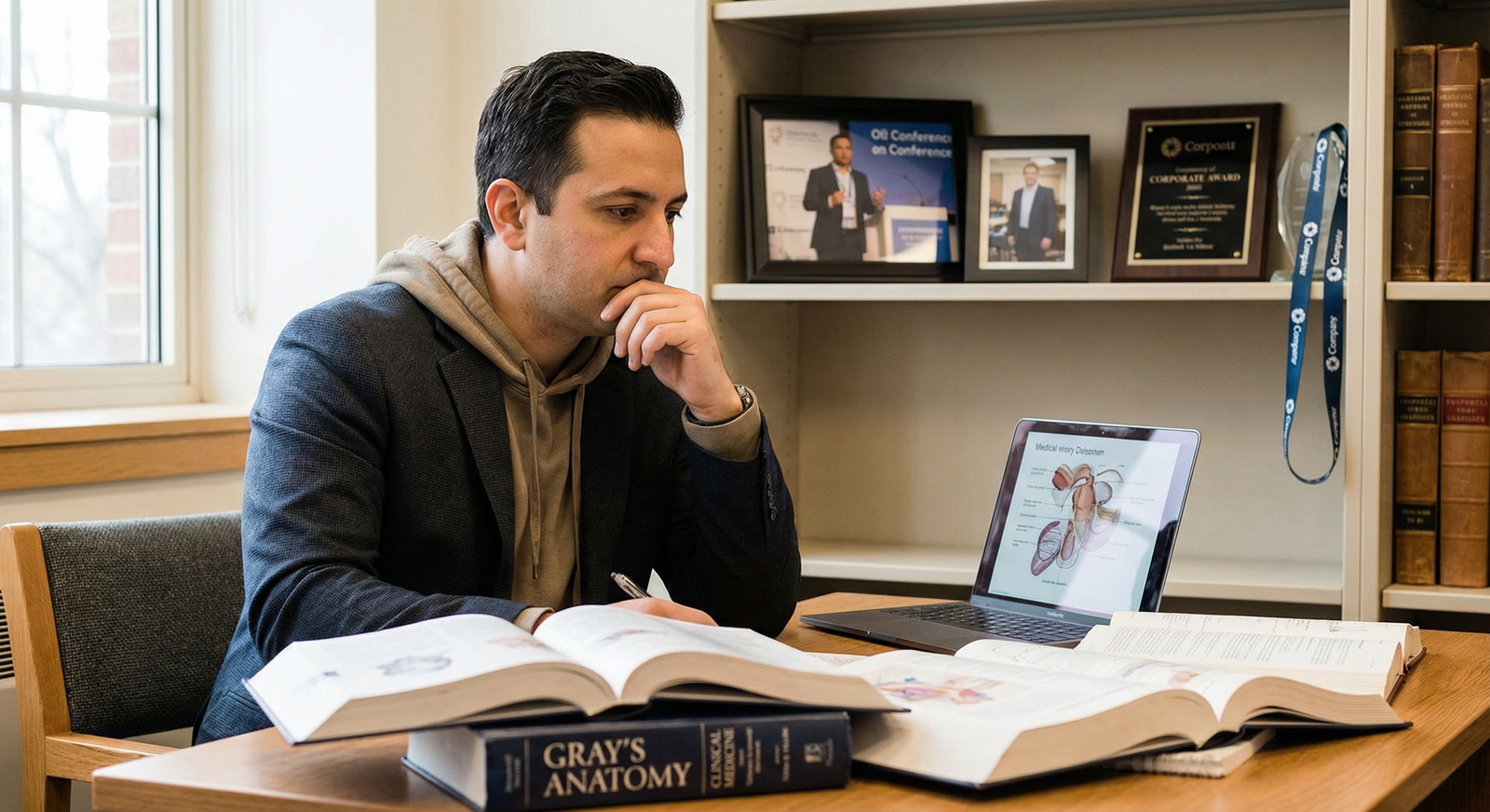
From Corporate to Clinic: One Woman’s Nontraditional Journey to Medicine
Transitioning from a stable corporate career to the uncertainty of medical training is a bold move that demands courage, planning, and deep self-reflection. Yet for many nontraditional applicants—especially women in medicine who may be juggling family, finances, and societal expectations—this kind of Career Transition can be the key to a more meaningful life.
This expanded story follows Sarah, a former marketing executive who left a high-paying corporate role to become a physician. Along the way, we’ll highlight practical steps, emotional realities, and strategic advice for anyone considering a similar Medicine Journey.
Introduction: A Leap of Faith into a New Career
Sarah spent over a decade in corporate marketing at a Fortune 500 company. On paper, her life looked ideal: a strong salary, leadership title, international travel, and professional recognition. Yet beneath the surface, she felt a growing disconnect between her daily work and the kind of impact she wanted to have.
The Quiet Question: “Is This It?”
Despite promotions and bonuses, Sarah found herself asking:
- What am I building toward?
- Will I feel proud of this work 20 years from now?
- If money and prestige didn’t matter, would I still be here?
These questions are common among nontraditional applicants considering medical education. For Sarah, they became impossible to ignore after a personal experience forced her to confront what truly mattered to her.
The Beginning: Corporate Life and the Seeds of Change
The Allure of the Corporate World
After earning her Bachelor’s degree in Business Administration, Sarah followed a familiar path: campus recruiting -> entry-level marketing role -> steady promotions.
Corporate life appealed to her:
- Clear performance metrics and rewards
- Professional development programs
- A visible ladder to climb
- A community of ambitious colleagues
By her mid-30s, she had a six-figure salary, a leadership title, and a lifestyle many admired.
The Missing Link: Caregiving and Perspective
Everything shifted when Sarah’s mother became seriously ill. Overnight, Sarah’s priorities changed:
- Late-night strategy calls were replaced with hospital visits
- Quarterly goals gave way to lab results and treatment plans
- Professional success felt less important than being present for her mother
During those months, Sarah watched physicians, nurses, and allied health professionals care for her mother with skill and compassion. She noticed:
- How a physician’s communication could calm an entire family
- How a nurse’s small act of kindness changed the tone of the day
- How medical decisions rippled through patients’ lives long after discharge
The contrast with her own work became sharper. Marketing campaigns felt abstract next to the immediate, tangible impact of clinical care. The seed of a new idea took root: What if my skills and energy could be redirected into medicine?

Discovering Passion: The Turning Point Toward Medicine
A Moment of Clarity
Months after her mother’s illness stabilized, Sarah attended a mindfulness retreat to manage stress. During a guided meditation, she envisioned herself:
- Wearing scrubs and a white coat
- Sitting at a patient’s bedside
- Explaining a diagnosis with warmth and clarity
- Working alongside a team focused on healing
This wasn’t a fleeting fantasy—it felt like recognition. She realized:
“The moments when I felt most alive were not in boardrooms; they were in hospital rooms with my mother.”
This Inspiration became the starting point for serious exploration of a transition to medicine.
Wrestling with Doubt and Practical Concerns
The emotional pull toward medicine was strong, but Sarah’s practical brain pushed back:
- “Am I too old to start over?”
- “How will I afford more schooling?”
- “Can I handle premed science courses after years away from textbooks?”
- “What will people think if I walk away from a successful corporate career?”
Instead of ignoring these fears, she treated them like a project—something her business training had prepared her for. She began:
- Researching post-baccalaureate premedical programs
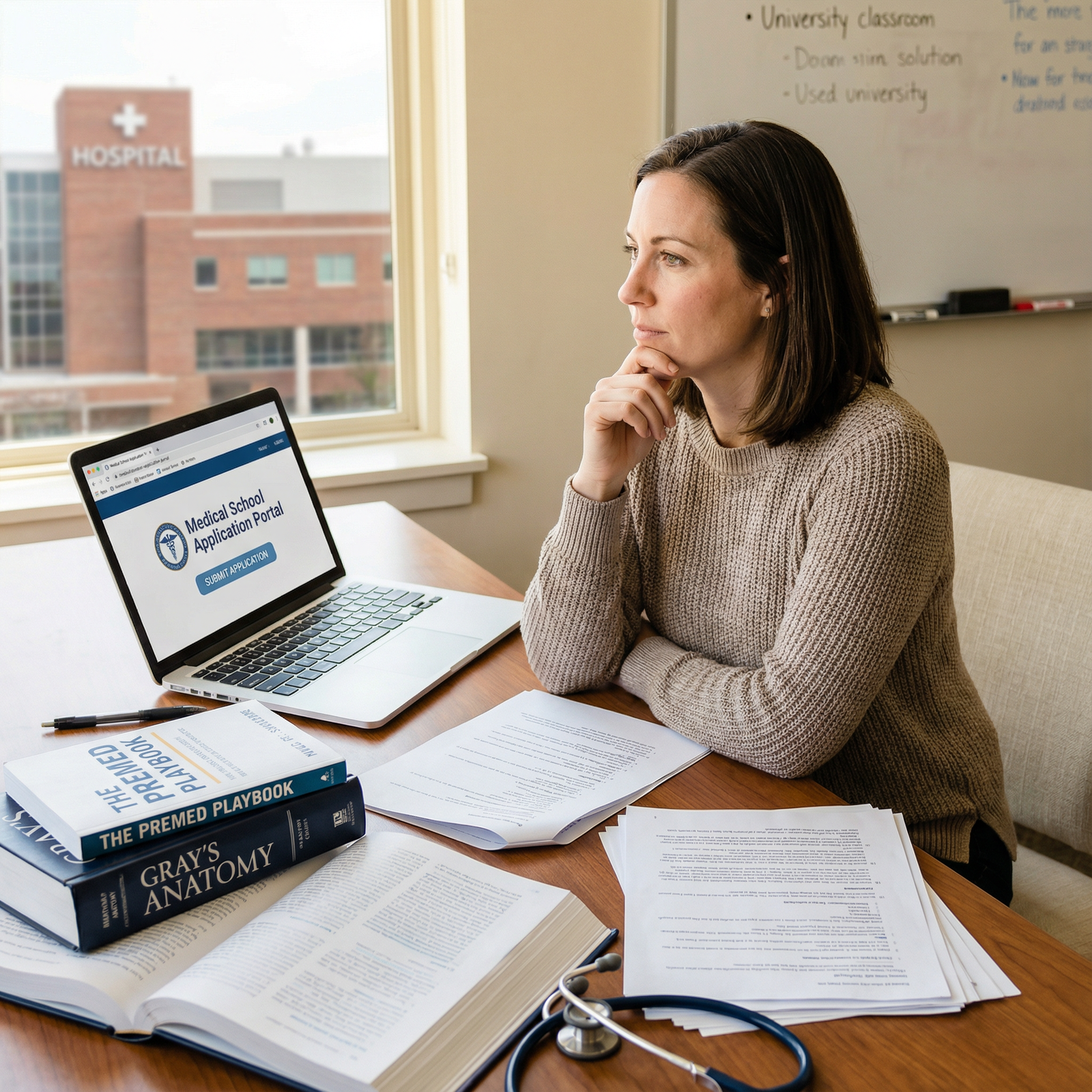
- Learning about the MCAT, AMCAS, and application timelines
- Reading blogs and forums for nontraditional applicants
- Talking to physicians—including women in medicine—about their journeys
The more she learned, the more the path felt challenging but possible.
Taking the Leap: Designing a Preparatory Year (or Two)
Going Back to School: Post-Bacc and Prerequisites
Sarah ultimately enrolled in a part-time post-baccalaureate pre-medical program at a local university, while gradually transitioning out of her corporate role.
Her plan included:
Core science prerequisites:
- General Chemistry I & II
- Biology I & II
- Organic Chemistry I & II
- Physics I & II
- Biochemistry
Strategic electives that strengthened her medical school application:
- Statistics
- Psychology
- Medical Ethics
Adjusting to the Classroom Again
Returning to the classroom after years in the corporate world was humbling:
- She was older than most classmates by 8–10 years
- Memorization-heavy subjects felt foreign compared to strategic marketing work
- Study techniques from undergrad no longer sufficed
Sarah adapted by:
- Using evidence-based study strategies like spaced repetition and active recall
- Treating studying like a full-time job: structured hours, clear goals
- Meeting professors early to discuss her nontraditional background and goals
Building a Support System as a Nontraditional Applicant
Feeling like an outsider is a common experience for nontraditional students. Sarah proactively built a support network:
Study Groups
She joined a small study group and brought her project management skills to organize shared notes and schedules.Premed Advising
She met regularly with an advisor familiar with nontraditional paths, who helped her:- Sequence courses
- Plan MCAT timing
- Identify target schools open to Career Transition applicants
Mentorship
Through networking events and physician-shadowing, she connected with:- A female internist who had also changed careers
- A program director who valued diverse backgrounds
These mentors provided both emotional support and concrete advice on how to frame her story.
From Applicant to Student: Navigating Medical School Entry
Preparing for and Taking the MCAT
With her prerequisites nearly complete, Sarah planned her MCAT:
- Set a 6–8 month prep timeline around her course load
- Used a combination of review books, question banks, and full-length practice exams
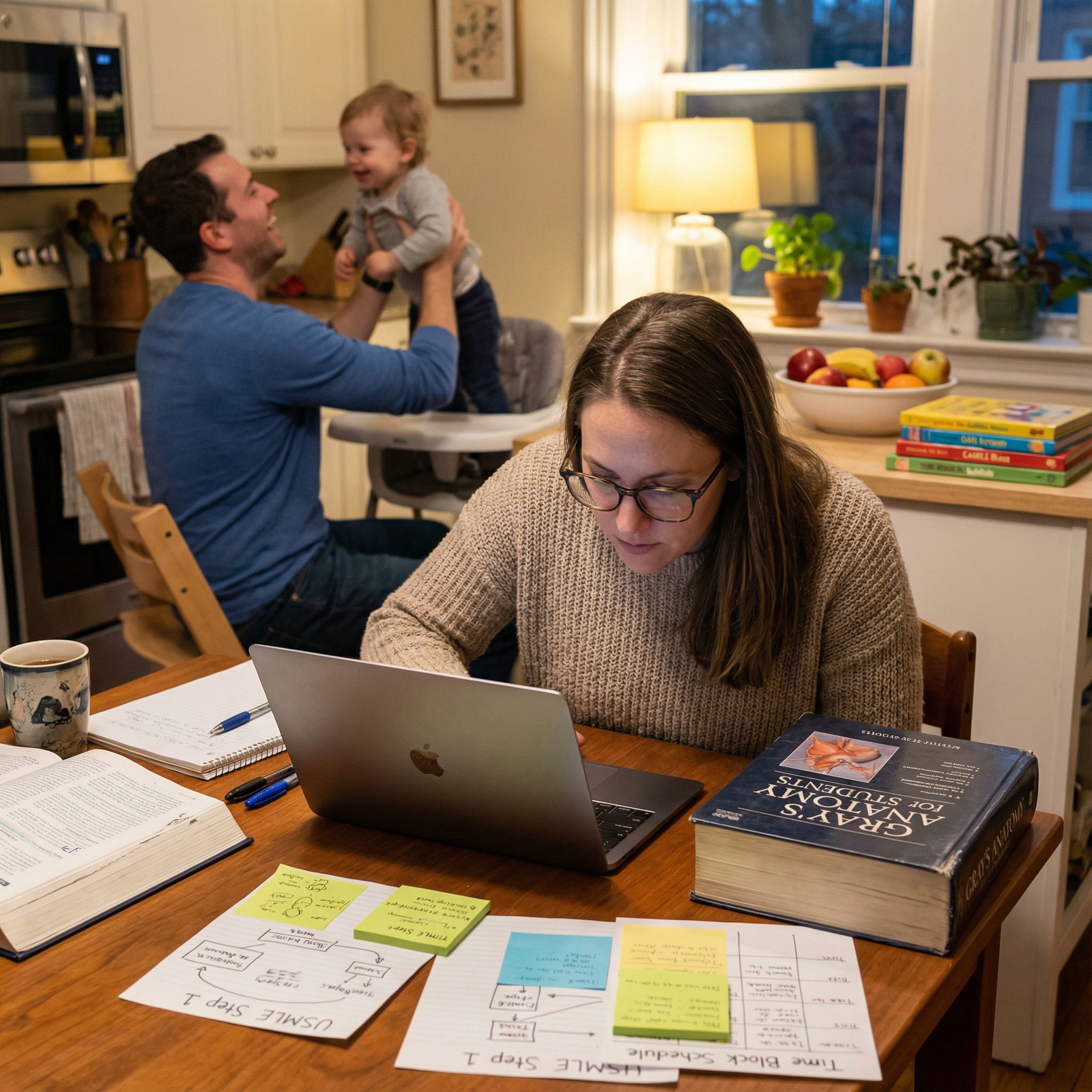
- Created a detailed weekly study schedule modeled after work project plans
Her nontraditional strengths—discipline, time management, and ability to learn complex new systems—proved invaluable.
Crafting a Compelling Application Narrative
When it came time to apply to medical school, Sarah approached her application like a targeted marketing campaign—except the product was her authentic story.
In her personal statement and secondary essays, she:
- Connected her family caregiving experience to her motivation for medicine
- Highlighted transferable corporate skills (leadership, communication, systems thinking)
- Reflected on how being an older applicant gave her emotional maturity and perspective
She also applied strategically:
- Selected schools known to value nontraditional and second-career students
- Emphasized her commitment to primary care and community health
- Integrated her passion for Women in Medicine and mentorship into her future goals
The Acceptance Call
Months later, she received the call she had envisioned: she was accepted into medical school.
It was a moment of validation—not just that she had the grades and scores, but that admissions committees believed in the value of her nontraditional path and her potential contribution to the profession.
Thriving in Medical School as a Nontraditional Student
Adjusting to the Pace and Volume
Medical school was a shock, even after her intense post-bacc program. Challenges included:
- Massive volumes of material in short time frames
- New teaching formats (PBL, team-based learning, OSCEs)
- The emotional weight of patient stories and clinical scenarios
Sarah approached medical education like a demanding job:
- Created weekly and daily study sprints
- Used priority frameworks (e.g., “must-know vs. nice-to-know”)
- Built in deliberate rest and recovery to avoid burnout
Common Challenges and How She Addressed Them
1. Time Management
- Used digital calendars and time-blocking
- Bundled tasks (e.g., flashcards during commute, anatomy review after lab)
- Protected non-negotiable time for sleep and exercise
2. Imposter Syndrome
Surrounded by brilliant classmates, she sometimes felt like she didn’t belong. She countered this by:
- Reminding herself of the value of her prior experience
- Seeking feedback from faculty who affirmed her clinical insights
- Joining nontraditional and women-in-medicine student groups
3. Financial and Life Responsibilities
Unlike many classmates, Sarah had:
- A mortgage
- Family responsibilities
- Fewer financial safety nets
She worked with financial aid counselors, created a detailed budget, and consciously accepted a temporarily leaner lifestyle in service of long-term goals.
Clinical Rotations: Where Her Background Shined
Once she entered clinical rotations, Sarah’s previous career experience became a major asset:
- Her communication skills made her effective at explaining conditions to patients in understandable language
- Her team management experience helped her work smoothly with nurses, social workers, and allied health professionals
- Her understanding of systems and workflows helped her see how to improve patient flow and clinic efficiency
She frequently received feedback that she seemed “like a resident already” in her professionalism and bedside manner.
Cultivating Deep Empathy
Sarah’s caregiving background and life experience allowed her to connect deeply with patients:
- She related to adult patients balancing illness with careers and families
- She recognized how social determinants (job stress, childcare, finances) affected health
- She learned when to listen more than talk, and how to sit with patients in difficult moments
Far from being a liability, her age and nontraditional path enhanced her empathy and made her a more grounded future physician.
Entering Residency: From Student to Physician in Training
Choosing a Specialty: Why Family Medicine
As she progressed through clerkships, Sarah found herself consistently drawn to:
- Longitudinal patient relationships
- Preventive care and chronic disease management
- Whole-person, family-centered approaches
Family medicine aligned beautifully with her values and her original motivation—helping individuals and families navigate complex health journeys.
Her residency application emphasized:
- Her corporate experience in strategy and systems improvement
- Her commitment to primary care access and patient education
- Her interest in advocating for women’s health and supporting women in medicine
She matched into a strong family medicine residency, a milestone that validated years of sacrifice and hard work.
Residency Realities: New Challenges, New Growth
Residency was both exhilarating and exhausting:
- 60–80 hour weeks
- Night shifts, cross-coverage, and rapid decision-making
- Responsibility for real patients, with real consequences
Yet Sarah noticed:
- Her prior experience managing high-stakes corporate projects helped her stay calm under pressure
- She was comfortable giving and receiving feedback after years in management roles
- Patients often commented on how heard and understood they felt with her
On difficult days, she returned to the memory of being at her mother’s bedside—the place where this journey began. It reminded her why the sacrifices were worth it.
Lessons Learned: Practical Insights for Career Changers
1. Redefining Success and Fulfillment
For Sarah, success shifted from:
- Titles → Impact on patients
- Salary → Alignment with values
- Applause → Internal sense of purpose
This rebirth of passion became more sustaining than any corporate recognition she had known.
2. Embracing Discomfort and Risk
Switching from corporate to clinic meant:
- Temporary loss of income
- Returning to “beginner” status
- Facing the possibility of failure in a new field
But moving through that fear reinforced a powerful lesson: growth rarely happens in comfort zones.
3. The Critical Role of Mentorship and Community
Mentorship was a recurring theme throughout her journey:
- Premed mentors guided academic planning
- Physician mentors helped frame her narrative for admissions
- Women in medicine mentors offered strategies for thriving in a male-dominated environment, negotiating, and protecting boundaries
For anyone considering a similar path, actively seeking mentors—and being honest with them about fears and goals—is invaluable.
4. Leveraging Transferable Skills
Nontraditional applicants often underestimate the value of their prior careers. Sarah found that her corporate skills translated directly to medicine:
- Leadership → Team coordination on rounds
- Project management → Managing patient panels and follow-ups
- Data analysis → Interpreting labs and outcomes trends
- Presentation skills → Teaching patients and peers
Rather than “starting from scratch,” she was building on a robust foundation.
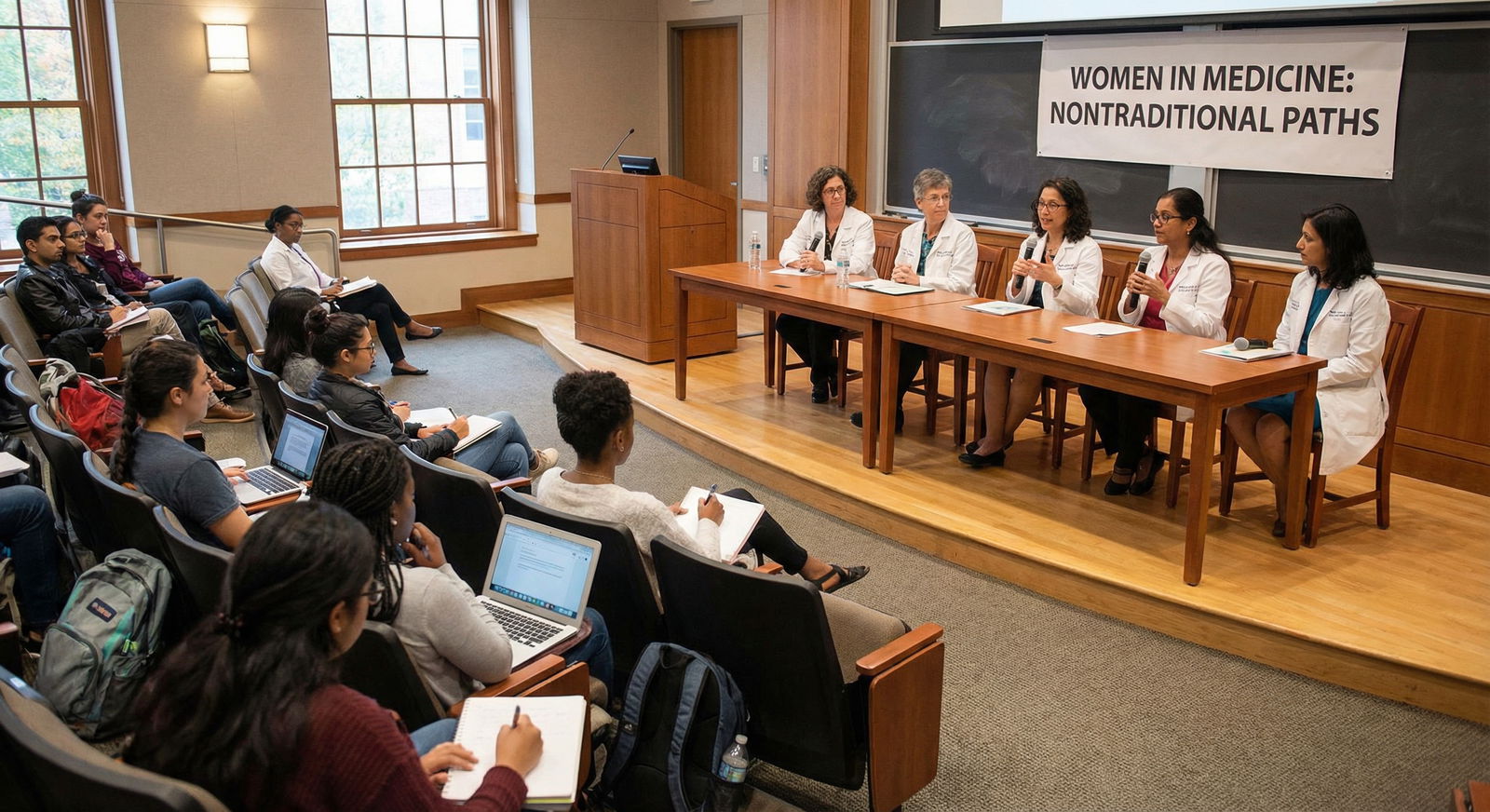
Actionable Advice for Aspiring Nontraditional and Second-Career Medical Students
If Sarah’s story resonates with you, consider these concrete steps to begin your own Medicine Journey:
1. Clarify Your Motivation
- Journal about why you want to pursue medicine
- Reflect on experiences that shaped your interest in healthcare
- Talk to physicians and trainees about the realities of the field
Admissions committees look for clarity and depth of motivation, especially in career changers.
2. Map Out the Academic Path
- Identify missing prerequisite courses
- Decide between a formal post-baccalaureate program vs. taking courses à la carte
- Research MCAT timelines that fit your work and life responsibilities
3. Assess Finances and Logistics
- Estimate the cost of prerequisites, MCAT, application cycle, and medical school
- Explore scholarships, post-bacc linkages, and financial aid policies
- Plan for transitions in housing, family responsibilities, and potential relocation
4. Build a Support Network Early
- Join premed clubs, especially those for nontraditional students
- Connect with online communities of career changers
- Attend pre-health conferences and local networking events
5. Own Your Story
- Don’t hide or apologize for your previous career—integrate it
- Frame your past as a strength that will enrich your future patient care
- Practice telling your story succinctly for interviews and networking
FAQs: Nontraditional Paths and Career Transition into Medicine
1. Is it too late to switch from a corporate job to medicine if I’m in my 30s or 40s?
No. Many successful physicians began their training in their 30s, 40s, or even later. Admissions committees increasingly recognize the value of life experience, especially when it enhances maturity, empathy, and professionalism. The key is to:
- Demonstrate strong academic performance in recent science coursework
- Show a clear understanding of the demands of medical training
- Articulate why medicine is the right path for you now
2. What specific steps should I take to prepare for medical school as a nontraditional applicant?
Consider this general roadmap:
- Self-assessment: Clarify your motivations and long-term goals
- Academic planning: Complete required prerequisites (via post-bacc or individual courses)
- MCAT: Schedule and prepare with adequate time and structure
- Clinical exposure: Shadow physicians, volunteer in clinical settings, or work in healthcare roles
- Letters of recommendation: Cultivate relationships with science faculty and physician mentors
- Application strategy: Apply to schools that value diversity in age, background, and career paths
3. How can I build a strong support network as a nontraditional or second-career premed?
- Join premed and nontraditional student organizations at your school
- Attend medical school fairs and informational sessions
- Seek out online communities (forums, social media groups) for career changers
- Ask physicians you shadow if they know others with nontraditional backgrounds
- Consider working with a premed advisor or mentor familiar with nontraditional paths
4. Will my previous corporate or non-medical work experience actually help in medical school and residency?
Yes. Many skills developed in other careers are directly relevant to medicine:
- Communication and presentations → patient education and teaching peers
- Teamwork and leadership → collaborating on rounds and in multidisciplinary teams
- Time and project management → balancing clinical duties, studying, and personal life
- Conflict resolution and negotiation → navigating complex patient and team dynamics
Be prepared to highlight these skills in your personal statement and interviews.
5. What unique challenges do women in medicine face, especially those entering from another career?
Women in medicine often navigate:
- Implicit bias and stereotypes about leadership and competence
- Work–life integration, particularly regarding family planning and caregiving responsibilities
- Underrepresentation in certain specialties and leadership positions
Women entering medicine as second-career professionals may also feel pressure around:
- Biological clock and family planning
- Financial and time investment later in life
- Standing out as “older” among peers
Supportive mentors, clear boundary-setting, careful specialty selection, and joining Women in Medicine organizations can help mitigate these challenges and open pathways to leadership and fulfillment.
Sarah’s story illustrates that a Career Transition from corporate to clinic is not only possible—it can deepen your sense of purpose and amplify your impact. If medicine is where your Inspiration keeps pulling you, it may be time to take the first deliberate step on your own nontraditional path to becoming a physician.