
Five Inspiring Late-Career Switchers Making Waves in Healthcare
Why Late-Career Switchers Are Transforming Healthcare
The path to becoming a physician is often portrayed as linear: premed, medical school, residency, and practice—usually completed by the mid-30s. But for a growing number of professionals, especially late-career switchers, the journey into healthcare begins much later.
These individuals may have spent a decade or more in finance, law, education, technology, or other fields before realizing their true calling in medicine. Their stories are powerful sources of inspiration for anyone considering a career change to healthcare—especially those who worry it might be “too late.”
Late-career medical professionals bring:
- Mature life experience and emotional resilience
- Transferable skills in communication, leadership, analysis, and problem-solving
- Fresh perspectives on patient care, healthcare systems, and policy
- Credibility when advocating for vulnerable or underserved populations
This article highlights five inspiring late-career switchers who transitioned into healthcare and are now driving meaningful change. Along the way, you’ll find practical takeaways for your own path as a non-traditional premed or medical student.
1. Dr. Jonathon Levy – From Finance to Family Medicine
Background: Numbers, Markets, and a Search for Meaning
For over a decade, Dr. Jonathon Levy built a successful career as a financial analyst. He thrived in a high-pressure environment, working with complex datasets, market projections, and risk models. On paper, he had “made it”: excellent income, professional recognition, and a clear upward career trajectory.
But major life events—including caring for an ill family member and witnessing inequities in who received quality care—forced him to reassess his definition of success. He realized he wanted his analytical skills to serve people more directly, not just portfolios.
Key strengths from his finance career included:
- Advanced quantitative reasoning and data analysis
- Comfort with uncertainty and risk management
- Experience working in high-stakes, time-sensitive contexts
- An understanding of how economic forces shape real-world outcomes
These skills would prove invaluable once he entered clinical medicine.
Transition: From Analyst to Aspiring Physician
At 35, Dr. Levy made a decision that many late-career switchers fear: he stepped away from a stable, well-paying job to pursue a demanding and uncertain path in medicine.
His transition steps included:
- Post-baccalaureate premed program – He completed prerequisite courses in biology, chemistry, physics, and organic chemistry while working part-time.
- Clinical exposure – He volunteered at a free clinic, where he witnessed first-hand how financial hardship affects access to care, adherence to medications, and overall health.
- MCAT preparation – He applied his structured, data-driven mindset to studying, tracking his performance like an investment portfolio, and steadily improving.
Importantly, he did not bury his past career; he reframed it. In his personal statement and interviews, he emphasized how his background in finance prepared him to:
- Interpret epidemiological and outcomes data
- Understand cost-effectiveness in treatment plans
- Advocate for policies that reduce financial barriers for patients
Impact on Healthcare: Using Finance to Fight Health Inequity
Today, as a family medicine physician, Dr. Levy serves a primarily low-income, underserved community. His prior expertise informs his work in several concrete ways:
- Policy advocacy: He collaborates with local health departments to design community health programs that are both clinically effective and financially sustainable.
- Financial literacy in health: He educates patients on navigating insurance, prescription costs, and community resources, recognizing that economic stability is a crucial social determinant of health.
- Population health initiatives: Using his data background, he helps his clinic track disease patterns, no-show rates, and medication adherence to better allocate resources.
Lessons for aspiring late-career switchers:
- Your prior “non-medical” skill set can become a core strength in healthcare.
- Policy, public health, and community medicine especially benefit from professionals who understand economics and systems.
- A well-framed career change narrative can be a major asset in the admissions process.
2. Dr. Lisa Huang – From Corporate Law to Pediatrics
Background: High-Stakes Law and a Growing Passion for Children’s Health
For more than 15 years, Dr. Lisa Huang practiced corporate law at a top-tier firm. She handled complex litigation, negotiated deals, and navigated intricate regulatory frameworks. She was meticulous, persuasive, and accustomed to long hours.
Despite her success, she increasingly found herself gravitating toward pro bono work—particularly in cases involving children’s welfare, disability rights, and educational access. Volunteering at legal clinics in pediatric hospitals was a turning point; she was drawn not only to advocacy, but also to the clinical teams caring for these children.
Her legal background gave her:
- Deep understanding of policy, regulation, and ethics
- Strong communication and negotiation skills
- Experience advocating for vulnerable populations
- Comfort with high-acuity, emotionally charged situations
Transition: From the Courtroom to the Clinic
At 40, Dr. Huang did what many would consider unthinkable: she left partnership track to apply to medical school.
Her transition involved:
- Academic preparation – She completed sciences through a structured post-bacc program with other non-traditional students.
- Shadowing and hospital volunteering – She spent time with pediatricians, neonatologists, and child psychiatrists to confirm that pediatric medicine truly suited her.
- Leveraging her legal work – Rather than downplaying her prior career, she wove it into a cohesive story of lifelong advocacy for children—now expanding from the legal to the clinical realm.
As a late-career medical student, she initially doubted whether she could keep pace with younger classmates. However, her maturity, discipline, and experience tackling complex material under pressure turned out to be major advantages.
Impact on Healthcare: A Pediatrician and Policy Advocate
Now a respected pediatrician, Dr. Huang occupies a unique intersection of law, ethics, and child health:
- Medical-legal partnerships – She has helped develop collaboratives where lawyers and pediatric teams work together to address social determinants of health (e.g., housing insecurity, immigration status, school discrimination).
- Policy reform – She consults on legislation affecting children’s access to healthcare, insurance coverage, and disability services.
- Ethical leadership – Her dual expertise makes her a key voice on issues such as consent, privacy, and guardianship in pediatric care.
Takeaways for career changers:
- Skills in law, policy, or advocacy translate powerfully into healthcare—especially pediatrics, psychiatry, and public health.
- Non-traditional applicants can carve out niche careers where their first profession is not a detour but a strategic advantage.
- Your prior professional identity can become the foundation for leadership roles in medical ethics and health policy.
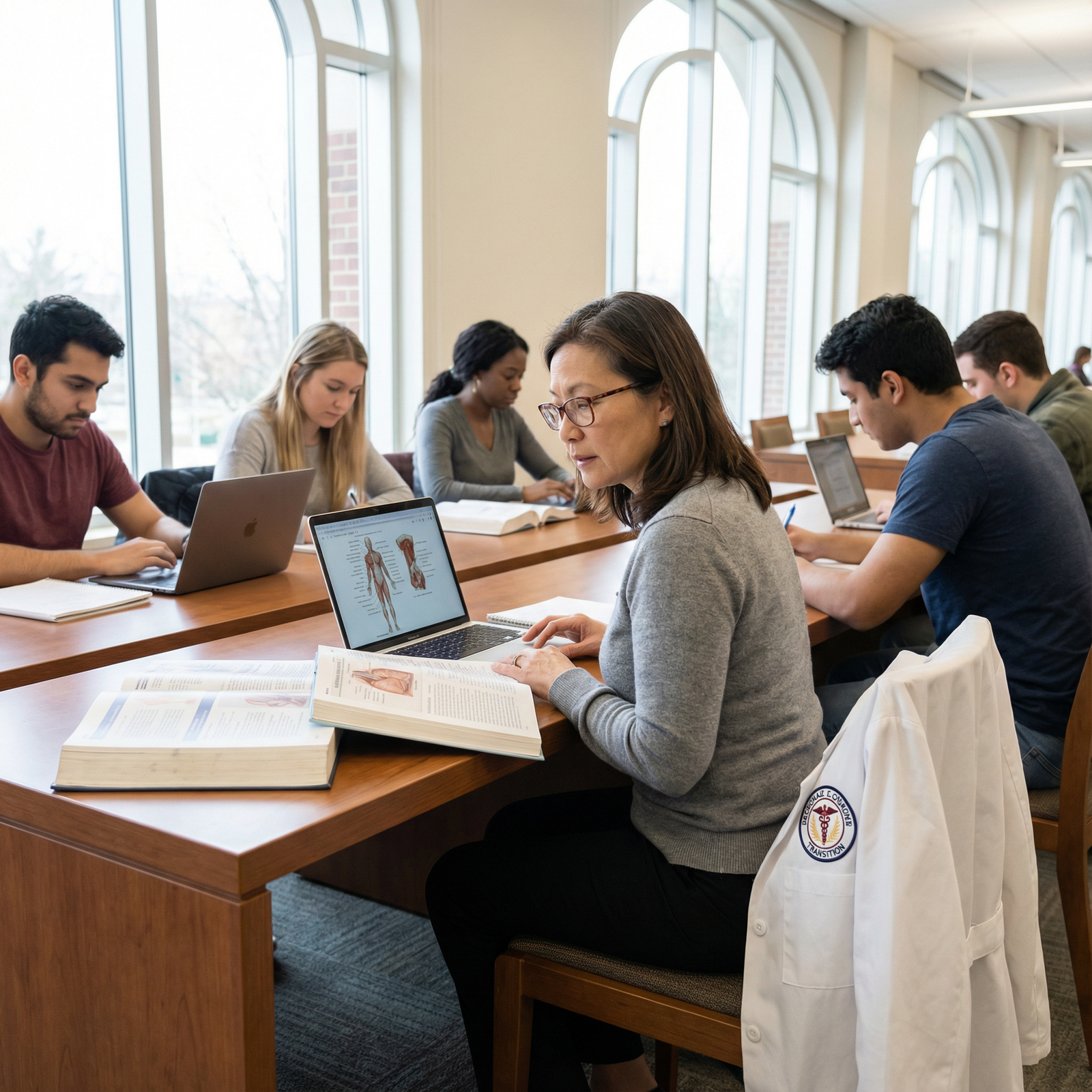
3. Dr. Jim Richards – From Classroom Educator to General Surgeon
Background: Teaching Science, Witnessing Suffering
For 20 years, Dr. Jim Richards taught high school biology and chemistry. Generations of students passed through his classroom, many of whom went on to careers in STEM and healthcare. He was passionate about explaining complex scientific ideas in accessible, engaging ways.
The turning point came when several close family members developed serious illnesses. He spent hours in hospital rooms, talking with physicians and nurses, trying to understand their conditions. The desire to move from explaining science to actually practicing medicine gradually intensified.
As a teacher, he had:
- Exceptional skills in simplifying complex concepts
- Experience fostering trust, empathy, and communication
- Strong organizational skills and time management
- A deep understanding of learning processes—valuable for both patient education and medical training.
Transition: Reskilling for a Second Career in Medicine
At 39, Dr. Richards enrolled in a premed program. Returning to being “the student” after decades as the teacher challenged his identity, but he embraced the process with humility and determination.
His transition strategies included:
- Leveraging prior coursework – His science background reduced the learning curve for basic sciences, allowing him to focus on more advanced material and MCAT preparation.
- Building a narrative around teaching – In applications, he highlighted how teaching refined his communication skills, empathy, and leadership—crucial traits for a surgeon.
- Early exposure to surgery – Shadowing in the OR revealed the mix of technical precision, teamwork, and decisive thinking that deeply appealed to him.
Impact on Healthcare: A Surgeon Who Never Stops Teaching
As a general surgeon, Dr. Richards blends his teaching background with surgical practice:
- Patient education – He creates visual aids, handouts, and videos that demystify common procedures, helping patients understand risks, benefits, and recovery.
- Resident and medical student teaching – Known for his clear explanations, he’s become a sought-after mentor in the operating room and on the wards.
- Shared decision-making – His communication style fosters collaborative decisions where patients feel deeply informed rather than rushed or intimidated.
What aspiring late-career medical professionals can learn:
- Backgrounds in education or training are incredibly valuable in patient-centered care and academic medicine.
- Medicine needs clinicians who can explain—not just perform—complex interventions.
- Your experience guiding learners can translate seamlessly into guiding patients and junior colleagues.
4. Dr. Maria Gonzalez – From IT Innovator to Rehabilitation Medicine
Background: Bridging Health and Technology from the Outside
Dr. Maria Gonzalez began her professional life in information technology, working specifically on healthcare technology solutions. She helped design electronic health record (EHR) interfaces, hospital workflow systems, and data analytics tools for healthcare organizations.
Her vantage point was unique: she worked closely with doctors, nurses, and administrators, yet remained on the “other side” of the clinical divide. Over time, she recognized a recurring theme:
- Many tech tools were not fully aligned with real clinical workflows.
- Patients’ experiences and accessibility needs were often an afterthought.
- Clinicians frequently felt more burdened than supported by new systems.
This disconnect motivated her to pursue a more direct clinical role where she could integrate her technical expertise with hands-on patient care.
Transition: Entering Medicine with a Tech Mindset
In her late 30s, Dr. Gonzalez started medical school. She approached it with the curiosity of an engineer and the empathy of someone who had seen technology both help and hinder patient care.
Key aspects of her transition:
- Strategic specialty choice – During clinical rotations, she was drawn to rehabilitation medicine (physiatry), where technology—from prosthetics to tele-rehab platforms—plays a central role.
- Continuous innovation – Even as a student and resident, she participated in quality improvement projects that optimized EHR templates and integrated remote-monitoring tools for rehab patients.
- Collaboration – She served as a “translator” between IT teams and clinical staff, improving communication and usability of new systems.
Impact on Healthcare: Human-Centered Tech in Rehabilitation
As a rehabilitation medicine physician, Dr. Gonzalez leads several initiatives:
- Tele-rehabilitation programs – She helped design virtual rehab platforms allowing patients to access guided exercises and check-ins from home, improving continuity of care and access for rural or mobility-limited patients.
- Data-informed recovery plans – She uses wearable devices and remote monitoring to track patient progress, adapting treatment plans based on objective data.
- Advocacy for inclusive design – She champions technology that is accessible to patients with disabilities, language barriers, or limited digital literacy.
Her work illustrates how late-career switchers with technical backgrounds can:
- Improve system usability and efficiency
- Reduce clinician burnout caused by poorly designed tools
- Expand access to care through innovation
For those considering a career change from IT, engineering, or data science to healthcare, Dr. Gonzalez’s path shows how your skills can drive meaningful, patient-centered innovation.
5. Dr. Eric Klug – From Culinary Arts to Nutrition-Focused Patient Care
Background: From Restaurant Kitchens to Holistic Health
Before entering medicine, Dr. Eric Klug built a thriving career as a chef and restaurateur. He understood food deeply—flavor, culture, supply chains, and the subtle ways nutrition shapes how people feel day to day.
A personal health scare prompted him to reevaluate his lifestyle and career. As he met with physicians and dietitians, he realized how powerful nutrition could be in both preventing and managing disease—and how often it was underemphasized in routine care.
From his culinary career, he brought:
- Advanced knowledge of food preparation, ingredients, and nutrition
- Strong skills in teaching and demonstrating practical techniques
- Experience managing high-stress environments and leading teams
- A holistic perspective on wellness, lifestyle, and culture.
Transition: Integrating Culinary Skills into Medical Training
At 36, Dr. Klug took on the academic prerequisites for medical school. Initially, he worried that his application might seem too unconventional, but he soon realized culinary arts could be a powerful differentiator.
He crafted his transition with:
- Targeted experiences – Volunteering at community health centers and nutrition programs, where he taught cooking classes for patients with diabetes, heart disease, and obesity.
- A clear narrative – Positioning himself as someone who would bridge the gap between medical recommendations and real-world behavior change.
- Focus on preventive care – Even during rotations, he emphasized lifestyle counseling and multidisciplinary care.
Impact on Healthcare: Bringing the Kitchen into the Clinic
Now a physician with a focus on preventive and lifestyle medicine, Dr. Klug:
- Runs nutrition and cooking workshops – He partners with dietitians to provide hands-on, culturally sensitive cooking classes specifically tailored to patients’ medical conditions and budgets.
- Advocates for better food in healthcare settings – He works with hospitals and clinics to improve the nutritional quality of inpatient meals and cafeteria offerings.
- Integrates food into treatment plans – For many patients, he prescribes structured dietary changes as a foundational component of managing chronic diseases.
His story underscores an important point for late-career switchers:
- Seemingly unrelated careers—like culinary arts—can become powerful assets in healthcare when linked to patient education, prevention, and behavior change.
- Medicine increasingly values expertise in lifestyle medicine, nutrition, and population health.
- Diverse backgrounds enrich how medical professionals engage patients and communities.
Key Lessons for Aspiring Late-Career Medical Professionals
1. Your Previous Career Is an Asset, Not a Liability
Whether you come from finance, law, education, IT, culinary arts, or another field, your prior experiences:
- Differentiate you from traditional applicants
- Provide concrete skills that enhance patient care and team dynamics
- Position you for leadership in niches like policy, education, quality improvement, or innovation
Instead of trying to “hide” your past, build a clear narrative of how it led you to healthcare and how it will benefit your future patients and colleagues.
2. Plan Your Transition Strategically
Successful late-career switchers typically:
- Complete prerequisites efficiently – Through post-bacc programs or targeted coursework.
- Gain meaningful clinical exposure – Volunteering, shadowing, scribing, and patient-facing roles.
- Address financial realities – Planning for tuition, reduced income, and potential family responsibilities.
- Evaluate specialty fit early – Considering lifestyle, length of training, and alignment with strengths and interests.
3. Embrace Your Non-Traditional Identity
Being older or coming from another field can feel intimidating, especially when surrounded by younger classmates. Yet, late-career switchers often stand out for:
- Professionalism and reliability
- Emotional maturity and perspective
- Strong communication skills and work ethic
Admissions committees and residency programs increasingly value this diversity in training environments.
FAQs: Late-Career Switchers and the Path to Medicine
1. Is it common for people to switch careers to medicine later in life?
While the “traditional” path still dominates, career change into medicine is becoming more common. Many medical schools now actively encourage applications from non-traditional candidates, including:
- Mid-career professionals
- Individuals with families or prior advanced degrees
- People from non-science backgrounds
These late-career switchers enrich training environments and healthcare systems with diverse viewpoints and skills.
2. Can I apply to medical school if my background is not in science or healthcare?
Yes. Many medical professionals began in entirely different fields—business, arts, law, engineering, education, or hospitality. You will need to:
- Complete required premed courses (often via a post-bacc program)
- Take the MCAT
- Gain clinical and volunteer experience to demonstrate commitment
Admissions committees evaluate your entire profile, not just your undergraduate major.
3. What advantages do late-career switchers have in healthcare?
Late-career medical professionals often bring:
- Mature judgment and resilience from years in the workforce
- Advanced communication, leadership, or analytical skills
- A refined sense of purpose and motivation—they know exactly why they are pursuing medicine
- Unique perspectives that improve team dynamics, patient relationships, and problem-solving
These strengths can be especially valuable in fields like primary care, psychiatry, pediatrics, surgery, public health, and health administration.
4. How can I start planning a transition to healthcare from another profession?
Consider taking these steps:
- Self-assessment – Clarify your motivations, strengths, and long-term goals.
- Research paths – Explore MD, DO, PA, NP, and other healthcare roles to find the best fit.
- Shadow and volunteer – Gain real exposure in clinics, hospitals, or community health organizations.
- Meet academic requirements – Enroll in necessary science courses and plan for the MCAT.
- Network and seek mentorship – Connect with other late-career switchers, advisors, and healthcare professionals who can offer guidance.
You can also explore comprehensive resources and transition guides designed specifically for non-traditional premeds and late-career switchers considering a career change into healthcare.
5. Am I “too old” to make a career change to medicine?
Age alone is rarely a disqualifier. Admissions committees and residency programs do consider the length of training and your long-term goals, but successful physicians have started medical school in their 30s, 40s, and even 50s. The more important questions are:
- Are you prepared for the academic and time commitments?
- Have you planned financially and personally (e.g., family, caregiving responsibilities)?
- Can you clearly articulate how your prior experience enhances your future role as a physician?
If you can answer yes—and are willing to do the work—then you are not “too old” to pursue a fulfilling, impactful career change into medicine.
These five late-career switchers show that the road into healthcare does not need to be straight or early. Whether you begin in finance, law, education, IT, culinary arts, or any other field, your journey can enrich not only your own life, but also the lives of your future patients, colleagues, and communities.