
The biggest myth about older matriculants is that they just “do what everyone else does, but later.” Wrong. Your transition is harder, more complex, and requires an actual operations plan.
You’re not just buying a laptop and a stethoscope. You’re renegotiating a life.
Here’s the timeline I use when I walk non-traditional students—from early 30s to mid‑40s—through the gap between “Congratulations, you’re in” and “Welcome to orientation.” Follow it roughly in order. Adjust the dates for your school’s calendar, but keep the sequence.
Big Picture Timeline: Acceptance → Orientation
You need an overview before the week‑by‑week grind.

| Period | Event |
|---|---|
| 4-6 Months Before - Confirm seat and finances | Offer acceptance confirmed |
| 4-6 Months Before - Decide move vs commute | Housing strategy |
| 4-6 Months Before - Start childcare / partner planning | Family logistics |
| 3 Months Before - Secure housing | Lease signed or mortgage plan |
| 3 Months Before - Arrange childcare and backup | Contracts and waitlists |
| 3 Months Before - Notify employer and plan exit | Final work date set |
| 2 Months Before - Finalize budget and loans | Loan acceptance, budget built |
| 2 Months Before - Begin academic ramp-up | Light review, tech setup |
| 2 Months Before - Medical / immunization clearance | Records and appointments |
| 1 Month Before - Pack and move | New home set up |
| 1 Month Before - Test routines | Commute trial, morning schedule |
| 1 Month Before - Confirm all admin items | IDs, forms, email, portals |
| Orientation Month - Arrive 3-7 days early | Settle, grocery, campus walk |
| Orientation Month - Attend orientation | Network, policies, professionalism |
| Orientation Month - Debrief and adjust | Tighten routines for week 1 |
Now let’s walk it step by step.
4–6 Months Before Orientation: Commit and Restructure Your Life
At this point you should stop thinking “I got in” and start thinking “I’m deploying for a 4‑year mission.”
1. Immediately After Acceptance (Within 1–2 Weeks)
You lock in the foundation first.
Secure your seat
- Pay deposit.
- Complete any “intent to enroll” or “commit to enroll” forms.
- Track deadlines in one place—Google Calendar, Notion, paper planner, whatever you’ll actually use.
Clarify the school’s dates
- Orientation start date.
- Mandatory pre‑orientation events (white coat, compliance sessions).
- Final date to switch housing, insurance, etc.
Decide: This school vs waitlist
- If you’re holding one acceptance and some waitlists, set a decision date for yourself (e.g., “If I don’t hear from X by May 1, I commit fully here.”).
- Older students get hurt by indecision more than by a less‑prestigious school. Stability matters more.
2. Life Structure Decisions (Weeks 2–4)
This is where non‑trads either get intentional or set themselves up for chaos.
At this point you should decide:
Move vs. Commute
- If commute > 45–60 minutes each way, I’ve seen older students flame out. You’re balancing classes, studying, maybe kids—endless driving will crush you.
- If you have shared custody or strong local support, commuting may still win. But choose it with full awareness of the time cost.
Partner and Family Plan
- Have the uncomfortable talk early:
- What happens to income?
- Who handles mornings, evenings, kid pickups?
- What does your partner need (time, clarity, boundaries) to not burn out?
- Do not say “We’ll figure it out later.” That’s code for “We’ll fight about this during exams.”
- Have the uncomfortable talk early:
-
- Identify your last working day.
- Ideal: stop work 4–6 weeks before orientation if finances allow.
- If you must work closer: at least protect 2 weeks for moving, logistics, and mental reset.
3–4 Months Before: Housing, Childcare, and Money
At this point you should be shifting from “decisions” to “contracts.”
Housing: Get This Off Your Plate
- Target: Lease signed or housing secured 3 months before orientation.
- Steps:
- Request the school’s housing guide or Facebook group.
- Decide: live alone vs roommate vs family housing.
- Older students with families usually do best near:
- Grocery stores
- Reliable schools/daycare
- Safe, quiet neighborhoods
- Older students with families usually do best near:
- If moving cities:
- Do a 2–3 day scouting trip if at all possible.
- Walk your potential commute during rush hour or simulate it by car.
Childcare & Backup Coverage
If you have kids, this is your single most important system.
At this point you should:
Lock in primary childcare
- Daycare/preschool with hours that actually match your day.
- Nanny/au pair with written expectations.
- After‑school program for older kids.
Build backup layers
- One local person who can:
- Take a sick kid for 2–3 hours while you attend mandatory sessions.
- Cover early mornings once in a while.
- Know the urgent care / pediatrician options near:
- Your home
- The school (for those “come get your kid now” calls)
- One local person who can:
Money: Hard Numbers, Not Vibes
You’re older. You probably have more obligations—and more to lose—than a 22‑year‑old.
At this point you should:
Get a clear snapshot of your finances
- Current savings.
- Debts (credit cards, car loans, mortgage).
- Spouse/partner income stability.
Build a real student budget, not fantasy:
| Category | Estimated Amount |
|---|---|
| Rent/Mortgage | $1,600 |
| Utilities/Internet | $250 |
| Groceries | $600 |
| Childcare | $900 |
| Transportation | $300 |
| Health Insurance | $400 |
| Misc/Household | $300 |
| Loan Refund Savings | $250 |
- Decide loan vs savings strategy:
- How much of your living costs will be loans vs partner income vs savings?
- Aim to protect a small emergency buffer (1–2 months expenses) if you can.
2–3 Months Before: Paperwork, Health, and Academic Ramp‑Up
At this point you should be turning toward the school’s to‑do lists and your own physical readiness.
1. School Paperwork and Compliance
Most schools will bury you in portals and forms. Do not resist it. Just schedule it.
Make a dedicated “admin week” on your calendar to:
Set up:
- School email
- Learning management system logins
- Financial aid portal
Complete:
- Background check
- Drug screening, if required
- HIPAA / safety training modules
Health compliance:
- Immunization records (MMR, Hep B series, TB testing, etc.)
- Physical exam forms
- Proof of health insurance
2. Health, Fitness, and Medical Care
Older matriculants feel the physical grind of first‑year more. You’re not fragile—you’re just human.
At this point you should:
See your PCP and dentist
- Update any chronic condition plans (BP, diabetes, thyroid, etc.).
- Get dental work done now so you’re not hunting for an endodontist during anatomy.
Tune your sleep and energy
- Start shifting your schedule toward the wake/sleep pattern you’ll use during school.
- If you’re staying up till midnight now, start pulling that back gradually.
Movement baseline
- You do not need to become a triathlete.
- You do want:
- 2–3 sessions/week of light strength or mobility work.
- Regular walking, especially if you’ll be on a large campus or hospital.
3. Academic Pre‑Hab (Not Overkill Studying)
No, you don’t need to “pre‑study all of biochemistry.” But you also shouldn’t walk in ice‑cold if you’ve been out of school for 7–10 years.
At this point you should focus on:
Systems, not content
- Install and learn:
- Anki (or your flashcard tool of choice).
- A PDF annotation app (GoodNotes, Notability, OneNote, or just plain Adobe with a system).
- Practice:
- Taking dense notes from a lecture or YouTube video.
- Summarizing in your own words quickly.
- Install and learn:
Light review only where you’re rusty
- Suggestions:
- Basic cell biology, genetics, metabolism refresher.
- Med school math: interpreting graphs, basic statistics used in research papers.
- Cap it at 3–5 hours/week. No heroics.
- Suggestions:
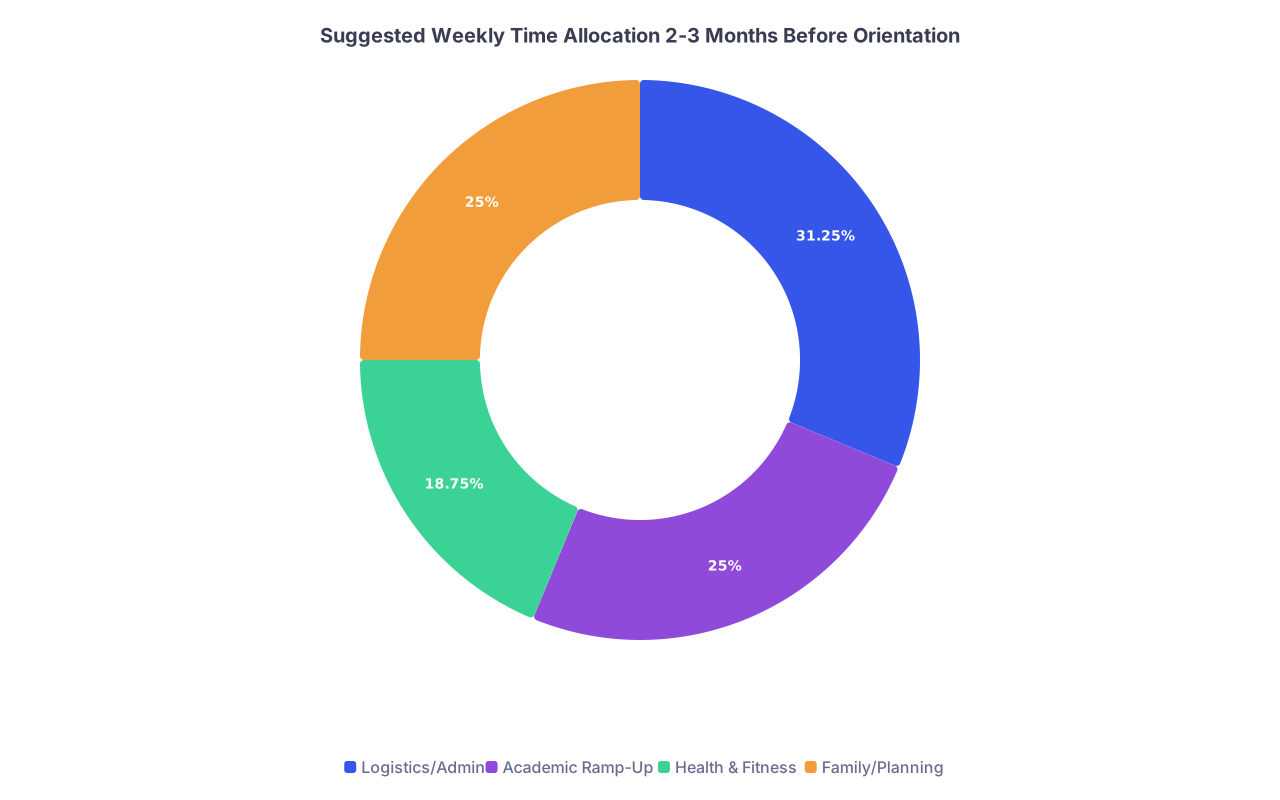
| Category | Value |
|---|---|
| Logistics/Admin | 5 |
| Academic Ramp-Up | 4 |
| Health & Fitness | 3 |
| Family/Planning | 4 |
6–8 Weeks Before: Work Exit, Moving Prep, and Relationship Adjustments
This is the “everything happens at once” phase. You want a plan before the chaos hits.
1. Employer and Professional Identity
At this point you should:
Give final notice (if you haven’t already)
- Typical: 4 weeks. If you’re senior staff, maybe 6–8.
Clarify:
- End date
- Health insurance coverage end date
- Options for COBRA or marketplace plans if your student plan doesn’t start until orientation
Decide: keep any per‑diem or PRN work?
- Pros: money, identity, easier re‑entry.
- Cons: time, cognitive load.
- My rule: if it will regularly eat into weekends or evenings, skip it first semester.
2. Moving Logistics
If you’re relocating, at this point you should:
- Book movers or truck.
- Schedule:
- Utility start/stop dates.
- Internet installation (do this early; you’ll regret waiting).
- Start a room‑by‑room declutter:
- You do not want to unpack 40 boxes of old office clothes you won’t wear for 4 years.
3. Partner and Family Expectations Reset
The closer you get, the more everyone’s anxiety spikes. Name it and reset expectations.
At this point you should sit down and answer together:
- What does a “typical week” look like for:
- Study hours
- Family time
- Chores
- What’s non‑negotiable for you? For them?
- Weekly date night? A protected Sunday morning off? Name it.
- How will you handle:
- You failing an exam?
- Their bad week at work?
- Kid crisis on your exam day?
Uncomfortable now is better than resentful later.
3–4 Weeks Before: Final Admin, Packing, and Routine Prototyping
At this point you should be turning the corner from logistics to actually rehearsing your new life.
1. School Admin: Triple‑Check
Make a one‑page checklist and confirm you’ve done:
- Tuition/loan acceptance and disbursement setup
- ID photo submitted
- Immunization and physical forms accepted (not just “uploaded”)
- Parking permit or transit pass, if you’re driving
- Housing deposit/payments on schedule
- Orientation schedule downloaded and blocked off on your calendar
2. Tech and Workspace Setup
Do this before you move, or as soon as you land.
Laptop check:
- Enough storage and RAM (8–16GB RAM minimum now).
- Working webcam/mic for any remote elements.
Accessories:
- Comfortable headphones.
- External monitor if you can afford it—non‑trads with older eyes thank themselves later.
- Simple backup system (cloud drive, external SSD, whatever you’ll use).
Personal workspace:
- Decide where you’ll study at home—and what “do not disturb” looks like for others.

3. Trial Runs: Commute and Daily Flow
At this point you should simulate your med school days.
Do at least 2–3 “fake” school days:
- Wake at your planned time.
- Do a mock commute during real traffic.
- Block out 8–10 hours where you’re “in school” (even if you’re just organizing, watching lectures, or doing admin tasks).
Notice:
- How much time you bleed in transitions.
- When your energy crashes.
- Where your kids/partner still assume you’re “available” during those blocks.
Then adjust:
- Maybe you move your workout earlier.
- Maybe dinner becomes a 3‑day meal prep instead of nightly cooking.
- Maybe you shift bedtime for everyone by 30 minutes.
1–2 Weeks Before Orientation: Settle, Breathe, and Final Details
At this point you should be physically where you’re going to live, or about to arrive.
1. Move In and Stabilize
- Unpack essentials first:
- Bedroom, bathroom, kitchen basics, study space.
- Walk:
- To campus
- To the nearest grocery store
- Around the hospital area you’ll use later

2. Orientation Prep: Mental, Not Just Logistical
At this point you should accept one fact: you’ll likely be one of the oldest people in the room. That’s fine. Own it.
- Decide how you’ll introduce yourself:
- One simple sentence about your prior career.
- One line about your family situation if you want to share.
- Identify 2–3 “non‑negotiables” for week one:
- Sleep minimum.
- One small daily decompression activity (10‑minute walk, call home, etc.).
- No major life decisions during the first two weeks.
3. Communication Check‑Ins
- With partner/family:
- Reconfirm childcare details for orientation days (these often run long).
- Agree on check‑in times: morning text, quick call, evening recap.
- With yourself:
- You’re allowed to be anxious and excited at the same time.
- Write down why you’re doing this in 3–4 bullet points. Keep it visible.
Orientation Week: How to Move Like an Older Matriculant
Now you’re there. At this point you should shift from planning mode to observing and aligning.
1. Treat Orientation Like Reconnaissance
You’re not there just for icebreakers. You’re performing reconnaissance for a 4‑year campaign.
Pay attention to:
- Faculty who seem invested in students—potential mentors.
- Staff who clearly “run the place” administratively—these people can save you later.
- Older or non‑traditional classmates—build a micro‑network early.
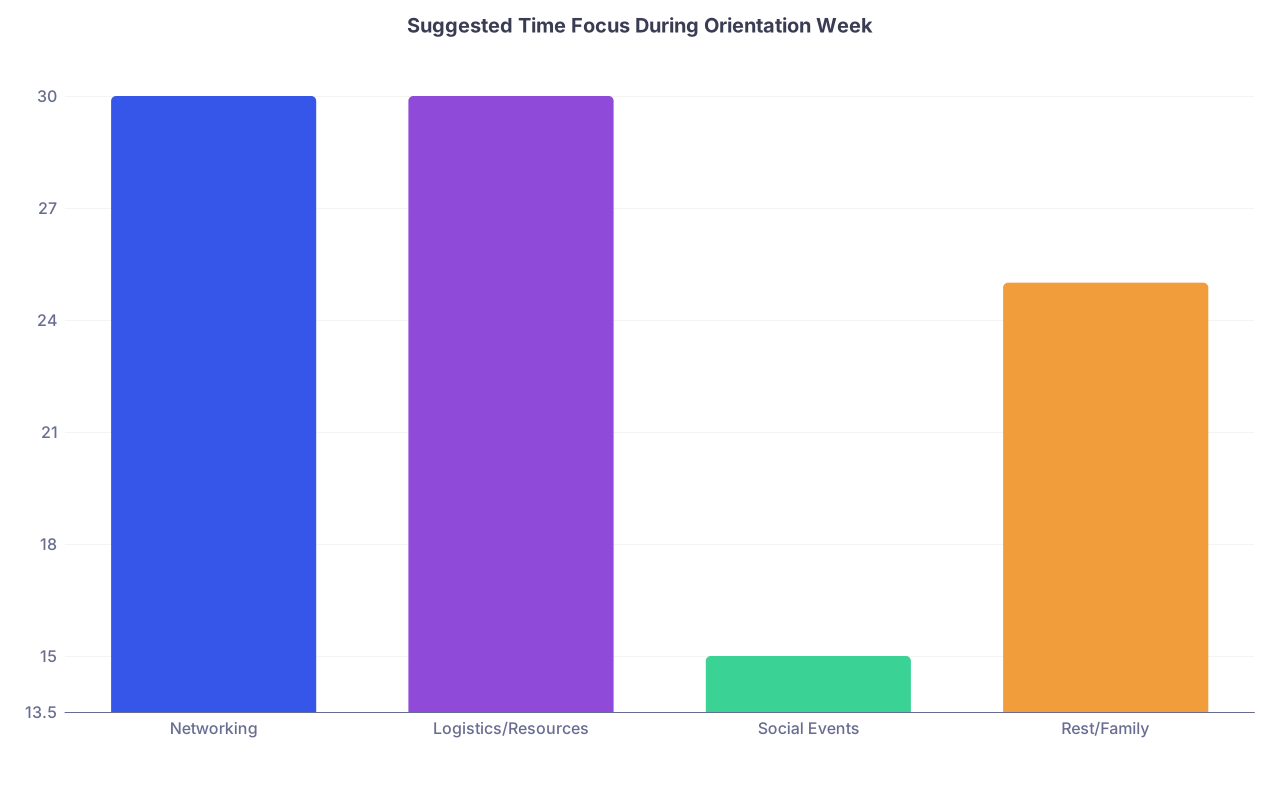
| Category | Value |
|---|---|
| Networking | 30 |
| Logistics/Resources | 30 |
| Social Events | 15 |
| Rest/Family | 25 |
2. Make 3–5 Strategic Connections
At this point you should:
Introduce yourself to:
- The student affairs or wellness person.
- Anyone running “non‑traditional” or “parents in medicine” groups.
- At least 2 classmates you could realistically study with.
Ask:
- How do exams/workload really feel here?
- What do second‑years wish they’d done differently at the start?
3. Protect Your Energy
You do not need to attend every social event. You are not failing orientation if you go home early.
- Choose:
- 1–2 events where you’ll show your face and be present.
- Evenings you’ll reserve for:
- Family time (if local)
- Quiet unpacking
- Early sleep

First Weekend After Orientation: Lock in Your Systems
You’re not done when orientation ends. The real work starts now.
At this point you should spend a few focused hours to:
Map your weekly template
- Class/lecture times
- Study blocks
- Commute
- Family/partner time
- Exercise
Set up:
- Shared calendar with your partner (Google Calendar etc.).
- Visible family schedule for childcare, pickups, activities.
Pre‑decide:
- Where you’ll study on heavy days (library vs home vs coffee shop).
- When you’ll say “no” to extra commitments (student orgs, volunteering) until you’ve survived your first exam block.

Three Final Points
- Older matriculants don’t need more grit—they need better systems. Treat this as a multi‑month operations rollout, not a last‑minute scramble.
- Time you spend planning housing, childcare, and communication before orientation will pay you back repeatedly during your first exam block.
- Your age is not a liability if you move like a professional: decide early, plan deliberately, and protect your energy from acceptance all the way to orientation.