Educational disclaimer: This article is for general educational purposes only. It discusses career planning decisions that may affect employment, scheduling, time off, and potential income tradeoffs, but it is not legal, financial, tax, or employment advice. Policies on PTO, workplace disclosure, liability, and clinical observation vary by employer and institution, so consult qualified professionals or your organization’s HR/compliance team for guidance specific to your situation.
You do not have a motivation problem. You have a logistics problem.
That distinction matters. A lot of career changers waste months feeling guilty because they can’t chase shadowing the way a 20-year-old with a light class schedule can. Wrong comparison. You have a job. Maybe kids. Maybe a mortgage. Maybe a manager who thinks “doctor shadowing” sounds like code for “I’m leaving in six weeks.” The issue is not whether you care enough. It’s whether you’ve built a system that respects real life.
Shadowing at this stage is not a performance. It’s not about collecting a heroic number of hours or acting like you’ve sampled every specialty in America. It’s for three things:
- Exposure
- Fit
- Evidence of informed commitment
That’s it.
You need enough real observation to answer “why medicine?” like an adult who understands what physicians actually do. Not like someone who watched a few hospital dramas and fell in love with the vibe. Admissions committees can smell fantasy from a mile away. What they respect is grounded clarity: you saw the workflow, the pace, the patient communication, the team dynamics, the boring parts, the frustrating parts, and you still want in.
So set a sane target outcome. For most busy career changers, that means:
- A focused set of shadowing experiences
- Across 2–3 relevant settings or specialties
- Scheduled in a way that doesn’t wreck your job performance or family stability
- Documented well enough to turn into strong application material later
That’s the game. Not perfection. Not overbooking yourself into burnout. Not pestering physicians until they avoid your email.
I’ve seen this go badly. Smart, capable adults send vague outreach, cancel at the last minute because work exploded, then disappear in embarrassment. Or they say they’re “available anytime,” which is obviously false, then become impossible to schedule. That burns bridges fast.
Here’s the fix: make yourself easy to help. Be specific. Be reliable. Think in blocks, not endless availability. Build a repeatable process. Once you do that, shadowing stops feeling like one more impossible premed hoop and starts becoming manageable.
Start With the Real Problem: You’re Busy, Not Unqualified
Career changers often assume they’re behind. Maybe you’ve been in tech, teaching, finance, military service, consulting, nursing support, research ops, or stay-at-home parenting. Whatever your path, you may look at traditional applicants and think, “They have more time, more campus access, more built-in physician connections.”
Usually true. Still not the real problem.
The real problem is that your week is already spoken for, and shadowing has to fit around obligations that are not optional. If you treat shadowing like a side quest you’ll squeeze in “somehow,” it won’t happen. Or it will happen sloppily. Neither helps you.
Here’s the better frame:
You do not need endless hours.
You need enough meaningful exposure to speak credibly and specifically.You do not need every specialty.
You need a few settings that sharpen your understanding of medicine.You do not need to blow up your life.
You need a workable plan that survives busy weeks.
A good target for many career changers is simple:
- One or two physicians in a field that connects to your story
- One contrasting setting if possible
- A mix of direct observation and thoughtful reflection
If you’re coming from public health, maybe primary care and emergency medicine make sense. If you’ve worked in rehab or elder care, maybe family medicine, geriatrics, PM&R, or orthopedics fits better. If your only strategy is “I should shadow everything,” your strategy is bad. Too broad. Too inefficient.
The admissions goal is not to show random exposure. It’s to show informed movement toward medicine. Focus wins.
Build a Shadowing Strategy That Fits a Full Schedule
Start with capacity, not ambition.
Take your calendar and mark the hours you can realistically use for shadowing over the next 8–12 weeks. Not fantasy hours. Real ones. Include:
- Commute time
- Time needed to change clothes or travel from work
- Family obligations
- Recovery time after long workdays
- Any schedule volatility at your current job
If you work 8 to 6 and have a 45-minute commute, weekday full-day shadowing may be a joke. Stop pretending otherwise. Better options:
- Half-days using PTO strategically
- Early morning clinic blocks
- Friday afternoons
- Weekend opportunities
- Clustered sessions on one or two protected dates per month
- Virtual informational shadowing or physician conversations when in-person is limited
A lot of busy applicants make the same dumb mistake: they plan based on what would look impressive, not what they can actually sustain. Then they cancel. Reliability matters more than grand plans.
Step 1: Define your weekly or monthly capacity
Use one of these models:
- Light capacity: 4–8 hours per month
- Moderate capacity: 8–16 hours per month
- High capacity for a short burst: 16–24 hours per month for 1–2 months
Pick one. Then protect it like an important appointment, because it is.
Step 2: Choose 2–3 specialties or settings
Tie them to your narrative. Good choices usually include:
- A core frontline field: family medicine, internal medicine, pediatrics, emergency medicine
- A second setting that contrasts workflow: outpatient vs inpatient, clinic vs hospital
- An area connected to your prior experience or stated interests
Don’t sample randomly. If your story is built around long-term patient relationships, three disconnected procedural one-offs won’t help much.
Step 3: Use efficient formats first
The best format is the one you can actually secure and complete professionally.
Prioritize:
- Half-day clinic blocks
- Weekend rounds or call-friendly settings, if permitted
- One full PTO day with multiple clinic sessions
- Virtual shadowing or informational sessions when access is restricted
- Back-to-back shadowing dates with the same physician or practice
Clustered sessions are gold. One physician who lets you come twice a month is more useful than ten vague leads that never go anywhere.
Step 4: Track everything
You need one simple spreadsheet. Nothing fancy. Columns:
- Physician name
- Specialty
- Practice or hospital
- Contact source
- Date of outreach
- Method of outreach
- Follow-up date
- Response status
- Scheduled date
- Hours completed
- Thank-you sent
- Reflection completed
This is not overkill. This is how adults avoid chaos.
I’ve watched applicants lose good opportunities because they forgot who introduced them, waited too long to follow up, or couldn’t remember what they observed. A tracking sheet fixes that.
How to Ask Without Burning Bridges: Scripts, Timing, and Etiquette
This is where most people either make it easy for physicians to say yes—or make themselves quietly unhelpable.
Your outreach should do three things:
- Respect their time
- Make the ask specific
- Signal that you’ll behave like a professional
Physicians are busy. Clinic schedules are packed. Admin rules are annoying. HIPAA concerns are real. If your email is long, vague, or emotionally needy, you are creating work. That’s the opposite of what you want.
The right sequence: ask in layers
Do not lead with a massive favor if you can avoid it.
Layer 1: brief introduction
If you have a warm intro, use it. Best sources:
- College or graduate alumni networks
- Coworkers with physician spouses or relatives
- Volunteer coordinators
- Former supervisors in health-adjacent jobs
- Local medical society directories
- Community physicians you’ve met professionally
Ask first for a brief conversation or advice, not an all-day shadowing slot.
Example email:
Subject: Career changer exploring medicine — brief advice request
Dr. Patel,
I was referred by Maria Chen at Lakeside Health. I’m a project manager currently preparing for a transition to medicine, and I’m trying to build a realistic understanding of physician work before applying. If you’re open to it, I’d be grateful for a 15-minute phone call or brief email guidance on how someone in my position might best learn more about clinical practice.
I work full-time, so I’m especially trying to be thoughtful about scheduling and professional expectations. Thank you for considering it.
Best,
Jordan Lee
Short. Respectful. No drama.
Layer 2: specific shadowing request
If the conversation goes well, then ask.
Example:
Thank you again for speaking with me last week. Based on your advice, I wanted to ask whether you might allow me to shadow for one half-day clinic session sometime in the next month. I’m available Friday afternoons, select Wednesday mornings with advance notice, and one Saturday per month if that fits your setting. I’m happy to complete any required paperwork and follow all confidentiality and clinic protocols.
That’s how you do it. Clear ask. Clear availability. No fake flexibility.
What not to do
Here’s how people burn bridges:
Vague asks
“I’d love to connect and learn more and maybe shadow sometime if possible.” Too mushy.Overclaiming flexibility
“I’m available anytime.” No, you aren’t. And they’ll find that out.Repeated pings
One initial message, one follow-up 7–10 days later, then move on. Do not become a nuisance.Last-minute cancellations
This is the fastest way to kill a future opportunity. If you cancel, do it early, apologize briefly, and offer one concrete reschedule option.Acting entitled because you’re older or accomplished
Nobody cares that you’ve led teams or closed deals if you can’t follow basic etiquette.
Timing rules that work
Use this protocol:
- Initial outreach: weekday morning
- Follow-up: 7–10 days later, once
- If no response after follow-up: archive and move on
- If yes: respond within 24 hours
- Before the shadowing date: confirm 48–72 hours in advance unless instructed otherwise
- Afterward: send thank-you within 24 hours
Sample follow-up email
Subject: Follow-up on shadowing inquiry
Dr. Patel,
I wanted to follow up on my message from last week in case it got buried. I’m a full-time working career changer exploring medicine, and I’d be grateful for the chance to shadow for a half-day if your clinic allows it. My current availability is Friday afternoons and one Saturday per month. If now isn’t feasible, I completely understand and appreciate your time.
Best,
Jordan Lee
Clean. Professional. Easy to decline.

The thank-you protocol
Send it within 24 hours. Mention one specific thing you learned.
Example:
Dr. Patel,
Thank you for letting me observe clinic yesterday. Watching how you balanced patient education, time pressure, and team coordination gave me a much more realistic understanding of outpatient medicine. I especially appreciated seeing how you handled preventive care discussions with hesitant patients. I’m grateful for your time and generosity.
Best,
Jordan Lee
That kind of note keeps doors open.
Then, if the experience went well, you may send a brief update later—after another shadowing block, after your MCAT, or when you submit applications. Not monthly. Not every random milestone. Be normal.
Make Every Shadowing Hour Count: What to Observe, Record, and Say Afterward
Busy applicants don’t have hours to waste. So don’t drift through shadowing like a tourist.
Go in with 3–5 observation goals:
- How the physician structures the day
- How they communicate with patients under time pressure
- What the patient population is actually like
- How nurses, MAs, scribes, and front-desk staff shape the workflow
- What parts of the job seem energizing versus draining
Pay attention to reality. The pace between visits. The charting burden. The repeated explanations. The awkward insurance conversations. The emotional gear shifts. That’s the stuff that makes your later application sound mature instead of generic.
Do not take notes in patient-facing moments unless explicitly invited and appropriate. That can look intrusive fast. Instead:
- Jot quick keywords during breaks if allowed
- Do a 10-minute brain dump in your car or at home right after
- Record facts first, interpretation second
Use a simple reflection template:
- Date, specialty, setting
- Hours completed
- What I observed
- What surprised me
- What challenged my assumptions
- What this clarified about my interest in medicine
- One story or moment I may later reference in essays or interviews
That template is gold. It turns scattered experiences into usable material.

A good shadowing reflection does not say, “The doctor was inspiring and I loved helping people.” That’s fluff. Everyone says that. A useful reflection sounds more like this:
“I saw how much of primary care is translation—explaining risk, uncertainty, and tradeoffs in plain language while still moving the clinic forward. The work was less dramatic than I once imagined, but more intellectually and relationally demanding.”
That’s informed. That’s believable.
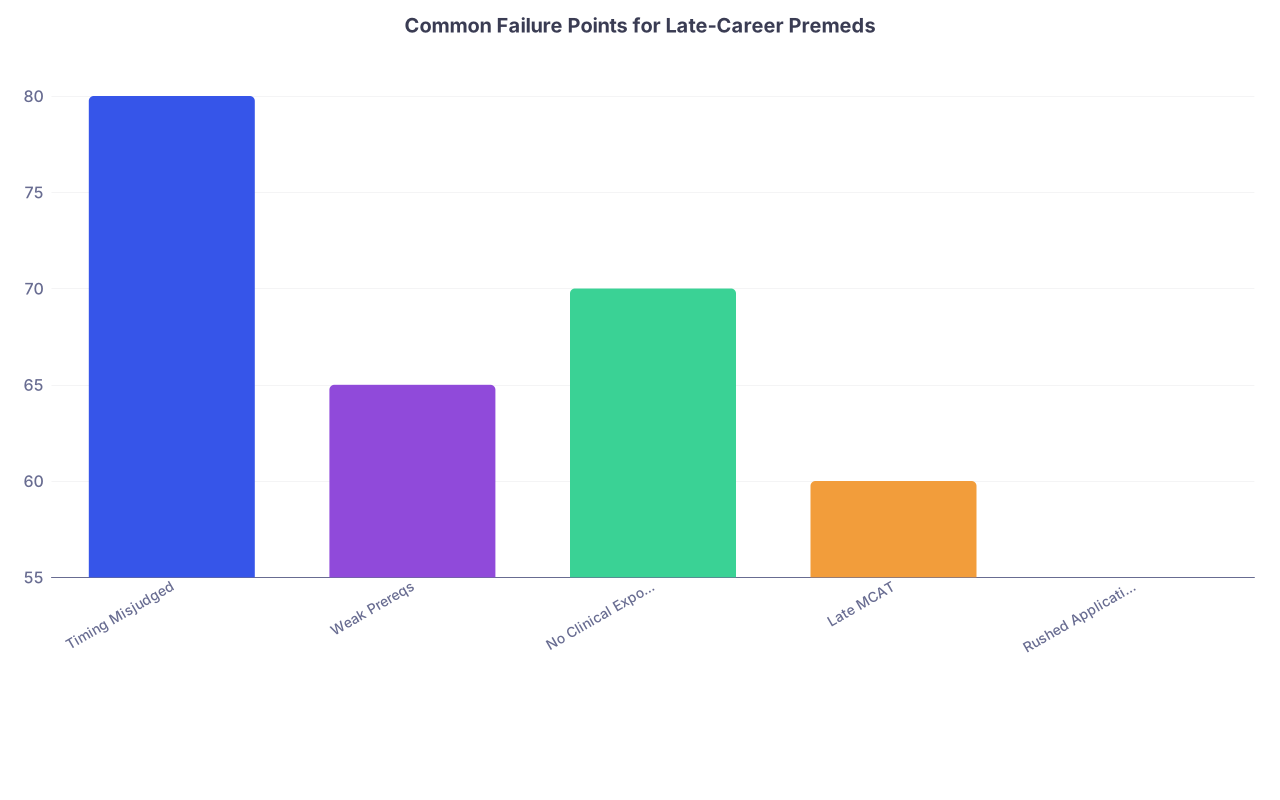
Fix Common Failure Points Before They Cost You Opportunities
Let’s solve the usual breakdowns.
If you have no contacts
Build a local outreach pipeline in one week.
Day 1:
- List every hospital, clinic group, urgent care, and private practice within reasonable distance
Day 2:
- Search alumni directories, LinkedIn, community groups, and local physician networks
Day 3:
- Draft one strong outreach email and one follow-up template
Day 4:
- Send 8–12 targeted messages
Day 5:
- Contact volunteer offices and ask about observation policies
Day 6:
- Reach out to one or two health-adjacent professionals you know for introductions
Day 7:
- Update your tracker and send the next round
This works better than waiting around hoping a connection appears.
If your employer won’t understand
Protect your current job. You do not owe everyone a grand announcement.
Use PTO when needed. Ask for time off professionally and minimally. You can say:
- personal appointment
- professional development
- scheduled commitment
Do not lie in ways that create bigger problems later. But don’t overshare either. Your current workplace is not your admissions committee.
If access is limited
Then stack related experiences:
- In-person shadowing
- Clinical volunteering
- Informational interviews with physicians
- Observation of team-based care roles
- Virtual physician panels or structured shadowing programs
No, virtual exposure is not a perfect substitute for in-person. But it is far better than doing nothing while pretending conditions are ideal.
If you get one chance only
Treat it like it matters. Because it does.
Your one-shot protocol:
- Confirm logistics early
- Arrive 10–15 minutes early
- Dress conservatively
- Bring any paperwork already completed
- Stay off your phone
- Ask thoughtful questions at appropriate times
- Thank every staff member who helps you
- Send a thank-you note the same day if possible
One strong experience can lead to another. Physicians talk. Staff talk even more. If you are pleasant, prepared, and low-maintenance, you often get referred. If you act awkward, flaky, or self-important, that spreads too.
The bottom line is simple. Busy career changers do not need a heroic shadowing story. They need a focused plan, respectful outreach, and clean follow-through. Make your ask easy. Make your scheduling honest. Make each hour count. Do that, and you’ll gain the exposure you need without burning bridges you may need later.