Renewal pay is not driven only by how hard you worked last year. The data shows that in many employed physician models, the larger force is how your employer maps your pay and productivity into MGMA percentile targets. That benchmark becomes an approval gate. Miss the gate by a little, and the renewal structure changes. Quietly. Mechanically. Sometimes brutally.
I have seen this in renewal reviews where a physician's RVUs were flat to slightly up, patient access improved, call burden stayed heavy, and yet the offer came back thinner. Why? Not because the physician suddenly became less valuable. Because compensation committees love benchmark language. It sounds objective. It gives them cover. "Market alignment" becomes the phrase that explains away a lower base, a smaller raise, or more compensation shifted into incentive pools.
That is the real issue. Percentile targets are often treated as binary thresholds rather than nuanced reference points. If your contract ties renewal economics to those thresholds, a small percentile movement can change your negotiating position far more than a modest change in actual output.
This article is for educational purposes only and is not financial, legal, or tax advice. Compensation plans, benchmark methods, and legal implications vary widely by employer, specialty, and state. Review renewal terms with qualified legal and financial professionals before making decisions.
What MGMA Percentile Targets Actually Measure (and Why They Drive Renewals)
MGMA data is commonly used to compare physicians against compensation and productivity distributions by specialty, practice type, and sometimes geography. Employers do not just ask, "What did you produce?" They ask, "Where do you sit relative to the distribution?" That distinction matters.
A renewal review may map several components at once:
- total cash compensation percentile
- wRVU percentile
- collections percentile
- compensation per wRVU
- sometimes panel size, encounters, or quality metrics
The problem is simple. Distributions create relative winners and losers even when absolute performance barely changes. If your compensation committee expects you to remain around the 60th percentile and you slide to the 40th, the offer can move materially. The data shows that a 20- to 25-point percentile drop can easily translate into a 5% to 15% renewal reduction depending on whether the plan uses smooth scaling or hard tiers.
For an employed physician, that can mean one of three things: lower base pay, smaller raise, or more compensation placed at risk. Same workday. Different math.
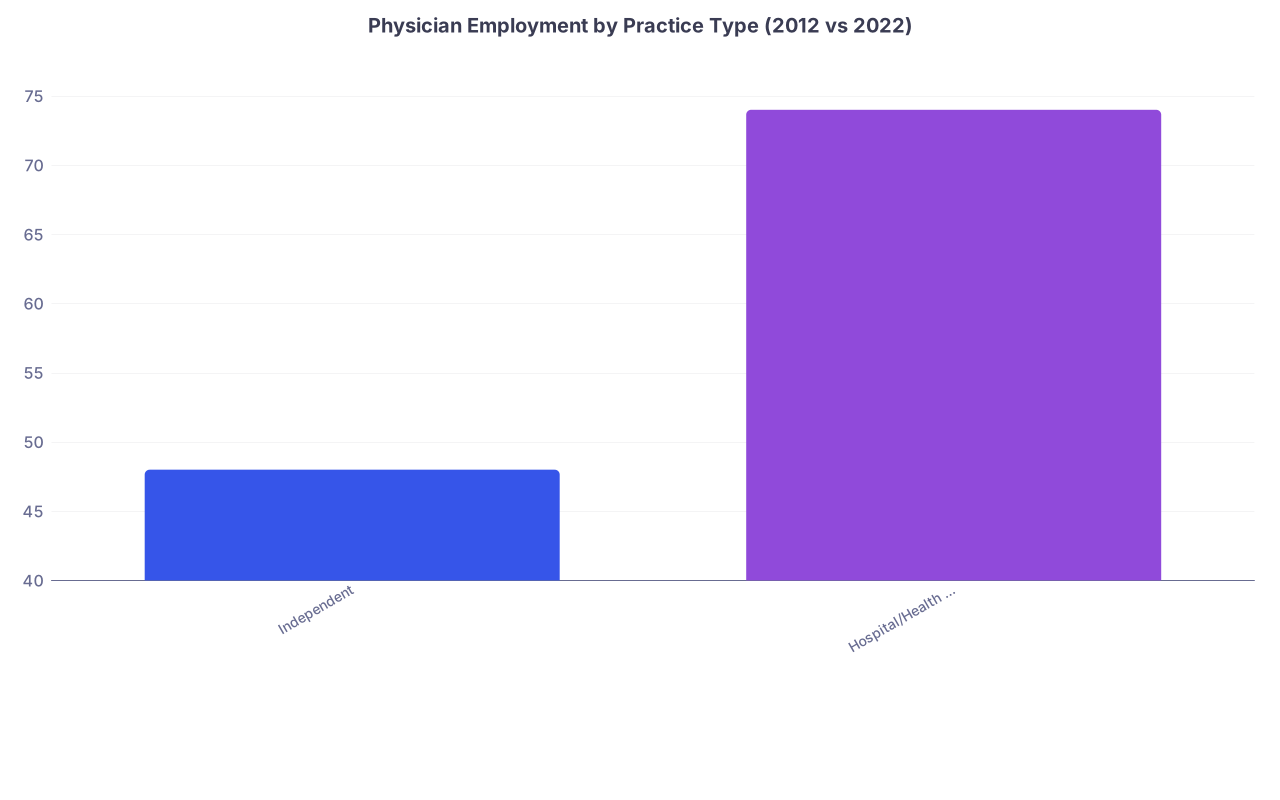
That chart is illustrative, but the pattern is real. The benchmark itself becomes a lever in the renewal conversation. Once leadership starts talking in percentiles, they are no longer negotiating your individual story. They are negotiating your place inside a spreadsheet.
Way #1: Percentile Floors Turn "Stable" Performance into "Under-Target" Status
This is the dumbest part of many comp plans. Stability does not protect you.
If your contract or renewal framework requires a minimum percentile floor, then your actual year-over-year consistency may not matter. You can hold RVUs nearly flat, maintain patient satisfaction, cover call, and still fall below the internal target if the benchmark floor rises or if peers in the survey moved faster than you did.
The data shows that threshold-based systems reward target attainment, not absolute contribution. A physician at the 49th percentile may be treated very differently from one at the 50th, even if the production gap is trivial. That is not economics. That is spreadsheet theater.
Ask directly:
- What percentile floor triggers a renewal adjustment?
- Is the floor applied to compensation, wRVUs, collections, or all three?
- What happens if I land between tiers, such as 45th to 49th percentile?
- Is there a partial-credit zone or a hard cutoff?
I have seen committees act as if a physician below target is "underperforming" when the actual miss was marginal and well within normal operating noise. A two-point percentile difference can be a rounding problem, not a performance problem. If the employer uses a floor, you need the exact threshold and the treatment of near-miss cases in writing.
Way #2: Updates Lag Real-World Change, Your Renewal Uses Last-Year Percentiles
Benchmark timing is where many physicians get clipped.
MGMA-based comparisons are built from trailing datasets. Your renewal, meanwhile, happens on a contract calendar. Those two clocks rarely match. If your collections rebound late in the year or your RVUs jump after adding clinic days in Q4, the renewal model may still be using earlier data inputs or a trailing benchmark that does not capture the rebound.
The numbers matter here. Suppose your production runs flat through Q3 and then improves 10% in Q4 after staffing stabilizes. If the renewal snapshot closes before that rebound is fully reflected, your percentile input may still look mediocre. The raise you expected does not show up until the next cycle. Maybe. That one-year lag can cost real money and negotiating leverage.
That mismatch is not rare. It is baked into the process. Ask for the exact measurement window, cutoff date, and whether late-year gains can be incorporated through recalculation or true-up.
Way #3: Percentile Quartiles Can Penalize You for Small Positioning Shifts
Many organizations simplify benchmark data into quartiles or buckets. That creates cliff effects.
Instead of treating the 24th and 26th percentile as nearly identical, the plan may place them in different compensation tiers:
- 0-25% = lower renewal tier
- 26-50% = middle tier
- 51-75% = upper tier
- 76-100% = top tier
That means a tiny positioning shift can trigger a disproportionate pay consequence. I have seen physicians lose a favorable renewal tier over a difference so small that it could be explained by attribution timing alone.
Example: if 26th percentile receives a neutral renewal adjustment and 24th percentile receives a reduced raise or base compression, the physician can suffer a meaningful compensation hit despite almost no absolute difference in work performed. In a tightly clustered specialty, a 1% to 3% change in collections or credited RVUs may be enough to cross that line.
If your employer uses buckets, insist on seeing the exact grid. Not a summary. The actual tier table.
Way #4: Specialty and Site Normalization Can Reclassify You Mid-Cycle
Benchmark identity errors are common, and they are expensive.
Your renewal may not be based on a single generic specialty line. Employers often choose among subgroups such as hospital-employed versus employed-group, regional cohorts, academic versus non-academic environments, multispecialty structures, or service-line-specific comparisons. That choice changes the reference set. Change the reference set, and your percentile can move even if your numbers do not.
I have seen physicians in hybrid roles benchmarked against the wrong practice type because it was administratively convenient. Bad sign. If your actual work mix is not aligned with the MGMA table used, the percentile result is distorted before the negotiation even starts.
Run a benchmark identity check:
- Which specialty table is being used?
- Which employment model subgroup?
- Which region?
- Which site-of-service assumptions?
- Were procedural, inpatient, outreach, or administrative duties considered?

The data shows that reclassification can produce a percentile swing without any underlying change in your performance. That is not a small technicality. It is the benchmark equivalent of moving the goalposts.
Way #5: Credit Allocation Rules Can Make You "Percentile-Down" Even When You Perform
This is where physicians get genuinely angry, and they should. Production is not the same thing as credited production.
Common pitfalls include:
- collections credited to the supervising or billing physician rather than the producing physician
- payer mix effects that suppress collections despite stable volume
- split RVU attribution in shared visits or team-based care
- use of wRVUs versus total RVUs without clear logic
- exclusion of call coverage, medical directorship, or non-visit procedural work
The data shows that a 10% to 20% reduction in credited RVUs can translate into a multiple-percentile drop, especially in specialties with wide distribution spreads. In other words, you can be doing the work and still look weaker on paper because the accounting rules are stingy.
That is why I always tell physicians to request the full attribution logic before renewal. Not after the offer lands. Before. You need to know what counts, what does not count, and who made those choices.
Way #6: Percentiles Can Quietly Change the Mix of Base vs. Incentive, Reducing Raise Magnitude
A lower renewal offer does not always show up as a lower total compensation target. Sometimes the employer gets sneakier.
They keep the headline number roughly flat but shift compensation from guaranteed base into incentive. On paper, total comp may look preserved. In reality, your certainty drops, your negotiating leverage weakens, and your month-to-month cash flow becomes more volatile.
The data shows this structure is especially common when leadership says you are "below target percentile but have upside opportunity." Translation: they do not want to guarantee the money.
Compare two illustrative scenarios with the same total target compensation of 100 index points:
- above target percentile: 65 base / 35 incentive
- below target percentile: 55 base / 45 incentive
That is a 10-point shift from guaranteed to at-risk pay with no headline reduction in total target. Bad deal if your incentive formula depends on variables you do not fully control.
If this shows up in your renewal, focus on guaranteed dollars, not just target totals. A flatter headline with a weaker base is still a pay cut in practical terms.
Way #7: Employers Use "Percentile Narrative" to Justify Caps on Raises
Once an employer decides your percentile is "too high" on compensation or "too low" on productivity, the renewal narrative writes itself. Suddenly the discussion is about market alignment, internal equity, and system consistency. Your growth trajectory, service line development, mentoring, referral capture, and access gains get sidelined.
I have watched this script too many times. It is polished. It is calm. It is also self-serving.
Your best response is numerical, not emotional. Build your own percentile proxy using the last 12 to 24 months of:
- credited wRVUs
- collections
- payer mix
- call burden
- administrative work
- internal peer comparisons, if available
- prior renewal assumptions versus current assumptions
Then isolate the cause of any shortfall. If the gap is caused by timing, credit allocation, or subgroup misclassification, say so plainly and request a plan-specific exception. If the issue is real underperformance, propose a measurable catch-up structure tied to dates and thresholds.
That final step matters most. Lock in the next-cycle rules. Measurement dates. Benchmark subgroup. Credit logic. Tier thresholds. The data shows that physicians who clarify methodology early are in a much stronger position than those arguing after the offer is already framed.
Closing: Turning Percentile Targets into a Measurable Negotiation Advantage
MGMA percentiles are not the enemy. Opaque use of them is.
The smart move is not to reject benchmarking. It is to control the inputs that drive the benchmark result: specialty identity, measurement dates, credit allocation, and tier logic. Once those are visible, renewal discussions become more predictable and much less punitive.
I recommend a simple renewal worksheet updated monthly. Track your credited productivity, collections, likely percentile proxy, and the exact dates your compensation plan uses. That sounds boring. It is not. It is leverage. And in renewal negotiations, leverage beats surprise every time.