
The biggest mistake attendings make with money is not under-negotiating. It’s going years without formally auditing their compensation at all.
You would never ignore a worsening lab trend for three years. But I routinely see physicians ignore compensation drift, RVU changes, and benefit erosion for exactly that long. Then they’re shocked when a new hire walks in making more with less call.
Let’s fix that with an actual schedule. Not vibes. A concrete, time-stamped review system you follow the way you follow a post-op protocol.
The Core Schedule: How Often You Should Review What
Here’s the backbone of your compensation review rhythm once you’re an attending. We’ll zoom into each part next.
| Review Item | Frequency |
|---|---|
| Paystub & hours | Monthly |
| RVU/production + bonus accrual | Quarterly |
| Paid time off & call schedule | Quarterly |
| Full compensation package | Annually |
| Contract terms & clauses | Every 2 years |
| Market salary comparison | Every 2 years |
At this point you should anchor on this rule:
- Monthly: Check what actually hit your account.
- Quarterly: Check what you’re trending toward.
- Annually: Check the whole package.
- Every 2–3 years: Check whether you’re underpaid compared with the market and renegotiate.
Anything less frequent than that and you’re leaving money and leverage on the table.
Month‑by‑Month: Your First 12 Months as an Attending
Your first attending year sets the baseline. If you aren’t tracking now, you won’t notice when you fall behind later.
Months 1–3: Establish Your Baseline
At this point you should be:
Month 1 – Dissect Your Contract and Paycheck
- Pull out:
- Base salary
- RVU or productivity targets
- Quality metrics tied to bonuses
- Call pay structure
- Signing bonus terms and clawbacks
- CME, relocation, retirement match, health/dental/vision premiums
- Compare to your first full paycheck:
- Is the base salary correct?
- Are benefits deductions what you expected?
- Is call pay (if any) showing up as agreed?
If the numbers don’t match your contract, flag it in writing now. Not in month 9.
- Pull out:
Month 2 – Build Your Tracking Sheet Create a simple spreadsheet (or use a financial app) with:
- Columns:
- Month
- Gross pay
- Net pay
- RVUs (if applicable)
- Call shifts worked
- Call pay
- Bonuses or stipends
- Add a running tally of:
- Total RVUs this year
- Average RVUs per month
- Projected RVUs vs target
This isn’t overkill. It’s your defense when you’re told, “I don’t think you hit your RVU threshold.”
- Columns:
Month 3 – Confirm the Production Math
- If you’re on RVU or collections:
- Request a production report from your admin or billing office:
- Total RVUs or collections
- Payer mix
- Denial rates if they’ll give them
- Request a production report from your admin or billing office:
- Compare to your contract:
- Are they using the same RVU definitions?
- Any carve-outs or facility fees you don’t get credit for?
At this point you should understand exactly how each hour of work turns into dollars.
- If you’re on RVU or collections:
Months 4–6: Lock In a Quarterly Review Habit
Every quarter (so end of Month 3, 6, 9, 12):
- Pull:
- 3 months of paystubs
- Most recent production report
- Call schedule for the quarter
Then run this short checklist:
Income Check
- Is your pay stable relative to your expected base?
- Any surprise changes in:
- Taxes withheld
- Benefits deductions
- “Miscellaneous” line items you don’t recognize
Call & Coverage Check
- How many calls did you actually take vs what was “expected”?
- Were any additional call stipends missed?
- If you’re “equal share,” are you actually equal? Or quietly taking more weekends and holidays?
Burnout vs Compensation
- Quick gut check:
- Does the amount of hassle, call, and RVU pressure feel aligned with the paycheck?
- If the answer is “absolutely not” two quarters in a row, that’s not just burnout. That’s a compensation issue.
- Quick gut check:
By Month 6, you should have two full quarters of data. That’s enough to project your bonus:
- Take your RVUs or collections to date
- Divide by 6 for monthly average
- Multiply by 12 to estimate your year-end total
- Compare against your bonus thresholds
If the projection says you’ll miss your bonus by a small margin, now is the time to adjust your schedule, not in December.
Months 7–9: Mid‑Year Mini Audit
At this point you should do a slightly deeper review than your regular quarterly check.
Add:
PTO and Holidays Used
- How many days have you actually taken?
- Are you on track to lose unused PTO at year’s end?
- Are you consistently working on “clinic closed” days with no extra pay?
CME and Professional Budget
- What have you used:
- CME dollars
- CME days
- Licensing, boards, DEA, society dues
- Are you leaving money unclaimed that you’ll lose December 31?
- What have you used:
This is when you adjust:
- Book CME conferences or online courses now
- Plan actual vacation days, not “I’ll see what’s open later”
Months 10–12: Annual Compensation Audit
Month 11 or 12 is your annual full compensation review. This is non-negotiable.
At this point you should gather:
- Contract
- Last 12 months of paystubs
- Production reports for the year
- Call schedule
- Benefits summaries (health, disability, retirement)
- Any bonus statements
Then run this annual checklist:
Base and Bonus Reality Check
- Confirm:
- Total base salary actually received
- Total bonuses (RVU, quality, call, admin)
- Calculate:
- Total compensation (salary + bonus + call + stipends)
- Effective hourly rate (roughly: total comp / [weeks worked × average hours/week])
- Confirm:
Benefits Value Put real numbers on:
- Employer retirement contributions
- Employer-paid portion of health insurance
- Disability and life insurance cost they cover
- CME dollars used vs available
- PTO (if unused PTO is paid out or just disappears)
Workload vs Pay
- Number of:
- Clinic days
- OR days
- Inpatient weeks
- Nights
- Weekend calls
- Any new clinical responsibilities added this year:
- Extra clinic sessions
- New service line
- More admin tasks
- Number of:
If your responsibilities went up and your compensation didn’t, flag that in writing for your next review.
Year‑by‑Year Plan: Early, Mid, and Late Career
Years 1–3: Establish Your System and Learn the Market
At this point you should be moving from survival mode to strategy.
Annually (Years 1–3)
Do your year-end audit as above. Then add:
Pull market data:
- MGMA, AMGA, or specialty society compensation reports (often through your group or hospital)
- Doximity and Medscape salary surveys (imperfect but directionally useful)
- Traveler/locums rates for your specialty/region
Compare:
- Your total comp vs:
- National median for your specialty
- Regional data
- Adjusted for hours, call, academic vs private, etc.
- Your total comp vs:
If you’re >10–15% below comparable peers for equal or greater workload by Year 3, that’s a red flag.
Every 2 years (starting Year 2–3)
Do a contract and market deep dive:
- Re-read:
- Non-compete clause
- Termination clauses
- Compensation adjustment language
- Partnership track terms (if applicable)
- Check:
- Did promised raises or partnership shares happen on schedule?
- Is your non-compete still tolerable for your life situation?
This is where you start planning renegotiation, not just griping in the lounge.
Years 4–7: Mid‑Early Career – Renegotiation Cycles
By this phase, “I’m just happy to have a job” is no longer a valid strategy.
At this point you should:
Every 2–3 years: Plan a Formal Compensation Conversation
Timeline it like this:
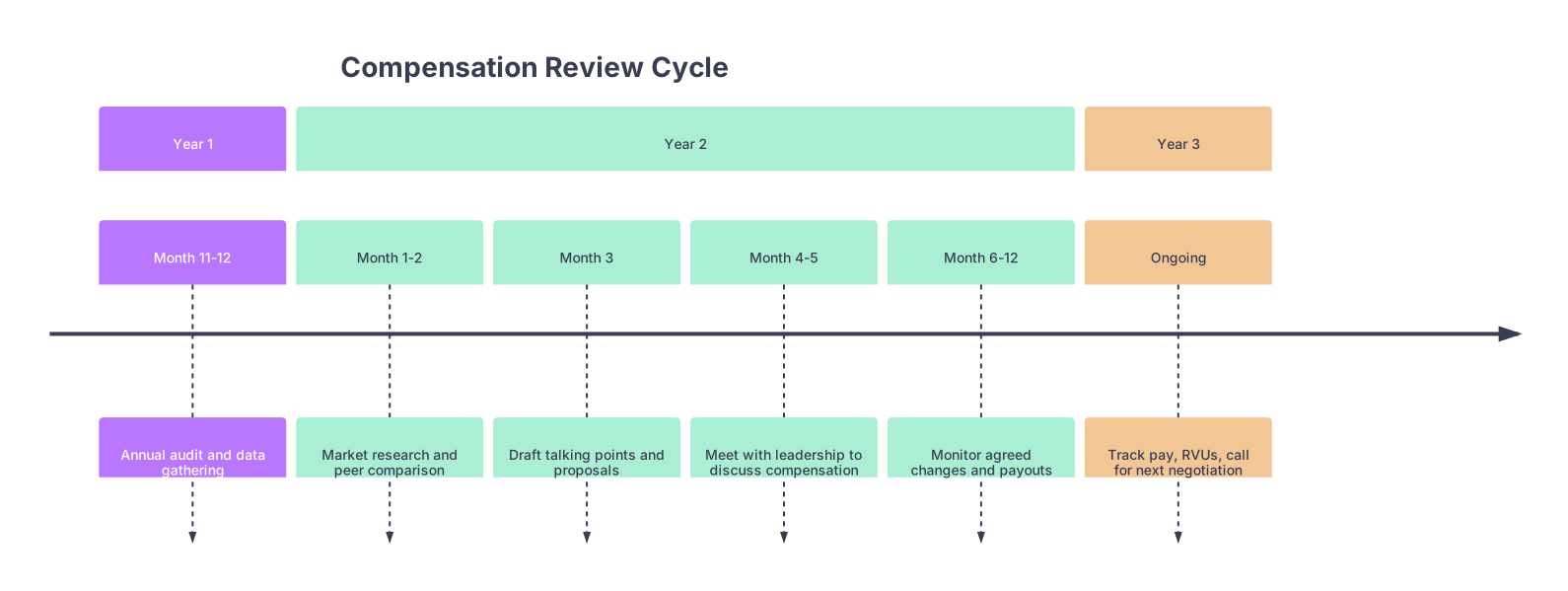
| Period | Event |
|---|---|
| Year 1 - Month 11-12 | Annual audit and data gathering |
| Year 2 - Month 1-2 | Market research and peer comparison |
| Year 2 - Month 3 | Draft talking points and proposals |
| Year 2 - Month 4-5 | Meet with leadership to discuss compensation |
| Year 2 - Month 6-12 | Monitor agreed changes and payouts |
| Year 3 - Ongoing | Track pay, RVUs, call for next negotiation |
Your prep phase (1–3 months before the meeting) should include:
- Running 2–3 years of your:
- Total comp
- RVUs or collections
- Call load
- Collecting:
- Internal benchmarks (know what newer hires are getting if you can)
- External benchmarks (salary surveys)
Then build a simple 1–2 page summary:
- “Here’s my production and responsibilities”
- “Here’s current market data”
- “Here’s the gap”
- “Here are specific adjustments I’m proposing”
Do not walk into these meetings with vague complaints. Show your numbers.
Annually (Years 4–7)
Your annual review now should specifically ask:
- Are new hires coming in with:
- Higher base
- Lower RVU thresholds
- Better call schedules
- Have your duties expanded?
- Leadership roles
- Teaching
- Committee work
- New service lines
If yes, and no pay change followed, that becomes central evidence for your next negotiation cycle.
Years 8–15: Peak Earning and Role Complexity
This is when your comp structure often gets messy:
- Admin stipends
- Medical directorships
- Profit sharing or partnership distributions
- Multiple employers or side gigs
At this point you should:
Annually
- Audit each income stream separately:
- Clinical W2/1099
- Admin stipends
- Medical director pay
- Side gigs (locums, consulting, speaking)
- Confirm:
- Are you being paid for all the hours you’re actually putting in?
- Any committee or “volunteer” role that has turned into a part-time job?
Every 2–3 years
- Full portfolio review:
- What percentage of income is:
- Clinical
- Admin
- Side work
- Are the lowest-value, highest-hassle tasks the ones that pay the least? (Common and fixable in negotiation.)
- What percentage of income is:
At this stage, you should also align compensation with life goals:
- Do you want:
- More admin and less call?
- Pure clinical and no meetings?
- Partial retirement with fewer clinical days?
Those decisions tie directly into how and when you renegotiate compensation and structure.
Late Career: 10–15 Years From Retirement
Your compensation reviews now must line up with your exit strategy.
At this point you should:
Every year
- Review:
- Retirement contributions
- Vesting schedules
- Any deferred compensation or pension formulas
- Confirm:
- What happens if you go 0.8 FTE?
- What happens to benefits if you drop below full time?
- Are there age or seniority-based salary step-downs coming?
Every 3–5 years
- Do a “glide-path” compensation plan:
- When will you:
- Drop nights?
- Drop call?
- Reduce clinic days?
- What compensation cuts are acceptable for those changes?
- When will you:
This is where a lot of people get burned: they assume they can just “cut back later” and discover their group only does full-time or nothing.
Quarterly Mini‑Checklist You Can Actually Follow
Let’s simplify. Every quarter, block 30–45 minutes and run through this.
At this point you should open:
- Your last 3 paystubs
- The latest production report
- Your calendar/call schedule
Then ask:
Money
- Did I get:
- The correct base?
- All expected bonuses/stipends?
- Proper call pay for extra shifts?
- Did I get:
Workload
- How many:
- Clinic days
- OR days
- Inpatient weeks
- Nights/weekends
- Was this higher or lower than usual?
- How many:
Trend
- Am I on pace for:
- RVU/production goals?
- Annual bonus thresholds?
- Am I on pace for:
Fairness Gut Check
- Compared to peers:
- Am I working more for the same or less pay?
- Have new duties crept into my job with no pay adjustment?
- Compared to peers:
If any quarter feels off in more than one of these categories, document it. Patterns over 2–3 quarters are your negotiation fuel.
Visualizing Your Compensation Review Year
Here’s what a typical attending year should look like for compensation oversight:
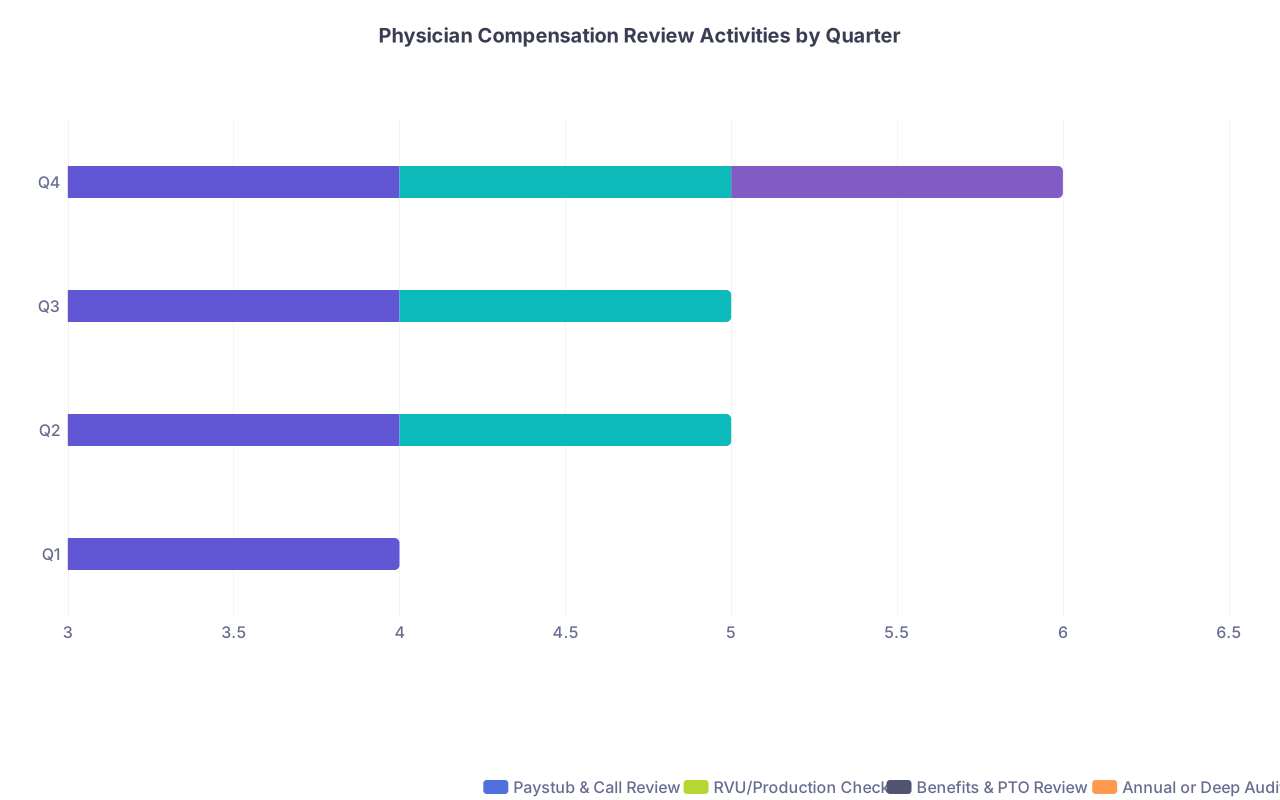
| Category | Paystub & Call Review | RVU/Production Check | Benefits & PTO Review | Annual or Deep Audit |
|---|---|---|---|---|
| Q1 | 3 | 1 | 0 | 0 |
| Q2 | 3 | 1 | 1 | 0 |
| Q3 | 3 | 1 | 1 | 0 |
| Q4 | 3 | 1 | 1 | 1 |
And if you’re earlier in practice, expect more intensity the first couple years, then a stable rhythm.

When You Must Trigger an Extra Review (Outside the Schedule)
Not everything runs on the annual calendar. Certain events should automatically trigger a compensation review, even mid-year.
At this point you should stop and re-evaluate whenever:
- Your workload changes:
- New clinic sessions
- New hospital coverage
- Added supervisory/teaching responsibilities
- Your group hires new physicians:
- Especially if they’re coming in with:
- Better base
- Lower call share
- Shorter partnership track
- Especially if they’re coming in with:
- Your RVU/collection formulas change:
- “New EHR”
- “Updated wRVU schedule”
- “System-wide compensation redesign”
- You hit or exceed bonus targets early:
- You’re hitting “stretch” goals by Q3? Time to renegotiate terms.
- You take on a leadership role:
- Section chief
- Medical director
- Committee chair that actually eats 2–4 hours/week
Every one of those should come with either:
- More money
- Less clinical time
- Or both
If you get “more responsibility” but neither of those, that’s a failed compensation review.
How Often Should You Involve Professionals?
You don’t need a lawyer or financial planner for every quarterly check. But sometimes you absolutely should bring them in.
At this point you should consider outside help:
-
- At signing
- At any major renegotiation (every 2–4 years)
- Whenever:
- Non-compete changes
- Termination clauses are revised
- Partnership or buy-in terms are updated
Financial planner or CPA
- Once per year for:
- Optimizing retirement contributions
- Reviewing tax strategy for W2/1099 mix
- When adding:
- Side gigs
- Equity offers
- Complex bonus structures
- Once per year for:
Think of them like consultants on your care team. You don’t send stable follow-ups for full workups every week, but you do bring in subspecialists when the case gets complex.
Bottom Line: Your Compensation Review Rhythm
Three key points to leave with:
You need a real schedule. Monthly paystub checks, quarterly mini-audits, annual full reviews, and market/contract deep dives every 2–3 years. That’s the minimum for a high-earning professional.
Track your own data. RVUs, call, bonuses, and duties creep over time. If you don’t write it down, the story will always favor the institution.
Tie reviews to action. Every pattern you identify should lead to a concrete ask: more pay, less call, clearer metrics, or a different job. Awareness without action is just unpaid admin work—for you.