
The most expensive mistake physicians make about partnership is assuming “partner” automatically means “rich.” It does not. It means “risk plus upside—usually delayed.”
Let’s walk year-by-year through what you should actually expect to earn on the way to partnership, how your income structure will change, and what decisions you need to make at each step so you do not get blindsided.
Big‑Picture: How Income Typically Evolves Toward Partnership
At a high level, this is the pattern I see over and over:
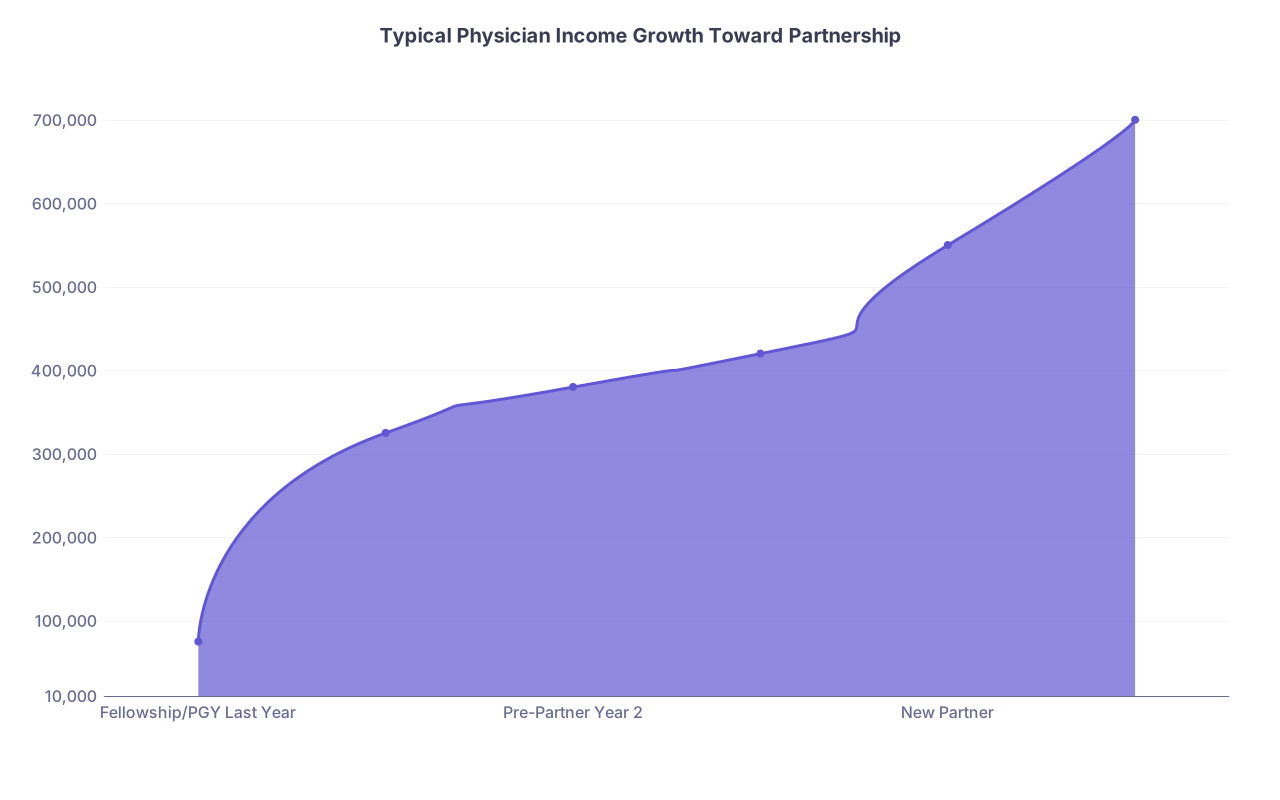
| Category | Value |
|---|---|
| Fellowship/PGY Last Year | 75000 |
| First Attending Year | 325000 |
| Pre-Partner Year 2 | 380000 |
| Pre-Partner Year 3 | 420000 |
| New Partner | 550000 |
| Mature Partner | 700000 |
- Training: Low but predictable salary, minimal variability
- Early attending (employee): Jump in income, heavy W‑2, low autonomy
- Pre‑partner: Mix of base and productivity, big variability, often “eat what you kill lite”
- New partner: Higher total comp but cash going to buy‑in, taxes more complex, real risk
- Mature partner: Peak earning years if the practice is healthy and you’re not asleep at the wheel
Now we go chronologically. Year by year. What money you can expect and what you should be doing about it.
Final Year of Training: Laying the Groundwork (Income Baseline)
At this point you should be:
- Using your current salary as a mental “floor,” not a “real” income
- Building a simple financial snapshot so you can model offers
Typical numbers:
- PGY 4–7 / Fellowship:
- Salary: $60,000–$80,000
- Moonlighting: $0–$40,000+ (very program‑dependent)
- Benefits: Health, minimal retirement, maybe a 403(b) with small match
Your job during this year is not to negotiate partnership terms. It’s to understand the range.
You need three things on paper:
Net worth snapshot
- Total loans (federal, private, refinanced?)
- Credit cards, car, any personal loans
- Savings/cash, investments, Roth IRAs, retirement accounts
Target specialty / region salary ranges
- Use MGMA, AMGA, Doximity, or state society data
- Differentiate:
- Academic vs private
- Employed vs partnership track
- Hospital‑owned vs independent group
Rough timeline to partnership by practice type
| Practice Type | Years to Partnership | Common Income Structure |
|---|---|---|
| Independent Specialty Group | 2–4 | Base + productivity, then K‑1 |
| Hospital Employed | None or 5–10+ | W‑2, RVU bonus |
| Private Equity Owned | 3–5 (or never) | Salary + bonus, synthetic equity |
| Academic Group | Rare / slow | Salary + incentives |
At this point you should:
- Decide if partnership income upside matters enough to justify more risk and complexity
- Start a simple spreadsheet to model: base, bonus, buy‑in, and expected partner earnings
First Attending Year (Year 1): Employed Income Reality Check
At this point you should be:
- Clarifying if your current job is truly a partnership track or just “we’ll see” talk
- Locking down your real first‑year cash flow
Typical first‑year compensation patterns:
Hospital employed / large system
- Total: $250,000–$450,000 depending on specialty
- Often guaranteed salary year 1, then RVU‑based
- Little or no path to partnership in the true ownership sense
Independent group with partnership track
- Total: $300,000–$500,000 year 1
- Base salary + productivity bonus; sometimes relocation + sign‑on
- Partnership usually 2–3 years away, contingent on volume and “fit”
Your tasks, month by month in Year 1:
Months 1–3: Stabilize and Track
- Set your take‑home expectation after taxes, retirement, and loan payments
- Start tracking:
- RVUs or collections attributed to you
- Call pay and any separate stipends
- How your bonus is calculated (exact formula, not hand‑wavy “we’re generous”)
Months 4–9: Learn the Financial Engine
By this point you should know:
- Payer mix: commercial vs Medicare vs Medicaid vs self‑pay
- Rough collections per wRVU if your group uses RVUs
- How overhead is allocated: fixed vs variable, and what percent you’re “charged”
If you do not have this clarity by month 9, that’s a red flag for partnership transparency.
Months 10–12: First Big Look at Future Income
At this point you should:
- Ask (directly, in person):
- “What did the median partner earn last year, net of overhead but before taxes?”
- “What’s the range for partners in our group over the last 3 years?”
- “What was buy‑in for the last 3 new partners?”
Write the numbers down. You’re building your income roadmap, not collecting vibes.
Pre‑Partner Year 2: Transition to True Productivity
This is when reality hits. Your “guarantee” is either gone or phasing out. Now the structure matters.
At this point you should be:
- Seeing a noticeable swing between low and high months
- Understanding how close you are to producing at partner level
Common income pattern Year 2 (pre‑partner):
- Total comp might actually drop slightly from Year 1 if guarantee ends
- Or jump up if you’re efficient and the bonus model is real
- Range commonly: $325,000–$550,000, depending on specialty and productivity
Your priorities in this year:
Every quarter, you should calculate:
- Your gross collections or RVUs
- Your compensation as a percentage of what you bring in
- How that compares to rumored partner percentages
If you’re bringing in $900k in collections and taking home $380k, you’re at ~42%.
If partners are taking home 55–60% on similar volume, you can sense what partnership might be worth.
- Clarify the Partnership Bar
You need specific benchmarks, not “you’ll know when you’re ready.”
Ask for:
- Minimum production needed (in numbers: RVUs per year, collections per year)
- Expected call/coverage/committee contributions
- The typical “we decided yes on this person at X months” stories
By the end of Year 2 (or about 12–18 months before projected partnership) you should have:
- Written explanation of:
- Buy‑in amount
- How it was calculated (assets, AR, goodwill, or just “market rate”)
- Payment options (cash, payroll deduction, financing)
- What happens if you leave early (do you get anything back?)
Pre‑Partner Year 3: Modeling the Jump (and the Risk)
This is the year to run the numbers like a business owner. Because that’s what you’re about to become.
At this point you should be:
- Doing side‑by‑side income scenarios: stay employed vs become partner
- Evaluating how volatile your income could become
Let’s outline a simplified comparison. Imagine a non‑surgical specialty in a busy independent group.
| Role | Collections Attributed | Take‑Home Comp | Comp as % of Collections |
|---|---|---|---|
| Senior Associate | $1,000,000 | $420,000 | 42% |
| New Partner (Year 1) | $1,000,000 | $520,000 | 52% |
| Mature Partner | $1,200,000 | $650,000 | 54% |
Looks like an easy decision? Not so fast.
You have to layer in:
- Buy‑in: e.g., $150,000 over 3 years = $50,000/year cash out
- Lost benefits: employer 401(k) match, some CME, maybe malpractice tail coverage
- Tax changes: more 1099/K‑1 income, quarterly estimates, higher planning burden
What to Do Month by Month This Year
Months 1–3
- Request partner‑level pro forma:
- “If I were a partner last year with my numbers, what would my net income have been, after overhead?”
- Ask to see (or at least be told): average partner income and range for last 3–5 years
Months 4–6
- Meet with a CPA who works with physician groups
- Build 3 scenarios:
- Remain associate for 3 more years
- Become partner on time
- Leave to another job (employed)
Have them factor:
- Taxes
- Buy‑in cash flow
- Retirement contributions possible in each model
Months 7–12
- Decide if the partnership track is truly aligned with your goals
- If yes, start setting aside cash every month for buy‑in and for a 3–6 month “income volatility buffer”
New Partner: Year 1–2 of Ownership
This is where physicians get surprised. The title upgrade doesn’t always mean instant net income explosion.
At this point you should be:
- Expecting more complexity, more volatility, and more meetings
- Watching your net income, not just top‑line numbers
Income characteristics for a new partner:
- Total gross compensation often jumps 15–40% compared to last pre‑partner year
- Net after buy‑in and new expenses might be… underwhelming for 1–2 years
- You’re now on K‑1/partner distribution, not just a straight W‑2 salary
Think of your income in buckets:
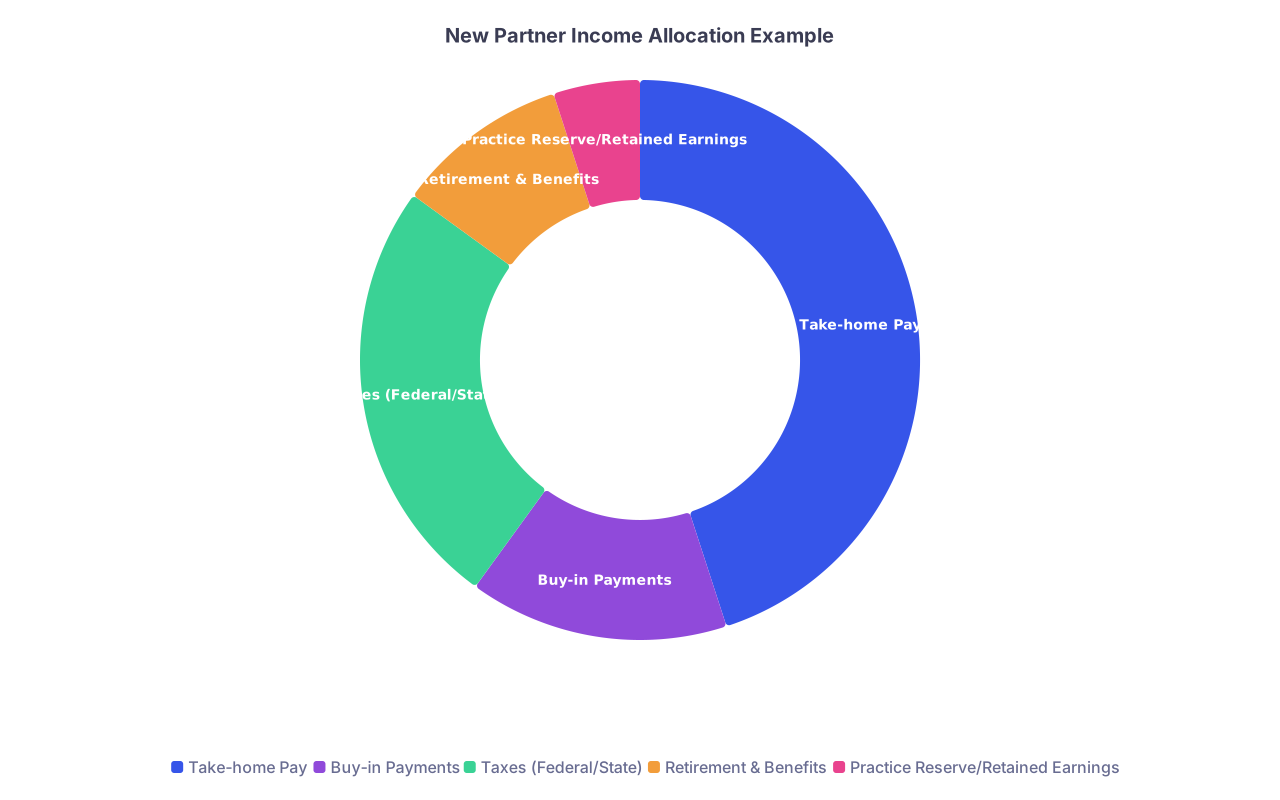
| Category | Value |
|---|---|
| Take-home Pay | 45 |
| Buy-in Payments | 15 |
| Taxes (Federal/State) | 25 |
| Retirement & Benefits | 10 |
| Practice Reserve/Retained Earnings | 5 |
First 6–12 Months as Partner
You should:
- Know exactly how distributions are determined:
- Strictly by production?
- Equal shares?
- Hybrid: base draw + true‑up?
- Understand the timing:
- Monthly draws vs quarterly true‑ups
- How negative balances are handled if your draw exceeds earnings
Cash flow gets tricky. Do not:
- Inflate your lifestyle in the first partner year
- Assume last year’s partner distributions will repeat (reimbursement can change fast)
Legal & Financial To‑Dos
During your first partner year:
Review the partnership/operating agreement with a healthcare attorney:
- Exit terms
- Buy‑out or capital account treatment
- What happens if a major partner dies, retires, or sells the group
Sit down with:
- A CPA (quarterly, at least the first year)
- A financial planner familiar with K‑1 income
- Possibly a healthcare attorney if your group is entertaining PE or hospital offers
Mature Partner: Years 3–10+ — Peak Earning and Real Risk
By this point you should:
- Have stable distributions with a clear sense of your earning capacity
- Be planning for practice‑level events that can smash or boost your income
Typical mature partner income band:
- Many cognitive specialties: $450,000–$800,000+
- Many surgical specialties: $700,000–$1.5M+
- Outliers both directions depending on market, call, and business skill
But here’s the unspoken reality: practice deals and payer shifts move the needle more than how many extra patients you see.
Watching the Horizon: 3–5 Year Risk Windows
Use a simple mental timeline:
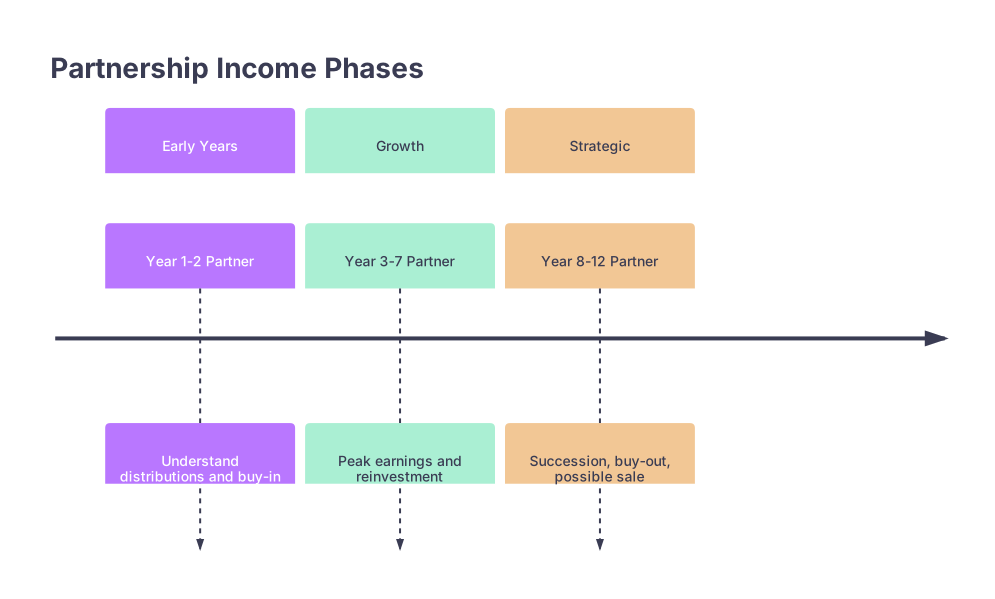
| Period | Event |
|---|---|
| Early Years - Year 1-2 Partner | Understand distributions and buy-in |
| Growth - Year 3-7 Partner | Peak earnings and reinvestment |
| Strategic - Year 8-12 Partner | Succession, buy-out, possible sale |
As a mature partner, every 2–3 years you should:
Re‑review:
- Payer mix changes
- Major contract renegotiations
- Capital needs (new EMR, ASC equity, imaging equipment)
Decide:
- Are we heading toward a sale (hospital or PE)?
- Are we staying independent and doubling down?
Both paths change your income trajectory:
-
- Short‑term: possible windfall (equity payout) + higher short‑term comp guarantees
- Long‑term: likely more admin oversight, potential eventual income ceiling
Stay independent:
- Short‑term: more risk, more capital investment
- Long‑term: more control over income structure and upside
Quick Comparison: Income Profile by Phase
| Phase | Typical Range (All Specialties) | Income Type Mix |
|---|---|---|
| Final Training Year | $60k–$120k | W‑2, low variability |
| First Attending | $250k–$450k | Mostly W‑2, some bonus |
| Late Pre‑Partner | $325k–$550k | W‑2/1099 hybrid, productivity heavy |
| New Partner | $450k–$650k (pre buy‑in) | K‑1 + draws, more volatility |
| Mature Partner | $500k–$1M+ | K‑1, distributions, possible equity |
Overlay taxes, buy‑ins, and benefits, and that curve smooths out, but the order of magnitude stays the same.
How to Use This Roadmap Practically
Let’s put it into a stepwise timeline you can actually follow.
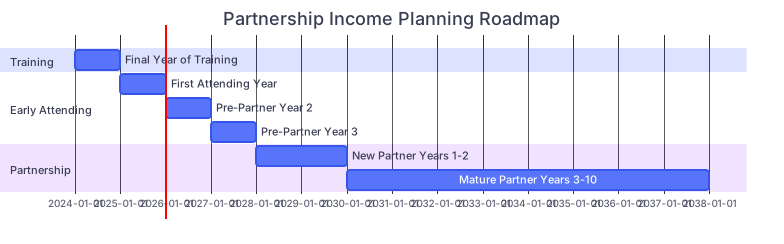
| Task | Details |
|---|---|
| Training: Final Year of Training | a1, 2024, 1y |
| Early Attending: First Attending Year | a2, 2025, 1y |
| Early Attending: Pre-Partner Year 2 | a3, 2026, 1y |
| Early Attending: Pre-Partner Year 3 | a4, 2027, 1y |
| Partnership: New Partner Years 1-2 | a5, 2028, 2y |
| Partnership: Mature Partner Years 3-10 | a6, 2030, 8y |
At Each Phase, You Should…
Final Training Year
- Build your net worth snapshot
- Research realistic income ranges in your specialty by setting
- Decide whether partnership‑track or employed makes more sense for you
First Attending Year
- Confirm in writing whether there’s a defined partnership track
- Learn how money actually flows through your group
- Track your own production relative to partners
Pre‑Partner Years 2–3
- Demand clarity on: buy‑in, partner income range, and decision criteria
- Meet with a CPA to model late pre‑partner vs new partner take‑home
- Accumulate cash for buy‑in and a volatility buffer
New Partner Years 1–2
- Understand distributions, tax planning, and capital accounts
- Avoid major lifestyle inflation until you see a full partner‑year cycle
- Get legal review of the partnership/operating agreement once as a full owner
Mature Partner
- Reassess practice strategy every 2–3 years: growth, sale, or status quo
- Treat your distributions as business income, not a guaranteed salary
- Start building parallel wealth outside the practice (taxable accounts, real estate, etc.)
Final Takeaways
- Partnership is an income curve, not a cliff. Your earnings should rise from pre‑partner to mature partner, but the first partner years can be surprisingly flat once you factor buy‑in and taxes.
- Every 12 months, you should be asking specific, numeric questions about partner income, buy‑in terms, and practice financial health—and writing the answers down.
- The smartest physicians treat each phase—early attending, pre‑partner, new partner, mature partner—as different financial jobs and plan cash flow, taxes, and risk accordingly.