
The biggest mistake final-year residents make is treating “attending money” like it starts on July 1. It does not. Your first attending salary is decided, sliced up, and partially lost in the year before you earn a single attending paycheck.
Let’s fix that.
This is a month‑by‑month guide through your final year of residency, focused on one goal: maximize the value of your first attending salary. Not just the number on the offer letter. The actual money that stays in your pocket, builds wealth, and does not get siphoned away by taxes, bad contracts, and lifestyle creep.
I will assume a standard academic schedule with graduation June 30 and attending work beginning July 1 (adjust by a month or two if your transition is different).
July–September (PGY‑Final Year): Foundation And Reality Check
At this point you should stop thinking like a trainee and start thinking like a business. Because that is what you are now: a one‑person professional corporation waiting to be formed.
July: Get Your Financial Baseline And Targets
In July, you are not job hunting yet. You are gathering ammunition.
By the end of this month you should:
Know your numbers cold
- List your:
- Federal loans (types, balances, interest rates, servicer)
- Private loans
- Credit cards, car loans, any other debt
- Current savings (cash, Roth IRA, 403(b)/401(k), brokerage)
- Pull your last tax return and look at:
- Marginal tax rate
- Any deductions/credits you are using (or missing)
- List your:
Define your first‑year attending priorities
- Order these explicitly:
- Aggressive loan payoff vs. PSLF vs. “standard” 10‑year
- Housing: buy vs. rent for 2–3 years
- Family plans: childcare, parental leave, partner’s job changes
- Decide your minimum acceptable:
- Base salary
- Sign‑on bonus
- Vacation/CME time
- Order these explicitly:
Sketch your first‑year attending budget at 2×–3× income
- If you expect $300k starting:
- Plan a budget at:
- $150k lifestyle (bare‑bones, pure wealth‑building)
- $225k lifestyle (reasonable)
- $300k lifestyle (max lifestyle, low margin of safety)
- Plan a budget at:
- Why now? So when recruiters dangle $320k vs $290k, you actually know the impact.
- If you expect $300k starting:
Use a simple breakdown like this:
| Category | Annual Amount | Monthly Amount |
|---|---|---|
| Taxes/Benefits | $90,000 | $7,500 |
| Housing | $36,000 | $3,000 |
| Loans | $30,000 | $2,500 |
| Savings/Invest | $45,000 | $3,750 |
| Living/Other | $99,000 | $8,250 |
That “Living/Other” number is where lifestyle creep either explodes or stays sane.
August: Understand Your Market Value
Now you move from “what do I need?” to “what am I worth?”
By the end of August you should:
Pull real compensation data, not rumors
- Use:
- MGMA (if you can access through your program or mentors)
- Doximity salary explorer
- Specialty society surveys (ACEP, ACOG, ACR, etc.)
- Separate:
- Academic vs. community
- Employed vs. independent group
- W‑2 vs. 1099 locums
- Use:
Know the total comp ranges, not just base
- For your specialty, track median ranges for:
- Base salary
- Expected productivity bonus (wRVU or collections)
- Sign‑on bonus
- Relocation
- Loan repayment
- Example for a hypothetical hospitalist:
- For your specialty, track median ranges for:
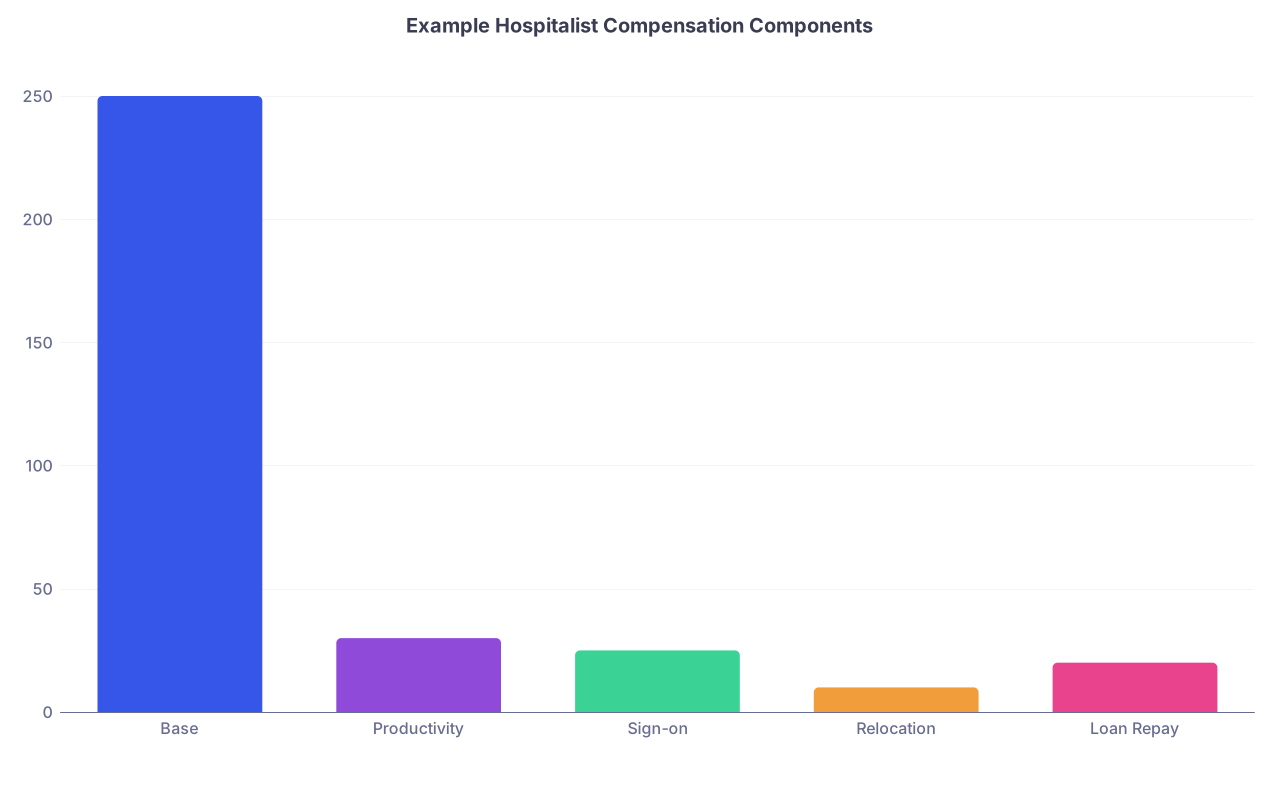
| Category | Value |
|---|---|
| Base | 250 |
| Productivity | 30 |
| Sign-on | 25 |
| Relocation | 10 |
| Loan Repay | 20 |
- These are thousands of dollars. That sign‑on and loan repayment can easily equal a full resident salary.
- Clarify where you are geographically willing to go
- Make three lists:
- Green zones: “Would be happy here”
- Yellow zones: “Only for big money or short term”
- Red zones: “Not going”
- Anything in “yellow” should command a pay premium. Do not pretend otherwise.
- Make three lists:
September: Clean Up Your Financial House
You want your credit, paperwork, and loan strategy sorted before you apply. Contracts move faster than you think.
By the end of September you should:
Pull your credit report and score
- Fix:
- Incorrect late payments
- Old addresses, outdated accounts
- Aim: score > 740 before you apply for any mortgage or large loan. You may not buy now, but you want the option.
- Fix:
Lock in your loan strategy
- Decide clearly:
- On PSLF path and staying in non‑profit employment? Then:
- Maximize forgiveness (pay as little as legally allowed)
- Not on PSLF? Then:
- Compare refinancing vs. staying federal (for protections)
- On PSLF path and staying in non‑profit employment? Then:
- At this point you should also:
- Update income‑driven repayment (IDR) with your current low resident income if possible. That keeps payments low right before the attending income spike.
- Decide clearly:
Create your “attending transition fund”
- Target: 3–6 months of living expenses in cash by graduation
- Why:
- Credentialing delays
- Licensing delays
- Signing gap between residency pay and first attending check
- Start automatic transfers now, even if small.
October–December: Job Search, Contracts, And Negotiation
This is the phase where most of the money is made or lost. Not on the floor. On paper.
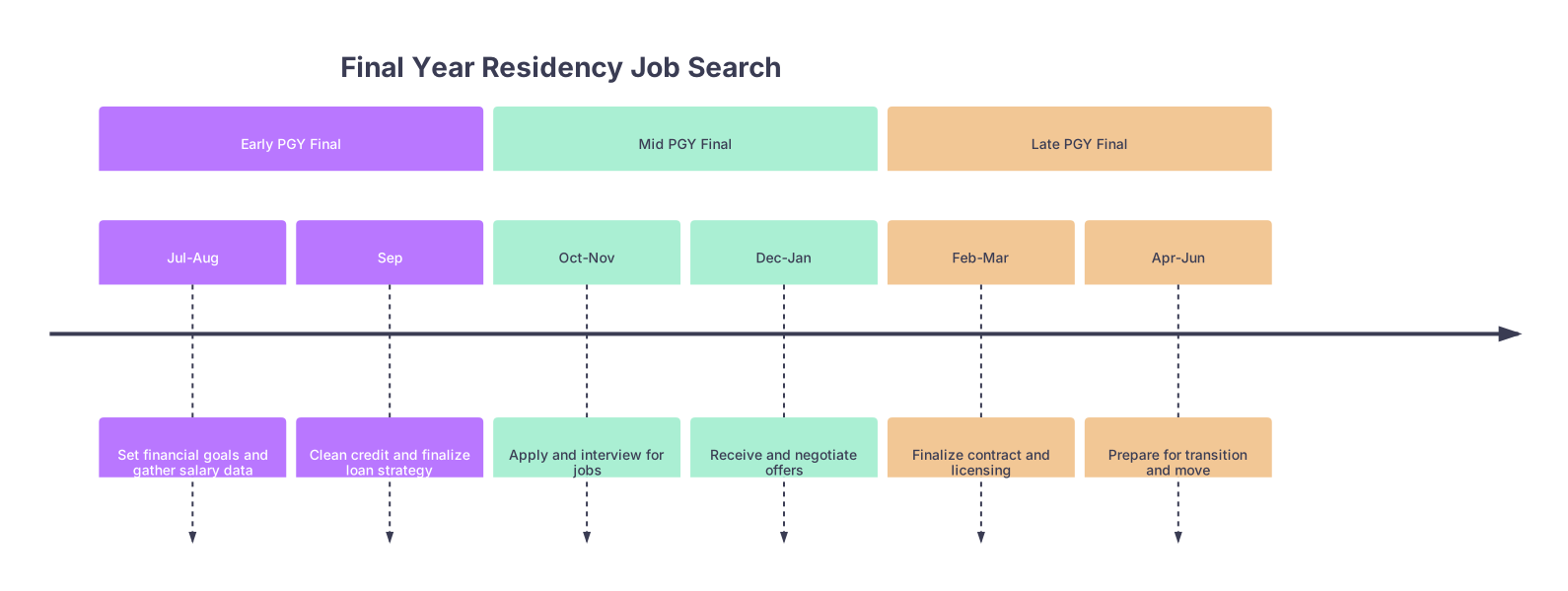
| Period | Event |
|---|---|
| Early PGY Final - Jul-Aug | Set financial goals and gather salary data |
| Early PGY Final - Sep | Clean credit and finalize loan strategy |
| Mid PGY Final - Oct-Nov | Apply and interview for jobs |
| Mid PGY Final - Dec-Jan | Receive and negotiate offers |
| Late PGY Final - Feb-Mar | Finalize contract and licensing |
| Late PGY Final - Apr-Jun | Prepare for transition and move |
October: Start The Job Search Intentionally
By the end of October you should:
Have an updated, clean CV
- 2–3 pages max
- Clear clinical interests, procedures, leadership roles
- Remove fluff research no one cares about from MS1
Write a short “positioning statement”
- 3–5 sentences that define:
- Who you are clinically (e.g., “general neurologist with interest in stroke and EEG”)
- What schedule you want (e.g., “12–15 shifts/month, no more than 1:3 weekends”)
- What you value (e.g., “transparent RVU structure, strong APP support”)
- This helps you screen jobs fast. Anything wildly off this statement is a likely mismatch.
- 3–5 sentences that define:
Start talking to people, not just recruiters
- Contact:
- Recent grads from your program
- Fellows 1–3 years ahead of you
- Ask very specific questions:
- “What was your base salary?”
- “What was the RVU target?”
- “How much of your compensation hit your bank versus ‘theoretical’ bonuses?”
- Contact:
November: Interview Season And First Offers
This is where “maximizing your salary” becomes concrete.
By the end of November you should:
Have 3–6 serious interview processes underway
- Different models:
- Big academic center
- Community hospital system
- Private group / partnership track
- Telemedicine / locums (for comparison or bridge roles)
- Different models:
Track offers in a single comparison sheet
- Capture:
- Base salary
- Expected total comp year 1, 3, 5
- Call schedule
- FTE definition (0.8 vs 1.0, etc.)
- Non‑compete terms
- Tail coverage (who pays, cost estimate)
- Do not rely on memory. You will confuse Job 2 and Job 5 by week three.
- Capture:
Start contract literacy (now, not after signing)
- Learn to identify:
- Compensation model: pure salary vs. salary + RVU vs. collections
- Benchmarks: what RVU level equals your “target” pay
- Clawbacks: sign‑on that must be repaid if you leave within X years
- Learn to identify:
January–February: Contract Negotiation And Legal Protection
This is the most financially leveraged 4–8 week window of your early career. A few emails and one lawyer can be worth $50k–$500k over five years.
January: Read, Red‑Ink, And Reality‑Check Offers
By the end of January you should:
Have at least one written offer in hand
- “We’re thinking around $300k” does not count. You want:
- Draft contract
- Or at least a detailed term sheet in writing
- “We’re thinking around $300k” does not count. You want:
Do a side‑by‑side contract comparison
- Focus on:
- Year‑1 guaranteed money:
- Base salary
- Guaranteed bonus or stipend
- Sign‑on, relocation, loan repayment
- Long‑term upside:
- Partnership track details and buy‑in cost
- RVU rates after initial guarantee
- Year‑1 guaranteed money:
- Example of year‑1 guaranteed comp across offers:
- Focus on:
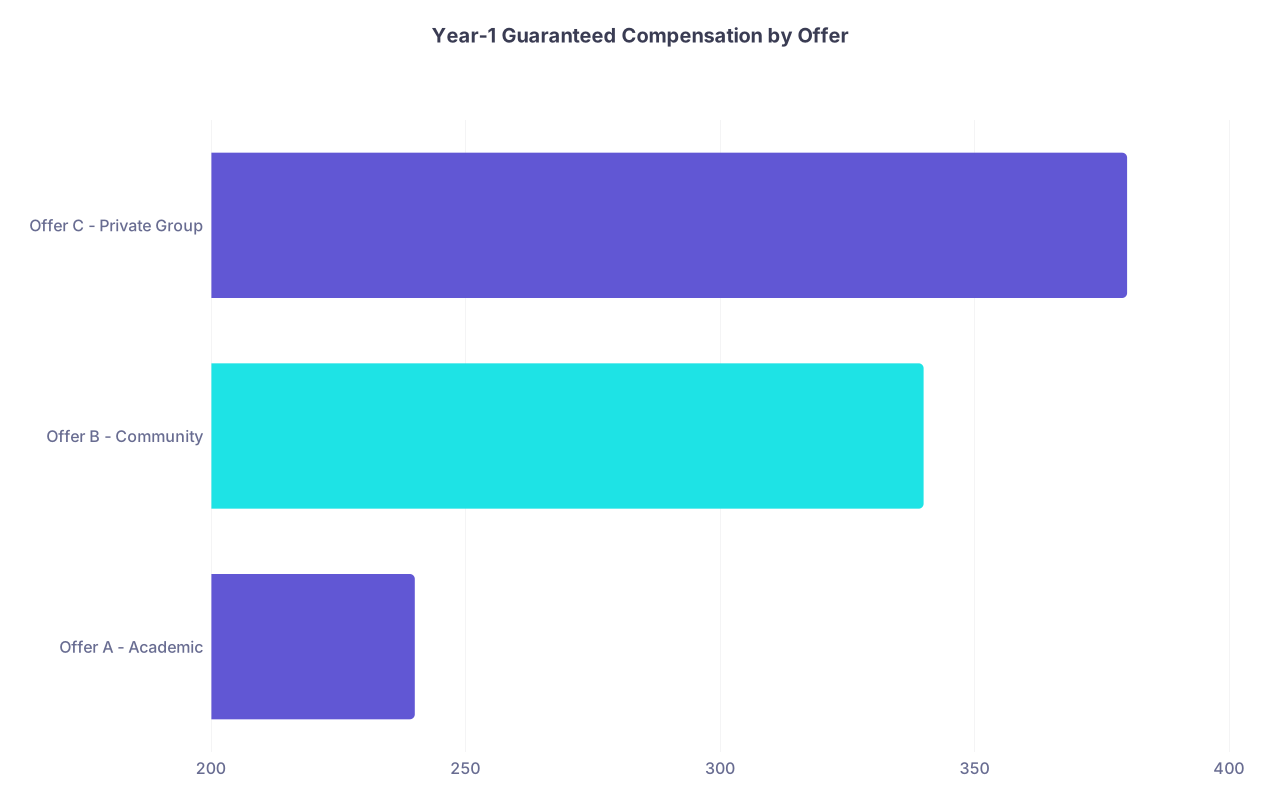
| Category | Value |
|---|---|
| Offer A - Academic | 240 |
| Offer B - Community | 340 |
| Offer C - Private Group | 380 |
- Mark contract red flags
- Non‑compete:
- Over 20–30 miles and >1–2 years? Problematic.
- Termination:
- Only “for cause” vs. “without cause” by either party with 60–90 days notice
- Call:
- Vague language like “equitable call” with no numbers is how you get abused.
- Non‑compete:
February: Hire A Contract Attorney And Negotiate Hard
This is where you protect yourself. And your future income.
By the end of February you should:
Have a physician‑contract attorney review your top 1–2 offers
- Pay for someone who:
- Works with your specialty and region
- Knows local non‑compete enforcement culture
- Cost: typically $500–$1,500
- Value: almost always 10× that over the contract term
- Pay for someone who:
Negotiate specific, high‑yield items
- Do not flail. Target the biggest levers:
- Base salary (especially if below median)
- Sign‑on bonus and structure (paid on signing vs. first check; clawback terms)
- Relocation and loan repayment
- Non‑compete radius and duration
- Tail coverage responsibility
- Use hard data:
- “MGMA median for my specialty in this region is $X. I am asking for at least Y% of median with Z call burden.”
- Do not flail. Target the biggest levers:
Get every change in writing
- Email recap after calls:
- “To confirm our discussion, base salary will be $X, sign‑on $Y paid at start date, with a two‑year pro‑rated repayment schedule.”
- If it is not in the contract or a signed addendum, it does not exist.
- Email recap after calls:
March–April: Licensing, Credentialing, And Tax Setup
At this point you should assume the clinical job is chosen. Now you prevent avoidable financial leaks.
March: Paperwork And Hidden Costs
By the end of March you should:
Apply for state license(s) where you will work
- Budget:
- Application fees
- DEA
- Controlled substance licenses
- Clarify with employer:
- Which fees are reimbursed
- Whether there is a cap under CME/dues
- Budget:
Confirm malpractice coverage details
- Occurrence vs. claims‑made
- Tail coverage:
- Who pays if you leave?
- Get a ballpark cost in writing. Tail can equal 1–2 years of premiums.
Plan your transition to higher tax brackets
- Meet with a CPA who works with physicians
- Specific questions:
- Optimal retirement account usage at new job (401(k), 403(b), 457(b))
- State tax implications of your chosen location
- How to handle moonlighting / locums income (if any) as 1099
April: Set Up Systems That Capture Your Higher Income
This is where you pre‑wire guardrails around your future salary.
By the end of April you should:
Design your automatic savings structure
- Decide target percentages:
- Retirement accounts: 20–25% of gross is a strong start
- Extra debt payoff: specific monthly or annual lump sums
- Taxable investments: automated monthly
- Decide target percentages:
Plan benefit elections before open enrollment
- Look ahead at:
- Health plan (HSA vs. PPO)
- Disability insurance (employer vs. private supplemental)
- Life insurance (enough to actually replace your income, not $50k group)
- High‑yield move:
- Max HSA if using HDHP: triple tax advantage is huge at attending income.
- Look ahead at:
Get a real disability policy quoted now
- You want:
- Own‑occupation
- Non‑cancelable, guaranteed renewable
- Locking this in while still a resident or just post‑residency usually saves you money. And protects everything that future salary can buy.
- You want:
May–June: Exit Residency, Enter Attending Life Cleanly
This is where people blow it with sudden lifestyle jumps, car purchases, and mortgages they barely understand. Do not be that person.
May: Finalize The Move And The First‑Year Cash Plan
By the end of May you should:
Have a detailed move budget and timeline
- Include:
- Movers
- Temporary housing
- Travel and lodging for house‑hunting
- Confirm what is:
- Reimbursed vs. taxable income (post‑2018, most employer‑paid moving expenses are taxable for you unless handled correctly).
- Include:
Decide: rent vs. buy for at least the first 1–2 years
- Strong recommendation: rent unless:
- You are 90% sure you will stay ≥5 years
- You are in a stable, not‑insane housing market
- First job mismatch plus a mortgage is how people get trapped or bleed money on selling costs.
- Strong recommendation: rent unless:
Finalize your first‑year attending “money map”
- Month‑by‑month plan for:
- When your resident checks stop
- When your first attending check starts
- Which debts get what payments when
- Example income timing:
- Month‑by‑month plan for:
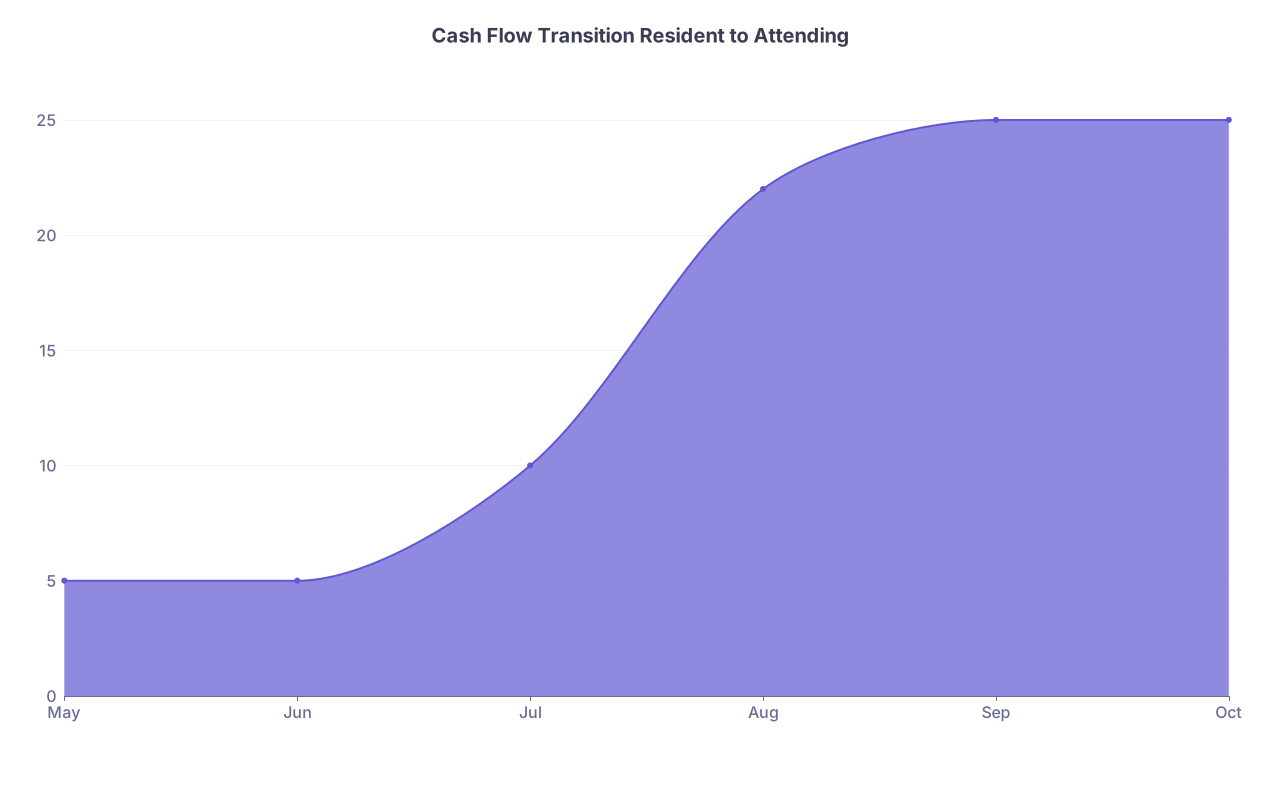
| Category | Value |
|---|---|
| May | 5 |
| Jun | 5 |
| Jul | 10 |
| Aug | 22 |
| Sep | 25 |
| Oct | 25 |
(Values represent approximate net income in thousands per month, showing the jump.)
June: Exit Cleanly And Protect The Gap
By the end of June you should:
Have 1–3 months of expenses in cash, ready
- For:
- Credentialing delays
- Payroll timing issues
- Move cost overruns
- For:
Avoid major new fixed expenses before first paycheck
- No:
- Luxury car on “anticipated” income
- Giant house closing two weeks before you start
- Wait until:
- You have seen 2–3 real paychecks
- Retirement and tax withholdings are clear
- Your actual take‑home is known, not guessed.
- No:
Do an exit interview with yourself
- Ask:
- What do I want my net worth to be 12 months from now?
- How much debt do I want gone?
- Write down:
- A specific target: “By next June, net worth +$X, loans −$Y, cash +$Z.”
- That written target will shape your decisions when offers for “doctor houses” and “doctor cars” appear.
- Ask:
July–December (First Attending Year): Guardrails And Optimization
Quick hit, because the article is about your final year of residency, but your preparation spills into these first months.
At this point you should:
Automate all the right things in month 1–2
- 401(k)/403(b)/457(b) contributions set high from day one
- Automatic transfers to savings and taxable investing
- Extra loan payments (if not pursuing forgiveness)
Run a detailed paycheck review
- After 1–2 checks:
- Verify tax withholdings
- Confirm retirement contributions
- Check health/dental/vision premiums
- Adjust now, not in April at tax time.
- After 1–2 checks:
Schedule one “attending year review” at month 6
- With:
- Financial planner (fiduciary, ideally fee‑only, physician‑savvy)
- Or at least your CPA again
- Goal:
- Course‑correct savings rates
- Capture any missed employer benefits
- Update tax estimates to avoid underpayment penalties
- With:
The Three Things That Matter Most
Your contract is more important than your clinical skill, for your first few years of income. Neglecting contract review and negotiation is financial malpractice against yourself.
Front‑load systems, not lifestyle. Automated savings, loan strategies, and insurance set up before the attending money hits will do more for your long‑term wealth than any “smart investment pick.”
Treat your final year of residency as a business launch, not a victory lap. Every month has a specific financial job. Do those jobs, in order, and your first attending salary will work for you instead of disappearing into everyone else’s pockets.