
The worst career move for a new attending is not choosing locums or permanent. It is drifting into one without a plan or timeline.
You are stepping into the only 12–24 month window where your early decisions can either buy you financial freedom or chain you to a bad job, bad market, and bad habits. So you do not “see what happens.” You run a structured, time-bound experiment.
This is the framework I give new attendings when they ask, “Should I start with locums or a permanent job?” It is not abstract. It is month-by-month, with hard checkpoints where you decide whether to double down, pivot, or cut your losses.
0–6 Months Before Graduation: Set the Ground Rules
At this point you should not be signing anything long-term. You are gathering data and narrowing options.
6 Months Before Graduation (Approx. January for July grads)
Your job now is to define your constraints and non‑negotiables before recruiters do it for you.
Decide your baseline parameters:
- Target geography bands (e.g., “Within 2 hours of family” vs “Anywhere for 2 years if pay is >90th percentile”)
- Minimum annual compensation (total effective comp, not just base)
- Acceptable schedule models (7 on / 7 off, M–F clinic, nights only, etc.)
- Loan situation and urgency (e.g., $400k at 7% vs $150k refinanced)
- Visa status or licensing constraints
Write these on a one‑page document. I have watched too many people ignore what they wrote down the moment a smooth recruiter offers a sign‑on bonus.
- Talk to 3–5 recent grads in your specialty:
- One who went straight permanent
- One who did locums first
- One who switched (locums → perm or perm → locums) within 2 years
- Ask them specifically:
- Actual first‑year take‑home pay vs what was promised
- Average hours per week (including charting at home)
- How quickly they realized they liked or hated their path
Begin a “job options tracker” spreadsheet:
Columns should include:
- Type (Locums / Perm / Academic / Hybrid)
- Location
- Estimated annualized comp (include stipends, relocation, bonus)
- Call requirements
- FTE expectation (0.8, 1.0, etc.)
- Contract length
- Malpractice type (claims‑made vs occurrence; tail cost if applicable)
You are building a comparison engine for later, not making decisions yet.
4–5 Months Before Graduation: Run Parallel Tracks (Locums and Perm)
At this point you should be actively courting both locums and permanent options. Do not lock in too early.
5 Months Out
Engage with locums agencies and direct‑hire recruiters.
- Register with 2–3 locums agencies, not 7. Too many = noise.
- Give them:
- Earliest start date
- States where you already have or can quickly get a license
- Minimum daily or hourly rate you will even consider
- In parallel, send your CV to hospital systems / groups in your desired regions for permanent roles.
Key financial question now:
Are you trying to:
- Maximize total income in first 2–3 years?
- Maximize stability and benefits?
- Maximize schedule control and time off?
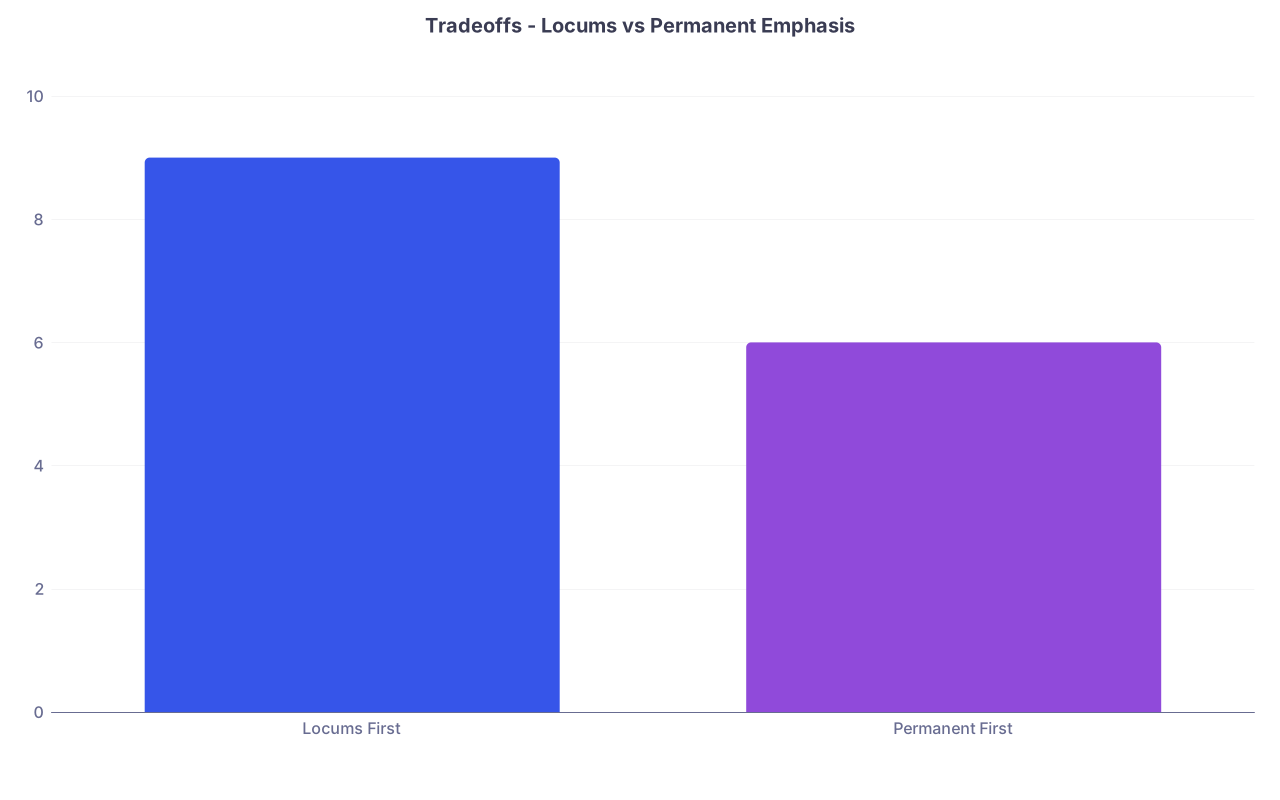
You can choose two. You will not get all three.
| Category | Value |
|---|---|
| Locums First | 9 |
| Permanent First | 6 |
(Think of 10 as “maximizes” and 0 as “barely.” Locums tends to win early on raw dollars and flexibility; permanent tends to win on benefits and predictable structure.)
4 Months Out
Now you should be looking at real numbers, not vague promises.
For permanent job options:
- Request:
- Draft contract
- Compensation model details (RVU rates, productivity thresholds)
- Sample schedule for a typical month
- Build a “true first‑year income” estimate:
- Base salary
- Realistic bonus (ask others at the same site what they hit in year 1)
- Call pay
- Subtract:
- Licensure fees if not covered
- CME not covered
- Long vesting schedules (you do not count a 4‑year vesting retirement match as “year 1 income”)
For locums options:
- Ask for:
- All‑in hourly or daily rate
- Guaranteed hours vs “estimate”
- Housing and travel specifics
- Malpractice arrangement and tail responsibility
Then you annualize it:
- Example: $220/hour, 12‑hour shifts, 12 shifts/month:
- Monthly: $220 × 12 × 12 = $31,680
- Annualized (no unpaid gaps): ~$380k before taxes and expenses
You are not signing yet. You are quantifying.
3 Months Before Graduation: Make a Provisional Path Choice
At this point you should commit to a provisional default for your first 12 months: “locums‑first year” or “perm‑first year.” You can still adjust, but you need a working plan.
Decision Framework at 3 Months Out
Use this quick matrix.
| Situation / Priority | Locums First Is Better | Permanent First Is Better |
|---|---|---|
| High loans, no dependents | Yes | |
| Need specific city for family/spouse | Yes | |
| Unsure about specialty practice setting | Yes | |
| Risk‑averse, hates uncertainty | Yes | |
| Wants maximum early savings / investing | Yes | |
| Needs strong mentorship and structure | Yes |
If at least 3 of your realities land in one column, that is your provisional path.
Set a 12‑month experiment goal:
- Locums‑first goal example:
- “Bank $150k after tax in 12 months, test 2 different practice settings, then choose a permanent home.”
- Permanent‑first goal example:
- “Secure a stable job in my preferred city, confirm culture and workload, then renegotiate or jump if comp is not at 50–75th percentile by end of year 2.”
Write the goal and stick it on your monitor. So you do not forget why you chose this.
Graduation to Month 3 as an Attending: Onboarding and Reality Check
This is where theory hits hospital reality. At this point you should ruthlessly track your time and money.
Month 0–1: First 4 Weeks on the Job
Whether you chose locums or permanent:
Track these daily:
- Start / end times (including charting at home)
- Number of patients
- Time spent fighting EMR / bureaucracy
- Emotional exhaustion at end of shift (1–10 scale)
I have seen new attendings tolerate miserable conditions for far too long because “it might get better.” Data will tell you if that is fantasy.
Financial tracking:
- Gross pay per pay period
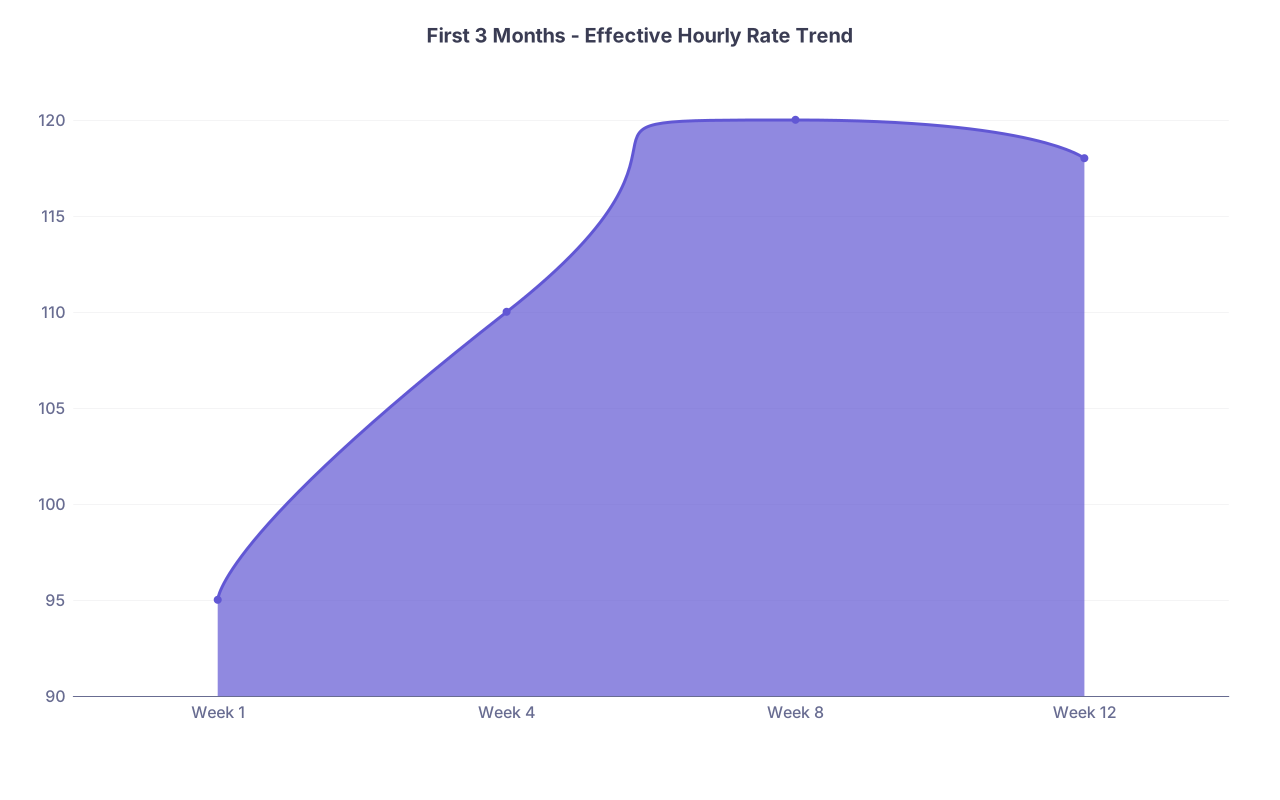
- Effective hourly rate:
- (Gross pay – job‑related expenses) / total hours worked including admin and commute
If you are locums:
- Add:
- Travel days
- Time away from home
- Gaps between assignments
If you are permanent:
- Add:
- Unpaid meetings
- Committee time
- After‑hours portal messages
| Category | Value |
|---|---|
| Week 1 | 95 |
| Week 4 | 110 |
| Week 8 | 120 |
| Week 12 | 118 |
Your early trend should be upward as you get faster. If it is flat or dropping, that is a red flag.
End of Month 3: First Checkpoint
At this point you should do a structured review, not a vague gut check.
For locums‑first path, ask:
- Is my effective hourly rate at least 20–30% higher than the best realistic permanent offer I had?
- Am I tolerating the lifestyle (travel, housing, being “the outsider”)?
- Have I learned anything meaningful about the types of practice I like or hate?
For permanent‑first path, ask:
- Is the culture matching what was sold in the interview?
- Is my workload reasonable for a new attending, or am I being thrown in as cheap labor?
- Does the compensation still look fair now that I see my actual RVUs / panel?
If your answer to at least 2 of these 3 in your chosen path is “no,” you start planning an exit timeline. Not tomorrow. But you do not wait until year 3 either.
Months 4–12: The Locums‑First Year (If You Chose It)
If you committed to locums first, this year is a deliberate, time‑boxed sprint: maximize net worth, test markets, then choose a home or double down as a career locums doc.
At this point you should be:
- Maximizing income density
- Securing your legal and financial foundations
- Lining up your next phase (another year of locums or a permanent position)
Months 4–6: Optimize Assignments and Legal Structure
Assignments:
- Aim for:
- Longer blocks (minimum 2–4 weeks) to reduce unpaid travel days
- Repeat sites where onboarding is already done
- Push rates aggressively on renewal:
- “I am willing to come back for X weeks at $Y/hour, otherwise I have alternatives.”
Legal and financial:
- Decide if you will:
- Stay as a W‑2 through agency, or
- Form an LLC / S‑Corp (varies by state, talk to a CPA who actually knows physician locums)
Typical sequence I see with serious locums physicians:
- Month 4–5: Track big expenses (travel, housing, CME, licensure)
- Month 5–6: Meet with accountant, set up:
- Quarterly estimated taxes
- Retirement vehicle (solo 401(k), SEP IRA, etc.)
- Account structure for business vs personal
You are not just a doctor. You are now a small professional services business.
Months 7–9: Start Scouting Permanent Options (Yes, Already)
At this point you should have a clear sense of:
- Which regions you like
- What size of hospital or group feels tolerable
- What call structure destroys your soul vs what you can live with
Use that to:
- Quietly start conversations with systems in your favored regions
- Filter hard:
- If a permanent job cannot come within 10–15% of your realistic annualized locums earnings, it must compensate via:
- Location you truly want
- Massive lifestyle improvement
- Academic / leadership track you care about
- If a permanent job cannot come within 10–15% of your realistic annualized locums earnings, it must compensate via:
If nothing looks compelling, you set up year 2 of locums as an intentional choice. Not as “I never got around to applying.”
Months 10–12: Decide: Double Down on Locums or Transition to Permanent
Here is the rule I recommend: by month 12 as a locums‑first attending, you decide whether you are:
- A career locums doc for at least the next 3–5 years, or
- Transitioning to a permanent position in the next 6–12 months
You choose one, because staying in limbo is how you burn out.
If you choose career locums (3–5 year horizon):
- By month 12 you should:
- Lock in 2–3 “anchor” sites that like you and pay well
- Formalize your business setup and insurance stack (own disability policy, adequate life insurance, solid emergency fund)
- Target a clear financial goal:
- Example: “I will accumulate $400k in investable assets and pay down $150k in loans by the end of year 3.”
If you choose to transition to permanent:
- Start:
- Applications at 9–12 months
- Negotiations by month 12
- Contract signing by month 15 latest
- Keep locums going while you:
- Leverage your data: “My current assignments pay X. If I take a pay cut to Y, I need Z in lifestyle and schedule to justify it.”
Months 4–12: The Permanent‑First Year (If You Chose It)
If you went straight into a permanent job, your risk is the opposite. Less volatility, more chance of getting stuck.
At this point you should be protecting yourself from golden handcuffs and quiet exploitation.
Months 4–6: Learn the Real Rules of Your Job
By now you know where the EMR buttons are. So your focus shifts to:
- True wRVU expectations vs contract language
- Informal expectations (“Everyone stays late,” “We all cover that clinic for free,” etc.)
- Who has power in your group (chair, senior partners, CFO)
Financial reality check:
- Compare:
- Your wRVUs and income to:
- National MGMA or specialty‑society data
- Other attendings at your site with similar FTE
- Your wRVUs and income to:
- If you are >20% under fair market rates and there is no ramp‑up clause or path to increase, write that down. You will need it later.

Months 7–9: Decide Whether to Invest or Plan an Exit
At this point you should know if your job is:
- A good permanent home
- Tolerable but underpaid
- Toxic or unsustainable
Use three signals:
- Culture – Do you trust leadership and colleagues?
- Compensation trajectory – Is there a believable path to 50–75th percentile for your specialty in the next 1–2 years?
- Life outside work – Is your non‑work life better or worse than during residency?
If at least 2 of these are negative, you start planning a two‑track strategy:
- Improve or renegotiate where you are
- Quietly open doors elsewhere (including locums)
Months 10–12: Prepare Either a Raise Conversation or Exit Strategy
At this point you should not still be “waiting to see” without a date on the calendar.
Two paths:
Path A – Stay and improve (job is decent but underpaid or slightly misaligned):
- Gather:
- Your productivity data
- Local and national benchmark data
- Specific examples of extra value you provide (committees, coverage, leadership tasks)
- Plan a meeting with leadership around your 12‑month mark:
- Ask directly:
- “What would it take for my compensation and schedule to reach X in the next contract cycle?”
- Ask directly:
If they are evasive or noncommittal, that is your answer.
Path B – Prepare to leave (job is clearly wrong):
- Start:
- Visiting locums agencies or alternative permanent sites
- Applying for additional state licenses if needed
- Set a hard timeline:
- “I will have a signed alternative contract or locums assignment by month 18 at the latest.”
Do not rely on sunk costs or fear of change to keep you stuck.
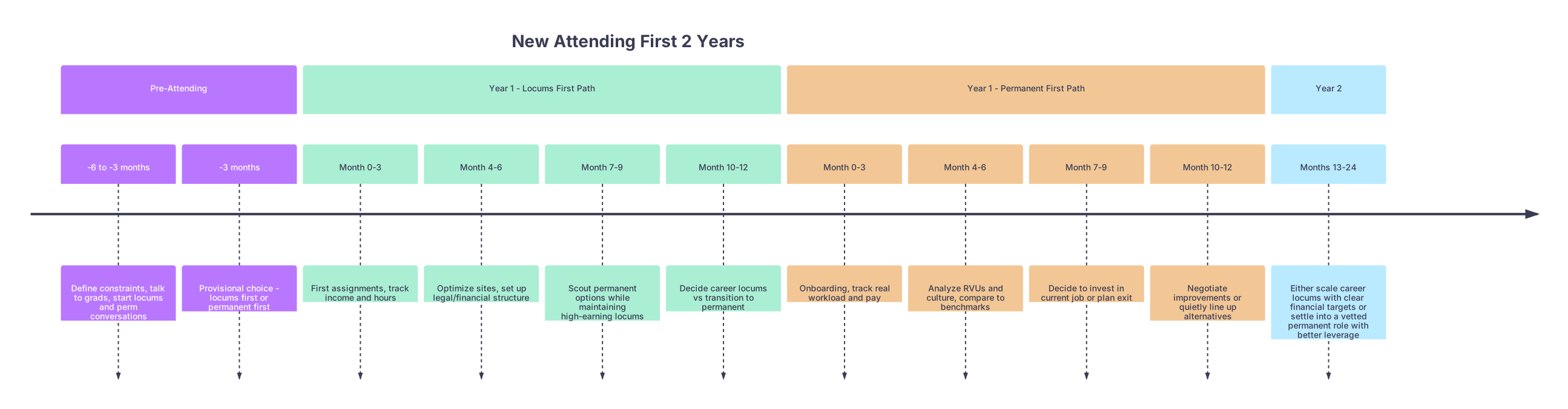
A Simple 2‑Year Timeline Map
Here is how the whole thing looks zoomed out.
| Period | Event |
|---|---|
| Pre-Attending - -6 to -3 months | Define constraints, talk to grads, start locums and perm conversations |
| Pre-Attending - -3 months | Provisional choice - locums first or permanent first |
| Year 1 - Locums First Path - Month 0-3 | First assignments, track income and hours |
| Year 1 - Locums First Path - Month 4-6 | Optimize sites, set up legal/financial structure |
| Year 1 - Locums First Path - Month 7-9 | Scout permanent options while maintaining high-earning locums |
| Year 1 - Locums First Path - Month 10-12 | Decide career locums vs transition to permanent |
| Year 1 - Permanent First Path - Month 0-3 | Onboarding, track real workload and pay |
| Year 1 - Permanent First Path - Month 4-6 | Analyze RVUs and culture, compare to benchmarks |
| Year 1 - Permanent First Path - Month 7-9 | Decide to invest in current job or plan exit |
| Year 1 - Permanent First Path - Month 10-12 | Negotiate improvements or quietly line up alternatives |
| Year 2 - Months 13-24 | Either scale career locums with clear financial targets or settle into a vetted permanent role with better leverage |
Key Financial and Legal Guardrails (Regardless of Path)
At every stage, a few rules keep you out of trouble.
1. Never sign a long non‑compete blindly.
- For permanent contracts:
- Know:
- Radius
- Duration
- Scope (all practice vs specific specialty)
- If it would block you from working in your preferred city for 1–2 years, treat that as a major “cost” of the job.
- Know:
2. Tail coverage is not a footnote.
- Claims‑made policies:
- If the employer does not pay for tail, that exit bill can equal 1–2 years of malpractice premiums.
- You factor that into your “real” compensation.
3. Locums agency contracts are contracts too.
- Watch for:
- Exclusivity clauses that bar you from working directly with a site later
- Indemnification language that pushes too much risk onto you
- If you plan to be serious about locums, pay for a one‑time review by a healthcare attorney. It is cheaper than one bad clause.
4. Build a liquidity buffer fast.
Whether locums or permanent:
- Target:
- 3–6 months of living expenses in cash within the first 12–18 months
- Because:
- Locums can have gap months.
- Permanent jobs can sour, and you may choose to leave before you have another contract signed.

Final 3–6 Months of Year 2: Consolidate or Correct Course
By this stage you should not still be flailing between options. You use your data and experiences to lock in a direction that serves your finances and your life.
If you landed in a good permanent job:
- Tighten:
- Retirement contributions
- Student loan strategy (refinance vs PSLF vs aggressive payoff)
- Explore:
- Side locums only if it does not wreck your primary job or your sanity
If you are career locums:
- Standardize your:
- Schedule patterns
- Tax and retirement planning
- Insurance coverage
- Revisit your financial targets yearly. Otherwise locums income can disappear into lifestyle creep very quickly.
The Short Version
- Decide early that your first 12–24 months are an experiment, not a life sentence. Put a provisional “locums‑first” or “permanent‑first” stamp on year 1 by 3 months before graduation.
- Run your path like a deliberate project with checkpoints at months 3, 6, 12, and 18. Use real numbers—effective hourly rate, savings, hours worked—not vibes.
- By the end of year 2, stop drifting. Either commit to a well‑compensated permanent role that fits your life or embrace structured, business‑minded career locums with clear financial goals.