
You are post-call, staring at your pay stub. You worked 246 hours last month. Nights, weekends, a couple of brutal 24s. Your “salary” looks fine on paper, but when you divide it by the hours you were actually in the hospital, your effective hourly rate is… depressing.
Here is what you are up against: hospitals and groups optimize their margins using your time. If you do not know your effective rate by shift type, by site, and by contract modifier, you are flying blind. The good news: schedule design is one of the most powerful levers you control to raise your real income without seeing a single extra patient.
Let’s fix it.
1. Step One: Know Your Real Effective Rate (Not What HR Tells You)
You cannot optimize what you have not measured. Start here.
A. Define “effective rate” correctly
Your effective hourly rate is:
Total cash compensation / Total hours required by that compensation
Not just clinical hours. Include:
- On-site clinical time
- In-house call
- Home call you must respond to (with realistic response expectations)
- Required meetings and admin time
- Commute time if it is meaningfully long and not optional
- Unpaid charting done outside scheduled hours
You do not need perfect precision. But you do need honest numbers.
B. Build a simple effective rate worksheet
Do this manually once, then automate it.
- Take the last 3–6 months of work.
- For each shift type, write:
- Start/end time
- Typical real departure time
- How many patients / wRVUs you generate
- Any differentials (night, weekend, holiday)
- Typical “off-clock” charting time after the shift
- For each site or role, write:
- Base salary portion attributable to that site (or pro-rated)
- Stipends (medical directorship, call stipends, supervision, etc.)
- Bonuses or productivity components
Then convert to an hourly rate.
| Shift Type | Pay per Shift | Total Hours (incl. charting) | Effective Hourly Rate |
|---|---|---|---|
| Weekday day (clinic) | $1,000 | 10 | $100 |
| Weeknight in-house | $1,600 | 14 | $114 |
| Weekend 24h call | $2,000 | 28 | $71 |
| Telehealth evening | $700 | 4 | $175 |
Once you see numbers like this, your strategy changes fast.
C. Use a quick formula in practice
For any offer or shift:
Effective rate = (Base component per shift + expected bonuses + differentials + stipends) ÷ (Real hours to do it well)
If you are RVU-based, convert:
Base pay ÷ required wRVUs = dollars per RVU
Then: dollars per RVU × expected wRVUs per hour = your effective hourly rate
Now you know what is good, bad, and abusive.
2. Map Your Shift Types and Expose the Losers
You probably have 4–8 distinct shift “flavors.” They do not pay equally. Even when the rate looks the same on paper.
Common shift buckets:
- Weekday day (clinic or hospitalist)
- Evening swing shifts
- Nights
- Weekends
- 24-hour in-house call
- 24-hour home call
- Telehealth blocks
- Admin / leadership time
A. Build a simple shift inventory
Create a one-page map. Across the top: shift types. Down the side: key variables.
| Variable | Shift A | Shift B | Shift C | Shift D |
|---|---|---|---|---|
| Start–End (real) | ||||
| Pay per shift | ||||
| Typical RVUs or patients | ||||
| Charting after shift | ||||
| Call intensity | ||||
| Effective hourly rate |
Fill this out once. You will see obvious patterns:
- Nights that pay only $200 more than days but add 3 extra painful hours.
- 24-hour “home call” that in reality is 18 hours of work for a flat stipend.
- Weekend shifts where the volume doubles but the pay does not.
B. Visualize what is actually paying you
Put the numbers in a chart.
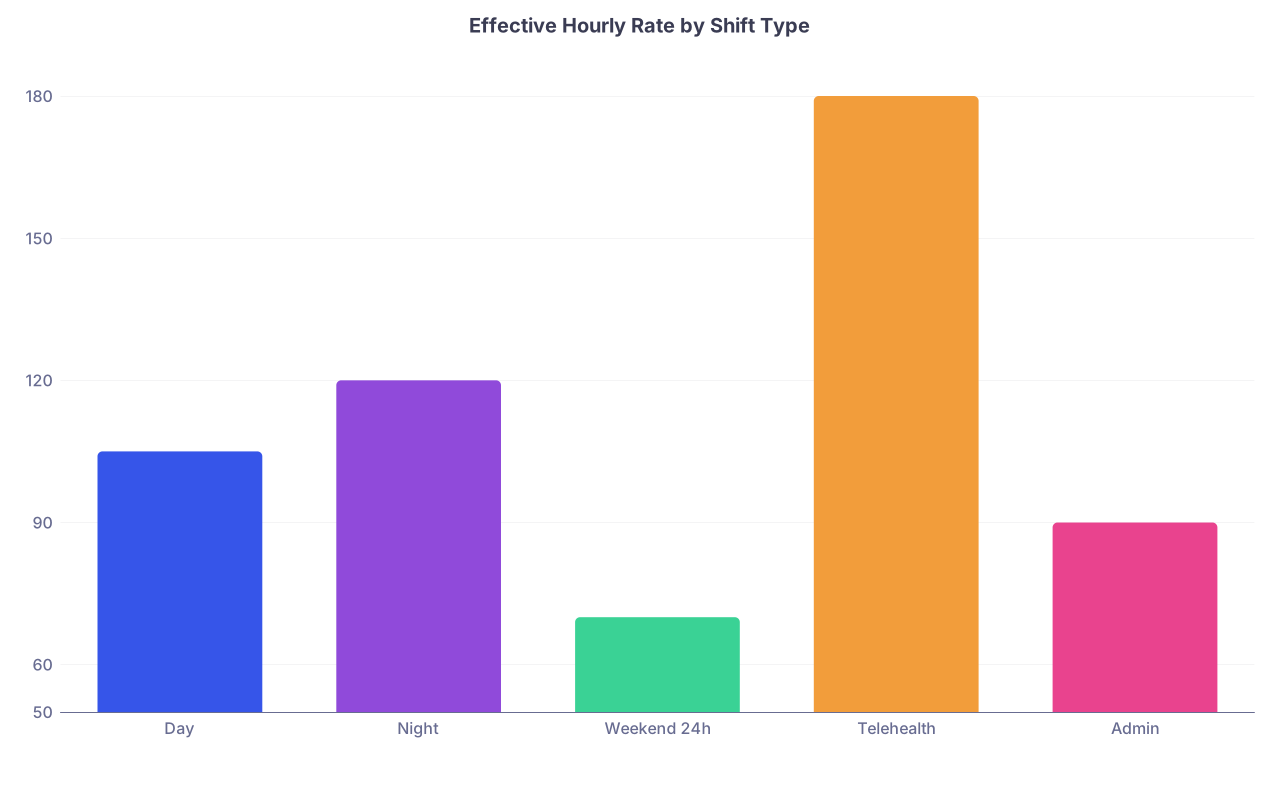
| Category | Value |
|---|---|
| Day | 105 |
| Night | 120 |
| Weekend 24h | 70 |
| Telehealth | 180 |
| Admin | 90 |
What this usually shows:
- 24-hour shifts are brutal per hour unless they are heavily compensated.
- Telehealth and short, focused blocks are quietly the highest earners.
- “Hero” shifts (busy weekends, trauma call) often pay the least per hour.
Once you see the losers, the next step is obvious: stop doing the worst-paying work, or aggressively reprice it.
3. Redesign Your Schedule: 6 Concrete Levers to Raise Your Effective Rate
Here is where you actually move money without necessarily working more.
Lever 1: Shift Mix – Stop Giving Away Your Prime Hours
Most physicians let scheduling inertia drive their lives. You can be more deliberate.
Target: Increase the percentage of your hours spent in high-effective-rate shifts.
- Rank your shift types by effective rate.
- Define a “goal mix,” for example:
- 60% top two shift types
- 30% middle tier
- 10% low tier (for coverage politics / collegiality)
- Approach your scheduler or chief with a structured ask:
- “Over the next quarter, I would like to shift toward X, Y shifts, and reduce Z. I can still cover some Z, but I would like those to be fewer and more predictable.”
Be ready with specifics:
- Which days.
- Which locations.
- How this still meets coverage needs.
Groups hate vague complaints. They respond much better to a concrete plan that still covers their needs.
Lever 2: Kill or Reprice Bad 24-hour Call
24s look “efficient” on a spreadsheet. That is the trap.
If your 24-hour call:
- Has more than 8–10 hours of active work
- Consistently destroys your next day
- Pays less than 1.5–2× your typical day rate per waking hour
…then you are subsidizing the hospital.
You have three rational options:
Reprice it
Use your data and propose a structure:- Flat stipend + per-encounter fee
or - Tiered: base + escalating bonus after a threshold of consults/admissions
- Minimum pay per hour (not just “per 24”)
- Flat stipend + per-encounter fee
Convert to shorter shifts
Push for:- 12 + 12 splits
- Night float models
- Hybrid: in-house for peak hours, then true home call after that
Strategic acceptance only
- Take fewer 24s.
- Take them on weekends where you can actually rest the next day.
- Use them tactically if they are needed for partnership / politics, but know they are a cost you are choosing.
Lever 3: Tighten the Front and Back End of Shifts
A lot of your free labor lives just outside the scheduled hours.
Typical pattern: “7–7” hospitalist shift is actually 6:30–8:00 once you add early sign-outs, late admits, and charting.
Systematically reduce this:
Pre-shift bloat
- Do not arrive 45 minutes early unless you are being paid.
- Push for shared sign-out / cross-cover structures that do not require you to pre-round half your list before official start.
End-of-shift creep
- Hard stop policies for routine tasks.
- Clear handoff expectations so you can pass appropriate work to the oncoming shift.
- Batch your charting during lulls to avoid a 2-hour dump at the end.
Documentation efficiency
- Templates.
- Smart phrases.
- Voice recognition tuned and customized.
- Offload clerical tasks to scribes or MAs when possible.
You add 1.5 hours to every 10-hour shift? You just cut your effective rate by ~15%. Just by being “nice.”
Lever 4: Use Telehealth and Remote Work Strategically
Telehealth is often underpriced per encounter, but overpowered per hour if you do it right.
Typical pattern I see:
- 4-hour evening telehealth block, modest pay per patient, but:
- No commute
- Near-zero no-shows
- Back-to-back visits
- Minimal physical exam and procedures
- Faster charting
Run the math honestly:
- 4 hours × 6 visits/hour = 24 visits
- Even modest reimbursement per visit becomes a strong hourly rate
- Overhead is low (for you), and you can sometimes stack this on days you are home anyway
Use these to:
- Replace low-yield clinic half-days
- Replace brutal extra calls
- Fill income gaps without adding full workdays

4. Legal, Contract, and Compliance Landmines When You Change Shifts
You are not just playing Tetris with your calendar. You are playing with contracts, Stark, and AML/AKS landmines. You need to know where the edges are.
A. Understand how your contract ties pay to time and work
Pull out your contract and look for:
- Compensation structure:
- Pure salary?
- Salary + wRVU?
- Hourly / per diem?
- Call stipends?
- Work expectations:
- Minimum shifts per month.
- Required call coverage.
- “Reasonable additional duties” (catch-all garbage language).
- Noncompete and moonlighting clauses:
- Radius and duration.
- Restrictions on telehealth or locums.
If you want to re-balance your schedule, you need to know which parts are negotiable and which are baked in.
B. Avoid accidental Stark and Anti-Kickback issues
You are not designing the entire comp plan, but some red flags:
- Productivity-only comp in hospital-owned groups without documented fair market value (FMV) and commercial reasonableness can be a problem.
- Call pay that looks wildly different for physicians in the same specialty without a clear reason can invite questions.
- Incentives per referral or per downstream facility revenue are radioactive.
For your purposes:
- Make sure any proposed changes still keep your total comp in a sanity band for FMV in your specialty and region.
- Do not negotiate “I will use your hospital for all admits if you bump my call pay.” That is the kind of sentence that shows up in subpoenas.
If you are about to significantly change your work pattern or add outside work (locums, telehealth, side gigs), at least run it by a health care attorney once. Not Reddit. Not your co-resident.
C. Scheduling and fatigue: legal and malpractice exposure
Your effective rate is not just dollars. It is also risk per hour.
Shifts that correlate with more malpractice exposure:
- Post-call clinic when you are trashed.
- 24s followed by “just a quick OR day.”
- Stacked nights without recovery.
If your schedule design creates:
- Chronic sleep deprivation
- Unsafe handoff patterns
- Shortcuts in documentation
…then your real “effective rate” is lower than it looks, because of latent liability.
Practical fix:
- Set personal hard rules: e.g., no elective OR the day after in-house call; minimum number of days after nights before clinic.
- Document fatigue/safety concerns when they are systemic. Helps later if there is a bad outcome tied to scheduling.
5. Use Data to Negotiate: You Need Numbers, Not Whining
Complaining about burnout does not move a CFO. Showing that your 24-hour call pays $45/hour effective while the market pays $120/hour? Different story.
A. Prepare a one-page negotiation brief
Include:
- Current state:
- Your current shift mix.
- Effective hourly rates by shift type.
- Total hours worked per month versus contracted expectation.
- Market comparison:
- MGMA or specialty society data for your region.
- Example offers from locums or other groups (de-identified).
- Proposed change:
- Specific shift mix you want.
- Revised rates for call or nights.
- How coverage is maintained.
You want to walk into the discussion with clear asks:
- “I want to reduce 24h calls from 6 to 3 per month and replace those hours with X evening swing shifts.”
- “I am proposing that in-house weekend call be compensated at Y per 12 hours, which keeps us squarely within FMV and matches market offers.”
B. Know their pressure points
Leadership cares about:
- Coverage
- Patient access
- Cost predictability
- Recruitment and retention
Tie your ask to their problems:
- Your new schedule design makes it easier to recruit.
- Repricing abusive call prevents turnover (which is insanely expensive for them).
- Predictable blocks are easier for staffing and throughput.
You are not “asking for more money because I am tired.” You are proposing a schedule and pay structure that is sustainable, fair, and stable.

| Step | Description |
|---|---|
| Step 1 | Calculate effective rates |
| Step 2 | Identify low value shifts |
| Step 3 | Design target shift mix |
| Step 4 | Prepare data brief |
| Step 5 | Meet with leadership |
| Step 6 | Implement new schedule |
| Step 7 | Consider alternatives |
| Step 8 | Acceptable offer |
6. Advanced Moves: Blending Core Job, Moonlighting, and Side Work
If your primary job will not move much, you have other ways to raise your effective rate.
A. Replace low-value shifts with high-yield moonlighting
Once you know your worst shifts, you can swap them.
Example pattern I see a lot:
- Day job 0.8–0.9 FTE
- Drop lowest-effective-rate shifts (e.g., weekend clinic).
- Add:
- 2–4 telehealth blocks per month
- 1–2 locums weekends at a strong hourly rate
Numbers:
- Drop 1 weekend 24h call paying $2,000 for ~28 hours (effective ~$71/h).
- Add 2 telehealth 4-hour evenings:
- $800 each × 2 = $1,600 for 8 hours (effective $200/h).
- Net: 12 fewer hours, $-400 gross… but you also freed up a full weekend day and dramatically cut fatigue. Usually you can actually add more high-yield work if you want.
Do not ignore taxes and benefits. But the basic logic holds.
B. Price your nonclinical time properly
You might be doing this wrong:
- Committee work for free
- “Small” administrative roles for a token stipend
- Prep and teaching time off the clock
If an admin role:
- Adds meetings and email time
- Reduces your clinical FTE
- Pays less per hour than your clinical effective rate
…then it is financially irrational, unless it serves a strategic purpose (path to leadership you actually want, political capital, job security).
A reasonable threshold: your admin/leadership roles should pay at least 0.7–0.8× your best clinical effective rate per hour. Otherwise you are subsidizing the system again.

7. A Practical 30-Day Protocol to Improve Your Effective Rate
If you want a concrete playbook, here is one.
Week 1: Measure
- Collect:
- Last 3 months of schedules.
- Pay stubs and RVU reports.
- For each shift type, calculate:
- Real start and end times.
- Charting time.
- Pay per shift.
- Effective hourly rate.
- Flag:
- Top 2 highest effective-rate shifts.
- Bottom 2 lowest effective-rate shifts.
Week 2: Design
- Decide:
- How many hours per month you actually want to work.
- Minimum income target.
- Draft:
- Target shift mix for the next quarter.
- Alternative scenarios (Plan A, B, C).
- Identify:
- Moonlighting or telehealth options that beat your bottom-tier shifts on effective rate.
Week 3: Negotiate (or Reallocate)
- Build:
- One-page brief with your data.
- Schedule:
- Meeting with your scheduler, medical director, or group leadership.
- Present:
- Your proposed shift mix.
- Any compensation adjustments needed for specific high-burden shifts.
- In parallel:
- Apply for 1–2 moonlighting/telehealth roles that fit your high-yield criteria.
Week 4: Implement and Iterate
- Lock:
- Next 1–3 months of your adjusted schedule.
- Track:
- Effective hourly rate weekly.
- Fatigue, errors, charting backlog.
- Adjust:
- Drop a shift type entirely if it remains poisonous.
- Double down on shifts that are both high-yield and sustainable.
By the end of 30 days, your calendar and your pay structure should actually reflect your goals, not institutional inertia.
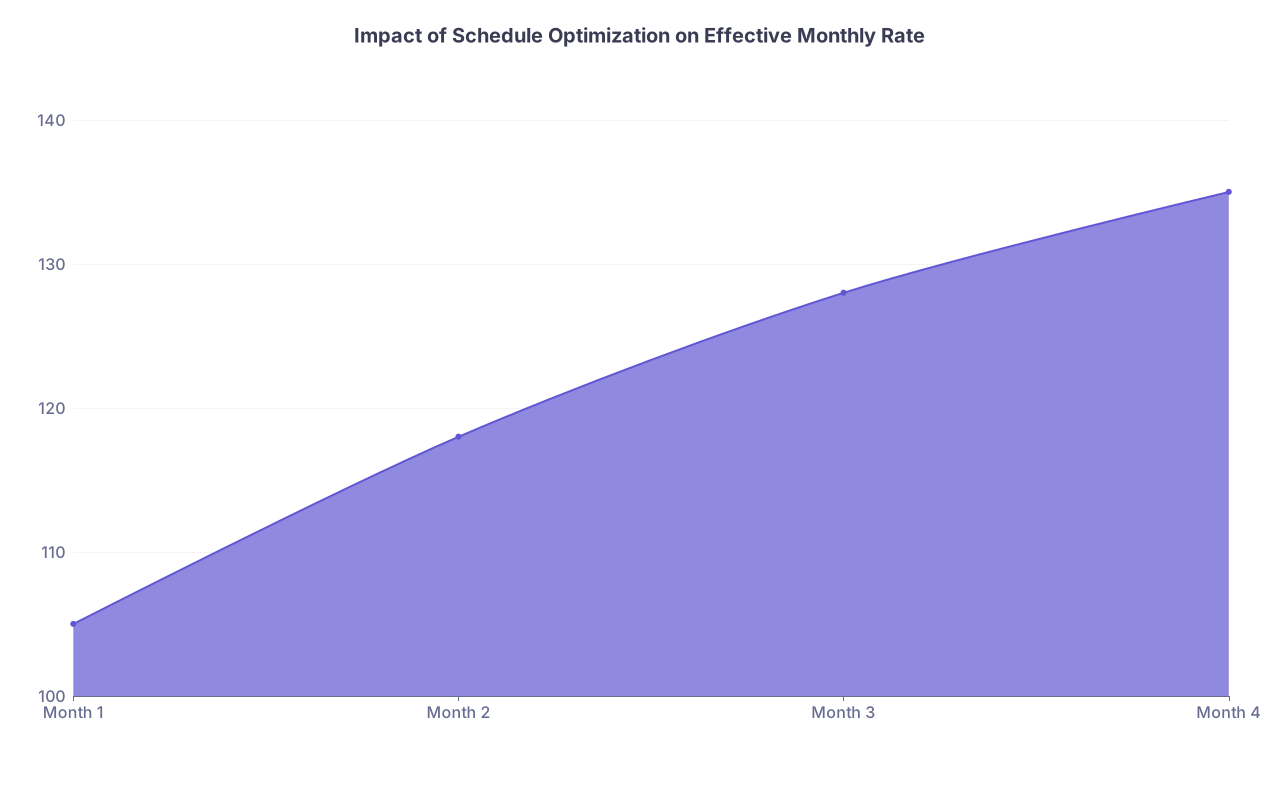
| Category | Value |
|---|---|
| Month 1 | 105 |
| Month 2 | 118 |
| Month 3 | 128 |
| Month 4 | 135 |
FAQs
1. How low is “too low” for an effective hourly rate?
As a rough rule, if your effective rate for a shift is:
- Less than half of what you could earn via reasonably available alternatives in your specialty and region, or
- Below what advanced practice providers in your own system are effectively earning for similar hours
…then it is too low. At that point, you are propping up a broken model. Either reprice it or exit that shift type.
2. Should I ever take low-paying shifts for politics or partnership?
Sometimes, yes. But do it consciously and in limited doses. If a certain amount of weekend call or undesirable coverage is clearly tied to partnership, leadership roles, or concrete long-term benefits, it can be a strategic sacrifice. Just cap it. For example: “I will take 1 low-value weekend per month for the next year until partnership, but not 4.”
3. How often should I recalculate my effective rate?
Twice a year is reasonable for most physicians, and immediately after any major change in:
- Compensation structure
- EHR or workflow
- Call burden
- Site of practice (new hospital, new clinic)
Your time is your main revenue-generating asset. Treat your effective rate the way a business treats its margins: track, adjust, and protect it.
Key points:
- Your “salary” is meaningless without knowing your effective hourly rate by shift type. Do the math, ruthlessly.
- Redesign your schedule so you spend more hours in high-yield shifts and either reprice or eliminate the worst offenders—especially abusive call.
- Use hard data, not emotions, to negotiate shifts and compensation, and protect yourself legally and clinically while you push for a schedule that actually makes sense.