
It is five years before you plan to retire from medicine.
You are in your office after clinic, the halls are finally quiet. On your screen: your EMR schedule, packed for the next three months. On your phone: an email from your group about “new productivity targets.” In your head: a number. The year you want to be done.
You are not burned out enough to walk away tomorrow.
You are too tired to keep pretending you will do this forever.
This is the moment where most physicians either drift into retirement by inertia—or they engineer it. The difference is what you do in the next five, three, and one years.
Let’s walk it chronologically.
5 Years Out: Lock In Options, Not Just Income
At five years from retirement, you still have leverage. Hospitals want you. Partners rely on your RVUs. Patients love you. This is when you trade that leverage for flexibility later.
At this point you should be:
- Auditing your finances (harshly)
- Renegotiating your contract with a retirement endgame in mind
- Deciding what “step-down” in workload might look like
- Protecting your last high-earning years from dumb decisions
Year -5: Money Reality Check and Contract Positioning
Do this first, before you touch your schedule.
Run your “walk-away number” with a real planner
Not a generic “you’re a doctor, you’re fine” talk. A real projection.Bring:
- Last 3 years of tax returns
- Current contract and comp statements (base, bonus, RVU, call stipends)
- Retirement accounts (401k/403b, 457b, IRA, defined benefit, partnership equity)
- Loans, alimony, tuition obligations
Ask them for three scenarios:
- Retire at your goal date with current income and workload
- Retire at goal date with a 20–30% workload cut in 3 years
- Delay retirement 2 years and cut 30–40% of clinical time now
You want hard numbers. “You can safely cut $X/year and still hit your target at 65.”
Identify your “fragile” income streams
At this point, part of your pay is probably:- Productivity bonuses
- Call pay
- Shift differentials
- Leadership stipends (medical director, committee chairs)
Those are exactly the things you will want to jettison later. Map out what happens if you:
- Drop call completely
- Reduce RVUs by 20–30%
- Lose director roles
Put income components in a table and see what is on the chopping block.
| Component | % of Total Pay |
|---|---|
| Base salary | 50% |
| RVU/productivity | 25% |
| Call/shift pay | 15% |
| Leadership stipend | 10% |
Start contract conversations now, not at year -1
You want language that allows:- Transition to part-time or reduced FTE
- Step-down from call
- Potential shift to non-RVU comp (administrative, teaching, quality roles)
Bad move: Showing up one year before retirement asking to cut call and shifts.
Better move: At renewal now, you say something like:“I plan to keep practicing another 5–7 years. Over that time, I would like the option to reduce call and transition to more clinic/consultative/teaching work. Can we build a pathway for that into this agreement?”
You are signaling value and longevity, not “I’m almost out the door.”
Make a decision about partnership buy-in / buy-out timing
In private practice, the five-year mark is when you:- Confirm the buy-out formula
- Clarify vesting and timelines
- Understand what happens if you reduce workload before retiring
I have seen partners learn, at year -1, that “part-time” status halves their buy-out valuation. You want that answer now.
Year -5: Workload and Lifestyle Adjustments (Subtle, but Strategic)
No radical cuts yet. You are setting up the runway.
At this point you should:
- Stop taking new high-complexity patients you know will follow you for 10 years.
- Decline new long-horizon leadership roles with 5–7 year arcs.
- Shift your clinical focus toward areas that:
- Are billable
- Are less cognitively or emotionally draining
- Have natural end-points (procedural work, hospital consults, limited-term clinics)
Example:
An internist at 60 shifts away from long-term complex primary care toward:
- Pre-op clinic 2 days/week
- Inpatient consult service 1 week/month
- Teaching residents 1 half-day/week
She is not working less yet. She is changing who will be angry when she retires. That matters legally and ethically when you are closer to leaving.
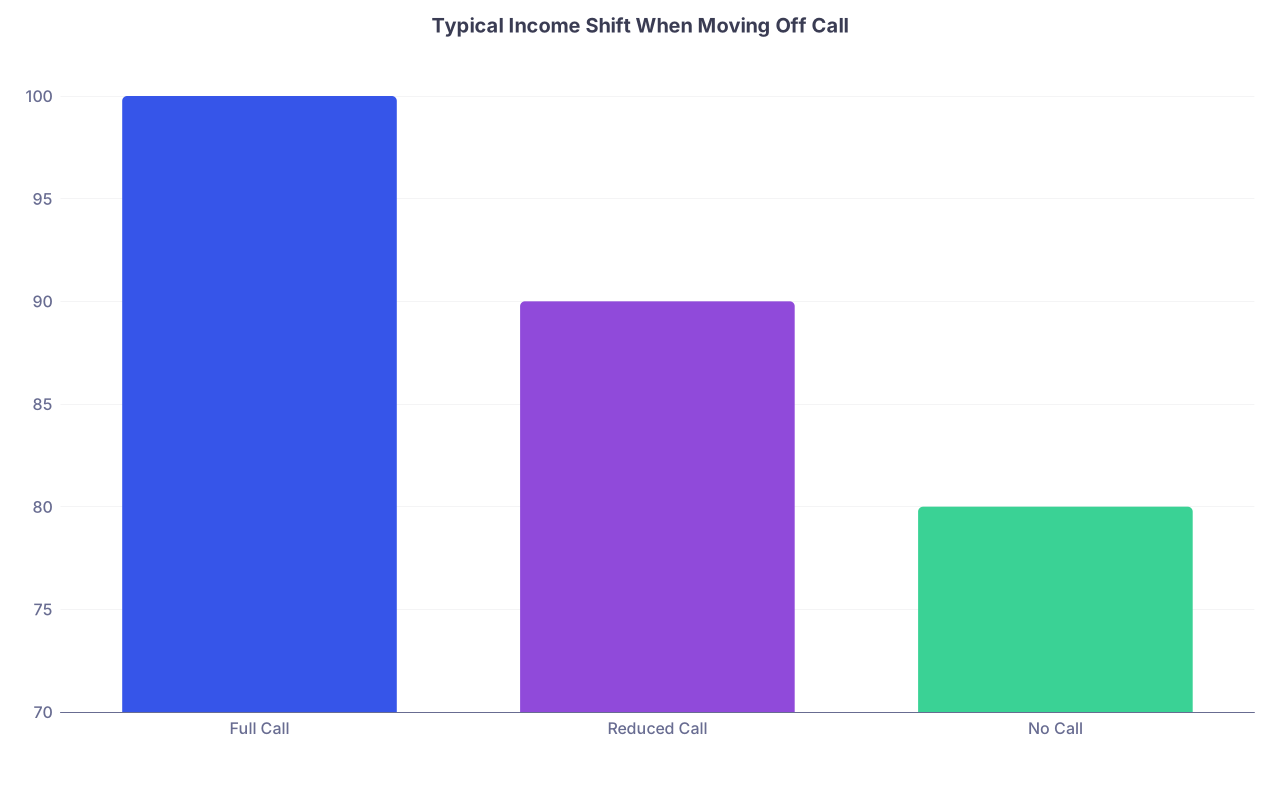
| Category | Value |
|---|---|
| Full Call | 100 |
| Reduced Call | 90 |
| No Call | 80 |
The simplified idea: you may lose 10–20% comp each step, and you need to know if that is survivable.
3 Years Out: Design Your Step-Down Schedule
Three years to go. You can see the finish line. The danger now is binary thinking: full throttle vs. cold turkey. That is how you end up hating the last year of your career.
At this point you should be:
- Actively reshaping your weekly schedule
- Shedding roles that tie you down financially or legally
- Formalizing your reduction in salary in exchange for sanity
- Planning patient handoffs deliberately
Year -3: Redefine Your FTE and Core Work
This is where the actual salary and workload negotiation begins.
- Pick your target FTE and timeline
Common paths I see work well:
- Year -3 to -2: 0.8–0.9 FTE
- Year -2 to -1: 0.6–0.7 FTE
- Final year: 0.4–0.5 FTE or very defined blocks (e.g., 7 on / 21 off for hospitalists)
Put it on paper for yourself:
| Year From Retirement | Target FTE | Typical Workload Pattern |
|---|---|---|
| -3 to -2 | 0.9 | 4 full days + 1 light/admin day |
| -2 to -1 | 0.7 | 3 full days + no call |
| Final year | 0.5 | 2–3 days, no call, no weekends |
- Turn this into a real proposal, not a vague wish
Go to your CMO, chair, or managing partner with:
- A clear FTE schedule
- Specific call reduction plan
- A list of what you will keep doing (teaching, quality projects, coverage gaps)
- A start date (ideally at next contract cycle, not “sometime next year”)
Approach it as, “Here’s how I can remain valuable and sustainable for the next 3 years,” not “I’m cutting back because I’m tired.”
- Clean up your role portfolio
At year -3, you should be out of:
- New research PIs that need 5-year follow-up
- Long-horizon QI projects that depend on your personal presence
- High-maintenance committees that meet forever and accomplish nothing
You can keep:
- Teaching roles (if they are paid or protect time)
- Advisory positions with clear end dates
- Discrete, well-scoped QI or admin work
The filter: Will anyone accuse you of abandoning a project halfway through? If yes, either finish it or transition leadership now.
Year -3: Patient Panel and Legal Risk Management
Nobody thinks this through early enough. You should.
- Tighten your patient panel
Gradually:
- Stop accepting new long-term patients
- Shift new referrals to specific colleagues with explicit warm handoffs
- Start dropping hints to complex legacy patients that you are “slowing down over the next few years and will be working with Dr. X to ensure continuity”
You are not announcing retirement yet. You are normalizing the idea of shared care.
- Review your malpractice tail coverage now
Especially if:
- You are in private practice
- You are changing employers right before retirement
- You are moving states post-retirement
Ask your carrier or risk office:
- Who pays for tail if I retire?
- Does reducing to part-time change that obligation?
- Do I need a specific “retirement endorsement”?
Three years is enough time to fix any bad surprises. One year is not.

1 Year Out: Final Salary Cut, Final Schedule, and the Exit Plan
One year left. The temptation now is to ignore the details because you are almost free. That is how people get burned—financially, emotionally, reputationally.
At this point you should be:
- Settling your final compensation and call structure
- Nailing down your retirement date in writing
- Executing patient transitions with intention
- Protecting yourself legally and emotionally on the way out
Year -1: The Last Big Contract and Schedule Shift
If you did the -3 year work, this is not a surprise to anyone.
- Make your retirement date official
Internally, pick:
- A firm final clinical day
- A clean break point (end of academic year, end of quarter, end of fiscal year)
Get it:
- Documented in an email to leadership
- Reflected in any renewal or addendum to your contract
- Recognized by HR for benefit calculations (unused PTO, final 401k contributions, etc.)
- Lock your final-year schedule
For the last year, your schedule should be:
- Predictable
- Lower volume
- Focused on calmer, more controllable work blocks
Examples that actually work:
- Office-based specialist: 3 shorter clinic days (say 8–3), no new long-term patients, procedural half-days with clear end-points
- Hospitalist: 7-on / 21-off for the last year with fewer admits, no nights
- Surgeon: Limited elective cases with robust backup, no new high-risk complex cases likely to need years of follow-up
This is where you accept the reality: you probably take a larger salary hit this last year. Do it intentionally, not by accident.
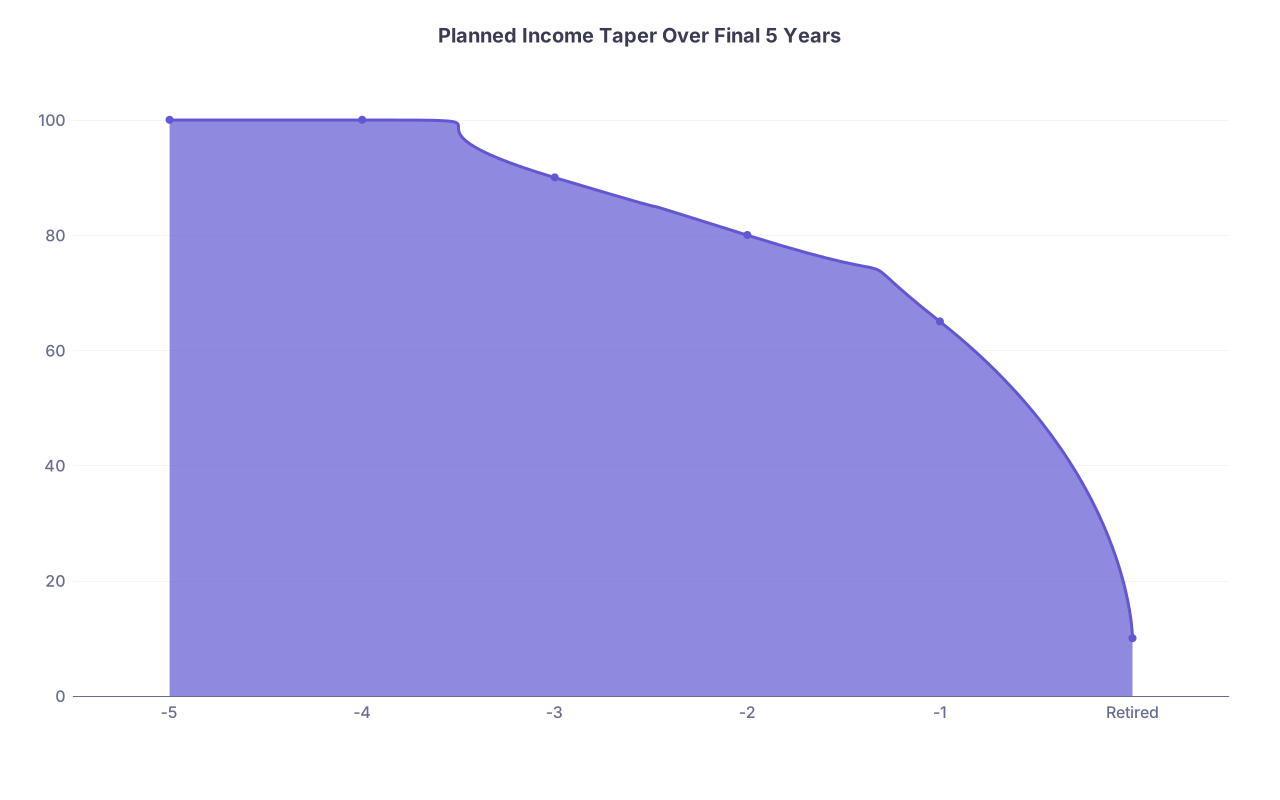
| Category | Value |
|---|---|
| -5 | 100 |
| -4 | 100 |
| -3 | 90 |
| -2 | 80 |
| -1 | 65 |
| Retired | 10 |
The general idea: keep income stable early, then taper more sharply when the schedule finally becomes humane.
Year -1: Patient Transitions and Notification Strategy
Sloppy here, and you create chaos.
- Formalize your panel transition plan
By 12 months out, you should have:
- A list of your highest-risk / most complex patients
- A named receiving physician (or clinic) for each
- At least one joint visit or documented warm handoff for the top tier
Time-bound the process:
- 12–9 months out: start co-managing with colleagues
- 9–6 months out: shift primary responsibility to them, you as backup
- Final 6 months: you see only a subset of stable, already-transitioned patients, or short-term follow-ups
- Know your notification requirements
Ask your risk management or legal department:
- Do we send formal letters to patients? Who writes and sends them?
- Is there a recommended wording to avoid abandonment claims?
- What is the required notice period (commonly 90 days, but check)?
Do not wing this. There is usually a boilerplate template your system already uses.
- Stop starting new long arcs of care
Examples:
- Do not initiate a complex multi-stage surgery sequence you know you will not finish.
- Avoid starting totally new chronic pain or complex psych management cases.
- For oncology: this gets trickier. You may need a more nuanced plan two years out, not one.

Year -1: Final Legal, Financial, and Benefits Cleanup
These are the boring pieces people skip, then regret.
- Benefits and retirement accounts
By 9–12 months:
- Confirm vesting dates for employer retirement contributions
- Check rules for unused PTO payout
- Decide what to do with 457(b) or other deferred comp (distribution timing matters for taxes)
- Verify health insurance transition: COBRA, spouse plan, or Medicare start date
- Malpractice tail / coverage confirmation
Do not assume HR “has it.” Get in writing:
- Whether tail is provided at retirement
- The duration of coverage
- Any conditions (e.g., minimum years of service, not going to a competitor)
- Licenses and credentials
Decide intentionally:
- Which licenses you will keep (state, DEA) and for how long
- Whether you want to keep a limited license for volunteer work
- When to notify hospitals/insurers of your planned end date for credentialing records
I have seen physicians tripped up when they want to do a little locums or volunteer work 6 months after retirement and discover everything lapsed. If you might want that option, plan it.
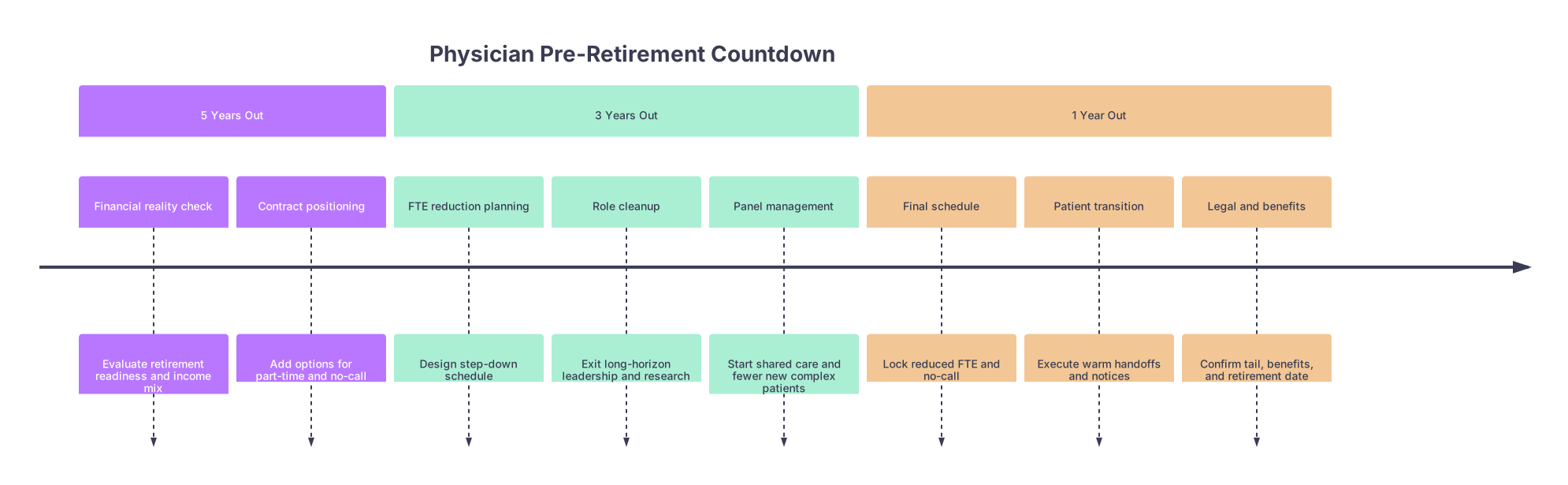
| Period | Event |
|---|---|
| 5 Years Out - Financial reality check | Evaluate retirement readiness and income mix |
| 5 Years Out - Contract positioning | Add options for part-time and no-call |
| 3 Years Out - FTE reduction planning | Design step-down schedule |
| 3 Years Out - Role cleanup | Exit long-horizon leadership and research |
| 3 Years Out - Panel management | Start shared care and fewer new complex patients |
| 1 Year Out - Final schedule | Lock reduced FTE and no-call |
| 1 Year Out - Patient transition | Execute warm handoffs and notices |
| 1 Year Out - Legal and benefits | Confirm tail, benefits, and retirement date |
Putting It All Together: A Concrete Week-by-Week Snapshot
Let me make this painfully specific. Here is what a typical final 18 months might look like in practice.
| Time to Retirement | Workload Focus | Key Actions |
|---|---|---|
| 18–12 months | 0.7–0.8 FTE | Reduce call, start shared care |
| 12–9 months | 0.6–0.7 FTE | Announce plan internally, schedule set |
| 9–6 months | 0.5–0.6 FTE | Heavy patient transition work |
| 6–3 months | ~0.5 FTE | See mostly stable, already assigned |
| Final 3 months | ~0.4 FTE or fixed blocks | No new patients, wrap-up only |
Each of those stages comes with an implicit salary adjustment. You are trading money for time and sanity, but you engineered it so you're not panicking.

Your Next Step Today
You do not need to fix everything tonight. But you do need to start.
Today, do one specific thing:
Pull up your last two years of compensation statements and your current contract.
On a single sheet of paper, write three numbers:
- What you earned last year, total
- How much of that was from call/shift/bonus/leadership (non-base)
- The year you actually want to stop full-time work
Then circle that year.
That is your starting line.
Once you see it in black and white, email your financial planner—or, if you do not have one, pick one to interview—and book a “5-year retirement runway” meeting. No theory. No vague dreams. Just, “Here is my date. Here is my income mix. How much can I safely cut in 3 years and 1 year without blowing this up?”
That one email starts your real pre-retirement countdown.