
The worst time to meet a contract attorney is after you have already signed your physician offer. The second worst is two days before your start date.
You need a timeline. Not vibes. Not “I’ll get to it when the offer comes.” A clear, stepwise plan for when to involve a contract attorney so you protect your income, your time, and your exit options before you lock yourself in.
Below is a practical, chronological guide. Phase by phase, with “at this point you should…” instructions you can actually follow.
12–6 Months Before Your First (or Next) Job Search
At this point you should be laying groundwork, not waiting for contracts to magically appear.
Primary goal: Understand what a “good” contract looks like in your specialty and region so you recognize red flags immediately.
Between 12–6 months out, you should:
Define your priorities clearly.
Before any attorney, you need your own internal checklist:- Must-have salary range
- Acceptable call schedule
- Max tolerable non-compete radius and duration
- Academic vs private vs hospital-employed preferences
- Loan repayment / PSLF needs
- Visa issues if you are J‑1/H‑1B
Collect sample contracts.
Ask senior residents, fellows, or trusted attendings:- “Can I see a de-identified version of your contract?”
- Pay attention to: compensation model, non-compete, termination clauses.
Identify 1–2 contract attorneys in advance.
Do not scramble the week you receive an offer. By 6 months before:- Get names from:
- Senior residents who negotiated well
- Specialty societies
- State medical societies or local bar associations
- Confirm they:
- Focus on physician employment contracts (not generic business law)
- Know your state’s non-compete and employment law landscape
- Can turn around contracts in 3–5 business days when needed
- Ask specific questions:
- “How many physician contracts have you reviewed in the last year?”
- “Which states do you routinely work in?”
- “Do you help with offer strategy, or just legal risk?”
- “Will you get on a call to discuss, or only send written comments?”
- Get names from:
Decide your budget and service level.
Typical ranges:- Flat fee: $400–$1,500 per contract review, depending on complexity and region
- Some include:
- Written markups
- One phone or video call
- Brief follow-up questions
At this point, you do not need a full contract review yet. You just need the relationship and expectations set. By the time offers start showing up, your attorney should already be in your contact list, not in a Google search tab.
3–2 Months Before Applying / Starting a Job Search
Now you are close enough that timing actually matters.
Primary goal: Be ready to use an attorney strategically from the offer stage, not just when you get a 15-page PDF.
At this point you should:
Schedule a brief “pre-offer strategy” consult (optional but smart).
This is not a full review. It is a 30–60 minute reality check:- Share:
- Your specialty and likely geographic areas
- Your priorities (money vs schedule vs academic track)
- Any special issues (moonlighting, side LLC, telemedicine work, J‑1 waiver)
- Ask:
- “What are the standard red flags in my specialty?”
- “What non-compete terms are common around here?”
- “Which parts of these contracts are usually negotiable and which are basically fixed?”
- Share:
Clarify turnaround times before offers arrive.
Ask directly:- “If I get an offer on a Monday and they want a decision by next Friday, can you review it in that window?”
- “What is your rush fee, and when does it apply?”
If your attorney cannot reasonably commit to timely reviews, find someone else now. Not when HR is already waiting.
When Verbal Offers Start (Pre-Contract Phase)
This is the most underrated moment to involve an attorney—before you ever see the formal contract.
You get the email or call: “We would like to extend you an offer.” They may send a letter of intent (LOI), term sheet, or just outline terms verbally.
At this point you should:
Capture the numbers in writing.
Before you talk to an attorney, get:- Base salary and/or wRVU rate
- Expected bonus or productivity structure
- Call responsibility
- Sign-on bonus, relocation, loan repayment
- FTE status and schedule (clinic vs OR vs procedures)
- Location(s) where you will work
Pause before saying “yes.”
You can respond with:- “Thank you, I am excited about the opportunity. I usually review written terms with my contract attorney. Once I see the term sheet or draft contract, I will get back to you within about a week.”
Optional but wise: short strategy call with your attorney.
This is when timing gets critical. Before you accept the idea of the job, check whether the structure makes sense.On this quick call (often 20–30 minutes), you should:
- Summarize the verbal/LOI terms:
- “They are offering $280k base, 1:4 call, employed by hospital, 2-year initial term.”
- Ask:
- “Is this in the normal range for my specialty in this region?”
- “Is there something I should try to nail down in the LOI before they draft a full contract?”
- “Any obvious dealbreakers based on these headline numbers?”
- Summarize the verbal/LOI terms:
Why this matters: once the full contract is written, people get defensive about changing “standard templates.” Fixing structural problems at the LOI stage is easier and faster.
When You Receive the Written Offer / Draft Contract
This is the non-negotiable point where you absolutely should meet a contract attorney. No exceptions. Whether you are a PGY‑3 FM resident or a lateral move cardiologist with 8 years in practice.
You now have:
- A letter of intent or
- A full employment agreement (often 10–40 pages) or
- An independent contractor agreement (for some locums/telemed roles)
At this point you should:
Immediately send the document to your attorney.
Do not respond “Looks great, I’m excited!” before legal review. You can acknowledge receipt but stop short of agreement.Email to attorney:
- Subject: “Physician Contract for Review – [Your Name], [Specialty], [State]”
- Attach:
- Contract PDF or Word file
- Any LOI or prior email with key terms
- Include:
- Desired start date
- Any stated response deadline from the employer
- Your top 3 concerns (e.g., non-compete, bonus structure, call expectations)
Schedule a review call within 3–5 business days.
Written comments alone are not enough. You want a conversation. On that call, you should walk through:Compensation model
- Is the base fair and competitive?
- Is RVU or bonus structure transparent and realistic?
- Are there “gotchas” like:
- Collections thresholds
- Unclear definitions of “net revenue”
- Changes to compensation at employer’s discretion
Schedule and call
- Is the call schedule defined or vaguely “as reasonably assigned”?
- Are extra duties (hospital committees, admin tasks) compensated?
Non-compete / restrictive covenants
- Duration (1 year is common; 2–3 years often excessive)
- Geographic scope (miles from which sites? primary vs satellite clinics?)
- Scope of work (your specialty only, or anything in medicine?)
- State-specific enforceability (some states heavily restrict or ban physician non-competes)
Termination clauses
- “Without cause” termination notice (60–90 days typical)
- Severance (rare, but possible in senior roles)
- Who can terminate and under what conditions
Tail coverage and malpractice
- Who pays for tail if you or they end the relationship?
- Claims-made vs occurrence policies
- Typical tail cost range in your specialty and region
Bonus / sign-on / relocation clawbacks
- If you leave early, how much must you repay?
- Is repayment prorated over time?
Side work / moonlighting / academic activity
- Can you do telemedicine, consulting, speaking, or research outside your job?
- Who owns IP from any research or side projects?
Your attorney should be blunt. “This non-compete is aggressive.” Or “You need the tail insurance clause rewritten, this is financially dangerous.”
You are paying them to be direct.
Timing Your Negotiations after Attorney Review
Once you understand the contract, the next step is when and how to push back. This is where candidates mess up the sequence and lose leverage.
At this point you should:
Have your attorney prioritize changes.
You cannot realistically renegotiate every line. Ask:- “If I can only get 3–5 changes, which ones matter most?”
Typical high-priority targets: - Non-compete scope and duration
- Tail coverage responsibility
- Termination notice period
- Base salary or wRVU rate if clearly below market
- Call schedule clarity
- “If I can only get 3–5 changes, which ones matter most?”
Decide if the attorney will be visible or behind the scenes.
For most early-career physicians, I recommend:- You communicate with the employer
- Attorney stays in the background as strategist Why? It preserves the relationship with your future colleagues and avoids a defensive HR reaction: “Our lawyers will need to review this.”
Respond to the employer within a defined window.
Ideal pacing:- Receive contract: Day 0
- Attorney review call: Day 2–4
- Your response with proposed edits: Day 4–7
Do not let it drift for weeks. People interpret long silence as disinterest.
Use language that keeps doors open.
Sample email:“Thank you again for the opportunity and for sending the agreement. I have reviewed it with my contract attorney. I remain very interested in the position. I had a few questions and proposed edits regarding [non-compete radius], [tail coverage], and [call schedule clarification]. Would you or your HR representative have time this week to discuss?”
Your attorney can help you script this. Use them.
Special Timing Scenarios: Short Deadlines, Multiple Offers, and Renewals
Reality rarely unfolds cleanly. HR may give you a 72-hour deadline. Another job may appear while one contract is mid-negotiation. Your current contract may be renewing automatically.
Here is when to involve your attorney in these messier timelines.
Scenario 1: Exploding Offer (48–72 Hour Deadline)
You get an offer email that reads: “We will need a signed contract by Friday.” It is Wednesday. Classic pressure tactic.
At this point you should:
- Immediately:
- Forward the contract to your attorney with “URGENT – short deadline” in the subject line.
- Ask your attorney:
- “Can you at least do a high-level review focusing on non-compete, compensation, and termination within 24–48 hours?”
- Reply to employer (same day):
- “I have received the agreement and am reviewing it with my contract attorney. I typically need about a week to complete that process. Is there flexibility on the Friday deadline?”
If they refuse any extension, that is information. Often not in your favor.
Scenario 2: Competing Offers
You are sitting on two or three different offers, each with different contracts. You are not sure which to pick.
At this point you should:
Ask your attorney for a comparative review, not just isolated comments.
“Given my goals (X, Y, Z), which of these contracts gives me the safest and most flexible position over the first 3–5 years?”Have them rank:
- Non-compete severity
- Malpractice/tail risk
- Termination risk
- Compensation realism
- Growth potential
A good attorney will say something like:
“Offer A pays more initially but traps you geographically and financially. Offer B pays slightly less but gives you a clean exit and better long-term upside. If you hate the job, B is safer.”
This is exactly the moment you should not wing it.
Scenario 3: Contract Renewal / Extension in an Existing Job
You are already in practice. Your employer sends an addendum or renewal for “another 2 years, mostly same terms.”
Many physicians foolishly sign this without a second thought. Bad idea.
At this point you should:
- Treat the renewal as a new contract event.
At least every major renewal (2–3 years), have your attorney:- Review:
- Any updated compensation formulas
- Changes to non-compete or termination
- New productivity thresholds or metrics
- Compare:
- Your current market value vs what they are offering now
- Review:
This often uncovers:
- Creep in non-compete scope
- Worsening bonus structures
- New quality metrics that cap your earning potential
You do not need a full thousand-dollar deep dive every year, but you absolutely should not assume renewals are harmless.
Quick Timing Reference: When to Meet a Contract Attorney
Here is a simplified timing table you can screenshot and keep.
| Stage of Process | Should You Involve an Attorney? | Ideal Interaction Type |
|---|---|---|
| 12–6 months before job search | Yes | Identify & pre-screen attorneys |
| 3–2 months before applying | Recommended | Pre-offer strategy consult |
| Verbal offer / LOI received | Recommended | Short strategy call |
| Written contract received (first draft) | Mandatory | Full review + call |
| During negotiation back-and-forth | Mandatory | Prioritize asks, script responses |
| Exploding or short-deadline offers | Mandatory | Expedited high-level review |
| Contract renewal / extension | Recommended | Focused review of changes |
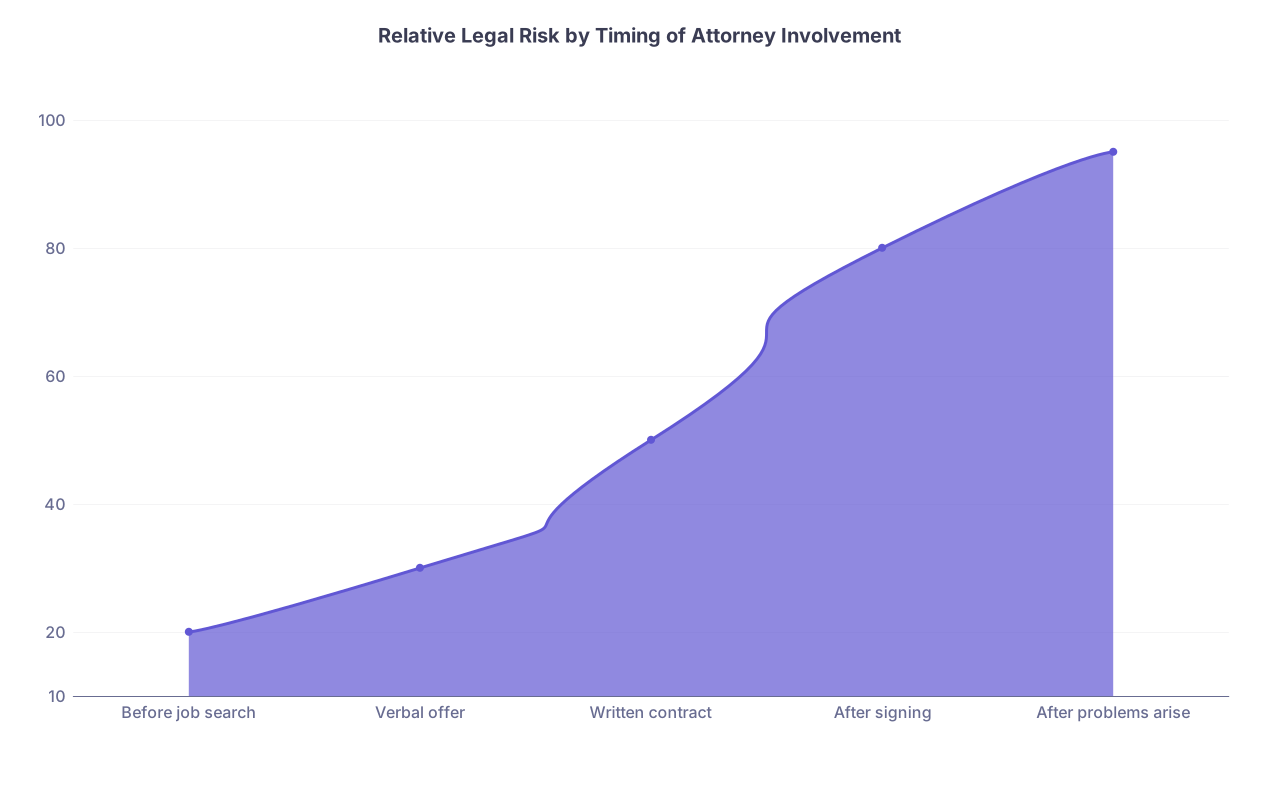
| Category | Value |
|---|---|
| Before job search | 20 |
| Verbal offer | 30 |
| Written contract | 50 |
| After signing | 80 |
| After problems arise | 95 |
Short Timeline Example: From Verbal Offer to Signed Contract
To make this concrete, here is what a clean 2–3 week timeline should look like.
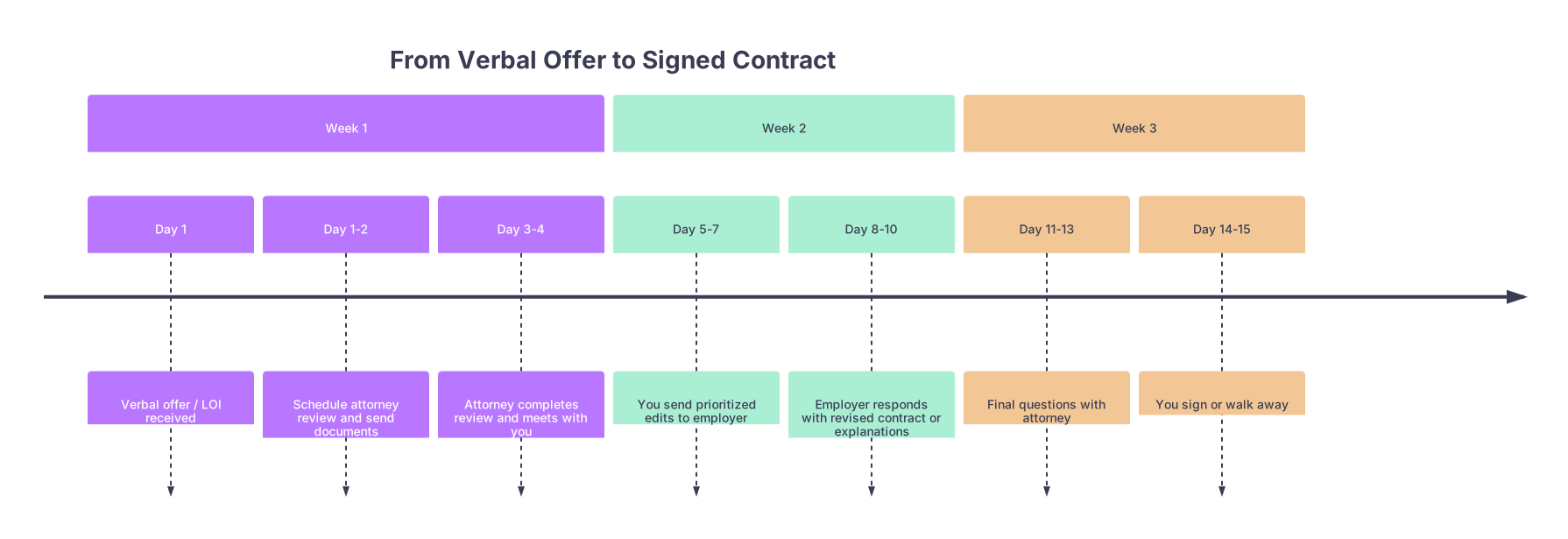
| Period | Event |
|---|---|
| Week 1 - Day 1 | Verbal offer / LOI received |
| Week 1 - Day 1-2 | Schedule attorney review and send documents |
| Week 1 - Day 3-4 | Attorney completes review and meets with you |
| Week 2 - Day 5-7 | You send prioritized edits to employer |
| Week 2 - Day 8-10 | Employer responds with revised contract or explanations |
| Week 3 - Day 11-13 | Final questions with attorney |
| Week 3 - Day 14-15 | You sign or walk away |
At each step, you know exactly when to bring your attorney in and what they should be doing.
Visual: Key Clauses Your Attorney Should Prioritize
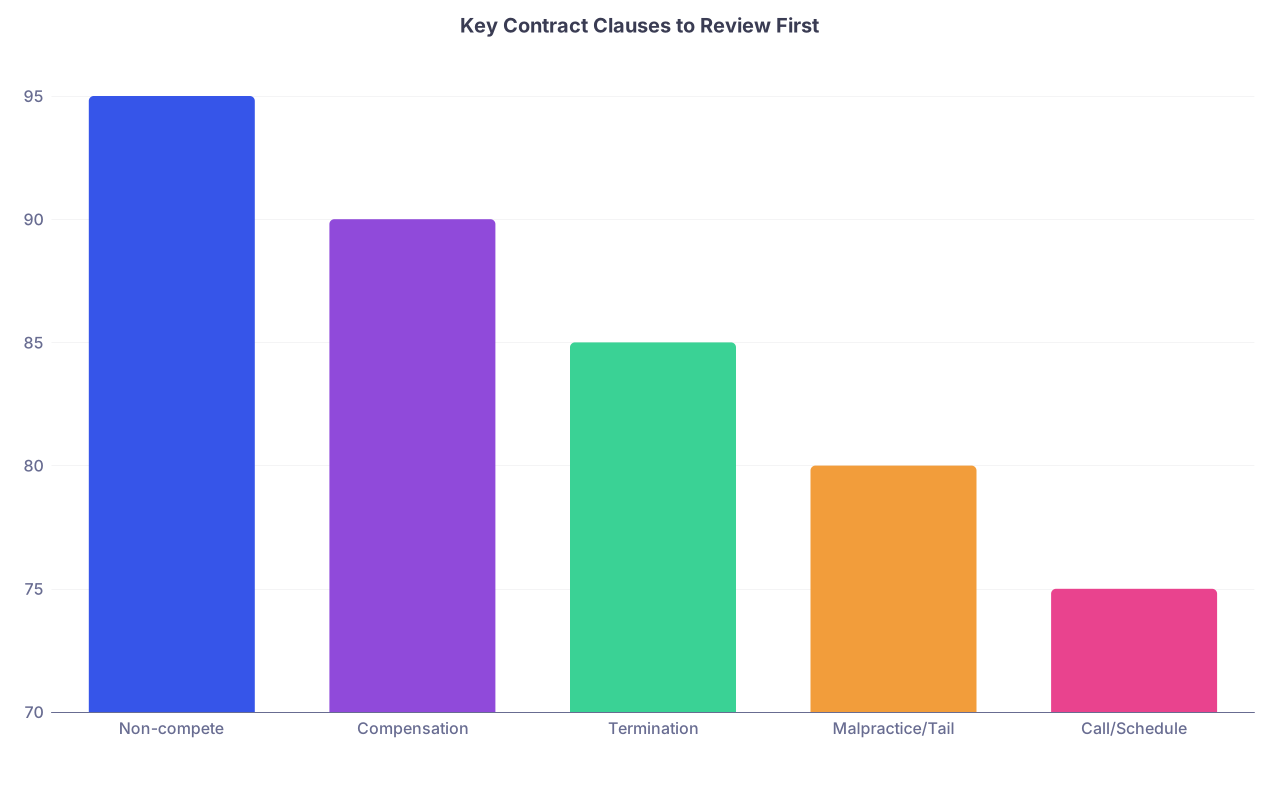
| Category | Value |
|---|---|
| Non-compete | 95 |
| Compensation | 90 |
| Termination | 85 |
| Malpractice/Tail | 80 |
| Call/Schedule | 75 |
These are not the only sections that matter, but if your time or budget is limited, your attorney must hit these hard.
What You Should Be Doing, Phase by Phase
To close this out, here is your chronological checklist, phrased exactly how you should think about it.
6–12 Months Before Job Search
At this point you should:
- Pick 1–2 contract attorneys and establish contact.
- Learn basic norms for your specialty and state.
- Decide you will not sign anything without a review. Non-negotiable.
2–3 Months Before Applying
At this point you should:
- Have a short strategy discussion about realistic expectations.
- Clarify fees and turnaround times.
When You Get Verbal Offers
At this point you should:
- Get all terms in writing (salary, call, sites, bonuses).
- Avoid committing until you speak to your attorney, at least briefly.
When You Receive the Written Contract
At this point you should:
- Send it to your attorney the same day.
- Schedule a review call within 3–5 business days.
- Let them help you prioritize what to negotiate.
During Negotiation and Before Signing
At this point you should:
- Use your attorney as a strategist, not a shield.
- Communicate professionally but firmly with the employer.
- Sign only after your questions are answered and high-risk clauses are addressed.
Key points to remember:
- The minimum acceptable time to meet a contract attorney is when you get the first written draft. Earlier is better. Later is expensive.
- Use your attorney strategically at the LOI/verbal offer stage to avoid building a bad deal into a 20-page trap.
- Every renewal and major change is another contract event. Treat it that way, or you will eventually pay for the shortcut.