
The worst time to ask about salary is when you have no leverage and no context—and that’s exactly when most trainees bring it up.
If you want to sound like a professional and not a desperate applicant, you need a timeline. Not vibes. Not “I’ll just see how it feels.” A clear, stepwise plan for when and how to ask about salary on interview day.
This is that plan.
Big Picture Timeline: When Salary Belongs in the Conversation
Let’s zoom out first. Over the full process, salary questions should follow this rough order:
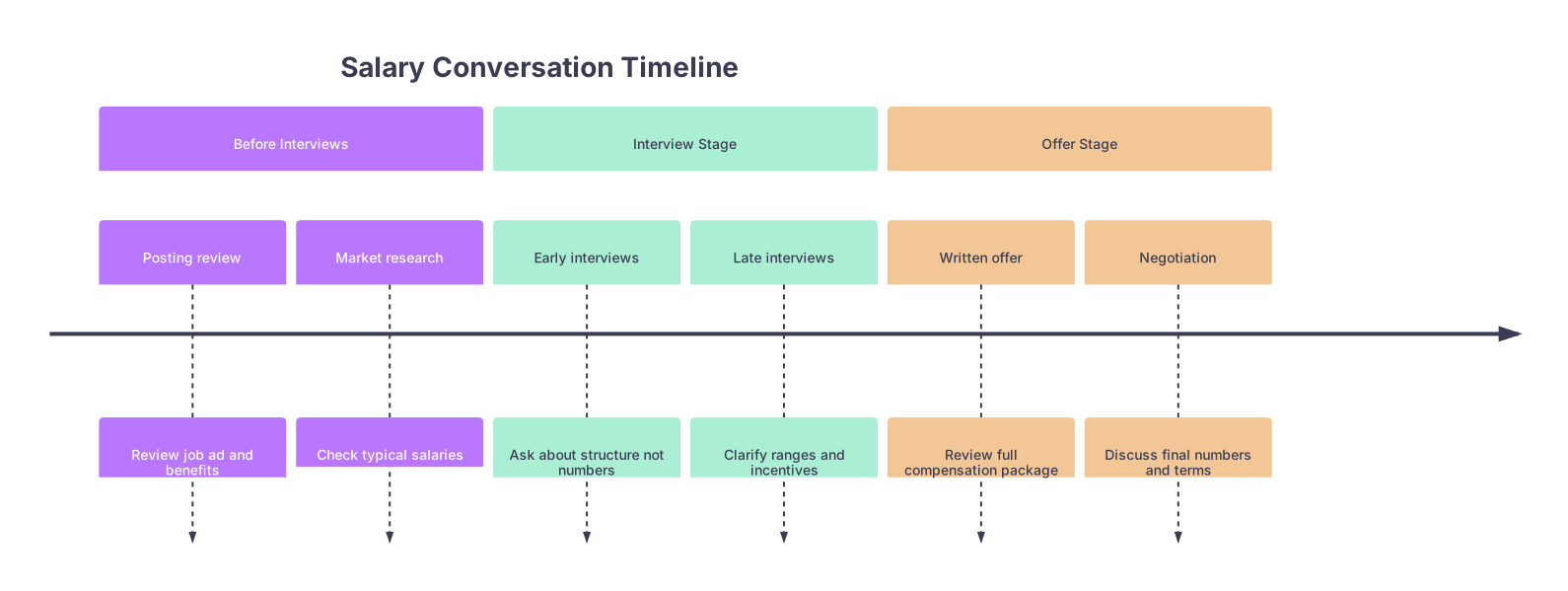
| Period | Event |
|---|---|
| Before Interviews - Posting review | Review job ad and benefits |
| Before Interviews - Market research | Check typical salaries |
| Interview Stage - Early interviews | Ask about structure not numbers |
| Interview Stage - Late interviews | Clarify ranges and incentives |
| Offer Stage - Written offer | Review full compensation package |
| Offer Stage - Negotiation | Discuss final numbers and terms |
At each stage, what you ask changes.
You asked specifically about interview day, but you cannot handle that well if you’ve done nothing before and plan nothing after. So I’m going to walk you chronologically:
- 1–2 weeks before the interview
- The night before
- Morning of interview day
- Early interview day (opening session / early chats)
- Mid-day (faculty interviews, PD chats)
- Late day (wrap-up, Q&A, resident-only sessions)
- 1–2 days after the interview
At each point: what is fair game to ask, what’s premature, and what will quietly get you downgraded.
1–2 Weeks Before Interview Day: Do Your Homework or Stay Quiet
At this point you should not be asking anyone about salary yet. You should be researching so you do not ask clueless questions later.
Your tasks this week
Read the posting and website carefully
- Does it list a range? “Starting at $230,000 with productivity bonus”
- Does it say “competitive salary” and nothing else? Red flag, but common.
- For residents/fellows: look for standardized institutional pay tables.
Pull market data so you have a baseline:
- For residents/fellows:
- FREIDA, program websites, GME office PDFs.
- Your own institution’s GME salary scale as an anchor.
- For attending roles:
- MGMA numbers if you have access.
- Doximity compensation, Medscape salary reports.
- Talk to recent grads (what they actually signed for, not theoretical numbers).
- For residents/fellows:
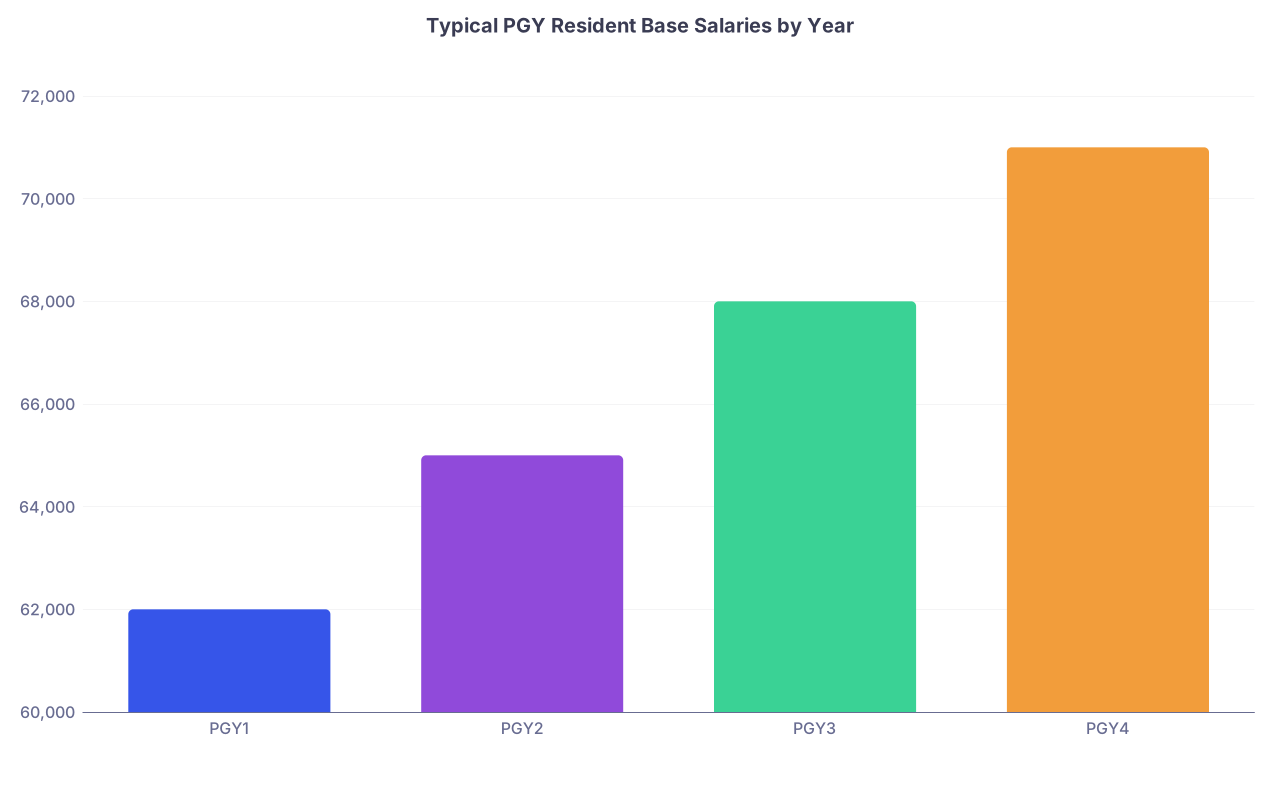
| Category | Value |
|---|---|
| PGY1 | 62000 |
| PGY2 | 65000 |
| PGY3 | 68000 |
| PGY4 | 71000 |
Write down your priority list
Rank these for yourself before you even think about negotiation:
- Base salary
- Bonus structure (productivity, quality, call pay)
- Schedule / FTE
- Loan repayment
- Sign-on bonus / relocation
- Non-salary benefits (CME, retirement match, parental leave)
This prep determines whether you ask intelligent, targeted questions on interview day or come off as someone who just wants “as much as possible.”
The Night Before: Build Your Salary Question Script
At this point you should draft your question list, not wing it.
You are not asking yet. You are deciding:
- Who is the right person to ask what
- Which questions are interview-day appropriate
- Which should wait until an offer
Break your questions into three buckets
Always safe on interview day (structure-level questions)
Things like:
- “How is compensation structured for faculty—fixed salary vs productivity-based?”
- “Are resident salaries determined by a hospital-wide PGY scale?”
- “Is there differential pay for nights/weekends or extra call?”
- “Is there protected time or pay associated with administrative or teaching roles?”
Sometimes safe, sometimes premature (range-level questions)
Better for:
- Late in the day
- Second visits
- Or when the interviewer brings up compensation
Examples:
- “For new graduates in similar roles, what’s the typical salary range?”
- “Is the compensation model RVU-based, and if so, what does a typical first-year total comp look like?”
Usually wait until you have an offer (negotiation questions)
These are late-stage:
- “Is the salary negotiable?”
- “Can CME funds be increased?”
- “Is there flexibility on the starting bonus or relocation package?”
On interview day, you live mostly in buckets 1 and (carefully) 2.
Morning of Interview Day: Calibrate, Don’t Ambush
At this point you should identify who is safe to ask and who is not.
As you get the schedule/email packet
Scan your agenda:
- Program Director / Division Chief
- Department Chair
- Residents/Fellows
- HR or recruiter
- Practice manager / administrator
Here’s the rule:
- HR / recruiter / practice manager → safest place for salary range and package details.
- Program leadership (PD, Chair) → great for compensation structure, philosophy, call pay setup, academic vs clinical split.
- Residents/fellows → perfect for: “Is your pay scale transparent? Do you feel the call pay is fair? Do people moonlight?”
- Faculty → good for: “Are you satisfied with the compensation model? Any surprises you wish you had known?”
What you don’t do: lead your 8:30 AM PD interview with “So what’s the salary?”
Early Interview Day: Orientation, Tours, Group Sessions
This is where many programs voluntarily cover compensation basics. At this point you should listen first.
Common early-morning situations:
- PowerPoint overview with a slide on “Compensation & Benefits”
- GME or HR rep doing a brief session
- Q&A with leadership
If they present salary/benefits
You do not need to ask “So what’s the salary?” again. That just shows you weren’t listening.
Instead, refine:
- “You mentioned a PGY scale. Does that differ between departments or is it uniform across the institution?”
- “You noted call stipends—are those paid as a flat amount per call, or hourly if the call is in-house?”
2–3 targeted questions > broad, anxious fishing.
If they don’t mention it at all
Still early in the day. You’re better off waiting until:
- The HR/practice manager slot
- A clearly labeled “benefits” session
- The end-of-day open Q&A
Asking salary 15 minutes into the welcome session reads poorly. You look primarily money-focused before they even know if you can do the job.
Mid-Day: Faculty & Leadership Interviews
This is where most trainees either under-ask (and regret it later) or over-ask (and come off as mercenary). Timing and phrasing matter.
At this point you should focus on structure and philosophy, not haggling
You’re still being evaluated. You want to show:
- You understand compensation models
- You’re long-term oriented (fairness, sustainability, workload)
- You’re not trying to negotiate line items mid-interview
Tailor your questions to role:
With a Program Director (residency/fellowship)
Good questions:
- “How are resident salaries set here—is it a GME-wide scale, or negotiated by department?”
- “Is there any differential for chief residents or extra leadership roles?”
- “Do residents get additional pay for extra shifts or moonlighting, and when does that typically start?”
Borderline on interview day, but sometimes fine late in the conversation:
- “For fellows here, is there a standard salary scale different from residents?”
With a Division Chief / Department Chair (attending roles)
At this point, it’s reasonable to ask about:
- Base vs incentive comp
- Typical workload assumptions
- How transparent the model is
Examples that play well:
- “For new faculty in this division, is there a standard starting structure—like a base salary plus RVU bonus—or is it individualized?”
- “How much of total compensation tends to be fixed vs variable in your group?”
- “How has the compensation model changed over the last few years?”
Stay away from:
- “What exactly will my salary be?”
- “How much are you paying the other candidates?”
- “Can you match offers from other places?” (Save that for the offer/negotiation phase.)
Late Day: Resident-Only Time, Informal Chats, Wrap-Up Q&A
This is your prime window for most salary-related questions—if you still have gaps.
By now they’ve:
- Given you their sales pitch
- Assessed your basic fit
- Seen how you behave throughout the day
At this point you should:
- Clarify what wasn’t clear
- Cross-check official statements with resident/fellow reality
- Ask about how it feels to be compensated there, not just the number on paper
Resident / Fellow-Only Sessions
Use these for honest, experience-level questions:
- “Do you feel the salary is livable in this city, given rent and commuting costs?”
- “How is moonlighting handled—do many people do it, and is it enough to move the needle?”
- “Is call pay reasonable for the work involved, or do people feel it’s under-valued?”
- “Do you actually see the educational stipend / CME money, or does it get eaten by other expenses?”
This is where you get the “we technically get $1,500 CME but we can’t roll it over and the approval is a nightmare” level of truth.
Final Open Q&A with Leadership
If compensation still hasn’t been clearly discussed, this is your last chance on the day.
At this point you should keep questions program-level, not personal:
- “Could you talk briefly about how compensation is structured for trainees here and how transparent that is—salary scales, call stipends, moonlighting policies?”
- “For graduating residents who stay on as faculty, how does the transition in compensation work—are there standard starting packages?”
Still avoid explicit negotiation language. You’re clarifying the system, not cutting a deal.
When a Salary Question is Actually Too Early (or Just Bad)
Some things I’ve heard candidates say that hurt them:
9:05 AM, first question of the day: “So what’s the starting salary and sign-on bonus?”
Translation to faculty: “Everything else is secondary.”To residents at lunch: “How much exactly do you each make after taxes?”
That’s personal. And weird.In a 20-minute PD interview: “I’ve got another place offering X. Can you match that?”
That’s what offers and negotiators are for.
Filter your impulses through this rule:
Early in the day: Ask about structures and expectations
Late in the day: Clarify ranges and realities
After an offer: Discuss numbers and negotiation
If you violate that order, you look naïve at best and arrogant at worst.
1–2 Days After the Interview: Follow-Up Salary Questions (When Needed)
At this point you should follow up by email or scheduled call if:
- They were vague about compensation
- They explicitly said, “We’ll send you more details” and never did
- You’re trying to compare programs and are missing basic info
This is the safest place to ask range-level questions clearly.
How to phrase a post-interview salary question
To HR / recruiter / practice administrator:
“Thank you again for the opportunity to interview on [date]. As I review programs, I realized I don’t have the full details of the compensation package for [position]. Would you be able to share the current salary scale (or typical starting salary range) and major components of the benefits package (retirement match, CME, call pay)? This will help me compare opportunities accurately.”
To PD (if no HR contact is available and culture feels informal):
“I really enjoyed learning more about the program on [date]. I realized afterward that I’m not clear on the current resident salary scale and any call differentials or moonlighting opportunities. Is there a document or summary you typically share with applicants, or someone in GME I should reach out to?”
You’re not negotiating here. You’re assembling information—which you absolutely should do before you rank or accept anything.
Quick Comparison: When to Ask What
Use this as your internal checklist on interview day.
| Stage of Day | Safe Topics | Usually Wait On |
|---|---|---|
| Early welcome | None (just listen) | Salary numbers, bonuses |
| PD / faculty (AM) | Compensation model, call structure | Exact salary, negotiation |
| Midday sessions | Benefits overview, scales | Comparing to other offers |
| Resident-only time | Livability, fairness, moonlighting | Detailed personal income |
| Final Q&A | Salary scale, typical ranges | Asking for specific number for you |
| Post-interview | Full package, written details | Actual negotiation (wait for offer) |
Visual Timeline: Salary Discussion Across the Process
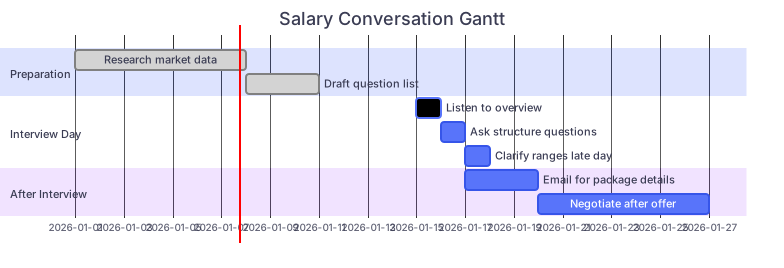
| Task | Details |
|---|---|
| Preparation: Research market data | done, prep1, 2026-01-01, 7d |
| Preparation: Draft question list | done, prep2, after prep1, 3d |
| Interview Day: Listen to overview | active, int1, 2026-01-15, 1d |
| Interview Day: Ask structure questions | int2, after int1, 1d |
| Interview Day: Clarify ranges late day | int3, after int2, 1d |
| After Interview: Email for package details | post1, 2026-01-17, 3d |
| After Interview: Negotiate after offer | post2, after post1, 7d |
Common Trainee Scenarios: How This Plays Out
Scenario 1: Residency Interview – Money Never Mentioned
- Whole day passes. No slide on salary. Residents seem cagey.
- You should:
- Ask residents privately: “Is there a published salary scale?”
- Use final Q&A: “Could you speak briefly to the resident salary scale and any differentials for call or chiefs?”
- If still unclear → email GME/PD for written scale afterward.
Scenario 2: Fellowship Interview – Vague About Moonlighting
You care a lot because you’ve got loans and maybe family.
- Midday, PD says, “Some fellows moonlight, but it’s variable.”
- At this point you should:
- Ask: “Are there institutional rules or limits on moonlighting, or is it up to each division?”
- Ask fellows later: “In reality, how many shifts per month are people doing, and what does that translate to financially?”
- If the answers are evasive across the board, treat that as data. Not a good sign.
Scenario 3: First Attending Job – Recruiter Mentions “Competitive Salary”
Every trainee hears this line. It means nothing without context.
- During interview-day recruiter meeting:
- Ask: “For context, what is the typical salary range for new grads in this role?”
- Follow-up: “How is that split between base and variable comp?”
- Clarify: “Is there a guarantee period before full productivity expectations kick in?”
You are not negotiating yet. You are defining the playing field.
Final Thoughts: What Actually Matters
If you remember nothing else:
Sequence matters more than courage. You’re not “bold” if you ask about salary too early; you’re just out of sync. Learn the order: structure → ranges → negotiation.
Ask about systems, not just numbers. Models, call pay, moonlighting rules, and benefit structures often matter more than a headline salary number. On interview day, focus there.
Use the right person at the right time. Residents for reality. HR for details. Leadership for philosophy and structure. Ask each group what they actually know and control.
Follow that timeline and you’ll sound like what you are becoming: a physician who understands both medicine and money—and knows when to talk about each.