
It’s July 1 of your fellowship year. You’re on orientation, pretending to care about another EMR module, and your phone buzzes: a co‑fellow just got a “Hey, want to chat about jobs?” email from a group across town.
You haven’t even figured out where the cafeteria is. But the job clock has already started.
Here’s the part nobody spells out clearly: during fellowship, there are specific windows when you should:
- Start looking seriously
- Start comparing
- Push hard on negotiation
- Finally sign
Miss those windows, and you either leave money on the table or get stuck scrambling into whatever’s left.
I’m going to walk you through your fellowship year chronologically: month‑by‑month first, then we’ll zoom in to what you should be doing this week and even this day when offers hit your inbox.
Big‑Picture Timeline: When Job Stuff Actually Happens
First, orient yourself. This assumes a 1‑year fellowship starting July 1. If you’re in a 2+ year fellowship, shift everything one year earlier so your “job year” is the final year.
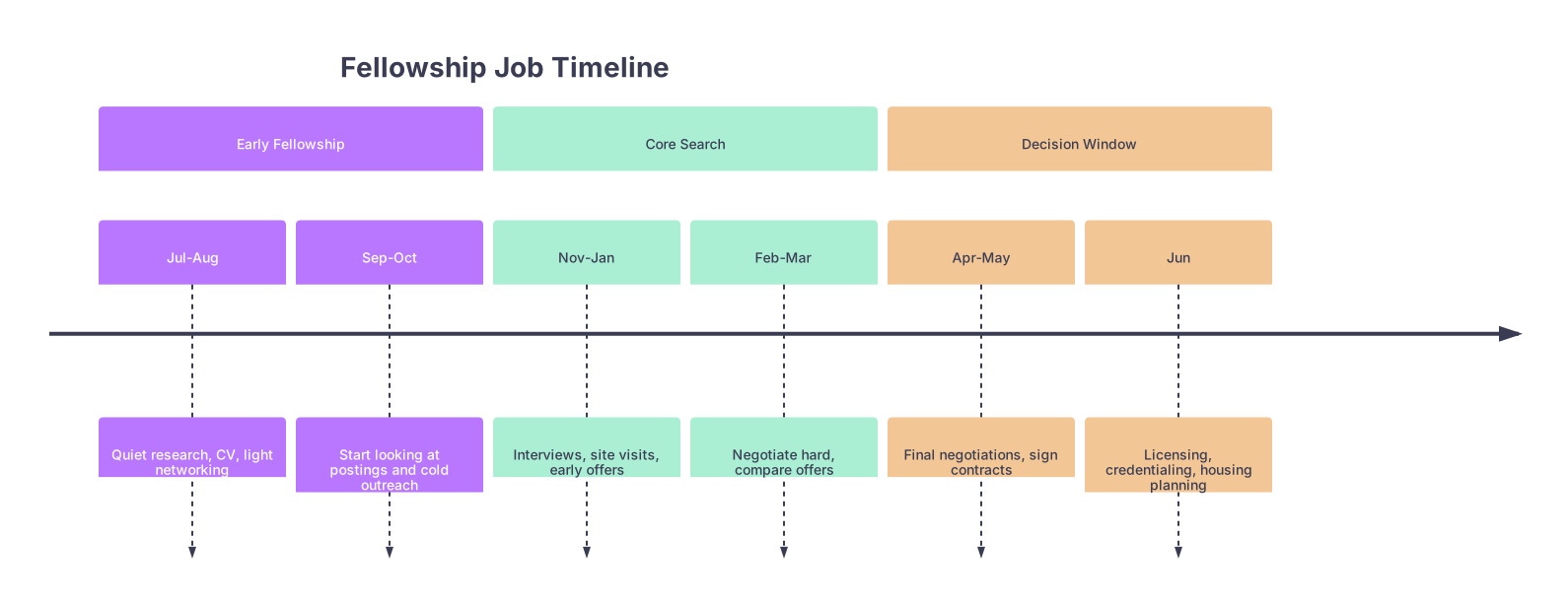
| Period | Event |
|---|---|
| Early Fellowship - Jul-Aug | Quiet research, CV, light networking |
| Early Fellowship - Sep-Oct | Start looking at postings and cold outreach |
| Core Search - Nov-Jan | Interviews, site visits, early offers |
| Core Search - Feb-Mar | Negotiate hard, compare offers |
| Decision Window - Apr-May | Final negotiations, sign contracts |
| Decision Window - Jun | Licensing, credentialing, housing planning |
That’s the skeleton. Now we add muscle.
July–August: Set the Foundation (But Don’t Sign Anything)
At this point you should not be signing contracts. You should be quietly getting yourself ready so when things heat up, you’re not doing this half‑asleep post‑call.
By the end of July
You should have:
- A clean, updated CV (2–3 pages, max)
- A working list of:
- Preferred geographic areas (ranked)
- Practice type priorities: academic vs private vs hospital‑employed vs hybrid
- Deal‑breakers: night call frequency, pure clinic vs mixed, base salary floor
Do this now, before you’re biased by the first halfway reasonable job waving a signing bonus at you.
Concrete tasks:
- Block a half‑day, sit down, and:
- Update CV with fellowship details and any pending publications (“in press” is fine)
- Create a simple spreadsheet with columns:
- City
- Practice type
- Rough salary target
- Call expectations
- Academic vs clinical load
- Your 1–10 interest score
At this point you should be:
- Saying “I’m still early in fellowship, just learning what’s out there” when anyone pushes you to commit.
- Listening way more than talking.
August: Quiet intel and expectations
This is when you start calibrating your expectations so you do not get fleeced later.
Ask recently graduated fellows what they signed:
- Base salary
- RVU/bonus structure
- Call pay
- Any “gotchas” (tail coverage, non‑competes)
Talk to your program director or trusted attendings:
- “What are typical first‑year packages for our specialty in this region?”
- “Which hospitals/groups treat junior faculty/associates well?”
If someone offers you a job in August and wants you to “grab it before it’s gone,” that’s a red flag. Early “exploratory” talks are fine. Early ultimatums are not.
At this point you should:
- Take meetings.
- Take notes.
- Not take out a pen to sign anything.
September–October: Start the Real Search, But Pace Yourself
This is your “signal interest but don’t marry anyone” stage.
September: Go from passive to active
At this point you should:
Start checking job boards weekly (not hourly):
- Specialty society sites (e.g., AHA, ACG, ASTRO, ATS depending on your field)
- Major hospital systems in your target cities
- Recruiter emails (use a separate email folder)
Begin light outreach:
- Email former residents from your program now working in your target cities
- “Can I pick your brain for 15 minutes about the local job landscape?”
Upload your CV to 1–2 reputable recruiters. Not 10. You do not want your CV sprayed everywhere.
Key point: In September, you can absolutely talk about preferences, rough salary ranges, and practice models. But you should not feel pressured to make decisions. You still have leverage coming.
October: Early interviews and feelers
Some specialties (e.g., heme/onc, cardiology) start interviews this early. Others lag a bit. But by October, you should be ready to take calls and maybe do a couple of visits on lighter weeks.
This is exploratory:
- Visit a few groups/centers that might be close to what you want.
- Pay attention to:
- How transparent they are about compensation
- Staffing levels (NP/PA support, nursing ratios)
- Faculty/partner turnover
At this point you should:
- Ask ranges, not details: “What’s the typical first‑year range here?”
- Avoid giving specific numbers yourself beyond “I’m looking to be in the competitive range for someone with my training in this market.”
If an offer appears in October, your default response:
“I’m very interested, but it’s still early in the recruiting season for my fellowship year. Can we keep talking and revisit specifics in a few months as things develop?”
If they react badly to that? Probably not a place you want to hinge your future on.
November–January: Offers Start. This Is When Things Get Real.
This is where most fellows screw up. They confuse the first offer with the right offer.
November: Interview heavy, soft offers begin
By now, you should have:
- Multiple interviews lined up or completed
- A clear picture of:
- Academic vs community pay gaps
- What your specialty’s “floor vs ceiling” looks like
This is often when you’ll hear variants of:
- “We’d love to have you; we can probably get you around $X plus RVUs.”
- “We’ll send you a term sheet soon.”
At this point you should:
- Push for written term sheets, not just verbal numbers.
- Avoid giving final yes/no decisions.
- Start tracking offers systematically, not in your brain at 3 a.m.
Use a simple comparison table so you’re not guessing later:
| Offer | Practice Type | Base ($) | Bonus/RVU | Call | Non-Compete |
|---|---|---|---|---|---|
| A | Academic | 230,000 | Small | q6 | 10 miles |
| B | Private | 380,000 | RVU heavy | q4 | 25 miles |
| C | Hosp-employed | 340,000 | Modest | q8 | None |
You’re not negotiating hard yet. You’re gathering ammo.
December–January: Real offers, real numbers
Now the core:
- You’ll start getting official offer letters or draft contracts.
- Some places will give you a deadline (30 days, 45 days, etc.).
This is where your timing matters.
At this point you should:
Slow down the clock without being a jerk.
Use lines like:- “Thank you, I’m very interested. I’m in active discussions with a few groups and want to be sure I make a thoughtful, long‑term decision. Is there flexibility on the deadline?”
- “My fellowship program has a heavy winter call schedule; can we extend the decision date into [X date]?”
Get all the details on paper before you negotiate:
- Base salary and term (1 year? 2 years?)
- Expected RVUs and how many others are actually hitting
- Bonus structure, quality metrics
- Call coverage expectations and compensation
- Tail coverage (who pays?)
- Non‑compete scope: miles, time, and what it actually restricts
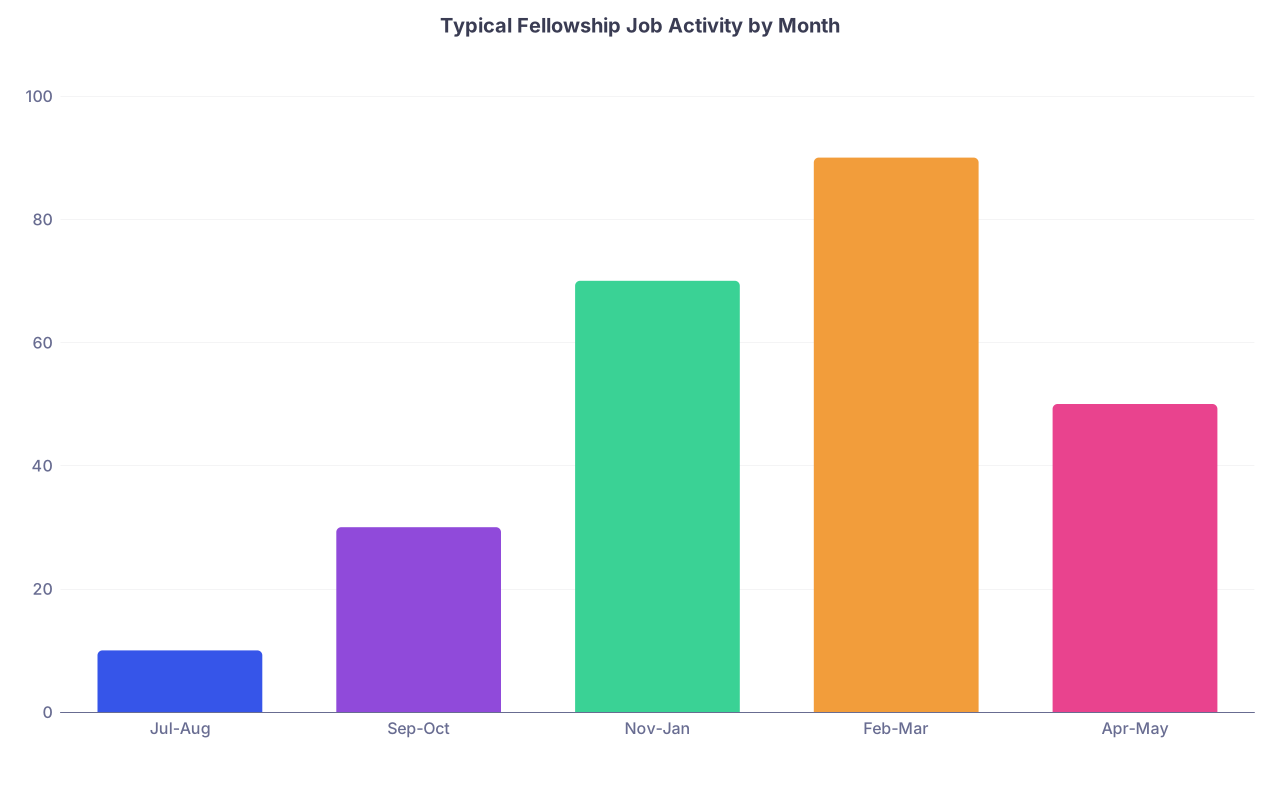
| Category | Value |
|---|---|
| Jul-Aug | 10 |
| Sep-Oct | 30 |
| Nov-Jan | 70 |
| Feb-Mar | 90 |
| Apr-May | 50 |
(Think of that as “intensity” of job activity. Peaks in winter.)
You still do not sign in most cases. Exceptions: hyper‑competitive subspecialties in limited markets. But even then, you negotiate first.
February–March: This Is Your Prime Negotiation Window
If you remember nothing else, remember this: most fellows should negotiate hardest between February and March.
By now you should have:
- 2–4 real offers or at least 2 serious options
- Actual written details you can compare
Now it’s time to:
Decide your top 1–2 options.
Not 5. Not “I’ll see what happens.” Pick your front‑runners.Negotiate, not beg.
You are not a med student. You are about to generate seven figures of revenue for someone.
What to negotiate in February–March
Here’s what makes sense to push on now:
Base salary
- Ask: “Based on the market for my specialty and region, I was hoping to be closer to $X base. Is there room to move in that direction?”
- Do not lowball yourself. Use MGMA or real data from co‑fellows.
Sign‑on bonus / loan repayment
- Especially powerful if you’re moving states or have heavy student loans.
Call structure
- Frequency
- Post‑call clinic expectations
- Extra pay for extra call
Non‑compete language
- Shrink the radius, shorten the time, or limit it to specific sites.
At this point you should:
- Put your ask in writing (short, clear email) after a brief phone discussion.
- Make 2–3 big asks, not 12 tiny ones. Excessive nickel‑and‑diming makes people dig in.
How to use competing offers without burning bridges
The line you walk here is: confident, not arrogant.
Examples:
- “Another offer I’m seriously considering is at $360k base with a $25k sign‑on. I’d strongly prefer to join your group, but I’d need to get closer to that overall package to make it work.”
- “In this market, I’m consistently seeing starting packages between $X–$Y for my subspecialty. Where could you realistically land within that range?”
Do not send them the other group’s actual contract. That’s amateur hour.
If someone tells you “We never negotiate” in February or March? They’re either lying or they don’t value you. Both are bad.
April–May: Time to Choose and Sign
At this stage, dragging your feet starts to cost you. Credentialing, licensing, and relocation all need lead time. This is when confusion and panic can set in if you haven’t handled the earlier steps.
Early April: Narrow to one
By early April, at this point you should:
- Have a clear #1 choice
- Maybe a #2 as backup, but you should stop pretending you’re “waiting for something else to appear” unless there’s a very specific pending option (spouse job, known upcoming position).
This is your last serious negotiation window.
What you can still push in April:
- Relocation allowance
- Start date flexibility
- CME funds and time
- Title tweaks (Instructor vs Assistant Professor, “partner‑track” language clarity)
What you shouldn’t be trying to overhaul in April:
- Massive salary jumps
- Entire compensation models
- Fundamental schedule structure or FTE level
If your contract is still a mess in April, that’s a bad sign for how they operate long‑term.
Late April–May: Sign, then move on with your life
Real talk: being “the last fellow without a signed job” in May sucks for your anxiety, even if you end up fine.
Reasonable target:
- Most fellows should have a fully executed contract by mid‑May.
At this point you should:
- Have the contract reviewed by a physician contract attorney at least once before signing, especially if:
- Non‑compete language is aggressive
- Compensation model is complicated (heavy RVU, partner buy‑in, equity)
- You’re moving across states and don’t understand legal differences
Do not ask your PD or a random attending to “look it over like a lawyer.” They are not.
Once you sign:
- Stop shopping.
- Stop taking “just in case” interviews.
- Focus on:
- State license(s)
- DEA
- Credentialing paperwork
- Where you will actually live and how far that is from night call.
Zoom‑In: Week‑by‑Week Once You Get a Real Offer
Now the micro‑timeline. Because once an offer hits, people tend to panic and respond in 48 hours. You don’t need to.
Let’s say it’s January 10. You just received a written offer by email.
Day 1–3: Read, don’t react
At this point you should:
- Reply: “Thank you so much. I’m excited about this opportunity and will review the details carefully over the next couple of weeks.”
- Download the PDF, print it, read it offline once.
- Highlight:
- Salary, bonus, term
- Call details
- Termination clauses
- Non‑compete
- Tail coverage
Do not send a counteroffer within 24 hours. That screams desperation.
Day 4–7: Gather context
- Compare to your existing offers/notes.
- Ask 1–2 trusted attendings (who understand compensation) for a sanity check on ranges.
- If it looks promising, line up an attorney review.
At this point you should:
- Email them if needed: “I’ve reviewed the offer and I’m planning to discuss it with a contract attorney next week. I’ll circle back after that with any questions.”
That one sentence buys you another week, usually more.
Week 2–3: Actual negotiation
Now you:
- Talk with the attorney (1 hour is usually enough for first pass).
- Prioritize your top 3 issues.
- Request a call with whoever has authority (department chair, practice lead, or HR rep).
On that call:
- Start with appreciation.
- Then be direct about your key asks.
- Follow‑up in writing summarizing agreed changes.
Week 3–4: Lock it in
If they’re responsive and reasonable:
- Expect one round of revisions, maybe two.
- Once your major issues are fixed, accept that no contract is perfect.
If they drag feet or refuse to budge on major red flags (insane non‑compete, no transparency on partners’ incomes, etc.), this is when you start listening very closely to your gut.
Common Timing Mistakes (And When They Usually Happen)
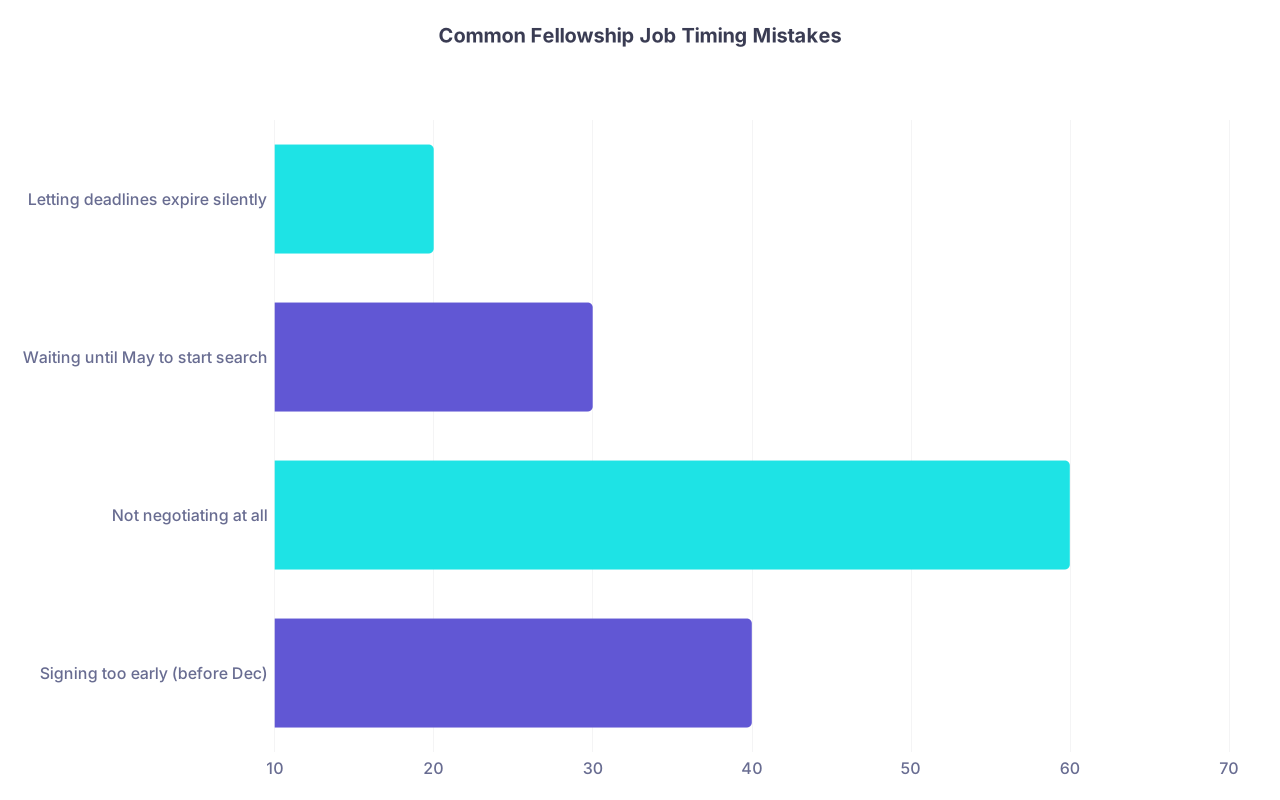
| Category | Value |
|---|---|
| Signing too early (before Dec) | 40 |
| Not negotiating at all | 60 |
| Waiting until May to start search | 30 |
| Letting deadlines expire silently | 20 |
Mistake 1: Signing in September–October
Why it happens:
- Anxiety
- Flattery
- Group says “We need an answer now or we’ll move on”
Reality:
- You’re likely underpaid relative to what they’d offer in February when they’re more desperate.
- You had zero ability to compare.
Better move at that point:
- “I’m very interested, but as a fellow I need to understand the full landscape before committing this far in advance. Can we revisit this closer to winter?”
Mistake 2: Treating February–March like “I’ll decide later”
By February–March, groups are serious. That’s when you have leverage to get:
- Higher base
- Better sign‑on
- Reasonable call structure
If you “wait and see” through March without engaging, you watch your leverage decay. By late spring, they may have filled the spot… or lost urgency to negotiate.
Mistake 3: Starting the whole process in April
Yes, you can find a job in May. But the better ones and the better negotiating windows are mostly gone. You’re choosing from leftovers or rushed fits.
Two–Three Things to Remember
- Your power to explore is highest early; your power to negotiate is highest mid‑year (February–March). Use the right tool at the right time.
- Don’t sign in the fall unless there’s an unusually strong reason. Most fellows should be signing in April–May after at least one real round of negotiation and comparison.
- Every offer buys you data. Use each contract you see to sharpen what you ask for next, instead of letting the first halfway decent number decide your entire post‑training career.