
The most common mistake physicians make when switching jobs is moving too fast.
You do not resign first. You do not negotiate last. And you definitely do not trust start dates until the ink is dry and credentialing is underway.
Here is the correct, safe sequence—month by month, week by week, right down to when you send which email.
6–9 Months Before Your Planned Start Date: Quiet Prep, No Sudden Moves
At this point you should be thinking, not acting loudly.
Step 1: Define your “must‑haves” and “never‑agains”
Before you talk to a single recruiter, write this down:
- Minimum base salary and target total comp (base + bonus + call pay)
- Schedule boundaries (clinic hours, call, weekends)
- Non‑compete tolerance (geography and time)
- Deal breakers from your current job (“no more 1:3 Q3 home call with 30 calls per night”)
If you do not know your current market value, you are negotiating blind. Get real numbers:
- MGMA or AMGA data if you can access it
- Ask trusted colleagues what they are actually making (not what’s “typical”)
- Look at posted ranges for similar roles in your region

| Category | Value |
|---|---|
| -9 | 0 |
| -8 | 5 |
| -7 | 20 |
| -6 | 40 |
| -5 | 65 |
| -4 | 80 |
| -3 | 90 |
| -2 | 97 |
| -1 | 100 |
Step 2: Pull your current contract and read the traps
At this point you should know exactly what you are leaving.
Highlight:
- Notice period (60, 90, 120 days?)
- Non‑compete: radius, duration, scope (hospital vs group vs entire system)
- Repayment clauses:
- Sign‑on bonus
- Relocation
- Loan repayment or stipends
- CME or board fees
- Malpractice:
- Who pays for tail if you leave?
- Claims‑made vs occurrence
You are building a checklist of “exit costs” so your new deal either offsets them or explicitly accounts for them.
Step 3: Quietly update your professional profile
No “Excited to explore new opportunities!” posts. You are still employed.
Instead:
- Update CV: clear dates, procedures, volumes, leadership roles.
- Clean up LinkedIn and Doximity with current, accurate info.
- Make a confidential email for job search (not your hospital email).
At this stage you do not:
- Tell partners you are “thinking of leaving”
- Give soft verbal notice
- Commit to a specific start date anywhere
You are gathering leverage, not starting fires.
4–6 Months Before Planned Start Date: Interviews and Offers, Still No Resignation
This is when the clock really starts.

| Step | Description |
|---|---|
| Step 1 | Identify Market Value |
| Step 2 | Review Current Contract |
| Step 3 | Apply and Interview |
| Step 4 | Receive Written Offer |
| Step 5 | Negotiate Terms |
| Step 6 | Signed Contract |
| Step 7 | Credentialing Starts |
| Step 8 | Give Formal Notice |
| Step 9 | Transition and Start New Job |
Month −6: Initial interviews and rough timeline
At this point you should be interviewing and planting the “start date” flag in every conversation.
When a recruiter asks, “When are you looking to start?” your answer should sound like:
“Realistically, 4–6 months from a signed contract. I have a [90]-day notice obligation and typical credentialing time. So if we sign in [Month X], a [Month Y/Z] start is realistic.”
You just:
- Set expectations early
- Signaled that you respect your current contract
- Gave yourself a buffer
Month −5: Push for written offers only
Verbal “we’ll pay around $320K” means very little. At this point you should:
- Continue interviews but push serious prospects to a written Letter of Intent (LOI) or offer.
- Make sure written offers specify:
- Base salary
- Bonus / RVU structure and threshold
- Call pay
- FTE status and clinical hours
- Expected start date (labeled “anticipated” or “target”)
Never resign based on a verbal offer. I have seen physicians do this and end up unemployed for six months when admin “restructured the position.”
3–4 Months Before Planned Start: Negotiate Hard, Lock Terms, Still Do Not Resign
This is the negotiation window. This is where most people get the order wrong.
Month −4: Systematic offer comparison
If you have more than one offer, you need structure, not vibes.
| Item | Offer A | Offer B | Offer C |
|---|---|---|---|
| Base Salary | $280K | $310K | $295K |
| Bonus/RVU Threshold | 5000 RVU | 6000 RVU | 5500 RVU |
| Non-compete Radius/Time | 10 mi / 2 yr | 20 mi / 1 yr | None |
| Tail Coverage | Employer | Split 50/50 | Physician |
| Sign-on / Relocation | 25K / 10K | 15K / 5K | 30K / 15K |
At this point you should:
- Build a simple table like this for your real offers.
- Assign weight to each line item:
- Non‑compete and tail coverage are often worth more than an extra $10K base.
- Decide your negotiation priorities:
- Example: “I will trade $10K of base for employer‑paid tail and no non‑compete.”
Week‑by‑Week in Month −4
Week 1–2: Contract review
You send the draft contract or LOI to:
- A physician contract attorney with real healthcare experience
- Optional: a trusted senior physician who has seen multiple contracts
Tell them your goals:
- “I need employer‑paid tail.”
- “I cannot accept more than 10‑mile non‑compete.”
- “I must have a target start date of August 1 with flexibility up to September 1.”
Week 2–3: First pass negotiation
At this point you should push for:
- Compensation:
- Base and realistic RVU or productivity targets
- Call pay explicitly defined
- Legal / risk:
- Non‑compete narrowed or deleted
- Employer‑paid malpractice tail, or a tail stipend negotiated
- Logistics:
- Clear statement: “Anticipated start date: [Month Day, Year], subject to credentialing and mutually agreed upon adjustments.”
This is also when you look back to your current contract:
- If you need 90 days’ notice, count backward from your target start date.
- Build at least 30 extra days of buffer for credentialing delays.
Example:
- Desired new start: September 1
- Notice period: 90 days
- Latest safe resignation date: June 1
- Add 30‑day buffer for delays → target to have contract signed and credentialing started by May 1
You do not leave a 2‑week gap. You leave a 4‑ to 8‑week cushion.
2–3 Months Before New Start: Signed Contract, Credentialing, Then Notice
Here is the critical rule: Contract signed and credentialing initiated before you resign.
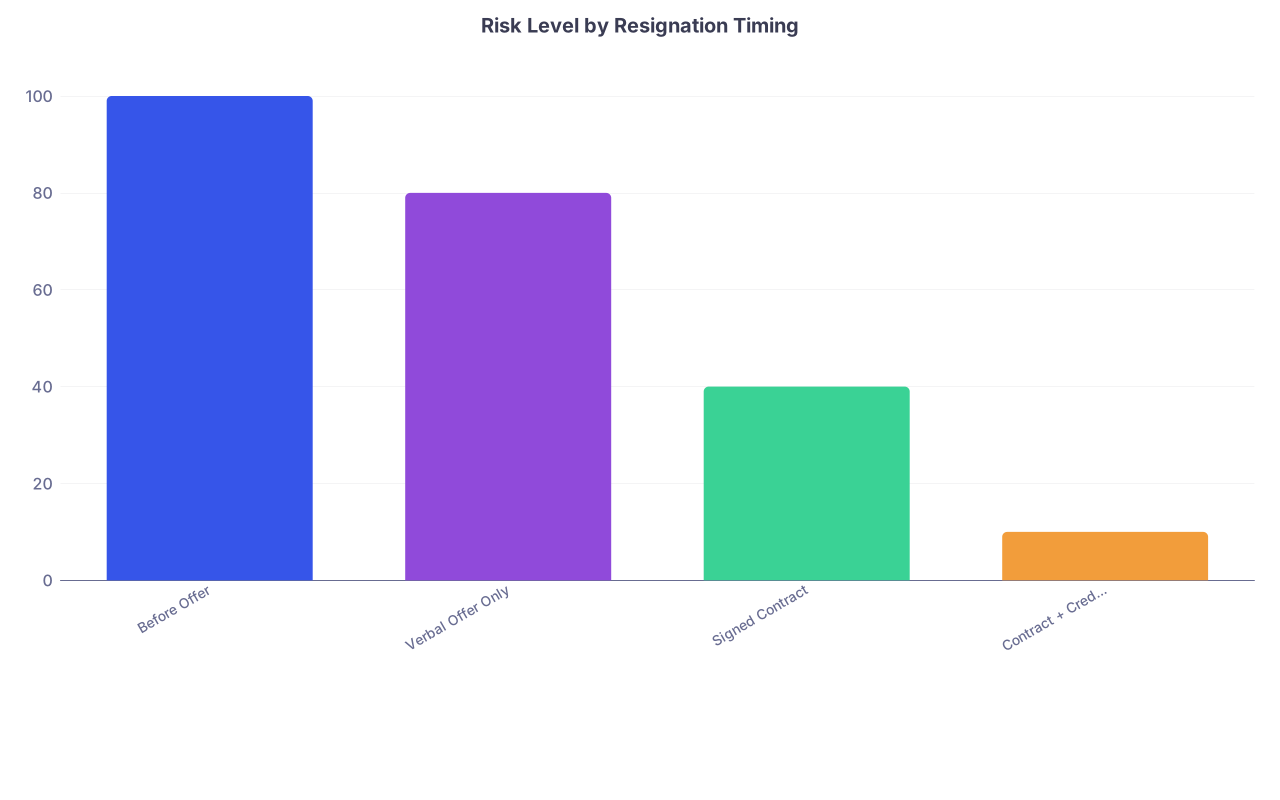
| Category | Value |
|---|---|
| Before Offer | 100 |
| Verbal Offer Only | 80 |
| Signed Contract | 40 |
| Contract + Credentialing | 10 |
Month −3: Signed contract and onboarding paperwork
At this point you should have:
- Final contract language agreed
- Target start date in writing
- Clear details on:
- Who pays for tail
- How non‑compete interacts with your current job’s radius
- Sign‑on bonus timing and repayment terms
Only now do you sign.
Immediately after signing, you:
- Complete the new employer’s credentialing packet within days, not weeks.
- Send all required:
- Licenses
- DEA
- Board certification
- References
- Case logs or procedure numbers
You ask one pointed question:
“Based on your typical timelines, when do you expect hospital credentialing and payer enrollment to be complete for my start?”
If they say “maybe August, maybe October,” you do not give June notice with a September start. You delay your notice until there is real progress.
Month −2.5 to −2: Safe window to give notice
Now you do the math.
Example timeline:
- Target new start date: September 1
- Notice requirement: 90 days
- Today’s date: May 20
- Credentialing packet: submitted May 1, in progress
At this point you should:
- Confirm with new employer:
- “Are we still on track for a September 1 start?”
- Get an email from credentialing or HR with their best estimate.
- If it aligns, schedule resignation for early June (about 85–100 days before new start).
Scripted Exit: How to Actually Resign (And What Day to Do It)
Week‑by‑Week in the Notice Month
Week 1: Verbal + written notice
You do this in order:
Meet with your direct leader (department chair, medical director, or practice owner).
- Do it early in the week, early in the day.
- Script:
“I have accepted another position that better fits my family and long‑term goals. Per my contract, I am giving [90] days’ notice. My last working day will be [Date]. I am committed to a smooth transition.”
Follow up with a brief written notice the same day.
- One paragraph, not a therapy letter.
- Include:
- Today’s date
- Contract reference (“Pursuant to Section X of my employment agreement…”)
- Final working date
- Send to:
- Your leader
- HR or practice manager
- Keep a copy.
Do not trash‑talk the place on your way out. Medicine is small and vengeful.
Week 2: Clarify logistics and money
At this point you should:
- Request a written summary of your exit financials:
- Unpaid bonus structure and timing
- PTO payout or loss (check contract and state law)
- Outstanding repayments (sign‑on, relocation, stipends)
- Final paycheck date
- Confirm malpractice tail:
- Get it in writing from risk management or HR that:
- Tail will be purchased by [who]
- Coverage dates and retroactive date
- Get it in writing from risk management or HR that:
- Align your last day:
- Protect at least one week free between jobs if possible.
- Avoid a last day that is also a heavy call day.
Week 3–4: Transition plan
You build a basic plan with your group:
- Last new patient date
- Handoff of complex patients
- Outstanding projects or leadership duties
- How in‑basket messages and test results will be handled after you leave
You document this in a short email so nobody can later claim “abandonment.”
The Gap Between Jobs: Financial and Legal Safety Checks
You should plan for a possible unpaid gap, even if you hope to avoid it.
1–2 Months Before Leaving: Cash and coverage
At this point you should:
- Have 3–6 months of living expenses available (savings or credit line).
- Understand:
- When your current health insurance ends (last day of employment or end of that month).
- When your new coverage begins (often first of the following month after start).
Schedule:
- If there is a gap:
- Evaluate COBRA vs marketplace short‑term coverage.
- Explicitly plan for continuity of expensive meds, maternity care, etc.

Retirement and tail risk
Before your last paycheck:
- Maximize any:
- 403(b) / 401(k) contributions you intend to make.
- HSA contributions if you are switching plans.
- Get confirmation on:
- When you become ineligible for the old plan.
- How vesting works for any employer match or pension.
On malpractice:
- If you are responsible for tail:
- Get actual quotes from carriers.
- Ask your new employer explicitly: “Will you reimburse part or all of my tail as part of my signing package?”
- Do not have a day where you see patients without active coverage.
0–1 Month Before New Start: Coordinating Start Date, Schedules, and First Check
Month −1: Locking in the start date in reality
At this point you should:
- Confirm with new employer:
- Start date
- Orientation date(s)
- First clinic/OR day
- Confirm:
- Payer enrollment complete for major insurers (Medicare, Medicaid, big commercial plans).
- Hospital privileges approved and start date active.
If a payer is delayed:
- Verify:
- Will you still be paid a guaranteed salary even if collections lag?
- Are they planning to delay your start or limit your schedule?
Push for written clarity. Vague promises here turn into months of “accounting adjustments” later.
2–3 Weeks Before Start: Practical setup
You handle the boring but painful things:
- Licensure:
- Confirm all state licenses, DEA, and controlled substance registrations align with the new practice location.
- Addresses:
- Update NPI address.
- Update state boards, medical staff offices, and professional organizations.
- Banking:
- Set up direct deposit info for new employer.
- Plan for gap between last old paycheck and first new one (often 2–4 weeks).
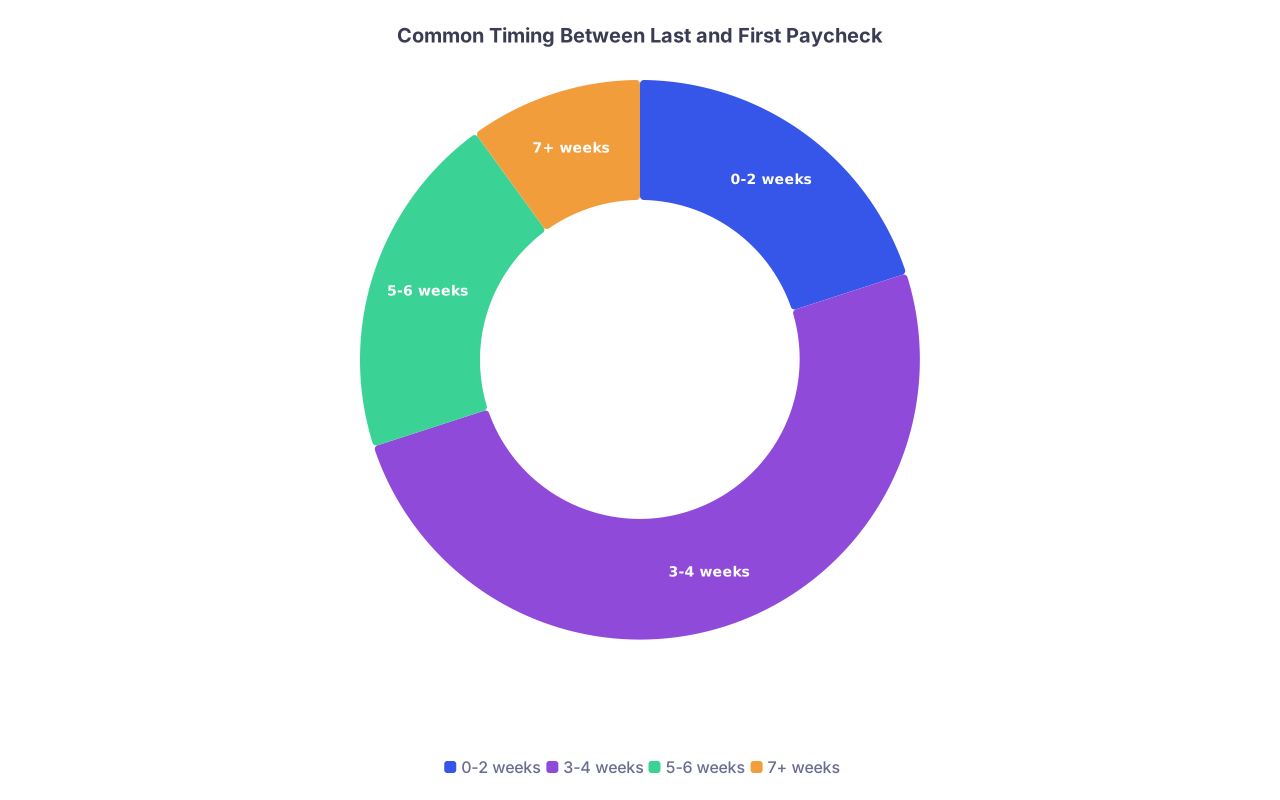
| Category | Value |
|---|---|
| 0-2 weeks | 20 |
| 3-4 weeks | 50 |
| 5-6 weeks | 20 |
| 7+ weeks | 10 |
First Week in New Job: Verify Compensation Matches the Contract
At this point you should shift from survival to verification.
Day 1–5 Checklist
You sit down with HR or your practice administrator and confirm:
- Base salary
- Annual amount and per‑paycheck gross.
- Bonus structure
- When RVU or productivity calculations occur.
- When quality or performance bonuses are paid.
- Call pay
- Exact nightly/weekend rates.
- How and when it is logged.

You keep a copy of:
- Signed contract
- Any addenda or amendments
- Email chains confirming unusual arrangements (tail reimbursement, sign‑on timing, repayment rules)
If anything does not match the contract:
- Flag it early, in writing.
- Attach the relevant contract section when you ask for correction.
Putting It All Together: A Compact Timeline
Here is the “if you remember nothing else” version.
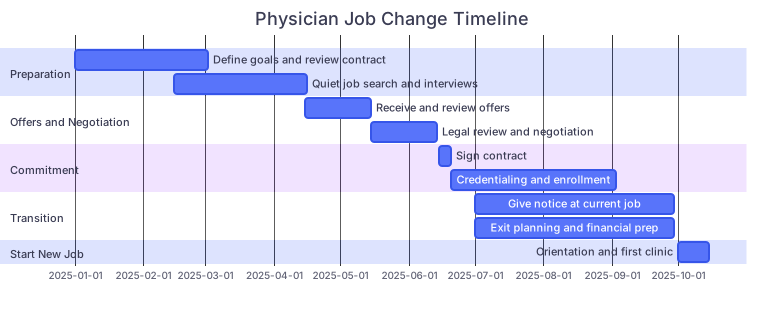
| Task | Details |
|---|---|
| Preparation: Define goals and review contract | a1, 2025-01-01, 60d |
| Preparation: Quiet job search and interviews | a2, 2025-02-15, 60d |
| Offers and Negotiation: Receive and review offers | b1, 2025-04-15, 30d |
| Offers and Negotiation: Legal review and negotiation | b2, 2025-05-15, 30d |
| Commitment: Sign contract | c1, 2025-06-15, 5d |
| Commitment: Credentialing and enrollment | c2, 2025-06-20, 75d |
| Transition: Give notice at current job | d1, 2025-07-01, 90d |
| Transition: Exit planning and financial prep | d2, 2025-07-01, 90d |
| Start New Job: Orientation and first clinic | e1, 2025-10-01, 14d |

Three Things You Should Not Forget
- Sequence matters more than speed. Signed contract and credentialing underway come before notice. Every time.
- Total package > headline salary. Tail coverage, non‑compete scope, and start‑date reliability can easily outweigh an extra $10K–$20K in base pay.
- Buffer saves careers. Leave weeks of cushion between last day and assumed start day, and months of cash buffer in case credentialing or payers drag their feet.
If you follow the timeline—define, compare, sign, credential, then resign—you will switch jobs with your income, license, and sanity intact.