
What exactly happens to that “$50,000 signing bonus” when you leave 11 months into a 12‑month commitment?
If you do not know the answer, you’re a prime target for an expensive mistake.
Let me be blunt: the signing bonus is not a gift. It’s almost always a loan disguised as a welcome present. And a lot of physicians do not figure that out until HR is asking for tens of thousands of dollars back—plus interest—after they’ve already moved, changed jobs, and spent the money.
This is the stuff that wrecks your cash flow, your credit, and sometimes even your willingness to leave a toxic job. Not because the job isn’t bad, but because the clawback math is worse.
Let’s walk through the traps so you do not become the cautionary story people whisper about in the physician lounge.
The “Free Money” Myth: How Signing Bonuses Really Work
Most physicians hear “$20k signing bonus” and think: tuition payoff, new car down payment, finally catch up on credit cards. That’s exactly how employers want you to think.
Here’s the reality: that “bonus” is usually structured as a forgivable loan. The key word is forgivable—if you fulfill every condition.
Common structure:
- You get a lump sum at signing or at start date.
- It’s technically a loan that is forgiven over a set term (usually 1–3 years).
- If you leave early, you repay the “unforgiven” remainder.
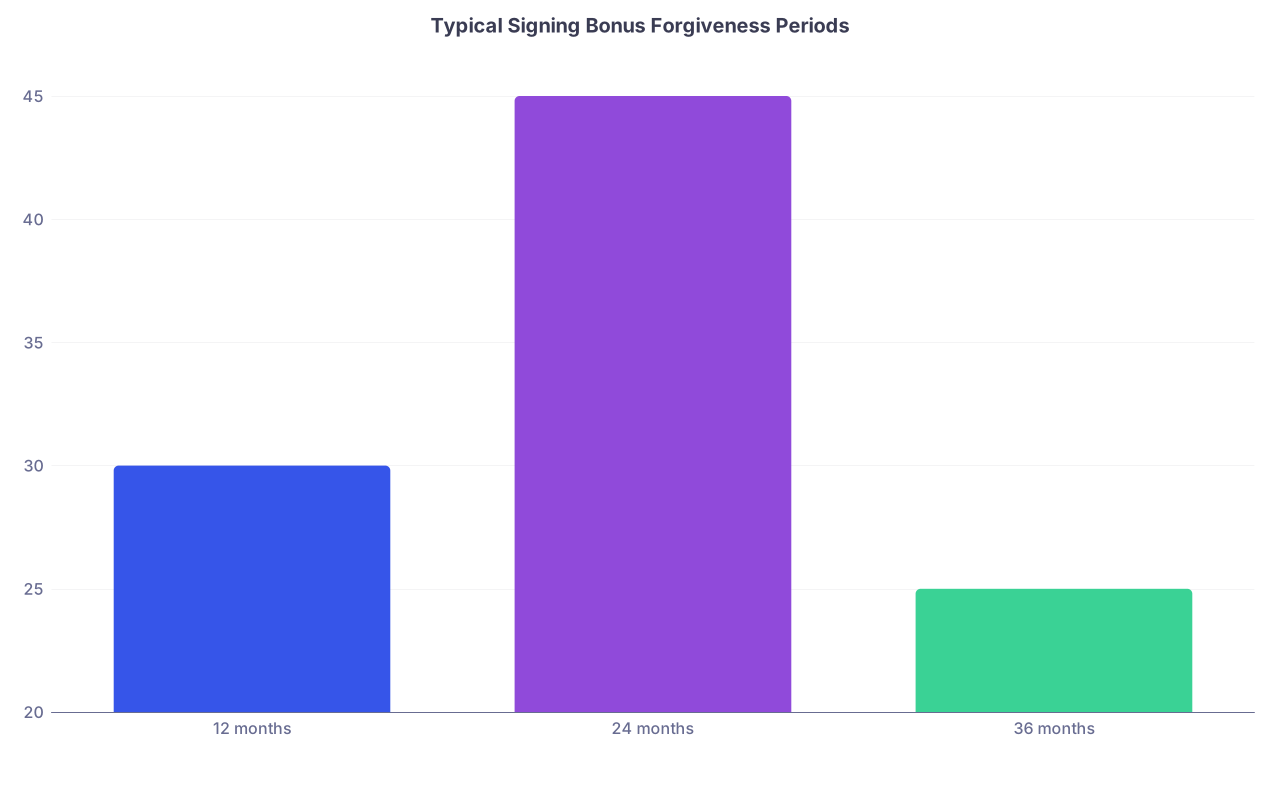
| Category | Value |
|---|---|
| 12 months | 30 |
| 24 months | 45 |
| 36 months | 25 |
What physicians think the arrangement is: “If I work most of the contract, they’ll pro‑rate it. I’ll be fine.”
What the contract might actually say: “If you leave before Month 24, you owe 100% of the bonus back within 30 days.”
Yes, I’ve seen that. Yes, people sign it without blinking.
Do not assume anything is pro‑rated unless it is written, clearly, in the contract. Verbal reassurances from a recruiter do not beat the paragraph your attorney will be reading back to you when the demand letter arrives.
Hidden Clawbacks: The Fine Print That Bites You Later
Signing bonuses are bad enough. But they’re often bundled with other “incentives” that come with their own repayment hooks.
Common culprits:
- Relocation reimbursement
- Student loan assistance
- Fellowship stipends or “transition” bonuses
- Early productivity advances or “draws”
Each one can have its own repayment trigger. Miss one of them and you’re writing a check.

Examples I’ve seen blow up:
Relocation payback surprise
A hospital pays you $15,000 for relocation—movers, temporary housing, flights. Buried in your contract: if you leave before two years, you repay all relocation, not just the signing bonus.
You resign at 18 months. HR sends you:
- Remaining signing bonus repayment: $12,500
- Relocation repayment: $15,000
Total: $27,500 you did not budget for. Due in 30 days.
Loan repayment that isn’t really “loan repayment”
Some employers advertise “$25,000 student loan repayment per year.” Sounds amazing. But the contract says:
- They pay the money to you, not directly to the lender.
- It’s treated like a taxable bonus.
- You must stay X years or repay the full amount.
Translation: you might owe tax on the income and also have to repay the gross amount if you leave early.
Productivity “advance” turns into personal debt
RVU‑based jobs sometimes give “guarantees” or “advances.” Hidden language: if your RVUs don’t cover the guarantee, the shortfall can become a debt you owe if you leave. Pair that with a signing bonus clawback and you can owe money after working full‑time for years.
If your contract doesn’t clearly separate these categories, you’re guessing at your risk. Guessing with five‑figure consequences is not a smart hobby.
The Math You’re Ignoring (But HR Is Not)
Here’s the gut punch: the repayment math often assumes you’ll stay the full term. Your actual life does not always cooperate.
Let’s say:
- Signing bonus: $40,000
- Forgiveness period: 36 months
- You leave after: 15 months
- Contract language: “forgiven on a straight-line monthly basis”
What you wish that means: “I should only owe a little bit, right?”
Actual math:
- Monthly forgiveness: $40,000 / 36 ≈ $1,111
- Months completed: 15 → forgiven ≈ $16,665
- Unforgiven portion: ≈ $23,335
- Often due within 30–60 days of termination.
Now add relocation:
- Relocation: $12,000
- Contract: “repaid in full if employment terminates before 24 months”
- You’re leaving at 15 months → owe full $12,000
Total immediate bill: ~$35,000.
| Scenario | Bonus | Term | Leave At | Owed Back |
|---|---|---|---|---|
| A: 100% clawback | $20,000 | 24 mo | 18 mo | $20,000 |
| B: Pro-rated | $30,000 | 36 mo | 18 mo | $15,000 |
| C: Pro-rated + relocation | $25,000 | 24 mo | 12 mo | $12,500 + $10,000 |
| D: Short-term contract | $10,000 | 12 mo | 6 mo | $5,000 |
| E: Front-loaded forgiveness | $50,000 | 36 mo | 18 mo | $30,000 |
The mistake is thinking, “I’ll see how I like it and if it’s bad I’ll just leave.” You can leave. But the question is: can you afford to?
Do that math before you sign. Not afterward when your spouse hates the town, your kids hate the school, and you’re trapped by a six‑figure mistake.
Traps Around Cause, Termination, and “Voluntary” Resignation
One of the nastier blind spots is how repayment is triggered.
Most contracts tie repayment to some combination of:
- Terminating before a certain date
- Being terminated “for cause”
- Failing to start on time
- Losing privileges or failing to obtain a license

| Step | Description |
|---|---|
| Step 1 | Sign Contract |
| Step 2 | Start Employment |
| Step 3 | Bonus Forgiven |
| Step 4 | Repayment Triggered |
| Step 5 | Check Contract |
| Step 6 | Stay Full Term? |
| Step 7 | Reason for Leaving |
Where people get crushed is in the gray areas:
- You’re “asked to resign” rather than formally fired for cause. Is that “voluntary”? Your contract might say yes.
- The hospital “non‑renews” your contract at year one in a three‑year bonus term. Do you still owe? Some contracts absurdly say yes.
- Your start date is delayed because credentialing took too long. Does that shift the forgiveness clock, or did they cleverly tie it to the original “start date”?
If the repayment language only mentions “voluntary resignation,” you need clarity on:
- What counts as voluntary vs involuntary
- Whether “termination without cause” waives or preserves repayment
- How non‑renewal is treated
- Whether mutual early termination still triggers repayment
If the recruiter says, “Oh, we’d never enforce that,” smile, nod, and demand it in writing or changed in the contract. Because HR and legal don’t care what someone said on a Zoom call 18 months ago.
Taxes: The Nasty Surprise When You Repay
Here’s the part almost no one explains to you: the IRS doesn’t care that you changed your mind about that bonus.
Scenario:
- You get a $30,000 signing bonus in 2025.
- After taxes, your deposit is maybe ~$21,000.
- You leave early in 2026 and must repay $20,000.
Two problems:
- You don’t have $30,000 sitting there. You only got $21,000.
- When you repay in a different tax year, the process to “fix” the taxes is ugly.
You’re basically dealing with two different questions:
- Contractual: How much do you legally owe the employer?
- Tax: Can you recoup some of the tax you paid on money you ended up repaying?
There are IRS mechanisms (like a deduction or credit for repayment of income in a later year), but they’re complex and not guaranteed to make you whole. And they don’t fix the immediate cash crunch of writing a big check now to maybe get a partial benefit later.
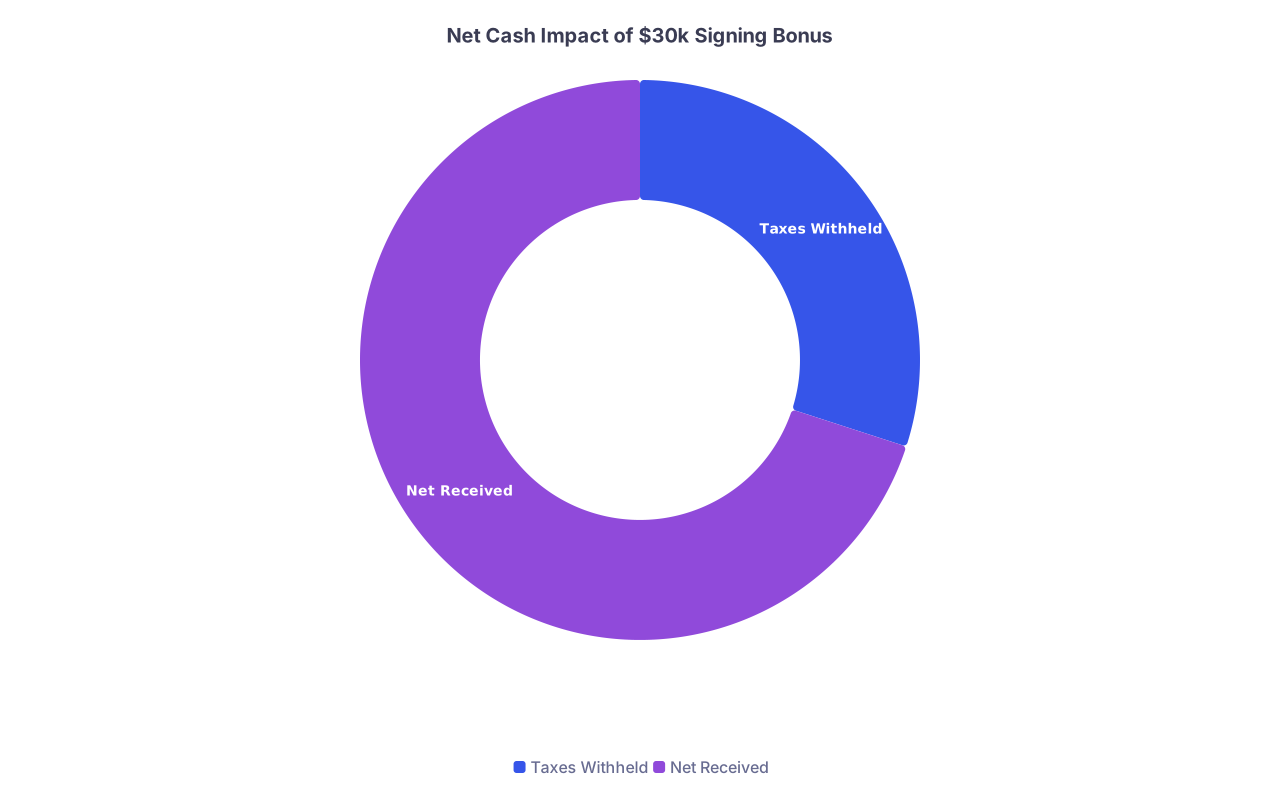
| Category | Value |
|---|---|
| Taxes Withheld | 9000 |
| Net Received | 21000 |
Mistake to avoid: mentally treating a taxed signing bonus as if it’s 100% yours to spend, with no downside.
Safer approach:
- Assume you might have to repay gross amount (pre‑tax).
- Don’t spend all of it.
- Keep at least 30–50% parked in a high‑yield savings account for a while, especially if you’re unsure about the job.
If the job turns out great and you stay through the full term, wonderful—you just gave your emergency fund a big head start.
Negotiating Out of the Worst Landmines
You’re not powerless. Most new grads just act like they are.
There are several levers you can pull to make signing bonus terms less dangerous:
Push for pro‑rata forgiveness
Instead of “100% payback if you leave before 24 months,” push for:
“Signing bonus of $X shall be forgiven in equal monthly installments over 24 months. Physician shall only be responsible for the unearned portion as of the termination date.”
If they resist, that’s a data point about how they treat physicians.
Cap repayment amounts
Negotiate a cap like: “Repayment obligation shall not exceed net amount received by physician” or limit the combination of signing bonus + relocation + other incentives to a reasonable maximum.
Tie repayment to voluntary departure only
Clarify:
- No repayment if you’re terminated without cause.
- No repayment if there’s a material breach by employer (e.g., they cut your salary 30%, change your location drastically, or fail to provide promised support).
Separate buckets
You want discrete, clearly defined items:
- Signing bonus forgiveness schedule
- Relocation repayment terms
- Loan repayment terms
- Productivity advances
When they’re piled into one vague paragraph, you’re the one who loses.
Get a competent physician contract attorney
This is the single most cost‑effective “expense” of your early career.

Huge mistake I see: people send their contract to a generic local lawyer who mostly does real estate or small business law. Physician contracts have their own landmines—noncompete, RVUs, tail coverage, bonus clawbacks. You want someone who’s seen this exact movie 300 times.
Life Happens: How Signing Bonus Terms Trap You in Bad Jobs
The real danger isn’t just writing a painful check. It’s the psychological trap.
You’re miserable. Call schedule is worse than promised. Partnership path keeps “sliding” by a year. Or leadership is openly toxic.
You consider leaving, but each time you run the numbers:
- Signing bonus repayment
- Relocation repayment
- Tail coverage for malpractice (if not covered)
- Moving costs again
Suddenly, you’re not free. You’re bought.
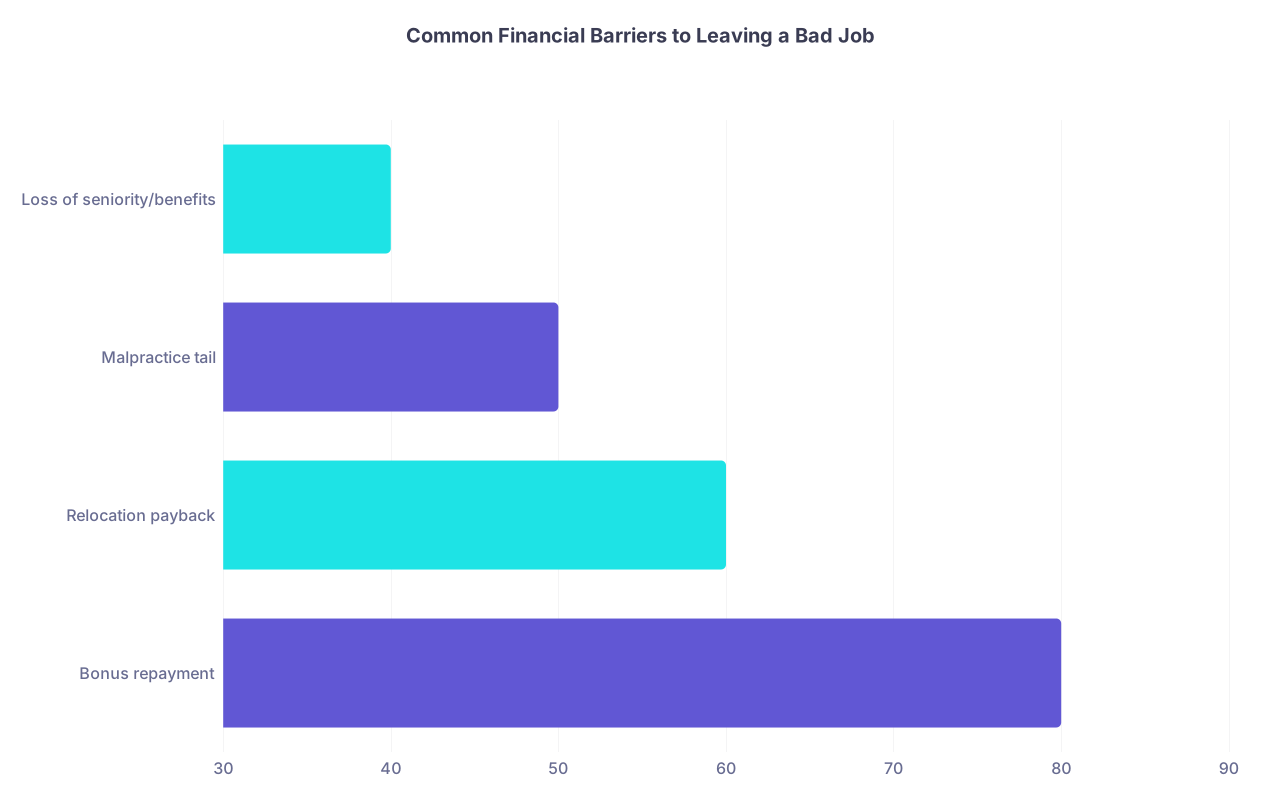
| Category | Value |
|---|---|
| Bonus repayment | 80 |
| Relocation payback | 60 |
| Malpractice tail | 50 |
| Loss of seniority/benefits | 40 |
I’ve watched really good physicians tolerate awful environments for years longer than they should because the combination of clawbacks, tail, and new‑job delay was too intimidating.
You can’t eliminate all risk. But you can keep it to where you’d actually be willing to pull the ripcord if you had to.
A few ways to protect Future You:
- Don’t chase the highest signing bonus if the strings attached are brutal.
- Prefer modest bonuses with flexible terms over huge ones with handcuffs.
- Keep your savings high enough that walking away is always on the table.
If a job has to pay you $100,000 up front and lock you into a rigid 3‑year clawback to get you there? That’s not a perk. That’s a red flag about the job itself.
Quick Red Flags in Signing Bonus Language
You don’t need a law degree to spot trouble. Here’s what should make you pause hard:
- “Repayment in full if physician does not complete initial term.”
- “Repayment of all incentives including, but not limited to, signing bonus, relocation, and any other amounts paid on physician’s behalf.”
- “Repayment shall be due within 15 days of termination.”
- No mention of pro‑rata forgiveness.
- No carve‑out for termination without cause.
- Employer can unilaterally change your site, schedule, or duties—and still enforce full repayment if you leave.

If you see these and your gut says “this feels off,” listen to that. The worst mistake is assuming “they probably won’t enforce it.” Big systems absolutely enforce it. Smaller groups often do, especially if things end badly.
FAQs: Signing Bonus Traps Physicians Keep Falling Into
1. Is it ever smart to refuse a signing bonus completely?
Yes. Especially when:
- The bonus is big but the clawback terms are draconian (100% repayment, long term, applies even if they terminate you without cause).
- You’re not sure you want to be in that location or group for more than a year.
- You have substantial existing savings and don’t actually need the cash up front.
You can sometimes trade lower or no signing bonus for a higher base salary, better schedule, or more favorable noncompete. Long‑term, that’s often a better deal than a one‑time check that controls your life for 2–3 years.
2. What if I already signed and now realize the clawback terms are awful?
You have fewer options, but you’re not completely dead in the water.
- Before you leave, see if the new employer is willing to cover part of your repayment (happens more often than you’d think, especially in high‑need specialties).
- Ask your current employer for a repayment plan instead of a lump sum; some will agree to 6–24 months.
- Talk to a tax professional about whether you can claim a deduction or credit for repaying prior income.
Most important: don’t panic and stay in an abusive or unsafe situation just because of money. Your health and license are more valuable than a signing bonus.
3. Should I tell my future employer about my signing bonus repayment obligation?
If you’re seriously considering their offer, yes. Not in the first phone call, but once you’re both interested.
“I’d like to be transparent that I do have a signing bonus and relocation clawback at my current job that would total about $X if I left this year. Is there any flexibility in a signing bonus or relocation package here to help offset that?”
Sophisticated employers understand this dynamic and will sometimes structure a package to make you whole—or at least soften the blow.
4. Can I just not pay the bonus back and see what happens?
That’s a fast track to collections, lawsuits, and damaged credit. Large health systems especially do not just “forget” about these amounts.
If you genuinely can’t pay:
- Communicate early and in writing.
- Propose a realistic payment plan.
- Get an attorney involved if they’re being unreasonable.
Ignoring it is the worst approach. They’ll add fees, send to collections, and you’ll be dealing with it while trying to settle into a new job.
5. How much should I keep in cash if I accept a large signing bonus?
Rule of thumb I like: don’t let your total short‑term obligations (possible clawbacks + tail + moving costs) exceed what you could realistically cover with 3–6 months of expenses saved.
If you take a large signing bonus and aren’t sure you’ll stay:
- Keep at least 30–50% of it in a separate savings account for the first 12–24 months.
- Don’t lock it up in illiquid investments.
- If the job is clearly great after a couple years and your forgiveness period is nearly done, then you can repurpose that cash.
Key points to walk away with:
- A signing bonus is usually a conditional loan, not free money. Treat it as a liability until it’s fully forgiven in writing.
- The real danger isn’t the size of the bonus—it’s the clawback terms, triggers, and hidden add‑ons (relocation, loans, advances) stacked on top.
- If you don’t understand exactly what happens financially when you leave early, you’re gambling your future flexibility on fine print you haven’t really read. Don’t make that mistake.