
What if the “lower‑paying” offer you just rejected would have left you $75,000 richer in five years than the one you proudly signed?
That is not a hypothetical. I’ve seen that exact thing happen. More than once.
Physicians are smart, but many still make one incredibly expensive mistake: they compare offers on base salary alone and ignore the benefits math. Then 2–3 years later, they realize their “higher salary” job has:
- Worse retirement contributions
- More unpaid call
- Higher insurance costs
- Fewer protected days off
- And no real upside
You do not want to learn that lesson by experience.
Let’s walk through the traps that cause MDs to misread compensation—and how to actually compare offers like someone who plans to keep their money.
The Core Error: Treating $300k vs $320k Like a Simple Comparison
Most physicians do this:
Offer A: $300k
Offer B: $320k
“Obviously B is better. That’s 20k more a year.”
And they’re wrong. Or at least, dangerously incomplete.
Because what you should be comparing is total compensation, not just the base salary number that recruiters love to put in bold. That total includes:
- Base salary
- Productivity/bonus structure (realistic, not fantasy numbers)
- Retirement contributions
- Health, disability, and malpractice insurance
- Call pay and weekend/holiday differentials
- CME money and time
- Sign‑on and retention bonuses (and strings attached)
- Vacation/PTO and how it’s actually used
- Any equity/profit‑sharing (for private practices or startups)
If you’re not consistently putting a dollar value on each of those, you’re flying blind.
Here’s where people blow it:
- They trust the recruiter’s phrase: “Our benefits are very competitive.” Translation: we hope you do not look too closely.
- They glance at the PTO line but never ask, “How many days do people here really take?”
- They hear “5% 401(k) match” but don’t ask what the other place contributes automatically (even without a match).
And then they move their entire life for a $20k “raise” that’s actually a net pay cut once all the math shakes out.
How Ignoring Benefits Math Quietly Costs You Six Figures
Let’s quantify this. Because this is where the regret comes from.
You’re choosing between two internal medicine hospitalist offers:
| Component | Offer A (Academic) | Offer B (Community) |
|---|---|---|
| Base Salary | $260,000 | $290,000 |
| Employer Retirement | 10% of salary | 3% match |
| Health Insurance Cost | $300/mo | $1,000/mo |
| Disability Premium | Employer-paid | You pay $400/mo |
| PTO | 6 weeks | 3 weeks |
| CME | $3,000 + 5 days | $1,000, no days |
Most people’s first reaction:
“Easy. B pays $30k more. Take B.”
Let’s do the actual math on just a few of those differences.
1. Retirement Contributions
- Offer A: 10% of $260k = $26,000/year
- Offer B: 3% of $290k = $8,700/year
Difference: $17,300 per year.
Over 5 years, without even investing growth:
$17,300 × 5 = $86,500.
With compounding? You’re probably giving up well over $100k+ in future retirement value.
2. Health + Disability Costs
- Health insurance difference: ($1,000 − $300) × 12 = $8,400/year
- Disability difference: $400 × 12 = $4,800/year
You’re already $13,200/year behind just paying for what the other employer would have covered.
Over 5 years: $66,000 gone.
3. PTO (Which Has a Very Real Dollar Value)
You make about:
- Offer A: $260,000 / 52 ≈ $5,000 per week
- Offer B: $290,000 / 52 ≈ $5,577 per week
PTO:
- Offer A: 6 weeks
- Offer B: 3 weeks
You might shrug at that. Until you realize that’s 3 extra weeks of your life every year. If you stay 10 years, that’s 30 weeks. More than half a year of actual time off.
That matters. And it also matters if you ever need time off for:
- Maternity/paternity leave
- Family illness
- Burnout recovery (yes, it happens)
Those extra 3 weeks have an implicit monetary value and a very real burnout cost avoidance.
4. Add It Up
Let’s roughly tally the concrete dollars over 5 years:
- Retirement loss: ~$86,500 (no compounding)
- Insurance/benefits out-of-pocket: $66,000
You’re down $152,500 in hard cash and contributions before considering:
- Value of the extra PTO
- CME money and time
- Malpractice coverage differences
- Lifestyle and burnout impact
But hey, that $30k higher base sounded good in the email, right?
This is the trap. Do not fall for “headline salary” without translating all the benefits into dollars.
The Big Benefit Categories Doctors Constantly Undervalue
You’re not going to miss base salary. It’s bolded and circled. The real danger is in everything you don’t think to price out.
Let’s go through the big ones that cost physicians the most.
1. Retirement Contributions: The Quiet Million‑Dollar Difference
I’ve seen physicians take a job with “better salary” and unknowingly walk away from:
- 10–15% employer 401(k)/403(b) contributions
- Defined benefit pensions at some academic and VA systems
- Cash balance or profit‑sharing plans in private practices
Over a 20‑year career, that gap is not tens of thousands. It’s 7 figures.
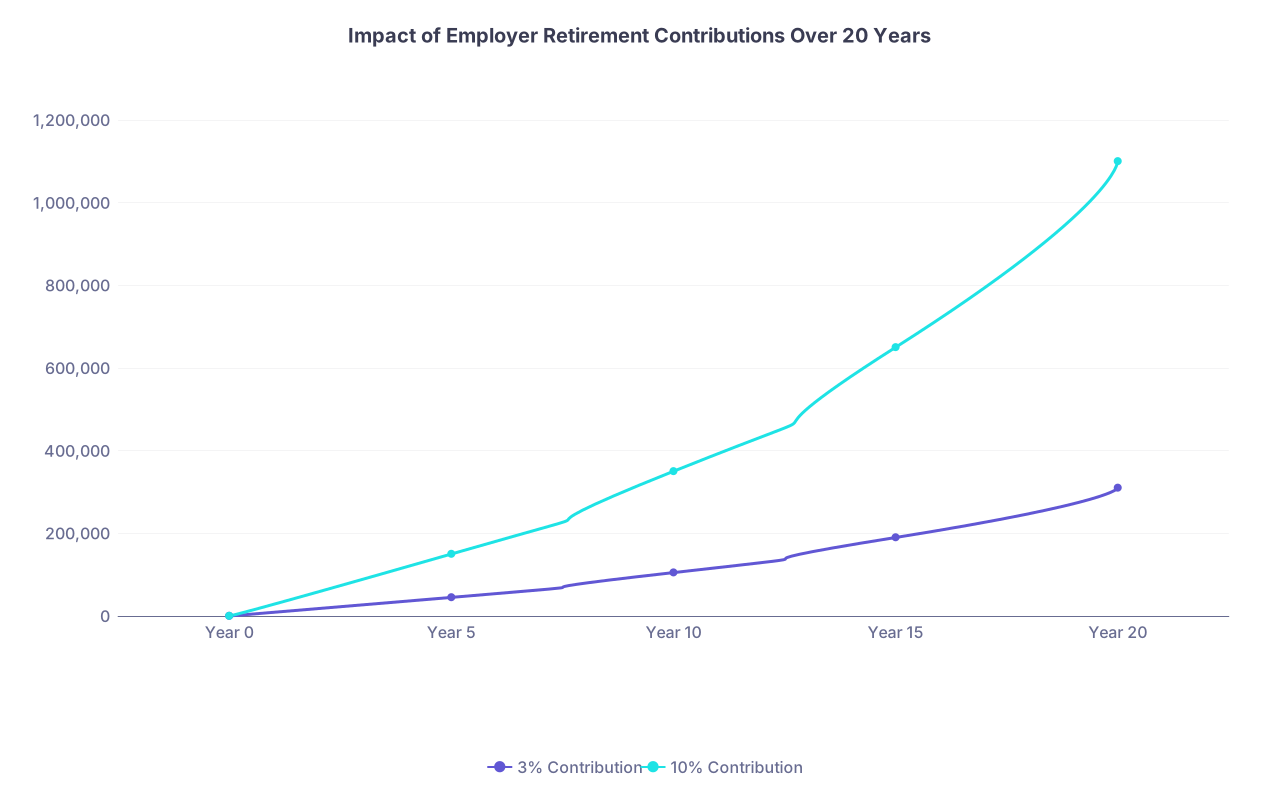
| Category | 3% Contribution | 10% Contribution |
|---|---|---|
| Year 0 | 0 | 0 |
| Year 5 | 45000 | 150000 |
| Year 10 | 105000 | 350000 |
| Year 15 | 190000 | 650000 |
| Year 20 | 310000 | 1100000 |
Common mistakes:
- Comparing only match %, ignoring non‑elective contributions
- Not asking when you’re fully vested (and what happens if you leave at 2–3 years)
- Ignoring contribution limits when there are multiple plans (e.g., 403(b) + 457(b))
If an employer is dropping 10–15% of your salary into retirement every year, that is part of your pay. A big part.
You must:
- Ask for the exact percentage (both match and automatic contributions)
- Confirm vesting schedule
- Get a clear explanation—in writing—of all available retirement plans
If you ignore this, you’re basically volunteering for a long, slow pay cut you won’t feel until it’s too late to fix.
2. Health Insurance: The $10,000 Swing People Treat Like a Footnote
Physicians tend to skim health insurance. You’re so used to terrible coverage as a resident that anything feels fine.
Huge mistake.
Differences you must quantify:
- Monthly premiums for you + family
- Deductibles and out-of-pocket maximums
- Employer HSA contributions (if high‑deductible plan)
Two hospitals in the same city can differ by $7k–$10k per year in cost for a family plan.
That’s not “just benefits.” That’s:
- One‑third of a 529 contribution
- An extra vacation (or two)
- Debt payoff acceleration
And for people planning kids? Maternity coverage, fertility coverage, and out-of-pocket max can completely change your actual cost.
I’ve watched one OB/GYN move for a $25k pay bump, then spend $9k more a year on health insurance and another $5k on fertility that would’ve been covered at the prior job. That shiny raise shrank fast.
3. Disability and Life Insurance: The “I’ll Figure It Out Later” Lie
You cannot outsource this to “future you.” Future you might be unable to work.
Key questions:
- Does the employer provide group long‑term disability? At what % of income?
- Is it own‑occupation? Partial/residual disability covered?
- Do they pay the premium (taxable benefit) or do you (potentially tax‑free benefit)?
- Any life insurance included (1x–3x salary)?
If one job:
- Covers a solid own‑occ disability policy and 2x salary life insurance
and the other:
- Offers nothing, and you’ll be paying $3k–$6k/year out of pocket for equivalent coverage
That cost belongs in your spreadsheet. It is part of total compensation.
Most docs blow this off.
Until they’re paying thousands more per year post‑tax for coverage they could have had pre‑tax with an employer.
4. Malpractice Insurance: Especially Tail Coverage
This one ruins people.
You sign with a group that uses claims‑made malpractice and doesn’t cover your tail. You leave in three years. Suddenly you owe $40k–$120k to buy your own tail coverage or you walk around exposed.
Common error:
“I saw they cover malpractice. Looks fine.”
No. Not fine. You need:
- Type: Claims‑made or occurrence?
- If claims‑made: Who pays for tail if you leave? Under what conditions?
- Are there clawbacks if you leave before X years?
An offer with occurrence coverage or guaranteed tail included is worth a lot more than the same salary with “you’re on your own” tail exposure. Price that out. Assume you will leave at some point. Because you probably will.
5. PTO, Call, and Schedule: Time Is Money (And Sanity)
Many physicians massively undervalue their time and energy.
Let’s talk:
- Vacation/PTO
- Call schedule
- Nights/weekends/holidays
These are not “soft” benefits. They’re hard‑value items that affect:
- Your burnout risk
- Longevity in the job
- Ability to moonlight or do side work
- Childcare costs
- Actual number of hours you work per dollar

| Step | Description |
|---|---|
| Step 1 | Review Offer |
| Step 2 | Check Benefits Math |
| Step 3 | Quantify Lost Value |
| Step 4 | Check Insurance Costs |
| Step 5 | Higher Risk of Burnout |
| Step 6 | Total Comp vs Lifestyle |
| Step 7 | Decide With Full Picture |
| Step 8 | Higher Salary? |
| Step 9 | Retirement Strong? |
| Step 10 | Schedule Reasonable? |
Two common dangerous assumptions:
“I don’t care about vacation; I just finished residency.”
Translation: “I’ve never had real vacation as an attending; I think I’m a machine.” Wait 18 months. You’ll care.“Call doesn’t bother me.”
It will when you realize the other job has protected days off after call, and yours expects you in clinic at 8 a.m. after being up all night.
You should always ask:
- How many weeks of true PTO (not including CME, not including holidays)?
- How many weekends and holidays will I work per year?
- What’s the call frequency in real life (not just “on paper”)?
- Are post‑call days protected or “strongly encouraged to come in if able”?
If one job pays $15k less but gives you:
- 2 extra weeks of vacation
- One fewer weekend per month
- Actual post‑call days off
Your hourly effective pay and life satisfaction may be far better.
6. CME, Licensing, and Fees: Death by a Thousand Cuts
Not as big as retirement or malpractice, but it adds up.
Look for:
- CME money (and days)
- Reimbursement for:
- State license(s)
- DEA
- Board certification/maintenance fees
- Professional society dues
A job that gives:
- $4k CME + 5 days + covers all licenses/fees
vs.
- $1k CME, no days, pay your own fees
can easily be a $5k–$8k/year difference when you add it all up.
Over a 5‑year stretch: you gave away another $25k–$40k for nothing.
Why Smart Physicians Still Miss This: The Psychology Angle
You’re not dumb. So why do so many MDs fall into the same trap?
A few patterns I’ve seen repeatedly:
1. Anchoring on Base Salary
The first number you hear sticks. If the recruiter opens with “Our starting salary is $375k,” every other number gets mentally framed around that.
You treat benefits as “extras” instead of core compensation.
You have to deliberately de‑anchor yourself by building a total comp spreadsheet and looking at the final dollar comparison, not the first one.
2. Decision Fatigue and Time Pressure
You’re finishing residency or fellowship. You’re exhausted. Loans are real. People are pushing you:
- “We need an answer by Friday.”
- “We have other candidates waiting.”
So you grab for:
- Higher base
- Bigger sign‑on
- Shorter commitment
and your brain quietly files “benefits” under “I’ll figure it out later.”
Spoiler: later is usually when things go wrong.
3. Overconfidence About Future You
“I’ll only be here 2–3 years.”
“I’ll make partner and then it won’t matter.”
“I can always moonlight more if benefits are weak.”
Real talk:
- Most people underestimate how hard it is to move jobs once they have kids, a house, and community ties
- Not everyone makes partner, and partnership terms change
- Moonlighting is a terrible long‑term fix for persistent under‑compensation
Assume the job you’re signing for might be your reality for 5–10 years. If you leave earlier, fine. But do not justify a bad deal with fantasies about your future hustle.
How to Actually Compare Offers Without Getting Screwed
Enough horror stories. Here’s the clean, disciplined way to avoid this mistake.
Step 1: Build a Total Compensation Sheet
Yes, in a real spreadsheet. On your laptop. Not in your head.
Columns: Offer A, Offer B, Offer C. Rows:
- Base salary
- Expected bonus (realistic, not recruiter fantasy)
- Employer retirement contributions (all plans)
- Health insurance cost (your share, yearly)
- Employer HSA contributions (if any)
- Employer‑paid disability value (or your cost if not provided)
- Employer‑paid life insurance value (or equivalent cost)
- Malpractice premium + who pays tail (estimate tail cost)
- CME money + days (attach dollar figure)
- PTO weeks (attach a rough dollar/time value)
- Licensing/fees covered
- Call stipends or differentials
- Sign‑on/relocation (and repayment terms)
Then compute:
- Total yearly employer value (salary + benefits they pay for)
- Your yearly out‑of‑pocket professional costs
You want to compare: net total value, not just salary.
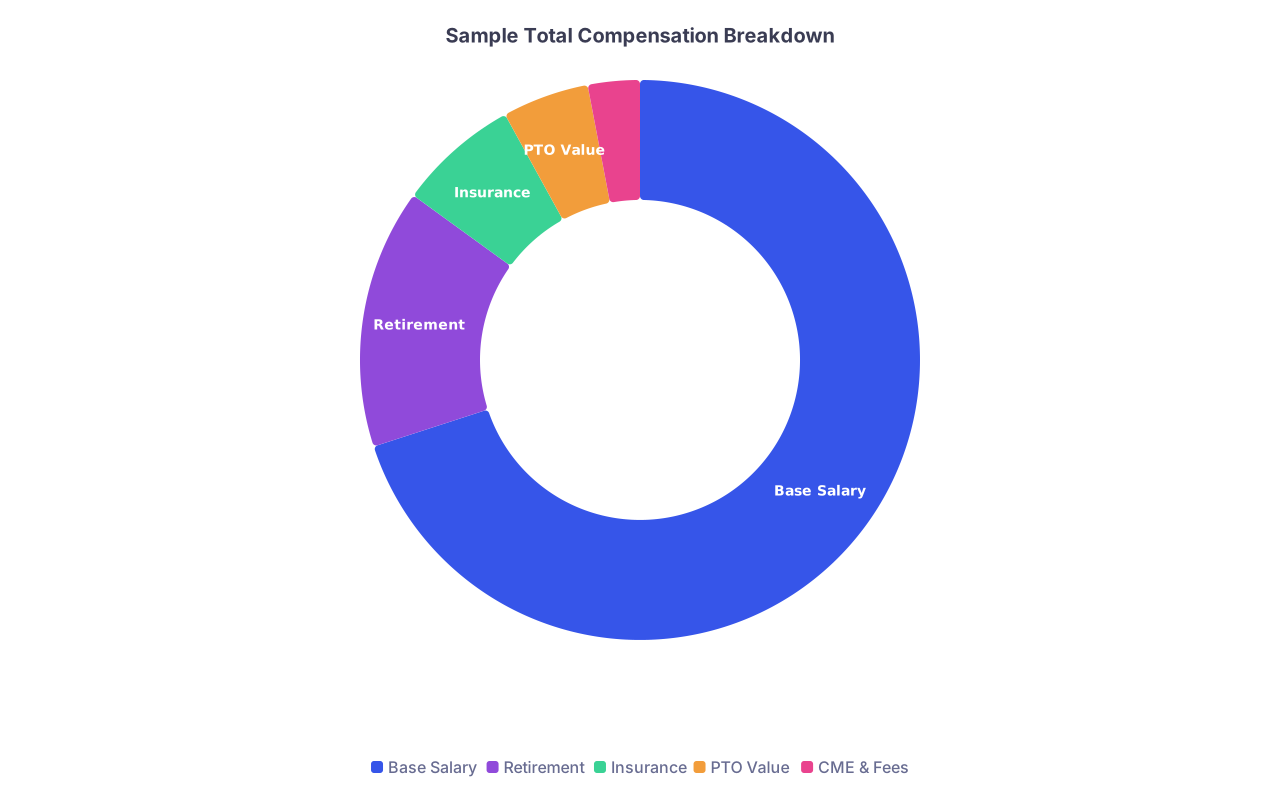
| Category | Value |
|---|---|
| Base Salary | 70 |
| Retirement | 15 |
| Insurance | 7 |
| PTO Value | 5 |
| CME & Fees | 3 |
Step 2: Adjust for Call and Hours
If one job has you working:
- 1.2 FTE worth of hours at 1.0 FTE pay
and another is:
- True 1.0 FTE schedule
your hourly pay may be very different.
Rough approach:
- Estimate total annual work hours (including call, weekends, nights)
- Divide total compensation by total hours
You might discover your “lower salary” offer actually pays more per working hour.
Step 3: Sanity‑Check with a Financially Literate Colleague
Show your spreadsheet to:
- An older attending you trust
- A physician who reads finance stuff (White Coat Investor‑type)
- Or, if you’re wise, a physician‑specific financial planner or attorney (paid by you, not by the employer)
Red flag if you’re hesitant to show someone your deal: that usually means part of you already knows it’s not great.
The Subtle Red Flags in “Great Benefit” Packages
One last thing. Sometimes an employer over‑advertises benefits to distract from a lowball salary or abusive workload.
Watch for:
- Very generous PTO that “nobody actually takes because we’re too short‑staffed”
- Enormous “potential” bonuses that nobody hits
- Great retirement match that vests only after 5–7 years when most people leave at 3
- “Flexible schedule” that hides constant last‑minute changes and added clinics

Benefits are powerful—both ways. Don’t be dazzled. Verify how they play out in real life:
- Ask, “How many days of PTO did you personally use last year?”
- Ask what proportion of physicians stay past the vesting cliff.
- Ask new hires in the last 1–2 years what the “gotchas” were.
A Quick Case Study: The Regret Call
A real story, details slightly altered:
New cardiologist turned down a $475k academic job with:
- 10% retirement
- 7 weeks PTO
- Guaranteed tail
- Reasonable call
Took a $525k private practice job with:
- 3% retirement
- 3 weeks PTO
- Claims‑made, no tail
- Heavy call
On paper, “$50k more.”
Three years later:
- Barely used 2 weeks vacation a year, burned out
- Practice got bought by a private equity firm, pressure ramped up
- Wanted to leave but tail quote came back around $85,000
- Total missed retirement contributions vs. academic job: ~$45k/year × 3 = ~$135k
- Insurance and fees out-of-pocket: another ~$10k/year
Net: He was effectively behind by six figures despite the higher salary. And stuck, unless he wanted to write a check the size of a luxury car just to walk away.
His exact line:
“I wish someone had forced me to do the math before I signed.”
That’s what I’m trying to do for you now.

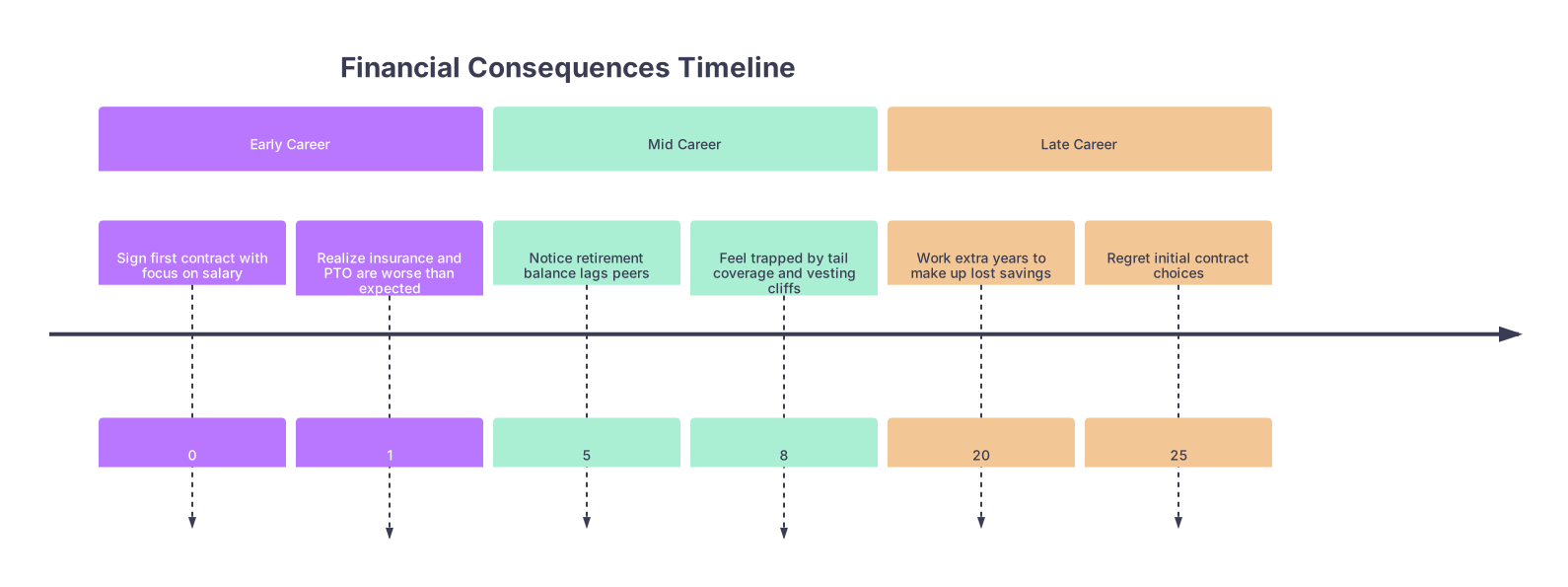
| Period | Event |
|---|---|
| Early Career - Sign first contract with focus on salary | 0 |
| Early Career - Realize insurance and PTO are worse than expected | 1 |
| Mid Career - Notice retirement balance lags peers | 5 |
| Mid Career - Feel trapped by tail coverage and vesting cliffs | 8 |
| Late Career - Work extra years to make up lost savings | 20 |
| Late Career - Regret initial contract choices | 25 |

The Bottom Line: Don’t Make This Salary Comparison Error
Keep it simple:
- Do the full benefits math. Salary is just one line item. Retirement, insurance, malpractice, PTO, and schedule can swing your real compensation by $50k+ a year.
- Translate everything into dollars and hours. Build a spreadsheet, price out benefits, estimate work hours, and compare total value—not recruiter headlines.
- Assume you’ll stay longer than you think. Vesting, tail coverage, burnout, and lifestyle compounds over years. Make the decision you won’t regret 5–10 years from now.
If you remember nothing else:
The “highest salary” offer is often the most expensive mistake.