
Most residents waste their PGY1–PGY3 salaries by “just surviving.” That is a costly mistake.
You are not “too broke” for a plan. You are too busy to wing it. The difference between residents who hit attending life stable vs. underwater is decided by a handful of very specific money moves made on a clear timeline.
Let’s walk PGY1 through PGY3 in order. At each point: what you should do, what to ignore, and what absolutely cannot wait.
Before PGY1 Starts (Match → Orientation)
At this point you should lock in your basic numbers and protect yourself from dumb surprises.
Within 2–4 weeks after Match Day:
Pull the real salary numbers, not rumors.
Look at your GME or HR site, not Reddit:- PGY1 base salary
- PGY1–PGY3 salary schedule (many have published step increases)
- Shift differentials (nights/weekends)
- Call pay or moonlighting policy (usually PGY2+)
- Meal money, parking subsidies, housing support, relocation stipend
Map your after‑tax take‑home.
Use a paycheck calculator for your state. Enter:- Annual PGY1 salary
- 403(b) / 401(k) contributions (even if 0% for now)
- Health insurance, dental, vision, disability premiums
- Pre‑tax HSA/FSA if available
This gives you a realistic per‑paycheck number, not magical thinking.
Draft a resident‑level budget.
Break into three buckets:
- Non‑negotiable fixed: rent, utilities, insurance, minimum debt payments, phone, internet
- Variable essentials: groceries, gas / transit, co‑pays, childcare
- Goals + buffer: emergency fund, retirement, big exams, visits home
Hard rule: your fixed costs should be ≤ 50–55% of take‑home. If rent alone is about to eat 40%, you are setting yourself up for constant stress.
Decide on housing with a salary lens, not a vibe lens.
At this point you should:- Cap rent at ~25–30% of net, not gross
- Avoid long, inflexible leases before you know your schedule and commute
- Ignore co‑residents who say, “It’s only $300 more for in‑unit laundry”
I have watched that “only $300” become the reason people carry a credit card balance for three years.
Set your non‑negotiable auto‑saves.
Before orientation, open:- A high‑yield savings account for:
- Moving / furniture
- Step 3 / COMLEX 3 costs
- Board fees / USMLE transcripts
- A simple “PGY1 emergency” fund target: 1 month of bare‑bones expenses by the end of intern year.
- A high‑yield savings account for:
PGY1 – Months 1–3: Survive, but Track Everything
You are drowning in pages and notes. At this point you should focus on awareness, not perfection.
First 30 days on payroll
Audit your first 1–2 paychecks.
Confirm:
- Tax withholding is correct (right state, single/married status accurate)
- Retirement account auto‑enrollment (some systems default to 3–5%)
- Correct health insurance plan and dependents
Fix errors now; they compound.
Create a brutally simple tracking system.
No fancy apps required. Options:- Single spreadsheet with categories: Rent, Food, Transport, Medical, Debt, Misc
- Or link accounts to one aggregator (e.g., Mint replacement, YNAB, Monarch)
Your only goal: know where the money actually goes for 2–3 months.
Decide your retirement contribution floor.
If your program offers:
- Match available PGY1? Contribute enough to get 100% of the match. Not optional. That is free money.
- No match / 457(b) only? Start with 1–3% if cash flow allows. Small is fine. The habit matters.
Address disability insurance basics.
Intern year is when people get hurt, burned out, and occasionally very sick.
- Enroll in your hospital’s group long‑term disability plan if available.
- Note: group plans may be taxable benefits and are often insufficient alone.
- Flag a reminder: “Review own‑occupation disability options PGY2 Q1.”
PGY1 – Months 4–6: Clean Up Debt and Define Short‑Term Goals
You now know your real spending pattern. It is rarely pretty. Good. Now you can correct.
By month 4
Inventory every debt.
For each:
- Federal loans: type (Direct Unsubsidized, Grad PLUS), balance, interest rate, servicer, grace/forbearance status
- Private loans: lender, rate, variable vs fixed, cosigner?
- Credit cards: balance, APR, promotional periods
- Car loans: balance, rate, term
Put it in one place. No guessing.
Decide the federal loan strategy (this is non‑optional).
You essentially choose between:
- Public Service Loan Forgiveness (PSLF) path
- Enroll in an income‑driven repayment plan (e.g., SAVE) as soon as eligible
- Submit Employment Certification Form annually
- Make qualifying payments at resident salary for 3+ years
- Aggressive payoff path
- May use forbearance or low payments during residency
- Plan to refinance aggressively as an attending
Residency Loan Strategy Snapshot Factor PSLF Path Refinance/Payoff Path Training hospital type Nonprofit Any Goal employer Academic/nonprofit Private/PP heavy Payment in residency Lower Often minimal Complexity Administrative Market/interest risk If you are even 30% likely to stay in academics or a nonprofit system, keep the PSLF option open. You can always change later. You cannot retroactively create qualifying years.
- Public Service Loan Forgiveness (PSLF) path
Kill high‑interest consumer debt.
At this point you should:
- Set up automatic payments to eliminate any credit card balance in 6–12 months.
- Avoid using forbearance as a license to overspend.
Residents dragging a $5k–$10k credit card balance into PGY3 are common. And miserable.
Months 5–6
Define 12–18 month financial targets.
Concrete, not vague.- Emergency fund to: ___ months of expenses
- Step 3 / COMLEX 3 funded by: ___ date
- Boards / in‑training exam prep budget: $___
- Future fellowship interview travel: $___ (if applicable)
- Wedding / major life event set‑aside: $___
Start building a thin but real emergency fund.
Target by end of PGY1:- Minimum: $1,000–$2,500
- Better: 1 month of bare‑bones expenses
Automation: $50–$150 per paycheck into savings. Done.
PGY1 – Months 7–12: Optimize Benefits and Prepare for PGY2 Pay
At this point you should refine, not reinvent.
Around month 7–9 (benefits open enrollment)
Level‑up your benefits choices.
Common upgrades:- Move to a higher‑deductible health plan + HSA if you almost never use healthcare and can fund the HSA.
- Increase retirement contributions slightly (even 1% bump).
- Add or adjust life insurance if you have dependents.
Begin serious disability planning.
This is one of the most skipped, most important PGY1–PGY2 milestones.
- Research independent “own‑occupation” disability policies for physicians.
- Ask: Do they offer a residency discount / gender‑neutral rates / future insurability option?
- Set a target: Policy in place by PGY2 midpoint.
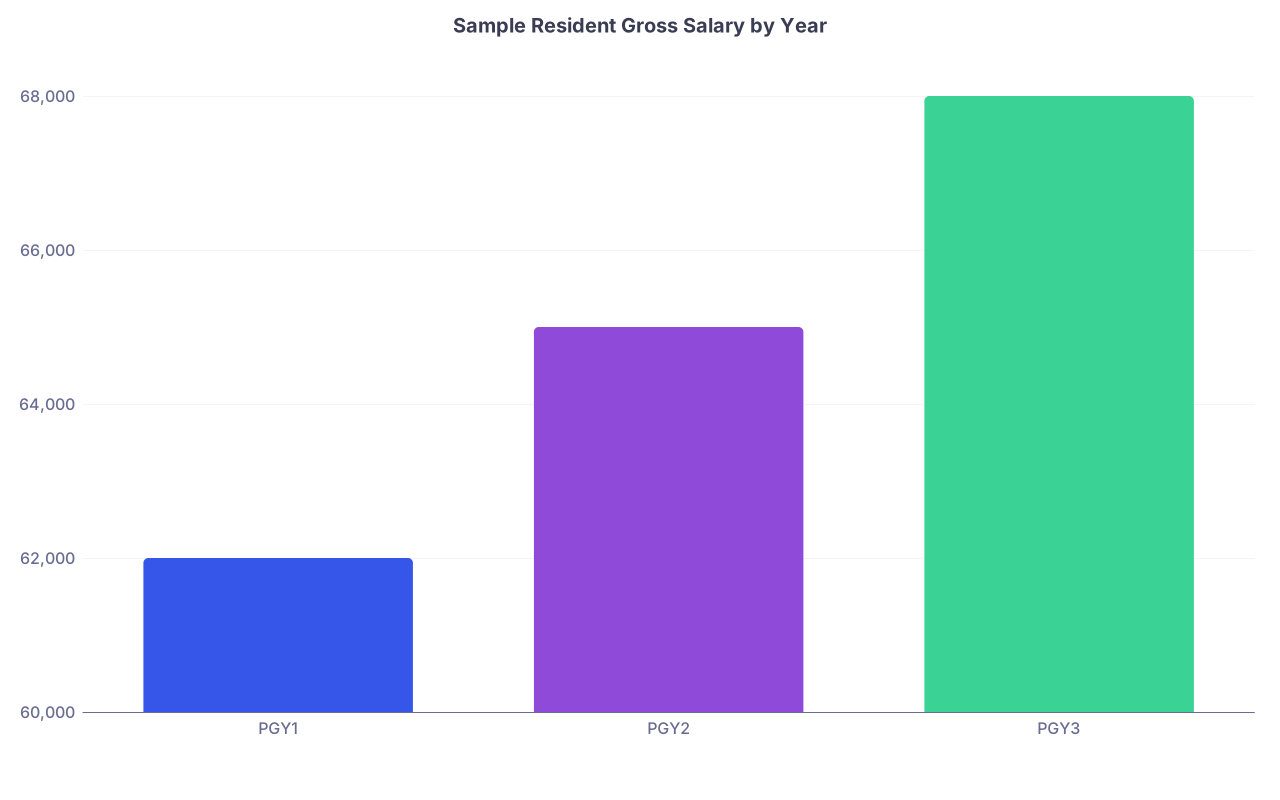
Estimate PGY2 salary and lifestyle creep in advance.
Use your program’s published salary step increases and run the numbers:
| Category | Value |
|---|---|
| PGY1 | 62000 |
| PGY2 | 65000 |
| PGY3 | 68000 |
Before you ever see the raise:
- Decide exactly how much will go to:
- Higher retirement %
- Loan payments
- Emergency fund top‑up
- Cap lifestyle creep to no more than 30–40% of the raise.
Check in on your debt plan.
- PSLF track? Confirm IDR recertification dates and that payments are actually being counted.
- Payoff track? Reassess any private loans; avoid refinancing until late PGY3 unless rate drop is dramatic and you are sure about specialty/direction.
PGY2 – Months 1–4: Use the Raise Intentionally and Explore Moonlighting
You are less terrified on call. Money decisions now start to move actual numbers.
Month 1 of PGY2
At this point you should:
Lock in an automatic raise allocation.
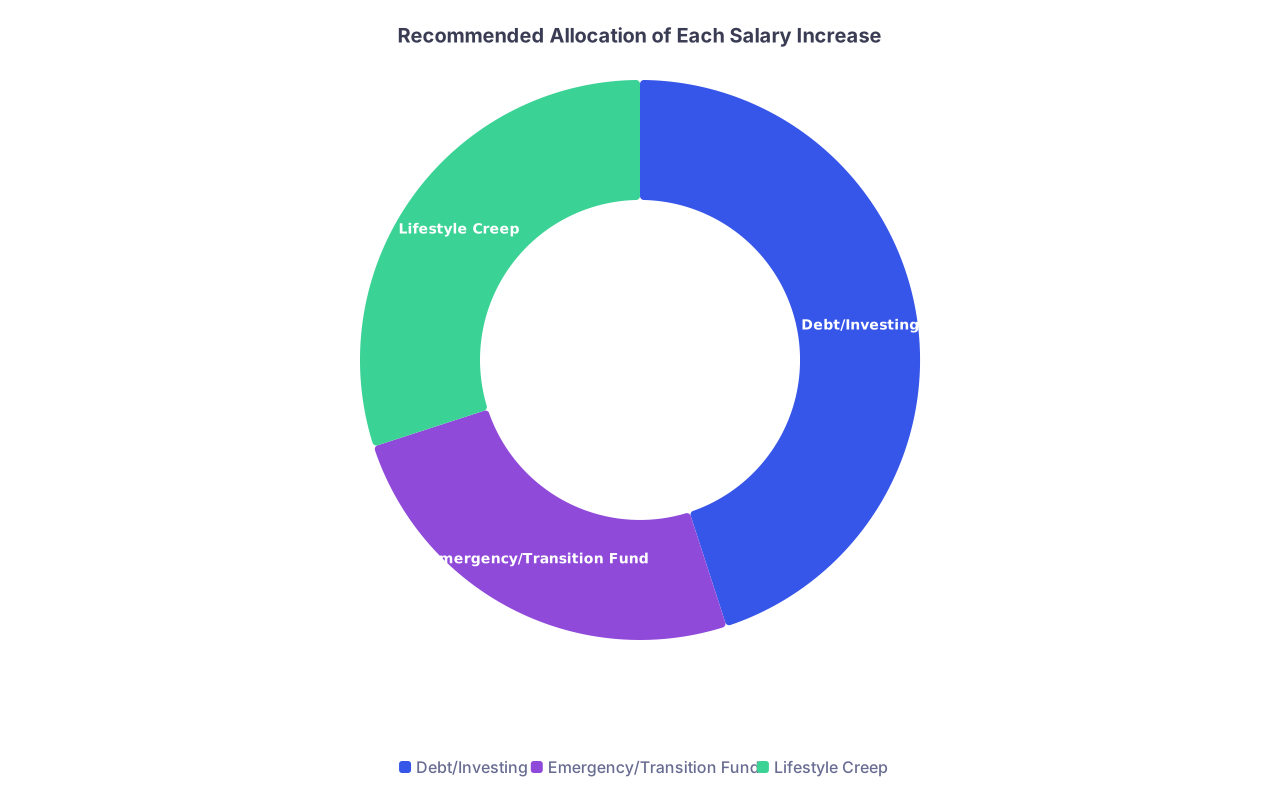
Split your new take‑home increase something like:
- 40–50% → loans / emergency fund / investments
- 30–40% → improved quality of life (better groceries, occasional travel)
- 10–20% → padding for under‑estimated categories (car repairs, board fees)
The attending version of you will thank the PGY2 who did this.
Re‑run your budget based on real data.
- Use last 3–6 months of spending to update targets.
- Fix chronic problem areas: constant food delivery, Uber addiction, impulse Amazon.
Finalize private disability coverage (if appropriate).
- Get quotes from 2–3 reputable companies via an independent agent familiar with resident policies.
- Aim for a policy that:
- Covers your specific specialty (own‑occupation)
- Is portable if you leave your institution
- Has a strong future purchase rider (lets you increase coverage as an attending without a new medical exam)
Months 2–4: Moonlighting & Extra Income
If your program allows moonlighting:

| Step | Description |
|---|---|
| Step 1 | PGY2 Considering Moonlighting |
| Step 2 | Do Not Moonlight |
| Step 3 | Check Work Hour Limits |
| Step 4 | Define Moonlighting Goal |
| Step 5 | Allocate 70 percent to Goals |
| Step 6 | Keep 30 percent for Lifestyle |
| Step 7 | Program Allows? |
| Step 8 | Still Under 80 Hours? |
| Step 9 | Extra Spending vs Debt/EF? |
At this point you should:
- Confirm:
- Program rules (in‑house vs external)
- Work hour restrictions and documentation
- Malpractice coverage details
- Decide the explicit purpose of moonlighting:
- Pay off credit cards by ___ date
- Build emergency fund to ___ months
- Save for boards / move after residency
I recommend a 70/30 rule:
- 70% of moonlighting income → pre‑defined goals
- 30% → guilt‑free spending
If you do not define this, 100% becomes DoorDash and random vacations.
PGY2 – Months 5–12: Plan for Fellowship/Job and Attending Pay
Now you plan not just for resident life, but for the transition.
Mid‑PGY2
At this point you should:
Clarify your post‑residency path.
- Fellowship vs straight to attending
- Academic vs community vs private practice inclination
- Geography constraints (partner job, family, visa issues)
Your answer dictates:
- How long your “low income” phase lasts
- Whether PSLF remains attractive
- When and how to refinance loans
Begin a “transition to attending” fund.
Target uses:- Moving costs and deposits
- Licensing and DEA fees
- Board certification exam fees
- Gap weeks between residency end and first attending paycheck
Goal: at least one month of attending‑level expenses by end of PGY3, started now.
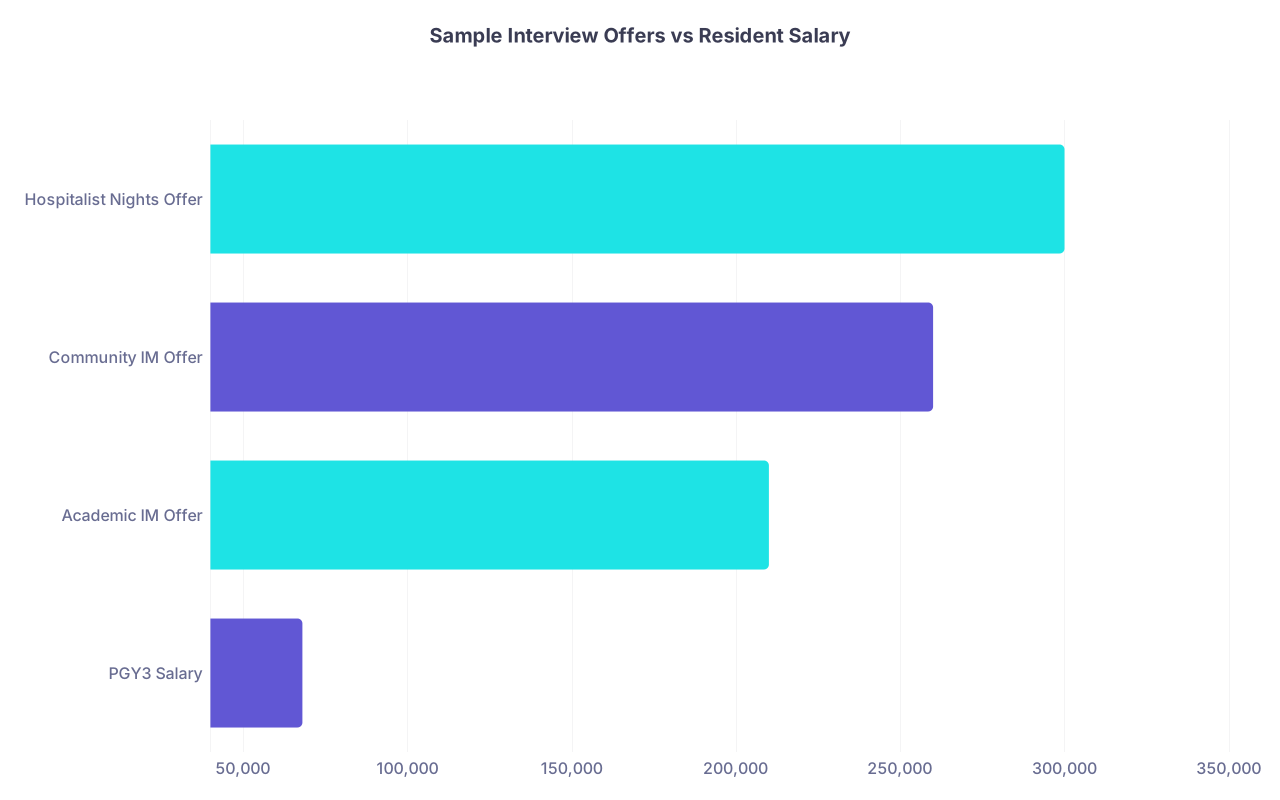
Model your first attending salary.
Look at MGMA data, online salary surveys, and current attendings in your field. Then run a conservative scenario. For example:
| Category | Value |
|---|---|
| PGY3 Salary | 68000 |
| Academic IM Offer | 210000 |
| Community IM Offer | 260000 |
| Hospitalist Nights Offer | 300000 |
This is not for daydreaming. It is to:
- Estimate tax bracket jump
- Plan retirement targets (maxing 401(k), backdoor Roth, etc.)
- Avoid “I make $250k, I can buy anything” syndrome
Late PGY2
Revisit insurance needs and beneficiaries.
- If you got married, divorced, had a child, or bought a home, update:
- Life insurance beneficiaries
- Retirement account beneficiaries
- Adjust coverage amounts if your financial responsibilities changed.
- If you got married, divorced, had a child, or bought a home, update:
Tighten your short‑term commitments.
- Do not sign a luxury car lease that extends years into attending life before you know your real attending numbers and call burden.
- Avoid high‑end housing leases timed exactly when you will be interviewing or moving.
PGY3 – Months 1–6: Lock in the Launch Plan
You now see the finish line. Money mistakes here are either very smart or very painful.
Early PGY3
At this point you should:
Maximize your PGY3 salary step.
Before the raise:
- Increase retirement contributions by 2–3% if cash flow allows.
- Direct a fixed amount per paycheck into your transition fund.
- Add any final push payments for high‑interest debt.
Decide on fellowship vs job with financial eyes open.
- Fellowship = 3+ extra years of resident‑level salary, often in a higher cost city, but potential higher lifetime earnings.
- Attending now = quicker debt attack and faster wealth building, but possibly plateaued income earlier.
If pursuing jobs, understand contract basics.
- Start a simple “offer comparison” sheet for:
- Base salary
- Bonus structure
- Call schedule
- Non‑compete terms
- Loan repayment perks or sign‑on
Get a contract reviewed by someone who knows physician contracts. Not your uncle who is a real‑estate lawyer.
- Start a simple “offer comparison” sheet for:

- Reassess your loan pathway based on real plans.
- Committed to nonprofit academic center? PSLF likely remains the best tool.
- Heading to high‑paying private practice? Prepare to refinance as soon as stable.
PGY3 – Months 7–End: Execute the Attending Transition
This stretch is where planning turns into checks written and forms signed.
6–9 months before graduation
At this point you should:
Build a precise transition budget. Include:
- Moving company or DIY truck + travel
- Rental deposits or down payment costs
- New licensing / credentialing fees
- Temporary housing if needed
- Gap coverage for health insurance (if any break between jobs)
Finish your emergency + transition fund targets.
By graduation, aim for:- 1–3 months of minimum living expenses in cash
- Extra buffer specifically for moving and job start
Plan for tax changes.
- Last resident year: usually lower bracket
- First attending year: major jump
If moonlighting or sign‑on bonuses are large, consider increasing withholding temporarily so you do not owe a nasty tax bill the following April.
3–4 months before graduation
Set clear rules for “first attending paycheck.”
Write them down. Examples:- Pay off all remaining credit card debt in month 1.
- Max the 401(k)/403(b) by year‑end (spread over months).
- Start or max Roth IRA (or backdoor Roth strategy).
- Define what “celebratory splurge” looks like (and cap it).
If you do not pre‑decide, lifestyle inflation will decide for you.
Finalize loan refinancing or PSLF documentation.
- If refinancing:
- Lock a rate close to residency end when income proof is available.
- Choose term consistent with your goals (often 5–10 years for aggressive paydown).
- If PSLF:
- Confirm all employment certifications submitted.
- Make sure payments are correctly counted in servicer records.
- If refinancing:

Quick PGY1–PGY3 Salary Planning Checklist
| Timepoint | Must-Do Financial Milestone |
|---|---|
| Pre‑PGY1 | Set housing budget, map net pay, basic EF |
| Mid‑PGY1 | Choose loan strategy, kill high‑interest debt |
| Start of PGY2 | Allocate raise, explore moonlighting wisely |
| Mid‑PGY2 | Start transition fund, clarify post‑res plan |
| Start of PGY3 | Plan job/fellowship with contracts & loans |
| End of PGY3 | Build buffer, set attending paycheck rules |
| Category | Value |
|---|---|
| Debt/Investing | 45 |
| Emergency/Transition Fund | 25 |
| Lifestyle Creep | 30 |
FAQ (Exactly 4 Questions)
1. I feel too broke in PGY1 to save anything. Should I just wait until PGY3?
No. Waiting is how you end up hitting attending life with zero cushion and bad habits. Even $25–$50 per paycheck builds the savings muscle and gives you options. The dollar amounts are small; the behavior is the point.
2. Is it really worth contributing to retirement during residency?
Yes, if there is any employer match, you should contribute enough to get it. That is instant 100% return. Even without a match, small contributions establish tax‑advantaged space and start compounding early. You will not feel that extra 1–3%, but future you absolutely will.
3. When should I refinance my student loans during residency?
Usually late PGY3 or just after graduation, if you are not pursuing PSLF and have a stable job lined up. Refinancing earlier can increase payment demands and remove forgiveness options before your career direction is clear. Exceptions exist for very high‑rate private loans, but those require careful math.
4. What is the single biggest PGY1–PGY3 money mistake you see?
Easy: signing expensive, inflexible commitments (luxury apartments, car leases, lifestyle subscriptions) based on future attending income instead of current resident income. Those contracts survive burnout, breakups, and failed boards. Your best move is keeping fixed costs lean until your attending pay is actually hitting your bank account.
Open your last bank statement right now and list your top three spending categories. Next to each, write a specific dollar change you will make with your very next paycheck—before PGY1–PGY3 drift locks in your habits.