

The fastest way to lose thousands of dollars as a physician is to assume your RVU compensation reports are correct.
They often are not.
I have seen physicians underpaid for years because of miscounted wRVUs, incorrect modifiers, “missing” encounters, or opaque internal adjustments nobody bothered to explain. The hospital was not necessarily malicious. Just messy. And messy systems cost you money.
Here is how you fix it—step by step—if your compensation RVUs are miscounted or misreported.
Step 1: Confirm You Actually Understand How You Are Supposed to Be Paid
You cannot argue miscalculation if you do not know the formula.
Before you accuse anyone of anything, sit down and decode your contract and your plan documents.
1. Get the exact documents
Gather all of this in one folder (paper or digital):
- Employment agreement / physician services agreement
- Any compensation plan attachments or exhibits
- Group or hospital compensation policy (often a separate PDF)
- Any “comp plan update” emails or memos
- Past 12–24 months of:
- RVU statements / productivity reports
- Pay stubs
- Bonus calculations
If you do not have the comp plan policy, request it in writing from HR, the practice administrator, or the compensation office. One sentence is enough:
“Please send me the current written compensation plan that governs RVU calculation and payment for my position, including any amendments in the last 3 years.”
2. Decode the formula
You are looking for very specific items:
Which RVU type matters?
Almost always: work RVUs (wRVUs), not total RVUs.Conversion factor
The dollars per wRVU (e.g., $52/wRVU). Note if:- It differs by specialty
- It changes annually
- It is guaranteed vs. adjusted to MGMA/AMGA benchmarks
Thresholds and tiers
Does your pay change after a certain number of wRVUs?- Example:
- First 5,000 wRVUs: $50/wRVU
- 5,001–8,000: $55/wRVU
8,000: $60/wRVU
- Example:
Measurement period
- Monthly vs quarterly vs annual true-up
- Is there a year-end reconciliation? Many people miss this line.
What counts as a wRVU?
This is constantly misunderstood. Clarify:- Only personally performed services vs. incident‑to
- Shared encounters with APPs
- Procedures done in hospital vs clinic
- Telehealth visits
- Call coverage or “per diem” work (often not RVU-based)
Non-RVU components
Fixed stipend, call pay, medical director pay, QI bonuses, etc.
You are separating what is RVU-based from what is not.
Do not skim this. Highlight every reference to:
- “work RVU”
- “productivity”
- “conversion factor”
- “threshold”
- “reconciliation”
- “benchmark” (MGMA, AMGA, SullivanCotter)
You want a one-page summary like this:
| Item | Example Term |
|---|---|
| Measured RVUs | Work RVUs (CPT-based) |
| Conversion factor | $52 per wRVU |
| Threshold | 6,000 wRVUs annually |
| Above-threshold bonus | Same $52/wRVU, paid quarterly |
| Measurement period | Quarterly, with annual true-up |
| Non-RVU pay | $220,000 base, $20,000 call stipend |
Once you have this, then you can check if the numbers on your statement align with the contract.
Step 2: Audit Your RVU Data Yourself (Do Not Assume Their Software Is Right)
Trusting the “RVU dashboard” without verifying it is how you end up subsidizing the hospital.
You need a basic, repeatable audit process.
1. Get a detailed encounter or CPT-level report
You want a file—not just a summary—containing for each encounter:
- Date of service
- CPT code billed
- Modifiers (25, 57, 59, 24, 62, etc.)
- Units
- Rendering provider (you vs APP)
- Location (clinic, OR, telehealth)
- Assigned wRVUs per CPT and modifier
- Any write-offs or adjustments
Ask for this from your billing office, practice manager, or EMR reporting team. Phrase it like this:
“Please send me, in Excel or CSV, a detailed monthly report of all billed CPT codes attributed to me as rendering provider, including modifiers, units, and wRVUs per line item for the last 12 months.”
If they resist, repeat the request in writing and copy your medical director or department chair. You are not asking for anything unusual.
2. Use your own RVU reference
Do not assume their mapping is right. Use:
- CMS physician fee schedule or
- A reputable RVU table from your specialty society
Check a sample of common codes:
- Office visits: 99213, 99214, 99215
- New patient visits: 99203, 99204, 99205
- Your bread‑and‑butter procedures
Put them in a small table and verify the wRVUs match what your system uses.
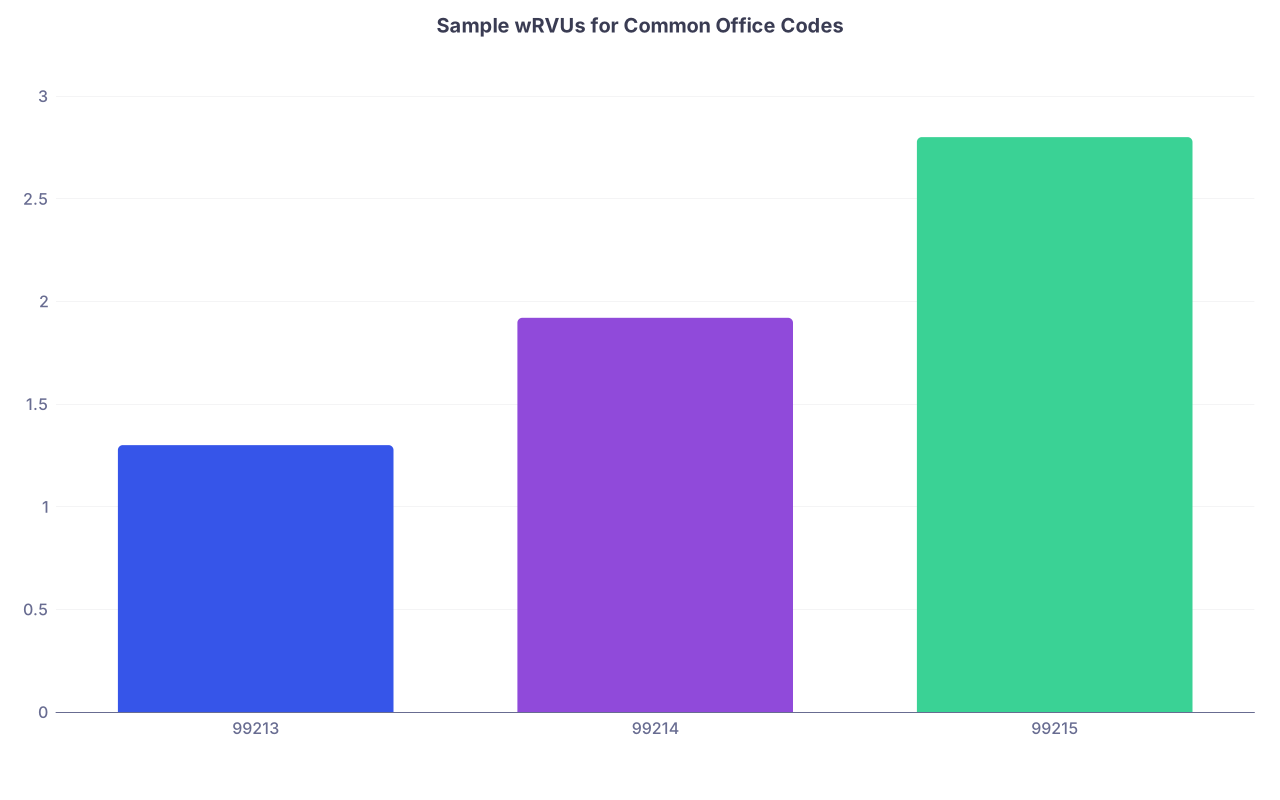
| Category | Value |
|---|---|
| 99213 | 1.3 |
| 99214 | 1.92 |
| 99215 | 2.8 |
If your report shows 99214 as 1.5 wRVUs when the reference is 1.92, that is a red flag.
3. Check three levels of numbers
You do not need to audit every line. You need a pattern.
Pick:
- 1 recent month (e.g., last complete month)
- 1 heavy clinical month in the past year
- 1 low-volume month (vacation/leave)
For each of these:
Count encounters by CPT code.
In Excel: pivot table by CPT, sum units.Multiply by standard wRVUs.
RVUs = count × standard wRVU per CPTCompare your total wRVUs to the official report.
- If you are within 1–2%—fine.
- If you are off by 5–20%—problem.
Look for obvious patterns:
- High-complexity codes down-coded in wRVUs
- Procedures listed but assigned 0 wRVUs
- Telehealth encounters present, but no wRVUs
- APP‑shared visits attributed entirely to the APP
- Modifiers wiping out wRVUs (e.g., -53, -52 used incorrectly)
Use conditional formatting or simple filters in Excel to spot zero or abnormally low wRVUs.
Step 3: Identify the Most Common RVU Miscounting Traps
Before you assume fraud, assume common stupidity. Certain errors are so predictable I can almost guess them before seeing the report.
Here are the big ones I see repeatedly.
1. Wrong or outdated RVU schedule
Classic scenario: CMS updates RVUs; the hospital “forgets” to update the internal table, sometimes for months.
Signs:
- Your wRVUs per 99214 are lower than national tables
- Newer codes (especially telehealth or new procedure codes) show 0 wRVUs
Fix:
- Confirm which year’s RVU schedule they are using
- Demand retroactive correction if the contract says they will use “current CMS RVU values”
2. APP and shared visit attribution
You do the work. The APP documentation or billing workflow causes the visit to credit to the APP’s NPI. Your wRVUs go to zero for those encounters.
Signals:
- Your clinic is full, but your RVUs do not match volume
- Encounters where you clearly saw the patient do not appear under your provider ID
- APP’s productivity looks suspiciously high
Fix:
- Clarify internal rules: “Who gets RVU credit when both MD and APP see the patient?”
- Ask billing to reassign specific encounters where policy supports MD credit
- Adjust workflows in the EMR so the correct rendering provider is selected
3. Modifiers killing wRVUs
Some modifiers can reduce payment but should not reduce work RVUs. Systems sometimes tie them together incorrectly.
Watch for:
- -62 (co-surgeon)
- -80, -81, -82 (assistants)
- -52, -53 (reduced / discontinued services)
- -59, -51 (multiple procedures)
Example mistake: Both surgeons in a 62 case each get 0.5× RVUs when the plan or CMS allows full work RVUs for each.
4. Global periods and post-op visits
Post-op visits inside a global period are typically 0 wRVUs. That is legitimate. The problem is when pre‑op or separately billable visits are also assigned zero.
Check:
- Pre-op H&Ps prior to major surgery
- Separate problems addressed during global periods that were billed correctly but zeroed out on the RVU side
5. Hospital vs. professional billing confusion
Facility (technical) fees are separate from professional fees. Your RVUs come from the professional side. Some internal reports mix or drop professional-only items.
Red flag: Procedures you know you did in the OR show up on hospital billing but not on your wRVU reports.
Step 4: Quantify the Financial Impact Before You Pick a Fight
You need numbers, not feelings.
1. Build a simple reconciliation sheet
In Excel or Sheets, for a representative period (say 12 months):
Columns:
- Period (month/quarter)
- Official reported wRVUs
- Your recalculated wRVUs
- Difference in wRVUs
- Conversion factor ($/wRVU)
- Under/overpayment per period
Example:
- Reported: 7,200 wRVUs
- Your calc: 7,800 wRVUs
- Difference: 600 wRVUs
- Conversion: $52/wRVU
- Underpayment: 600 × $52 = $31,200
Even if you only do this for 3–6 months, you will approximate the annual impact.
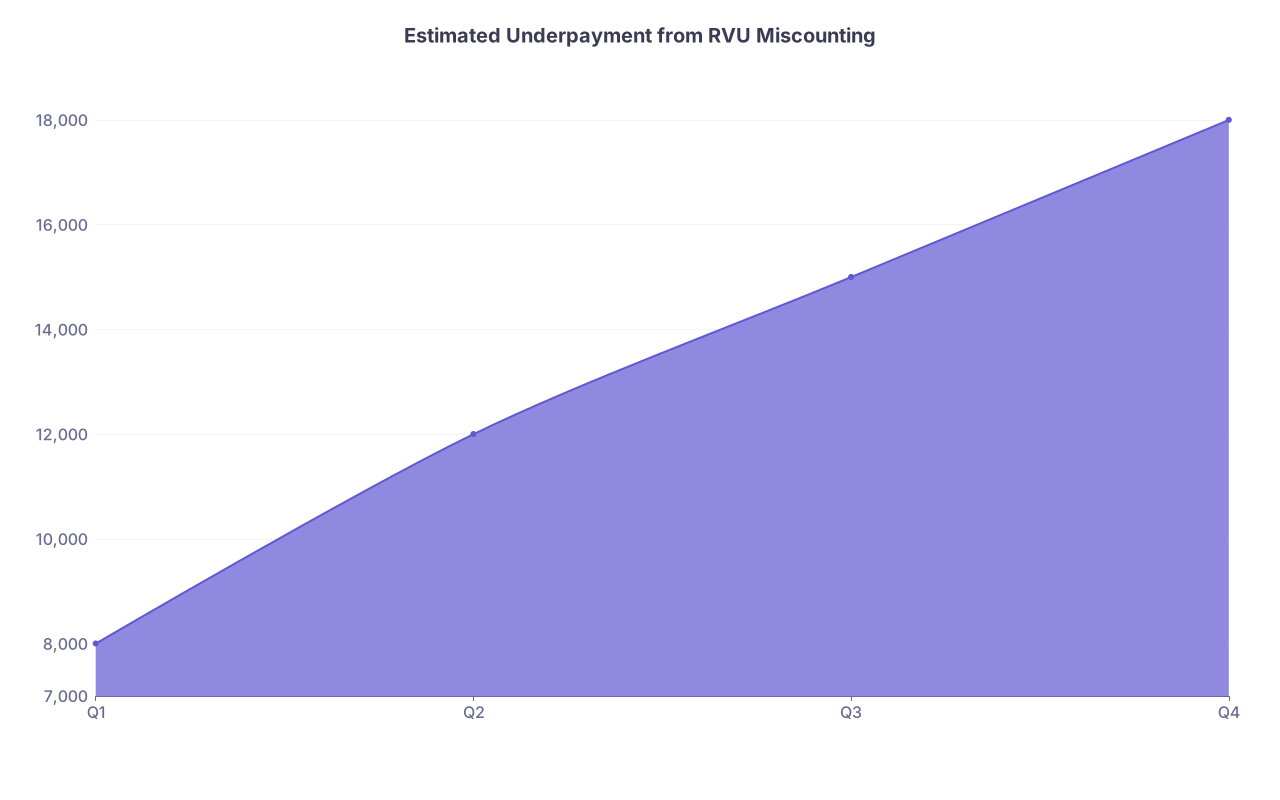
| Category | Value |
|---|---|
| Q1 | 8000 |
| Q2 | 12000 |
| Q3 | 15000 |
| Q4 | 18000 |
2. Separate errors by type
For your own clarity (and for later negotiation), categorize the discrepancies:
- Mis-applied RVU schedule: X RVUs
- Missed procedures / encounters: Y RVUs
- Incorrect APP attribution: Z RVUs
- Modifier / coding anomalies: W RVUs
You do not need to show this breakdown to them immediately, but you should understand where the leak is.
3. Cross-check with pay stubs
Remember: not all pay is RVU-based.
Recreate what your total pay should have been for the audited period:
- Base salary or guarantee
- Stipends / call pay
- RVU-based pay (your corrected wRVUs × contractual conversion factor)
Then compare to actual compensation received. That difference is your claim.
Step 5: Escalate Smartly, Not Emotionally
Storming into the CEO’s office accusing them of theft is a good way to get labeled “difficult” and achieve nothing.
You need a staged, professional escalation.
1. Start low: billing / compensation analyst
Request a meeting (virtual is fine) with:
- The comp analyst or RVU reports person
- Your practice manager or clinic admin
Send documents beforehand:
- Summary spreadsheet of your recalculation
- 1–2 pages of specific example encounters
- A short email framing this as “help me understand”
Example email:
“I have been reviewing my RVU productivity statements against CPT-level data and the compensation plan. I am seeing a consistent discrepancy of approximately 500–700 wRVUs per quarter, primarily related to [APP attribution / incorrect wRVU mapping for 99214 / missing procedure codes].
I have attached a short summary and a few example cases. Could we schedule 30 minutes to review these together and confirm whether my RVUs have been calculated according to the written plan?”
In the meeting:
- Stay calm.
- Ask them to walk you through their calculation method.
- When you see where it diverges from contract or CMS logic, flag that specifically.
Sometimes this is where they say, “Oh, yes, we know about that issue—we are fixing it.” Push for timelines and retroactivity.
2. If unresolved: bring in your medical director or department chair
If the analyst shrugs, escalates slowly, or hides behind “this is how our system works,” you need clinical leadership.
Send a concise note to your department chair / medical director:
- Attach your summary
- State your concern in one paragraph
- Ask for their support in resolving it
You are not asking them to be your lawyer. You are asking them to ensure the organization follows its own written compensation plan.
Step 6: Use the Contract and Policy Language as Your Leverage
Hand-waving about “fairness” does not move systems. Contracts do.
1. Highlight exact clauses
Pull out and quote:
- “Physician shall be compensated at the rate of $X per work RVU for all work RVUs personally generated by Physician.”
- “Work RVUs shall be determined using the current year CMS Medicare Physician Fee Schedule.”
- “Productivity compensation shall be reconciled and true‑up adjustments made within 90 days of the end of the measurement period.”
When someone says “our internal policy is…” you counter with:
“That may be the operational practice, but the written agreement states [quote]. I am simply asking that we calculate my RVUs and compensation according to the contract we both signed.”
2. Clarify ambiguous terms
If the contract uses vague wording like “standard practice” or “current RVU tables,” get them to commit in writing what that means.
Ask:
- “Which specific RVU schedule (year and source) has been used for my calculations for 2023–2024?”
- “Can you confirm whether APP shared visits are credited under my NPI or the APP’s, and where this is documented?”
Step 7: Decide When To Involve a Lawyer or Outside Help
Sometimes internal fixes work. Sometimes they stall, delay, or quietly deny. You need to know when to bring in backup.
1. Indicators you need legal input
- Discrepancy is large (tens of thousands or more)
- Problem spans multiple years
- They admit an error but refuse retroactive payment
- They invoke non-existent “policy” that contradicts written contracts
- You suspect systemic underpayment across the group
At that stage, find a healthcare attorney experienced with physician compensation and Stark/AKS issues, not a generalist.
Bring:
- Your contract and all comp policies
- Your reconciliation spreadsheets
- Email threads about the dispute
- Sample RVU and CPT-level reports
Be clear: You are not going nuclear. You are evaluating:
- Contract breach
- Potential wage claims
- Whether this pattern affects Stark / fair market value issues
2. Consider leveraging a physician-focused consultant first
Sometimes hiring a lawyer feels like escalation too early. A third option:
- Physician compensation consultant
- RVU audit specialist
- Experienced practice management advisor
They can:
- Validate your math
- Identify if your contract is out of line with market
- Help you structure a proposal for correction
Often, when administration sees you have an independent, competent expert behind you, the tone changes.
Step 8: Protect Yourself Going Forward – Build a Monthly RVU Defense System
You do not fix this once. You build a process so it does not happen again.
1. Set a recurring review cadence
Every month (put it on your calendar):
Download your RVU summary from the EMR or comp portal
Compare total wRVUs to:
- Prior months
- Known clinic and OR volume
Spot check:
- 10–20 random encounters
- A few telehealth visits
- A couple of shared APP visits
If something looks off for that month, you catch it early—while adjustments are easy.
2. Track your own volume indicators
At minimum, keep a simple log:
- Clinic days per month
- Number of patients seen
- Number of major procedures or surgeries
- Days on call
Does not need to be complicated. I have seen people use a paper calendar with numbers in the corners. The point is: if your clinic felt slammed in May but your RVUs are lower than February (when you were on vacation), that’s a trigger.
3. Standardize coding workflows with your team
A lot of RVU leakage is workflow:
- APPs selecting themselves as rendering provider for MD-led visits
- Incorrect visit type templates defaulting to lower codes
- Coders downgrading without explanation
Fix this by:
- Holding a 30–45 minute meeting with coding/billing, you, and key APPs
- Reviewing 5–10 example notes where you disagree on level
- Establishing clear rules for:
- Who is rendering provider in shared visits
- When to use higher-level visit codes
- Proper use of modifiers that do not zero out RVUs
Document agreed rules and send a summary email. This becomes the new “standard.”
Step 9: Know When the Problem Is the Plan, Not the Math
Sometimes you discover the RVUs are counted correctly…but the plan is terrible.
Indicators:
- Conversion factor far below market (e.g., $38/wRVU where MGMA median is $55 for your specialty)
- High thresholds that are almost impossible to reach
- Cap on RVU-based pay regardless of productivity
- No credit for highly time-consuming but low-RVU work (e.g., complex inpatient rounding, multidisciplinary care)
In that case, you have a different problem: a bad deal.

| Step | Description |
|---|---|
| Step 1 | Review Contract and Reports |
| Step 2 | Miscount Problem |
| Step 3 | Bad Plan Problem |
| Step 4 | Request Corrections |
| Step 5 | Monitor Monthly |
| Step 6 | Legal or Consultant |
| Step 7 | Renegotiate or Exit |
| Step 8 | Math correct? |
| Step 9 | Resolved? |
Now you are not arguing misreporting. You are deciding:
- Do I try to renegotiate?
- Do I accept this for short term (e.g., visa, location, family reasons)?
- Do I quietly plan an exit to a better-structured job?
Be honest with yourself. There is no coding fix for a fundamentally underpaying system.
Step 10: Document Everything Like You Expect This To End Up in Writing (Because It Might)
Paper (or email) wins arguments.
Starting now:
- Keep a dedicated email folder: “Comp / RVU Issues”
- After every meeting, send a brief recap:
- “Today we reviewed… My understanding is that… Next steps are…”
This is not paranoia. Hospital administrators change. Comp analysts rotate. Two years later, when someone asks, “Who agreed to this?” you want written breadcrumbs.
Today’s Concrete Next Step
Do not wait for the end of the year “true-up” to discover a 15% mistake.
Today, before you forget:
- Pull your last 3 months of RVU productivity reports.
- Circle one high-volume clinic month.
- Email billing/IT and request a detailed CPT-level report for that month with wRVUs per line.
When that file hits your inbox, you are not guessing anymore. You will know—within one evening of focused work—whether your compensation RVUs are being counted correctly or whether money is quietly leaking out of your pocket.


