
Matching into a residency program is a defining moment—but it is not the finish line. Once the excitement of Match Day settles, your focus should quickly expand beyond learning how to write notes and admit patients. This is the moment to start building the professional relationships that will shape your future.
Networking in Medicine after the match is about much more than collecting business cards or LinkedIn connections. It is about intentionally developing a web of colleagues, mentors, sponsors, and collaborators who will influence your training, open doors to Residency Programs and fellowships, and support you throughout your career development.
This enhanced guide explores why post-match networking matters, where and how to build connections, and how to turn those connections into concrete opportunities—while still being authentic and patient-centered.
Why Networking in Medicine Matters So Much After the Match
Networking can feel like a “later” task, something you do as a senior resident or just before applying for your first attending job. In reality, your first year of residency is one of the most powerful times to start.
1. Accelerating Career Development and Clarity
As a new resident, you may not yet know exactly what you want your career to look like. Building a professional network helps you:
Explore different career paths
Talk to hospitalists, subspecialists, clinician-educators, researchers, and physician leaders. Learn what their day-to-day work looks like, how they got there, and what they wish they had done earlier.Clarify your own goals
Conversations with people at different career stages help you decide:- Academic vs. community practice
- Generalist vs. subspecialty
- Clinical vs. research vs. administrative focus
- Full-time vs. part-time or portfolio careers (teaching, consulting, global health, etc.)
Receive targeted guidance
A mentor or senior colleague who knows your interests can advise you on:- Which electives to choose
- Which projects will be most impactful
- What timelines you should follow for fellowship or job applications
- How to strategically position yourself within or beyond your current department
Well-timed advice early in residency can change your trajectory dramatically.
2. Accessing Hidden Job and Fellowship Opportunities
Many of the most desirable positions in medicine—jobs, fellowships, leadership roles—are never advertised widely. They’re filled through:
- Internal recommendations
- Word-of-mouth among faculty
- Informal networks at Medical Conferences and professional societies
When you invest in networking:
You hear about opportunities sooner
A division chief might mention an upcoming opening during a casual conversation at a conference lunch. A mentor might alert you to a fellowship slot that’s quietly becoming available.Your name gets mentioned in rooms you are not in
When someone says, “We need a reliable resident for this project/job/elective,” your network can say, “You should talk to them.”
This kind of advocacy often depends less on your CV and more on people’s firsthand experience working with you.
3. Expanding Collaboration and Research Possibilities
Research and quality improvement (QI) work are key parts of many Residency Programs and essential for competitive fellowships. Networking enables:
Cross-institutional collaborations
Meet collaborators at Medical Conferences or through professional societies to increase the impact and visibility of your work.Interdisciplinary projects
Partner with pharmacists, nurses, data scientists, or public health researchers you meet through hospital committees or institutional initiatives.Better, more diverse mentorship
A strong network lets you learn simultaneously from:- A research mentor
- A clinical mentor
- A career or leadership mentor
Each contributes something different to your career development.
4. Building a Personal Support System in a High-Stress Environment
Residency is intense. Having a strong network offers emotional and professional support:
Peers who understand your experience
Co-residents inside and outside your specialty are invaluable sounding boards for clinical dilemmas, exam stress, and work-life balance struggles.Senior residents and attendings you can trust
These relationships help when you encounter:- Ethical conflicts
- Burnout or compassion fatigue
- Difficult feedback or evaluations
Your network can normalize challenges and guide you through them.
5. Staying Current with Trends and Innovations
Medicine evolves quickly. Networking helps you:
- Learn about emerging therapies, technologies, and guidelines early
- Identify areas where you might build niche expertise
- Stay connected to national conversations in your specialty via:
- Academic Twitter / X
- Specialty-specific listservs
- Society-hosted webinars
Networking is ultimately about staying plugged into the evolving “big picture” of your field.
Building Your Network Post-Match: Where to Start
You don’t need to be extroverted to be effective at Networking in Medicine. You do need to be intentional. Think of networking as relationship-building based on genuine curiosity, respect, and follow-through.

1. Leverage Hospital and Residency Program Resources
Your own institution is the easiest and most important place to build connections.
a. Orientation and Early Residency Events
Arrive prepared
Learn names and roles of key people (program director, APDs, chief residents, major division heads). Have a short introduction ready: who you are, your interests, and what excites you about this program.Engage actively during orientation
Ask questions, participate in discussions, and introduce yourself to:- Co-interns and residents in other years
- Faculty who lead sessions
- Administrative coordinators (who often know everything about how the system actually works)
Use social events strategically
Welcome dinners, retreats, and holiday gatherings are low-pressure spaces to:- Learn about people’s hobbies and backgrounds
- Find shared interests (sports, music, volunteer work)
- Build relationships that make later academic or clinical conversations easier
b. Educational Conferences, Workshops, and Grand Rounds
Turn routine educational activities into networking opportunities:
- Sit next to someone you don’t know and introduce yourself briefly.
- Ask insightful questions during Q&A, then follow up with the speaker afterward:
- “I really appreciated your point about X. I’m a PGY-1 interested in Y. Do you have any advice on where a resident could get involved in work like this?”
- Email or message the speaker afterward to thank them and continue the conversation.
c. Committees and Institutional Initiatives
Joining institutional groups builds your network and your CV:
- Quality improvement or patient safety committees
- Diversity, equity, and inclusion (DEI) councils
- Educational curriculum committees
- Wellness or GME leadership initiatives
These put you in regular contact with department leaders, program directors, and motivated peers from other specialties.
2. Use Online Platforms Strategically and Professionally
Digital networking extends your reach far beyond your hospital walls.
a. LinkedIn for Physicians and Trainees
Optimize your LinkedIn profile for medical career development:
Professional photo and headline
Example: “Internal Medicine Resident | Interested in Cardiology & Medical Education.”Summary focused on your path
Briefly describe:- Your current role and training program
- Your core clinical and research interests
- What you hope to do in the next 3–5 years
Engage actively
- Share brief reflections on interesting (de-identified) cases, new guidelines, or conference takeaways.
- Congratulate colleagues on publications, awards, or transitions.
- Join groups relevant to your specialty, medical education, or physician leadership.
b. Professional Societies and Member Portals
Many specialties have powerful societies (e.g., ACP, AAFP, AAP, ACOG, ACC, ASA, etc.) that support residents:
Join as a resident member
Fees are often discounted or waived. Membership can include:- Access to networking events at Medical Conferences
- Online forums and mentorship programs
- Career development webinars and courses
Use the member directory
Identify faculty working in your area of interest at other institutions. Reach out with a short, respectful message if you’re interested in collaborating or learning more about their work.
c. Social Media for Academic Networking
Platforms like X (Twitter), Instagram, and even Threads or Bluesky are increasingly used for academic networking:
Follow:
- Thought leaders in your specialty
- Major journals and conferences
- Residency Programs and fellows in positions you might want
Engage thoughtfully:
- Comment on threads about new research or guidelines
- Share your learning from conferences using official event hashtags
- Be professional—assume everything is public and permanent
Social media should reinforce your professional identity, not conflict with it.
Mentorship and Sponsorship: The Core of Career Development
Networking is not just about breadth (knowing many people); it’s about depth (having a few key people who truly invest in you).
1. Identifying Potential Mentors
Great mentors often share one or more of these features:
- Have a career path similar to what you want
- Are enthusiastic about teaching and working with trainees
- Listen actively and respect your goals
- Have enough bandwidth to meet periodically
Sources of mentors include:
- Your clinic or ward attendings
- Research supervisors
- Program leadership (PD/APDs/chief residents)
- Faculty you meet via committees or conferences
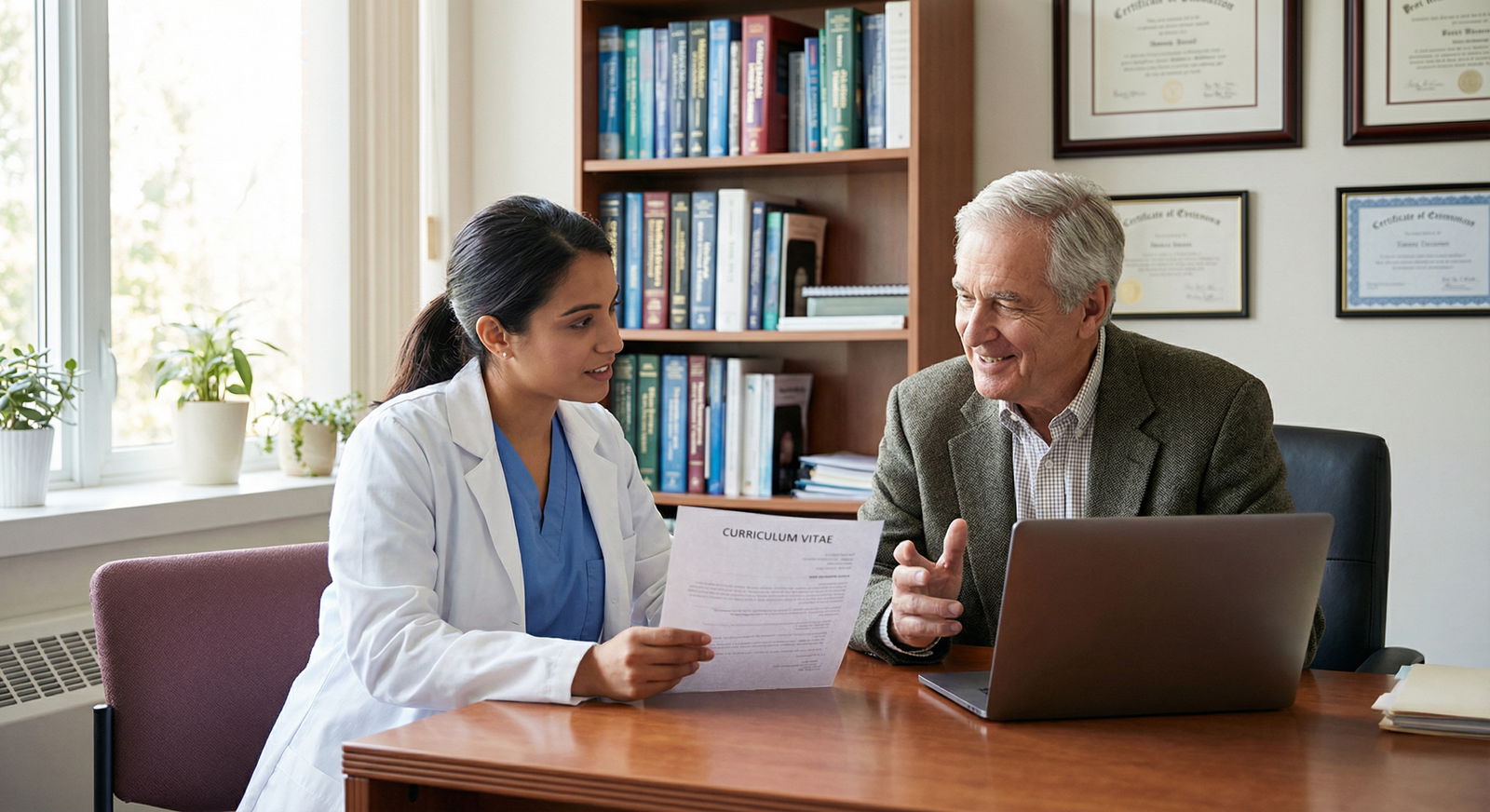
You don’t need to ask, “Will you be my mentor?” at the first meeting. Let the relationship develop over a few interactions.
2. Making the Most of Formal Mentorship Programs
Many Residency Programs assign formal mentors:
Treat this like a real opportunity, not a checkbox
- Schedule an initial meeting early in PGY-1.
- Prepare a short, focused agenda: introduce yourself, share your interests, ask about their career journey.
- Request advice on 1–2 concrete decisions (e.g., electives, early research ideas).
Follow up and follow through
When they make suggestions or introductions, act on them and report back. This reinforces that their investment in you is worthwhile.
3. Creating Informal Mentorship Relationships
Some of your best mentors may emerge informally:
- A senior resident who helps you through your first ICU rotation
- An attending whose teaching style or career path resonates with you
- A researcher outside your department with overlapping interests
You can cultivate these by:
- Asking for a brief meeting to learn more about their work
- Requesting feedback after a rotation or presentation
- Offering to help with a project that aligns with your goals
4. The Role of Sponsors vs. Mentors
Mentors advise you. Sponsors advocate for you.
- Sponsors are often senior people who:
- Nominate you for awards or committees
- Introduce you to influential colleagues
- Recommend you for positions and fellowships
Sponsors usually emerge from mentorship relationships where you have:
- Demonstrated reliability
- Produced strong work
- Clearly communicated your goals
Aim over time to build both mentorship and sponsorship into your network.
Using Medical Conferences as High-Yield Networking Opportunities
Medical Conferences can accelerate your networking far beyond what’s possible at home—if you prepare.
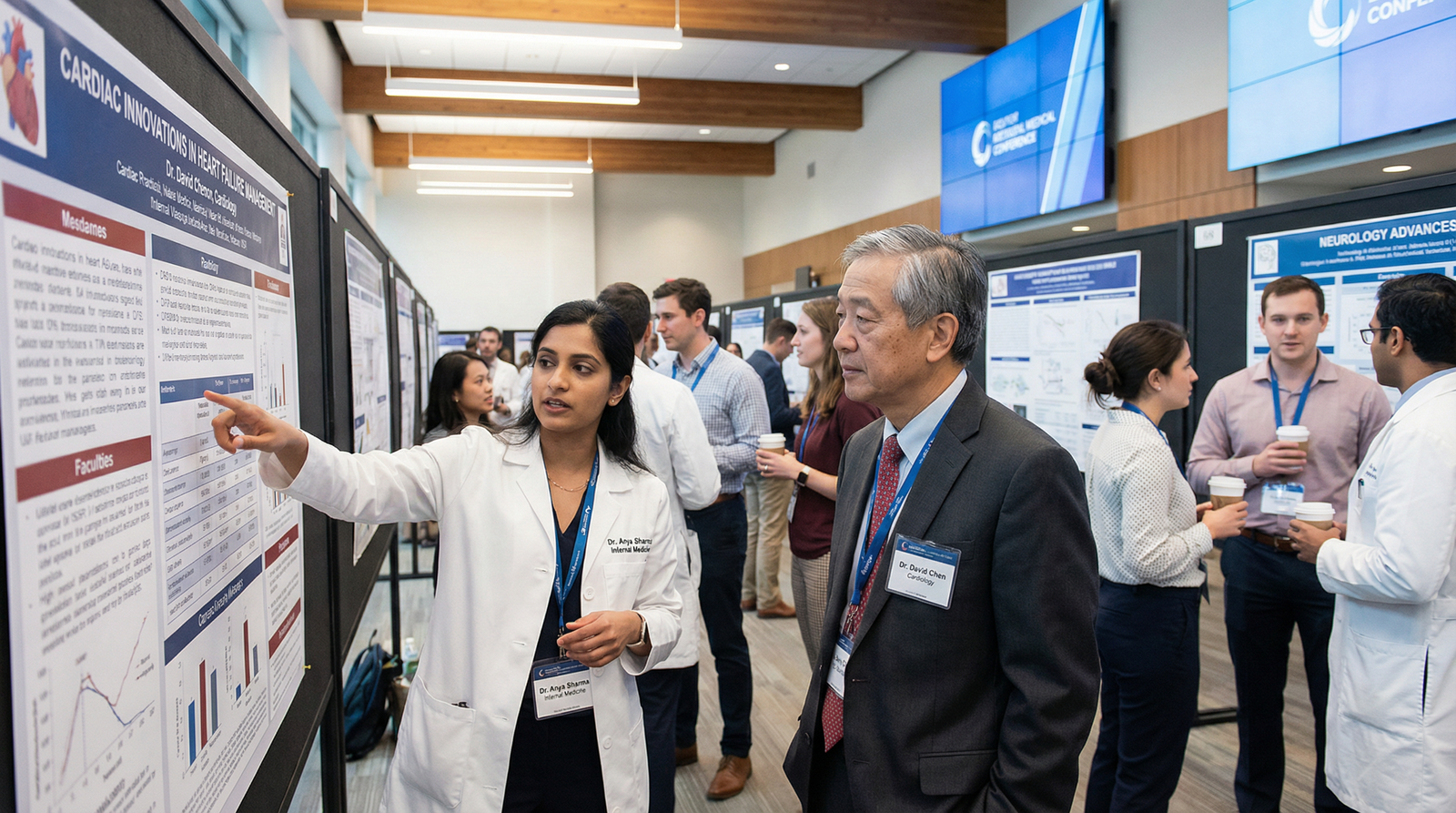
1. Presenting Your Work: Poster, Oral, and Workshop Opportunities
Whenever you can, present:
Posters
- Great for early research or QI projects.
- Force you to distill your work and talk about it efficiently.
- Natural conversation starter—people walk up to you.
Oral presentations
- Increase your visibility and reputation.
- Offer a platform to showcase your communication skills.
Workshops
- Even as a resident, you might co-lead a workshop on teaching skills, wellness, or QI.
- Positions you as an educator and collaborator.
After your session, follow up with attendees who showed interest. Exchange contact information and consider future collaboration.
2. Planning Your Networking Strategy Before the Conference
Before you travel:
Review the program and identify:
- Sessions and speakers that match your interests
- Programs you might want to apply to for fellowship or jobs
- Society committees that accept resident members
Email 2–5 people in advance:
- “I’ll be attending [Conference]. I’m a PGY-2 interested in [area]. I’ve followed your work on [topic]. Would you have 10–15 minutes to meet for coffee during the meeting?”
This transforms a large, impersonal conference into a series of targeted, meaningful meetings.
3. Networking During the Conference
Maximize your time on-site:
- Attend resident or trainee-focused events
- Go to specialty interest group meetings
- Introduce yourself briefly after talks:
- “I really enjoyed your session on [topic]. I’m a resident at [institution] interested in [related area]. Could I follow up by email about potential ways to get involved?”
Always have:
- A professional email address
- Updated LinkedIn profile
- A simple way to share your contact (QR code, LinkedIn QR, or digital card)
Following Up and Maintaining Your Network Over Time
Meeting people is only the first step. The long-term value of Networking in Medicine comes from nurturing those relationships.
1. The Art of the Follow-Up
Within 48–72 hours after meeting someone:
Send a brief email or message:
- Thank them for their time or conversation.
- Reference a specific part of your discussion.
- Mention one concrete next step (e.g., “I’ll send you my updated CV,” or “I’ll reach out in October about that elective opportunity.”)
Connect on LinkedIn with a personalized note:
- “It was great speaking with you at [event]. I appreciated your advice on [topic] and would love to stay connected.”
2. Staying Genuinely Engaged
Over months to years, maintain relationships by:
Sending an occasional update:
- “I wanted to share that I matched into [fellowship]—your advice about X was really helpful along the way.”
- “I recently presented our project at [conference]; here’s a brief summary of the feedback we received.”
Sharing resources:
- Articles, guidelines, or opportunities you think they might find interesting.
- This shows you’re not only taking from the relationship, but also giving back.
3. Being a Good Colleague and Network Member
Your reputation is your most powerful networking asset:
- Be reliable—meet deadlines, show up on time, and follow through on commitments.
- Be kind and respectful to everyone—peers, staff, and faculty.
- Give credit generously—acknowledge others’ contributions in projects and presentations.
People remember how you make them feel as much as how skilled you are clinically.
Real-World Networking in Medicine: Case Examples
Case Study 1: Networking to a Dream Fellowship
Dr. Jane Doe, an internal medicine resident, was interested in cardiology. During PGY-1:
- She introduced herself to a cardiology attending after grand rounds and asked about getting involved in a small QI project.
- Over two years, that attending became her mentor and eventually her sponsor—introducing her to colleagues at a national cardiology meeting.
At the conference, she:
- Presented a poster on their shared QI work
- Met program leadership from multiple cardiology fellowships
- Followed up afterward with tailored emails
When application season arrived, her mentor personally called a program director at her top-choice fellowship to recommend her. She matched there—through a combination of hard work and strategic relationship-building.
Case Study 2: Cross-Institutional Research Through Conferences
Dr. John Roe, a family medicine resident, developed a strong interest in diabetes management and community health:
- He attended a national primary care conference and went to a breakout session on innovative diabetes interventions.
- After the session, he introduced himself to the speaker, an endocrinologist leading a multi-center project.
They exchanged contact information. Dr. Roe followed up with:
- A concise email thanking the speaker
- A short description of his clinic population and interest in implementation research
Within months, he was integrated into a collaborative research network. This led to:
- A peer-reviewed publication with multiple well-known co-authors
- Invitations to present at additional meetings
- A stronger application for a future academic position
His network transformed his local interest into national-level impact.
FAQs: Networking After the Match for Residency and Beyond
1. Why is networking important in medicine if I’m already matched?
Even after you match into a Residency Program, your journey is just beginning. Networking:
- Shapes your career development and helps you clarify long-term goals
- Opens doors to fellowships, jobs, and leadership positions that may never be publicly advertised
- Facilitates research and QI collaborations that strengthen your CV
- Provides mentorship, sponsorship, and emotional support in a demanding profession
- Keeps you informed about new guidelines, technologies, and trends in your field
Your match determines where you start—not where you finish.
2. How can I start networking post-match without feeling fake or transactional?
Focus on building real relationships rather than “working the room”:
- Start with people you already interact with—co-residents, attendings, chiefs.
- Be curious: ask about their career paths and what they enjoy about their work.
- Offer help where you can—join projects, volunteer for committees, share resources.
- Follow up consistently and express genuine appreciation.
Authentic networking is about mutual respect and shared interests, not self-promotion alone.
3. What are the most high-yield networking activities during residency?
Some of the best-return activities include:
- Getting involved in at least one project (research, QI, education) with a faculty mentor
- Presenting your work at local, regional, or national Medical Conferences
- Joining your specialty’s professional society and attending trainee events
- Regularly attending grand rounds and talking to speakers afterward
- Building strong relationships with program leadership and senior residents
These activities simultaneously grow your skills, your CV, and your network.
4. Should I only network within my own specialty?
No. While you should absolutely build depth within your specialty, cross-specialty connections are powerful:
- Complex patients require multidisciplinary care—knowing colleagues in other fields improves patient outcomes.
- Interdisciplinary research (e.g., medicine + public health, surgery + engineering) is increasingly valued.
- You may discover unexpected career interests or collaborative opportunities through colleagues in other departments.
Think of your network as a web, not a straight line.
5. How can I maintain my network over years as I move between institutions?
As you transition from medical school to residency, then to fellowship or your first job:
- Keep your contact information (especially email and LinkedIn) current.
- Send occasional updates to key mentors, sponsors, and collaborators.
- Reach out when you’re making big decisions (specialty choice, fellowship applications, job searches).
- Continue to attend Medical Conferences and society meetings where your network gathers.
Professional relationships in medicine can last decades and span multiple institutions—if you nurture them.
Investing in networking after the match is not optional if you want a fulfilling, flexible, and impactful career in medicine. Start early, be intentional, and build relationships grounded in authenticity and integrity. The connections you cultivate now will not only expand your opportunities—but also help you become the kind of physician others are proud to know and recommend.