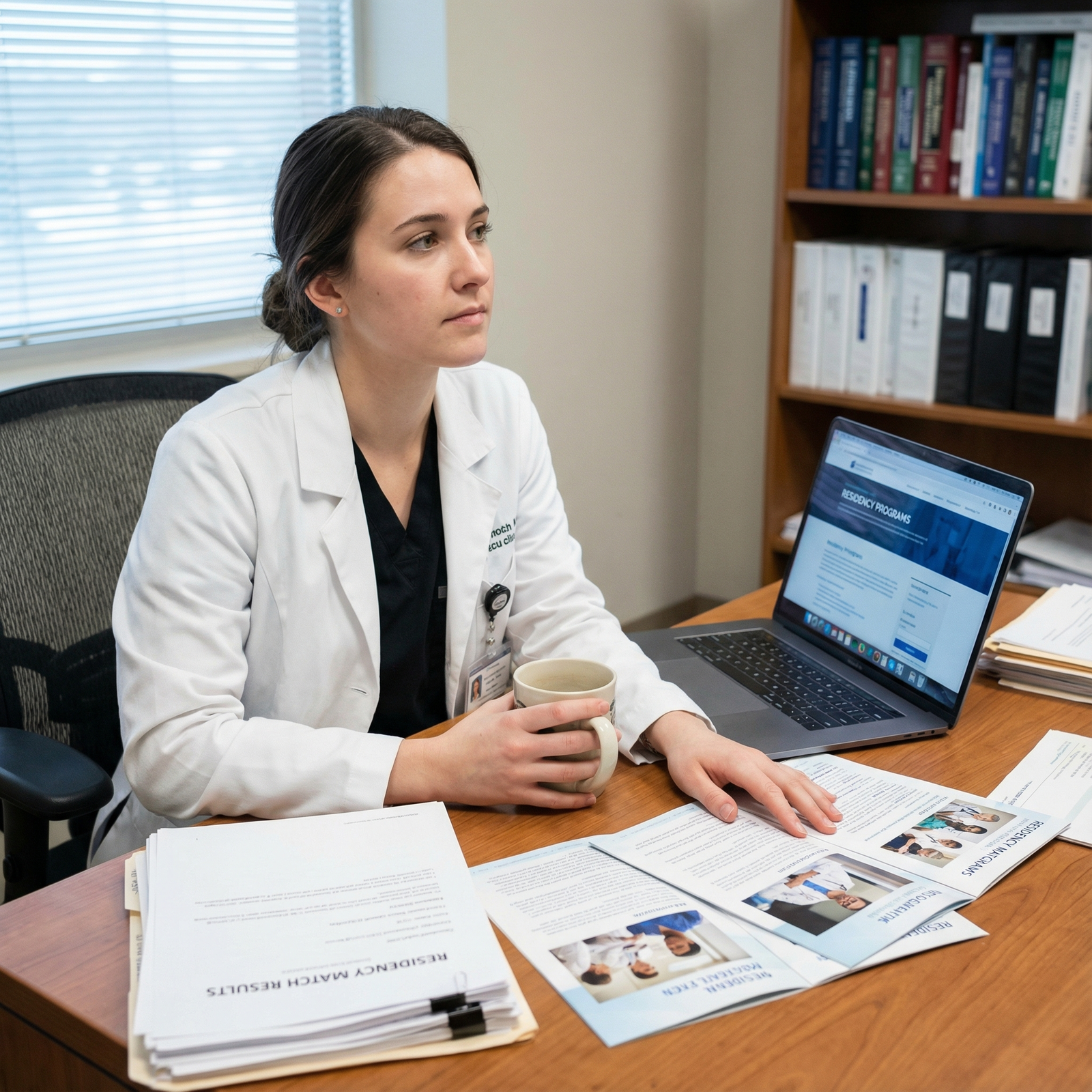
The Supplemental Offer and Acceptance Program (SOAP) is one of the most intense and consequential weeks in medical education. For unmatched or partially matched applicants, SOAP represents a critical second pathway into residency—and with it, continued progression in your medical career.
While SOAP can feel rushed and overwhelming, applicants who approach it with strategy, preparation, and flexibility can dramatically improve their chances of securing a residency position. This guide explains how SOAP works, what to expect, and concrete steps to maximize your success.
Understanding SOAP in the Residency Match Process
Before developing a strategy, you need a clear understanding of what SOAP is, what it is not, and how it fits into the broader residency match and career development landscape.
What Is SOAP?
SOAP (Supplemental Offer and Acceptance Program) is a structured, time-limited process run by the NRMP for eligible unmatched and partially matched applicants to compete for unfilled residency positions.
Key points:
- It occurs during Match Week, following the release of “Did I Match?” results.
- Only applicants who are SOAP-eligible (unmatched or partially matched and registered for the Match) can participate.
- Positions available through SOAP are unfilled after programs submit their rank lists in the main Match.
- All applications are submitted through ERAS, and communication rules and timelines are tightly controlled by NRMP.
SOAP is not a “free-for-all scramble.” It is a regulated, round-based process with strict rules that programs and applicants must follow.
SOAP Timeline and Major Phases
While exact dates change each year, the basic flow is consistent. Knowing the structure ahead of time helps you stay calm and organized.
Typical sequence:
Monday (AM): “Did I Match?” Notification
- You learn whether you are:
- Fully matched
- Partially matched (e.g., advanced but no prelim, or prelim but no advanced)
- Unmatched
- You learn whether you are:
Monday (Midday): List of Unfilled Programs Released
- SOAP-eligible applicants can see which programs and specialties have unfilled positions.
Application Window Opens
- You can submit a set number of applications (usually up to 45 programs) via ERAS.
- No direct unsolicited contact with programs is allowed unless permitted by NRMP rules.
SOAP Rounds of Offers (Tuesday–Thursday)
- Programs review applications.
- Several offer rounds occur at set times.
- You may receive offers, which you must accept or reject within a short time window.
- Once you accept a position, you are matched there and exit SOAP.
Post-SOAP
- Any remaining unfilled positions may become available outside SOAP.
- You can reassess and plan for the next steps in your career development.
Key Features of SOAP
- Centralized Communication: Offers come through NRMP’s system; you accept or decline there.
- Application Limits: There is a cap on the number of programs you can apply to, so strategy matters.
- Speed and Structure: The process unfolds quickly over a few days; preparation ahead of time is essential.
- Multiple Specialties: Many applicants apply across different specialties and program types (prelim, transitional, categorical).
Understanding this framework allows you to tailor your strategy and make informed decisions under time pressure.
Foundation for Success: Preparation Before Match Week
The most successful SOAP experiences are built long before Match Week. Even if you are hopeful about matching, having a SOAP contingency plan is a smart, low-risk form of career insurance.
1. Optimize Your ERAS Application in Advance
Your ERAS application during SOAP is the same application you used for the main Residency Match, with the ability to update certain sections. If you suspect you are at higher risk of going unmatched (e.g., lower scores, limited interviews, prior failures, non-US graduate), proactive preparation is critical.
Core elements to refine and update:
Personal Statement(s)
- Have multiple versions ready:
- One for your primary specialty.
- Additional versions for realistic backup specialties you might consider in SOAP (e.g., Family Medicine, Internal Medicine, Psychiatry, Prelim Surgery, Prelim Medicine).
- Emphasize:
- Your fit for that specific specialty.
- Clinical strengths, professionalism, and teachability.
- Clear career trajectory that seems aligned with the specialty (e.g., primary care, hospital medicine, psychiatry, surgery).
Keep these versions saved and labeled so you can quickly assign them to programs during SOAP.
CV and Experience Entries
- Update all:
- Clinical rotations (especially audition rotations and sub-internships).
- Research, leadership, and volunteer experiences.
- Teaching and mentorship roles.
- Highlight:
- Teamwork.
- Reliability.
- Adaptability.
- Any experiences that show resilience or growth after challenges (e.g., repeating a rotation, improving test performance).
Letters of Recommendation
You cannot obtain new letters mid-SOAP, so think ahead:
- If you know you might SOAP into backup specialties, preemptively request letters from attendings in those fields.
- Aim for:
- 3–4 strong letters total, including at least one from your primary specialty and one from a potential backup specialty if applicable.
- Ensure the letters are uploaded to ERAS early enough to be used in SOAP.
2. Clarify Your “Plan B” and “Plan C”
Effective SOAP strategy is part of broader career development planning.
Ask yourself honestly:
- Which backup specialties could I realistically see myself training in?
- Am I open to a preliminary or transitional year as a bridge to reapplying for a desired categorical specialty?
- How flexible am I with:
- Geographic location?
- Program size (community vs academic)?
- Shifts in long-term career trajectory?
Discuss these questions with:
- Your dean or academic advisor.
- Mentors in your preferred and backup specialties.
- Recent graduates who have gone through SOAP or non-traditional paths.
Write down your priority tiers (e.g., Tier 1: categorical in any of 2–3 specialties; Tier 2: prelim positions in locations you can live in; Tier 3: wider geographic or specialty flexibility).
This clarity will help you make rapid, confident decisions during SOAP offer rounds.

Strategic Application During SOAP: Where and How to Apply
Once SOAP starts, time moves quickly. Strategic, data-driven decisions about where to apply can significantly impact your outcome.
3. Analyze Available SOAP Positions Quickly and Rationally
When the list of unfilled residency positions is released:
- Sort positions by:
- Specialty.
- Categorical vs preliminary vs transitional.
- Geographic region.
- Focus first on specialties and programs where your application is competitive and consistent with your experience and interests.
Sources of insight:
- NRMP Charting Outcomes and specialty-specific match data:
- Gives you a sense of historical competitiveness.
- Your own interview history:
- If you interviewed broadly in Internal Medicine but not in Surgery, IM positions may be a more realistic SOAP focus.
- Advisors and mentors:
- Within the first few hours, discuss your profile with advisors who can guide you on where you are most likely to be successful.
4. Use Your Limited Applications Wisely
Because you can only submit a finite number of applications, avoid extremes:
- Too narrow (e.g., only a handful of highly competitive programs).
- Too scattered (e.g., applying randomly without regard to your fit or competitiveness).
A balanced strategy:
- Prioritize categorical positions in realistic backup specialties first.
- Include prelim or transitional year positions strategically:
- Especially if you are aiming for an advanced specialty (e.g., Radiology, Anesthesiology, Derm, Neuro) and still plan to reapply.
- Consider geographic flexibility:
- Applicants willing to move broadly often have better SOAP outcomes.
5. Tailor Your Application Materials to SOAP Programs
You won’t have time to write completely new documents for each program, but you can:
- Use specialty-specific personal statements you prepared earlier.
- Write concise, targeted communication (when allowed) focusing on:
- Why you are a good fit for the specialty and their program type (e.g., community-based, primary care focus).
- Any regional ties or reasons you are genuinely interested in the location.
- Ensure your ERAS experiences and descriptions highlight transferable skills:
- Communication, continuity of care, procedural interest, hospitalist aspirations, etc., depending on the specialty.
Even small amounts of tailored content can distinguish you among many similar applications.
Communication, Networking, and Interviews During SOAP
Although SOAP has strict communication rules, professional networking and strong interview skills remain powerful tools.
6. Leverage Your Network—Within NRMP Rules
Networking in medical education is about respectful, professional relationships—not shortcuts. During SOAP:
Work Through Your School
- Ask your dean’s office or student affairs:
- Many schools actively reach out to programs on behalf of unmatched graduates.
- They may know which program directors or coordinators are open to hearing more about applicants they already know or have worked with.
Mentors and Alumni
- Contact mentors and alumni in:
- Your target specialties.
- Institutions with unfilled positions.
- Ask:
- Whether they know anyone at those programs.
- If they can advocate for you or at least alert programs to your application.
Keep all communication professional, concise, and respectful of timing, especially during hectic SOAP days.
7. Use Social Media and Online Platforms Strategically
Online platforms can support your SOAP efforts if used thoughtfully:
- LinkedIn:
- Update your profile with your medical education, interests, and clinical experiences.
- Connect with mentors, alumni, and residents in target specialties and institutions.
- Twitter/X and specialty organizations:
- Some program directors and residency accounts post about positions, program values, and updates.
- Forums (e.g., Reddit, Student Doctor Network):
- Use primarily for information sharing, timelines, and support.
- Verify all advice with official sources and your school; do not rely solely on anonymous posts.
Online visibility is secondary to the strength of your ERAS application, but it can help you learn more about programs and signal professionalism.
8. Excel in Rapid-Fire Virtual Interviews
Programs often perform brief, high-yield interviews during SOAP due to time constraints. These may be shorter or less formal than main-season interviews, but they are equally important.
Prepare for:
- Common questions:
- “Walk me through your journey and what brings you to our program.”
- “Why this specialty now?”
- “What did you learn from going unmatched?”
- “What are your strengths and areas you’re actively working on?”
- Red flag discussions:
- Exam failures or repeats.
- Gaps in training.
- Limited interviews.
Frame these honestly but constructively:
- Acknowledge the issue briefly.
- Emphasize what you learned.
- Demonstrate how you have addressed it (extra clinical work, dedicated study, feedback from mentors, reflection on professionalism).
Technical preparation:
- Test your audio, camera, and internet.
- Choose a quiet, well-lit, neutral background.
- Dress as you would for any professional residency interview.
- Keep a notepad with key points and program-specific questions.
Professionalism, Mindset, and Flexibility During SOAP
SOAP is as much a test of your professionalism and resilience as of your credentials.
9. Demonstrate Genuine Enthusiasm and Professionalism
Program directors want residents who:
- Are coachable.
- Work well in teams.
- Are motivated and reliable.
- Will enhance program culture.
Convey this by:
- Responding promptly to communication.
- Being courteous with program staff and coordinators.
- Showing authentic interest in the program’s mission (e.g., serving underserved communities, strong primary care emphasis, research focus).
Avoid:
- Negative comments about other programs, specialties, or your medical school.
- Sounding entitled or dismissive of certain locations or program types.
- Overly long or emotional emails; keep communication focused and professional.
10. Make Thoughtful, Timely Decisions on Offers
When you receive an offer in a SOAP round, you typically have a very short window to:
- Accept the offer (binding).
- Or let it expire/decline and risk not receiving another.
To prepare:
- Before offers begin, clearly rank:
- Which types of positions you would definitely accept.
- Which you would consider, depending on circumstances.
- Which you would decline, because they do not align with your minimal career or personal needs.
- Discuss edge cases with mentors:
- Is a prelim year far from home worth it if it increases your chances of a future reapplication?
- Are you willing to change specialties entirely for a categorical spot?
There is no universal right answer—only what best supports your long-term well-being and professional goals. What matters is that your decisions are intentional, not purely emotional in the moment.
11. Stay Organized and Support Your Mental Health
SOAP can be emotionally heavy. Structure and support matter.
Practical organization:
- Use a spreadsheet or tracker for:
- Programs you applied to.
- Specialties, locations, and program types.
- Communication, interview times, and notes.
- Keep a printed or digital copy of the SOAP schedule with offer round times.
Emotional and mental support:
- Talk with:
- Family and friends who understand your goals.
- Counselors or wellness services at your school if stress is high.
- Normalize the experience:
- Many successful physicians have SOAPed or taken non-linear paths to residency.
- Being unmatched is a setback, not a permanent label of your worth or potential.

Learning From Real SOAP Experiences
Case examples can clarify how strategic choices and mindset affect outcomes.
Case 1: Pivoting Specialties and Succeeding
“Sarah” applied primarily in OB/GYN and received very few interviews. On Monday of Match Week, she learned she was unmatched.
What she did:
- Quickly met with her dean and an Internal Medicine mentor.
- Reviewed the list of SOAP positions and saw multiple IM categorical openings in regions she was open to.
- Used an Internal Medicine–focused personal statement she had drafted as a backup before Match Week.
- Her mentors emailed a few IM program directors where she had geographic ties, highlighting her strong clinical evaluations and patient communication skills.
- She interviewed virtually with several programs, clearly articulating why Internal Medicine aligned with her long-term interest in women’s health and primary care.
Outcome:
- Sarah matched into a community-based IM program through SOAP.
- She later pursued a women’s health track and reported high satisfaction with her new trajectory.
Key lessons:
- Flexible specialty planning and early backup materials.
- Active mentorship and networking.
- Honest reframing of career goals.
Case 2: Learning From an Initial SOAP Failure
“Tom” applied in a highly competitive specialty with minimal backup planning. He had few interviews and learned he was unmatched.
In his first SOAP:
- He had not prepared alternate personal statements or backup specialty letters.
- He submitted rushed applications without discussing strategy with advisors.
- He did not track his applications or follow up through his school.
- He did not receive a SOAP offer.
What changed the following year:
- He completed a research year and gained strong letters in Internal Medicine.
- He approached the next Match with a dual-application strategy:
- Reapplying to his dream field.
- Applying more broadly to categorical Internal Medicine.
- He also had a clear SOAP plan with IM and prelim options.
- That year, he matched into a solid IM program in the main Match.
Key lessons:
- A difficult SOAP outcome does not end your career.
- Strategic reflection, additional experience, and stronger mentorship can transform your next cycle.
If You Do Not Match Through SOAP
Even with excellent preparation, not everyone will match in SOAP. If that happens, you still have viable paths forward.
Options to consider:
Post-SOAP Open Positions
- Some programs may still have vacancies after SOAP that can be filled outside the NRMP process.
- Your school or mentors may know of institutions seeking residents or clinical staff.
Additional Clinical or Research Experience
- Take a structured research position or clinical fellowship (e.g., in a hospital-based role).
- Maintain clinical exposure, obtain new letters, and strengthen weak areas of your application.
Reassessing Specialty Choices
- Discuss candidly with mentors whether another specialty might be a better fit based on:
- Your performance.
- Interests.
- Market realities.
- Discuss candidly with mentors whether another specialty might be a better fit based on:
Improving Standardized Test Performance or Credentials
- If exams were a major weakness, plan focused remediation and retesting if applicable.
- Consider additional certifications or degrees (e.g., MPH, research fellowship) that support your goals.
Professional and Personal Wellbeing
- Address burnout, stress, or personal challenges that may have affected your performance.
- Use this period to build resilience and clarity, not just credentials.
Many physicians with non-traditional or delayed paths ultimately build fulfilling, impactful careers. Your trajectory may be different than planned, but it remains yours to shape.
FAQ: SOAP and Residency Match Strategy
1. What exactly is SOAP, and who is eligible to participate?
SOAP (Supplemental Offer and Acceptance Program) is an NRMP-organized process during Match Week allowing unmatched or partially matched residency applicants to compete for unfilled positions. You are generally eligible if:
- You registered for and participated in the Main Residency Match.
- You are unmatched or partially matched after rank list processing.
- You are not withdrawn, ineligible, or otherwise excluded by NRMP rules.
The NRMP publishes specific eligibility criteria each year; always check the current guidelines.
2. How many programs can I apply to during SOAP, and can I apply to multiple specialties?
The NRMP sets a limit on the number of SOAP applications you can submit (commonly up to 45 programs, but this can vary). Within that cap, you can apply to multiple specialties, including categorical and preliminary programs.
Strategic tips:
- Prioritize specialties where you are realistically competitive.
- Balance categorical and prelim/transitional options based on your long-term goals.
- Avoid scattering applications randomly across too many specialties without a coherent career rationale.
3. How can I stand out to residency programs during the intense SOAP period?
You can distinguish yourself in SOAP by:
- Having polished, specialty-specific personal statements prepared in advance.
- Ensuring your ERAS application clearly highlights your clinical strengths, professionalism, and teamwork.
- Demonstrating professionalism and enthusiasm in every interaction.
- Providing honest but constructive explanations for any red flags.
- Using your network of advisors, mentors, and alumni (within NRMP rules) to advocate for you and help programs understand your strengths.
Programs look for applicants who will be reliable, teachable, and positive contributors to their residency community.
4. What if I still do not match after SOAP? Is my medical career over?
No. Not matching after SOAP is a painful setback, but it does not end your medical career. Many physicians have experienced non-linear paths before securing residency positions. Productive next steps may include:
- Seeking post-SOAP unfilled positions or hospital roles.
- Completing a research or clinical fellowship year.
- Reassessing specialty choices with trusted mentors.
- Strengthening your application for the next cycle (additional experience, improved exams, better letters).
What matters most is your willingness to learn from the experience, seek feedback, and make deliberate changes.
5. How early should I start planning for SOAP, and should I plan for it even if I feel confident about matching?
You should begin thinking about SOAP months before Match Week, especially if:
- You have limited interviews.
- You are applying to highly competitive specialties.
- You have known application weaknesses.
Even applicants who feel confident about matching benefit from having:
- Updated ERAS documents.
- A draft backup personal statement.
- Preliminary ideas about alternate specialties or locations.
Planning for SOAP is not pessimism—it is responsible, proactive career development in a competitive training environment.
Approaching SOAP with preparation, flexibility, and professionalism can transform a stressful week into a pivotal opportunity. By understanding the process, leveraging your network appropriately, and making thoughtful, data-informed decisions, you significantly improve your chances of securing a residency position and moving forward in your medical career.