
The worst mistake after not matching is drifting. The first month decides whether you recover strategically or just emotionally.
You do not have time to “see how things go.” You need a week‑by‑week plan. Day‑by‑day in some spots. That’s what I’ll give you.
Overall Month 1 Game Plan
Here’s the blunt reality:
- You have 4 critical weeks after not matching.
- Every week has a different job.
- If you try to do everything at once, you’ll do nothing well.
At a high level:
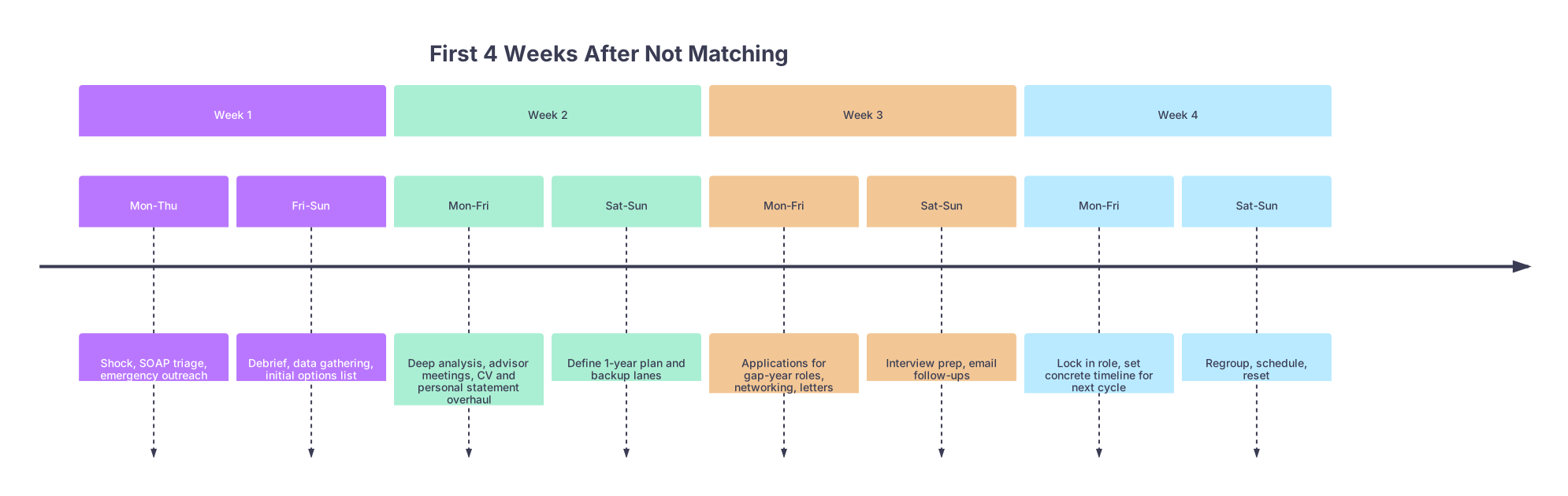
| Period | Event |
|---|---|
| Week 1 - Mon-Thu | Shock, SOAP triage, emergency outreach |
| Week 1 - Fri-Sun | Debrief, data gathering, initial options list |
| Week 2 - Mon-Fri | Deep analysis, advisor meetings, CV and personal statement overhaul |
| Week 2 - Sat-Sun | Define 1-year plan and backup lanes |
| Week 3 - Mon-Fri | Applications for gap-year roles, networking, letters |
| Week 3 - Sat-Sun | Interview prep, email follow-ups |
| Week 4 - Mon-Fri | Lock in role, set concrete timeline for next cycle |
| Week 4 - Sat-Sun | Regroup, schedule, reset |
We’ll walk this step by step. At each point I’ll tell you exactly what you should be doing.
Week 1: Shock, Triage, and Information (Days 1–7)
You just found out you didn’t match. Or SOAP didn’t work. Your brain is on fire. You still have to make decisions.
Day 1–2: Controlled Shock and Immediate Triage
At this point, you should focus on two things only: emotional containment and immediate opportunities.
Contain the emotional spiral (but don’t pretend you’re fine).
You are angry, ashamed, embarrassed. I’ve watched students vanish for 2 weeks here and wreck their next cycle. Do not do that.Very short checklist:
- Tell 1–2 trusted people (partner, friend, mentor) what happened.
- Turn off social media for 48–72 hours if Match posts are wrecking you.
- Write down every catastrophic thought, then write one sentence next to each about what you can actually do (e.g., “I will apply to research positions in IM”).
Clarify your immediate status.
- Did you SOAP and get no offers?
- Did you skip SOAP?
- Did you partially match (prelim only, no advanced)?
That status drives your next year. Write it clearly in one line.
Notify key people.
Before rumors swirl:- Email your school’s Dean of Students / GME office: short, factual, calm.
- Tell your primary advisor/program director equivalent (if you had a home specialty).
- If you had strong letter writers, let them know you didn’t match and that you’ll likely reapply.
Script you can adapt:
“I wanted to let you know that I did not match / did not secure a SOAP position this cycle. I’m committed to reapplying and would really value your guidance on next steps. Could we set up a 20–30 minute meeting in the next 7–10 days?”
If SOAP is active right now (for some readers it is when they see this):
- Drop everything non‑SOAP.
- Lean on your school’s match support team.
- Rank ANY acceptable preliminary/transitional or open categorical positions that keep you clinically active. Prestige is irrelevant now. Survival and trajectory matter.
Day 3–4: Initial Data Pull – Know What Went Wrong
By mid‑week, the shock is wearing off. This is where people either get serious or start rationalizing.
At this point, you should be gathering hard data, not guessing.
Collect:
Scores & metrics
- USMLE/COMLEX scores and any fails
- Clinical grades, class rank if available
- Number and type of programs applied to
Application details
- Specialty or specialties you applied to
- Number of interviews received and attended
- Any red flags: leaves of absence, professionalism issues, late exams
Documents
- ERAS CV
- Personal statement(s)
- Letters list (who wrote them, from where)
Throw all of this into one folder. Name it “Match Debrief [Year]”. You’ll use it repeatedly.
Day 5–7: First Pass Analysis & Options List
By the end of Week 1, you need a working theory of why you did not match and a short list of realistic paths.
Step 1: Roughly diagnose the problem
Use a simple table like this to force yourself to be specific:
| Area | Strong / Average / Weak | Notes (Be Brutally Honest) |
|---|---|---|
| Scores (Step/COMLEX) | ||
| Clinical evals | ||
| Research | ||
| Letters | ||
| Specialty choice (competitiveness vs stats) | ||
| Number of programs applied |
Typical patterns I see:
- 210–220 Step 1/Step 2 with a shot at competitive specialties → wildly over-reaching.
- One exam fail → many programs screened you out automatically.
- Only 20–30 program applications in a competitive field → not enough volume.
- Late exams → full applications went in too late.
You do not need a perfect analysis yet. Just a working one.
Step 2: Draft your options list
By the end of Week 1, you should have 3–5 possible lanes for the coming year. Examples:
- Reapply to same specialty + strengthen in research and letters.
- Pivot from competitive field (e.g., derm, ortho) to IM, peds, FM, psych.
- Accept a prelim year and reapply (if you got prelim only).
- Do a structured research fellowship or chief year (some schools offer this).
- Work in a clinical adjacent role (scribe supervisor, clinical instructor) + targeted research.
Quick visual of common lanes:
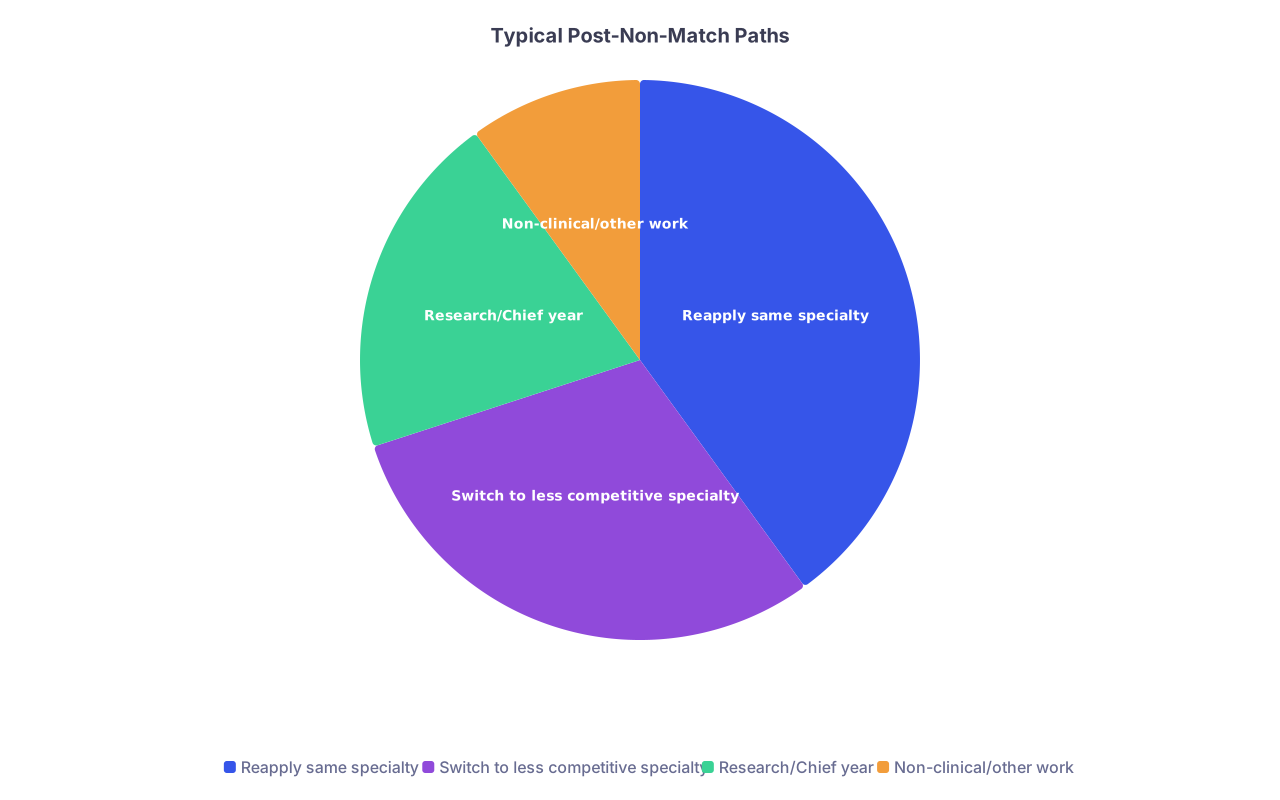
| Category | Value |
|---|---|
| Reapply same specialty | 40 |
| Switch to less competitive specialty | 30 |
| Research/Chief year | 20 |
| Non-clinical/other work | 10 |
Do not “pick” one yet. Just list them.
Week 2: Deep Debrief and Concrete Strategy (Days 8–14)
Now you’re past raw panic. This week is about clarity and planning.
Day 8–10: Meet With Advisors and Get Outside Eyes
At this point, you should not be making big decisions alone.
Schedule:
- Meeting with school advisor or Dean
- Meeting with at least one faculty mentor in your target (or possible new) specialty
- If available, meeting with your school’s career/match office
Bring:
- Your metrics and ERAS application
- Your rough self‑diagnosis
- Your tentative lanes
Questions to ask directly:
- “If I reapply in [same specialty], what is my realistic chance if I fix X, Y?”
- “If I switched to [backup specialty], would my application be competitive with one strong year?”
- “What has worked for previous unmatched grads from our school?”
- “Is there an internal research or fellowship position I should pursue?”
Do not let them dodge. Push for concrete answers, even if they’re uncomfortable.
Day 11–12: Decide on Your Primary Lane
By mid‑week, you need a provisional commitment.
At this point, you should choose:
Main goal:
- Reapply to same specialty
- or Switch specialties
- or Prelim → advanced strategy
Main focus for the next year:
- Research heavy
- Clinical heavy (prelim/TY)
- Mixed research + strong clinical exposure
Draw a simple decision flow for yourself:

| Step | Description |
|---|---|
| Step 1 | Did not match |
| Step 2 | Reapply same specialty |
| Step 3 | Consider switch specialty |
| Step 4 | Identify alternative specialties |
| Step 5 | Strengthen and accept longer odds |
| Step 6 | Specialty realistic with 1-year improvement |
| Step 7 | Research or clinical gap year |
| Step 8 | Willing to change field |
You’re not signing a blood oath. You’re giving your brain a working plan so you can take action.
Day 13–14: Rewrite Your Core Materials
This part feels early, but it isn’t. Jobs and positions for unmatched grads open quickly.
By the end of Week 2, you should have:
Updated CV (non‑ERAS format)
- 2–3 pages, clean, professional.
- Emphasize clinical rotations, research, teaching, leadership.
- Add a short “Professional Summary” at the top (2–3 lines: grad year, interests, goals).
Draft of a new personal statement or professional statement
Not the same one you used to apply to residency. A short, honest version for:- Research positions
- Hospital jobs
- Fellowship/gap year roles
A short email template explaining your situation
You will reuse this a lot. Something like:“I graduated from [School] in [Year] and applied to [Specialty] this match cycle but did not match. I’m planning to reapply in [Year] and am seeking [research/clinical] opportunities that will strengthen my application, particularly in [specific area]. I’m very interested in your work in [topic] and would appreciate the chance to discuss any potential positions or ways I might get involved.”
Week 3: Position Hunting, Networking, and Applications (Days 15–21)
This is the hustle week. You’re turning your plan into actual opportunities.
Day 15–17: Systematic Search for Gap-Year Positions
At this point, you should be in full job‑hunt mode.
Targets to search:
Research positions
- Your home institution: department coordinators, division chiefs.
- Nearby academic centers: IM, FM, psych, surgery, etc.
- Funded research fellowships (often in IM, cards, heme/onc, EM).
Clinical roles
- Preliminary/TY positions that may open late.
- Visiting resident/extern roles (for IMGs especially).
- Hospitalist extender, clinical instructor, or “clinical research coordinator” with significant patient exposure.
Other but relevant
- Teaching jobs (USMLE/COMLEX prep companies, anatomy or clinical skills teaching).
- Public health or quality improvement roles within systems.
Use a simple weekly goal chart to keep yourself from fake‑working:
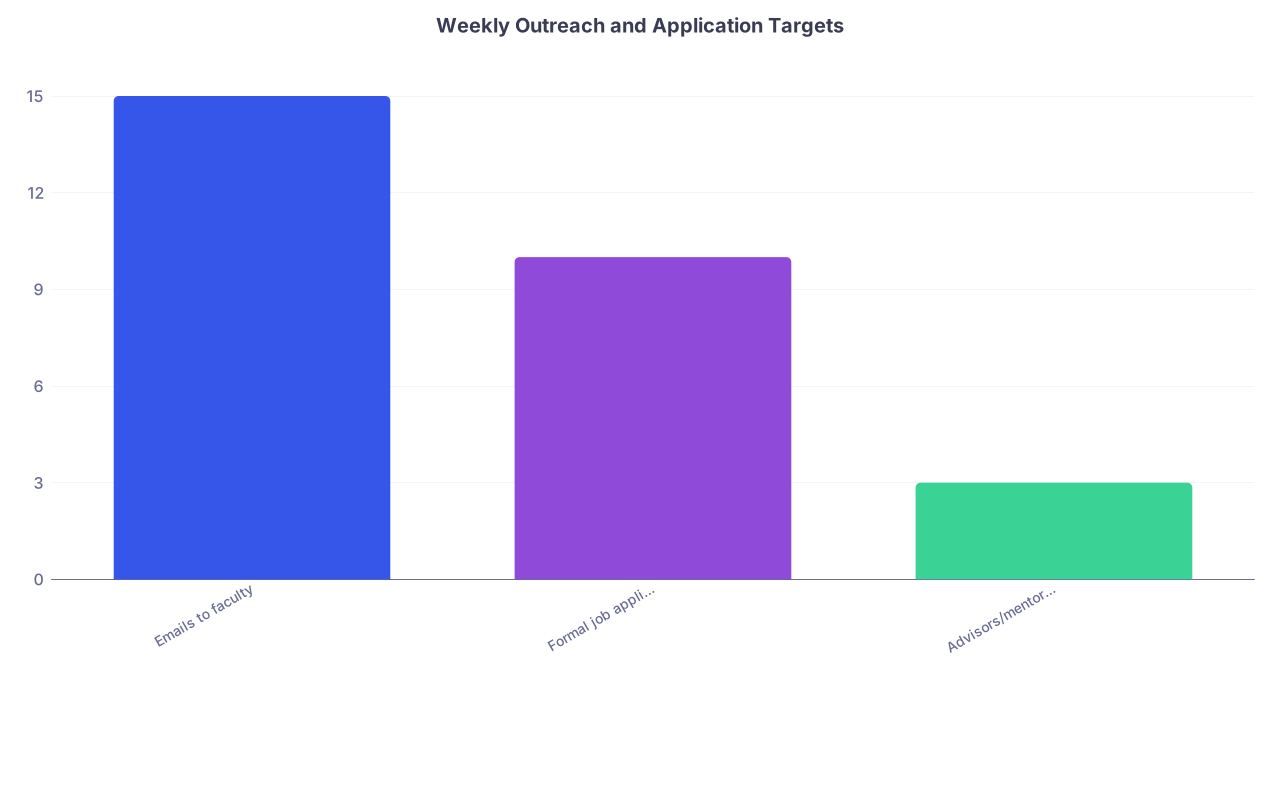
| Category | Value |
|---|---|
| Emails to faculty | 15 |
| Formal job applications | 10 |
| Advisors/mentors contacted | 3 |
Aim for numbers like that. Not 2 emails and “I tried.”
Day 18–19: Direct Outreach to Humans (Not Just Portals)
Here’s where most applicants wimp out. They submit online and wait.
You should be:
- Emailing specific faculty: “I read your paper on X…”
- Emailing program coordinators asking if any post‑match positions or research roles exist.
- Contacting recent grads from your school who did research years, prelim years, or switched specialties.
For each role you’re targeting:
- Send a tailored email + CV.
- Ask for a 10–15 minute call to discuss potential opportunities.
- Log every contact in a simple spreadsheet (date, person, role, status).
Day 20–21: Prepare for Quick Interviews
Opportunities for unmatched grads often move fast and informally. You do not want your first explanation of “why I didn’t match” to be clumsy.
By the end of Week 3, you should have:
A polished 60–90 second story:
- What happened
- What you learned
- What you’re doing now
- What you want from the next year
Clear answers to:
- “Why didn’t you match?” (Concise, factual, no self‑pity, no blaming.)
- “Why this position?” (How it specifically supports your reapplication.)
- “What’s your long‑term plan?” (Reapply to X, with focus on Y.)
If you can, do one mock conversation with:
- A friend,
- A resident you know,
- Or your advisor.
Week 4: Locking In Your Role and Structuring the Next Year (Days 22–30)
By now, you’ve collected information, reached out widely, and hopefully have some bites.
Day 22–24: Evaluate and Prioritize Offers/Options
You might have:
- A possible research position in your target specialty.
- A general research/quality job outside your specialty.
- A teaching role.
- Maybe a late‑opening prelim or transitional spot.
At this point, you should prioritize based on how strongly each option helps you match next year.
Criteria that matter:
Alignment with your reapplication specialty
Research in your field > random unrelated lab work.Access to letter writers
Will you work closely with attendings who can see your work ethic?Clinical exposure
Direct patient care or at least clinic/rounding is ideal.Productivity potential
Feasible to get at least one poster, paper, or significant project completed in a year?
Quick comparison structure:
| Factor | Option A (Research in target) | Option B (Prelim year) | Option C (Teaching only) |
|---|---|---|---|
| Specialty alignment | High | Medium | Low |
| Letters potential | High | High | Medium |
| Clinical exposure | Medium | High | Low |
| Research output | High | Low | Low |
You’re choosing the highest impact, not necessarily the most prestigious.
Day 25–27: Formalize the Position and Future Match Plan
Once you’ve picked your main lane (or have a leading option):
Lock in the role
- Get written confirmation (offer letter or email).
- Clarify start date, responsibilities, and expected time commitment.
- Ask explicitly: “Will there be opportunities for me to present, publish, or teach?”
Map your next 12 months for the next Match cycle
You need a timeline like this in your head:
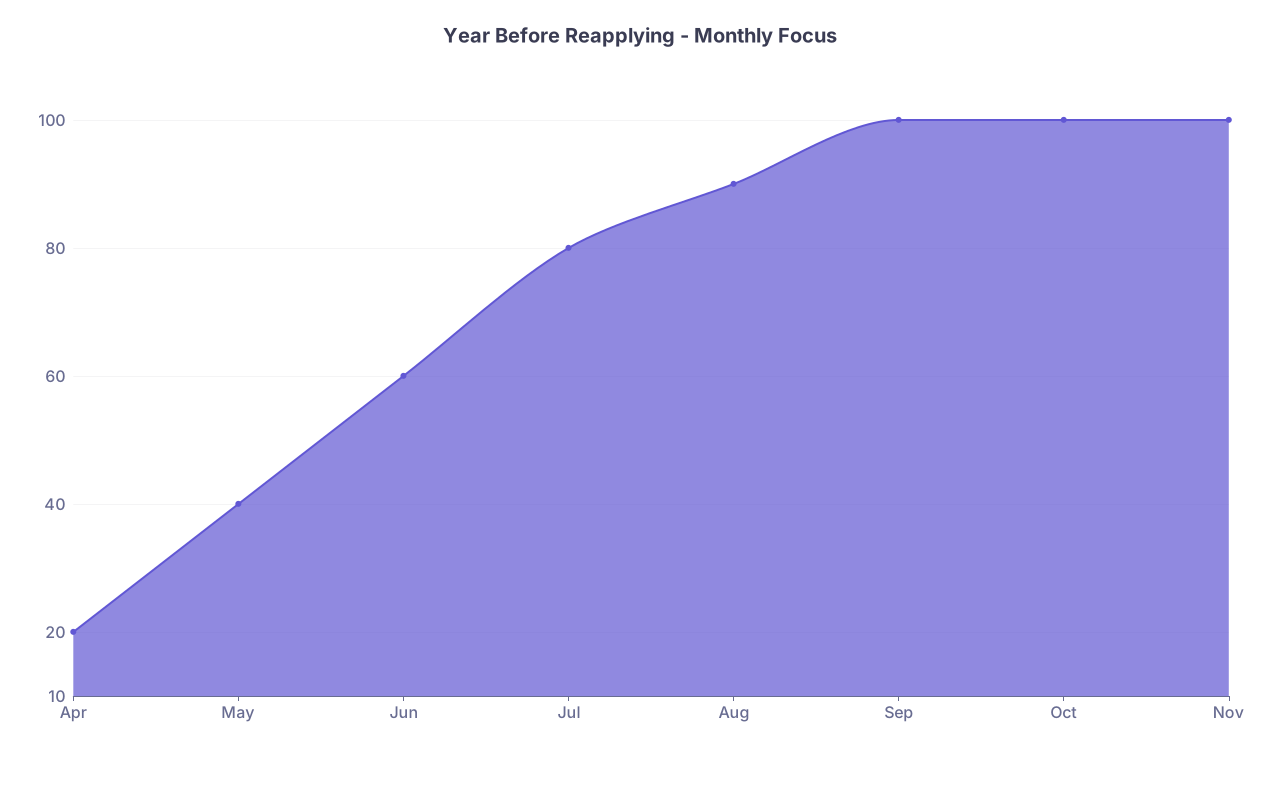
| Category | Value |
|---|---|
| Apr | 20 |
| May | 40 |
| Jun | 60 |
| Jul | 80 |
| Aug | 90 |
| Sep | 100 |
| Oct | 100 |
| Nov | 100 |
Where “100” means fully ready for ERAS with:
- New letters
- Strong recent experience
- Updated scores (if retaking Step 2 or COMLEX Level 2)
- Revised personal statement and application narrative
Specific tasks to plan:
- When you’ll ask for new letters (usually late summer).
- When you’ll polish a new personal statement.
- When you’ll schedule any needed exam retakes or new tests.
- When you’ll finalize your program list (including more safety programs).
Write this all down. Calendar it.
Day 28–30: Reset, Routine, and Damage Control
Last few days of Month 1 are about stability and reputation management.
Emotional reset
- Decide how you’re going to answer friends/family who keep asking “What happened?”
- Remove yourself from group chats or threads that constantly drag you back to Match drama if needed.
Daily and weekly routine Create a simple weekly template for the year:
- X days in clinic or lab
- X hours per week dedicated to:
- Board studying (if retaking)
- Research writing
- Application prep
Professional narrative You do not hide the non‑match; you frame it.
Something like:
- “I did not match this past cycle in [specialty]. I’m spending this year in [role] focusing on [skills/areas] and will be reapplying with a stronger application next year.”
You want that story to sound practiced and matter‑of‑fact, not defensive.
Quick Summary Checklist: What You Should Have by End of Month 1
By Day 30, minimally, you should:
- Have a clear, realistic primary plan for reapplying or pivoting.
- Have updated CV and a working personal/professional statement.
- Have sent dozens of targeted emails and applications for roles.
- Ideally have secured or be close to securing:
- A research/clinical gap‑year position,
- Or a prelim/transitional role.
- Know your testing plan (retakes or no).
- Have a basic 12‑month calendar with key milestones.
If you do not have these by the end of Month 1, your odds next cycle go down. Not to zero, but down. I’ve seen people recover from much worse—but not by waiting.