
It’s 4:30 pm on Match Day. Your email says “We are sorry to inform you…” and your group chat has gone quiet. You open Instagram. Then X. Then Reddit. Everyone else is posting “Matched!” banners and celebratory photos. Your stomach drops, your heart is pounding, and your thumb is hovering over “Create post.”
This is the danger zone.
You are not just a disappointed applicant right now. You are a future colleague whose digital footprint is about to get heavily scrutinized by program directors, faculty, and hospital HR. They will Google you. They will see what you post today, tonight, and in the weeks after not matching.
I’ve watched people blow real opportunities because of what they did online in the 72 hours after not matching. Months of Step studying and thousands of dollars in ERAS fees, all undermined by a single angry tweet or a reckless Reddit rant.
Let’s walk through the biggest social media mistakes in this moment—and how to avoid torching your reputation when you need it intact the most.
1. The Rage Post: Publicly Trashing Programs or the Match
This is the classic catastrophic move.
You feel wronged. Maybe you had strong scores, good letters, “should have” matched. So you open Twitter/X, Facebook, or a public forum and post something like:
- “The Match is rigged. PDs are corrupt.”
- “Program X is trash. They led me on and ghosted me.”
- “I guess they’d rather rank cheaters and nepotism babies than people who actually work.”
I’ve seen variations of all of these. And then I’ve watched the consequences hit.
Why this is so damaging:
It makes you look unprofessional and unstable.
Not matching is an emotional trauma. But programs are not going to parse the context. They will see:- Lack of emotional regulation
- Poor judgment under stress
- Potential future HR or patient complaint risk
Programs talk to each other. More than you think.
Faculty at Hospital A trained with faculty at Hospital B. PDs sit on committees together. They screenshot. They share. Your name gets associated with “trouble.”Nothing is ever really deleted.
- Screenshots, archives, third-party reposts
- Program coordinators and residents look at social media. They absolutely do.
What to do instead:
- If you must say something publicly right away, keep it neutral and brief, or say nothing:
- “Did not match this year. Processing and regrouping. Grateful for those supporting me.”
- Save the real venting for:
- A friend’s couch
- A therapist
- A trusted mentor
Not the internet.
Rule: If it feels cathartic to post in the moment, it’s probably a terrible idea professionally.
2. The Overshare: Turning Your Trauma into Content

The second major mistake: turning your unmatched status into a stream of raw, public, real-time therapy.
Examples I’ve seen:
- Long IG stories detailing:
- Specific scores
- How many interviews you got
- Which programs “jerked you around”
- TikToks crying about how unfair the system is, naming specialties or cities
- Reddit posts with so much detail that anyone in your region can easily identify you
Why it backfires:
You think you’re humanizing yourself. PDs see risk.
Vulnerability is good in real life. On public, permanent platforms, it’s very different. Program leaders might interpret:- Poor boundary control
- Potential future oversharing of patient or workplace issues online
- Difficulty separating personal emotional life from professional obligations
You lock in a digital identity as “the person who didn’t match.”
Months later, when you apply again:- They Google you
- The top result is your crying TikTok or your Reddit post
Not the narrative you want shaping your candidacy.
You invite commentary you’re not ready to handle.
Anonymous users:- Blaming you for not working hard enough
- Demanding your scores and credentials
- Accusing you of “playing the victim”
That adds harm when you’re already raw—and might trigger you into posting something even worse.
Safer approach:
- Use private or locked accounts if you need to share emotionally
- Or better: delay. Give yourself at least 72 hours before posting anything reflective, even if it’s “positive”
- When you do share, stay general:
- “Didn’t get the outcome I hoped for this Match. I’m disappointed but working on next steps. Thanks for the support.”
If the post requires emotional labor to write, you probably shouldn’t be doing it yet.
3. The Match Week Panic: Live-Posting Your SOAP or Backup Plans
You did not match. Now you’re in SOAP or considering a research year, prelim, or reapplication strategy.
Huge trap here: live-documenting your SOAP experience or your scramble in public.
I’ve seen:
- “Just applied to 35 prelim IM programs through SOAP, fingers crossed!”
- “Program X just rejected me in SOAP lol”
- “Got offered [specialty] spot at [small city hospital]—don’t know if I should take it or wait.”
Why this is dangerous:
Programs do not want their internal processes broadcast.
SOAP is already chaotic. Public commentary about:- Who rejected you
- Who is moving slow
- Who seems “desperate”
can seriously anger programs.
You look indecisive or entitled.
Posting publicly about:- Debating whether you’re “too good” for a certain program
- Being annoyed at certain offers
Will turn off exactly the people who might be willing to take a chance on you.
You reveal more about your application than you realize.
With enough details—specialty, region, type of program—people can:- Identify specific programs
- Infer your stats
- Build a partial picture that may be unflattering or inaccurate
Hard rule:
During SOAP and the immediate days after? No live commentary on:
- Specific programs
- Where you’re applying
- Who rejected you
- What offers you’re considering
Share that only with mentors, not timelines.
4. The “Private” Rant: Trusting DMs, Group Chats, or Fake Accounts
You think you’re safe in:
- Private Instagram stories with the “Close Friends” filter
- Group chats with classmates
- A throwaway Reddit or Twitter account
- Anonymous meme pages
You’re not.
I’ve personally seen:
- Screenshots from “close friends” stories printed and brought to professionalism committees
- Residents forwarding nasty comments from group chats to PDs
- “Anonymous” accounts easily linked to a specific student by writing style or repeated details
Typical mistakes:
- Calling specific programs:
- “Toxic”
- “Sketchy”
- “Predatory”
when you interviewed there and people recognize your story
- Making fun of co-applicants:
- “How did SHE match derm?”
- Mocking matched classmates’ Step scores or schools
Why it burns you:
One wrong person in the audience is all it takes.
People are petty. Envious. Or just drama-prone. A single person can:- Screenshot
- Forward
- Completely alter your reputation in faculty circles
You underestimate how small medicine is.
Medicine is tiny. Specialty communities are microscopic. That “anonymous” story about the “midwest ortho program with a malignant PD and only 2 ORs” narrows it to like 3 places.You reveal your character under stress.
Programs know everyone is stressed. They look at how you behave anyway. Ranting that crosses into:- Personal attacks
- Identity-based comments
- Mocking patients or vulnerable groups
is the kind of thing that ends careers before they start.
Safer outlet:
- In-person conversations with 1–2 trusted people
- Journaling
- Therapist or counselor
- Mentor outside your specialty
If you wouldn’t be comfortable with your words on a slide at Grand Rounds, don’t type them anywhere.
5. Posting Blame, Not Ownership
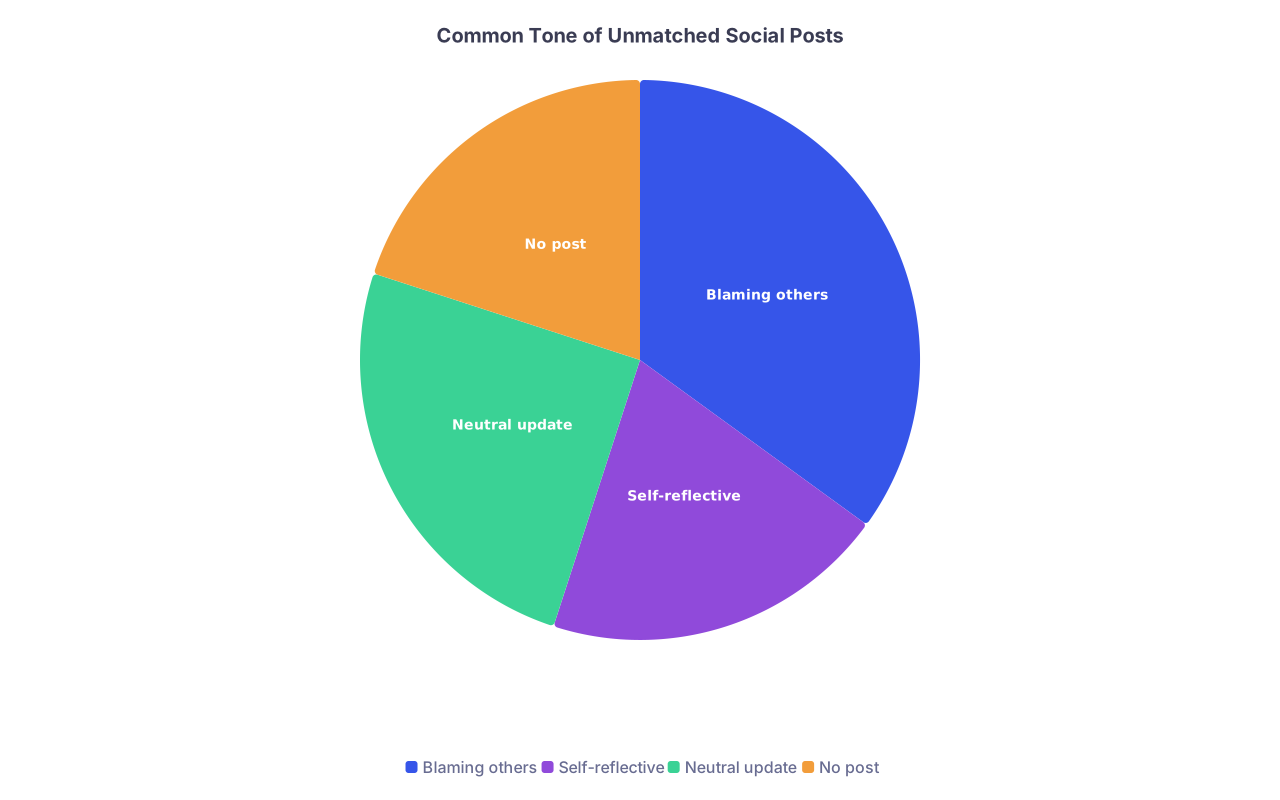
| Category | Value |
|---|---|
| Blaming others | 35 |
| Self-reflective | 20 |
| Neutral update | 25 |
| No post | 20 |
There’s a specific tone that kills people’s chances on reapplication: public victimhood with zero self-reflection.
I do not mean you should blame yourself for a broken system. The match process has structural issues. But when your entire public narrative is:
- “It’s all nepotism.”
- “International grads are being unfairly blocked.”
- “All they care about is Step score and connections.”
- “The system is broken; hard work doesn’t matter.”
You send one clear signal: I take no ownership.
Programs read that as:
- You won’t accept constructive feedback
- You’re more interested in blaming than problem-solving
- You might become a chronic complainer or legal risk when things go badly during residency
Better framing (publicly):
- “This process has real flaws, and I was affected by them. I’m disappointed, and I’m also actively working on X, Y, Z to improve my application for next cycle.”
- “I didn’t get the outcome I wanted this year, but I’ve talked with mentors and I’m focusing on strengthening [research/letters/Step 2/clinical experience].”
You can privately rage at the system. Publicly, show two things:
- Awareness of systemic issues
- Willingness to take specific, actionable steps on your side
That combo reads as mature rather than bitter.
6. Unprofessional “Coping” Content: Alcohol, Drugs, or Reckless Behavior
There’s another category of post-match social media disaster: the “dark humor” coping content that looks horrible to people deciding if you should care for patients.
Common examples I’ve seen after not matching:
- “Guess I’ll just drink until SOAP is over” with a table full of bottles
- Jokes about:
- “Self-medicating”
- “Needing benzos to get through this”
- “Who wants to do a line with an unmatched doc?”
- Party photos that same weekend:
- Clearly intoxicated
- Suggesting reckless behavior
- Captioned with something bitter or nihilistic
Why programs care so much:
Fitness for duty.
They are legally and ethically responsible for patient safety. Anything that looks like:- Problematic substance use
- Poor impulse control
- Self-harm jokes
is a red flag.
Professionalism committees exist and they are active.
A single concerning post can:- Trigger formal review
- Require remediation plans
- Delay or derail onboarding at future positions
You’re allowed to cope. You’re allowed to go out, cry, or sit in sweatpants for a week. Just do not turn maladaptive coping into content.
Baseline filter:
Can a future PD see this and still comfortably imagine you:
- On night float
- Managing high-risk patients
- Representing their program on the wards
If the answer is no, it does not belong online. Anywhere.
7. The Silent Killer: Neglecting to Clean Up Old Content
Some of you are not posting anything new. Good. But your old content might still hurt you.
I’ve seen reapplicants blindsided when a program quietly found:
- Political rants with hostile or discriminatory language
- Comments trashing nurses, PAs, or other specialties
- Low-effort memes that cross into misogyny, racism, or ableism
- Step 1 memes about “stupid” patients or “drug-seeking” people that did not age well
You may think, “That was from M1, it doesn’t count.” Programs disagree.
You need to audit your accounts. Yesterday.
| Category | Examples to Delete Quickly |
|---|---|
| Discriminatory | Slurs, stereotypes, hateful jokes |
| Patient mocking | Stories or memes about patients |
| Anti-colleague | “Nurses are lazy,” “FM is dumb” |
| Substance misuse | Bragging about heavy use |
| Unprofessional humor | Sexual, graphic, or cruel jokes |
Do this before:
- SOAP
- Reaching out for research positions
- Reapplying next cycle
You are not being paranoid. You’re being realistic.
8. What You Should Do Online After Not Matching
So what’s actually safe, maybe even helpful?
Here’s what doesn’t usually hurt you (when done thoughtfully):
Simple status acknowledgment (optional, not necessary)
- “I didn’t match this year. I’m disappointed but grateful for the support from friends and mentors. I’m working on my next steps.”
Keep it: - Short
- Sincere
- Free of blame and oversharing
- “I didn’t match this year. I’m disappointed but grateful for the support from friends and mentors. I’m working on my next steps.”
Quiet profile tightening
- Make older posts private or friends-only
- Remove questionable content
- Clean up bios that sound edgy or unprofessional
Targeted networking on LinkedIn or email
- Connect with alumni in your desired specialty
- Message: “I didn’t match this cycle and am exploring research or prelim options. Would you be willing to speak for 10–15 minutes?”
Not a public post. Direct, professional outreach.
Low-key academic presence (if you’re up for it later)
- Sharing accepted abstracts, posters, or publications
- Commenting professionally on clinical topics
Do this only once you’ve stabilized emotionally a bit.
If you’re unsure whether a post is safe, do this:
- Type it
- Save it to your notes app
- Re-read it in 72 hours
- If you still think it looks professional, maybe post a toned-down version
You almost never regret the post you did not make.
FAQ (Exactly 3 Questions)
1. Can programs really see my “private” social media if my account is locked?
They cannot see your private content directly, but they can easily see:
- Your profile photo, bio, and often your follower/following lists
- Any content someone in your circle screenshots and forwards
All it takes is one person in your “close friends” list who is careless, annoyed, or simply thinks “someone should know about this.” Don’t rely on privacy settings to protect you from bad judgment.
2. Is it ever okay to talk honestly online about not matching?
Yes, but timing, tone, and detail matter. If you want to share your story:
- Wait at least a few weeks until you’re less raw
- Focus on what you learned and what you’re doing next, not just how unfair everything is
- Avoid naming specific programs, interviewers, or colleagues
Think “professional reflection,” not “live meltdown.” Long-form blog posts or thoughtful threads months later are far safer than emotional posts on Match Day.
3. I already posted something angry—what should I do now?
Delete it immediately. Don’t argue in the comments, don’t “clarify,” don’t double down. Then:
- Stop posting for a while
- Do a full audit of your accounts for anything similarly risky
- If a mentor or dean you trust is aware of the post, be honest and own it as a lapse in judgment under stress
You can recover from one bad post faster than you think—if you stop adding fuel.
Key points to walk away with:
- The 48–72 hours after not matching are the highest-risk time for social media self-sabotage. Step away from the keyboard.
- Anything that looks like rage, blame, oversharing, or unprofessional coping can seriously damage your reapplication chances.
- You don’t need to build a personal brand right now. You need to protect your future. Silence and restraint online are not weakness; they’re strategy.