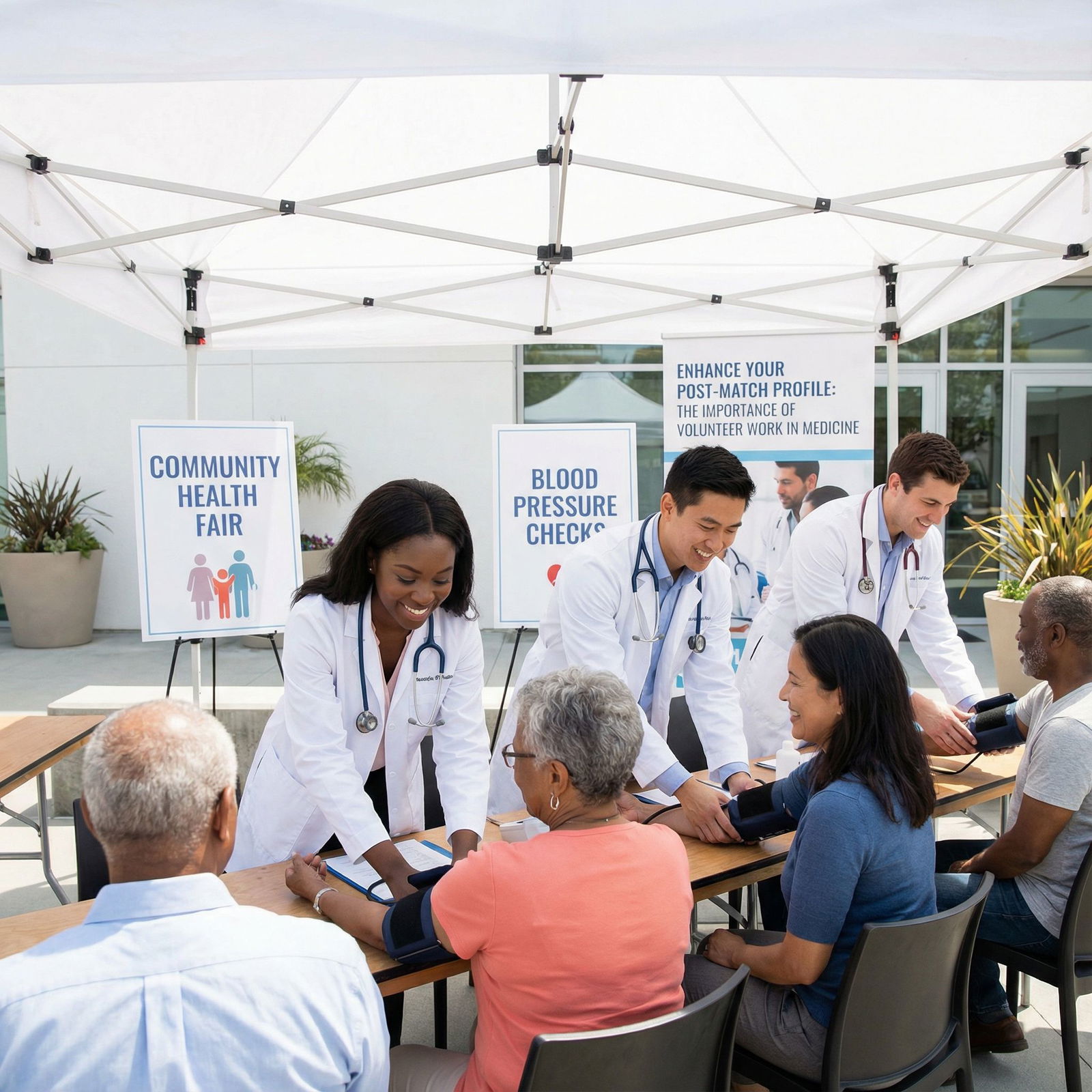
The Role of Volunteer Work in Strengthening Your Post‑Match Residency Profile
Introduction: Why Volunteer Work Still Matters After Match Day
Even after Match Day, your trajectory in medicine isn’t “set and forget.” Many residents continue building their professional identity, preparing for fellowships, competitive subspecialties, and long-term healthcare careers. As program directors, department chairs, and future employers review your post-match profile—CV, evaluations, scholarly work, and broader contributions—they look for more than board scores and clinical performance.
Strategic, meaningful volunteer work is one of the strongest differentiators you can bring to your post-match profile. It signals sustained engagement with patients and communities, shows that you understand medicine beyond the hospital walls, and showcases the kind of professional development that predicts long-term success in healthcare.
This article explores:
- Why volunteer work is so valuable for residents and late-stage medical students
- High-yield types of volunteer experiences in healthcare careers
- How to choose the right opportunities aligned with your goals
- Realistic examples of how volunteer work shapes residency and fellowship applications
- Concrete strategies for presenting volunteer experiences persuasively in your CV, ERAS updates, letters, and interviews
Whether you are a current applicant planning ahead, a newly matched resident, or someone seeking to strengthen your profile for future transitions, you can use smart community service to build a more compelling and enduring professional narrative.
Why Volunteer Work Is Powerful for Your Medical Residency Profile
1. Demonstrating a Genuine Commitment to Medicine and Service
In a crowded field of highly qualified applicants, decision-makers look for evidence that your interest in medicine goes beyond coursework and required rotations. Volunteer work in healthcare and community settings sends several strong signals:
- Sustained commitment – Longitudinal community service reflects that caring for others is part of your identity, not just a box to check for applications.
- Alignment with core medical values – Volunteer work showcases compassion, altruism, professionalism, and integrity—competencies explicitly valued by ACGME and residency programs.
- Service mindset – By working with patients and communities outside traditional clinical environments, you demonstrate that you see healthcare careers as a means to serve, not only as a profession or status.
Program directors frequently mention that they are drawn to applicants whose activities show a pattern of service and follow-through, rather than episodic, one-off participation. Thoughtful volunteer engagements can help you tell a coherent story about who you are as a physician.
2. Developing Critical Soft Skills for Residency and Beyond
Residency is as much about teamwork, communication, and adaptability as it is about medical knowledge. Volunteer work provides a lower-stakes environment to practice the soft skills that directly translate to clinical success:
- Communication skills: Explaining complex concepts (e.g., hypertension, diabetes, vaccines) in simple, culturally sensitive language to patients in community settings.
- Team-based collaboration: Working with non-physician volunteers, public health workers, and community leaders teaches you to respect diverse roles—crucial for interprofessional care.
- Leadership and project management: Leading a health fair, organizing a vaccination drive, or coordinating volunteers builds skills in planning, delegation, and evaluation.
- Cultural humility and empathy: Volunteer work with underserved or marginalized groups deepens your understanding of patients’ lived experiences and reinforces patient-centered care.
Residency milestones and competency-based evaluations increasingly assess these domains. Being able to draw on specific volunteer experiences gives you concrete examples for interviews, self-evaluations, and letters of recommendation.
3. Broadening Your Perspective on Health Systems and Equity
Many residents first encounter health disparities in fragmented ways through inpatient or clinic encounters. Community-based volunteer work offers a different vantage point:
- You see how social determinants of health—housing, food insecurity, transportation, employment, language barriers—shape outcomes long before patients show up in your ED or clinic.
- You gain insight into community health resources and gaps, which can inform how you discharge patients, refer them to services, and advocate for them during residency.
- You develop an appreciation for public health and population-level interventions, not just individual patient care.
This broadened perspective is powerful when you later apply for chief residency, quality improvement roles, population health positions, or fellowships in primary care, psychiatry, emergency medicine, and other fields committed to community and systems-based practice.
4. Strengthening Your Professional Network and Mentorship
Volunteer environments naturally connect you with a diverse network:
- Faculty and attending physicians running community clinics, outreach programs, or advocacy groups
- Public health professionals and nonprofit leaders working at the intersection of policy, education, and care delivery
- Peers and senior trainees who may become collaborators, co-authors, or future colleagues
These relationships often lead to:
- Strong, specific letters of recommendation highlighting your character, initiative, and leadership
- Opportunities to co-author papers or present posters on community-based projects
- Invitations to join institutional committees, task forces, or quality initiatives
In short, volunteer work can be the starting point for professional development pathways that are not accessible through routine clinical duties alone.

High-Impact Types of Volunteer Work for Residency Applicants and Residents
Not all volunteer experiences carry the same weight. For a post-match profile or future transition (e.g., fellowship applications), prioritize roles that connect clearly to healthcare careers, professional development, and patient care.
1. Clinical Volunteer Work: Extending Care Beyond Required Rotations
Clinical volunteering lets you contribute to patient care in supervised, structured settings outside mandatory training. Appropriate roles vary by your level of training and institutional policies, but may include:
Free or charitable clinics:
- Taking vitals, rooming patients, translating, helping with medication reconciliation
- Assisting with telehealth visits for those with limited access
- Helping coordinate referrals and follow-up
Community health centers or mobile clinics:
- Joining outreach teams screening for diabetes, hypertension, or HIV
- Participating in street medicine teams serving people experiencing homelessness
- Providing health education after screenings (e.g., what a high blood pressure reading means)
Student- or resident-run clinics:
- Taking on leadership roles (clinic coordinator, quality improvement lead, volunteer scheduler)
- Developing workflows, triage systems, or educational materials
These experiences demonstrate continuity of interest in direct patient care, comfort with diverse populations, and increasing responsibility over time.
2. Public Health and Community Health Initiatives
If you want to show an understanding of health at the population level, public health-oriented volunteer work is invaluable:
Vaccination campaigns and screening drives:
- Organizing COVID-19, influenza, HPV, or childhood immunization events
- Setting up workflows, registration systems, and follow-up reminders
- Collecting data and helping evaluate coverage or uptake
Health education programs:
- Delivering talks in schools, shelters, churches, or community centers on nutrition, exercise, reproductive health, addiction, or mental health
- Creating culturally and linguistically appropriate educational materials
- Using social media or community radio to share health information
Chronic disease management groups:
- Facilitating group visits for patients with diabetes, heart failure, or COPD
- Teaching self-management skills and providing peer support frameworks
These activities highlight your interest in prevention, patient empowerment, and longitudinal care—qualities prized in primary care, internal medicine, pediatrics, psychiatry, and family medicine.
3. Research and Health Policy/Advocacy Organizations
Volunteer involvement in research and advocacy can merge your interest in evidence-based medicine with system-level change:
Clinical and outcomes research support:
- Assisting with data collection, chart review, or patient recruitment in community-based trials
- Helping analyze data on health disparities, access to care, or quality metrics
- Co-authoring abstracts or posters on volunteer-driven projects
Health policy and advocacy:
- Collaborating with organizations focused on access to care, insurance coverage, immigrant health, reproductive rights, or mental health parity
- Participating in legislative visits, policy brief drafting, or community organizing
- Writing op-eds or educational content for advocacy groups
Adding these elements to your volunteer profile makes you attractive to programs with strong community, policy, or academic missions and can support later applications to fellowships in public health, health services research, or academic medicine.
4. Non-Clinical Service that Still Aligns with Professional Identity
Not every valuable volunteer experience is clinical. Some non-clinical roles can still meaningfully enhance your medical residency profile:
Tutoring and mentoring:
- Supporting premed or early medical students, especially from underrepresented backgrounds
- Mentoring high school students interested in healthcare careers
- Leading pipeline program sessions at local schools or community centers
Disaster relief and emergency response:
- Volunteering with organizations like the Red Cross or local emergency management services
- Assisting in shelters, basic first aid, or logistics during crises, within your level of training
Community leadership roles:
- Serving on boards of local nonprofits focused on health, housing, or social services
- Coordinating food drives, housing support, or legal aid navigation in partnership with medical-legal partnerships
Frame these experiences in terms of skills directly relevant to residency: leadership, communication, resilience, and systems-based practice.
How to Choose the Right Volunteer Opportunities for Your Goals
1. Align Activities with Your Specialty Interests and Long-Term Vision
Intentional alignment strengthens your narrative. Examples:
Pediatrics:
- Volunteer in children’s hospitals, school health programs, early childhood development centers, or organizations focused on child advocacy or foster care support.
Psychiatry:
- Support crisis hotlines, suicide prevention programs, school-based mental health initiatives, or community organizations addressing addiction and recovery.
Internal Medicine / Family Medicine:
- Work with chronic disease management programs, free primary care clinics, refugee health initiatives, or outreach to older adults.
Emergency Medicine:
- Join disaster response teams, harm-reduction outreach, or street medicine programs serving at-risk populations.
This doesn’t mean every activity must be specialty-specific. However, having at least one or two experiences that clearly complement your intended field makes your post-match profile feel cohesive and purposeful.
2. Prioritize Depth, Continuity, and Responsibility Over Volume
Program directors can easily distinguish between:
- A list of brief, fragmented volunteer entries done for “checkbox” purposes
- Vs. a small number of sustained commitments with increasingly meaningful roles
Aim for:
- At least one longitudinal experience (e.g., 1–2 years of consistent involvement)
- Evidence of growth: starting as a general volunteer, then becoming a coordinator, educator, or project lead
- Documented impact, such as improved attendance, better processes, or measurable outcomes
Depth allows you to tell rich stories about challenges, ethical dilemmas, and lessons learned—critical for strong personal statements and interviews.
3. Seek Leadership and Project-Based Opportunities
Once you are established in a volunteer setting, look for ways to move from participant to contributor to leader:
- Propose a new initiative: e.g., a hypertension education series at the free clinic where you volunteer.
- Lead a quality improvement project: streamline patient flow at the health fair, improve interpreter usage, or reduce missed follow-ups.
- Mentor or train new volunteers or junior students: demonstrating teaching skills valued in academic programs.
Leadership roles strengthen your professional development narrative and can generate concrete project outcomes, posters, or scholarly work that bolster your CV.
4. Be Realistic About Time and Burnout
In residency, time is your scarcest resource. Protecting your wellbeing is as important as enriching your profile:
- Start with small, sustainable commitments (e.g., one evening clinic per month, one health event every 2–3 months).
- Choose organizations with clear expectations and flexible scheduling for trainees.
- Communicate transparently about your call schedule and rotation demands.
Well-chosen, manageable volunteer work can energize you rather than exhaust you, helping prevent burnout and reconnecting you with your original motivations for entering medicine.
Real-World Examples: How Volunteer Work Shapes Applications
Case Study: Mary – Building a Public Health–Oriented Profile
Mary, interested in internal medicine with a future in primary care, began volunteering at a nonprofit that provided free health screenings and health education to under-resourced neighborhoods.
Over two years, she:
- Conducted blood pressure and blood glucose checks at community centers and churches
- Created simple educational handouts on nutrition and lifestyle changes for hypertension and diabetes
- Coordinated follow-up reminders and referral lists for patients with abnormal results
- Helped design a small quality improvement project to track return visits and screening outcomes
In her residency application and later for a primary care track, Mary:
- Used the STAR method to describe a situation where she improved follow-up rates by revising the contact process
- Linked this work to her understanding of health disparities and access barriers, especially in minority communities
- Obtained a detailed letter from the program director at the nonprofit, emphasizing her reliability, initiative, and cultural competence
Residency programs with strong community and ambulatory emphasis were particularly impressed by her consistent service and public health mindset, leading to multiple interviews and a match at a program known for community engagement.
Case Study: James – Crafting a Psychiatry-Focused Volunteer Narrative
James planned a career in psychiatry and chose to volunteer at a crisis hotline and later at a mental health crisis stabilization center.
During his involvement, he:
- Completed formal training in crisis de-escalation, suicide risk assessment, and safety planning
- Assisted staff with intake assessments, psychoeducation, and connecting clients to ongoing care
- Participated in a small research project analyzing call trends and barriers to accessing mental health services
In his ERAS application and interviews, James:
- Described a formative encounter (without revealing any patient-identifying information) that shaped his understanding of stigma and access issues in mental health
- Highlighted the communication and de-escalation skills he developed, tying them to real scenarios on inpatient psychiatry and emergency rotations
- Showed ongoing commitment by continuing to volunteer intermittently even after starting residency
Programs with strong community psychiatry and integrated behavioral health tracks recognized his work as a clear indicator of specialty fit and dedication to mental health advocacy.
Presenting Volunteer Work Effectively in Applications and Interviews
1. Integrate Volunteer Experiences Into Your Professional Story
Don’t isolate volunteer work as an afterthought at the end of your CV. Instead:
- Reference key volunteer experiences in your personal statement, showing how they shaped your values, specialty choice, or career goals.
- Connect them to your clinical rotations: for example, explain how your work at a free clinic made you more attentive to discharge planning and social needs during inpatient rotations.
- Mention longitudinal volunteer roles in your MSPE/Dean’s letter and CV under leadership, service, or scholarly activity when appropriate.
The goal is a unified narrative: “This is who I am as a physician, and this is how my community and volunteer work illustrates that.”
2. Use the STAR Method to Describe Impact
When writing about volunteer experiences in ERAS, CVs, or during interviews, use the STAR method:
- Situation: Brief context (e.g., “Our free clinic had low follow-up rates for abnormal pap smears.”)
- Task: Your responsibility (“I was asked to help improve the follow-up process.”)
- Action: What you did (“I created a reminder system, partnered with a local lab, and developed a patient-friendly explanation sheet.”)
- Result: Concrete outcome (“Follow-up rates increased from 45% to 70% over six months.”)
This approach communicates impact, not just participation, and shows you can identify problems and drive improvement—critical qualities for residency and beyond.
3. Emphasize Skills and Competencies Relevant to Residency
For each significant volunteer role, identify 2–3 skills you developed:
- Communication with diverse populations
- Leadership and team coordination
- Systems thinking and quality improvement
- Cultural humility and trauma-informed care
- Data collection and basic research skills
Then, explicitly link these skills to residency demands. For example:
“Through coordinating volunteers at our weekend clinic, I developed scheduling systems and communication strategies that I’ve since used to manage busy inpatient teams and ensure smooth sign-outs.”
4. Prepare to Discuss Volunteer Work in Interviews
Interviewers often draw from your volunteer section to start conversations. Be ready to:
- Share specific stories (de-identified) that illustrate growth, ethical reflection, or a change in perspective.
- Reflect on challenges—such as working with limited resources, confronting your own biases, or managing emotionally difficult situations.
- Discuss how you plan to continue or expand similar work during residency, perhaps through a community track, scholarly project, or QI initiative.
Having 2–3 polished examples drawn from your volunteer experiences can make your interviews more engaging and memorable.

FAQ: Volunteer Work and Your Post-Match Residency Profile
1. How much volunteer work do I need to positively impact my residency or fellowship applications?
There is no fixed “minimum number” of hours. Decision-makers care more about:
- Consistency: Engagement over months or years, not just a few one-day events
- Responsibility: Roles that show initiative, reliability, and growth
- Relevance: Clear connections to patient care, community health, or professional development
As a practical guideline, one or two longitudinal experiences layered with a few shorter, meaningful events is typically stronger than a long list of brief, unrelated activities.
2. Does volunteer work still matter once I’ve already matched?
Yes. After the Match, your career continues to evolve. Volunteer work can:
- Enhance your profile for fellowships, chief resident positions, or academic roles
- Lead to scholarly projects, quality improvement initiatives, or publications
- Strengthen your professional identity as a physician committed to community service and health equity
Even as a resident, appropriately chosen volunteer activities—especially those aligned with your program’s mission—can distinguish you.
3. How can I fit volunteer work into a busy residency schedule without burning out?
Strategies to protect your time and energy:
- Choose low-frequency, high-impact roles, such as a monthly clinic or quarterly health event.
- Coordinate with your program leadership—many residencies endorse and sometimes sponsor structured outreach or service programs.
- Combine volunteer work with existing responsibilities (e.g., turning a clinic into a QI project or scholarly activity).
- Be honest with yourself and your supervisors; it’s better to have a smaller, sustainable commitment than overextend and risk burnout.
4. Should I include non-medical volunteer work on my residency or fellowship applications?
Yes, when it reflects transferable skills or a strong service ethic. For example:
- Leading a community tutoring program
- Volunteering in shelters, food banks, or housing initiatives
- Organizing large-scale community events or advocacy campaigns
Be sure to frame these experiences in terms of skills relevant to healthcare careers: leadership, communication, resilience, teamwork, and systems thinking. However, prioritize medically or community health–related activities when space is limited.
5. How do I ask for a strong letter of recommendation based on volunteer work?
Choose someone who:
- Has observed you closely over time in your volunteer role
- Can comment on your professional behavior, reliability, communication, and leadership
- Understands your career goals and specialty interests
When you ask, provide:
- Your updated CV and personal statement
- A brief summary of projects or contributions you made in that role
- Specific points you hope they might address (e.g., leadership, cultural competence, initiative)
This helps the letter writer craft a detailed, credible endorsement that strengthens your overall profile.
By approaching volunteer work as a strategic, authentic extension of your professional values, you can significantly enhance your post-match profile—not just for residency applications, but throughout your medical career. Thoughtful community service deepens your clinical practice, expands your understanding of patients’ lives, develops key skills, and positions you as the kind of physician who leads, advocates, and serves both inside and beyond the hospital walls.