
Turning Unmatching Into Opportunity: Real Stories of Resilient Medical Careers
The path to becoming a physician is rarely linear, even though many of us imagine it as a straight line: medical school → residency → attending. When that line is disrupted by not matching into residency, it can feel like the ground has been pulled out from under you. Yet for many physicians and medical graduates, unmatching was not the end of their medical journey—it was the beginning of a different, equally meaningful one.
This article shares success stories of doctors who did not initially match but went on to build impactful Medical Careers in education, primary care, MedTech, global health, and research. Their experiences highlight how Resilience, creativity, and strategic planning can turn an apparent dead end into a new Career Path.
Whether you’re an unmatched applicant, a medical student planning ahead, or an advisor supporting trainees, these stories and strategies can help you reframe unmatching—from a permanent failure to a pivotal turning point.
Understanding Unmatching in the Residency Landscape
What Does It Mean to “Unmatch”?
In the context of the National Resident Matching Program (NRMP) and similar systems worldwide, “unmatching” means that an applicant does not receive a residency position when results are released. This can occur in several ways:
- Receiving no interview offers in the application cycle
- Interviewing but not being ranked to match
- Participating in the Match but not being assigned to any of the programs on one’s rank list
Common contributing factors include:
- Applying to overly competitive specialties (e.g., dermatology, neurosurgery, plastic surgery)
- Limited geographic flexibility
- Lower-than-average exam scores or clinical grades
- Sparse or weak letters of recommendation
- Insufficient clinical experience in the target specialty
- Inadequate or unfocused personal statement or application strategy
Importantly, unmatching is not a measure of your worth as a future physician. It reflects a complex interaction of numbers, timing, specialty trends, and application strategy.
Emotional and Professional Impact
The moment you learn you did not match can be devastating. Common reactions include:
- Shock and disbelief: “This has to be a mistake.”
- Shame and isolation: Avoiding classmates or family for fear of judgment
- Anxiety about the future: Concerns about loans, immigration status, or career prospects
- Questioning identity: “If I’m not a resident, am I still on a real medical path?”
These reactions are normal and human. Yet in many success stories, including the ones below, this intense moment later becomes a catalyst for reflection and growth. How you respond over the next weeks and months can shape your career trajectory much more than the unmatch itself.
From Unmatching to New Purpose: Five Success Stories
Each of the following physicians started with unmatching, then found alternative Career Paths aligned with their strengths and passions. While names are changed for privacy, the themes, decisions, and steps are based on real-world experiences.
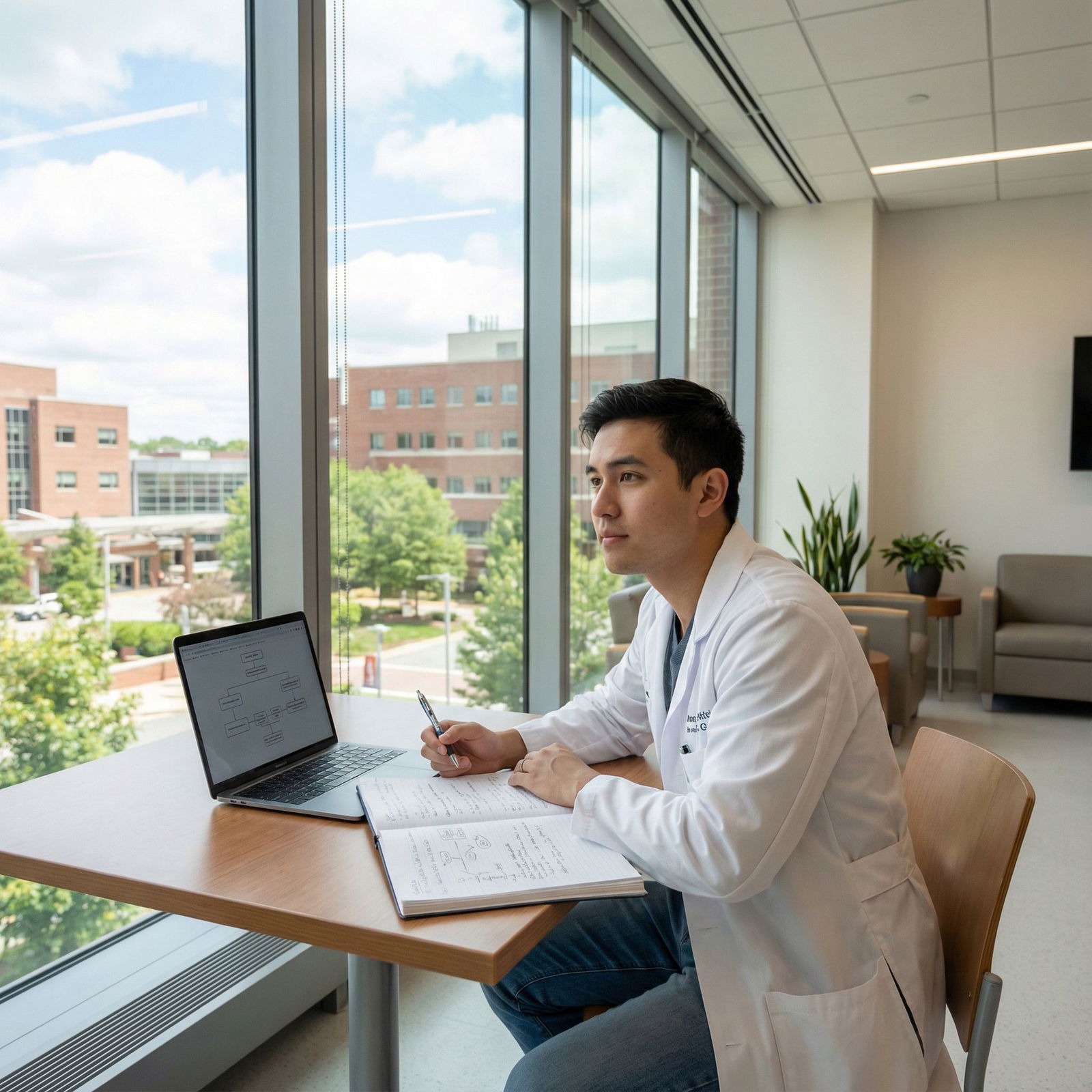
1. Dr. Sarah: From Unmatched Applicant to Medical Education Leader
The Setback
Dr. Sarah applied in a moderately competitive specialty, with strong clinical evaluations but mid-range exam scores and limited research. She received a few interviews but ultimately unmatched. The initial days were filled with embarrassment and self-doubt. She considered reapplying immediately but sensed she needed time to reflect first.
The Pivot: Discovering a Passion for Teaching
Instead of rushing into another cycle, Dr. Sarah asked:
- What activities have consistently energized me in medical school?
- When did I feel “in flow” and most fulfilled?
She realized that teaching and mentoring—tutoring underclassmen, leading review sessions, and explaining complex topics on the wards—had been highlights of her training.
Through networking with faculty, she learned of a clinical educator position at a nearby medical school:
- Responsibilities included running small-group sessions, OSCE prep, and clinical skills teaching.
- She also participated in curriculum development and helped design assessment tools.
This allowed her to remain in the academic environment, maintain clinical relevance, and build a track record in education.
Building a New Academic Identity
Dr. Sarah strategically strengthened her profile:
- Earned a certificate in medical education through evening and online programs
- Published education-focused articles on simulation, assessment, and learner feedback
- Presented workshops at national meetings on innovative teaching methods
- Collaborated on curriculum committees, gaining visibility with institutional leadership
Over the years, she was promoted, became a course director, and later obtained a faculty appointment. She now:
- Supervises medical students across multiple clerkships
- Advises unmatched graduates on alternative Medical Careers
- Leads institutional initiatives on assessment and professionalism
Key Lesson:
Unmatching led Dr. Sarah to recognize an existing passion—education—that she might have overlooked otherwise. Today, she is a respected academic physician shaping future generations.
Actionable Takeaways:
- If you enjoy teaching, ask about clinical educator roles, standardized patient programs, or simulation centers.
- Consider education certificates, master’s programs, or fellowships in medical education.
- Build a niche by publishing, presenting, and collaborating on education projects.
2. Dr. Kevin: Rerouting From Surgery to a Fulfilling Career in Family Medicine
The Setback
Dr. Kevin entered medical school determined to become a surgeon. He completed sub-internships in surgery, logged long hours in the OR, and applied almost exclusively to general surgery programs. His application was solid but not exceptional in a highly competitive region—and he did not match.
The Pivot: Discovering Joy in Longitudinal Care
In the months following Match Day, Dr. Kevin began volunteering at a community-based primary care clinic while considering his options. There, he:
- Followed patients over several visits
- Addressed chronic conditions and preventive care
- Witnessed the impact of long-term relationships with individuals and families
This experience reframed his view of Medical Careers:
“I realized I had been focused on the prestige and intensity of surgery, but what I really loved was connecting with patients and caring for the whole person.”
Dr. Kevin started exploring Family Medicine—a specialty he had largely overlooked. The breadth of practice, flexibility in setting, and emphasis on continuity resonated deeply.
Rebuilding His Application
For the next application cycle, he took deliberate steps:
- Arranged family medicine rotations and observerships, including at programs where he hoped to match
- Obtained strong letters of recommendation from family physicians who observed his patient-centered care
- Revised his personal statement to authentically explain his evolving interests and insight after unmatching
- Participated in a quality improvement project on hypertension control at the clinic, leading to a poster presentation
He also expanded his geographic flexibility, applying more broadly and including community and rural programs.
The Outcome
Dr. Kevin matched into a community-based Family Medicine residency the following year. He has since:
- Developed a focus in procedural Family Medicine (e.g., office-based procedures, point-of-care ultrasound)
- Taken leadership roles in clinic quality improvement
- Mentors students who are uncertain about their specialty choices
Key Lesson:
Unmatching gave Dr. Kevin the space to discover a specialty aligned with his values and strengths. His new path offered the continuity, relationships, and breadth he truly wanted.
Actionable Takeaways:
- Use time after unmatching to explore other specialties through shadowing or paid clinical roles.
- Be honest in your personal statement about how your thinking has evolved—it can signal maturity and insight, not inconsistency.
- Don’t underestimate broader geographic applications and community-based programs.
3. Dr. Amanda: Blending Medicine and Technology in a MedTech Career
The Setback
Dr. Amanda, with an undergraduate background in computer science, applied to Internal Medicine but did not match. She felt torn: should she reapply, or was there another way to use her combined interests in technology and medicine?
The Pivot: Entering the MedTech World
Recognizing her dual strengths, Dr. Amanda began exploring healthcare technology and MedTech startups. She:
- Attended local digital health and innovation meetups
- Reconnected with former tech colleagues who had transitioned into healthcare companies
- Completed short courses in health informatics and data science
Through a networking event, she was offered an internship at a healthcare software company working on:
- Electronic health record (EHR) usability
- Clinical decision support tools
- Data visualization for clinicians
Her clinical knowledge was invaluable; she could translate between engineers and clinicians, flagging potential workflow issues and patient safety concerns that non-clinical team members might miss.
Growing Into a Leadership Role
Over time, Dr. Amanda:
- Became a product manager overseeing clinical AI tools
- Contributed to publications on AI in clinical workflows and EHR optimization
- Spoke at conferences about physician involvement in digital health innovation
- Advised startups on regulatory and clinical validation questions
She built a MedTech Career that allowed her to impact patient care indirectly but at scale, influencing how thousands of clinicians deliver care.
Key Lesson:
Unmatching helped Dr. Amanda recognize that her unique skill set was particularly suited to MedTech. Her clinical training gave her a competitive advantage in the technology space.
Actionable Takeaways:
- If you have technical interests, explore roles in health IT, digital health, medical devices, or AI in medicine.
- Highlight your clinical reasoning skills and understanding of healthcare workflows in applications.
- Build a portfolio: contribute to pilot projects, user testing, or implementation studies in digital health.
4. Dr. Michael: Channeling Unmatching Into Global Health and Humanitarian Medicine
The Setback
Dr. Michael had always been drawn to service and global health electives but applied primarily to a domestic-focused residency program. The year he applied, positions in his specialty and preferred locations were extremely limited, and he did not match.
The Pivot: Committing to Global Health
Instead of seeing this as purely a failure, Dr. Michael asked:
- What initially drew me to medicine?
- Where can I make the greatest impact, regardless of title or training route?
He realized his longstanding interest in global health and humanitarian work was more than a side interest—it was core to his professional identity.
He pursued opportunities including:
- A global health fellowship with a nonprofit organization focused on capacity-building in low-resource settings
- Clinical and programmatic work in rural clinics in several countries under supervision and within local regulatory frameworks
- Health education campaigns, maternal-child health projects, and community-based interventions
Building a Global Health Career
Over several years, Dr. Michael:
- Completed a Master’s in Public Health (MPH) with a focus on global health policy
- Led research on health systems strengthening and task-shifting strategies
- Collaborated with ministries of health and international organizations
- Became a recognized voice in global health advocacy and policy discussions
His work has influenced national-level strategies for maternal health and noncommunicable disease management in multiple countries.
Key Lesson:
Unmatching helped Dr. Michael fully commit to his passion for global health, ultimately allowing him to impact populations rather than just individual patients.
Actionable Takeaways:
- If global health interests you, explore fellowships, NGOs, MPH programs, and research roles in this area.
- Develop skills in public health, program evaluation, and cross-cultural communication.
- Global health can connect back to residency later, or it can form a standalone, impactful career path.
5. Dr. Emily: From Unmatched Applicant to Academic Researcher and Clinician-Scientist
The Setback
Dr. Emily applied in a highly competitive specialty with strong clinical performance but modest research. She unmatched and felt that her dream of combining clinical care and science might be over.
The Pivot: Diving Into Research
Reflecting on what she loved about medicine, Dr. Emily realized her most memorable experiences involved answering unanswered questions, evaluating literature, and designing small quality projects. She began:
- Volunteering in a research lab connected to her medical school
- Collaborating on chart reviews and clinical trials
- Learning statistics, study design, and data analysis
Her intellectual curiosity and work ethic quickly stood out.
Building a Research-First Career
Dr. Emily secured a dedicated research fellowship focusing on autoimmune diseases. Over the next few years, she:
- Co-authored multiple peer-reviewed manuscripts
- Presented at national and international conferences
- Helped write grant applications and learned the funding landscape
- Built relationships with clinician-scientists and department chairs
With this enhanced research portfolio, she reapplied to residency—this time emphasizing her commitment to an academic clinician-scientist track and her newly acquired skills. She was accepted into a program with a strong research focus and protected research time.
Today, Dr. Emily balances:
- Outpatient clinical care
- Leading a basic and translational research lab
- Teaching and mentoring medical students and residents
Key Lesson:
Unmatching nudged Dr. Emily toward a rigorous research pathway that ultimately strengthened her candidacy and set her up for a fulfilling academic career.
Actionable Takeaways:
- Post-unmatch years can be high-yield research years if structured strategically.
- Seek formal research fellowships, funded positions, or NIH-supported programs where possible.
- Target mentors with a track record of supporting trainees into residency and academia.
Common Threads: What These Success Stories Have in Common
Across these diverse Career Paths—medical education, primary care, MedTech, global health, and research—several themes emerge.
1. Structured Reflection and Honest Self-Assessment
Each physician paused to analyze:
- Core values and motivators
- Strengths (clinical, interpersonal, analytical, technical)
- Activities that felt energizing vs. draining
Practical tip:
Set aside time to journal or talk with a trusted mentor:
- What parts of clinical work do you miss most?
- If residency did not exist, what role in health or science would you design for yourself?
- Which skills do others consistently praise you for?
2. Openness to Nonlinear Career Paths
All five examples illustrate that there are many ways to practice medicine and influence health:
- Direct patient care (with or without residency, depending on country and setting)
- Education and curriculum design
- Health technology, informatics, and product development
- Global health programs and policy
- Research and academia
3. Strategic Networking and Mentorship
None of these transitions occurred in isolation. Successful unmatched graduates:
- Reached out to faculty, alumni, and colleagues
- Attended conferences, meetups, and webinars
- Asked directly: “Given my background and goals, what would you recommend for the next 12–24 months?”
4. Skill-Building and Credentialing
They didn’t simply wait for the next Match—they invested in growth:
- Certificates, master’s degrees, or fellowships
- Publications or conference presentations
- Leadership roles in clinics, NGOs, or companies
This not only created new options but also improved their competitiveness for any future residency application.
Practical Steps if You’ve Unmatched and Are Considering Your Options
If you’ve recently unmatched, consider the following approach over the next weeks and months:
Stabilize and get support
- Talk to classmates, counselors, or mental health professionals.
- Avoid making irreversible decisions in the first emotionally intense days.
Clarify your goals
- Do you still strongly desire residency in any specialty?
- Are you open to alternative Medical Careers that may not require residency?
- Are you considering a hybrid approach—building a parallel career while reapplying?
Assess immediate opportunities
- SOAP or post-Match positions (if eligible)
- Research, teaching, or clinical assistant roles
- Certificates or degrees (e.g., MPH, MEd, MS in data science, health informatics)
Develop a 1–3 year plan
- Year 1: Reflection, skill-building, targeted experience
- Year 2–3: Strengthen profile, decide whether to reapply, pivot further, or double down on new path
Keep doors open where feasible
- Maintain clinical exposure if you might reapply.
- Stay in touch with mentors who can write updated letters of recommendation.
- Track achievements that will support any future pivot.

FAQs: Navigating Life After Unmatching
1. What does it mean to “unmatch” in residency, and how common is it?
Unmatching means that an applicant did not secure a residency position through the NRMP (or equivalent matching system) in a given cycle. This can be due to specialty competitiveness, geographic limitations, exam scores, or application strategy. Each year, thousands of applicants do not initially match in the United States alone, including both U.S. graduates and international medical graduates (IMGs). While the majority eventually secure some form of training or role in healthcare, the pathway is often less direct and requires strategic planning.
2. Can I still have a meaningful Medical Career if I never match into residency?
Yes. While residency is required for independent clinical practice in many countries, there are multiple alternative Career Paths where medical training is highly valued:
- Medical education (teaching, curriculum design, simulation)
- Health technology and MedTech (product development, clinical informatics)
- Public health and health policy (local, national, global levels)
- Pharmaceutical and biotech industries (clinical development, safety, medical affairs)
- Research (basic science, clinical research, epidemiology, implementation science)
- Healthcare consulting, quality improvement, or hospital administration
Some individuals later transition back into residency; others build stable, fulfilling careers entirely outside traditional residency structures.
3. If I plan to reapply after unmatching, what should I focus on during my “gap” year?
Use your time strategically to strengthen areas of your application:
- Clinical exposure: Observerships, clinical assistant roles, or locum opportunities (where legal)
- Research: Projects that can lead to publications or presentations, ideally in your target specialty
- Letters of recommendation: Work closely with mentors who can observe your professionalism, clinical reasoning, and teamwork
- Focused specialty experience: Electives or jobs that demonstrate commitment to the field you’re applying to
- Application refinement: Revise your personal statement, CV, and program list with advisor input
Document your achievements and be ready to explain your growth during interviews.
4. How can networking and mentorship help after unmatching?
Networking and mentorship are often the difference-maker after an unmatch. They can help you:
- Identify hidden opportunities (research positions, educator roles, MedTech internships)
- Receive honest feedback on your application’s strengths and weaknesses
- Gain tailored guidance about specialty switching, reapplying, or pivoting
- Access letters of recommendation and introductions to key decision-makers
Be proactive: reach out to faculty, alumni, and specialty societies. Prepare a concise summary of your background, current situation, and specific questions.
5. How do I cope emotionally with unmatching while planning my next steps?
It’s important to address both the emotional and practical dimensions:
- Normalize your feelings: Many capable, hardworking future physicians have unmatched and still built successful careers.
- Seek support: Talk with friends, family, peers who unmatched, counselors, or therapists. Shame thrives in isolation.
- Separate self-worth from outcome: The Match is a logistical system, not a definitive measure of your value.
- Create a structured plan: Concrete steps (e.g., specific people to contact, roles to apply for) can reduce anxiety and restore a sense of agency.
- Give yourself time: It’s okay if your next steps unfold over months, not days.
Unmatching is undeniably painful, but it is not the final word on your potential as a physician or health professional. As Drs. Sarah, Kevin, Amanda, Michael, and Emily demonstrate, with Resilience, reflection, and strategic action, it can become the turning point that leads you to a Career Path better aligned with who you are and the impact you want to make in medicine and beyond.