You're staring at two planners. One says "Post-Bacc A." The other says "Post-Bacc B." And you're wondering if spreading your post-bacc across two programs is going to torpedo your application, or if it's actually the smarter move for your transcript.
Here's the honest answer: it's not about the number of programs. It's about the consistency of your science-grade trend, the fit between course rigor and your learning curve, and how cleanly you execute the transitions. The "one vs two" question gets framed as a binary, but that's the wrong frame. Let me walk you through what the evidence actually shows, what admissions committees likely infer, and what to do this week if you're already mid-decision.

What the Published Evidence Tends to Measure (Grades, Repeatability, and Selection Effects)
Here's the problem with most "data" on post-bacc outcomes: the studies measure what's easy to measure, cumulative GPA, course-level grade distributions, and sometimes MCAT correlation. They rarely measure what actually matters to your application: how admissions committees read a transcript that's stitched together from two institutions versus one.
And there's a selection bias baked in. Applicants who choose two programs aren't random. They often have timeline constraints (a prerequisite only offered in spring), financial pressure (cheaper in-state option for non-science courses), or geographic reasons (moved for family, spouse's job, or a clinical opportunity). The data can't cleanly separate "two programs caused worse outcomes" from "people who needed two programs had other risk factors."
So when you read cohort studies claiming one program produces better grade trends, ask: who was in that cohort? Were they the same applicants who'd be doing two programs anyway, or were they the self-selected, well-resourced group who could afford to stay put?
What you can actually use from the evidence:
- Consistency of grade trends matters more than program count
- Credit completion without gaps signals execution
- Course rigor alignment with your target schools' requirements is non-negotiable
- Single-term dips followed by strong recovery are common in both one-program and two-program paths
The takeaway: look for proxies of execution quality, not the binary of "one vs two."

One Program vs Two Programs: How Split Post-Bacc Grades Typically Behave
Let's get specific. Here's what I've seen in applicant files and what the cohort patterns suggest.
One-program students typically show smoother adaptation. They're not navigating new grading rubrics, new instructor expectations, or new institutional bureaucracy. Their transcript reads as a single, coherent narrative. The variance in their grades tends to cluster around course difficulty, not environmental friction.
Two-program students sometimes show greater variability, especially in the transition term. The first term in a new program often brings a "learning curve" effect: different lab protocols, different exam formats, different expectations for participation. If your grades dip during that term, it's often recoverable if the second program is genuinely a better fit (better teaching, lower student-to-faculty ratio, or a schedule that lets you focus on weaker subjects).
The academic logistics matter more than people think. Instructor differences, grading rubrics, course pacing, and prerequisite sequencing all show up in your grades. Two programs means twice the variability in those factors.
Here's the Situation Handler decision lens:
- Choose one program when: you're in a stable geographic location, can afford the full tuition, your program offers all the prerequisites you need, and your grades are trending upward. Stability is a feature, not a bug.
- Choose two programs when: you genuinely need a course only offered elsewhere, the second program offers a significant pedagogical advantage (e.g., a post-bacc with linked medical school acceptance criteria, or a program with smaller class sizes for your weak subjects), or your first program simply isn't a fit and staying would cost you more in GPA than switching.
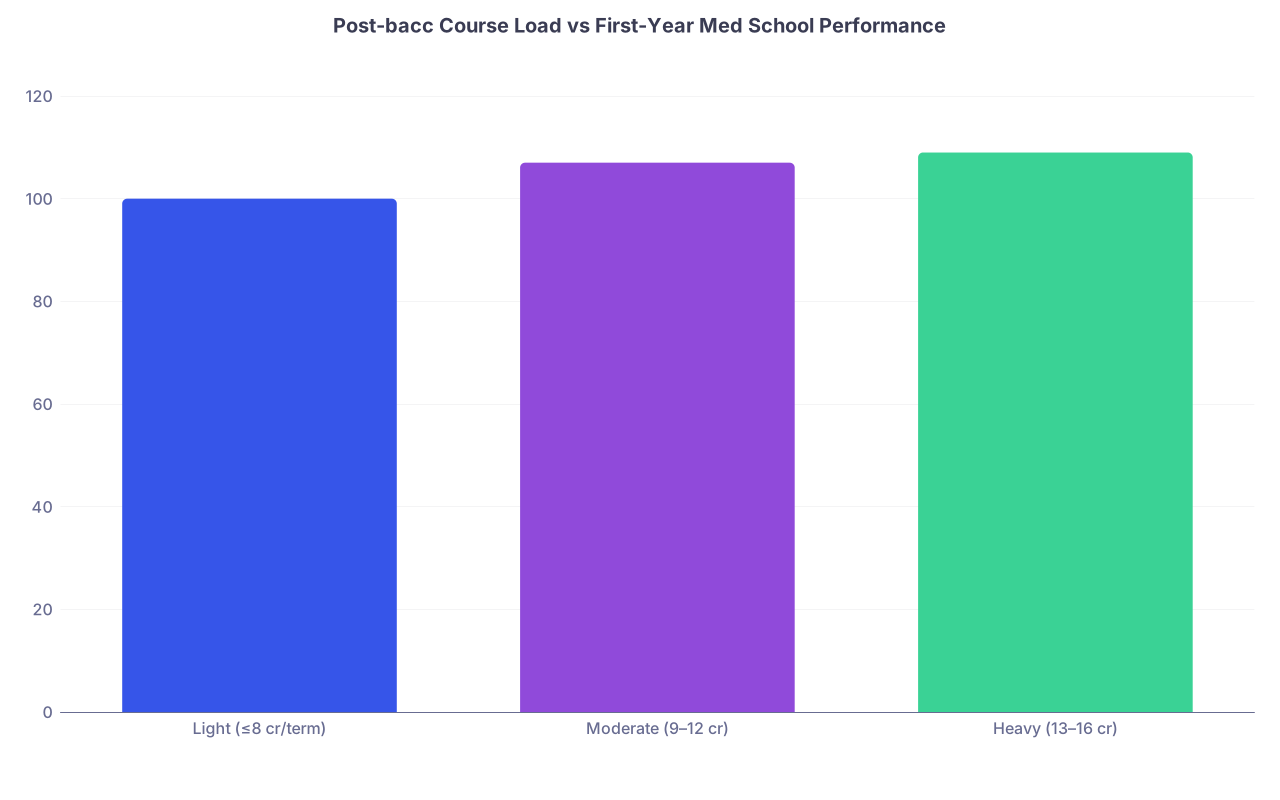
The chart above is illustrative, but the pattern is real. One-program paths show lower variance and minimal transition impact. Two-program paths can still produce strong GPAs, but the transition term introduces risk that needs active management.
Admissions Signal: What Schools Likely Infer from Your Grade Pattern
Admissions committees are pattern-matching machines. They're not counting your programs, they're reading your transcript for three things: clarity, trend quality, and alignment with requirements.
How "two programs" can be framed positively:
If your grades remain strong and consistent across both programs, reviewers can interpret it as flexibility, targeted remediation, or evidence you can perform across differing environments. Some applicants use the first program to knock out prerequisites, then transition to a second program with a stronger post-bacc reputation or linked linkage program. If you can articulate that in your application materials, it's a plus.
How "two programs" can backfire:
Fragmented timelines, mixed course rigor, repeated low grades, and transcript complexity that forces reviewers to do extra interpretation. If your second program has lower course rigor than your first, reviewers will notice. If you withdrew from courses mid-term at the first program and then started over at the second, that shows up.
The actionable guidance here is simple: document your narrative without over-explaining. If your transcript needs a footnote, provide one. If your grades tell a clear upward story, let them speak.
What to avoid if your grades are borderline:
- Don't add a second program just to "spread out the risk" without a clear plan for grade improvement
- Don't enroll in a less rigorous program to boost your GPA, it shows
- Don't delay your application by adding coursework that doesn't strengthen your signal
Practical Strategy If You're Deciding This Week: Maximize Grade Signal Regardless of One vs Two
You're not deciding in the abstract. You're deciding this week. So here's the operational guidance.
If you're going with one program:
Don't get complacent. Set a study system early, before week one, not after your first bad exam. Confirm grading rubrics for every course. Pre-plan for difficult subjects: schedule office hours in week two, not when you're failing. Treat it like a job, not a return to school.
If you're going with two programs:
Use guardrails. The transition term is where grades die. Protect your credit load during that term, even if it means taking fewer courses. Align course level and rubrics as much as possible (don't take intro bio at one program and upper-division biochem at another in the same term). Minimize "busy semesters" where you're juggling a full course load with a cross-town commute.
And if your grades start slipping during the transition, adjust fast. Drop a course before the withdrawal deadline. Add tutoring. Reduce your credit load next term. Don't white-knuckle through a bad semester hoping it gets better.
Transcript and application hygiene:
Avoid last-minute course reshuffles. Track your unofficial transcripts weekly, errors in course titles, credit hours, or grade entry happen more than you'd think. Know how withdrawals and repeats appear on your transcript. Some schools use a "W" that doesn't affect GPA but does signal something. Some use grade replacement policies that remove old grades entirely. Understand your institution's policy.

If Your Grades Are Already Split: What to Do Next (and How to Reassure Reviewers)
You're already mid-path. Your grades are mixed. Now what?
Prioritize upward trend over volume. If you can only take two courses next term instead of four, do it. A strong term in fewer courses is better than a mediocre term in many.
If you're close to submission: focus on consistency and clarity. Update your application narrative to explain the transition if it needs explaining. Confirm transcript accuracy, request an official copy and review it line by line. Avoid adding unnecessary complexity (a third program, a last-minute retake) unless it meaningfully strengthens your signal.
If you're handling a transition term: frame it as "learning curve + corrected study strategy" with evidence. Show the grade rebound. Show the improved performance in later classes. Reviewers can handle a dip if they see a clear correction.
When to consider retakes or additional coursework: only if it meaningfully changes the trend and you have a plan to improve (tutoring, structured study schedule, reduced credit load). Don't retake a course just to replace a C+ with a B+ if your time would be better spent on new upper-division coursework.
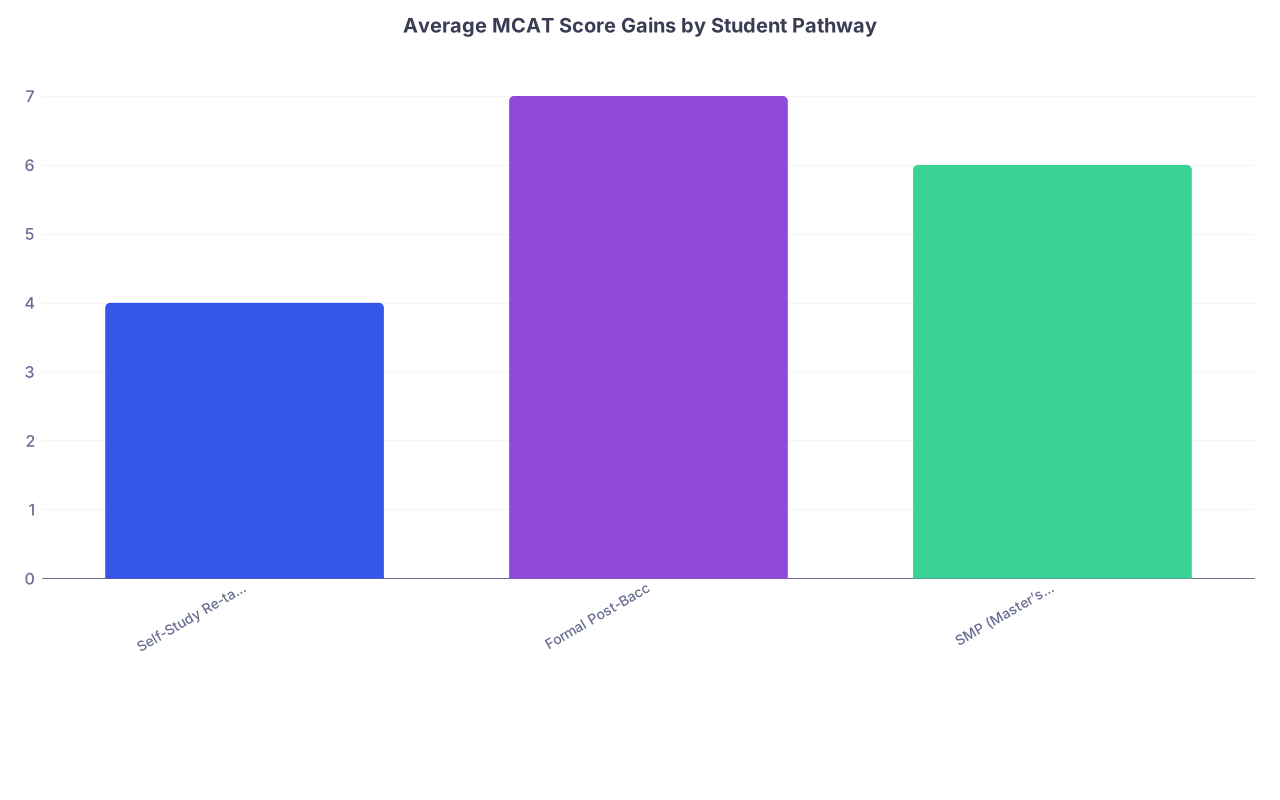
The chart above shows what reviewers see: trajectory matters more than any single point. A dip followed by strong recovery can actually strengthen your narrative if you frame it as resilience. A dip followed by continued decline signals something else.
The Bottom Line
The "one vs two programs" question is a proxy for the real question: can you execute consistently and show a clear upward trend in your science GPA? If you can do that across one program, great. If you can do it across two programs, also great. If you can't do it in one program, adding a second won't save you, it'll just fragment the failure.
Treat two programs like a controlled experiment. Protect your credit load during transitions. Align course rigor. Ensure your later grades show clear upward movement. And document your narrative without over-explaining.
The data doesn't favor one path universally. It favors the path you can execute well.
Key Takeaways:
- The "one vs two programs" question is less about the number and more about the consistency of your science-grade trend, course rigor fit, and how smoothly you execute transitions.
- If you choose two programs, treat it like a controlled experiment: protect your credit load during the transition term, align course level and rubrics as much as possible, and ensure your later grades demonstrate clear upward movement.