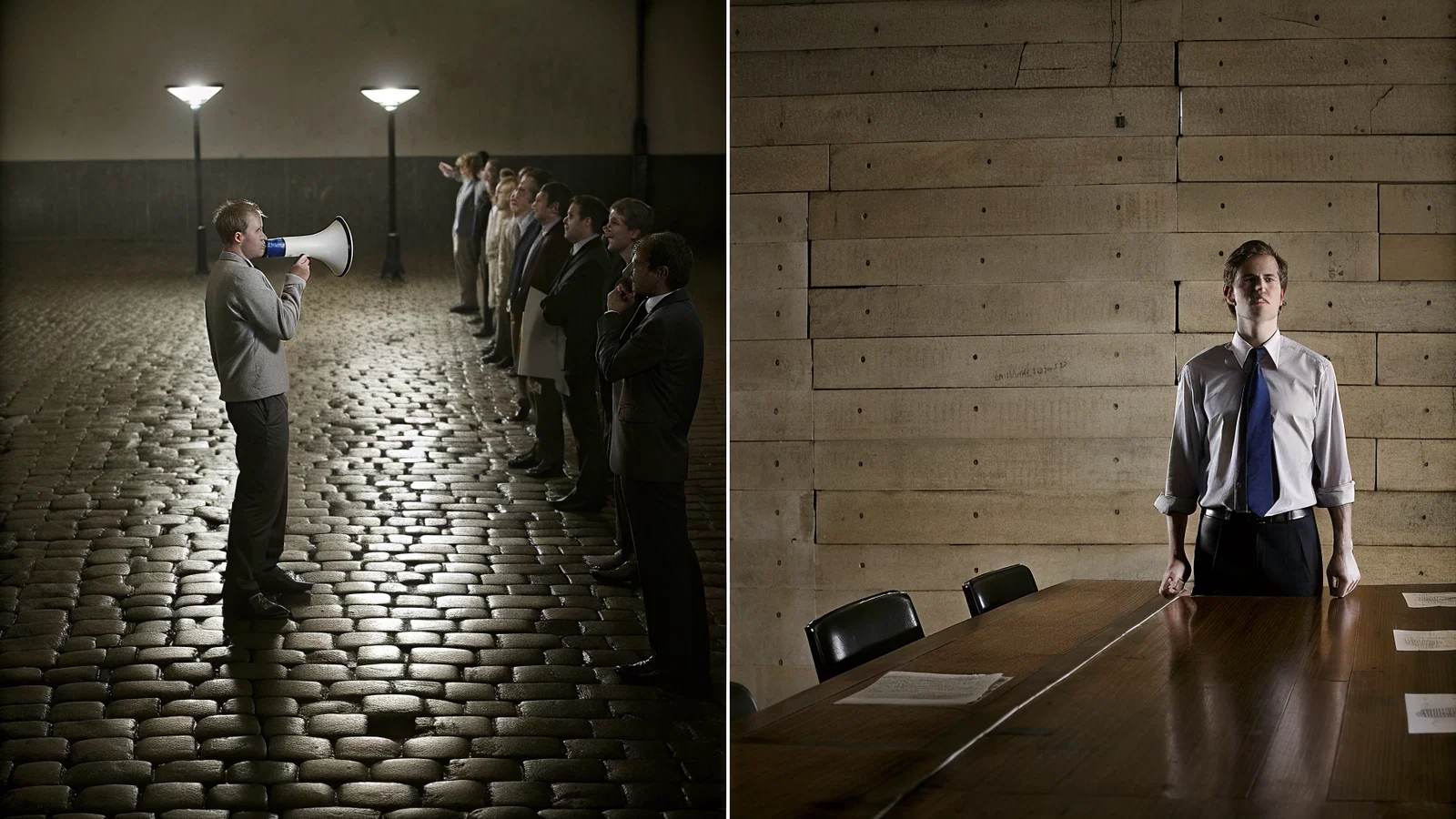
Most local health campaigns don't die from a lack of passion. They die from a sequencing error. Somebody decides the issue needs "awareness," so they organize a rally. The rally gets thirty seconds on the evening news, a councilmember tweets a photo, and eighteen months later the same organizers are wondering why nothing changed.
I've watched this cycle repeat in city after city, clinic closures, lead pipes, pharmacy deserts. The problem is never energy. It's that advocates pick a tactic before they pick a strategy, and then wonder why the policy needle won't move.
If you are struggling to bridge the gap between passion and procedural success, consider learning about essential public health advocacy strategies for future clinicians to align your efforts effectively.
So let's settle the question properly: protest or lobbying? The honest answer is that asking which one "wins" is like asking whether a hammer or a nail builds a house. But you absolutely can learn when each one works, when each one wastes your time, and how to sequence them so your campaign ends with signed legislation instead of a photo op.
The Strategic Dilemma: Visibility vs. Velocity
Define your terms first, because people conflate them constantly.
Grassroots mobilization is organized public pressure: town halls, petitions, canvassing, packed public-comment sessions, coordinated testimony. Its product is heat, visible, countable evidence that voters care.
Institutional lobbying is direct technical engagement: drafting ordinance language, working budget committees, sitting down with chiefs of staff, shaping administrative rules. Its product is text, the actual legal language that binds a government to act.
Here's the tension nobody wants to say out loud. Public pressure creates urgency, but urgency doesn't write law. I've seen 400 people fill a council chamber and lose the vote 6-3 because nobody had drafted an amendment the council could actually adopt. Conversely, I've seen beautifully drafted model ordinances die in a drawer because no politician had a reason to spend capital on them. Heat without text is noise. Text without heat is a PDF.
And be honest about the failure mode on your own side. Marches feel productive. That's exactly what makes them dangerous, performative activism delivers the emotional payoff of progress without the substance. Policy shops have their own version: the 60-page white paper that three staffers skim and nobody implements.
The fix is a diagnostic, run before you choose tactics. Ask three questions:
- Is this issue already on the public agenda? If nobody's talking about it, lobbying has nothing to attach to. You need heat first.
- Does the barrier require new money, or just new rules? Money fights live in budget committees, lobbying territory. Rule changes can sometimes be forced by public mandate.
- Who actually holds the pen? Identify the human being who will draft the language. If you can't name them, you're not ready to lobby. You're ready to organize.
For those unsure if their personality type fits the mold of a traditional activist, explore whether you can still have a meaningful role in health policy even if you are not outspoken.
If you are struggling to identify your entry point, consider how physicians can join local boards of health and actually influence policy to gain firsthand experience.
The Anatomy of Grassroots Impact
For those just starting out, creating a structure can be simplified by following a no advocacy experience 6-month plan to build a policy track record.
Grassroots power is real, and I won't pretend otherwise. I watched a parents' coalition in a mid-sized school district force lead testing and pipe remediation onto the agenda in under two months, an issue the facilities department had quietly deferred for years. Nobody lobbied that into existence. A hundred angry parents at a school board meeting did.
But it worked because they followed a protocol, not because they were loud. Here's the one that works:
- Name the villain and the deadline. "Fix our water" loses. "The board votes on the capital budget June 12, and the lead line replacement must be in it" wins. Every mobilization needs a decision-maker, a decision, and a date.
- Build the coalition weird. Pediatricians next to pastors next to small business owners. Councilmembers can dismiss the usual suspects. They struggle to dismiss a room that looks like the whole district.
- Pick a stage with consequences. Public comment periods, budget hearings, candidate forums before an election. Protest where the vote actually happens.
- Convert crowd size into a countable ask. Turnout is a means. The end is a specific motion, line item, or commitment extracted on the record.
When does this approach shine? Acute, emotional, visible crises: a clinic closure, contaminated water, a hospital pulling obstetrics from the county, an environmental health threat with a fence-line community breathing it. Situations where delay itself is the scandal.
Now the limitation, and it's a big one. Grassroots wins tend to produce reactionary policy, emergency ordinances with sunset clauses, one-time funding appropriations, task forces that report to no one. The crowd goes home. Staff turns over. Institutional memory evaporates, and three years later you're fighting the same fight. Heat wins battles. It doesn't build infrastructure.
Leveraging Institutional Lobbying for Precision
Here's where laws actually get made, and it isn't the chamber floor. It's budget committee markups. Administrative rulemaking. Municipal code revisions nobody reads. Unsexy rooms with bad coffee. That's precisely why it works, nobody's competing for attention there.
You don't need a paid lobbyist to do this. You need to be useful. Local legislators and their staff are drowning. A city councilmember might be voting on zoning, sanitation contracts, and a syringe-services ordinance in the same afternoon. The advocate who hands them a turnkey solution, pre-drafted, scored, ready to introduce, doesn't have to push. They get pulled in.
The lobbying protocol I'd hand any health advocate:
- Map the real decision-makers. Not just the mayor. The committee chair who controls the hearing calendar. The budget director who scores your proposal. The health officer who'll implement it. Most campaigns lobby the person with the title and ignore the person with the pen.
- Draft the text before the first meeting. Walk in with ordinance language, not a request for "support." Support is free and worthless. A motion is a commitment.
- Bring a fiscal note, even a rough one. A one-page cost estimate with citations beats a passionate speech. Staffers trust numbers they can check.
- Line up co-sponsors before going public. Two or three committed votes in hand changes every conversation that follows.
- Follow up in writing within 48 hours. Every meeting ends with a documented next step, or it didn't happen.
And here's the synergy piece people miss: lobbying is how you institutionalize what protests win. That emergency lead-testing ordinance the parents forced through? A good advocate converts it into permanent code, attaches a recurring funding line, and adds mandatory public reporting. The crowd won the moment. The paperwork wins the decade.
Read the chart carefully, because it tells the whole story. Grassroots pressure is fast, nothing moves a council like a packed room and a news camera, and emergency responses can land in weeks. But that speed comes with shallow roots. Lobbying is slower to ignite and far more durable, and dollar for dollar, it delivers more lasting policy per unit of effort. Speed is a spark. Sustainability is a structure.
The Integrated Model: Building Your Advocacy Hybrid
Stop choosing. Sequence instead.
I call it the hammer and anvil strategy. Grassroots protest is the hammer, it drives the issue onto the agenda and makes inaction politically expensive. Institutional lobbying is the anvil, the hard, shaped surface that gives the strike its form. A hammer alone just makes dents. The anvil alone never feels a blow.

Resource allocation. In steady state, once your issue is on the agenda and you have a sponsor, I recommend a 70/30 split: roughly 70% of person-hours on technical lobbying work (drafting, fiscal notes, committee wrangling) and 30% on visible community engagement to keep the pressure warm. But flip it early. Before you have a sponsor and a hearing date, run 70/30 the other way, organize hard until someone with a vote needs to be seen as your champion. The ratio follows the phase, not a fixed ideology.
The 90-day playbook:
- Weeks 1-2: Draft the policy text and a one-page fiscal summary. Quietly.
- Weeks 3-6: Recruit two or three co-sponsors. Brief the committee chair's staff. No press yet.
- Weeks 7-10: Time the public push, testimony, turnout, local media, to the hearing calendar. Maximum visibility exactly when votes are being counted.
- Weeks 11-13: Vote, then immediately pivot to implementation: funding lines, reporting requirements, enforcement language. Don't declare victory at passage. Passage is the middle of the fight.
Measure what matters. "Awareness" is where accountability goes to die. Track these KPIs instead:
- Confirmed sponsor count
- Committee hearings secured
- Amendments adopted into the final text
- Dollars actually appropriated
- Enforcement and reporting provisions included
- Days from introduction to floor vote
If your metrics are impressions, petition signatures, and turnout, you're measuring applause. Applause doesn't fund clinics.
The Bottom Line
- Grassroots action creates the political heat that forces an issue onto the agenda, use it for urgent, emotional, visible crises.
- Institutional lobbying converts that heat into binding legal language, use it for complex, budgetary, bureaucratic fights.
- The winning campaigns move seamlessly from populist disruption to technical implementation, and they measure votes and dollars, not decibels.
So here's your assignment, and yes, I'm giving you one. This week: pick one local health issue you care about. Run the three-question diagnostic. Then draft the one-page policy summary, problem, solution, cost, ask, before you plan a single public action. If your diagnostic says the issue needs heat first, fine: organize. But organize toward a hearing date, with text already in hand. The movements that change local health policy aren't the loudest ones. They're the ones that show up to the protest with the ordinance already drafted.