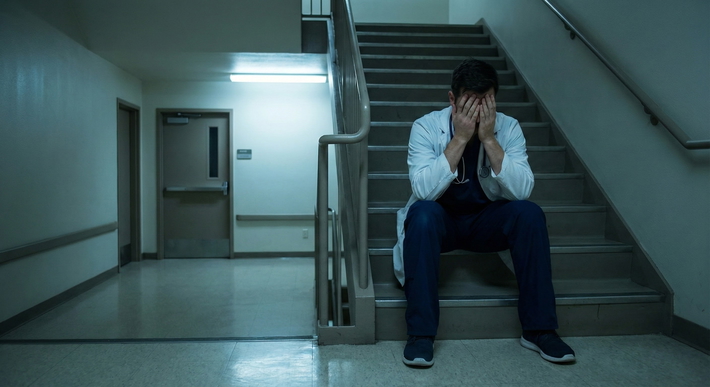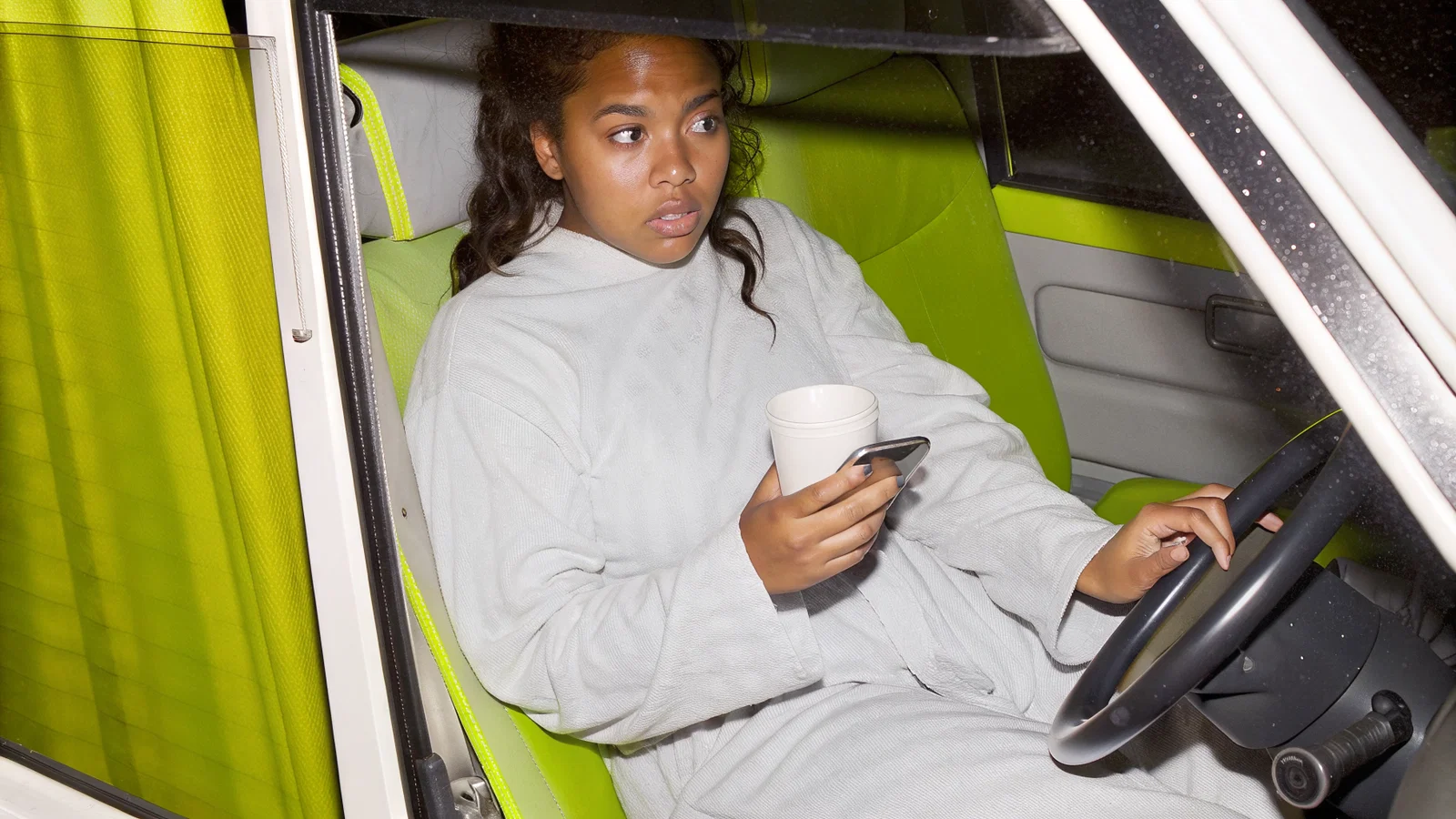
5:32 AM. Your toddler's cough kept everyone up twice overnight. Daycare opens at 6. Your 24-hour call starts at 7. The coffee's not working yet. Your phone shows three unread messages from the Chiefs about a patient you're cross-covering.
This is the reality for thousands of resident parents across the country. And for years, the assumption has been obvious: of course they burn out faster. More responsibilities. Less sleep. Guilt layered on top of exhaustion.
The data tells a more interesting story.
Here's what the numbers actually show, and more importantly, what you can do about it.
The Burnout Landscape in Residency Today
Let's set the baseline. Current research puts resident burnout somewhere between 50-60% depending on the year measured and the specialty. That's not a typo. The majority of residents in active training programs meet criteria for burnout on validated instruments like the Maslach Burnout Inventory.
Burnout isn't just being tired. It's a specific syndrome with three core components:
- Emotional exhaustion, feeling drained before your shift even starts
- Depersonalization, treating patients as cases rather than people (the cynic's armor)
- Decreased sense of personal accomplishment, wondering why you bother
These aren't character flaws. They're predictable responses to chronic occupational stress without adequate recovery. And residency is, by design, a chronic stress environment.
Why focus specifically on parent residents? Because they represent a unique intersection of stressors that doesn't generalize well from other populations. A teacher with kids isn't working 80-hour weeks. An accountant with kids doesn't have someone else's life in their hands at 3 AM. Parent residents navigate a particular pressure cooker, and the conventional wisdom, that kids make burnout worse, deserves a closer look.
What the Data Actually Shows: Parents vs. Non-Parents
Here's where it gets interesting.
Multiple studies from 2020-2024, including work published in Academic Medicine, JAMA Internal Medicine, and Journal of Graduate Medical Education, have examined burnout rates stratified by parental status. The results consistently surprise people.
Residents without children report equal or higher burnout than residents with children.
Let me say that again because it's counterintuitive. The group we assume is "better off" because they have fewer obligations is, by multiple metrics, doing worse.
One 2022 multi-institutional survey of over 4,000 residents found burnout rates of approximately 48% among residents with children versus 55% among those without. A 2023 longitudinal study tracking residents through PGY-1 to PGY-3 showed that the burnout gap actually widened over time, with non-parents accumulating more depersonalization scores year over year.
When you break down the Maslach subscales:
| Metric | Residents With Kids | Residents Without Kids |
|---|---|---|
| Emotional Exhaustion | Slightly lower | Higher |
| Depersonalization | Similar | Higher |
| Reduced Personal Accomplishment | Lower (better) | Higher (worse) |
The "traditional" assumption, that children are purely an additional burden on residents, is empirically incomplete. Something else is happening.
Why Parent Residents May Have an Unexpected Advantage
I'm not saying parenting is easy. I'm not saying parent residents don't struggle. But the data forces us to confront a real mechanism: children impose boundaries that residents without kids often fail to create themselves.
Forced disconnect. When your kid needs to be picked up at 5:30, you leave at 5:30. There's no "I'll just finish this one note." Parent residents can't accidentally work until 9 PM because the daycare closes at 6 and the late fee is brutal. This is a feature, not a bug, in a profession that otherwise rewards self-erasure.
Role clarity beyond work. Medicine is consuming. Without counterweights, your entire identity can collapse into "resident." Parents have a non-negotiable second identity: Mom or Dad. That role provides psychological insulation against the daily indignities of training. A bad day in the ICU hurts less when you go home to a kid who thinks you hung the moon.
Built-in social network. Parenting creates connections, whether through school communities, pediatrician offices, neighborhood networks, or partner relationships that handle child-rearing logistics. Non-parent residents often rely heavily on co-resident friendships, which can be intense but also professionally entangled. Parent residents have relationships that exist outside the hospital ecosystem.
The counterpoint is real, and I won't pretend otherwise. Childcare breakdowns at 5 AM. Guilt about missed developmental milestones. The financial pressure of daycare costing more than rent in some cities. Sleep deprivation compounded by a teething infant plus 80-hour workweeks. These are legitimate stressors, and for residents without adequate support, they tip the scales the other direction.
But the research suggests that without those structural supports, stable childcare, partner involvement, family nearby, parent residents burn out at higher rates than their peers. The variable isn't parenthood. It's the infrastructure around parenthood.
Actionable Strategies for All Residents
The data points to one uncomfortable truth: the problem isn't whether you have kids. It's whether you've built structural protections around your life.
Here's what to actually do with this information.
For parent residents:
- Lock down backup childcare before you need it. Find two backup options, a trusted neighbor, a family member, a paid on-call sitter service. Test the system with a low-stakes day. Don't wait for the emergency.
- Stop apologizing for using the boundaries your kids force on you. Leaving at 5:30 isn't weakness. It's the only thing keeping you in this career for the next 20 years.
- Document your parental leave and use every day. Programs that pressure residents to shorten leave are burning their own pipeline. Don't internalize that pressure.
- Build a peer network of parent residents. They understand the unique math of a sick kid plus a call schedule plus a partner's travel. Other parents don't require explanation.
For non-parent residents:
- Create artificial boundaries and defend them. Pick a hard stop time. Stop checking messages at 8 PM. Take your full weekend off once a month. Without external forcing functions, you'll drift toward 24/7 availability.
- Cultivate non-medical relationships. Join a climbing gym. Take a pottery class. Volunteer somewhere unrelated to healthcare. Your social world cannot be 90% hospital staff.
- Identify your "second role." What's your identity outside of medicine? Hiker? Uncle? Writer? Fantasy football commissioner? Protect it.
- Watch the small warning signs. Increased cynicism, skipping meals, dreading shifts you used to enjoy. These aren't character defects. They're early burnout symptoms that respond to intervention.
Institutional supports that benefit everyone:
- Adequate parental leave (not just technically compliant, actually adequate)
- On-site or subsidized childcare
- Flexible scheduling where feasible
- Protected time for non-clinical recovery
- Mental health support that doesn't require disclosure to your program director
These aren't benefits for "parents." They're structural improvements that reduce burnout across the board.
Prompt: Documentary-style photograph of three diverse residents in scrubs taking a brief walk together through a hospital courtyard during a break. One holds a paper coffee cup, another wears wireless earbuds, the third gestures while telling a story. They are mid-conversation, relaxed postures, genuine smiles. Morning light, slightly overexposed sky, candid photojournalistic composition, Canon EOS R5 aesthetic, no posed smiles.
The Bottom Line: It's Not Who You Are, It's How You Build Your Walls
The data is clear. Parenthood itself isn't the burnout variable many residents assume it is. The variable is whether your life has structural protections, boundaries, purpose beyond work, social support, recovery time.
Parent residents often have those built in, which is why their burnout rates trend lower despite objectively heavier logistics. Non-parent residents can absolutely match or exceed those protective factors, but they have to build them deliberately because no one is forcing them to leave work at a reasonable hour.
If you're a non-parent resident reading this and recognizing yourself in the higher-burnout data, take it seriously. You're not immune. The protective factors don't materialize automatically. They require the same intentional planning that parent residents apply to childcare logistics.
If you're a parent resident and you're burning out anyway, the answer isn't to feel guilty about struggling. It's to audit your infrastructure. Where are the gaps? Childcare? Sleep? Partner support? Program flexibility? Each gap is a fixable problem, not a personal failure.
Burnout in residency is not a personal moral failing. It's a predictable outcome of a system that hasn't historically prioritized trainee wellbeing. The residents who navigate it best, whether they have kids or not, are the ones who treat their own recovery as seriously as their patients' care.
Your kids might force you to leave work on time. But even without kids, you can build those same walls. The data says you should.
Prompt: Cinematic photograph of a resident in scrubs at the end of a long shift, packing a worn canvas messenger bag near a hospital exit. Warm late-afternoon light streams through glass doors. They pause to look at a small photo tucked into the bag's outer pocket—a candid smile crosses their face. A tiny succulent in a clay pot sits on the windowsill behind them. The mood is hopeful, relieved, quiet. Shot with shallow depth of field, 50mm lens, golden hour warmth, contemplative documentary style.