
This article is for educational purposes only. It is not financial advice, not legal advice, and not tax advice. Figures vary by individual circumstances, consult a qualified professional before acting.
The 3 AM Trap: When You're Tempted to 'Fix' the Numbers
It's 3 AM. The lab just called. Your patient's sodium is 120. You're tired, you're anxious, and every fiber of your sleep-deprived brain is screaming at you to just do something. That instinct? That's the trap. It's the exact reflex that ends careers and ruins lives.
We are wired to treat abnormal numbers. But in hyponatremia, the assumption that "more abnormal means more urgent" is a deadly fallacy, especially in asymptomatic or mildly symptomatic patients. Watchful waiting feels like negligence. It feels like you're leaving the patient to rot. But here's the hard truth: doing nothing aggressive is often the standard of care.
The first red flag is reaching for that bag of 3% saline without doing the legwork. If you're about to hang hypertonic saline and you haven't checked the patient's volume status, you don't know how long their sodium has been low, and you haven't established their baseline neuro exam, stop. Put the bag down. Walk away from the Pyxis. You are about to cause more harm than a sodium of 120 ever could.
The Two Sides of the Coin: When Hypertonic Saline Is a Lifesaver vs. a Death Sentence
Hypertonic saline is a weapon, not a reflex.
It is absolutely indicated when your patient is actively seizing, comatose, obtunded, or experiencing an acute drop in sodium with clear neurological compromise. In those moments, 3% saline is a miracle drug. It saves lives.
But the flip side is the nightmare. In chronic hyponatremia, rapid correction doesn't just risk a bad outcome; it causes osmotic demyelination syndrome (ODS). ODS is permanent. It's often fatal. And you can't undo it once it starts.
The 3 AM brain fog mistake is using hypertonic saline as a knee-jerk reaction for any sodium under 120. You guess the rate, you don't calculate the expected correction, and you overshoot. If you blast past an 8 mEq/L rise in 24 hours, you are playing Russian roulette with the patient's pons.
The key pitfall is confusing a severe laboratory value with a severe clinical picture. A sodium of 110 in a stable, chronic, asymptomatic patient is a biochemical curiosity that needs slow, careful management. A sodium of 110 in a patient actively seizing is an emergency. Do not let the number on the screen dictate your clinical decisions. Let the patient do that.
Watchful Waiting: The Underused Superpower, and Its Hidden Dangers
Watchful waiting is not "doing nothing." It's an active, aggressive monitoring strategy. It means strict I/Os, fluid restriction, and serial sodium checks. It requires meticulous documentation.
The trap here is over-reassurance. If you tell the nurse, "Let's just watch it," and walk away, you are setting the patient up for disaster. Watchful waiting without specific parameters for intervention is just willful blindness.
To make watchful waiting safe, you must define your triggers for escalation. Write them down. Tell the nurse: "Call me if the sodium drops more than 2 mEq/L in an hour, if urine output changes drastically, or if the patient becomes confused."
The most common error is using watchful waiting as an excuse to skip repeat labs. You must order the next sodium check before you leave the floor. A "watchful waiting" note without a follow-up lab order in the chart is a malpractice trap waiting to be sprung.
The 3 AM Decision Checklist: Your Anti-Mistake Protocol
When you get that critical lab, don't panic. Run the checklist.
- Assess symptoms, not just numbers. Is the patient actually altered, or just sitting there eating a sandwich?
- Determine chronicity. Check old records. If this sodium has been 115 for a week, the brain has adapted. Rapid correction is lethal.
- Check volume status. Orthostatics, JVP, lung sounds, skin turgor. This changes everything.
- Review recent meds. Thiazides? SSRIs? Carbamazepine?
- Calculate the correction rate. If you give 100 mL of 3% saline, know exactly how much you expect the sodium to rise.

Red flags demanding immediate hypertonic saline: seizures, GCS < 8, active vomiting with neurological signs, or an acute drop >10 mEq/L with symptoms.
Green flags for watchful waiting: asymptomatic, chronic, euvolemic, no meds actively driving it down. But you still need repeat labs in 6 hours.
Follow the "safe overcorrection" rule: aim for a 4-6 mEq/L rise in the first 24 hours. Never exceed 8 mEq/L. Check the sodium every 4-6 hours to catch an overshoot early.
A massive pitfall: using normal saline in hypervolemic hyponatremia. If your patient is in heart failure or cirrhosis and you give them a liter of NS, you will worsen their fluid overload and you won't fix the sodium. You're just drowning them.
When You're Wrong: The ODS Nightmare You Must Never Forget
I remember a case. A 65-year-old on thiazides, sodium 112. Completely asymptomatic. The covering resident got spooked by the number and gave hypertonic saline. The sodium jumped to 128 in 18 hours. Two days later, the patient couldn't swallow. Then they couldn't move their limbs. Locked-in syndrome. Osmotic Demyelination Syndrome.
ODS is a resident's worst fear because it is entirely iatrogenic. It's permanent. And it is entirely avoidable.
You have to adopt the "slow and steady" mindset. Sodium correction is a marathon. Your patient does not need a normal sodium by morning. Your job is to prevent harm, not to normalize labs.
If you suspect ODS, new neurological deficits, dysarthria, gait instability, or confusion 2-6 days after correction, stop all correction immediately. Consult neurology. But honestly, by the time it shows up, the damage is done. Prevention is your only weapon.
Documentation pearl: Write your rationale for watchful waiting in the chart. "Patient is chronic, asymptomatic, and euvolemic. Will monitor with serial labs q6h and restrict fluids. Holding hypertonic saline to avoid ODS risk." That note is your shield.
The 3 AM Sutra: How to Sleep at Morning Report
You are the patient's advocate, not the lab's. The sodium number doesn't care about your fear, but your patient relies on your judgment.
Build a personal rule for these calls: When in doubt, check urine osmolality and volume status. That is the highest-yield information you can get, and it prevents 90% of pitfalls.
When the nurse asks, "Are you going to give that hypertonic?" know exactly what to say: "I'm holding that for now. I want repeat labs in 4 hours and neuro checks hourly. Call me immediately if they become confused or lethargic."
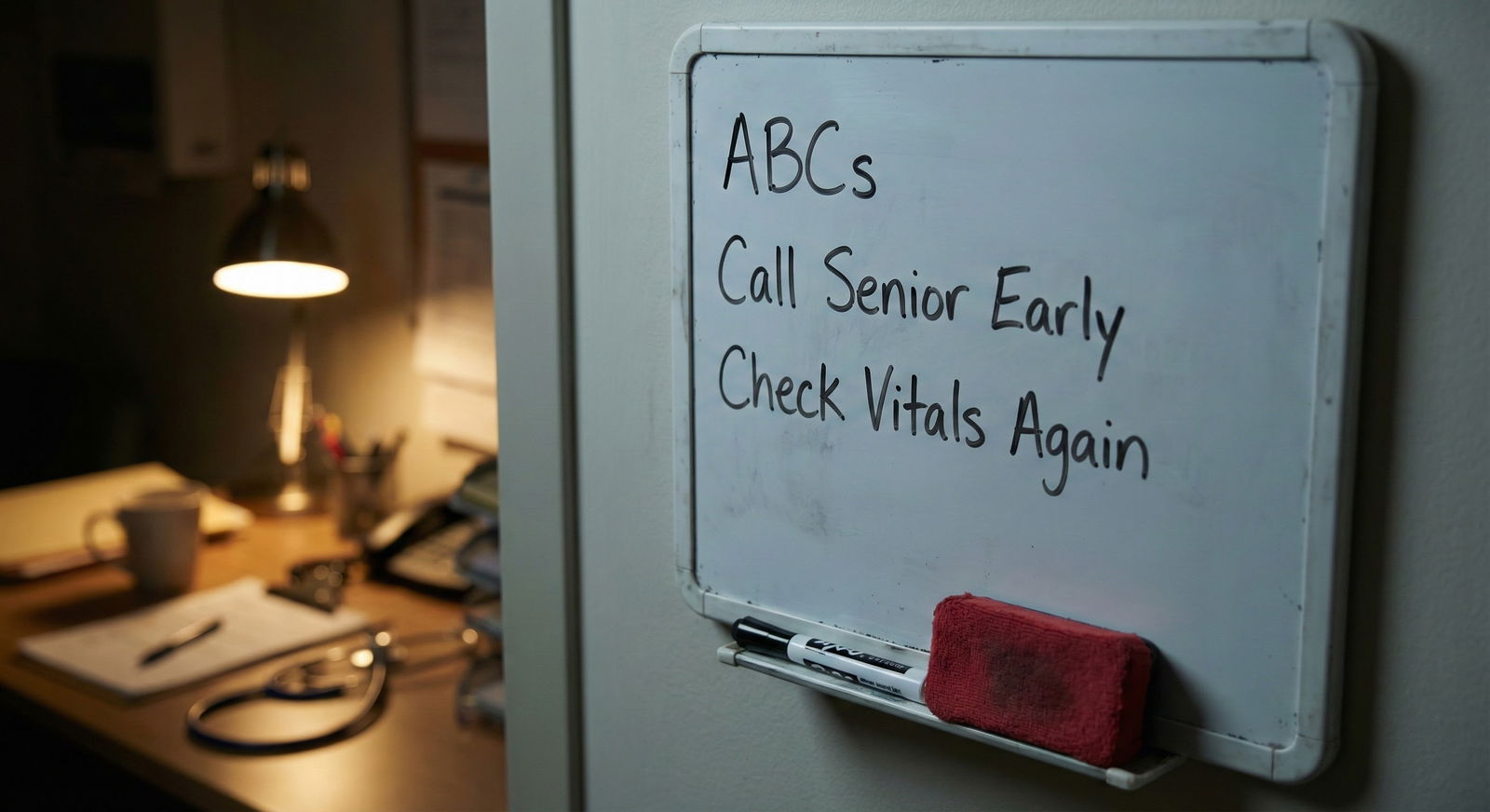
Mistake-avoidance mantra: Slow is smooth, smooth is safe. Apply that to every hyponatremia call you take for the rest of your career, and you will never regret it.
The win isn't a sodium that hits 140 by morning. The win is a patient who leaves the hospital with their brain intact.
Frequently Asked Questions
What exactly defines 'severe symptoms' that warrant hypertonic saline? Severe symptoms are seizures, coma, obtundation, or altered mental status that's clearly neurological (e.g., confusion not explained by other causes). If the patient is awake, oriented, and talking normally, that's not severe, even if the sodium is 115. Don't let the number scare you into dangerous intervention.
How fast should I recheck sodium if I'm doing watchful waiting? Recheck every 6 hours initially, and plan the next check before you leave the floor. If you're expecting a drop, check more often, but the key is you must check, a 'watchful waiting' note without a follow-up lab order is a malpractice trap. Your plan must include when to escalate.
If I do use hypertonic saline, what's the target sodium in the first 24 hours? Target a rise of 4-6 mEq/L in the first 24 hours, and never exceed 8 mEq/L. For chronic hyponatremia, even 6 mEq/L may be too fast if there's risk factors for ODS, slow is your friend. I've seen residents aim to 'fix' to 130 in one shift, and that's how you end up with a locked-in patient.
Key Takeaways
- The 3 AM trap is your instinct to treat the number, but the real mistake is ignoring clinical context and chronicity.
- Hypertonic saline is a weapon, not a reflex: use it only for severe symptoms or acute drops, and never let the sodium rise more than 8 mEq/L in 24 hours.
- Watchful waiting is an active, documented plan with repeat labs and triggers for escalation, not 'doing nothing.'
- Always assess volume status first; it changes the treatment entirely (e.g., normal saline in hypervolemic patients is iatrogenic harm).
- Fear of ODS is healthy: respect the brain, correct slowly, and document every decision to protect yourself and your patient.