
The biggest mistake residents make with febrile neutropenia is thinking they have time. You do not. Treat it like trauma in a hemodynamically “okay” patient: stable until they are not, and the cliff can be fast.
Let me walk you through how to handle this on call—thresholds, exact orders, when to panic, and how to escalate without sounding clueless.
1. Step Zero: Recognize the Trigger and Move
Febrile neutropenia is not an “I’ll finish this note and then call” problem. It is a “stand up and walk to the patient” problem.
The operational definition you should actually use
You will see multiple formal definitions. On call, use this:
Fever
- Single oral temp ≥ 38.3°C (100.9°F)
- Or ≥ 38.0°C (100.4°F) sustained for ≥ 1 hour
Neutropenia
- ANC < 500/µL
- Or ANC 500–1000/µL and expected to drop to < 500 in next 48 hours (just had chemo, ANC crashing)
If the patient is on chemo, BMT, or has known marrow failure and the nurse says “temp 38.1”—you just got paged for febrile neutropenia until proven otherwise.
Do not wait for a new CBC to “confirm” neutropenia if you know they were 0.4 this morning. They are neutropenic until the marrow resurrects.
Hard “move now” criteria
Get to bedside immediately if:
- Systolic BP < 100 or MAP < 65
- HR > 120
- RR > 22 or looking tachypneic
- O2 sat < 94% new or worse
- Altered, confused, or just “off”
- Rigors, chills, or they “look sick” (yes, that is a valid criterion)
If you are on a big hematology/oncology service, this page should jump to the top of your list. Above hypokalemia. Above “patient asking for sleep meds.” Above the new COPD admission who is already on the floor.
2. At the Bedside: What You Must Do in the First 5–10 Minutes
You are not doing a full H&P. You are doing a focused, high-yield, “is this sepsis?” assessment.
A. Rapid vital assessment and sepsis screen
Look at:
- BP, HR, RR, O2 sat, temp, mental status
- Urine output if they are on the floor and have a Foley or can report
On call, I mentally run qSOFA and “eyeball test”:
- qSOFA positive if:
- SBP ≤ 100
- RR ≥ 22
- GCS < 15
qSOFA is crude, but if they hit 2 or more, you should be thinking ICU or at least rapid escalation.
B. Focused history – you need specific details
Three key threads:
Oncologic context
- Underlying malignancy: AML? ALL? Solid tumor on chemo? BMT?
- Last chemo date, last BMT day (Day +X matters)
- Prior history: resistant bugs, ESBL, CRE, VRE, MRSA colonization
- Prophylaxis: TMP‑SMX, levofloxacin, posaconazole, acyclovir, etc.
Symptoms to localize source
- Respiratory: cough, dyspnea, chest pain
- Urinary: dysuria, frequency, flank pain
- GI: diarrhea, abdominal pain, mucositis, neutropenic colitis risk
- Lines: tenderness, erythema at port, PICC, Hickman
- Skin: rashes, wounds, pressure ulcers
- CNS: headache, neck stiffness, new focal deficits
Recent interventions
- Recent central line placement or exchange
- Recent TPN start
- Recent broad antibiotics (risk for resistant/atypical bugs)
- Recent imaging or invasive procedures
Do not get lost in a 20‑minute interview. You are hunting for source and risk modifiers.
C. Focused exam – hit the common hiding spots
You are trying to do what lazy people skip.
- General: sick vs not, rigors, diaphoresis, cap refill
- HEENT: oral mucositis, thrush, HSV lesions, sinus tenderness
- Neck: stiffness, meningismus if any CNS concerns
- Lungs: new crackles, focal decreased breath sounds
- Heart: new murmurs (endocarditis not common but catastrophic)
- Abdomen: tenderness, guarding, rebound, especially RLQ pain in profound neutropenia (think typhlitis)
- Perianal area: do not do a deep DRE in profoundly neutropenic, but look for erythema, abscess, pain
- Skin: line sites, port pockets, PICC site, pressure areas, any erythema or nodules
- Extremities: cellulitis, phlebitis
If something looks even mildly concerning—assume it is the source until proven otherwise.
3. The “Within 60 Minutes” Rule and Empiric Antibiotic Thresholds
Your mental rule should be: broad‑spectrum IV antibiotics within 60 minutes of identifying febrile neutropenia. Sooner is better. Every delay >1 hour in septic neutropenia is a bad decision.
You do not wait for:
- Blood cultures to finish drawing
- Chest x‑ray to be done
- ID to call back
- Attending to physically show up
You can call for advice while the nurse is hanging the first dose.
Core empiric antibiotic threshold
If ALL three are true:
- Fever meeting criteria in a patient with actual or expected ANC < 500
- No obvious noninfectious cause (e.g., transfusion reaction clearly identified)
- Not already on appropriately broad IV coverage for febrile neutropenia
→ You start empiric IV antipseudomonal monotherapy.
The usual first‑line monotherapy agents:
- Piperacillin–tazobactam 4.5 g IV q6h
- Cefepime 2 g IV q8h
- Meropenem 1 g IV q8h (for ESBL risk, prior colonization, or if your institution uses carbapenems preferentially)
Locally, your program will have a febrile neutropenia order set. Use it unless it is obviously wrong for the situation.
| Drug | Coverage Highlights |
|---|---|
| Piperacillin-tazobactam | Broad gram-, Pseudomonas, anaerobes |
| Cefepime | Broad gram-, Pseudomonas |
| Meropenem | ESBL, Pseudomonas, anaerobes |
| Vancomycin | MRSA, resistant gram+ |
| Tobramycin/Amikacin | Additional gram-, Pseudomonas |
4. When to Add Vancomycin (or Other Gram‑Positive Coverage)
This is where residents either over‑ or under‑treat. Do not reflexively add vanc “just because neutropenic.” That breeds resistance and nephrotoxicity.
You do add vancomycin (or equivalent MRSA/gram+ coverage) if:
- Hemodynamic instability or septic shock (MAP < 65 despite fluids, lactate elevated)
- Concern for catheter‑related infection: tunnel tenderness, port pocket erythema, purulence
- Skin or soft tissue infection (cellulitis, abscess)
- Pneumonia with prior MRSA colonization or severe CAP risk factors
- Known colonization or infection with MRSA, penicillin‑resistant pneumococcus
- Mucositis severe enough to consider viridans strep
- Prior history of MRSA bacteremia
So your empiric regimen becomes, for example:
- Cefepime 2 g IV q8h + Vancomycin (dose per pharmacy, target AUC or trough)
or - Pip‑tazo 4.5 g IV q6h + Vancomycin
If your institution prefers linezolid or daptomycin for specific reasons (renal function, VRE, pneumonia), follow that protocol.
When not to use vancomycin
- Stable, low‑risk patients with no line issues, no skin/soft tissue focus, no MRSA risk factors
- As a default for all neutropenic fever
- Because “the nurse asked if you want vanc too”
If you start vanc in a marginal scenario and the patient stays stable, de‑escalate within 48–72 hours if cultures are negative and no clear gram+ source appears.
5. Orders: Exactly What to Put In (First Pass)
Let me be specific. On call, you want a mental pre‑built order set.
A. Labs to order now
Stat:
- CBC with diff
- CMP (or BMP + LFTs)
- Lactate
- Coag panel (PT/INR, PTT) if sick, on chemo, or liver involvement
- Mg, Phos (you will need them anyway)
- Blood cultures:
- At least two sets
- One from each lumen of central line if present
- One from peripheral stick if possible
- UA with reflex culture
- Type and screen if they are unstable, anemic, or look like they might bleed or need transfusions
Add:
- Viral PCRs if respiratory symptoms (flu/RSV/COVID panel depending on your hospital)
- Stool C. diff PCR if diarrhea
- Fungal markers (galactomannan, beta‑D‑glucan) usually in coordination with heme/ID, more for prolonged neutropenia or persistent fevers
B. Imaging
- Chest x‑ray: almost always. Portable if unstable.
- CT chest if hypoxia, negative CXR, or strong suspicion of pneumonia.
- CT abdomen/pelvis with contrast if:
- Abdominal pain, especially RLQ pain in profound neutropenia (typhlitis)
- Persistent abdominal symptoms, diarrhea with pain
- CT brain ± LP if altered mental status, meningismus, new focal neurologic deficits, or severe headache and platelet count allows procedure.
Do not hold antibiotics while waiting on imaging.
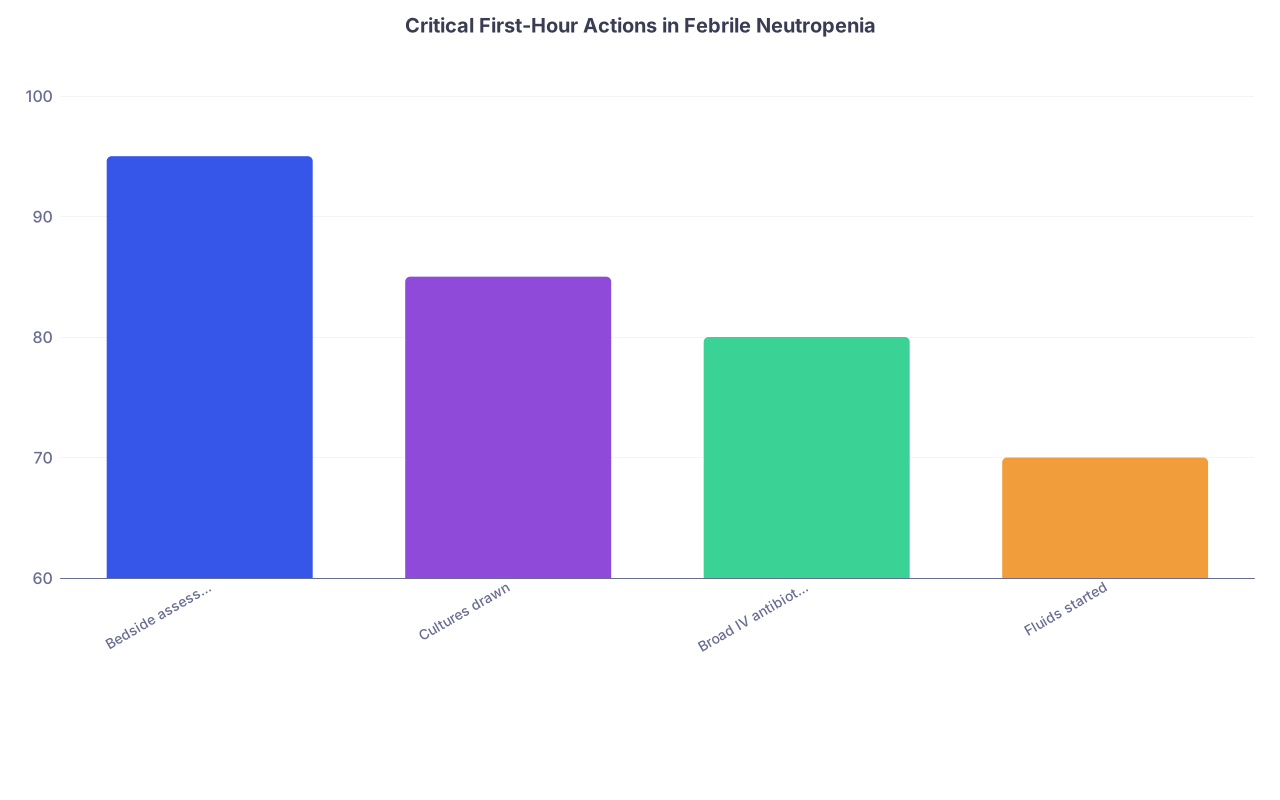
| Category | Value |
|---|---|
| Bedside assessment | 95 |
| Cultures drawn | 85 |
| Broad IV antibiotics | 80 |
| Fluids started | 70 |
C. Medications and fluids
Antibiotics
Choose based on local protocol and patient factors.
Example stable, no special risk factors:- Cefepime 2 g IV q8h
Unstable or abdominal source suspected:
- Pip‑tazo 4.5 g IV q6h ± Vanc
Known ESBL or high‑risk:
- Meropenem 1 g IV q8h ± Vanc
Fluids
- If hypotensive or lactate elevated:
- NS or LR bolus 30 mL/kg (or at least 1–2 L rapidly in adults)
- Reassess after each liter—lungs, JVP, O2 needs.
- If hypotensive or lactate elevated:
Antipyretics
- Acetaminophen is fine after drawing blood cultures.
- Avoid masking fever before cultures.
Growth factor (G‑CSF)
- This is usually not your middle‑of‑the‑night decision.
- Many institutions reserve filgrastim for:
- Profound neutropenia with sepsis
- Expected prolonged neutropenia
- High‑risk hematologic malignancies per heme/onc protocol
- Call heme/onc before ordering.
6. Distinguish High‑Risk vs Low‑Risk Febrile Neutropenia (But Do Not Delay Treatment)
Yes, MASCC and CISNE scores exist. On call at 2 a.m., you use a simpler mental model. You treat everyone as high‑risk initially and later downgrade if appropriate.
High‑risk features (needs admission, often higher level of care)
Any of the following:
- Hemodynamic instability, MAP < 65
- New or increasing O2 requirement
- ANC expected to be < 100 for > 7 days
- Acute leukemia induction, BMT recipients, CAR‑T patients
- Significant comorbidities: CKD, cirrhosis, advanced COPD, heart failure
- Mucositis grade ≥ 2, severe diarrhea
- Clinically obvious pneumonia, abdominal catastrophe, CNS symptoms
- Any organ dysfunction: rising creatinine, bilirubin, encephalopathy
Low‑risk is basically: solid tumor, short‑duration neutropenia, otherwise healthy, stable vitals, no organ dysfunction, no source that concerns you.
But even “low‑risk” in the inpatient setting still gets IV antibiotics at least up front.
7. Escalation: When You Call for Backup and How
Residents get burned because they delay escalation thinking “I can handle this.” Sometimes you can. Sometimes that is bravado.
You have three escalation targets:
- Your senior resident (or night float senior)
- The hemonc fellow or primary oncologist (if internal service)
- The ICU team / rapid response
Call your senior resident early if:
- MAP drifts below 65 despite fluids
- Lactate ≥ 2 mmol/L
- Increasing O2 needs
- You are even thinking “Do they need ICU?”
You will not be punished for calling early. You will be judged for calling late.
Clear ICU / rapid response triggers
You should be dialing or activating a team if:
- Persistent hypotension after 30 mL/kg fluid resuscitation
- Need for vasopressors to maintain MAP ≥ 65
- Respiratory distress:
- RR > 30
- New high‑flow or noninvasive requirement
- Altered mental status progressing
- Multi‑organ dysfunction: rising creatinine, LFTs, lactate climbing
- Rapidly progressive rash with hypotension (toxic shock, meningococcemia, etc.)
Do not get cute managing developing septic shock on the floor because “ICU beds are tight.” That is not your problem at PGY‑1.

| Step | Description |
|---|---|
| Step 1 | Febrile neutropenic patient |
| Step 2 | Bedside assessment |
| Step 3 | Stat cultures, labs, broad IV antibiotics |
| Step 4 | Stat cultures, labs, IV antibiotics |
| Step 5 | Fluid bolus 30 mL/kg |
| Step 6 | Call senior + ICU / Rapid response |
| Step 7 | Admit to monitored bed |
| Step 8 | Unstable? |
| Step 9 | MAP < 65? |
8. Special Situations You Will Definitely See
These are the cases that trip residents up because they are off‑algorithm.
A. The “afebrile but crashing neutropenic” patient
Never anchor on fever. If ANC < 500 and the patient is:
- Hypotensive
- Tachypneic
- Altered
- Has new infiltrate or obvious infection
→ Treat them as septic neutropenic even if temp is 36.8°C. Elderly and heavily pretreated patients may not mount a fever.
You still draw cultures and start broad IV therapy. Document “afebrile sepsis in neutropenic patient – empiric broad antibiotics started.”
B. Already on broad antibiotics and now febrile
Common scenario: on day 3 of pip‑tazo for pneumonia, now febrile again.
Framework:
Are they clinically worsening?
- Hypotension, more O2, confusion → this is now a sepsis escalation.
Re‑culture and image
- Repeat blood cultures
- Re‑image chest, abdomen, lines as indicated
Broaden or change class
- From cefepime → meropenem if ESBL or resistant gram‑negative concern
- Add vanc if new line infection concern or skin lesions
- Ask ID/heme for possible antifungal coverage if:
- Neutropenia > 4–7 days
- Persistently febrile > 4–5 days despite good antibiotics
Do not just “continue the same antibiotics” in a clinically worsening neutropenic patient. That is how you miss resistant bugs and fungi.
C. Mucositis and GI symptoms
Severe oral mucositis + neutropenia + hypotension = think viridans strep sepsis. Add vanc early.
RLQ pain, neutropenia, and fever? Think typhlitis (neutropenic enterocolitis):
- Broad coverage including anaerobes: pip‑tazo or carbapenem
- Surgical consult early if peritonitic
- CT abdomen/pelvis with contrast strongly considered
D. Central line problems
Red, tender port site + fever = until proven otherwise, catheter‑related bloodstream infection.
Orders:
- Blood cultures from each lumen + peripheral
- Start broad IV therapy (including vanc)
- Call heme/onc and possibly ID
- Line removal vs salvage depends on bug, host, and stability
If the patient is in septic shock with an obvious infected line, the line should go. Quickly. You do not wait 48 hours “to see cultures.”
9. Monitoring: The Next 6–24 Hours
You hung antibiotics and did the initial workup. This is where people relax too early.
Vital sign monitoring
- Unstable/ICU: continuous monitoring, frequent ABGs or VBGs, lactate trending.
- Floor but concerning: vitals q2–4h for at least the first 24 hours.
- Any change in status (BP down, O2 up, new confusion) → reassessment and probably escalation.
Lab follow‑up
- CBC, BMP at least daily; more frequent in unstable or in ICU.
- Daily cultures review. If blood cultures positive:
- Call ID or heme/onc.
- Tailor antibiotics: narrow if possible, broaden if resistant patterns appear.
- Watch creatinine closely with vanc, pip‑tazo, aminoglycosides.
Afebrile but still neutropenic
You do not stop antibiotics just because the fever resolved for 12 hours. Duration depends on:
- Underlying disease
- Depth and duration of neutropenia
- Identified source or lack thereof
On call, your job is not to decide final duration. Your job is to not prematurely stop coverage without attending/heme input.
10. Documentation That Protects You (And Helps the Team)
Write a concise but sharp note. It should answer:
- What happened: “Neutropenic patient (ANC 0.2) with Tmax 38.6°C on day 7 post‑chemo.”
- What you did quickly: “Seen at bedside within X minutes. Cultures drawn from central and peripheral. Empiric cefepime started at hh:mm.”
- Assessment of severity: “Currently hemodynamically stable without organ dysfunction; low suspicion for sepsis at this time” or “meets criteria for septic shock, ICU consulted.”
- Plan:
- Antibiotic regimen and rationale
- Monitoring plan (vitals, repeat labs, imaging)
- Consultants aware (heme/onc, ID, ICU)
This makes you look organized and protects you when someone reviews the chart.
11. A Few Common Bad Habits To Kill Early
I have watched residents repeat the same mistakes. Do not be that person.
Waiting for orders to be “complete” before giving antibiotics
- Cultures and first lab draw are the only things that come before antibiotics. Not the CT. Not the consult note.
Ignoring low‑grade fevers in neutropenia
- 38.1°C is not “borderline.” That is a febrile neutropenic patient.
Under‑resuscitating
- Giving a 250 mL “bolus” to a hypotensive septic patient and calling that “resuscitation” is absurd.
Forgetting line cultures
- Drawing two peripheral sets and ignoring the port/PICC is a miss. You need both to interpret differential time to positivity.
Not walking to see the patient personally
- Managing this via phone order is malpractice‑adjacent. You need eyes on them.
You are not trying to become an ID attending at 2 a.m. You are trying to not miss sepsis and to deliver first‑hour care fast and correctly. Febrile neutropenia is one of the few times where speed and protocolized care matter more than clinical artistry.
Get the thresholds burned into your brain. Build your mental order set. Know your institution’s standard regimen, and know when to escalate it. The next step, once you are comfortable with the acute management, is refining de‑escalation, outpatient risk stratification, and antifungal decisions—those higher‑order calls that separate a competent resident from a future hemonc or ID specialist.
But that is the next phase of your training. On call, tonight, your job is simpler: recognize fast, treat fast, escalate early, and keep them alive long enough for daylight rounds.