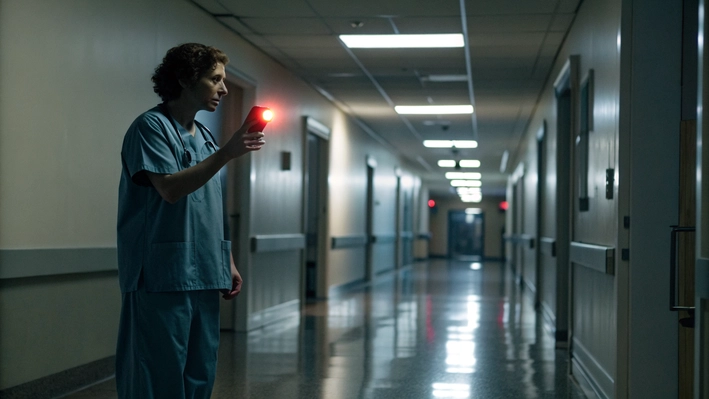
What if a patient slowly crashes overnight, you miss the early signs, and everyone decides you’re the unsafe resident they can’t trust?
Welcome to the on‑call brain spiral. I’ve lived in that space. The “am I actually safe to be here?” anxiety. The “what if I’m the reason someone codes at 5 a.m.?” fear. It’s not just abstract — you’ve seen cases presented in M&M where the story sounds way too close to what you’re afraid you’ll do.
Let’s talk about how to protect yourself. Not just “be vigilant” fluff. Real, concrete habits and mental checklists that make it much harder for subtle deterioration to sneak past you — even when you’re exhausted, covering too many patients, and your imposter syndrome is screaming that you have no idea what you’re doing.
The Real Fear Behind “Missing Something”
It’s not just fear of harming someone. It’s fear of:
- Being called incompetent
- Getting destroyed at M&M
- Having attendings lose trust in you
- Getting that reputation: “don’t leave them alone overnight”
You’ve probably already had some near‑misses: a borderline BP you signed out, a patient you didn’t go re‑check, a lab you forgot to follow up. And your brain replays it at 3 a.m. like a horror film.
Let me be blunt: you will miss things sometimes. Everyone does. The goal isn’t perfection — it’s building a system so that the things you miss are minor, and the big stuff is caught early enough that your senior, ICU, or RRT can help fix it.
On nights, it’s not your brilliance that keeps patients safe. It’s your habits.
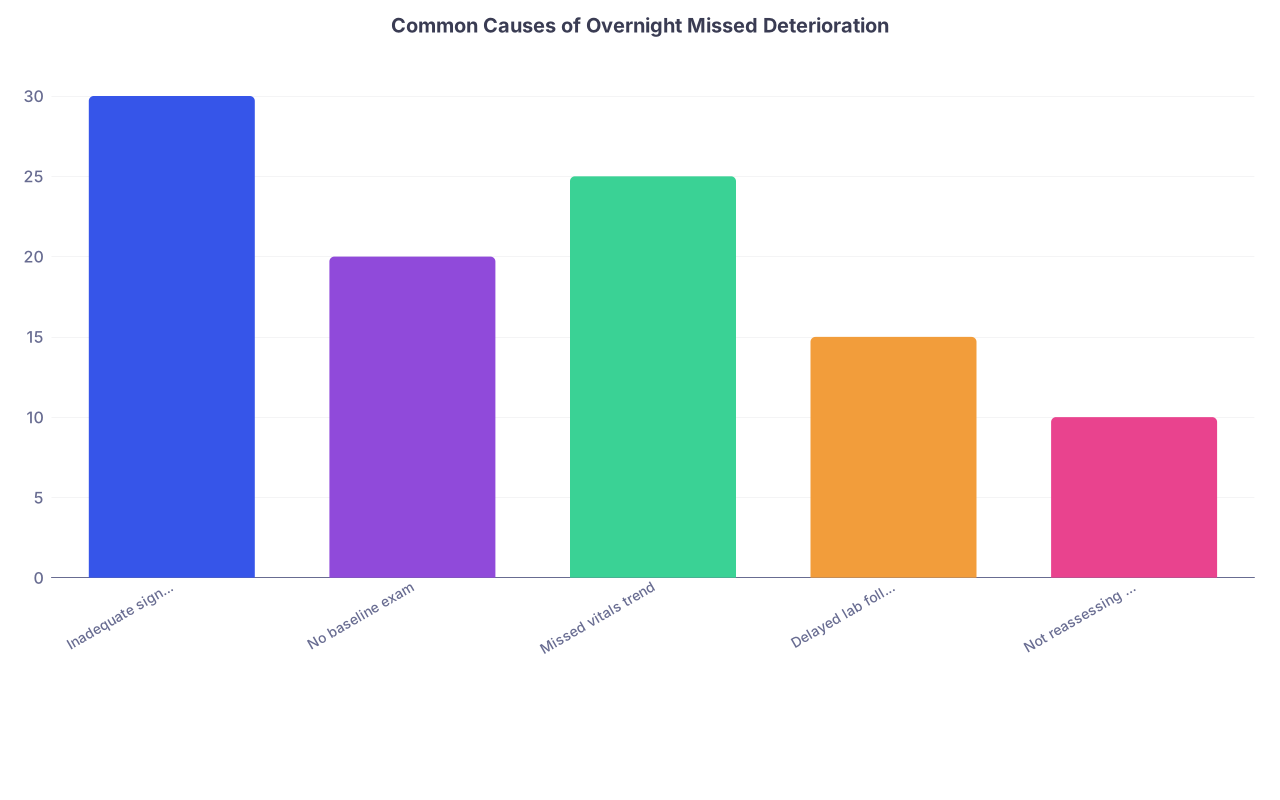
| Category | Value |
|---|---|
| Inadequate signout | 30 |
| No baseline exam | 20 |
| Missed vitals trend | 25 |
| Delayed lab follow-up | 15 |
| Not reassessing after change | 10 |
Step 1: Ruthlessly Mine Signout for “People Who Will Hurt You”
If your signout is weak, your night will be unsafe. Period.
You can’t protect yourself from subtle deterioration in a patient you don’t know is even remotely unstable.
In signout, your goal is not “hear every detail about every patient.” Your goal is: find out who is most likely to deteriorate and why.
When the day team says, “Nothing active,” I don’t believe them. I push — politely, but I push.
You should be listening for:
- Anyone with borderline vitals (soft BPs, tachycardia, increased O2 requirement)
- New infections, new bleeding, new chest pain, new neuro symptoms
- Anyone recently transferred out of ICU or step‑down
- Fresh post‑ops, especially within 24 hours
- Anyone the day team “feels weird about” but can’t fully explain
Ask direct questions. Not vague ones. Things like:
- “Who are the two patients you’re most worried about tonight?”
- “Who could end up in the ICU if things go badly?”
- “Who’s on the edge if their BP or O2 drops even a little?”
If they say, “Well, maybe bed 32,” now you know who needs extra eyes.
Then, for those flagged patients, you get concrete:
“Okay, for bed 32 — what’s their trend been today? What are red‑line vitals for you? At what point would you call RRT vs just you?”
Write that down. Don’t trust your post‑call brain.

Step 2: Do the “Mini Admission” on the Scary Ones
You don’t have time to deeply pre‑round on 40 patients. But you do have time to “mini‑admit” the top 3–5 highest‑risk ones the moment the shift starts.
For those patients:
Read their last note and today’s events. Not everything — just:
- Why they’re here
- What changed in the last 24 hours
- Any procedures, transfusions, rapid O2 or BP changes
Look at trends, not single numbers:
- Vitals over last 24 hours (heart rate, BP, O2, RR, temp)
- Labs: lactate, creatinine, WBC, Hgb, troponin, etc.
Put your eyes on them. Even for 30–60 seconds.
Don’t just rely on “nursing will call if they look bad.” You want your own baseline:- How awake are they?
- How are they breathing? Can they speak in full sentences?
- Skin color, sweat, work of breathing, mental status.
This is your protection later. When the nurse calls at 3 a.m. saying, “He looks different,” you have a mental picture to compare to.
Also, selfishly, this is your medicolegal armor. “Resident saw patient at 21:30, patient alert, oriented, normal work of breathing, BP 105/60, sat 95% RA, no distress” is a lot better than “resident never saw patient before deterioration at 03:45.”
Step 3: Learn the Red Flags You Don’t Argue With
You don’t have to recognize every obscure zebra. But there are some patterns where, if you see them, you skip the mental debate and move straight to “this is bad until proven otherwise.”
Here are a few that people rationalize away way too often:
- New tachycardia (esp. >110–120) without a clear, benign cause
- Increasing O2 requirement (2L to 4L to 6L) over a few hours
- Subtle confusion or agitation in someone previously normal
- RR > 24. Everyone underestimates respiratory rate; if someone is 28–30, believe it
- Soft BPs in patients who started normal (systolic drifting 130 → 110 → 95)
- Low urine output in a sick patient
- “He just seems off” from a nurse who actually knows the patient
Those are “don’t be a hero” moments. You are absolutely allowed to overreact.
I’ve seen residents killed in M&M not because they didn’t know some esoteric diagnosis, but because the chart showed 8 hours of rising O2 and tachycardia with no escalation.
Your mindset: trends > single numbers, and deltas matter.
| Pattern | Your Move |
|---|---|
| Rising O2 needs | Reassess + consider RRT/ICU eval |
| New tachycardia | Full exam + labs + EKG |
| Drop in mental status | Neuro check + glucose + CT if needed |
| Hypotension trend | Fluids, labs, call senior early |
| Rising lactate/Cr | Think sepsis/shock, escalate early |
Step 4: Make the Nurses Your Early-Warning System (Not Your Opponents)
You will not catch everything alone. You’re outnumbered by patients and outgunned by fatigue.
Nurses are your force multipliers if you set it up that way.
At the start of the night, for each high‑risk patient, I’d say to the bedside nurse:
- “I’m worried they could go south. If you see any change — vitals, mental status, breathing, even just a bad feeling — I want to hear about it early.”
- “If his O2 goes above 4L or RR > 24, please page me. I’d rather come see him too much than not enough.”
Does this mean you’ll get more pages? Yes. That is the point. Early noise is better than late disaster.
And if they call and it seems minor? Go. Look. Put your hand on the patient. Over time you’ll develop a sense for “this is real” vs “this is fine,” but early on, err on the side of showing up.
You’re also building a reputation. If you’re the resident who blows off nursing concerns, you will get fewer calls. That doesn’t mean things are fine. It means no one trusts you.

| Step | Description |
|---|---|
| Step 1 | Nurse notices change |
| Step 2 | Page resident |
| Step 3 | Resident assesses patient |
| Step 4 | Document exam and plan |
| Step 5 | Call senior |
| Step 6 | Call RRT or ICU |
| Step 7 | Red flags present |
| Step 8 | Still concerned |
Step 5: Script Your Response to the “Something’s Off” Page
The worst time to invent a plan is when you’ve been woken from dead sleep.
Have a default, autopilot sequence. Something like:
Ask three quick questions on the phone:
- “What are their current vitals?”
- “What’s different from before?”
- “Are they on oxygen? How much?”
If anything sounds even slightly concerning, say:
“I’m coming to see them now. Put them on the monitor if they’re not already.”At bedside, run a rapid mental ABC check:
- Airway: talking? gurgling? snoring?
- Breathing: RR, work of breathing, accessory muscle use, wheeze, crackles
- Circulation: heart rate, BP, pulses, cap refill, obvious bleeding
- Mental status: oriented? confused? agitated?
- Skin: pale, mottled, sweaty?
Get immediate data:
- Repeat vitals
- Fingerstick glucose
- Basic labs if needed: CBC, BMP, lactate, troponin, VBG/ABG depending on concern
- EKG if tachycardic, chest pain, or hypotensive
Then here’s the key protection move: loop in your senior earlier than feels “justified.”
Say the words:
“I’m worried and I’d like you to lay eyes on them with me.”
Not “I don’t know what’s going on and I’m dumb.” Just “I’m appropriately worried.”
A lot of night disasters become ordinary “we caught it, we escalated, we handled it” stories just because someone made that call at midnight instead of 4 a.m.

Step 6: Document Like Someone Will Read It at M&M
This part is unpleasant to talk about, but it’s real. When things go bad, people go back and read your notes at 1x zoom on big screens.
You protect yourself by making it very obvious that:
- You saw the patient
- You recognized risk factors
- You had a reasonable plan
- You escalated when appropriate
Your overnight notes don’t need to be novels. But for any concerning change, write something like:
“Called by RN for increased O2 needs and tachycardia. At bedside: patient alert, speaking full sentences, RR 22, sat 93% on 4L (baseline 2L), HR 112, BP 108/64. Exam: mild increased work of breathing, crackles at bases, no accessory muscle use. Concern for early pulmonary edema vs pneumonia vs PE. Ordered CXR, BNP, troponin, lactate, CBC, BMP. Gave 20mg IV Lasix. Discussed with senior at 23:45; plan to re‑eval in 1 hour or sooner if worsening. RN aware to call for RR > 24, sats < 90%, or increased O2.”
That tells a story. It shows you weren’t asleep at the wheel.
Will it save you from all criticism? No. But the alternative — no note, or “patient looks okay” with nothing else — basically paints “I didn’t really think about this” in neon.
Step 7: Accept That Anxiety Can Be a Safety Feature — If You Aim It
Your fear of missing subtle deterioration isn’t totally irrational. People do miss things at night. Patients do crash. Sometimes there is a moment where you look back and think, “I should have gone back earlier.”
So what do you do with that?
Use the anxiety as a trigger for habits, not for paralysis.
When your brain starts the “what if they’re getting worse and I’m ignoring it” spiral, translate that into one actionable step:
- “Okay, I’m going to re‑check vitals and go see them once more.”
- “Okay, I’m going to call my senior and run this by them.”
- “Okay, I’m going to put a brief note so there’s a clear story.”
You don’t win this game by being fearless. You win by letting your fear push you into early, small escalations instead of late, massive ones.
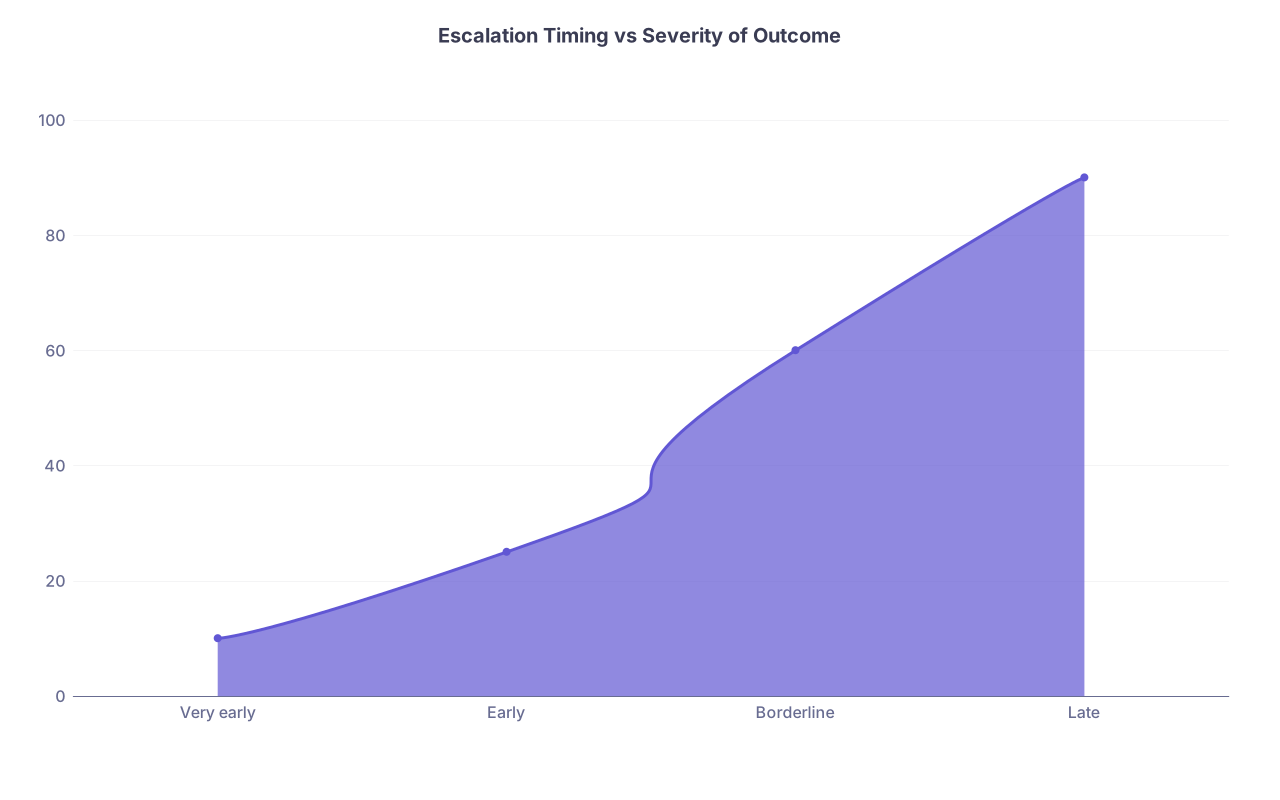
| Category | Value |
|---|---|
| Very early | 10 |
| Early | 25 |
| Borderline | 60 |
| Late | 90 |
(Think of those values as “chance of bad outcome.” Your whole job is to keep yourself on the left side of that line by acting early, not perfectly.)
Step 8: Build a Simple Night Routine So You Don’t Rely on Willpower
You will not be your best self at 3 a.m. That’s expected. The system knows that, even if it pretends it doesn’t.
So build stupid‑simple routines that don’t require thinking:
- At the start of the night: identify your top 3–5 worry patients and see them
- Around midnight: re‑check vitals and notes on those same patients
- Around 3–4 a.m.: scan overnight labs on them and re‑assess if anything changed
This is not “perfect medicine.” This is “bare minimum survivable safety net.”
You’re allowed to be tired, grumpy, slower than you wish. What you can’t be is completely reactive, waiting for codes to pop up on the monitor.

FAQ (Exactly 4 Questions)
1. How do I know when I’m over-calling versus appropriately escalating?
If you’re asking this, you’re probably not the problem. Early in training, you should be calling more than you’re comfortable with. A reasonable rule: if vitals are trending the wrong way, mental status has changed, or your gut is screaming “this feels bad,” you escalate. Over time, seniors will tell you, “Next time, you don’t have to call for X,” and that’s how your threshold gets fine‑tuned. No one is mad that you called early on someone who looked borderline but stable. They are mad if you hide a sinking patient until they’re in extremis.
2. What if I miss something and the patient crashes — am I ruined?
No. One bad night doesn’t define your entire career. What people care about is pattern and response. Did you learn from it? Do you ask for help faster now? Do you adjust your habits? I’ve seen interns who had awful codes on their watch who went on to become some of the safest, most vigilant residents precisely because it scared them into better systems. The ones who really get in trouble are the ones who don’t change.
3. How do I push back if the day team shrugs off someone I’m worried about for the night?
You don’t need to be confrontational. Just be specific: “I’m on tonight and I’m honestly anxious about him. Can we put in some parameters, like if his O2 goes above 4L or BP drops below X, we plan for RRT or ICU?” Or, “I’d feel better if we got a baseline lactate/ABG before you leave.” You’re signaling, “I will be the one living with this at 3 a.m., and I want backup plans now.” If they still blow you off, document your concern and loop in your senior.
4. What if the nurses stop calling me because I’ve annoyed them with too many pages and requests?
This is backward. You want to be the resident nurses call “too much,” not “too little.” If you’re worried you’re annoying them, talk to them: “I know I’m asking you to call me for a lot of things. I’m still early and I’d rather over‑react while I learn. If there are better ways I can work with you, tell me.” That bit of humility + presence at the bedside goes a long way. Nurses don’t hate being asked to look out for red flags; they hate being ignored when they raise them.
Key points: You protect yourself from missing subtle overnight deterioration by (1) aggressively identifying your highest‑risk patients and actually seeing them, (2) treating vital sign and mental status trends as non‑negotiable red flags, and (3) escalating early — to nurses, to seniors, to RRT/ICU — and documenting that you were awake, thinking, and acting, even if you weren’t perfect.