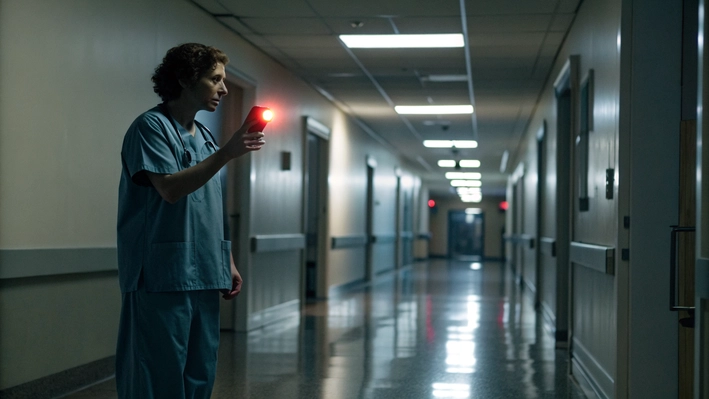
The fear of looking incompetent asking for help overnight is quietly harming residents more than any drug error or missed lab ever will.
The 2 a.m. Terror No One Admits Out Loud
Let me guess the script running in your head.
You’re on call. It’s late. You’re staring at a patient who’s… not crashing, but not right. Vitals are a little off. Something in your gut feels wrong. You hover over the phone to call your senior or attending and your brain immediately launches into:
“What if this is nothing and I wake them up for no reason?”
“What if they think I can’t handle being on call?”
“What if they tell the PD I’m unsafe to be alone?”
“What if this ruins my reputation with the team?”
“What if they regret ranking me?”
And then the absolute worst one:
“What if everyone else would’ve handled this themselves and I’m the only idiot who needs help?”
So you wait. You recheck vitals. Refresh the EMR five times. Reread the note. Rewrite your differential in your head. Tell yourself, “I’ll call if they get a little worse.” And with every minute, the bar for “bad enough to call” creeps higher and higher.
This is how people get hurt.
Not because you’re incompetent.
Because you’re terrified of looking incompetent.
Let me be blunt: the culture that makes you feel that way is broken. Not you.
What Seniors and Attendings Actually Think (Versus What You Fear)
You’re probably imagining your attending rolling over, checking their phone, and sighing to their spouse: “Ugh, this intern again. They can’t do anything by themselves.”
I’ve seen the other side of that call. Here’s what it usually looks like.
Middle of the night. Phone rings. Senior picks up, half-awake:
“Hey, what’s up?”
You: stumble through your presentation, a little disorganized, probably apologizing too much.
Senior: “Okay, slow down. Start with age and chief complaint.”
Do they sometimes sound short? Sure. They’re tired. But most decent seniors are thinking:
- Thank God they called instead of sitting on this.
- How worried does this resident sound?
- What can I teach them while fixing this?
- How can I help them not feel like an idiot?
What they are not thinking, 99% of the time:
“This person is incompetent because they asked for help.”
You know what does make them question your judgment?
Finding out the next morning that you were worried at 1 a.m., didn’t call, and the patient tanked at 4.
I’ve literally heard variations of this:
- “I don’t care if you wake me up too much. I care if you don’t wake me up when you’re worried.”
- “If you’re debating whether to call, that probably means you should call.”
- “You’re not bothering me. You’re doing your job.”
Are there some toxic seniors who will make you feel small? Yes. And they’re wrong. And unsafe. And usually everyone already knows they’re a problem.
You’re not crazy for being scared of them. But you still can’t base your clinical decisions on “how do I avoid annoying this one insecure PGY-3?”
You’re Not Weak for Needing Help; You’re Inexperienced. Those Are Different.
Medicine screws with your head because you jump from MS4 to intern and the world suddenly treats you like you should know how to handle a GI bleed alone at 3 a.m. because you once saw one as a student.
You’re not weak.
You’re not broken.
You’re just new.
And here’s the thing nobody tells you explicitly: residency is designed around the assumption that you will need help. A lot. Especially overnight.
The whole structure of call is basically:
- Intern: sees the patient, collects data, feels nervous, calls for help
- Senior: interprets, decides, guides, sometimes comes in
- Attending: available as backup, sets plan, takes ultimate responsibility
You are literally paid (poorly, yes) to learn under supervision. Not to be an independent practitioner from day one.
You asking for help is not you failing at the job.
You not asking for help is you failing the safety system built into the job.
Let me spell out the ugly truth: Residents who never ask for help are the ones people quietly don’t trust. The “cowboy” who always has a plan and never needs backup? Nurses are nervous around them. Seniors double-check their orders. Attendings remember their “near misses.”
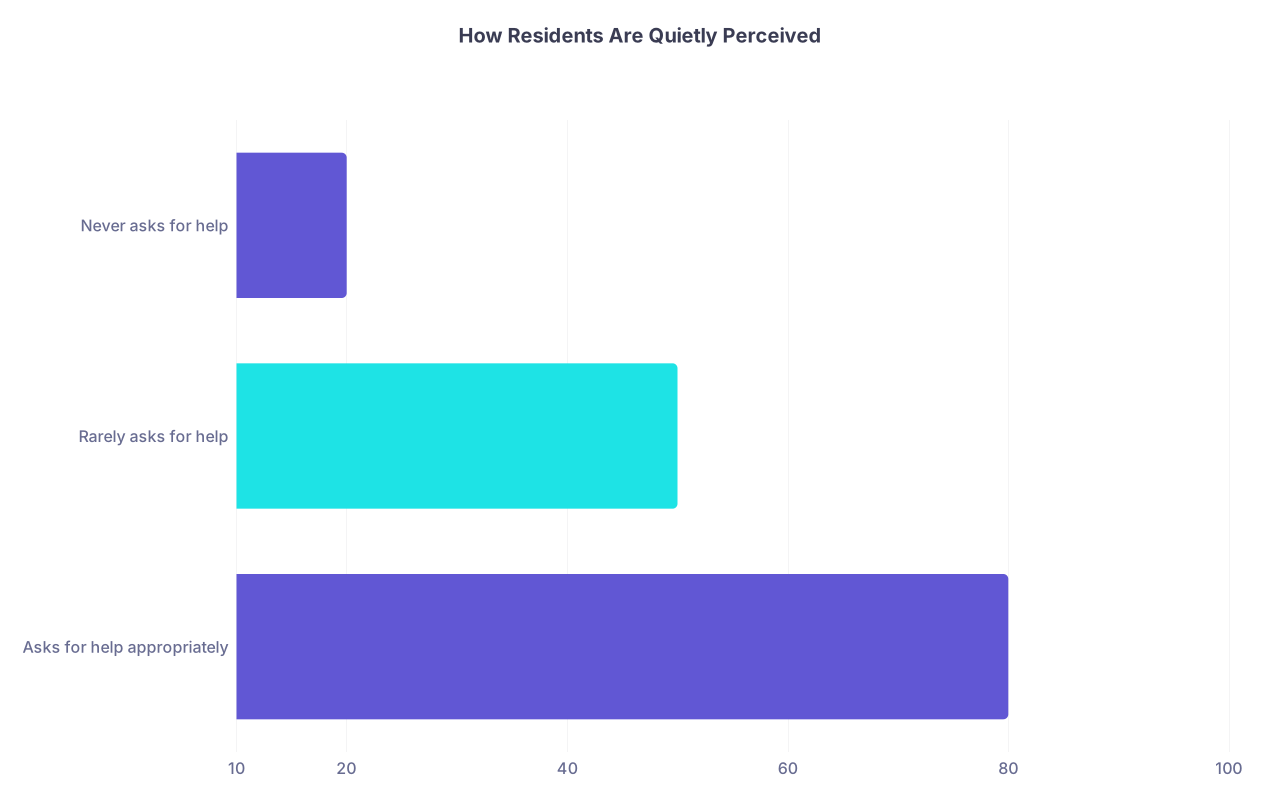
| Category | Value |
|---|---|
| Asks for help appropriately | 80 |
| Rarely asks for help | 50 |
| Never asks for help | 20 |
The sweet spot is “asks for help appropriately.” And you don’t get there by always erring on the side of silence.
The Worst-Case Scenarios You’re Playing Out in Your Head
Let’s walk through the disasters you’re imagining and I’ll tell you what actually happens.
“They’ll think I’m incompetent”
What actually tends to happen:
- Night 1: you call multiple times. You sound nervous. Senior talks you through it.
- Night 5: you call less, but still when you’re unsure. Senior sees your growth.
- After a month: you’re more structured; you still call, but your asks are clearer.
People don’t judge you by “how many times did you ask for help?”
They judge you by:
- Do you recognize when you’re out of your depth?
- Does your judgment improve over time?
- Do you learn from each situation?
Incompetence is not “needs supervision.”
Incompetence is “doesn’t know what they don’t know, and acts like they do.”
“They’ll talk about me behind my back”
Short answer? Yes. People talk.
But here’s the more honest version of that conversation:
Bad scenario (rare, toxic environment):
“Ugh, they’re so needy. I never had to call that much as an intern.” (They’re lying, by the way.)
More common scenario:
“They’re anxious, but they care. They call when they’re worried. They’ll be fine by spring.”
And then there’s the other kind of behind-your-back talk, the truly scary one:
“Nurse said they were worried and the intern still didn’t call. Patient almost ended up in the ICU. That’s a problem.”
You don’t get to choose whether people talk about you. You do get to choose which version of that story you’d rather live with.
“I’ll wake them for something stupid and they’ll be mad”
Okay. Let’s imagine the really uncomfortable case:
You call. You present. They come down or review the chart and it is something pretty benign. Your threshold was low. Your anxiety was high.
Worst likely outcome?
They’re a little short. Maybe they say, “Next time, you can handle this by doing X, Y, Z before you call me.”
You feel stupid. You replay it in your head for three days. You question if you should’ve just kept your mouth shut.
Now compare that to the alternative universe where that same situation wasn’t benign. They tell you the next day: “If you were that worried, you should’ve called me.”
Which regret do you actually want to live with?
How to Ask for Help at Night Without Feeling Like a Trainwreck
You can’t fix the anxiety completely. But you can make the process feel less like you’re flailing.
Here’s a script that works even if your brain is mush.
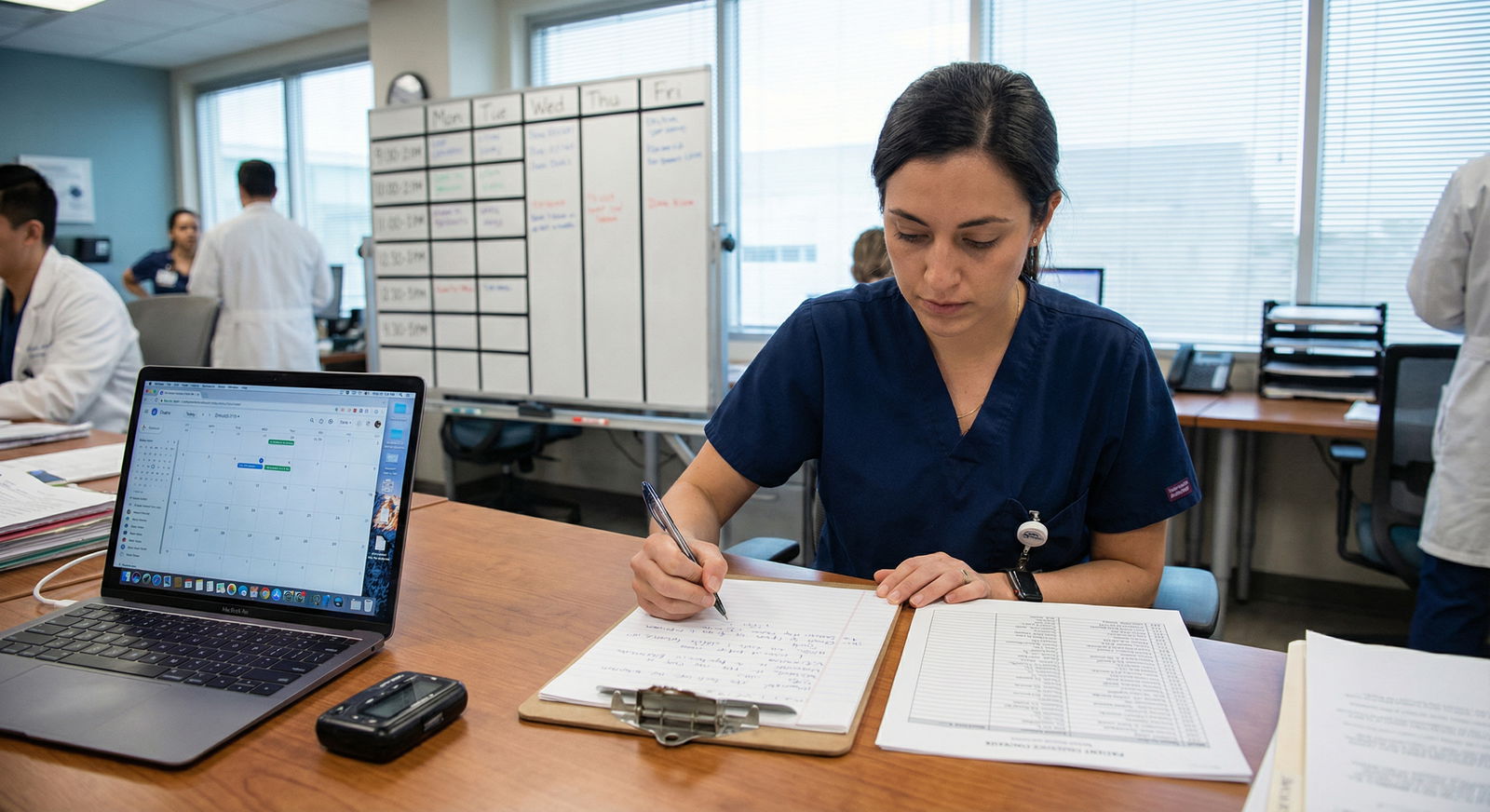
Before you call, take 90 seconds. Literally 90 seconds.
Jot down on a scrap of paper or sticky note:- Name, age, one-line summary (“65 F with CHF admitted for pneumonia”)
- Why you’re being called (“New hypotension, MAP 58”)
- Vitals trend last few hours
- Labs/imaging that matter (or “none yet”)
- What you’ve already done
- What you’re worried about (“sepsis vs bleed vs cardiogenic”)
Then call. And say it out loud in roughly this structure:
“Hey, sorry to wake you. It’s [your name] on [service]. I’m calling about [name], [age] with [one-liner]. The nurse called me because [main issue].
Right now vitals are [X]. On exam I saw [Y]. I’ve done [A, B, C] so far. I’m worried about [what’s scaring you]. I’m not sure if I should [two options you’re considering] and wanted to run it by you.”
That last line matters. It shifts you from “helpless intern” to “developing clinician who needs oversight.”
If you literally have no clue what to do, it’s still fine to say:
“I’ve checked vitals, examined them, and I’m not confident I understand what’s going on. Can you help me think through next steps?”
That’s not incompetence. That’s exactly what you’re supposed to be doing.
The Hidden Allies: Nurses, RT, and Your Senior
You know who absolutely does not think you’re incompetent for asking for help? The nurses.
They’re the ones who see residents freeze at 3 a.m.
They’re the ones who watch patients circle the drain while someone “waits a bit longer.”
They remember which residents pick up the phone and which ones avoid it.
I’ve heard ICU nurses say straight out:
“I’ll take the anxious intern who calls too much over the cowboy who never calls, any night of the week.”
If a nurse says, “I’m really worried about this patient,” your ego is not allowed to override that. I don’t care how you think it’ll look. That’s the universe handing you a clear “call your senior” moment.

| Step | Description |
|---|---|
| Step 1 | You feel uneasy |
| Step 2 | Call senior |
| Step 3 | Reassess in short interval |
| Step 4 | Nurse worried too |
| Step 5 | You still worried |
And your senior? Their job is literally to be your backstop. A good senior will want you to reach out. You are not “bothering them.” You are letting them do the part of their job that actually matters.
Will they sometimes sound annoyed? Sure. People are human at 3 a.m. That does not mean you were wrong to call.
The Real Risk: Silence, Not Questions
If you remember nothing else from this whole thing, keep this:
You will not get fired for asking for help when you’re unsure.
You absolutely can get in serious trouble for not asking.
Programs don’t go nuclear because “this intern called too often the first month.” They go nuclear when:
- There’s a patient harm event and it comes out there was no escalation.
- Nurses report a pattern of “we were worried and they brushed us off.”
- Seniors say, “I had no idea they were struggling; they never called overnight.”

If something goes sideways and you escalated early? There is shared responsibility. Team responsibility. System responsibility.
If something goes sideways and you sat on your fear alone because you didn’t want to “bother” anyone? You carry more of that weight than you deserve. And it sticks.
You Being Anxious Means You Care (And That’s Good)
You’re reading this because you’re already worried about being safe. That puts you ahead of the people who should be scared and aren’t.
Is your anxiety annoying to live with? Absolutely.
Is it actually protective sometimes? Also yes.
The goal isn’t to erase your fear of looking incompetent. The goal is to stop letting that fear outrank patient safety and your own safety.
Tiny mindset reframe that helps:
Instead of:
“If I call and it’s nothing, I’ll look stupid.”
Try:
“If I don’t call and it’s something, this could haunt me for years.”
When you put those two regrets side by side, one of them is obviously worse.
And just to be very clear: Every attending you respect now? They have stories of the dumb calls they made as interns. The “I called my attending at 2 a.m. for constipation” type stories. They survived. You will too.

Quick Reality Check Table
| Scenario | Actual Consequence |
|---|---|
| Call and it’s nothing major | Brief annoyance at worst, you learn |
| Don’t call and patient worsens | Safety event, real scrutiny, guilt |
| Call “too much” in first months | Seen as anxious but teachable |
| Never call, act overconfident | Quietly labeled unsafe, not trusted |
| Call when nurse is worried | Seen as appropriate escalation |
FAQ – Exactly What You’re Afraid to Ask Out Loud
1. How do I know when something is “call-worthy” and not just me being anxious?
Use a simple rule: if you are uneasy and/or the nurse is uneasy, it’s call-worthy. Full stop. You’re not required to perfectly sort “real” from “false” alarms at 2 a.m. as a new resident. Your job is to recognize that your Spidey sense is tingling and bring in someone whose threshold is calibrated by more experience.
2. What if my senior is actually kind of a jerk about being called?
That sucks, and you’re not imagining it. Some seniors are insecure and offload that by shaming juniors. You still have to protect patients and yourself. If they snap at you, keep your voice steady and say, “I understand. I’m still not comfortable managing this alone and want your input.” Then document your communication clearly. If it becomes a pattern, quietly talk to a chief or someone you trust. But don’t let one person’s attitude push you into dangerous silence.
3. Will my program director hear about every time I ask for help?
No. They’re not reading a log of “number of overnight calls per intern.” What gets to a PD’s radar are patterns: unsafe independence, refusal to escalate, recurrent issues after feedback. You being appropriately cautious early on? That barely registers, except maybe as, “They’re anxious but conscientious.” Which is survivable. Reckless overconfidence is not.
4. How do I stop apologizing 10 times every time I call?
You can’t fully stop the urge, but you can script around it. Before the call, decide you’re allowed one apology: “Sorry to wake you.” After that, switch to facts: “Here’s what’s going on.” If you catch yourself apologizing again, literally pause and say, “Let me restart and give you a concise summary.” It sounds more confident than you feel, I promise. And seniors care more about clarity than you being perfectly slick.
5. What if I freeze and literally don’t know what to ask for when I call?
Say that. Seriously. “I’m calling because I’m worried about this patient and I don’t know what I need yet. Can I talk it through with you?” Then let them guide the questions: “What are the vitals? What did the nurse see? What’s the exam?” You’re not expected to have a neatly packaged plan at 3 a.m. as a brand-new resident. You are expected to raise the flag when you’re in over your head.
Years from now, you won’t remember every overnight call where you worried you sounded dumb; you’ll remember the ones where you chose courage over silence and refused to let your fear of looking incompetent matter more than keeping your patients safe.