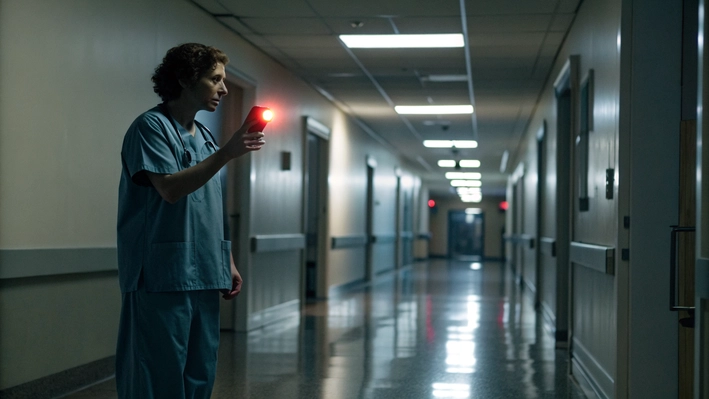
The Unwritten Rules of Calling Your Attending at 3 AM on Call
It’s 2:56 AM. You’re on your first real call as an intern. The ED just paged about a hypotensive patient you admitted six hours ago. The nurse is asking, “Do you want to upgrade him? Push more fluids? Call the ICU?”
Your cursor is hovering over your attending’s number. You’ve typed the digits twice and deleted them twice. Your senior’s in a different wing dealing with a GI bleeder. You feel that familiar knot in your stomach:
“Is this a real ‘call the attending at 3 AM’ problem… or am I about to out myself as the clueless intern?”
Let me tell you how this actually works. Not the “what’s in the handbook.” The real rules—the ones that decide if your attending trusts you, labels you as unsafe, or quietly decides never to take you on a high-acuity rotation again.
Because that’s what’s on the line when you make that call at 3 AM.
What Attendings Really Think About 3 AM Calls
Here’s the part your chiefs don’t spell out. There are three broad categories attendings silently put residents into when it comes to overnight calls:
| Resident Type | What Attendings Say Later |
|---|---|
| Never Calls | "I don't know what they're doing at night." |
| Calls for Everything | "They can't make basic decisions." |
| Calls for the Right Stuff | "I trust their judgment." |
The third category is where you want to live. And that has almost nothing to do with whether your decision at 3 AM is “right” in some textbook sense. It’s about signal.
Are you signaling that:
- You recognize sick vs not sick
- You understand your level of training
- You respect their sleep but not more than patient safety
Here’s the inside truth:
Attendings do not get mad because you woke them up. They get mad because of why you woke them up and how obviously unprepared you were when you did it.
I’ve sat in post-call rooms and heard this exact sentence more than once:
“If they’re going to call me at 3 am, they’d better at least know the vitals and where the patient is.”
You think that’s basic. You’d be surprised how many people blow it.
When You Absolutely Call — No Debate
Let’s start with the non-negotiables. The stuff where if you don’t call, your attending will torch you on evaluation day and will be right to do so.
If any one of these is happening, you call. I do not care if your senior says, “Maybe we can wait and see.” You will not be the resident who hid a crashing patient from the attending.
- Unstable vitals you cannot rapidly fix
- Rapid change in mental status
- New need for pressors, BiPAP/CPAP, or intubation
- Suspected stroke, STEMI, massive PE, or other “time is tissue” events
- Transfer to ICU or step-down level of care
- Code blue or peri-arrest situation on your patient
- Procedural or surgical emergency being actively mobilized
And here’s the nuance most interns miss: it’s not just the clinical situation. It’s the trajectory.
A single BP of 88/54 on a septic patient who responds to fluids and is waking up? Fine, you can manage, reassess, then update later.
A trend of BPs in the 80s for two hours, escalating oxygen, increasing lactate, and you’re “tweaking fluids” on the floor? If your attending finds out the next morning that you sat on that all night, they will not be impressed with your “independence.” They’re going to say, “Why did no one call me?”
And they won’t forget.
The Gray Zone: Where Judgment Actually Matters
Here’s where real residents separate themselves: the gray zone. The “should I or shouldn’t I?” situations.
These are the ones that keep you staring at the phone for five minutes. Because clinically, you can probably manage it. But you’re not sure if you should manage it alone.
Let me give you a few real-world examples I’ve seen blow up later.
Example 1: The Slow Burn Hypotension
Medicine floor. 75-year-old admitted with pneumonia.
22:00 – BP 102/64, on 2 L NC
01:00 – BP 94/58, on 3 L NC
02:30 – BP 88/55, on 4 L NC, HR 110, febrile
You give a fluid bolus, start broadening antibiotics per sepsis protocol, draw lactate, consider blood cultures (if not already done). The nurse asks, “Do we need to move him?” Now you’re thinking, “If I call, they might say I’m overreacting. If I don’t and this goes south…”
This is exactly the kind of patient your attending wants to know about at 3 AM. Not because they’re going to magically fix it from home. But because this might be an ICU transfer in the next couple of hours and they want to be part of that decision.
You call.
Example 2: The Post-Op Tachycardic Patient
Surgery. POD1 from laparoscopic cholecystectomy. HR 120–130 for two hours, normotensive, sats fine, pain “6/10,” borderline UOP.
You can write for more fluids, check CBC, re-dose pain meds, maybe an EKG. Is this a 3 AM emergency? No.
But here’s what most attendings would say at M&M if this patient later turned out to have a bleed or a PE:
“Why didn’t anyone at least call me when the heart rate was 130 all night?”
You don’t need a long call. Something like:
“Hey, Dr. Smith, sorry to wake you. Quick update on Ms. X, POD1 lap chole. She’s been persistently tachycardic in the 120s for two hours. Normotensive, sats okay on room air, pain moderately controlled, abdomen soft but tender. I’ve given a fluid bolus and ordered labs and EKG. Just wanted you to be aware and see if you have any other concerns or if you want us to watch closely for now.”
That’s a 60-second call that buys you a lot of trust.
How Prepared You Need To Be Before You Hit “Call”
This is the part that kills residents’ reputations: calling unprepared.
Let me be blunt. If you wake an attending at 3 AM and then say, “Uh, let me check that,” three times in the first minute, they will never fully trust you overnight again.
You do not call until you can answer, without putting them on hold:
- Exact, recent vitals (not from an hour ago; I mean now)
- Oxygen delivery and recent changes
- Mental status baseline vs now
- What interventions have already been done (meds, fluids, imaging, labs ordered)
- Relevant labs and imaging that have already resulted
- The patient’s overall status: floor vs ICU, code status, major comorbidities
And then the crucial part residents forget: what you think is happening and what you think should happen next.
Not, “What do you want to do?”
But, “I think this is likely sepsis from X; I’ve done A, B, C; I’m considering D. I’m calling you because of [high-risk feature / potential for deterioration / possible ICU transfer].”
Attendings talk about this behind closed doors. They’re not judging you on your differential as if it’s an exam. They’re judging this:
Do you sound like a doctor who has actually seen the patient and thought critically, or do you sound like a switchboard operator relaying vitals?
If you sound like the latter, the label you get is: unsafe.
What You Should Say (And What You Should Never Say)
Let’s get tactical. Here’s how a 3 AM call sounds from someone who knows what they’re doing.
The Good Call
“Hi Dr. Lee, this is Dr. Patel, the night resident on 6B. Sorry to wake you, I’m calling about Mr. Johnson, your 68-year-old with CHF and pneumonia you admitted earlier today.
He’s had worsening hypotension over the last two hours — currently 84/52, HR 112, RR 24, on 4 L NC with sats 93%. He was 102/64 on 2 L earlier. Mentation is a bit more sluggish but he’s still arousable and oriented. Lungs with increased crackles at the bases, extremities cool.
I’ve given a liter of LR with minimal response, broadened antibiotics as per sepsis protocol, ordered repeat labs including lactate and blood cultures, and started him on maintenance fluids. I’m concerned he’s progressing into septic shock and may need ICU-level care or pressors. I wanted to update you and discuss transfer to the ICU versus another bolus while we wait for labs.”
That call is gold. Any halfway decent attending will respect you for it.
Now the disastrous version:
The Bad Call
“Uh, hi, Dr. Lee? This is, um, one of the residents. I’m calling about Mr. Johnson. He doesn’t look good. His pressure has been kind of low.
…No, I don’t have the exact numbers in front of me. Let me check.
…Yeah, I haven’t seen him yet, the nurse just called and was worried so I figured I should call you.”
I’ve heard that verbatim. More than once. Those residents get shredded later. In faculty meetings. In eval comments. In decisions about who gets good letters.
You are allowed to be uncertain. You are not allowed to be sloppy.
The Real Politics: Seniors, Nurses, and You in the Middle
Here’s the quiet mess no one explains well.
You’re not just managing the patient. You’re managing expectations up and down the chain.
- Nurses expect you to make decisions and not hide behind the phrase “let me check with my attending” every five minutes.
- Seniors expect you to loop them in before you go over their heads.
- Attendings expect to be called for serious changes and never blindsided in the morning.
This is the unwritten algorithm most good residents end up using:
- Nurse calls you, concerned.
- You see the patient. In person. Not “chart review medicine.” You examine them.
- You stabilize what you can: fluids, basic meds, stat labs, basic imaging, oxygen adjustments.
- You page/call your senior, give a tight report, and say:
“I’m worried enough that I think we should at least update the attending. I’m happy to make the call, or we can do it together.” - Between you and the senior, you decide how to present it and what your ask is.
- Then you call the attending, already somewhat aligned as a team.
Where things go sideways is when residents skip steps 2–4 and go straight to 6. Attendings can feel that instantly. They can hear when it’s a “I haven’t seen the patient yet but someone told me to call you” situation.
One more behind-the-scenes truth: nurses know which residents they can trust at 3 AM. They talk about you just as much as attendings do. If you’re the resident who repeatedly says, “Let’s just wait” for concerning stuff because you’re scared to call your attending, they will start bypassing you. Documenting against you. That gets ugly fast.
“I Don’t Want to Bother Them” Will Get You in Trouble
I want you to burn this into your brain:
“I did not want to bother you overnight” is not a noble explanation. It is a confession that you prioritized their sleep over the patient.
You’re not their friend. You’re not their roommate. They are being paid to be available 24/7 for the patients on their service. That is literally the job.
I’ve heard attendings say, word for word:
“If they ever tell me they didn’t call because they didn’t want to wake me, and the patient was actually sick, I’m done. That’s a judgment problem.”
The attendings who make you feel bad for calling at 3 AM about a legitimately concerning situation? Those are the ones with judgment issues. Not you. You can’t fix them. What you can do is protect yourself by being prepared and appropriate with your calls.
The ones with real judgment, the ones who will actually go to bat for you with fellowship directors, are the ones who would rather hear from you too often in your first month and watch you calibrate over time.
How Different Specialties Really View Night Calls
Not all attendings see a 3 AM call the same way.
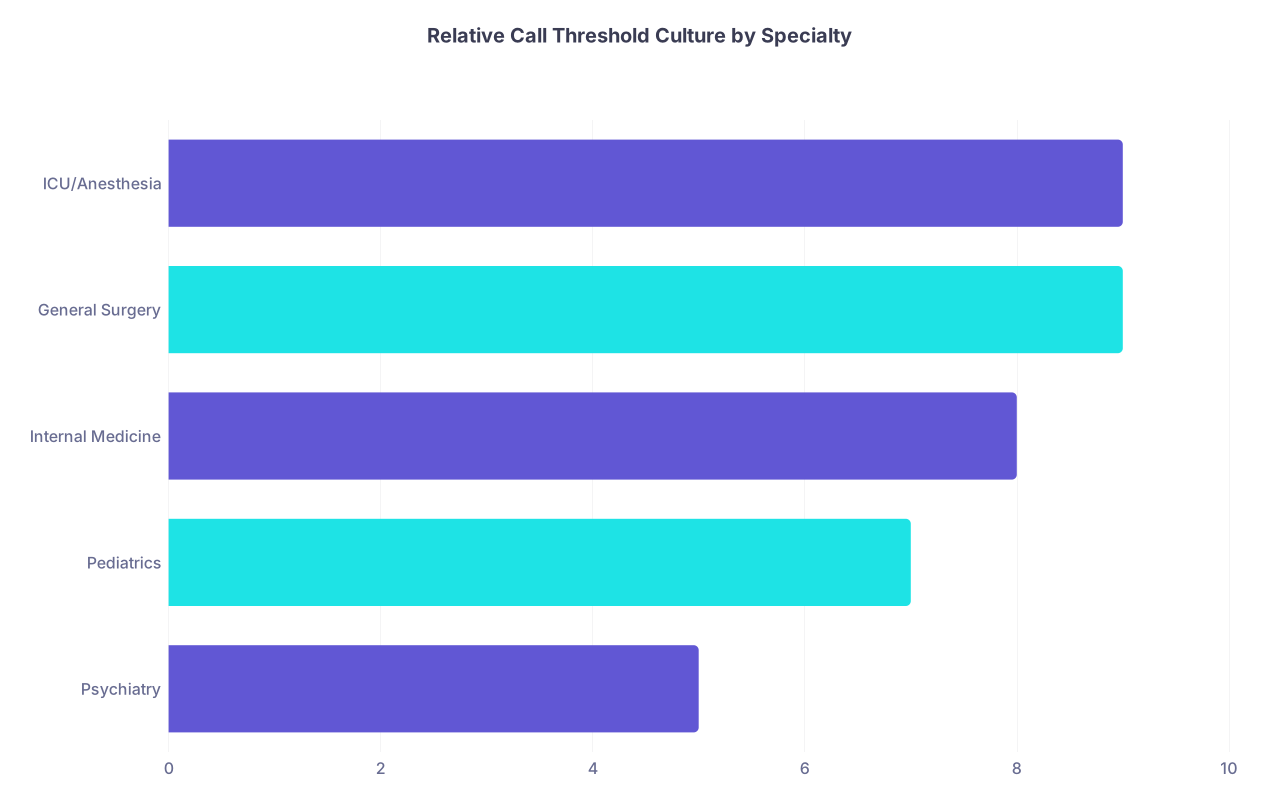
| Category | Value |
|---|---|
| Psychiatry | 5 |
| Pediatrics | 7 |
| Internal Medicine | 8 |
| General Surgery | 9 |
| ICU/Anesthesia | 9 |
Scale: 1 = “Call for everything,” 10 = “Only death and dismemberment”
This isn’t scientific; it’s pattern recognition after seeing dozens of programs.
- Surgery: They’ll say “don’t call me unless they’re dying,” but then roast you at M&M for not calling when the heart rate was 130 all night and the abdomen was a bit firmer. Translation: they want you to be selective but not oblivious.
- Medicine: More comfortable with nuance. They usually expect a bit more early calling from interns and will coach you. But they will obliterate you if there’s a major decompensation they weren’t looped in on.
- Peds: Lower threshold to call, especially for young kids and anything respiratory. They’ll usually be kinder about it, but the standard for detection of deterioration is high.
- ICU/anesthesia: Often want fewer “FYI” calls because most of the action is under constant monitoring. But they have zero tolerance for “We waited and watched while they tanked.”
You calibrate this over your first few calls with each attending. But you always err on the side of safety. Your pattern should start “slightly overcalling but well-prepared” and then narrow as you learn their style.
Script Your Own 3 AM Template
You can make your life much easier if you have an internal template for every night call. Something like:
- One-sentence ID: who is this and why are they here?
- What changed: “Over the past X hours…”
- Current vitals and oxygen needs.
- Exam highlights relevant to the problem.
- What you’ve already done.
- Your impression.
- Your proposed next step and clear ask.
That last part is where residents often flail. They default to: “So… yeah.” Don’t do that.
Instead:
- “I’m calling because I think we should move him to the ICU and I’d like your input and sign-off.”
- “I’m calling to get your thoughts on whether this warrants emergent imaging tonight or if it’s safe to observe until morning.”
- “I’m calling because I’m worried about X and want to make sure we’re not missing Y.”
Attendings like a defined ask. It tells them you’ve thought it through. They can say yes, no, or adjust. But you’ve given them a starting point.
The One Thing That Instantly Builds Trust
There’s one line that, if you back it up with behavior, makes you the kind of resident attendings love to work with:
“I’ve seen the patient and I’m staying nearby to monitor closely.”
They can hear the difference between a desk-doctor and a resident who actually shows up at the bedside. The one who goes back in after the call to reassess and adjust. The one who doesn’t document once and disappear.
You know what attendings actually remember years later when they’re writing your fellowship letters? Not your Step scores. Not your shelf percentiles. They remember the 3 AM night you called them about a crashing patient, gave a clean, organized story, admitted your uncertainty honestly, and then did exactly what needed to be done.
The unwritten rules of calling at 3 AM aren’t about avoiding your attending. They’re about earning their trust.
You’ll have nights where you overcall a bit. You’ll have nights where you realize at sign-out, “Yeah, I probably should’ve called on that one.” That’s part of the calibration. What matters is that you keep two priorities straight: the patient’s safety and your own integrity.
Years from now, you won’t remember the exact vitals that made you finally hit “Call” at 3 AM. You’ll remember whether you were the kind of doctor who showed up, owned the situation, and wasn’t afraid to wake someone up when it actually mattered.