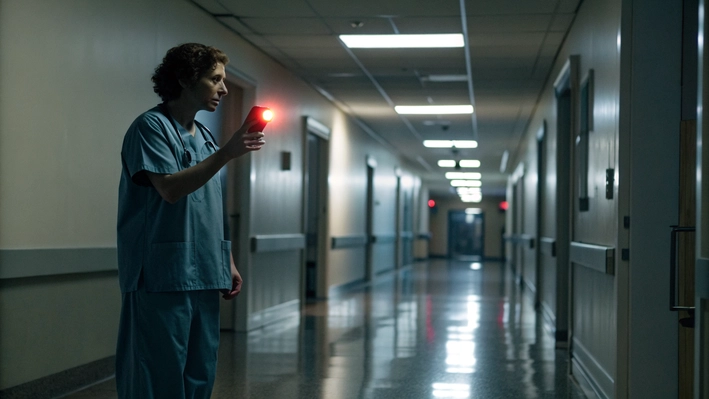
The most dangerous part of residency is not the code. It is the quiet, half‑asleep cross‑cover decision you make at 2:37 a.m. when no one is watching.
Let me tell you what actually happens behind the scenes: attendings and program directors judge you more by how you behave on cross‑cover than by your carefully curated daytime performance. They will never say this out loud. But I have sat in those rooms when your name comes up. And it is always, “How are they on nights? Can I trust them when I am not there?”
No one sits you down and teaches you the unwritten rules. You just start getting paged, and everyone assumes you “figure it out.” The problem is, you do not know what “it” is.
This is the playbook you were never given.
What Cross‑Cover Really Means To Your Attendings
During the day, you’re supervised, seen, and buffered by the team. On cross‑cover, you’re exposed. Raw. Every flaw and every strength amplified.
Here’s the first secret: attendings are not primarily judging the medical perfection of your cross‑cover decisions. They are judging your risk sense and your judgment under pressure.
They ask themselves three questions about you, and your entire reputation on call is built on these:
- Do you recognize danger early?
- Do you ask for help before things fall apart?
- Do you document and communicate well enough that I am not blindsided in the morning?
Notice what is not on that list: “Did they perfectly diagnose CHF vs COPD at 3 a.m. from the nursing note alone?” They know you will be wrong sometimes. They expect it.
What they actually care about is something more primitive:
Is this resident safe?
And “safe” has a very specific, unspoken meaning on cross‑cover.
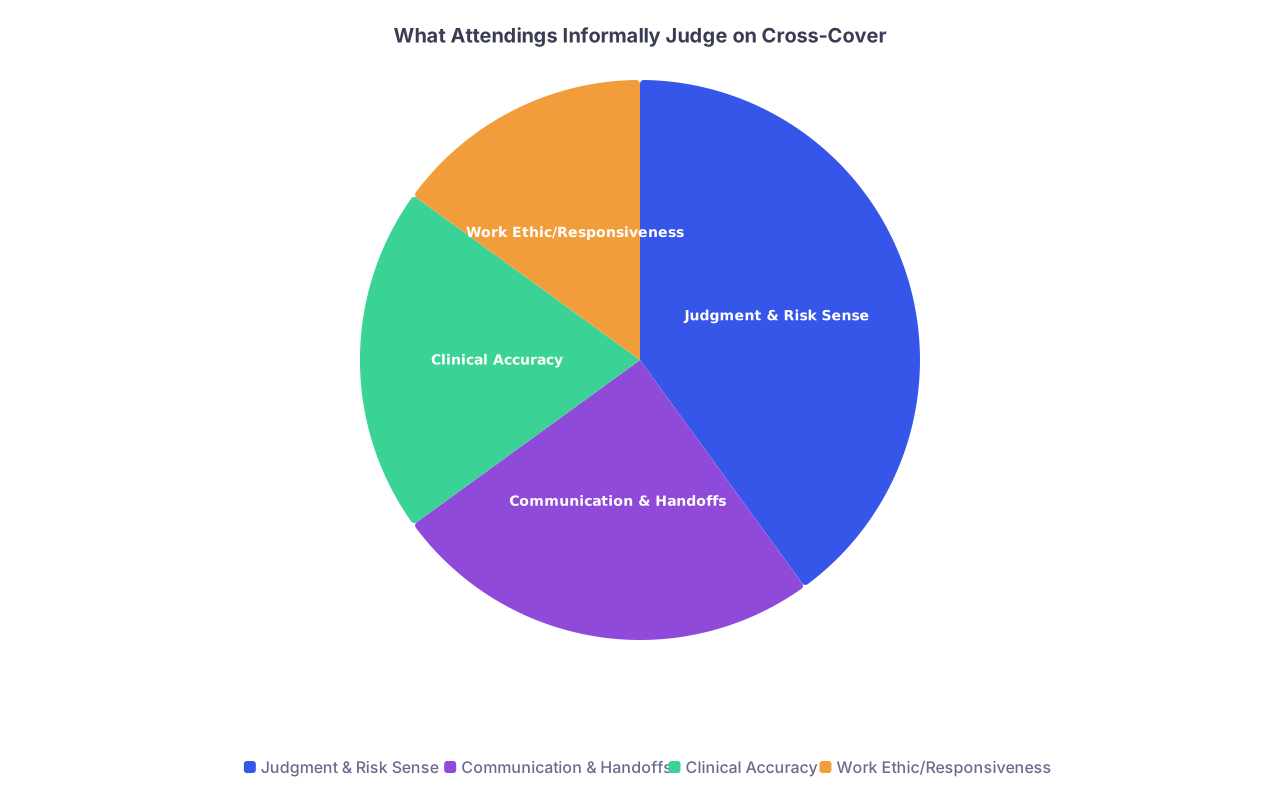
| Category | Value |
|---|---|
| Judgment & Risk Sense | 40 |
| Communication & Handoffs | 25 |
| Clinical Accuracy | 20 |
| Work Ethic/Responsiveness | 15 |
That’s the weighting in most people’s heads, even if they never articulate it.
The Hidden Hierarchy of Night‑Time Decisions
Interns think there are two options on cross‑cover:
- Handle it yourself
- Call for help
That’s naive. There’s actually a whole unspoken hierarchy of acceptable responses. Faculty and seniors expect you to move up and down that ladder depending on the risk.
Here’s the real mental map most good residents use. Nobody shows you this on paper, but I’ve seen it taught informally at 1 a.m. in call rooms more times than I can count.

| Step | Description |
|---|---|
| Step 1 | Page received |
| Step 2 | Go see patient now |
| Step 3 | Stabilize basics |
| Step 4 | Call senior |
| Step 5 | Document and sign out |
| Step 6 | Can this wait safely? |
| Step 7 | Call nurse, clarify, check chart |
| Step 8 | Place conservative orders |
| Step 9 | Leave for primary team with clear signout |
| Step 10 | Acutely unsafe? |
| Step 11 | Still worried? |
| Step 12 | Need orders? |
| Step 13 | Trajectory unclear? |
Let me translate that into the mentality that separates trusted residents from the ones nobody wants alone on nights.
1. “Is this patient safe right now?” comes before “What is the diagnosis?”
The hidden expectation: You prioritize stability over precision at night.
Faculty do not want to hear that you spent 45 minutes hunting obscure differentials while the patient sat tachypneic on room air. They want to hear: “I went to bedside, checked vitals, put them on oxygen, got a stat CXR, drew labs, and called the senior because I was worried about sepsis vs PE.”
You are expected to:
- See the patient in person for anything that might be bad.
- Fix obvious ABC issues first.
- Worry about which of three bad diagnoses later.
If there’s even a small part of you that thinks, “If this goes south, I’ll regret not seeing them,” the unspoken rule is: go.
2. Seniors and attendings want you to “over‑call” early, under‑call late
This one nobody tells you, but they expect it.
Early in intern year:
They’d rather you call them too much than miss one big thing. They expect to be annoyed sometimes. That’s baked into the job.
By late intern year and as a senior:
They expect you to filter hard. Call them for:
- Changes in level of care
- Transfer to ICU
- Unclear chest pain / neuro change / airway concerns
- Any rapid response, code, or escalation
- Anything you document as “unstable” or “concerning”
But they quietly expect you to handle:
- Routine pain adjustments
- Afib RVR in a known afib patient who is stable
- Mildly worsening creatinine in a chronic CKD patient
- Anxious family calls at 1 a.m.
What makes you look bad? Calling for trivial issues without having your own basic plan. “Hey, so the nurse says the patient is nauseous, what do you want to do?” That’s a cross‑cover sin.
“I went to see them, they’re hemodynamically stable, no abdominal peritonitis, likely med‑induced. I was going to give ondansetron 4 IV and re‑check in an hour—any concerns?” That’s how a trusted resident sounds.
The Politics of “Can This Wait for the Primary Team?”
Here is the dirty little secret: a lot of cross‑cover work technically “can” wait. But whether it should wait is where people start judging you.
Attendings expect a particular sorting behavior. They won’t say it. But the next morning, they absolutely notice whether you touched or ignored certain things.
| Issue Type | What Attendings Quietly Expect Overnight |
|---|---|
| New chest pain, neuro change, hypoxia | You evaluated, ordered basics, and escalated if unclear |
| Drifting vitals (soft MAP, rising RR) | At minimum, you reassessed and ordered some labs/fluids |
| Non-urgent med refills, sleep meds | You deferred or gave conservative one-time orders |
| Complex dispo, goals of care | You stabilized and left the full conversation for dayside |
| Routine lab abnormalities (mild) | You acknowledged, maybe ordered repeat, left note for team |
What makes you look bad the next morning
I’ve seen this pattern come up in evaluations and CCC meetings:
“I don’t mind if they didn’t solve it, but I mind if they pretended it didn’t exist.”
Things that tank your reputation:
- A patient with rising O2 needs all night with zero cross‑cover note, no escalation, and the primary team finds them at 10 a.m. in frank respiratory distress.
- Labs clearly drawn for a reason (e.g., trending troponin) that you never checked and the attending discovers or is called about at 6 a.m.
- Nursing documented concern (“patient more confused than baseline”) at 1 a.m., and you neither saw nor addressed it.
Pattern recognition is everything. You are not expected to fix all of it. You are expected to not ignore smoke.
How Nurses Actually Judge You (And Why It Matters More Than You Think)
You think your image is built on what attendings think. That’s only half true. The other half is what nurses say about you when you’re not there.
And yes, that absolutely reaches your chiefs and PD.
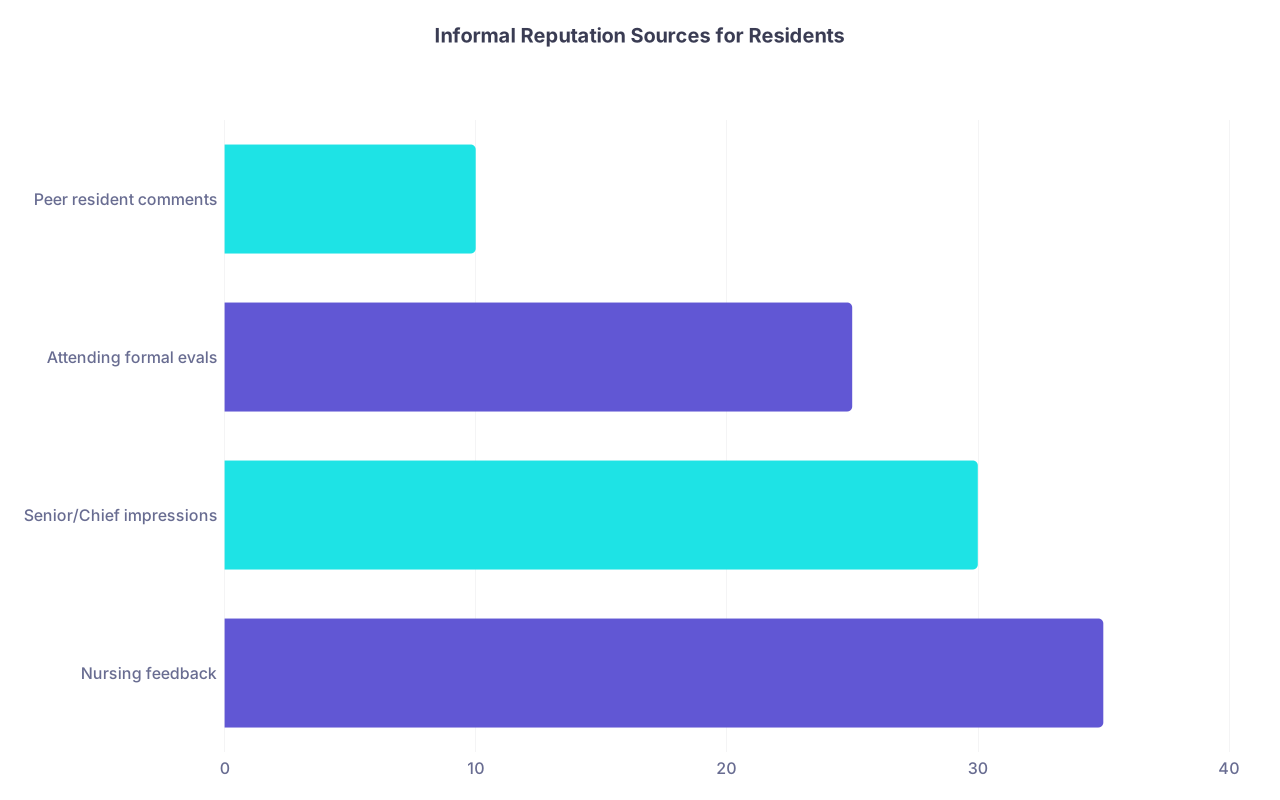
| Category | Value |
|---|---|
| Nursing feedback | 35 |
| Senior/Chief impressions | 30 |
| Attending formal evals | 25 |
| Peer resident comments | 10 |
I’ve sat in meetings where someone said, “The nurses really don’t like calling them on nights,” and watched that sink a resident’s promotion to chief.
Unspoken nursing expectations for cross‑cover:
- You pick up the phone or call back quickly. Even if you can’t go immediately, you communicate a plan.
- You don’t reflexively throw orders from the computer without understanding the situation.
- You do not belittle or dismiss their concern—especially when they say, “I just don’t feel comfortable with this patient.”
- When they say, “This is not this patient’s baseline,” you take it seriously. They know that patient better than you.
The fastest way to become “that unsafe resident” in nursing lore is to say some version of:
“Just recheck the vitals, call me back if worse,” over and over without ever actually laying eyes on the patient who is quietly tanking.
Good night residents do one simple thing differently: they go to the bedside a lot more than you think you can “afford” to. And in the long run, that saves them time and reputation.
The Documentation Trap: What Leaders Really Look For
Nobody warns you about this: your cross‑cover documentation becomes the forensic record when something goes wrong. And bad outcomes always get dissected.
Program directors, risk management, chiefs—they pull the chart. They do not see how tired you were. They see:
- Time of nursing page
- Time of your note
- Whether you saw the patient
- What you did
- Who you called
That’s it. That’s the story.
Here’s the unspoken expectation:
If a patient was even moderately sick overnight and you touched them, there should be some trace you existed.
This does not mean you write a novel for every Tylenol order. It means:
- For anything that could become a story (desats, chest pain, neuro change, hypotension, rapid response, fall, IV pressors, unusual lab changes), you drop a brief cross‑cover note.
- You clearly document: “Discussed with senior” or “Discussed with ICU fellow” when you escalate.
- Your timeline matches reality. If the nurse paged about hypotension at 02:10, your note doesn’t say you examined them at 05:00.
And here’s the hard truth: in a morbidity and mortality conference, “I was really busy and forgot to document” does not help you. The chart is considered the truth.
Risk‑Averse vs Risk‑Blind: How You’re Quietly Categorized
Let me be blunt. Residents get mentally sorted into four buckets after a few months of nights:
| Type | How They Act at Night | How Leadership Really Sees Them |
|---|---|---|
| The Black Hole | Never calls, invisible in notes | Dangerous, risk-blind |
| The Alarmist | Calls for everything, no filter | Inefficient, needs supervision |
| The Technician | Great orders, poor communication | Smart but not yet a leader |
| The Steady Hand | Sees sick, calls early, documents | Trustworthy, promotable |
The goal is to be the Steady Hand. Not the hyper‑independent hero. Not the panicked caller. The steady, boringly safe one.
The unspoken expectation of a “Steady Hand” on cross‑cover:
- You see more borderline‑sick patients than your peers.
- You accept that your job is to waste a few steps to prevent disasters.
- You call seniors with a three‑sentence story and a plan, not a stream of consciousness.
- You’re not embarrassed to say, “I don’t know what this is, but I don’t like it.”
Everyone pretends they value brilliance. At 3 a.m., they value your bias toward safety.
The Politics of Calling Your Senior or Attending
Here’s what no one admits out loud: seniors and attendings talk about how you call them.
I’ve overheard too many conversations like this:
“She calls me, but she’s always seen the patient and has a reasonable plan. I never mind those calls.”
“He waits way too long. By the time he calls, we’re already behind.”
Your unspoken job when you call:
- Prove you did some work. Have vitals, exam, and focused data.
- Show you’re thinking. Even a simple: “My top two concerns are X and Y.”
- Ask for what you actually need. Advice? ICU transfer? Just reassurance?
A horrible 2 a.m. call sounds like:
“Hey, um, so the nurse said the patient doesn’t look good and is hypotensive. Not sure what’s going on.”
A strong 2 a.m. call sounds like:
“Hey, I’m on nights. Mr. Jones in 854 had a BP drop from 110s to 80s over the last hour. HR 120s, febrile at 38.9, looks mottled, new O2 requirement 4L from baseline room air. I’ve bolused 1L LR, got blood cultures, lactate, started broad‑spectrum based on his allergies. I’m worried about septic shock. I think he needs ICU—can you come see with me?”
Notice the difference? The second one says: I am on the field, playing. I just want a coach, not a rescuer.
That’s the unspoken bar.
Time Management on Nights: What You’re Really Expected To Juggle
Nobody is grading how many clicks you do per hour. They are grading something harder to measure: triage sense.
You’re not expected to clear the entire cross‑cover list. You are expected to:
- Identify the 3–5 patients who might crash and put them in your mental “watch list.”
- Batch non‑urgent pages when possible (three sleep med requests in one hallway? One trip).
- Not get stuck for 90 minutes in one room while four other concerning pages pile up unheard.
The unofficial scorecard in an attending’s head during a rough night looks something like this:
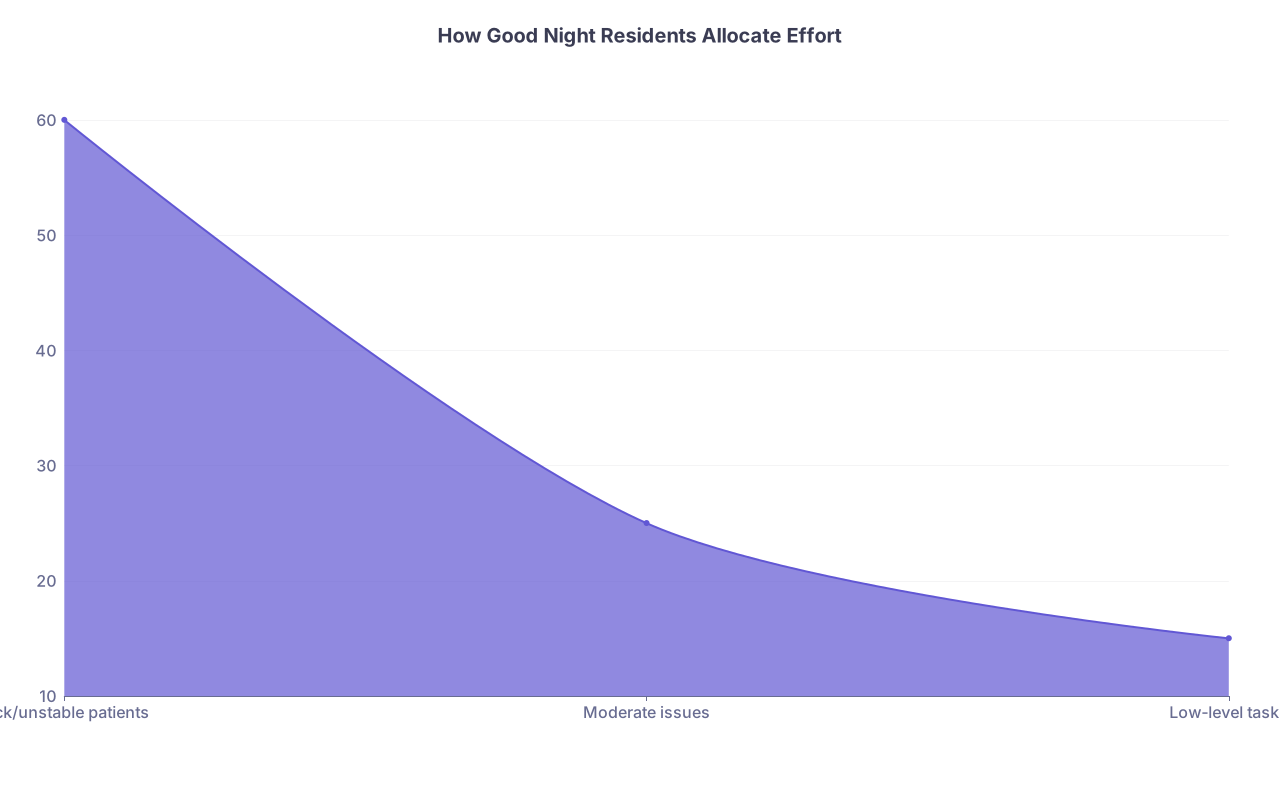
| Category | Value |
|---|---|
| Sick/unstable patients | 60 |
| Moderate issues | 25 |
| Low-level tasks | 15 |
If you spend most of your night adjusting bowel regimens while someone in CHF spirals quietly, that will show. Maybe not that night. But it will show.
Good cross‑cover means constantly asking yourself: “What else could be happening that’s worse than what I’m doing right now?”
How to Not Get Burned by “Just Sign This Order”
One of the most dangerous phrases a nurse can say to a tired intern is:
“Can you just sign this order? The day team already said they wanted it.”
Unspoken rule from every seasoned resident: never “just sign” anything at 3 a.m. without understanding:
- What it is
- Why it’s being done
- Whether it’s still a good idea now
I have watched residents get pulled into messes they didn’t create because they were the last signature on an order that should never have gone through overnight. Contrast studies, high‑risk meds, random blood product requests, chemotherapeutic agents, dialysis tweaks—you will see all of this get proposed at the wrong hours.
Your quiet protection clause is simple:
“I see that in the note. Given it’s overnight and elective, I’m going to defer this to the primary team unless there’s an urgent reason to do it now. Is there something acute I’m missing?”
That language signals judgment. It tells anyone reviewing the chart later that you did not blindly comply. It also pushes the true responsibility back to daytime where it belongs.
The Emotional Side No One Admits: Fear, Guilt, and Second‑Guessing
Here’s something most seniors will not say out loud to you: everyone has at least one night that haunts them.
The patient they should have seen in person. The call they should have made. The vague concern they brushed off. If you’re human, you will miss things.
The unspoken expectation from good programs is not that you’re perfect. It’s that:
- You reflect honestly on the near misses.
- You change your behavior afterward.
- You don’t become defensive when feedback comes couched in “we were worried about your nights.”
What worries program directors is not that you made an error at 2 a.m. The real red flag is when someone has no insight that their cross‑cover style is risky.
You will go home some mornings replaying decisions. That’s normal. What you do with that discomfort is what matures you.
Practical Night Habits That Signal “This Resident Gets It”
Let me pull it all together into what I’ve seen consistently in the residents everyone trusts at night:
- They start the night by scanning the list and pre‑identifying sick or tenuous patients.
- They respond quickly to pages, even if just to say, “I’ll be there after this rapid.”
- They physically see far more patients than their weaker peers.
- They keep a small list (paper, phone, whatever) of patients to re‑check in a few hours.
- They write short cross‑cover notes for any real event.
- They call seniors early with a concise story and a proposed plan.
- They would rather look “over‑cautious” than explain a preventable crash.
And yes, most of them had one or two scary nights that forged those habits.
Years from now, you will not remember every cross‑cover call you answered. But you will remember the night you decided, “I’m never ignoring that kind of page again.” That’s the night you quietly grow up in this job.