
The worst way to call a rapid response is to turn it into a confused, half-whispered suggestion instead of a clear, urgent request for help.
If you’re a resident on call, you cannot afford to screw this up. People do, every single day. I’ve watched smart interns freeze, mumble the wrong thing, or waste 60 seconds arguing with a nurse while a patient quietly crashes in the next room.
Let’s make sure you’re not that story.
The Silent Killer: Waiting Too Long To Call
The most dangerous communication mistake is simple: not calling. Or calling way too late.
Here’s how it usually plays out:
- Nurse: “Hey, I’m worried about Mr. X—he doesn’t look right.”
- Intern (already behind on notes, half-distracted): “What are his vitals? I’ll come see him in a bit.”
- Thirty minutes later: “He’s unresponsive.”
Now you’re doing compressions and thinking, “Why didn’t we call rapid earlier?”
That delay? Communication failure.
Common delay mistakes
Arguing instead of acting
- You debate whether it “meets criteria.”
- You ask for repeat vitals, labs, ABGs before agreeing.
- You tell the nurse, “Just give a fluid bolus; I’ll reassess.”
Translation: You’re negotiating with a deteriorating patient. They don’t negotiate back; they just crash.
-
- “Okay, page me if he gets worse.”
- “Let’s just watch him for now.”
- “I’m tied up in a cross-cover; I’ll swing by.”
Those phrases are code for: I’m hoping this stops being my problem. It rarely works out in your favor.
Letting pride get in the way
- You don’t want to look “dramatic.”
- You’re afraid the senior will think you overreacted.
- You tell yourself, “If I call rapid on everyone, I’ll look incompetent.”
You know what looks more incompetent? Explaining to risk management why you didn’t call.
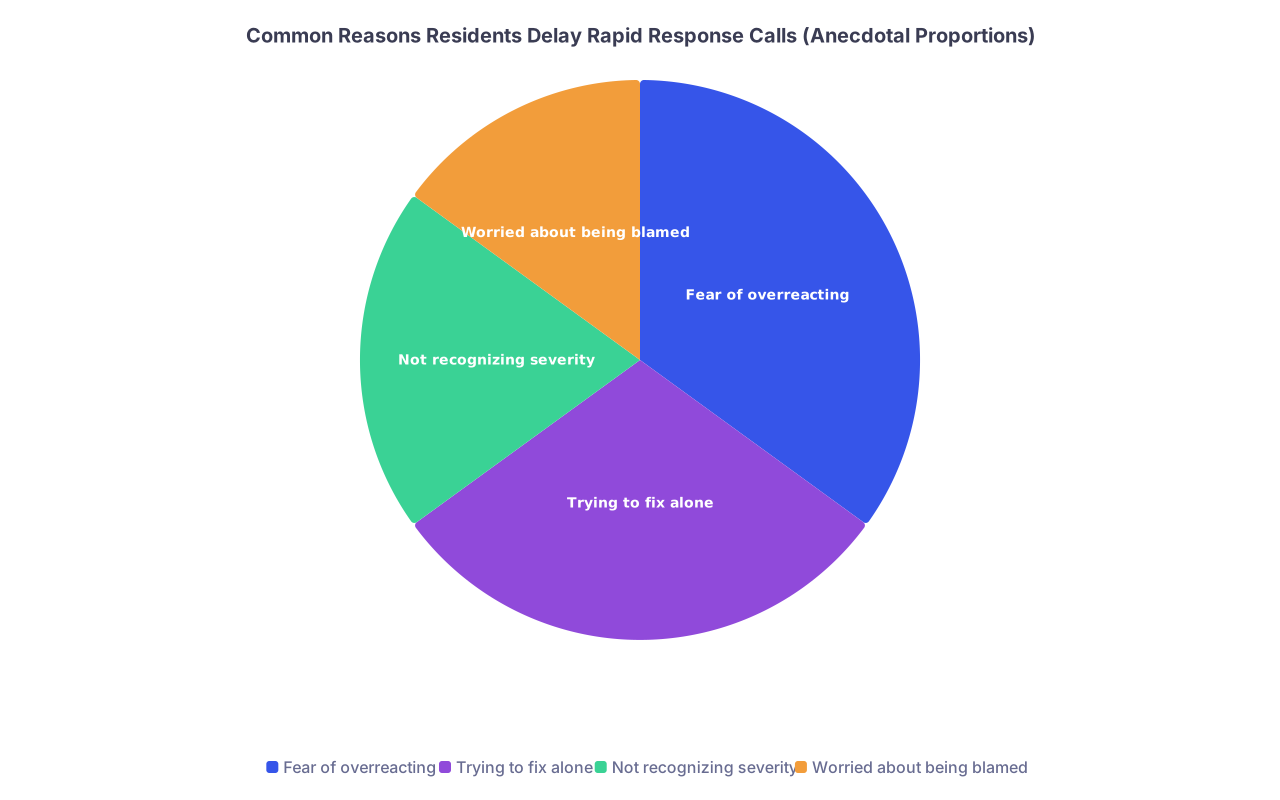
| Category | Value |
|---|---|
| Fear of overreacting | 35 |
| Trying to fix alone | 30 |
| Not recognizing severity | 20 |
| Worried about being blamed | 15 |
The rule you don’t break
If you’re thinking, “Should I call rapid?” the answer is: yes.
If a nurse asks you to call rapid, the answer is: yes.
You can always de-escalate once the cavalry arrives. You can’t rewind a cardiac arrest.
Don’t make this mistake: debating whether the situation "deserves" a rapid response. If there’s doubt, call it.
Botched Overhead Calls: How to Sound Confused When It Matters Most
You only have a few seconds to communicate clearly when you call a rapid. The worst way to do it is how I’ve heard it dozens of times:
- Mumbled location nobody can understand
- Wrong room, wrong floor, wrong unit
- No callback number
- Sounding so unsure that people don’t move with urgency
The anatomy of a terrible rapid response call
Picture this:
You run to the nearest phone, breathless, slam the button for operator or the code number, and say:
“Uh, I think I need a rapid in, uh, Mr. Johnson’s room… he’s not doing well.”
That’s useless. The operator doesn’t know:
- Who you are
- Where you are
- What unit you’re on
- Which Johnson you’re talking about
- Whether this is real or someone just kind of worried
Or worse:
“Rapid response to 4 East, room 412.”
But the patient is actually on 5 East, 512. Fat finger, wrong floor. The team sprints to the wrong place while your patient keeps dropping their pressure.
The minimum safe script
Do not improvise in chaos. You need a mental template that comes out automatically.
Here’s the simplest, safe version when calling through your operator or dedicated code line:
“This is Dr. [Name], I need a rapid response in [unit], room [room number], for [brief reason: ‘acute respiratory distress’ or ‘unresponsive’]. Call back number [extension or phone].”
Example:
“This is Dr. Patel. Rapid response to 5 East, room 512, for acute shortness of breath and hypoxia. Call back 3840.”
That’s it. Short, specific, and usable.
Don’t make this mistake: starting with “So, um, we have a patient…” instead of the location first. If they don’t hear anything else, they must hear where to go.
Talking in Vague, Useless Terms
The second big category of mistakes: saying a lot of words that mean nothing.
Both in the call and when the rapid team arrives.
Vague language that slows the response
I’ve heard these classics:
- “He doesn’t look good.”
- “She’s a little off.”
- “The vitals are kind of bad.”
- “He’s sort of breathing weird.”
That doesn’t trigger urgency in the human brain. You want the listener to immediately understand: is this worrying or life-threatening?
Instead of hand-wavy descriptions, use concrete, alarming facts:
- “Blood pressure 70s over 40s.”
- “New O2 requirement, 2 to 15 liters in 10 minutes.”
- “Acute change in mental status, now only responsive to pain.”
- “Respiratory rate in the 40s with use of accessory muscles.”
When the team arrives: the anti-HPI
Another mess: when the team finally gets there and you give them a rambling novel instead of what they actually need.
Bad version:
“So, this is Mr. Jones, he came in last week with abdominal pain, and then GI saw him, and then yesterday we noticed his creatinine was a little higher but then this morning he was kind of okay, and then…”
Meanwhile the respiratory therapist is staring at the monitor and the patient is desatting.
What they need first is:
- Why they’re there right now
- What just changed
- Key focused background
Think in this order:
Present trigger (what changed acutely):
“He was satting 95% on 2 liters this morning, now he’s 82% on 15 liters non-rebreather, RR 40.”Very short background:
“Admitted 3 days ago with pneumonia, on ceftriaxone and azithro, no prior lung disease.”What’s been done so far:
“We’ve given 1L fluids, moved to NRB, got an ABG pending.”
Don’t make this mistake: starting with their entire admission story. In a rapid, long-winded equals dangerous.
Ignoring the Bedside Nurse (The Fastest Way to Miss What Matters)
If you want to crash and burn during a rapid, here’s a reliable method:
- Talk only to the attending or ICU fellow.
- Don’t ask the nurse anything.
- Don’t listen when the nurse tries to speak up.
- Assume you already know the situation better.
I’ve seen it: intern stands by the door, answering questions from the rapid team while the nurse at the bedside is literally holding the patient’s last stable BP in their head and can’t get a word in.
Why this is such a critical mistake
The nurse usually:
- Has been with the patient for hours
- Knows exactly when they “started looking different”
- Has seen the trend in vitals minute by minute
- Knows how they were 30 minutes ago vs now
You, cross-cover night float, might have:
- A half-read signout
- A name you saw once during signout
- A vague idea of “PNA, stable”
The nurse’s gestalt—“he is not his baseline”—is often your early warning. Dismissing that is how you miss sepsis, PE, bleeding, stroke.
How to avoid being that resident
When the rapid team arrives, a safer sequence:
- Stand at the bedside, not back by the doorway.
- Ask the nurse early and explicitly:
“Can you tell us what changed and when?” - Then give your focused summary.
This isn’t about being “nice.” It’s about not missing the most important piece of information in the room.
Don’t make this mistake: talking past the nurse like they’re background noise. That’s how critical info never reaches the team leader.
The “I’ll Fix It Myself First” Hero Complex
You’ll be tempted to try to stabilize the patient before you call rapid. To prove you can “handle it.”
That’s a rookie trap.
Here’s what it looks like:
- You get called about HR 150, BP 85/50, febrile, confused.
- Instead of immediately thinking “rapid,” you:
- Order a full sepsis bundle
- Hang 2 liters of fluids
- Fumble with the EKG machine yourself
- Ask for labs, ABG, lactate
- Promise, “Call me back if things get worse.”
You just burned 20–40 minutes trying to be a one-person ICU.
Why this is dangerous
While you’re:
- Trying to remember vasopressor dosing
- Manually cycling BPs
- Reviewing labs that won’t result for 30 minutes
…you could have a dozen extra hands:
- Placing extra IV access
- Getting the crash cart to the door
- Drawing stat labs and ABG correctly the first time
- Getting the ICU fellow at the bedside
And if you’re wrong and this is about to be an arrest, you’re now trying to lead ACLS with bad situational awareness and no preparation.
Call rapid first. Then do things. Not the other way around.

Chaos on Arrival: No Roles, No Control, No Clarity
People think the mistake is “not knowing advanced medicine.” Honestly? The bigger error is losing control of the room through poor communication once the team shows up.
Classic scenarios:
- Nobody is clearly leading.
- Three people giving conflicting orders.
- Vitals monitor not visible to half the room.
- No one assigned to document, no one clearly timing events.
- Family members crying in the room with zero communication.
You don’t need to be the one leading (often the ICU fellow or hospitalist rapid leader will), but you do need to communicate in a way that prevents chaos.
Simple communication moves that prevent disaster
When the team arrives, avoid these mistakes:
Standing in the hallway
If you hang back, people assume you’re peripheral. Then they hunt for someone else to give history and make decisions. That costs time. Step up, introduce yourself.
Not identifying yourself
When asked “Who’s the primary team?” don’t say “Medicine.” Say:
“I’m the night float resident for this patient, Dr. Santos, covering Internal Medicine A team.”
Answering questions you’re not sure about
Don’t guess. If you don’t know, say, “I’m not sure, but I can pull it up in the chart right now,” and do it quickly.
Letting 5 people talk at once
If you’re close enough to influence the room and it’s chaotic, a simple, “Let’s have one person give orders; Dr. X, can you lead?” can save the whole situation.
Don’t make this mistake: fading into the background and hoping someone else will “handle it.” You are part of the team; act like it.
Tech & System Screwups: The Boring Stuff That Gets People Hurt
The unsexy pitfalls are the ones that blindside new residents. You think your hospital system will just “work.” It doesn’t. Not always.
Common system-level mistakes
Not knowing the exact rapid response number / process
Sounds obvious. Until you’re on a satellite floor or in radiology at 3 a.m. and the code button is nowhere in sight.
At minimum, you must know:
- The code/rapid number from any hospital phone
- How to trigger it from:
- Bedside phone
- Hallway phone
- Off-unit locations (CT, MRI, lobby)
- Whether there’s a separate number for cardiac arrest vs rapid response
Assuming cell service will be fine
Dead zones exist. Radiology, basement, stairwells. Don’t be the person trying to FaceTime the unit while the patient desats.
Not confirming the location
Some hospitals have:
- 4 North in both main and new towers
- Same room numbers on stepdown vs floor
If you say “Rapid to 412,” and there are two 412s, you’ve just created a dangerous delay.
| Risk Area | What Goes Wrong |
|---|---|
| Dual towers | Same unit names, different |
| Stepdown vs floor | Same room numbers |
| Radiology suites | Unfamiliar to rapid team |
| ED vs inpatient | Patients moved mid-call |
Not rehearsing the process mentally
You should have done at least a mental “drill”:
- If a patient crashes in CT → how do you call rapid?
- In the hallway?
- In the lobby waiting for transport?
Don’t make this mistake: discovering how to call a rapid at the moment you need it most. Learn the system while your patients are still stable.

| Step | Description |
|---|---|
| Step 1 | Recognize acute deterioration |
| Step 2 | Call rapid response |
| Step 3 | State location first |
| Step 4 | Give brief reason |
| Step 5 | Provide call back number |
| Step 6 | Go to bedside |
| Step 7 | Give focused update to team |
| Step 8 | Clarify plan and follow up |
| Step 9 | Any doubt about severity |
Emotionally Tone-Deaf: Mishandling Family and Staff
You’re not just communicating with the rapid team. You’re also being silently judged by:
- The family at the bedside
- The nurse who called you
- The respiratory therapist
- Your colleagues
Screw this up and you damage trust that you desperately need the next time something goes wrong.
Mistakes that destroy trust
Minimizing the situation in front of the family
Saying things like:
- “It’s not a big deal, we’re just being cautious.”
- “We’re just calling extra help, nothing to worry about.”
Then the team rushes in, throws on a NRB, yells for the crash cart. Families aren’t stupid. Now they feel lied to.
Blaming the nurse
- “Well, I wasn’t told it was this bad.”
- “I didn’t know the vitals were that low.”
- Subtle eye-rolls or tone that suggests the nurse overreacted.
That gets remembered. And the next time that nurse is borderline on whether to call you early? They may hesitate.
Going silent
A room full of people moving fast, alarms blaring, and you say nothing to the family. They stand in the corner, panicking, trying to guess what’s happening.
Safer, honest communication moves
You don’t need to give a TED talk. Just a few clean sentences:
To the family, early:
“We’re worried about a sudden change in [their] breathing/blood pressure. I’ve called in our rapid response team so we can get more people and resources here quickly.”
If things escalate:
“There’s a risk [they] could get much sicker very quickly. We’re doing everything we can in this moment.”
To the nurse afterward:
“Thank you for calling me and asking for rapid. That was the right call.”
Even if it turned out okay. Especially then.
Don’t make this mistake: pretending everything is fine while the room looks like an episode of ER. People notice the disconnect and lose trust.

A Simple, Safe Mental Checklist: What to Say and Do
You don’t need a 20-page protocol in your head. You do need a bare-minimum checklist you can run on autopilot when your adrenaline spikes.
Think of it as your personal anti-mistake script.
Before the call (5–10 seconds max)
- Confirm:
- Unit
- Room number
- Glance at:
- Latest vitals
- O2 source and settings
- Decide:
- “Yes, this needs a rapid” (default to yes).
During the call
Say, in this order:
- Who you are
- Exact location
- Very brief reason (1–2 phrases)
- Callback number
Then hang up and go back to the patient.

When the team arrives
Give them:
- Trigger event (what changed & when)
- Focused background (1–2 sentences)
- What’s already been done
Then:
- Answer questions honestly (don’t fake knowledge).
- Involve the nurse explicitly.
- Make sure someone documents key events.
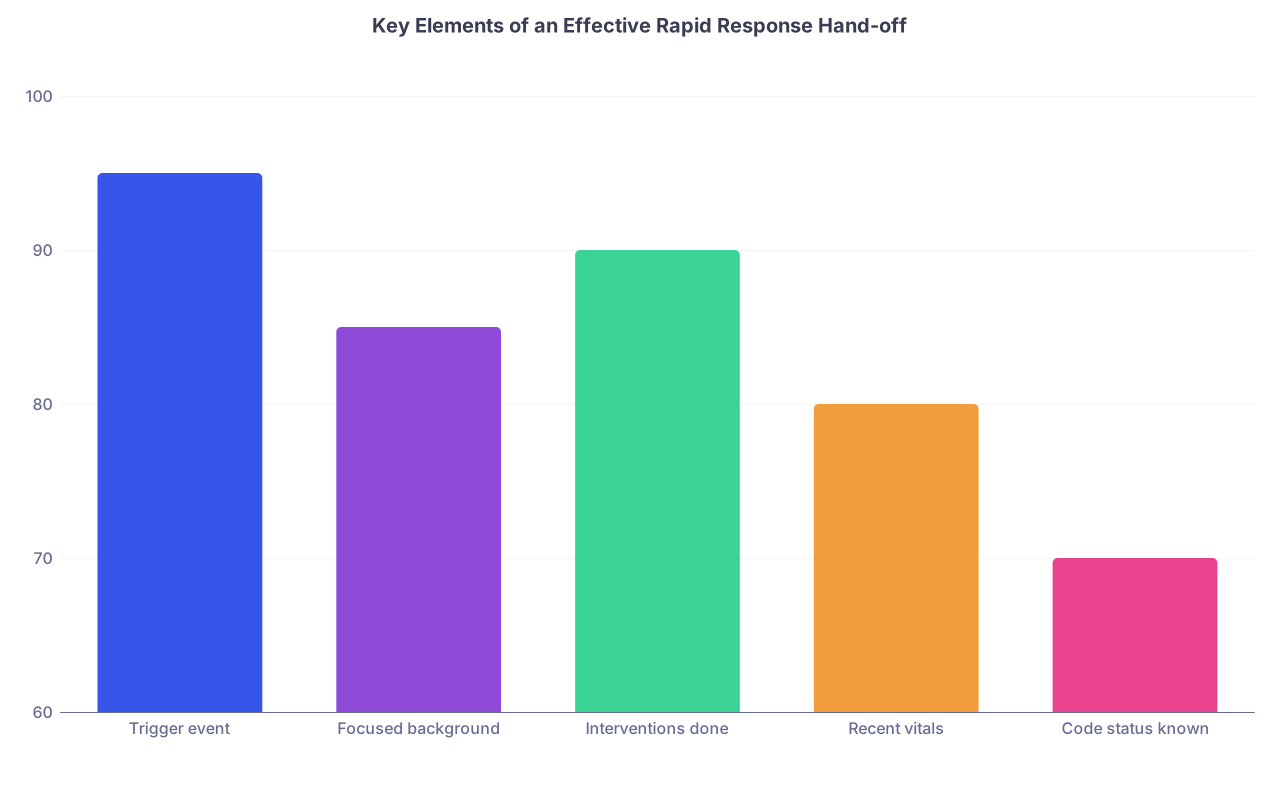
| Category | Value |
|---|---|
| Trigger event | 95 |
| Focused background | 85 |
| Interventions done | 90 |
| Recent vitals | 80 |
| Code status known | 70 |
Bottom Line: The Mistakes You Don’t Get To Make Twice
You’re not going to be perfect. Nobody is. But there are a few mistakes with rapid responses that you don’t get many chances to repeat.
Burn these into your brain:
- When in doubt, call early. Arguing, hesitating, or trying to be a solo hero is how people die.
- Be concrete and specific. Location first, real vitals, clear triggers. No vague “he doesn’t look good” nonsense.
- Listen to the nurse; stand at the bedside; own your role. Don’t fade into the background and don’t sideline the person who knows the patient best.
If you avoid those three, you’ll already be safer than half the residents I’ve watched struggle through their first year on call.
FAQ (Exactly 5 Questions)
1. What’s the difference between a rapid response and a code blue, and does it change how I call?
A rapid response is for serious but potentially reversible deterioration (hypotension, new hypoxia, acute mental status change) before arrest. A code blue is for cardiopulmonary arrest. Many hospitals have different numbers/buttons for each, but the communication principles are the same: location first, clear reason, callback number, then get to the bedside. Don’t undercall a code when someone has no pulse “to avoid overreacting.” If you think it’s an arrest, call it as a code.
2. What if I call a rapid and the team thinks it was unnecessary?
Then good—your patient lived long enough to prove you wrong. Most experienced rapid team members would rather be called for a “false alarm” than arrive to an arrest that could have been prevented. If someone rolls their eyes, ignore it. Your loyalty is to the patient, not to other people’s ego or convenience.
3. Should I ever call my senior before calling a rapid?
If the patient is crashing or you’re seriously worried, no. Call rapid first, then your senior. The only time calling your senior first makes sense is if the situation is concerning but stable and you truly believe you can manage with immediate guidance (for example, new tachycardia but normal BP and mental status). As soon as you’re thinking “this could go south fast,” you should be thinking rapid.
4. What if I’m off the unit (radiology, hallway, transport) when the patient crashes?
You still call a rapid, but you must know the process from that location: the code button, the overhead number, or the local emergency extension. This is where residents screw up because they only know how to call from the bedside. Ask early in your rotation: “How do I call a rapid from CT? From MRI? From the lobby?” Don’t wait for the first emergency to find out.
5. How do I handle family questions while the rapid team is working?
Stay honest and brief. One or two clear sentences is enough: “Your [family member] had a sudden change in their condition. We’ve called in our rapid response team to help stabilize them.” If they ask, “Are they dying?” you don’t sugarcoat or catastrophize: “They’re very sick right now and there is a risk of that. We’re doing everything we can at this moment.” If you don’t know an answer, say you’ll find out after the initial crisis phase and then actually circle back.