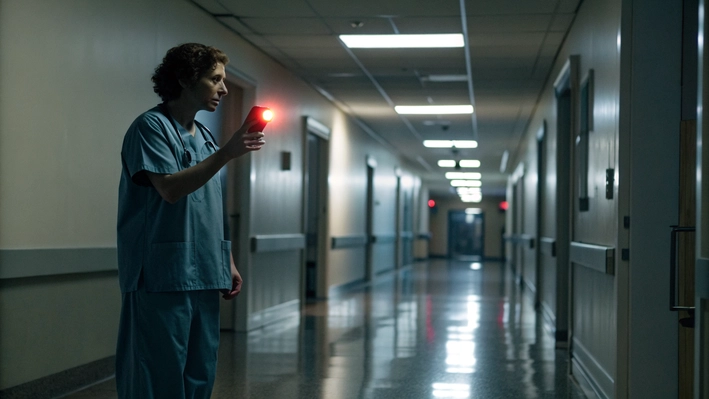
The chart that terrifies more residents than any lab value is the PowerPoint slide at M&M with their note blown up to 48‑point font.
You are not afraid of nights. You are not afraid of procedures. You are not even truly afraid of sick patients. What you should be afraid of is sloppy on‑call documentation that will get dissected in front of your colleagues, attendings, and sometimes the CMO.
Let me be very clear: the fastest way to lose credibility as a resident is to have your note used as Exhibit A in “what went wrong.”
On call, you are tired, rushed, interrupted, and often alone. Perfect conditions for making documentation mistakes that haunt you months later in morbidity and mortality. These are not theoretical risks. I have seen careers take a detour over a single bad progress note.
Let’s walk through the 10 most common on‑call documentation mistakes that come back to bite people at M&M—and how to not be that example.
1. The “Nothing Changed” Phantom Note
The laziest, and most dangerous, note on call is the “unchanged from prior” special.
You know the one:
“No acute events. Vitals stable. Continue current plan.”
Except there were acute events. The patient desatted to 82% twice. They got 40 mg IV furosemide. The nurse called you at 03:00. RT was at the bedside.
None of that is in your note.
The next morning that patient is in the ICU on BiPAP, and at M&M your 8‑line crust of a progress note is on the screen. Everyone can see it: you either were not aware what was happening, or you were and you did not document it. Both look bad.
Do not make this mistake.
On call, if anything non‑trivial happens, your note must show:
- That you knew.
- That you evaluated.
- That you decided something (even if the decision was “no change”).
A safe, minimal overnight note for a “quiet” patient might include:
- One line of interval events: “No overnight nursing calls, no new symptoms reported.”
- Vitals trend comment if they were marginal: “BP soft but stable 90s/50s, no change from prior, mentation intact.”
- Brief assessment that links back to the original problem.
If there were events, you do not get to write “no acute events.” You write exactly what happened and what you did.

| Step | Description |
|---|---|
| Step 1 | Nurse calls |
| Step 2 | Assess patient |
| Step 3 | Add brief event note |
| Step 4 | Update HPI and assessment |
| Step 5 | Notify senior or attending |
| Step 6 | Place updated orders |
| Step 7 | Significant change |
If the nurses remember being at the bedside three times and your note says “no acute events,” you will look either clueless or dishonest. Neither is survivable long term.
2. Missing the “Who Knew What, When” Trail
You want to see a room get quiet at M&M? Show a timeline slide with:
- 01:13: Critical potassium = 6.8 called to unit
- 01:16: Nurse documents “paged MD”
- 02:27: Resident progress note: “Plan: monitor labs”
Everyone in that room is now asking: When did you find out? Who knew? Who decided to “monitor”?
If your documentation does not make the communication chain obvious, it can be reconstructed for you. By risk management. By chart review. You do not want that.
You must document three separate things clearly:
- When the result/intervention/concern became known.
- Who was notified (you, your senior, the attending, the ICU team).
- What decision was made after that conversation.
A safe structure you can reuse:
- “01:20 – Critical K 6.8 reported by lab to bedside RN, RN paged cross cover.”
- “01:25 – I evaluated patient at bedside: asymptomatic, vitals stable, telemetry NSR.”
- “01:30 – Discussed with night float senior Dr. Smith; agreed to treat with IV calcium gluconate, insulin/dextrose, furosemide, and repeat BMP in 2 hours. No dialysis at this time.”
This kind of note will save you at M&M. It shows:
- You were responsive.
- You involved appropriate supervision.
- There was an actual plan beyond “monitor.”
What you cannot have is an isolated line at 04:00: “K elevated; will recheck.” That reads like indifference, even if you were very busy.
3. The Drive‑By Exam (a.k.a. “Exam: Unremarkable”)
On call, you are exhausted. You want to believe the nurse who tells you, “He looks the same as earlier.”
So you chart: “Exam: unchanged, no acute distress.” Without actually looking at the patient.
You have just committed documentation malpractice.
At M&M, the question “Did anyone examine the patient?” turns into “Show me where it says you examined the patient.”
If your note has:
- No time stamp.
- No exam details beyond “unchanged.”
- No mention of key systems relevant to the problem.
Your “exam” does not exist.
You must avoid two patterns:
- The copy‑forward exam at 02:00 that looks identical to the 09:00 attending note.
- The content‑free exam: “Gen: NAD. Heart: RRR. Lungs: CTAB. Abd: soft NT/ND.”
For events overnight, your exam should:
- Be time‑stamped relative to the event or the call.
- Focus on why you were called.
Short of breath? Then we need respiratory rate, work of breathing, accessory muscle use, auscultation, edema, mental status. - Avoid obviously false boilerplate. “NAD” while you describe severe pain is absurd.
Here is an example that holds up:
“02:40 – Evaluated at bedside for new dyspnea. Appears mildly tachypneic, speaking full sentences, no accessory muscle use. RR 24, SpO2 93% RA. Lungs with faint bibasilar crackles, no wheezing. Heart RRR, no murmurs. No LE edema. AOx3, no confusion.”
Is it a full attending‑level exam? No. Is it adequate, honest, and defensible? Yes.
If you did not examine them, say that clearly and why: “Patient refused exam; appears comfortable, speaking full sentences, no visible distress from doorway.” That is still better than pretending.
4. Vague, Hedged, and Useless Assessments
M&M loves vague assessments. Because they expose fuzzy thinking.
Phrases that should set off sirens in your head:
- “Will monitor.”
- “Suspect infection, will continue to follow.”
- “Low concern at this time.”
- “Likely just anxiety.”
These are not plans. These are shrugs dressed up as sentences.
On call, under pressure, residents write “monitor” when they do not know what to do or do not want to commit. The problem: at M&M, lack of commitment looks like lack of thought.
Every time you are tempted to write “monitor,” ask yourself: Monitor what, how, and what would make me act?
This is the minimum safe version:
“Will monitor VS q2h overnight and repeat CBC at 04:00. If fever >38.5, HR >120, or SBP <90, will broaden antibiotics and notify ICU.”
That is a plan. It shows:
- A parameter.
- A time frame.
- A threshold for action.
Contrast:
“Slightly hypotensive, will monitor.”
That is a future slide with a red arrow next to it.
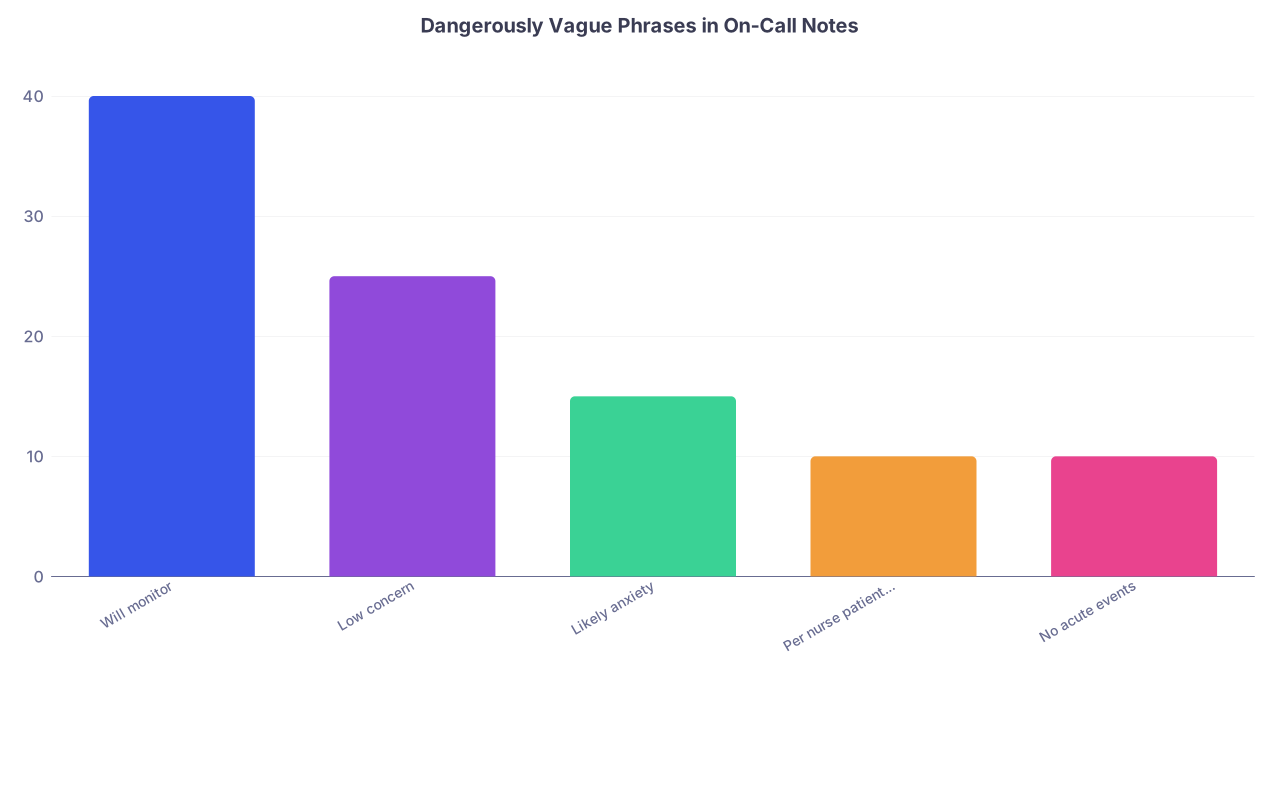
| Category | Value |
|---|---|
| Will monitor | 40 |
| Low concern | 25 |
| Likely anxiety | 15 |
| Per nurse patient ok | 10 |
| No acute events | 10 |
Do not give reviewers ammunition. Be specific. Even a one‑line plan is better than hedged nonsense.
5. Failing to Document Escalation (or the Lack of It)
The single most explosive question at M&M: “Why was the attending not called?”
Sometimes the answer is reasonable. The patient looked stable. The changes were minor. But if that reasoning lives only in your head and not in the chart, it might as well not exist.
Two distinct failures happen on call:
- You never escalate when you should have.
- You do escalate, but you never record that you did.
Both look nearly identical on the slide: no mention of any attending or senior involvement.
Every significant change in status should answer these two questions in your note:
- Was anyone above you notified?
- If not, why not?
Examples that hold up:
“Discussed with ICU fellow Dr. Lee at 03:00; at present does not meet ICU transfer criteria. Will continue on stepdown with q1h vitals and low threshold to call back.”
or
“No attending notification at this time; MAP low‑90s but stable, no change in exam, no chest pain, no dyspnea. Will notify if BP <90/60 or new symptoms develop.”
Notice: you are putting your reasoning on paper. You are not justifying recklessness; you are showing judgment.
What you must never do is let a borderline patient slowly deteriorate over several nursing notes while your progress notes stay silent and supervision is invisible. That is how systemic failures get rebranded as “individual lapses in judgment.”
6. Time Confusion and Retroactive Story‑Editing
M&M loves a good timeline. Administration loves it more.
What kills residents is chaotic, inconsistent timing:
- Orders at 01:15, notes timed 00:50.
- Multiple addenda without clear time stamps.
- Documented “no distress” after hypoxia or hypotension has already been charted by nursing.
You cannot retroactively edit the story to make it cleaner. The EMR remembers.
Common bad habit: evaluating the patient at 03:00, forgetting to chart, writing the note at 04:30, but time‑stamping it vaguely so it looks like it happened closer to the nurse call.
That will not survive forensic review.
Your defense against this:
- Document in near real‑time, or
- If delayed, document both evaluation time and documentation time.
Example:
“02:10 – Evaluated at bedside (documented at 03:05 due to concurrent rapid response on another patient). At time of evaluation: RR 20, SpO2 95% on 2L NC…”
That line alone shows you are not trying to fudge. You are explicitly acknowledging delay.
Inconsistent timing is one of the fastest ways to make people suspicious of your entire chart, even if your medical decisions were reasonable.
Use explicit time stamps for:
- Nurse calls.
- Your evaluations.
- Critical results.
- Escalation calls.
- Major orders (code status changes, transfers, new antibiotics for sepsis).
You want the timeline slide in M&M to look like it was written from your notes, not against them.
7. “Per Nurse Patient Is Fine” and Other Second‑Hand Medicine
Second‑hand medicine is doing your job by proxy and then documenting it like you did it yourself.
I see this far too often on call:
“Per RN patient stable, no need for further workup.”
At M&M this sounds insane. You are the physician. You own the decision.
Relying on nursing assessment is not the problem. Documenting only the nursing perspective as your clinical decision is.
Safer structure:
- Acknowledge nursing input.
- Add your own assessment (even if remote).
- Own the decision.
For example:
“01:40 – RN reports transient chest discomfort now resolved, current VS stable. Unable to examine in person due to concurrent code blue; from chart review and telemetry, no new EKG changes or arrhythmias noted. Given resolution of symptoms and stable telemetry, will not obtain stat EKG/troponin now but will reassess in person within 1 hour. RN to call back immediately if pain recurs.”
Is it perfect? No. But it tells the truth and documents your judgment.
What you must not write:
- “Spoke with nurse, no action needed.”
- “Per nurse, patient is fine, will monitor.”
Those are invitations for people to question whether you understand your role at all.
8. Ignoring “Soft” Evidence of Deterioration
Patients rarely go from completely fine to crashing in one step. The record almost always shows clues:
- Rising O2 needs: 2L → 4L → 6L
- Intermittent tachycardia
- Increasing pain meds required
- Subtle mental status changes charted by nursing
Residents on call get burned when their documentation pretends these trends do not exist.
If the vitals and nursing notes show trajectory, your progress note must either:
- Acknowledge the trend and interpret it, or
- Explain why it does not change your plan.
What you absolutely cannot do is write “Stable” when the data says otherwise.
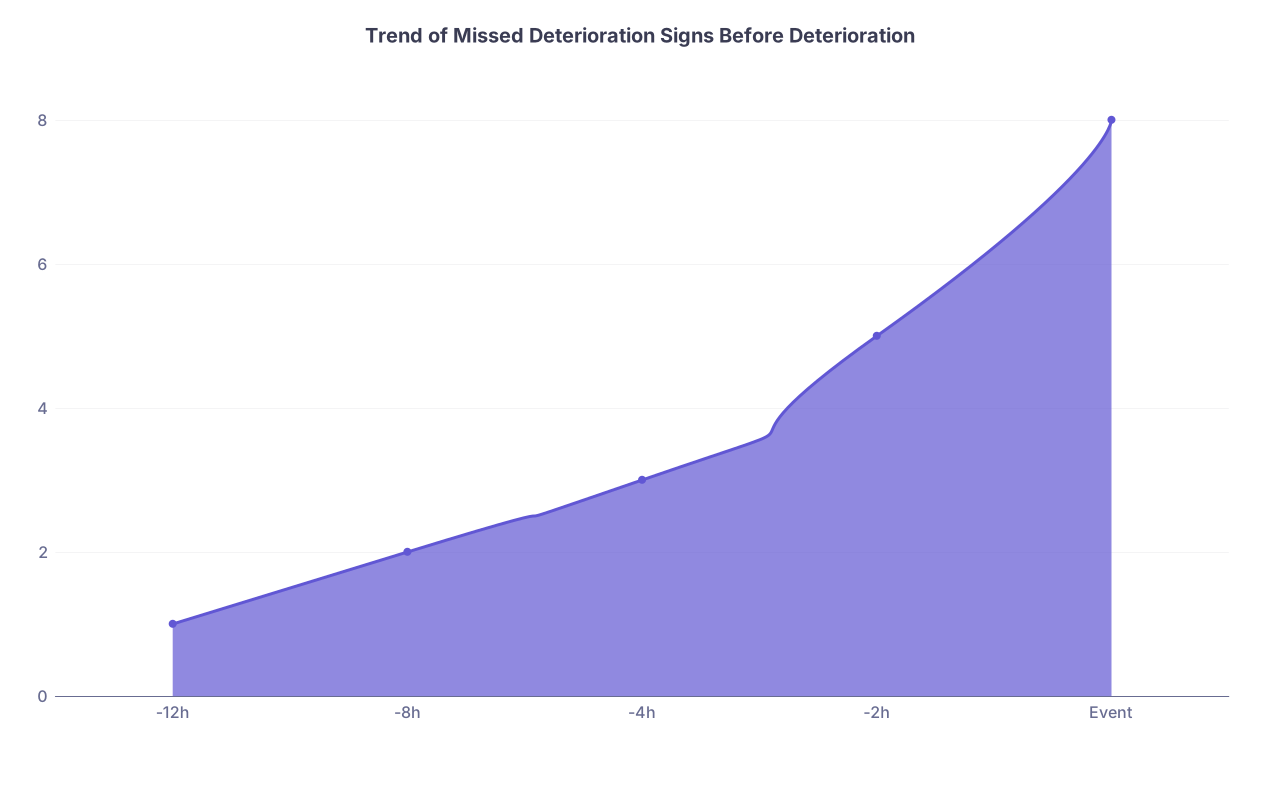
| Category | Value |
|---|---|
| -12h | 1 |
| -8h | 2 |
| -4h | 3 |
| -2h | 5 |
| Event | 8 |
That line could be O2 liters, MEWS score, or just “things that should make you nervous.” Your notes must show you noticed.
Example of safe acknowledgment:
“Over past 8 hours, O2 requirement increased from 2L to 5L with stable work of breathing and no new radiographic changes. Concern for early progression of pneumonia vs volume overload. Will increase frequency of vitals to q1h, consider ICU evaluation if O2 requirement reaches 6L or work of breathing increases.”
That is a resident who will not be crucified when the patient ends up in the ICU.
The dangerous move is this:
“Lungs CTAB, patient comfortable, will monitor.”
with no mention that they are now on 6L high‑flow.
9. Unclear Code Status and Goals of Care
Nothing is more chilling at M&M than the slide that reads:
- Nursing note 21:30: “Family asking about code status.”
- Resident note 22:00: No mention of code status.
- 02:10: Code blue, full resuscitation, family upset.
If someone raises code status or goals of care overnight, your documentation cannot pretend that conversation did not happen.
Two critical mistakes:
- Not clarifying code status when it is clearly in question.
- Discussing but not documenting, so it looks like no one thought about it.
You are on call. You do not always have the time or relationship to hold a full family meeting. Fine. But you must at least:
- Acknowledge the concern.
- Describe what you told them.
- Leave a plan for the primary team.
For instance:
“22:10 – Family expressed concern about what would happen if patient stopped breathing. Explained current code status is Full Code per prior documentation and more thorough goals of care discussion should be done with primary team tomorrow. Family would like to revisit and may be leaning toward DNR. No changes to code status tonight; will sign out to day team to address.”
Even better if you can actually address it then:
“23:30 – Discussed code status directly with patient (AOx3, able to express wishes). Patient states they would not want chest compressions, shocks, or intubation. Confirmed understanding. Changed code status in EMR to DNR/DNI and notified bedside RN.”
At M&M, the difference between “nobody documented this” and “someone documented they attempted and set a clear plan” is the difference between system failure and “we did what we reasonably could.”
10. Copy‑Pasting Old Plans After the Patient Has Outgrown Them
Copy‑forward is the siren song of the exhausted resident. You know it. I know it.
On call, copying the day team’s note is tempting. You tell yourself you will just tweak a line or two. Then you get pulled into a rapid response, and suddenly your note goes in with an outdated assessment and plan that do not match the night.
At M&M, nothing is more damning than seeing:
- Day team: “Low suspicion for sepsis.”
- Overnight: lactate rising, hypotension, blood cultures drawn.
- Your note: “Low suspicion for sepsis, will monitor.”
You look like you did not think at all.
The problem with copy‑paste is not just laziness; it is contradiction. When objective data in the chart has shifted, your recycled plan becomes evidence of cognitive shutdown.
Your rule: if anything of consequence happened since the last note, you do not copy the assessment language. You rewrite it in your own words, even if brief.
Safe minimal overnight structure:
- “Since previous note: [one or two concrete events].”
- “New data: [key labs/imaging].”
- “Updated assessment: [your interpretation].”
- “Plan changes: [new actions, or explicit statement that despite changes you are not changing management, with justification].”
If you must use copy‑forward, delete any phrase that carries judgment (e.g., “low likelihood,” “unlikely,” “just anxiety”) unless you actively re‑decide that it is still true.
| Area | Unsafe Habit | Safer Alternative |
|---|---|---|
| Interval events | "No acute events" by default | Specific events listed or explicit "none reported" |
| Assessment language | "Will monitor" | Defined parameters, time frame, and triggers |
| Exam | Copy-forward full exam | Focused, time-stamped, event-driven exam |
| Escalation | No mention of calls | Document who you called and what was decided |
| Timing | Vague or mismatched time stamps | Explicit evaluation and documentation times |
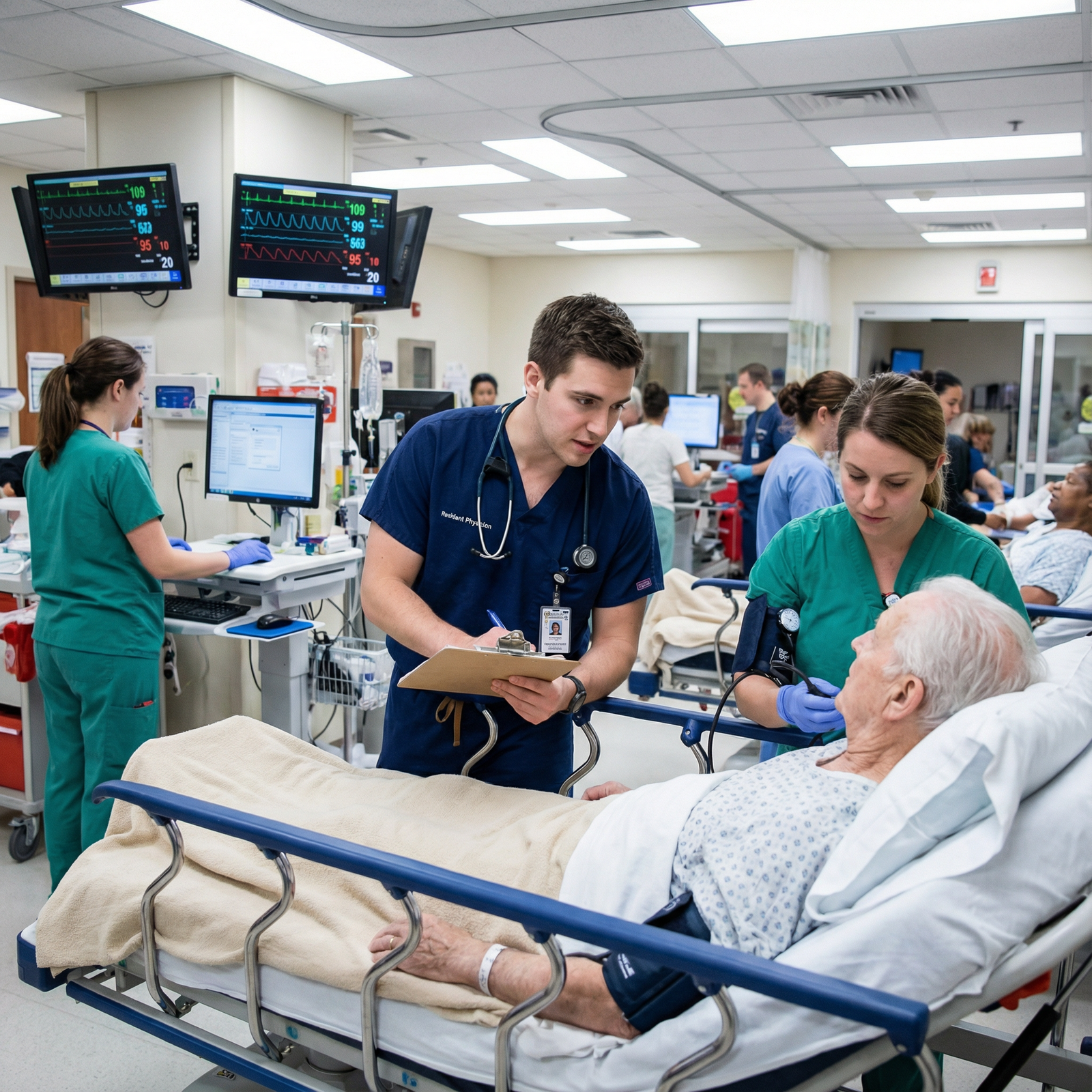
Building an On‑Call Documentation Reflex That Survives M&M
You do not need to write a novel at 3 a.m. You do need a reflex that triggers when any of the following words appear:
- “Desat”
- “Hypotension”
- “Chest pain”
- “Confused”
- “Family upset”
- “Code status”
- “Rapid response”
- “Critical value”
When you hear or write those, your brain should automatically go:
- Did I physically evaluate the patient?
- Did I look at the relevant data (vitals, labs, imaging, telemetry)?
- Did I formulate and document a clear plan with thresholds?
- Did I involve and document senior or attending input if needed?
- Would this note make sense to a stranger reading it tomorrow?
One trick that works: imagine your note on a screen in a room of 80 people with your name on it. Does it reflect what actually happened? Does it capture your thought process? Or does it make you look absent?
If the answer is “I would not want anyone to see this,” fix it now. While it is still fresh.
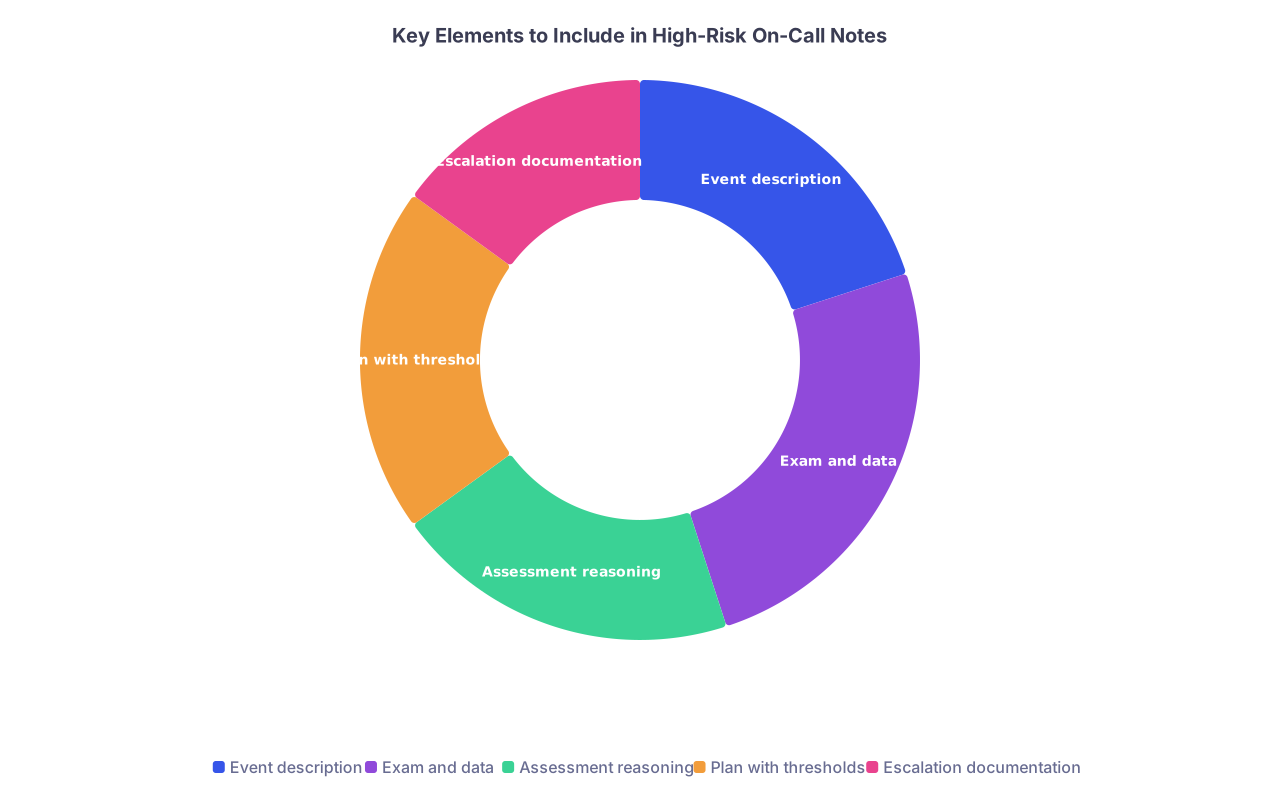
| Category | Value |
|---|---|
| Event description | 20 |
| Exam and data | 25 |
| Assessment reasoning | 20 |
| Plan with thresholds | 20 |
| Escalation documentation | 15 |

Quick Mental Checklist Before You Sign the Note
Before you click “sign,” ask:
- If the patient crashes in 2 hours, would my note look oblivious?
- Does the time line in this note match nursing notes and orders?
- Can someone understand what I did and why from these few lines?
- If my attending reads this without talking to me, will they think I was asleep at the wheel?
If any answer makes you uneasy, adjust. Two extra minutes now beats 20 minutes on a podium defending yourself.

FAQs
1. How long should an overnight note be for a significant event?
Long enough to clearly show: what happened, what you found, what you thought, what you did, and who you told. That might be 5–8 focused sentences. If you are writing paragraphs of fluff but no concrete decisions, it is too long and still inadequate. Brevity is fine; missing key elements is not.
2. Is it acceptable to document an assessment based mostly on chart review if I truly cannot get to the bedside?
Yes, but only if you say that explicitly. For example: “Unable to assess in person due to simultaneous code on another patient; assessment based on RN report, vitals, and telemetry review.” Then document why you think that is sufficient for now and what will make you go in person. Hiding that you did not examine them is what will hurt you.
3. Should I document when I disagree with my senior or attending’s plan?
You should document that a plan was made in discussion with them. You do not turn the chart into a debate transcript. For example: “Plan made in discussion with night attending Dr. X.” If you have serious concern, escalate in real time or through the chain of command, not passive‑aggressively in the chart. The M&M podium is not the first place to reveal your disagreement.
4. What if I honestly forgot to document an event until much later in the night?
Add an addendum that states both the time of the event and the time of documentation. For instance: “Addendum entered at 06:30 to reflect evaluation that occurred at 01:15…” Then describe what actually happened. Late but honest is always safer than silently back‑dating or pretending it never occurred. The audit trail exists whether you like it or not.
Remember three things. First, “no acute events” is not a default; it is a statement you have to earn. Second, vague plans and fuzzy timing are exactly what M&M will spotlight, so be specific and honest, even if brief. Third, your on‑call note is not just a box to check; it is your only witness in the room when people are asking what really happened that night.