
You’re Here
It’s 2:37 a.m.
You’ve finally closed your last note, you’re half‑lying on the call room bed, shoes still on, one eye already drifting shut.
Then: the page.
“Pt stable but concerning – can you come take a look?”
Your heart rate jumps a bit. You stare at the text and your brain does that resident calculation: How tired am I? How far is that unit? How sick could this patient be? Can I safely manage this over the phone?
You’re about to make what feels like a tiny decision.
It’s not tiny.
How you respond to that single “stable but concerning” page is exactly how people in your hospital decide what kind of physician you are. And they’re deciding all the time. Night after night. Page after page.
Let me show you what actually happens on the other side of those calls—and how your pattern of responses builds, or burns, your reputation.
What “Stable but Concerning” Really Means (From Nursing and Attendings)
Here’s the first secret: “Stable but concerning” is almost never about vitals alone.
On paper, the patient looks okay: BP 110/65, HR 94, RR 18, sat 95% on 2L. Labs from earlier today unremarkable.
But the nurse is paging because something feels off.
Nurses don’t write “patient looks like death” in the EMR. They write “stable but concerning,” “change from baseline,” “increasing work of breathing,” or “c/o feeling worse.” That’s the sanitized version of, “My gut says this patient is going to tank and I’m not willing to eat this alone.”
On rounds, attendings translate that language automatically. Residents learn it the hard way.
I’ve heard nurses at 3 a.m. at a high‑acuity academic hospital say this word for word:
“He’s technically okay, but I don’t like him.”
That’s “stable but concerning.”
If you treat that as “fine, doesn’t need to be seen,” you’re already behind.
What Your Response Signals (And Who’s Watching)
Every time you’re paged with one of these, you’re broadcasting three things to the entire floor:
- How you handle uncertainty
- How much you respect nursing judgment
- How seriously you take early deterioration
People talk about all three. Explicitly.
You think you’re just deciding whether to get out of bed or call back. The charge nurse is deciding whether you’re the person she trusts with the next unstable admit. The senior is deciding if she can assign you the sicker list tomorrow. The attending is deciding if your overnight signouts can be trusted without double‑checking.
Here’s the uncomfortable truth: your pattern becomes your reputation far faster than your knowledge base.
No one remembers your exact plan for that COPD exacerbation on day 3. They do remember:
- “He always comes to see the patient when we’re worried.”
- “She always tries to manage from the phone.”
- “You have to push him to come up; he’ll say ‘just monitor’ to everything.”
Those phrases get repeated in work rooms, huddles, and yes, in promotion and fellowship letters.
The Three Typical Resident Archetypes (And How They’re Judged)
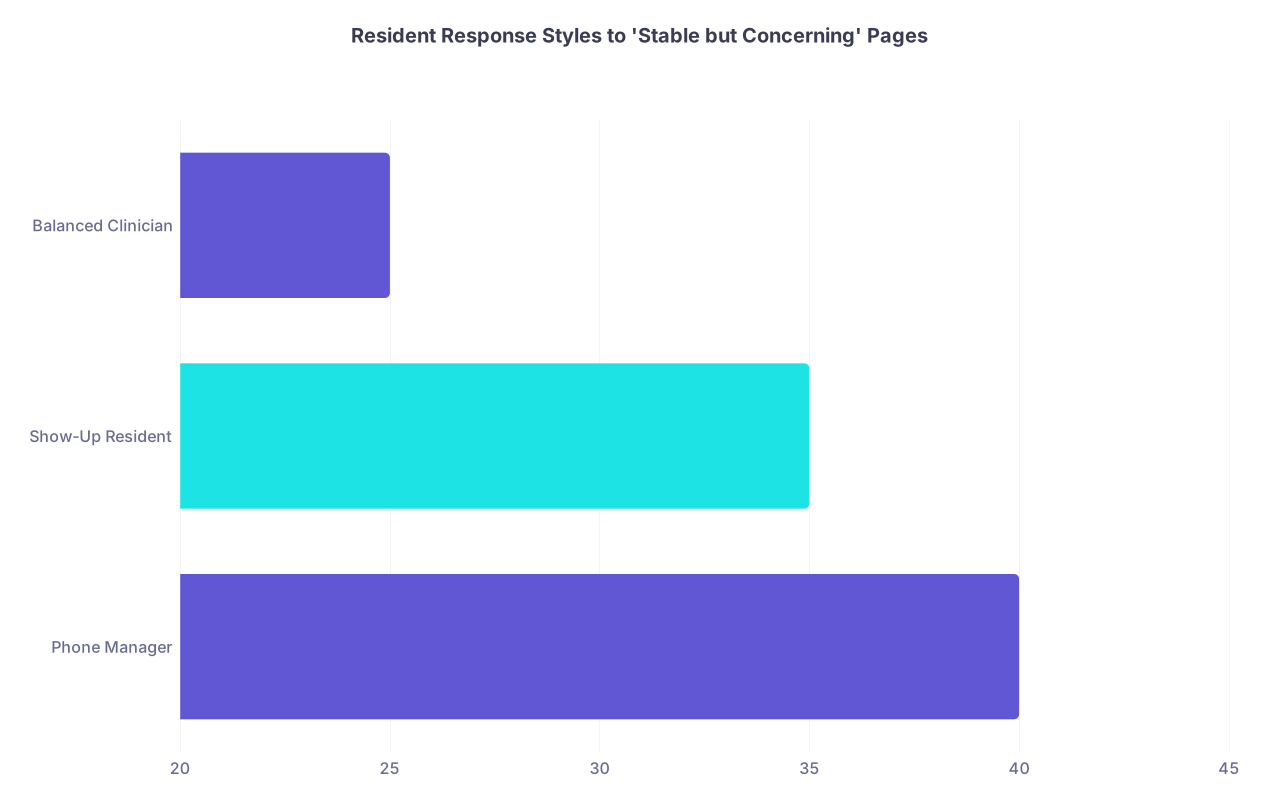
| Category | Value |
|---|---|
| Phone Manager | 40 |
| Show-Up Resident | 35 |
| Balanced Clinician | 25 |
I’ve watched the same patterns form at community programs, big-name IM residencies, surgery, EM—you name it. Residents fall into three broad camps.
1. The Phone Manager
This is the resident who reflexively stays at the desk.
The script is familiar:
“OK, vitals are fine? No fever? Sat is what? OK, just monitor and page me if anything changes.”
They’ll order a one‑off lab or PRN dose from the computer without laying eyes on the patient. Sometimes that’s fine. Sometimes it’s malpractice‑adjacent.
How nurses describe them:
- “You really have to convince him to come up.”
- “She always asks for another set of vitals instead of coming.”
How attendings think about them (but rarely say out loud):
- “Looks good on paper, but clinical judgment is lagging.”
- “I don’t fully trust their sense of who’s sick vs not sick.”
They become the resident who gets a lot of “soft” feedback: “Work on situational awareness” or “Be more proactive.” Translation: “Stop being lazy about seeing patients.”
2. The Show-Up Resident
This one gets out of the chair. A lot.
If a nurse says “concerning,” they’re at the bedside in five minutes. Even for stuff that turns out to be nothing.
Do they lose some sleep? Yes. Do they sometimes walk into rooms that do not need them? Also yes.
Do nurses love them? Absolutely.
I’ve heard versions of this exact exchange on day shift after a busy night:
Charge nurse: “Page nights if you’re worried; Dr. X always comes.”
New hire nurse: “Even if the vitals are OK?”
Charge nurse: “That’s why I said worried.”
Attendings pick up on this too. The “shows up” resident is the one people trust with sicker admits, the one they feel comfortable leaving alone on nights earlier in training.
Are there downsides? If you never triage by phone, you’ll burn out faster and never learn to risk‑stratify. But over‑showing‑up is a correctable error. A reputation for not showing up is much harder to fix.
3. The Balanced Clinician
This is where you want to land.
They call back quickly. They ask a structured, efficient set of questions. They’re not scared to make a judgment call—but when the story smells off, they appear in the room without drama.
Their pattern looks like this:
- First time a nurse on that unit says “stable but concerning”: they go see the patient.
- Patient population they don’t know well (e.g., fresh post‑op for a medicine resident, LVAD for a new intern): they go see.
- Specific nurse who rarely pages? If they say concerning, they go.
- Known anxious nurse who pages every 30 seconds? They still go when certain red‑flag words appear: “new confusion,” “more work to breathe,” “looks different than earlier.”
Internally, attendings label them: “Good clinical sense. Doesn’t blow off pages but also isn’t panicky.” That’s who you want to be.
The Unspoken Algorithm Attendings Expect You to Use
Here’s the mental flowchart good seniors and attendings are silently hoping you’ll run when you get that page.

| Step | Description |
|---|---|
| Step 1 | Receive stable but concerning page |
| Step 2 | Call nurse immediately |
| Step 3 | Ask targeted questions |
| Step 4 | Lower threshold to see patient |
| Step 5 | Go to bedside now |
| Step 6 | Check chart and vitals |
| Step 7 | Phone orders with clear follow up |
| Step 8 | Assess patient in person |
| Step 9 | Escalate to senior or attending |
| Step 10 | Document brief assessment and plan |
| Step 11 | Trust this nurse or unit? |
| Step 12 | Any red flags in story? |
| Step 13 | Still uneasy? |
| Step 14 | Sick or could worsen? |
They’re not asking you to be heroic. They’re asking you to (1) take the call seriously, (2) get enough information, and (3) respect that “something is off” is data.
Questions good residents ask on the phone:
- “What’s different compared to this morning?”
- “Have you ever taken care of this patient before? Does this feel like them?”
- “Is there anything specific you’re worried will happen in the next hour?”
- “How are they looking from the door vs when you’re at the bedside?”
None of that is in UpToDate. But that’s the stuff that catches the septic patient before the lactic is 7.
Specific Scenarios: How Reputations Are Built (or Destroyed)
Let me give you a few real resident‑level cases I’ve seen play out.
Scenario 1: The “Just Anxiety” Miss
Night float, PGY‑2 medicine resident.
Page at 1:10 a.m.: “Stable but concerning, patient c/o feeling ‘really off’ and more SOB, vitals stable.”
Resident thinks: “She’s 28, admitted for chest pain, had a negative workup so far. Anxiety.”
Response: “Check another set of vitals, if HR > 110 or sat < 92% page me back. Maybe give her the PRN Ativan that’s ordered.”
Nurse hesitates, says, “She doesn’t usually look like this, I’m worried.” Resident still doesn’t go.
At 2:05 a.m., rapid response. Now HR 130s, hypotensive, sat 88% on 5L, CP, diaphoretic. STEMI on EKG. She goes to the cath lab.
Did the patient survive? Yes. Did people forget that the nurse had paged an hour earlier? No chance.
Next morning the attending summary to the chief: “We need to work with him; he didn’t respond appropriately to a concerning call.”
They don’t say “lazy” in your evaluation. They write “needs development in recognizing and acting on early clinical deterioration.”
Same meaning.
Scenario 2: The “Nothing” Call That Mattered
PGY‑1 on nights, newish to the hospital.
Page: “Stable but I’m a little concerned, patient keeps saying he ‘feels weird,’ vitals stable, no new pain.”
Intern goes to see him. Walks in, chats. Patient can’t really describe it. Says “just off.” Physical exam normal. Tele normal.
Intern spends 5 minutes. Orders a basic panel for the morning. Reassures nurse, says, “If he looks any different, page me.”
Patient is fine. It was nothing.
Nurses’ takeaway: “Even as an intern, she shows up and doesn’t dismiss us.”
Fast forward two months: that same intern gets paged for “he looks worse, I don’t like his breathing, but the vitals are OK.” Nurse already trusts that this resident will take her seriously. That means she pages earlier and more confidently. That snowballs into catching badness earlier.
You don’t see that causal chain written anywhere. But it’s real.
How Nurses Actually Keep Score
Let me be blunt: the nurses know exactly which residents they trust at 3 a.m.
They keep a mental scoreboard. It’s not about how smart you are. It’s about how you behave when they’re asking for help.
The off‑the‑record categories I’ve heard at nurse stations:
| Resident Type | Nurse Nickname | Typical Comment |
|---|---|---|
| Shows up, helpful | "My go-to" | "If I’m worried, I want them on nights." |
| Reluctant, distant | "The ghost" | "You have to beg them to see the patient." |
| Panicky, disorg | "Chicken little" | "They come but have no plan." |
| Calm, decisive | "The adult" | "They always know what to do next." |
You really want to be seen as “the adult.” Calm. You come, you assess, you don’t freak out, you move the plan forward.
Here’s the part residents underestimate: nurses talk to attendings and chiefs. Informally, walking out of a room, half‑joking, but the message lands.
I’ve literally heard:
“You’re on with Dr. S tonight, you’ll be fine. He actually comes.”
That’s the reputation you’re building or eroding every time you answer—or don’t answer—a concerning page.
Documentation: The Quiet Protector (or Prosecutor)
There’s another layer most juniors ignore: what ends up in the chart around these calls.
If you respond appropriately to a “stable but concerning” page and see the patient, your documentation does a few important things:
- Shows the attending you took it seriously
- Protects you when something later goes wrong
- Makes you look like you’re on top of your list
A competent brief note at 03:12:
“Called by RN for pt c/o ‘feeling off.’ VSS, exam notable for mild increased WOB compared to prior. No CP, no new neuro sx. At bedside pt A&Ox3, speaking full sentences, lungs with scattered wheeze. Low concern for acute decomp at this time. Plan: repeat vitals q2h x 2, repeat BMP at 0600, instructed RN to page for any new CP, SBP < 100, sat < 92% or change in mental status.”
When an attending reads that in the morning, their brain logs: “Good judgment. Answered the call. Clear plan.”
Flip side.
If the only documentation around that time is a rapid response note an hour later, you look absent—even if you actually did some phone triage. No evidence you engaged.
Attendings and risk management read the same chart. Different stakes, same conclusion.
When to Absolutely Get Out of Bed (Non‑Negotiable Situations)
You’re allowed to triage. You should triage. But there are situations where the only acceptable response to “stable but concerning” is “I’m on my way.”
Here’s the short list that shouldn’t be up for debate:
- The nurse or RT uses the word “different” or “not like earlier” about breathing, mental status, or color
- Any new confusion, agitation in someone who was previously appropriate
- Chest pain that’s new, different, or more intense, even if the vitals are rock solid
- Post‑op patient where the nurse says, “I’m worried about their belly”
- Any patient on pressors, high‑flow, BiPAP, or who was unstable in the last 24 hours, regardless of current vitals
- A nurse you trust says, “I can’t put my finger on it, but I’m really worried”
That last one is not fluffy. It’s the distilled version of thousands of patient encounters compressed into a gut feeling. Dismissing that is how you get written up in M&M.
The Long Game: How This Shapes Your Career, Not Just Your Night
This isn’t just about surviving your call month without getting yelled at.
The patterns you set now—how you react to low‑grade concern, how quickly you show up, how you talk to nurses on the phone—become the backbone of your professional reputation.
Across programs, you see the same trajectory:
- The resident who shows up, listens, and learns to weigh “concerning” appropriately becomes the fellow or young attending others trust with the complicated service.
- The resident who habitually manages everything from the computer becomes the attending whose name makes nurses roll their eyes at assignment.
You’re not just building a file of evaluations. You’re building a story people tell about you:
- “She has excellent clinical judgment and responds appropriately when nurses express concern.”
- “He sometimes underestimates early warning signs raised by nursing staff.”
Guess which one gets you letters for competitive fellowships.
Practical Scripts That Build Trust Without Burning You Out
You do not have infinite energy. You can’t and shouldn’t sprint to every minor complaint. But you can respond in a way that makes it clear you take concern seriously and are thinking.
Here are a few phrases that signal “adult in the room” status.
On the phone:
- “Thanks for calling me about this. Tell me what’s different from earlier.”
- “OK, vitals right now are reassuring, but if you’re saying he looks worse, I’m coming to see him.”
- “I’m downstairs admitting someone; it’ll take me about 10 minutes to get up there. If anything changes before then—numbers or how he looks—page me STAT.”
At the bedside after:
- “I’m glad you called. I’d rather see him and have it be nothing than miss something early.”
- “Let’s keep a tighter eye for the next couple hours; if your gut says he’s heading the wrong way, loop me in again.”
Those sentences spread. Nurses repeat them. Seniors hear about them. You establish a consistent persona: responsive, collaborative, not panicky, not dismissive.
A Quick Reality Check: How Often Do These Pages Predict Real Trouble?
You might be wondering: “Am I going to burn myself out running to every ‘weird feeling’?”
Here’s what attendings know from experience, though most won’t put numbers on it openly.
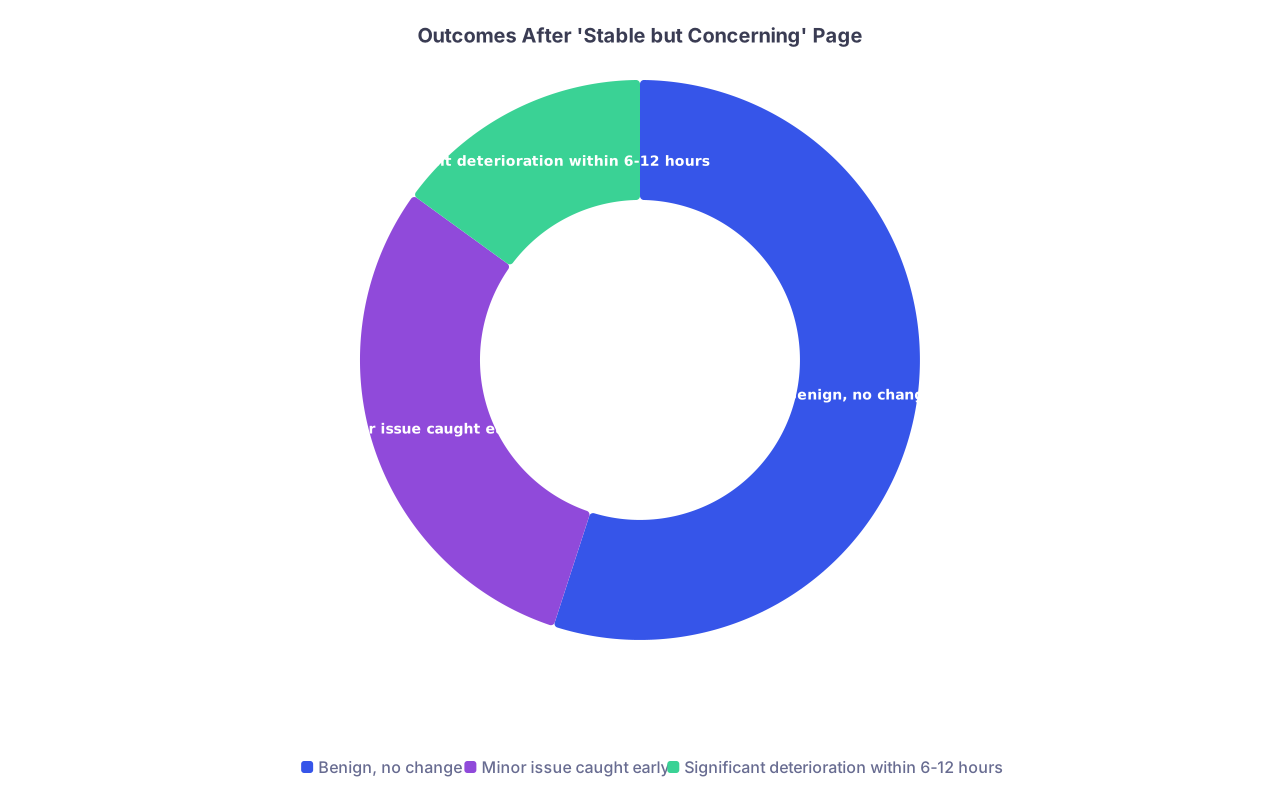
| Category | Value |
|---|---|
| Benign, no change | 55 |
| Minor issue caught early | 30 |
| Significant deterioration within 6-12 hours | 15 |
Roughly:
- More than half end up benign. Nothing real changes.
- About a third reveal a minor issue you can actually fix earlier: early sepsis, brewing GI bleed, early CHF, med side effect.
- A meaningful minority are the early tip‑off to a real crash in the next 6–12 hours.
You don’t know which is which at the time. That’s the whole point.
If you decide, as a habit, that most are “nothing,” you will miss some of that 15%. The problem is those cases are the ones that define your reputation for years.